59.
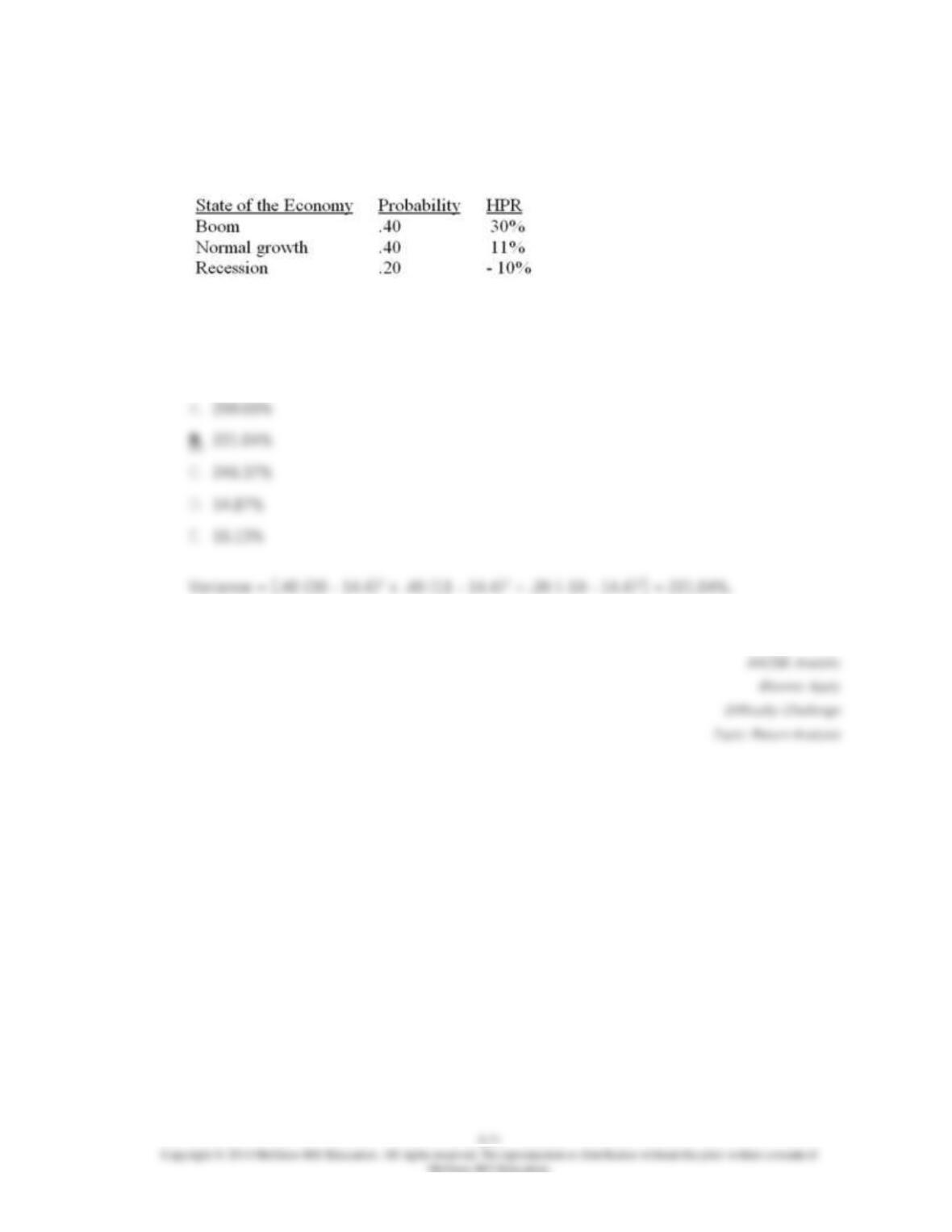
You have been given this probability distribution for the holding-period return for GM
stock:
What is the expected variance for GM stock?
60.
You purchase a share of CAT stock for $90. One year later, after receiving a dividend of $4,
you sell the stock for $97. What was your holding-period return?
61.
When comparing investments with different horizons, the ____________ provides the more
accurate comparison.
62.
Annual percentage rates (APRs) are computed using
63.
An investment provides a 2% return semi-annually, its effective annual rate is
64.
If an investment provides a 1.25% return quarterly, its effective annual rate is
65.
If an investment provides a 0.78% return monthly, its effective annual rate is
66.
If an investment provides a 3% return semi-annually, its effective annual rate is
67.
If an investment provides a 2.1% return quarterly, its effective annual rate is
68.
Skewness is a measure of
69.
Kurtosis is a measure of
70.
When a distribution is positively skewed,
71.
When a distribution is negatively skewed,
72.
If a distribution has “fat tails,” it exhibits
73.
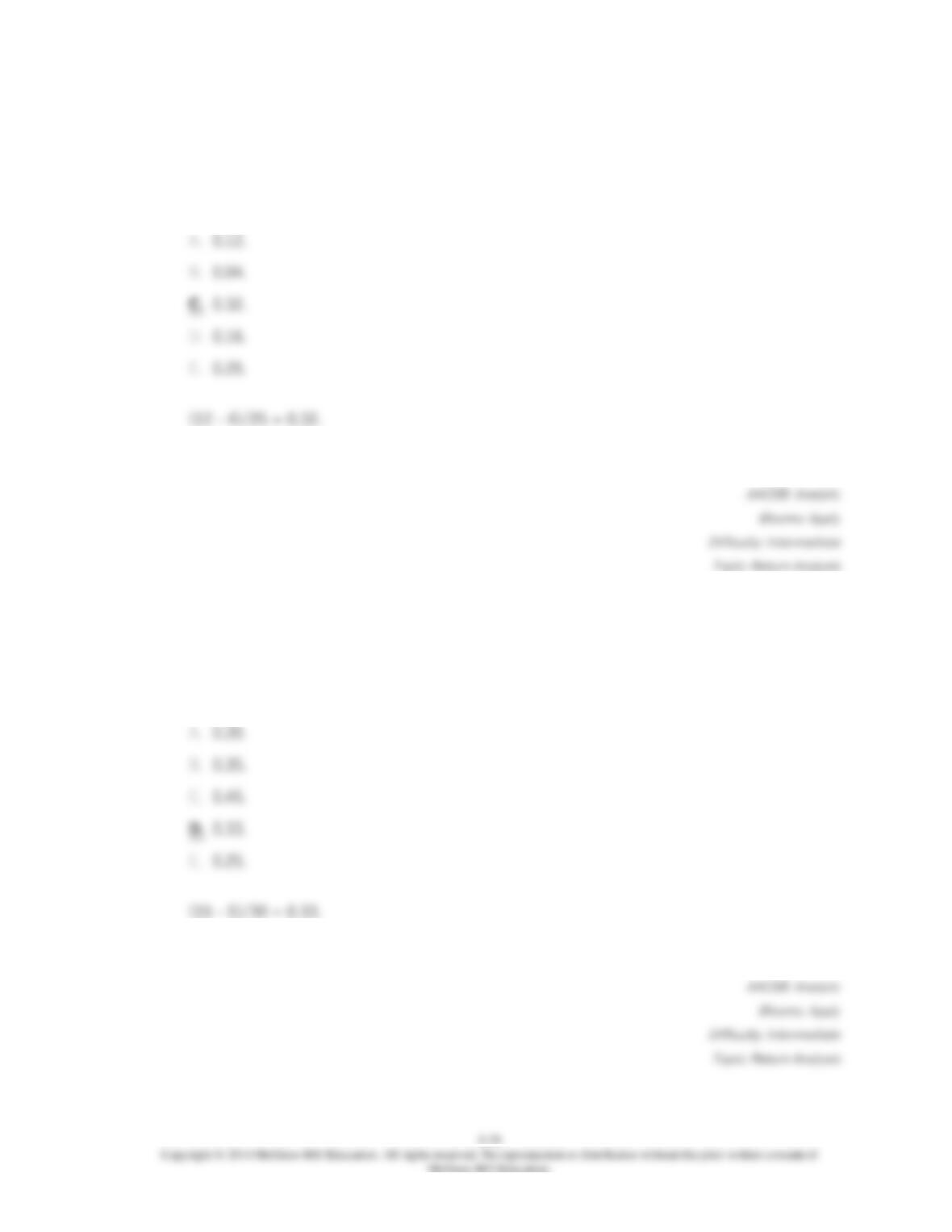
If a portfolio had a return of 8%, the risk-free asset return was 3%, and the standard
deviation of the portfolio’s excess returns was 20%, the Sharpe measure would be
74.
If a portfolio had a return of 12%, the risk-free asset return was 4%, and the standard
deviation of the portfolio’s excess returns was 25%, the Sharpe measure would be
75.
If a portfolio had a return of 15%, the risk-free asset return was 5%, and the standard
deviation of the portfolio’s excess returns was 30%, the Sharpe measure would be
76.
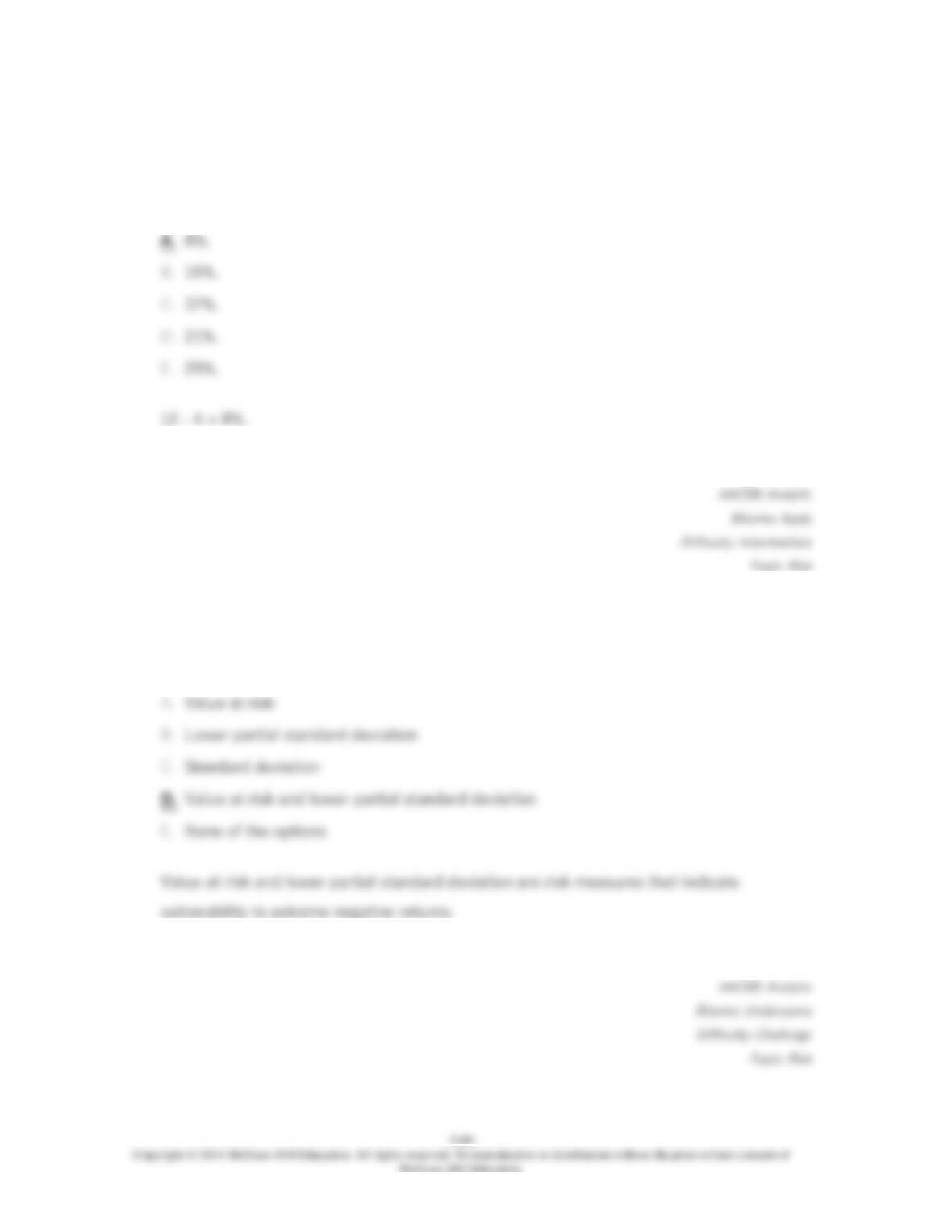
If a portfolio had a return of 12%, the risk-free asset return was 4%, and the standard
deviation of the portfolio’s excess returns was 25%, the risk premium would be
77.
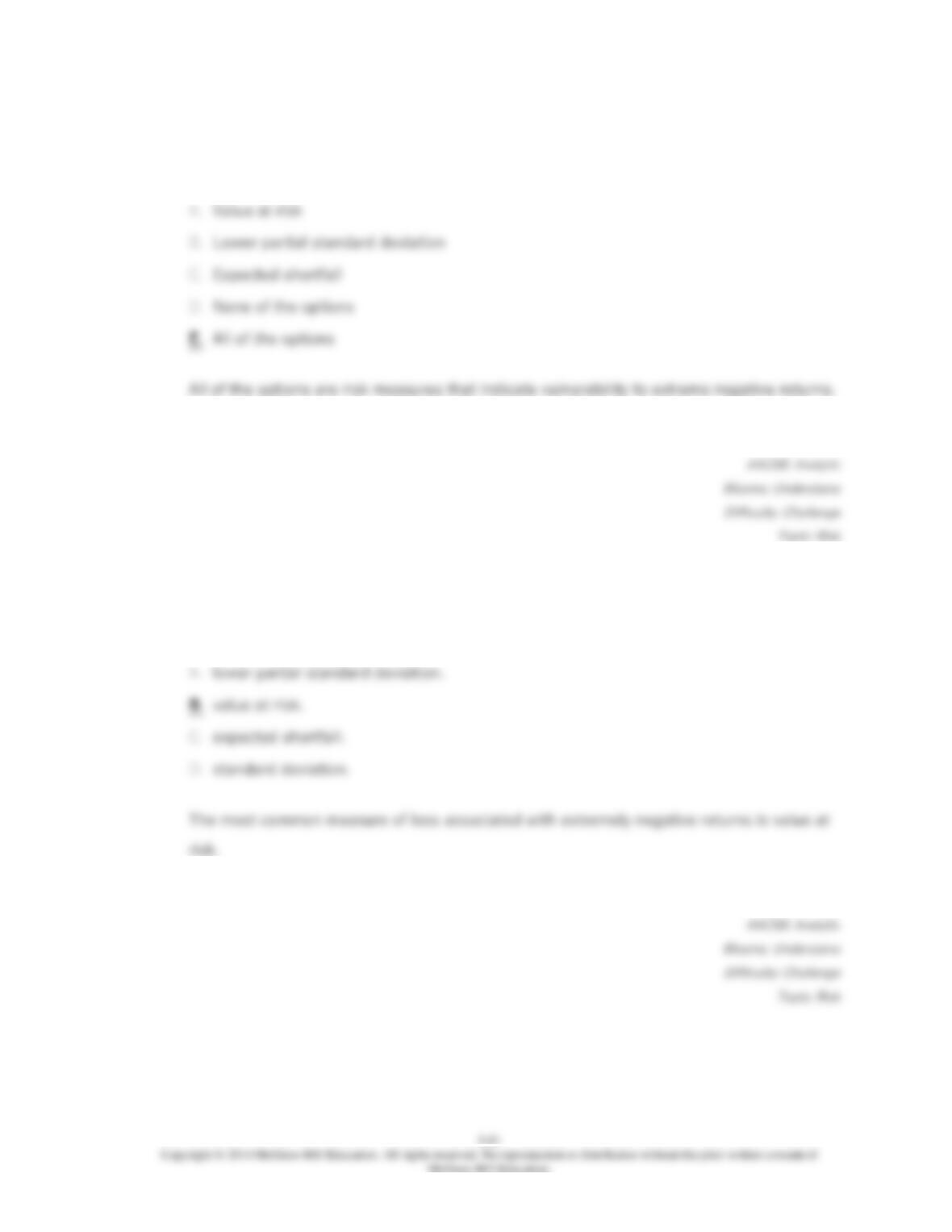
________ is a risk measure that indicates vulnerability to extreme negative returns.
78.
________ is a risk measure that indicates vulnerability to extreme negative returns.
79.
The most common measure of loss associated with extremely negative returns is
80.
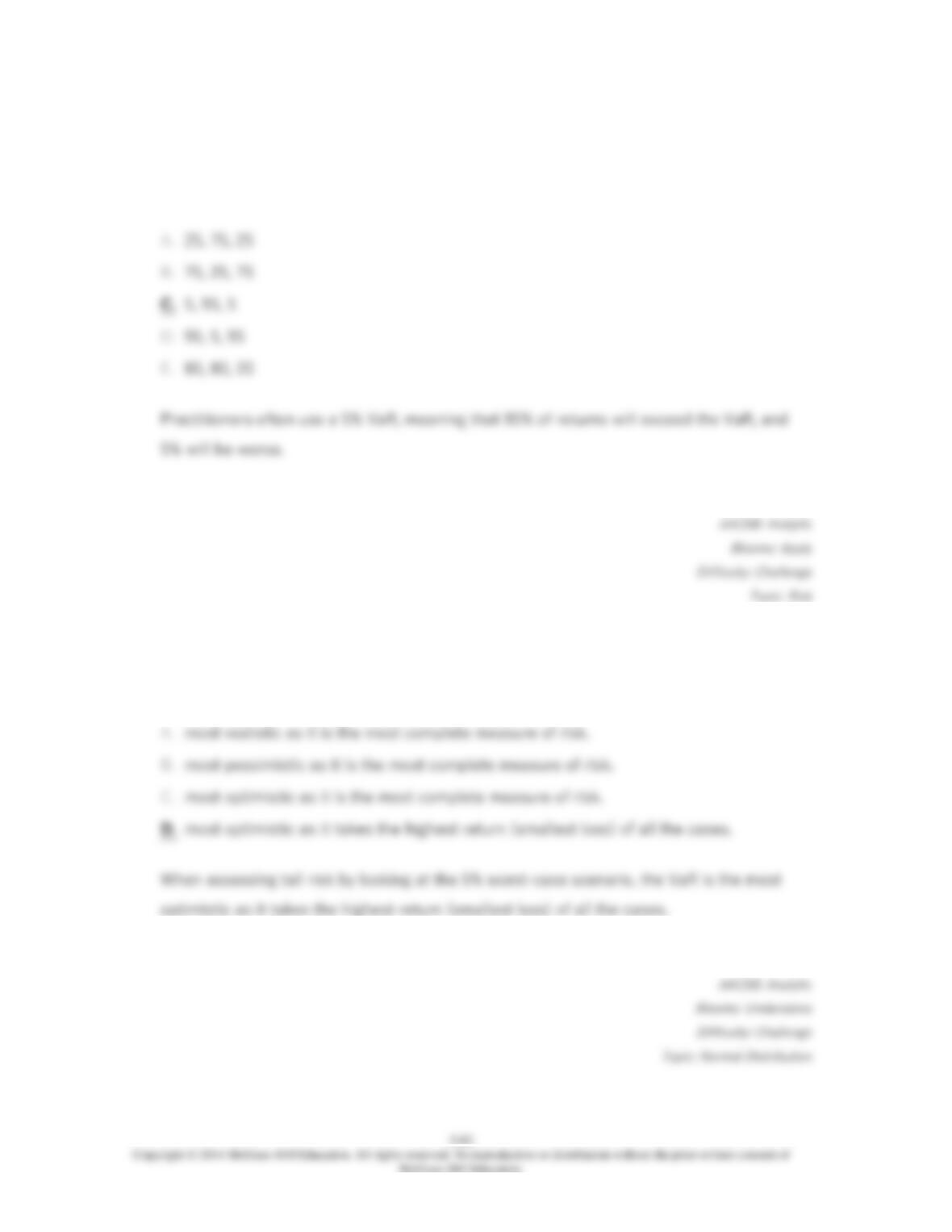
Practitioners often use a ________% VaR, meaning that ________% of returns will exceed
the VaR, and ________% will be worse.
81.
When assessing tail risk by looking at the 5% worst-case scenario, the VaR is the
5-83
82.
When assessing tail risk by looking at the 5% worst-case scenario, the most realistic view
of downside exposure would be
Short Answer Questions
83.
Discuss the relationships between interest rates (both real and nominal), expected
inflation rates, and tax rates on investment returns.
84.
Discuss why common stocks must earn a risk premium.
85.
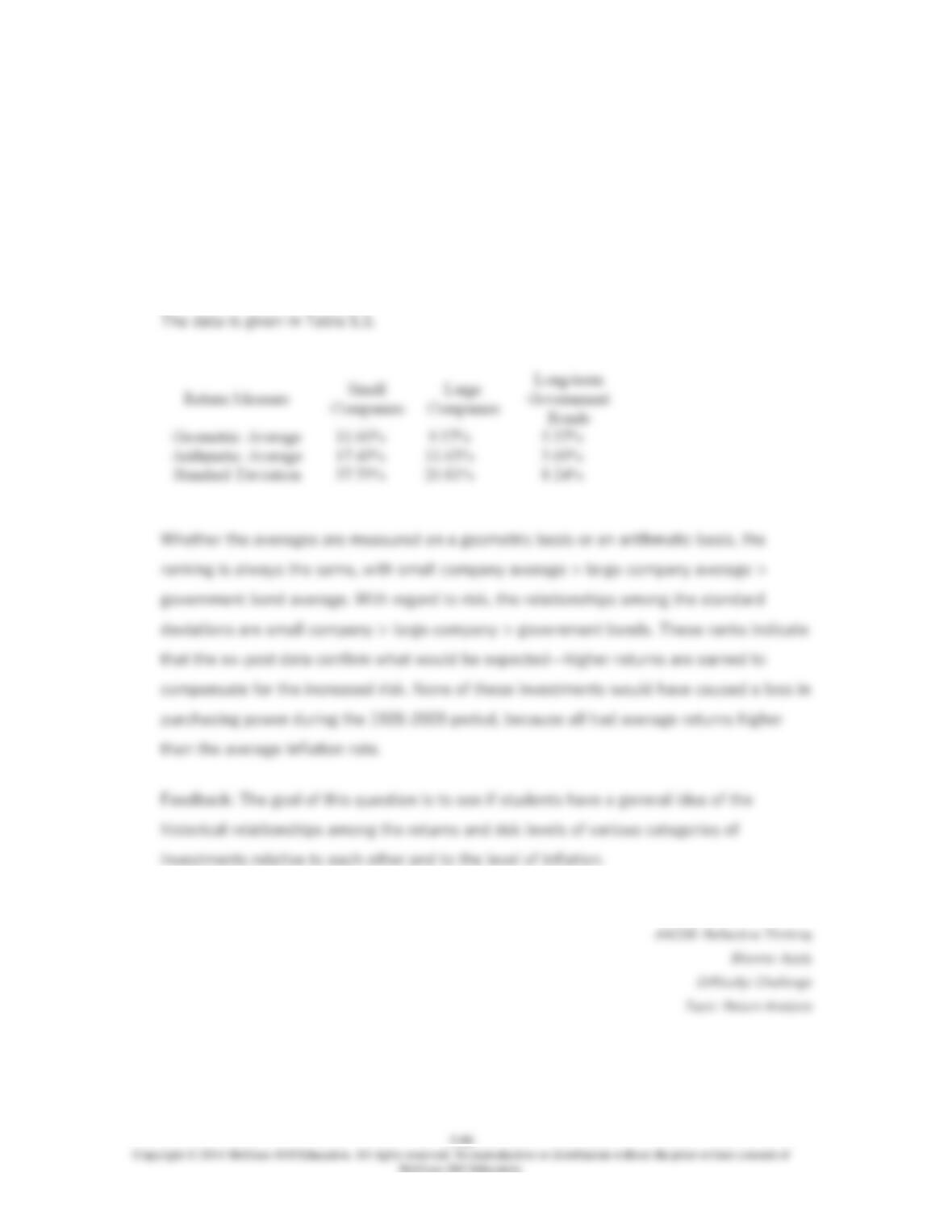
Discuss the historical distributions of each of the following in terms of their average return
and the dispersion of their returns: U.S. small company stocks, U.S. large company stocks,
and U.S. long-term government bonds. Would any of these investments cause a loss in
purchasing power during a 1926-2009 holding period?
86.
Discuss some reasons why an investor with a longtime horizon might choose to invest in
common stocks, even though they have historically been riskier than government bonds or
T-bills.