51.
Differences between hedge funds and mutual funds are that
52.
Of the following types of mutual funds, an investor who wishes to invest in a diversified
portfolio of stocks worldwide (including the U.S.) should choose
53.
Of the following types of mutual funds, an investor who wishes to invest in a diversified
portfolio of foreign stocks (excluding the U.S.) should choose
54.
Of the following types of ETFs, an investor who wishes to invest in a diversified portfolio
that tracks the S&P 500 should choose
55.
Of the following types of ETFs, an investor who wishes to invest in a diversified portfolio
that tracks the Dow Jones Industrials should choose
56.
Of the following types of ETFs, an investor who wishes to invest in a diversified portfolio
that tracks the Nasdaq 100 should choose
57.
Of the following types of ETFs, an investor who wishes to invest in a diversified portfolio
that tracks the Russell 2000 should choose
58.
Of the following types of ETFs, an investor who wishes to invest in a diversified portfolio
that tracks the Wilshire 5000 should choose
59.
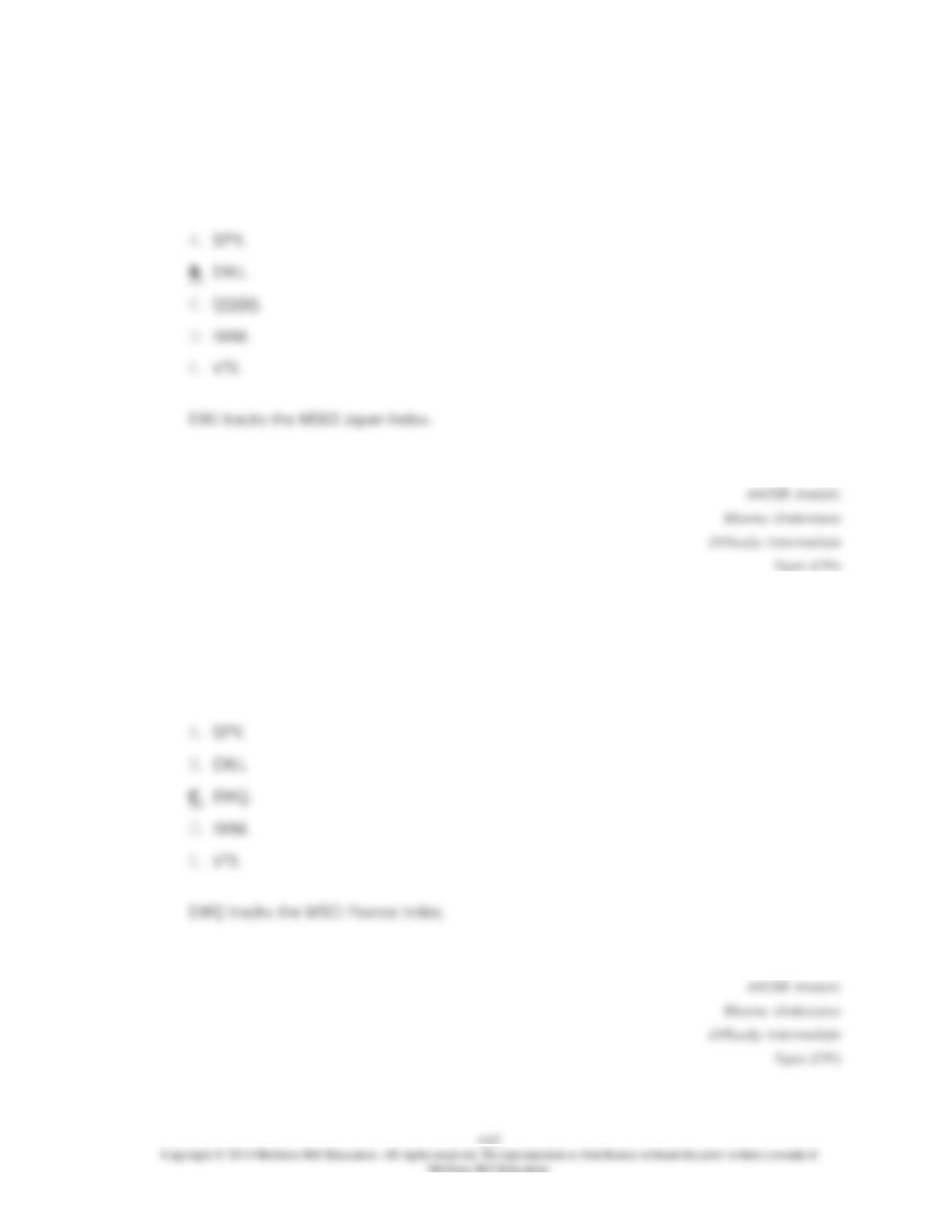
Of the following types of ETFs, an investor who wishes to invest in a diversified portfolio
that tracks the MSCI Japan Index should choose
60.
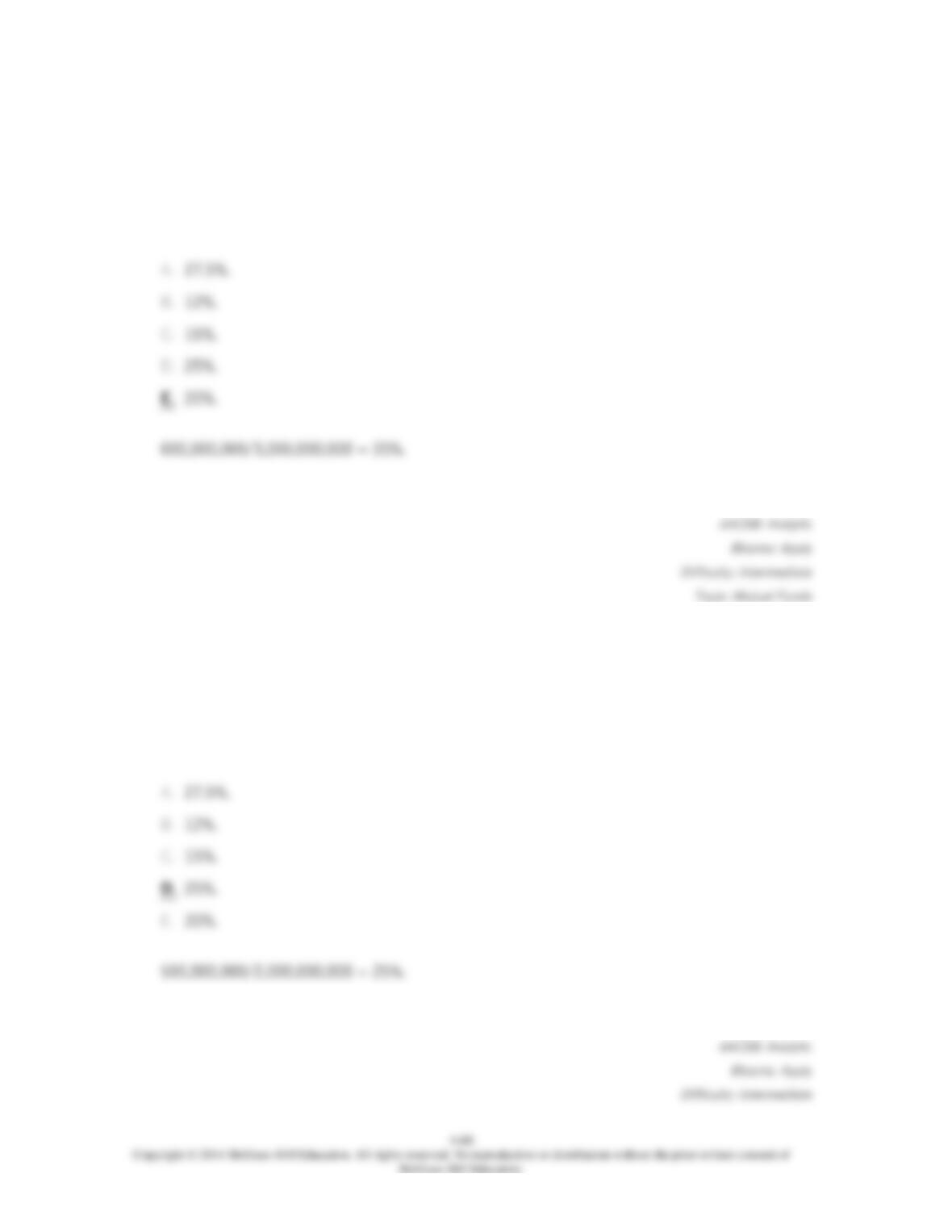
Of the following types of ETFs, an investor who wishes to invest in a diversified portfolio
that tracks the MSCI France Index should choose
61.
A mutual fund had average daily assets of $3.0 billion in 2012. The fund sold $600 million
worth of stock and purchased $700 million worth of stock during the year. The fund’s
turnover ratio is
62.
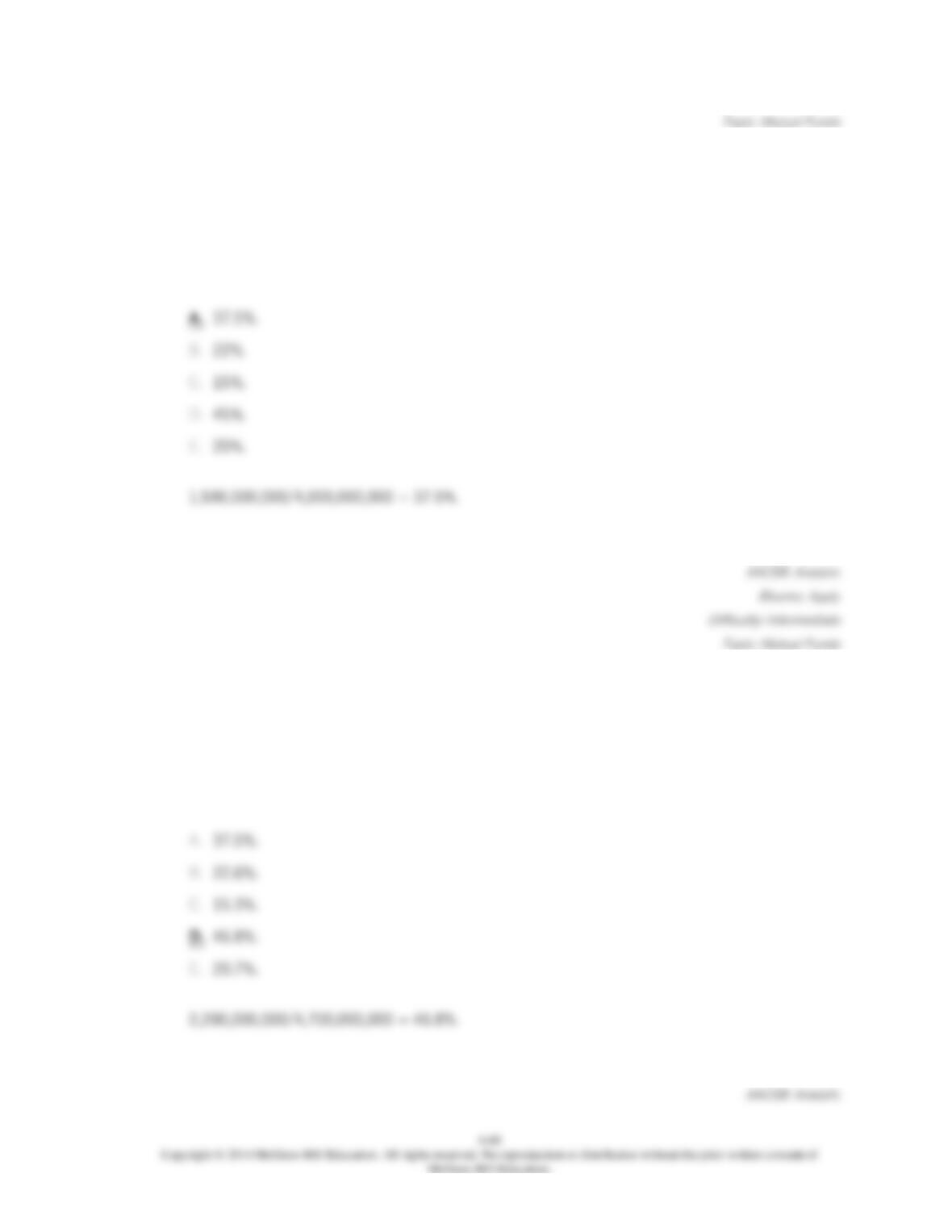
A mutual fund had average daily assets of $2.0 billion in 2012. The fund sold $500 million
worth of stock and purchased $600 million worth of stock during the year. The fund’s
turnover ratio is
63.
A mutual fund had average daily assets of $4.0 billion in 2012. The fund sold $1.5 billion
worth of stock and purchased $1.6 billion worth of stock during the year. The fund’s
turnover ratio is
64.
A mutual fund had average daily assets of $4.7 billion in 2012. The fund sold $2.2 billion
worth of stock and purchased $3.6 billion worth of stock during the year. The fund’s
turnover ratio is
65.
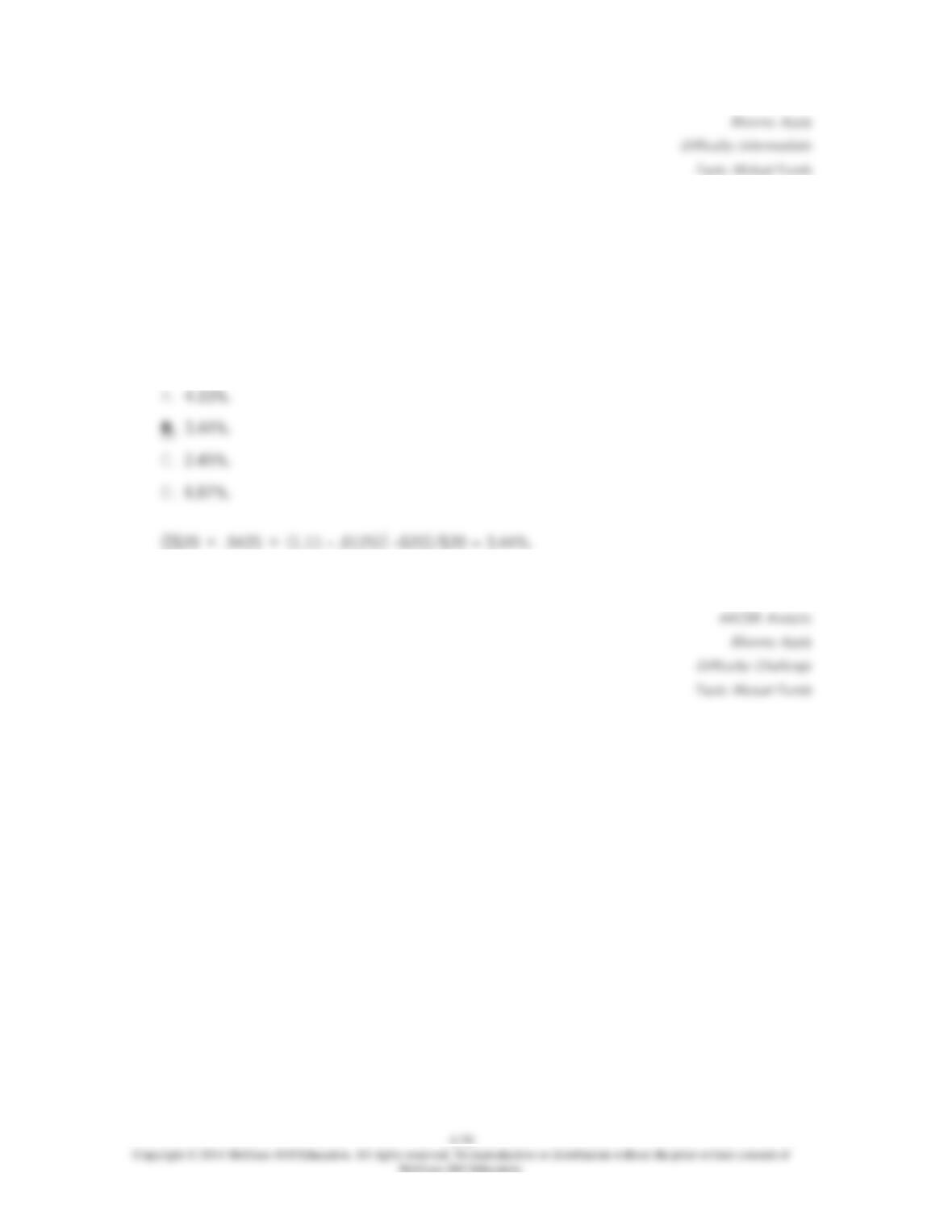
You purchased shares of a mutual fund at a price of $20 per share at the beginning of the
year and paid a front-end load of 5.75%. If the securities in which the fund invested
increased in value by 11% during the year, and the fund’s expense ratio was 1.25%, your
return if you sold the fund at the end of the year would be
66.
You purchased shares of a mutual fund at a price of $12 per share at the beginning of the
year and paid a front-end load of 4.75%. If the securities in which the fund invested
increased in value by 9% during the year, and the fund’s expense ratio was 1.5%, your
return if you sold the fund at the end of the year would be
67.
You purchased shares of a mutual fund at a price of $17 per share at the beginning of the
year and paid a front-end load of 5.0%. If the securities in which the fund invested
increased in value by 12% during the year, and the fund’s expense ratio was 1.0%, your
return if you sold the fund at the end of the year would be
4-72
Topic: Mutual Funds
68.
You purchased shares of a mutual fund at a price of $20 per share at the beginning of the
year and paid a front-end load of 6.0%. If the securities in which the fund invested
increased in value by 10% during the year, and the fund’s expense ratio was 1.5%, your
return if you sold the fund at the end of the year would be
Topic: Mutual Funds
Short Answer Questions
4-73
69.
List and describe the more important types of mutual funds according to their investment
policy and use.
70.
Discuss the taxation of mutual fund income.
71.
What is an exchange-traded fund? Give two examples of specific ETFs. What are some
advantages they have over ordinary open-end mutual funds? What are some
disadvantages?
72.
Discuss the consistency of mutual fund performance results, as studied by Goetzmann
and Ibbotson (1994) and Malkiel (1995).