27.
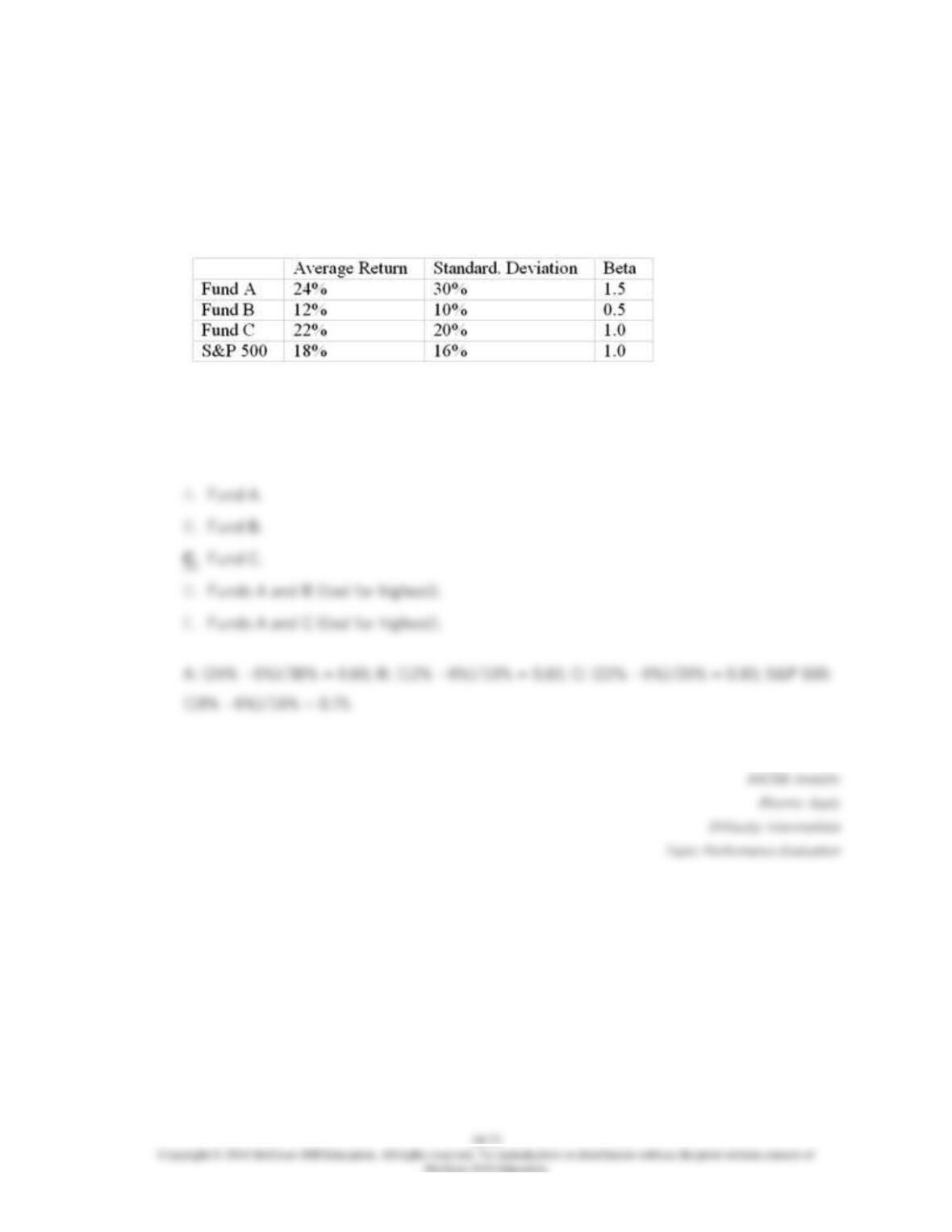
You want to evaluate three mutual funds using the Sharpe measure for performance
evaluation. The risk-free return during the sample period is 6%. The average returns,
standard deviations, and betas for the three funds are given below, as are the data for the
S&P 500 Index.
The fund with the highest Sharpe measure is
28.
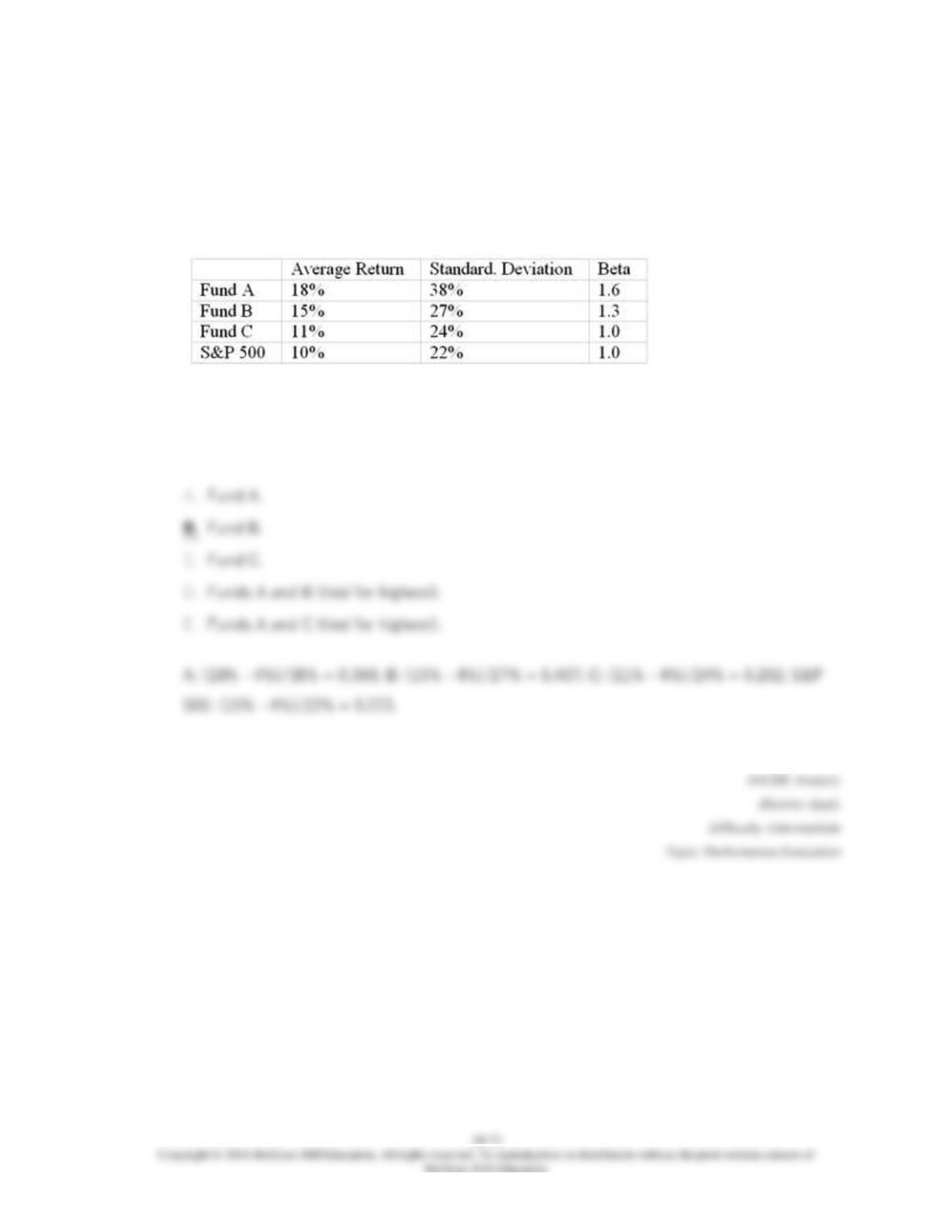
You want to evaluate three mutual funds using the Sharpe measure for performance
evaluation. The risk-free return during the sample period is 4%. The average returns,
standard deviations, and betas for the three funds are given below, as are the data for the
S&P 500 Index.
The fund with the highest Sharpe measure is
29.
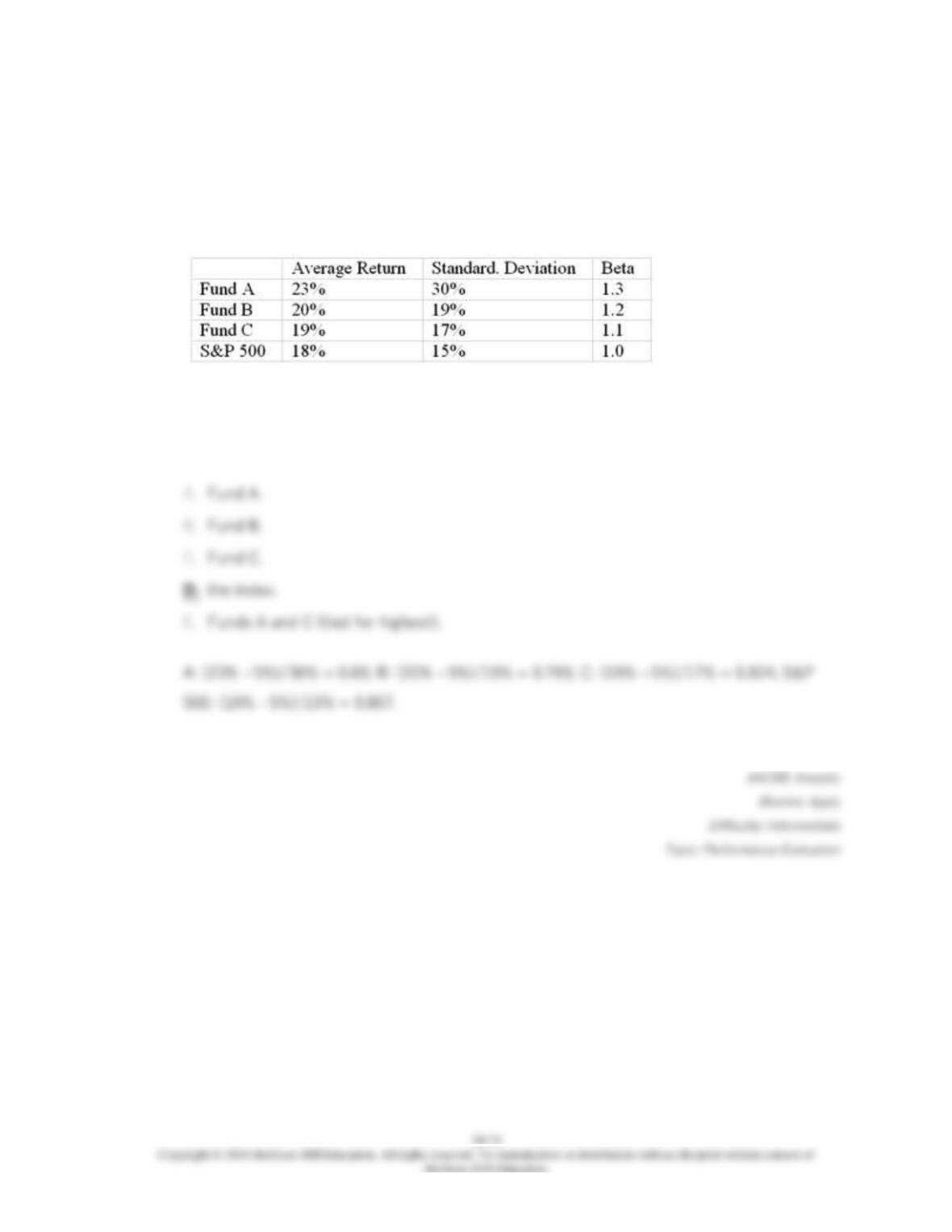
You want to evaluate three mutual funds using the Sharpe measure for performance
evaluation. The risk-free return during the sample period is 5%. The average returns,
standard deviations, and betas for the three funds are given below, as are the data for the
S&P 500 Index.
The investment with the highest Sharpe measure is
30.
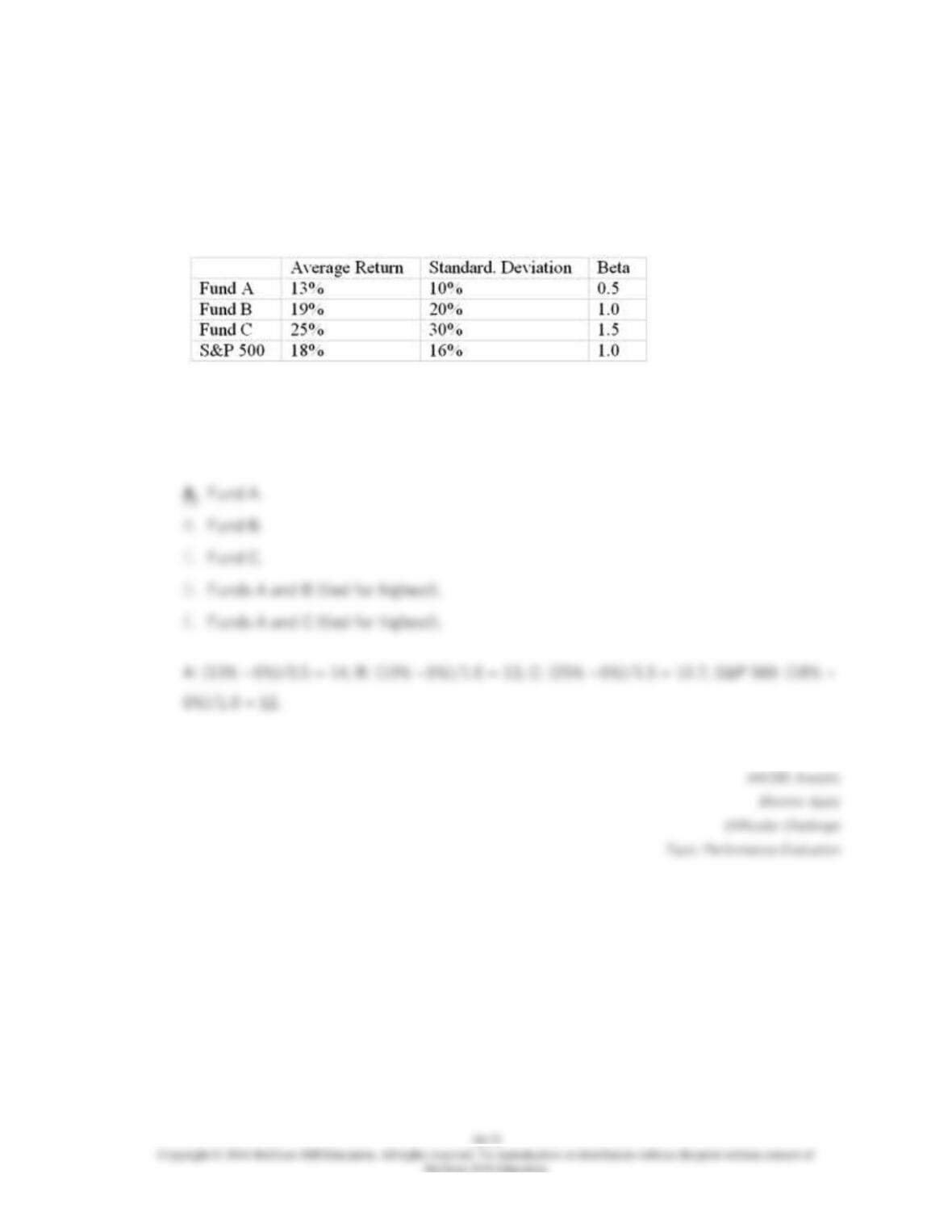
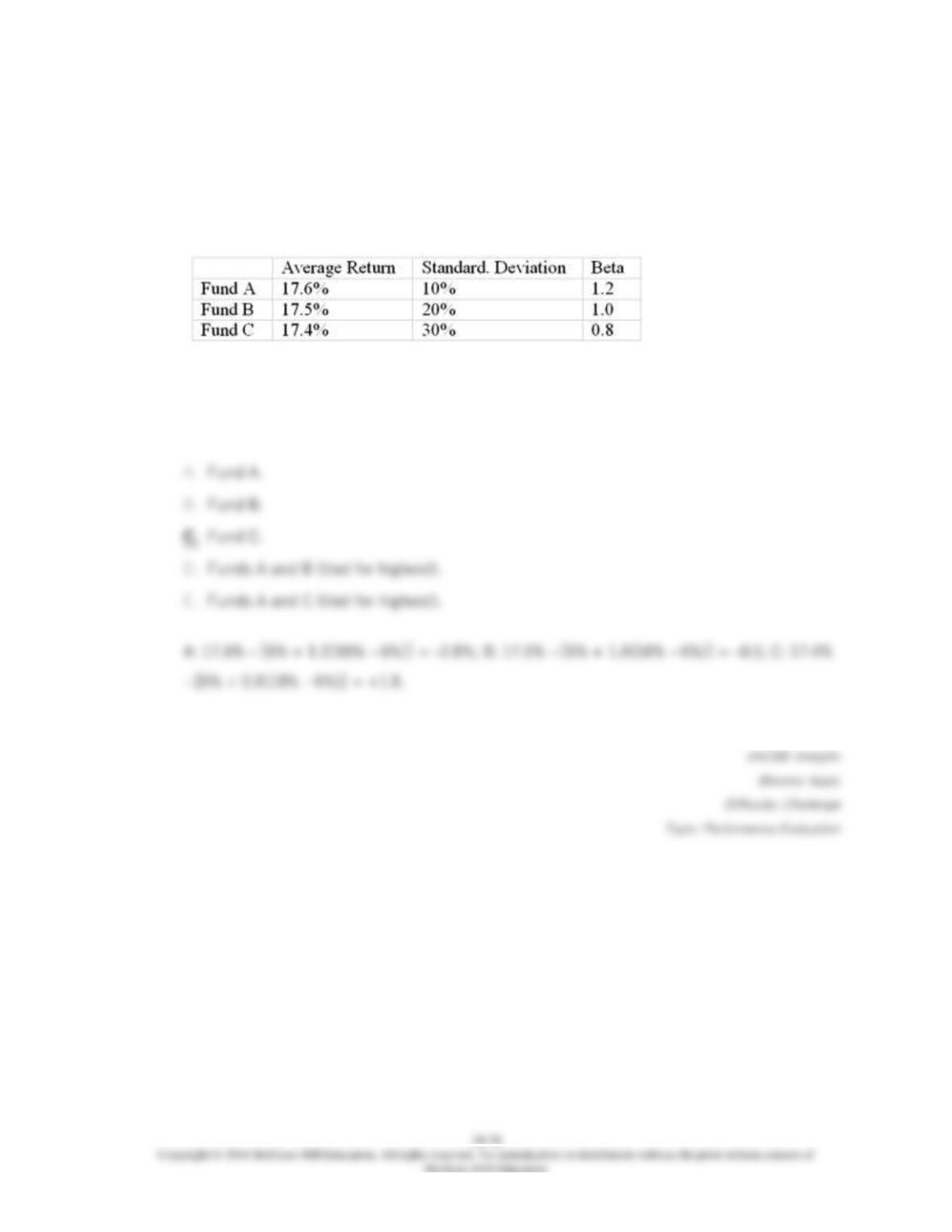
You want to evaluate three mutual funds using the Treynor measure for performance
evaluation. The risk-free return during the sample period is 6%. The average returns,
standard deviations, and betas for the three funds are given below, in addition to
information regarding the S&P 500 Index.
The fund with the highest Treynor measure is
31.
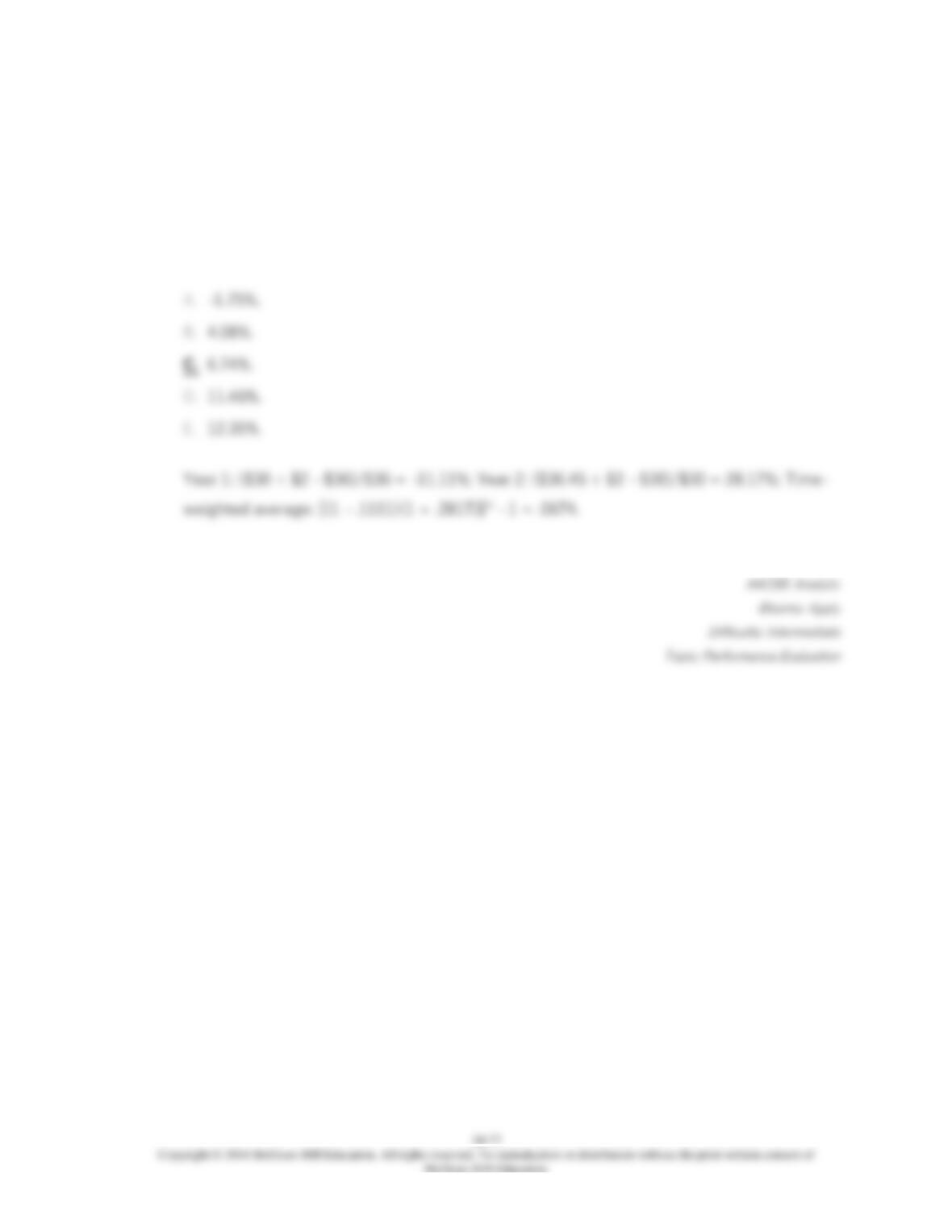
You want to evaluate three mutual funds using the Jensen measure for performance
evaluation. The risk-free return during the sample period is 6%, and the average return on
the market portfolio is 18%. The average returns, standard deviations, and betas for the
three funds are given below.
The fund with the highest Jensen measure is
32.
Suppose you purchase one share of the stock of Volatile Engineering Corporation at the
beginning of year 1 for $36. At the end of year 1, you receive a $2 dividend and buy one
more share for $30. At the end of year 2, you receive total dividends of $4 (i.e., $2 for each
share) and sell the shares for $36.45 each. The time-weighted return on your investment is
33.
Suppose you purchase one share of the stock of Volatile Engineering Corporation at the
beginning of year 1 for $36. At the end of year 1, you receive a $2 dividend and buy one
more share for $30. At the end of year 2, you receive total dividends of $4 (i.e., $2 for each
share) and sell the shares for $36.45 each. The dollar-weighted return on your investment
is
34.
Suppose you purchase one share of the stock of Cereal Correlation Company at the
beginning of year 1 for $50. At the end of year 1, you receive a $1 dividend and buy one
more share for $72. At the end of year 2, you receive total dividends of $2 (i.e., $1 for each
share) and sell the shares for $67.20 each. The time-weighted return on your investment is
35.
Suppose you purchase one share of the stock of Cereal Correlation Company at the
beginning of year 1 for $50. At the end of year 1, you receive a $1 dividend and buy one
more share for $72. At the end of year 2, you receive total dividends of $2 (i.e., $1 for each
share) and sell the shares for $67.20 each. The dollar-weighted return on your investment
is
36.
Suppose you own two stocks, A and B. In year 1, stock A earns a 2% return and stock B
earns a 9% return. In year 2, stock A earns an 18% return and stock B earns an 11% return.
__________ has the higher arithmetic average return.
37.
Suppose you own two stocks, A and B. In year 1, stock A earns a 2% return and stock B
earns a 9% return. In year 2, stock A earns an 18% return and stock B earns an 11% return.
Which stock has the higher geometric average return?
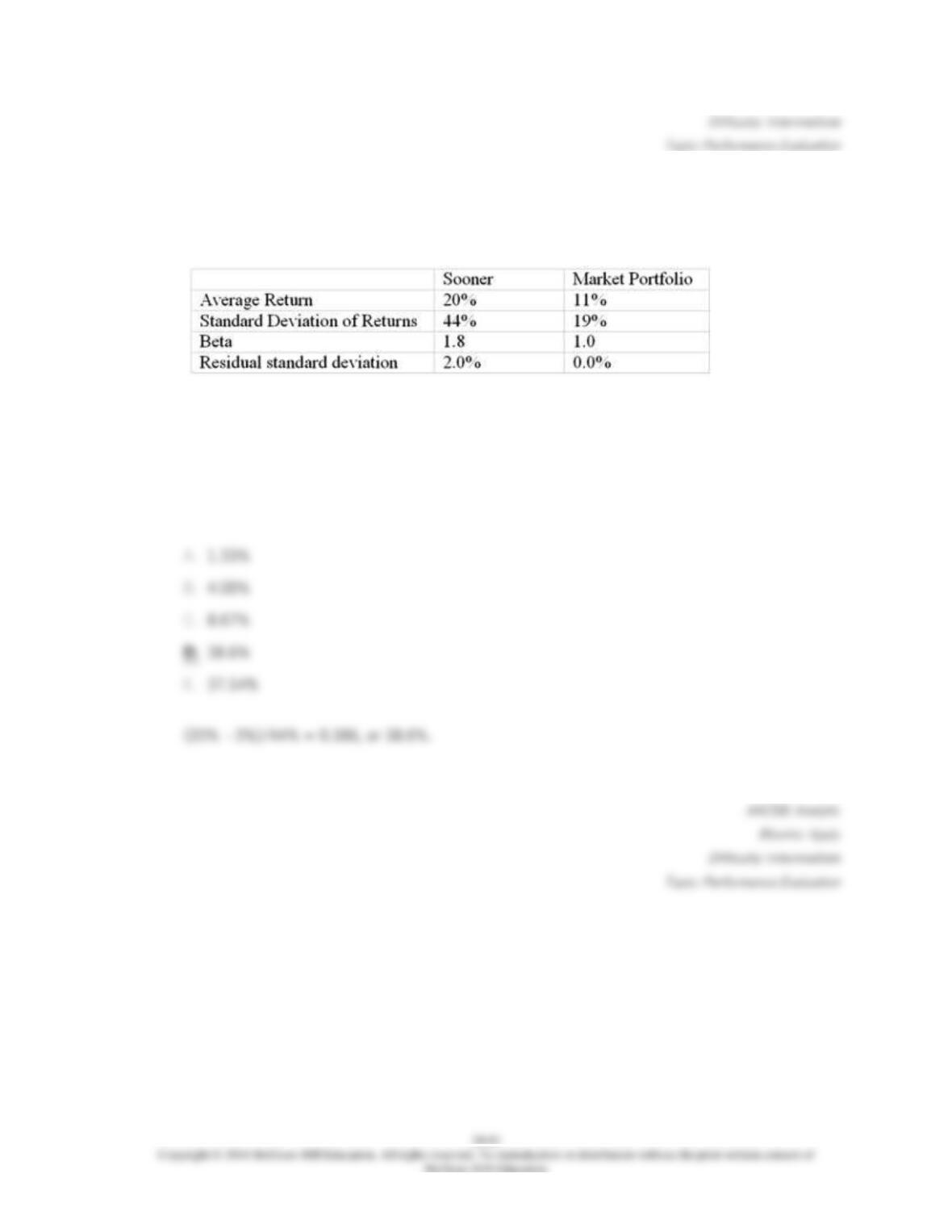
38.
The following data are available relating to the performance of Sooner Stock Fund and the
market portfolio:
The risk-free return during the sample period was 3%.
What is the Sharpe measure of performance evaluation for Sooner Stock Fund?
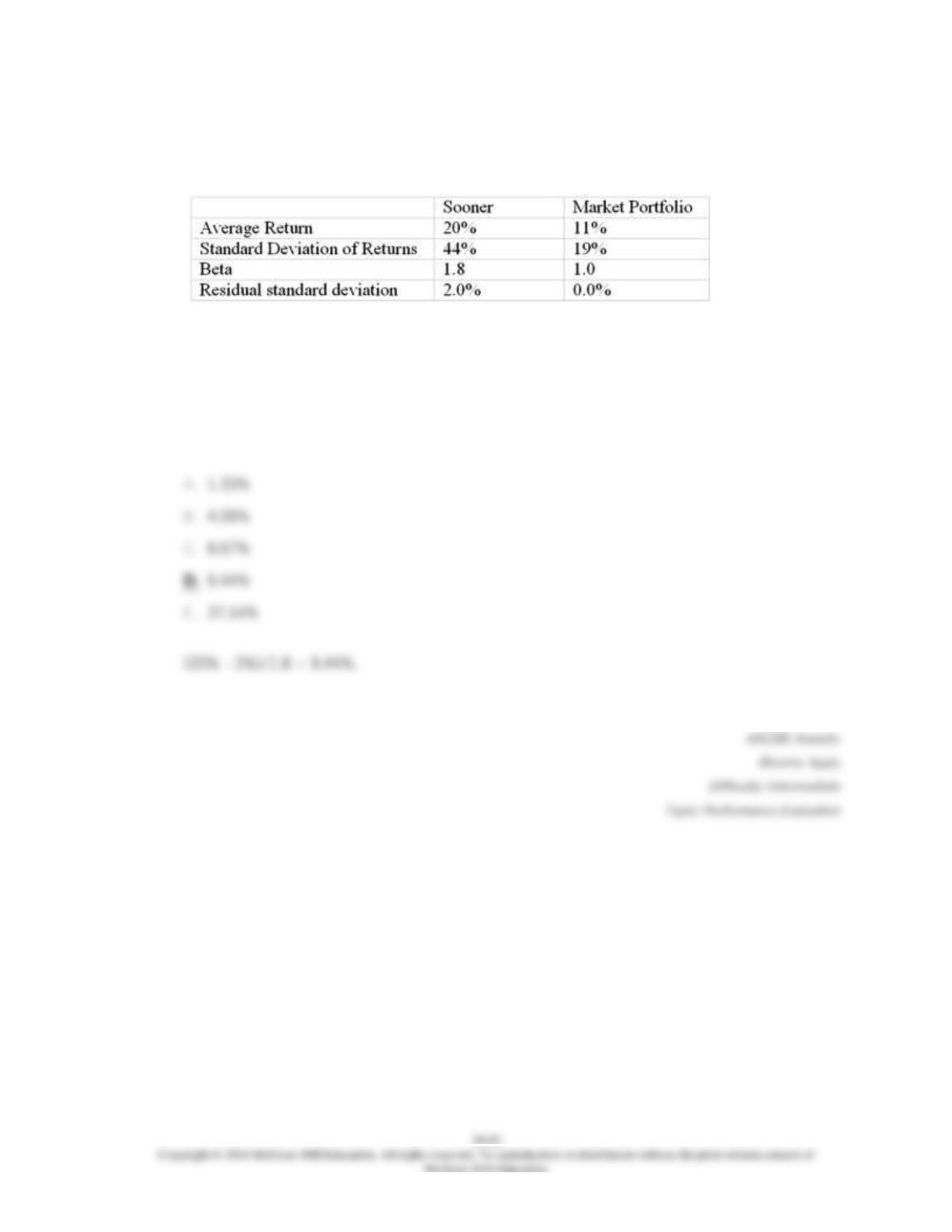
39.
The following data are available relating to the performance of Sooner Stock Fund and the
market portfolio:
The risk-free return during the sample period was 3%.
What is the Treynor measure of performance evaluation for Sooner Stock Fund?
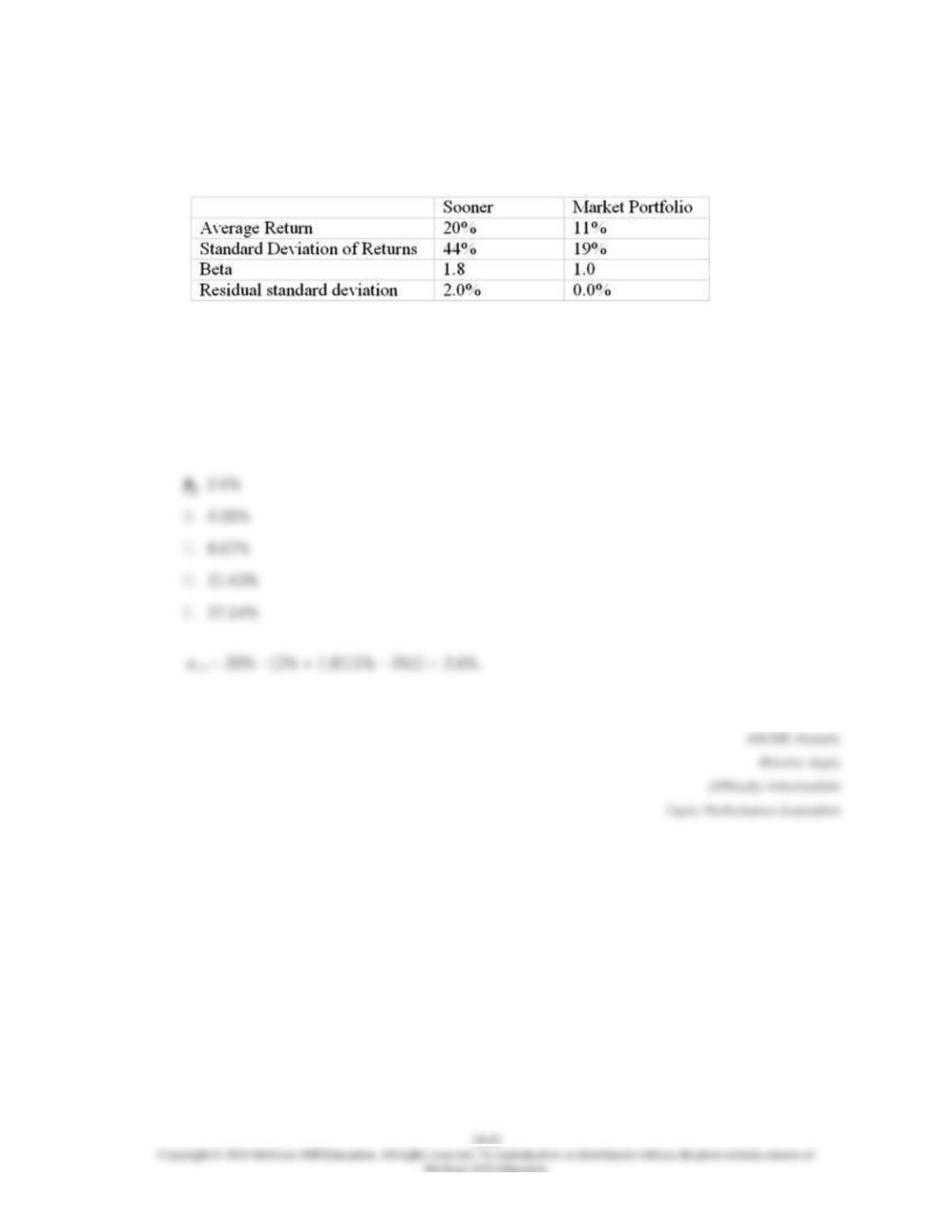
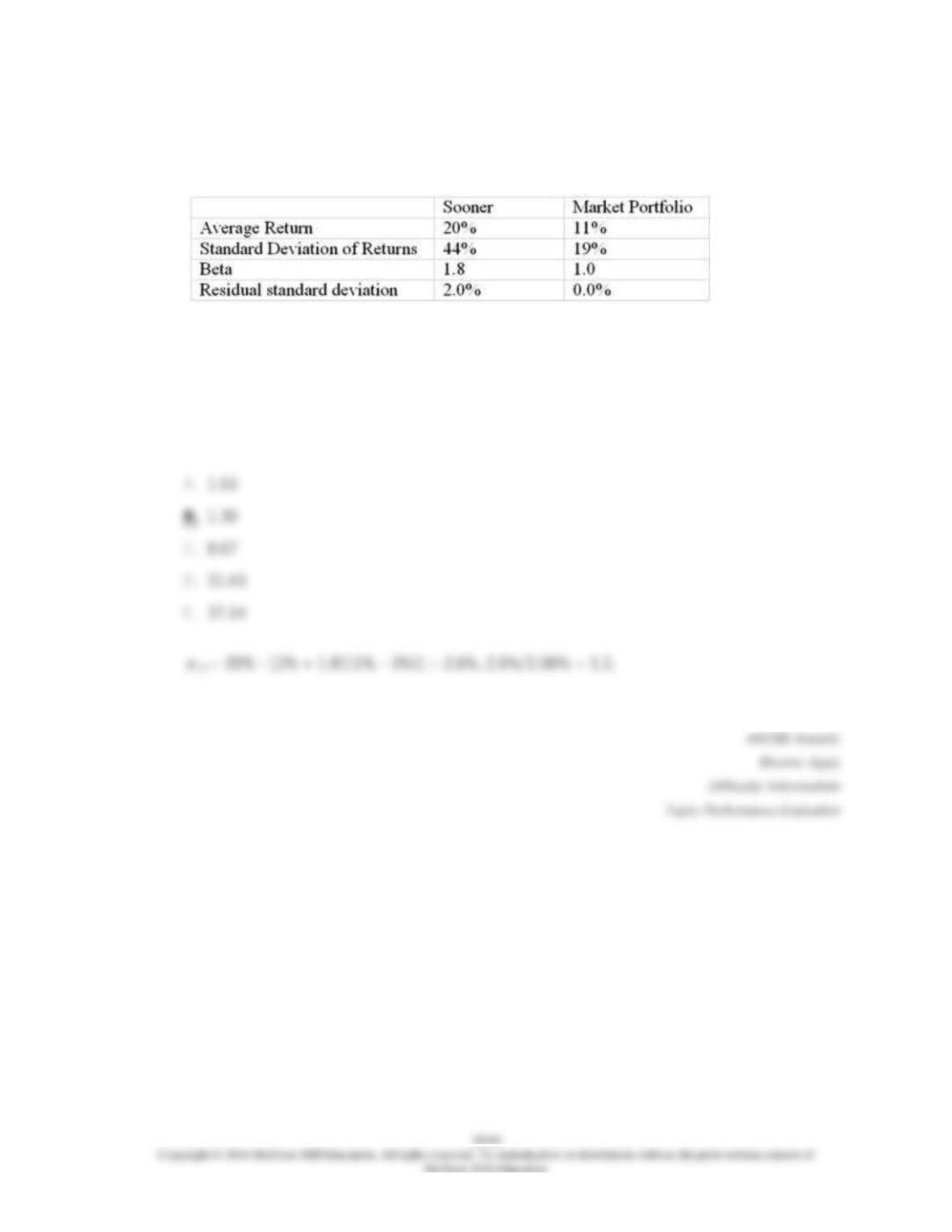
40.
The following data are available relating to the performance of Sooner Stock Fund and the
market portfolio:
The risk-free return during the sample period was 3%.
Calculate the Jensen measure of performance evaluation for Sooner Stock Fund.
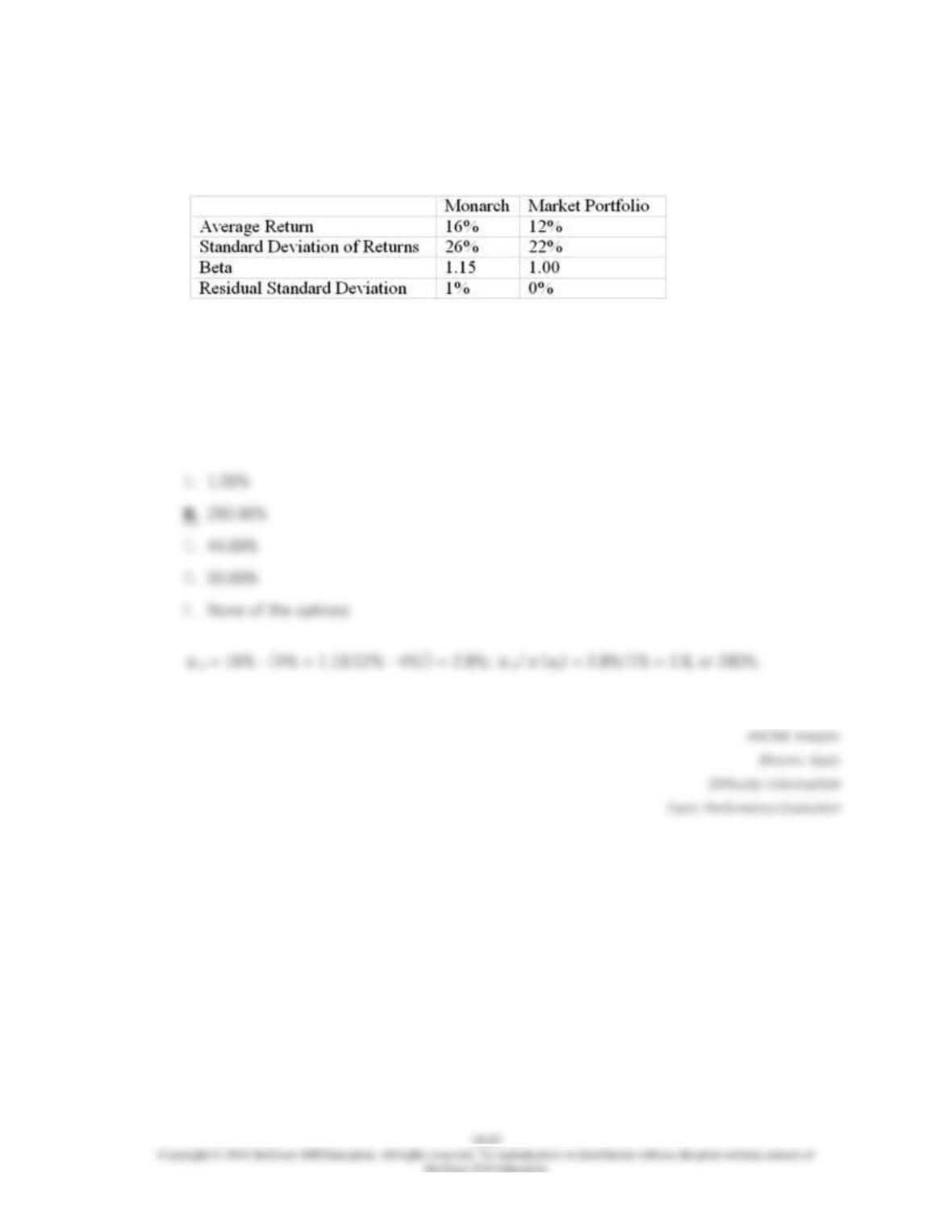
41.
The following data are available relating to the performance of Sooner Stock Fund and the
market portfolio:
The risk-free return during the sample period was 3%.
Calculate the information ratio for Sooner Stock Fund.
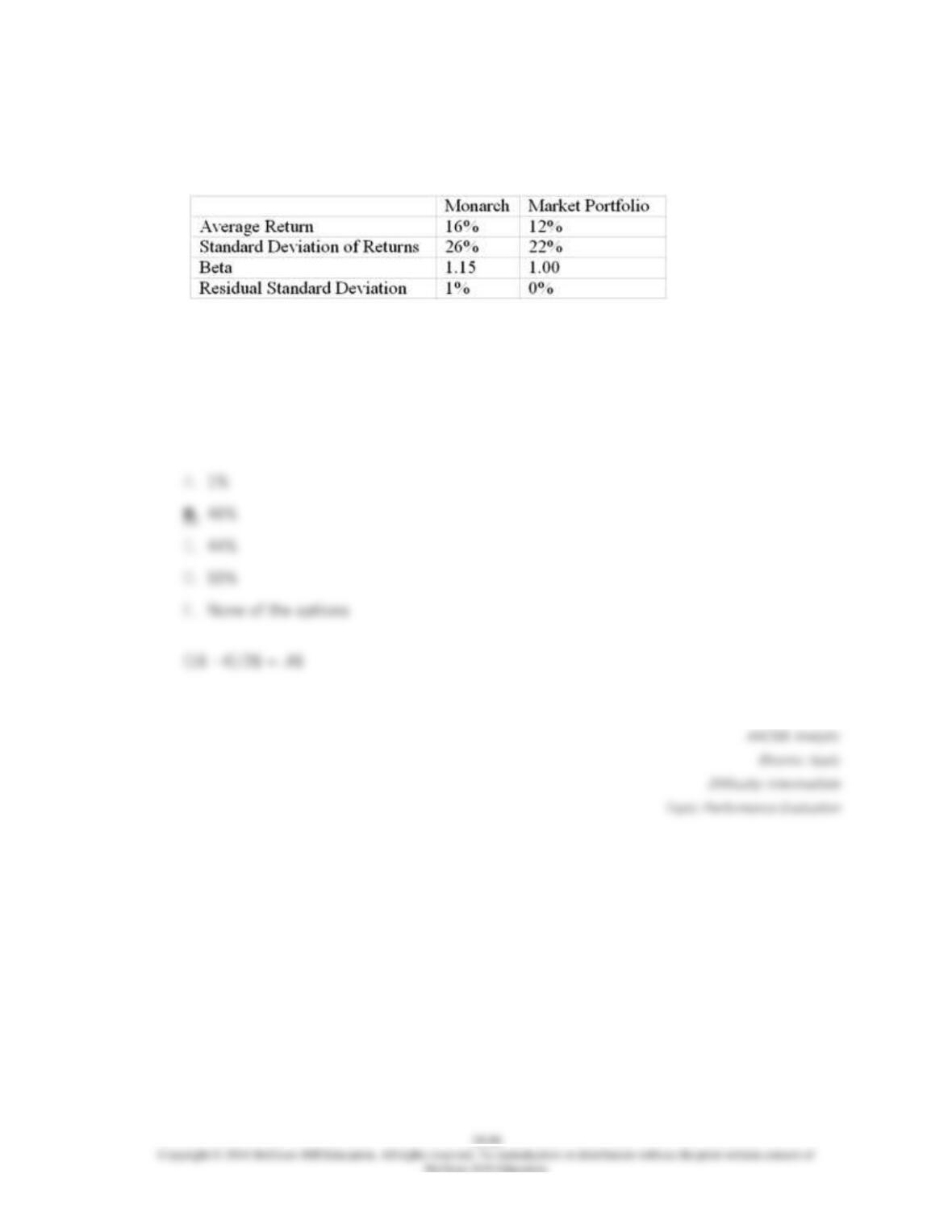
42.
The following data are available relating to the performance of Monarch Stock Fund and
the market portfolio:
The risk-free return during the sample period was 4%.
What is the information ratio measure of performance evaluation for Monarch Stock Fund?
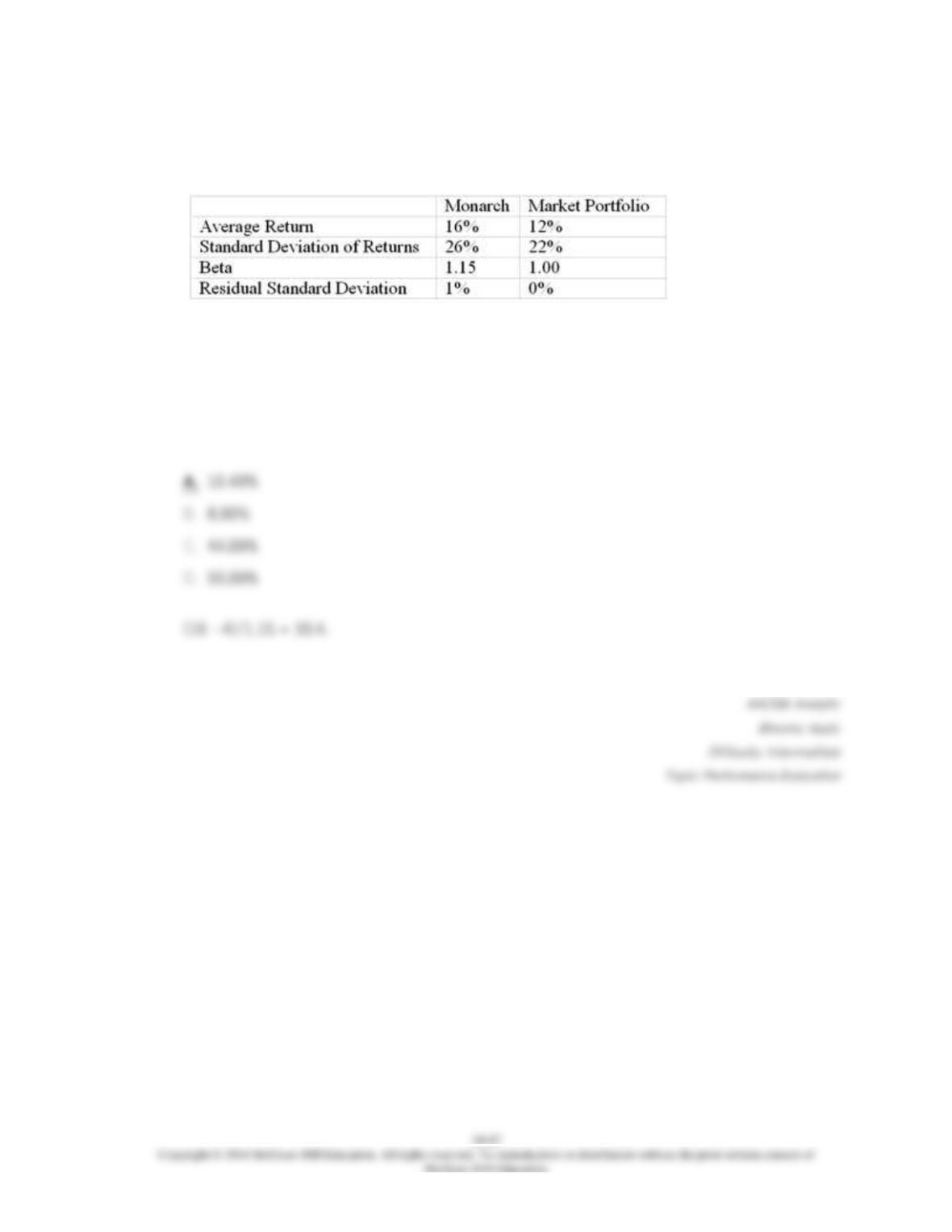
43.
The following data are available relating to the performance of Monarch Stock Fund and
the market portfolio:
The risk-free return during the sample period was 4%.
Calculate Sharpe’s measure of performance for Monarch Stock Fund.
44.
The following data are available relating to the performance of Monarch Stock Fund and
the market portfolio:
The risk-free return during the sample period was 4%.
Calculate Treynor’s measure of performance for Monarch Stock Fund.
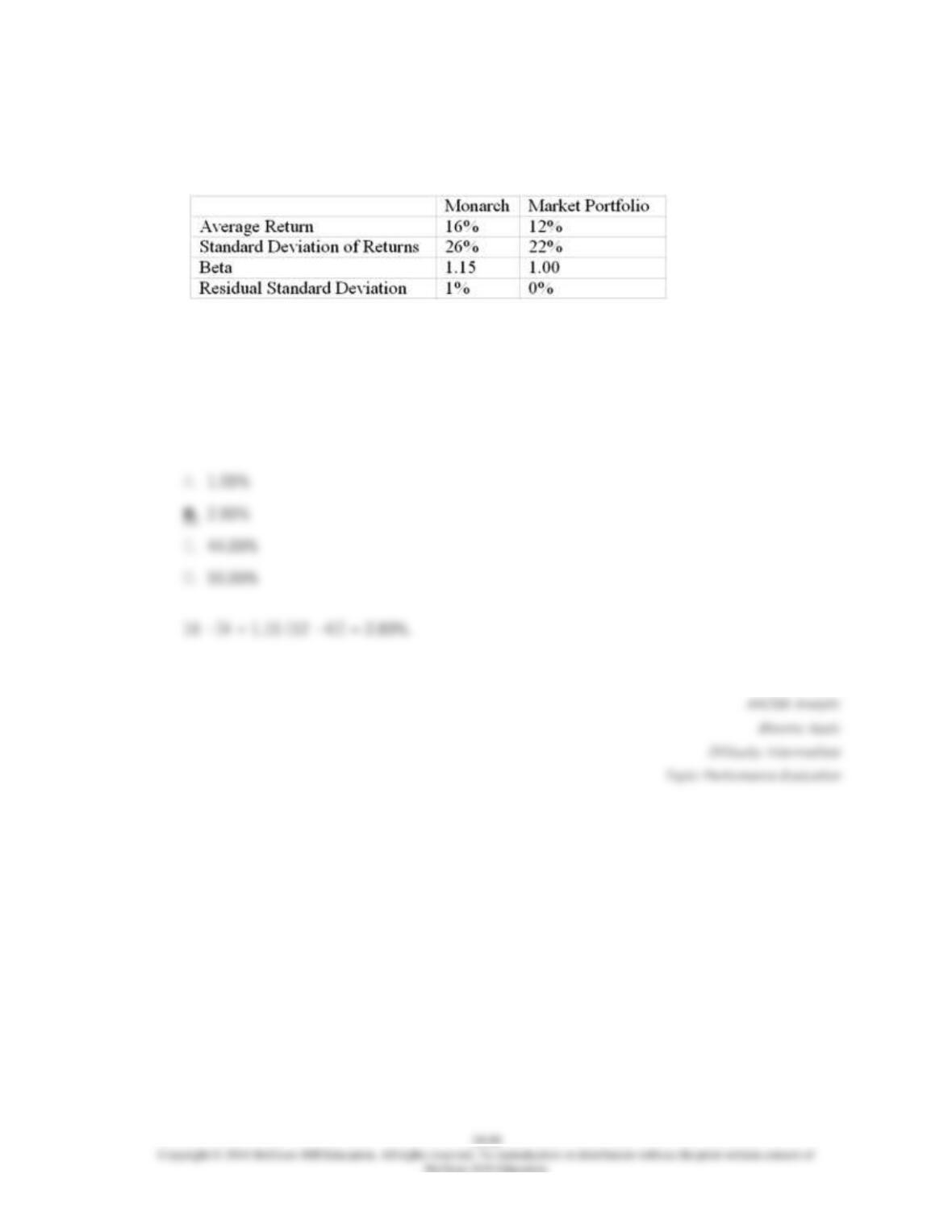
45.
The following data are available relating to the performance of Monarch Stock Fund and
the market portfolio:
The risk-free return during the sample period was 4%.
Calculate Jensen’s measure of performance for Monarch Stock Fund.
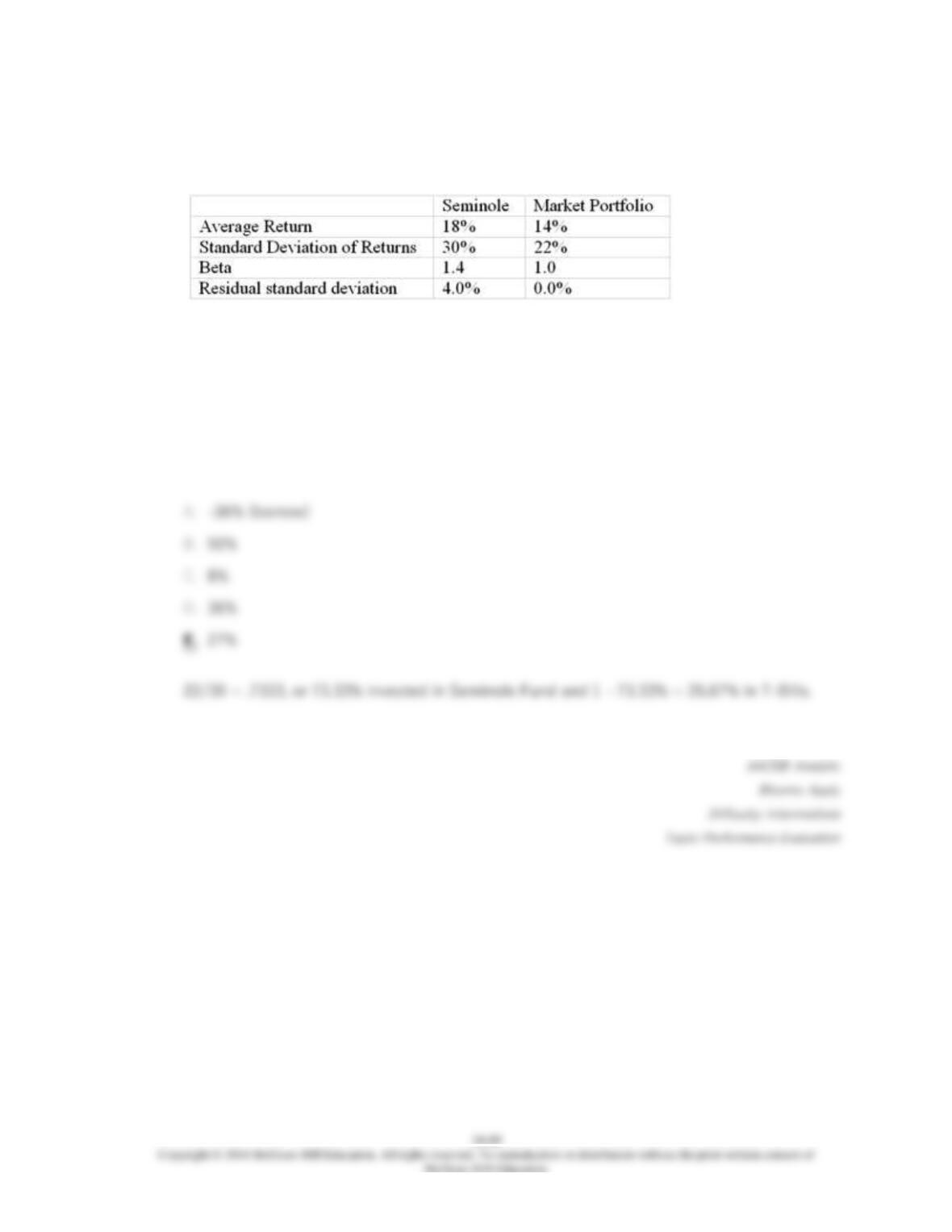
46.
The following data are available relating to the performance of Seminole Fund and the
market portfolio:
The risk-free return during the sample period was 6%.
If you wanted to evaluate the Seminole Fund using the
M
2 measure, what percent of the
adjusted portfolio would need to be invested in T-Bills?
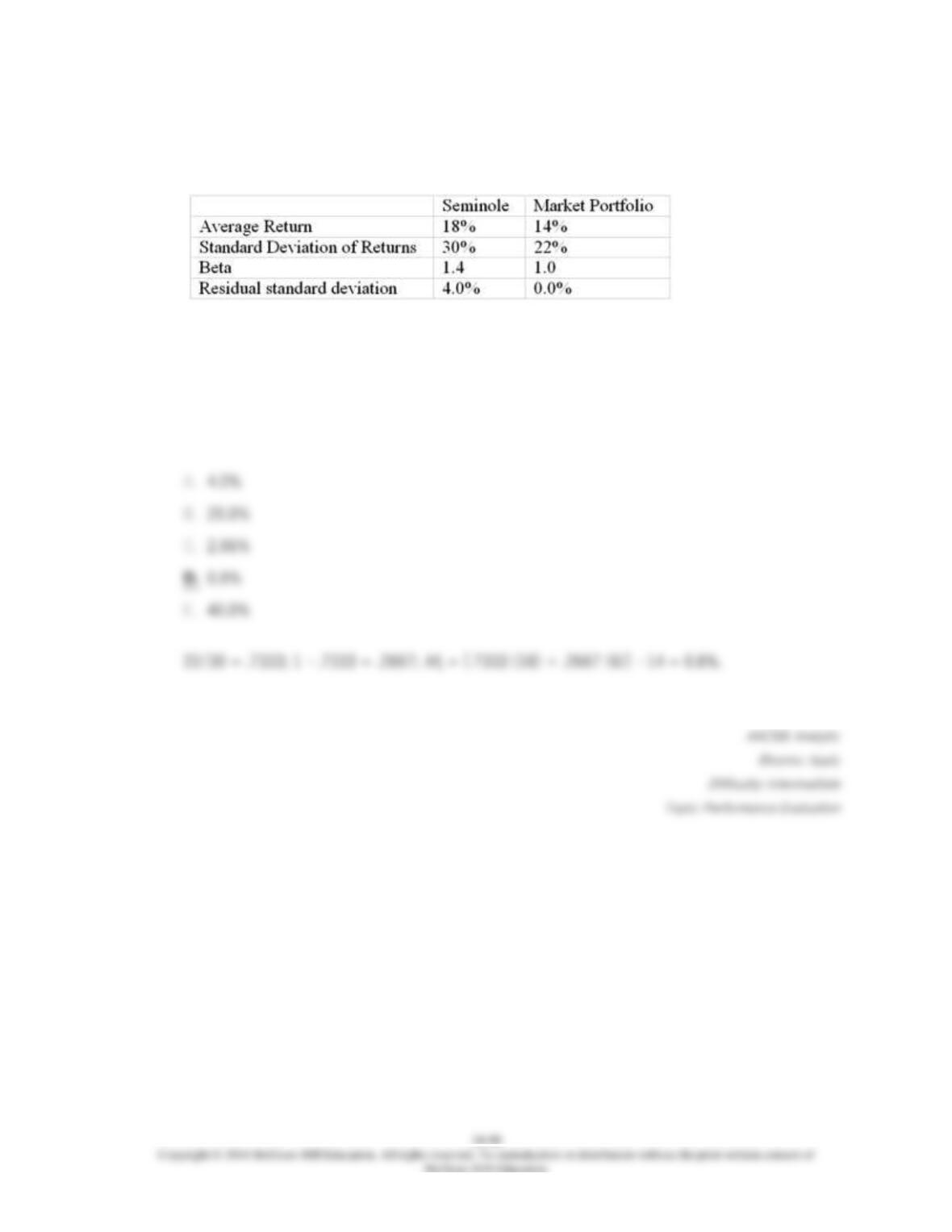
47.
The following data are available relating to the performance of Seminole Fund and the
market portfolio:
The risk-free return during the sample period was 6%.
Calculate the
M
2 measure for the Seminole Fund.
48.
If an investor has a portfolio that has constant proportions in T-bills and the market
portfolio, the portfolio’s characteristic line will plot as a line with ___________; if the
investor can time bull markets, the characteristic line will plot as a line with ___________.