49.
Studies of style analysis have found that ________ of fund returns can be explained by
asset allocation alone.
50.
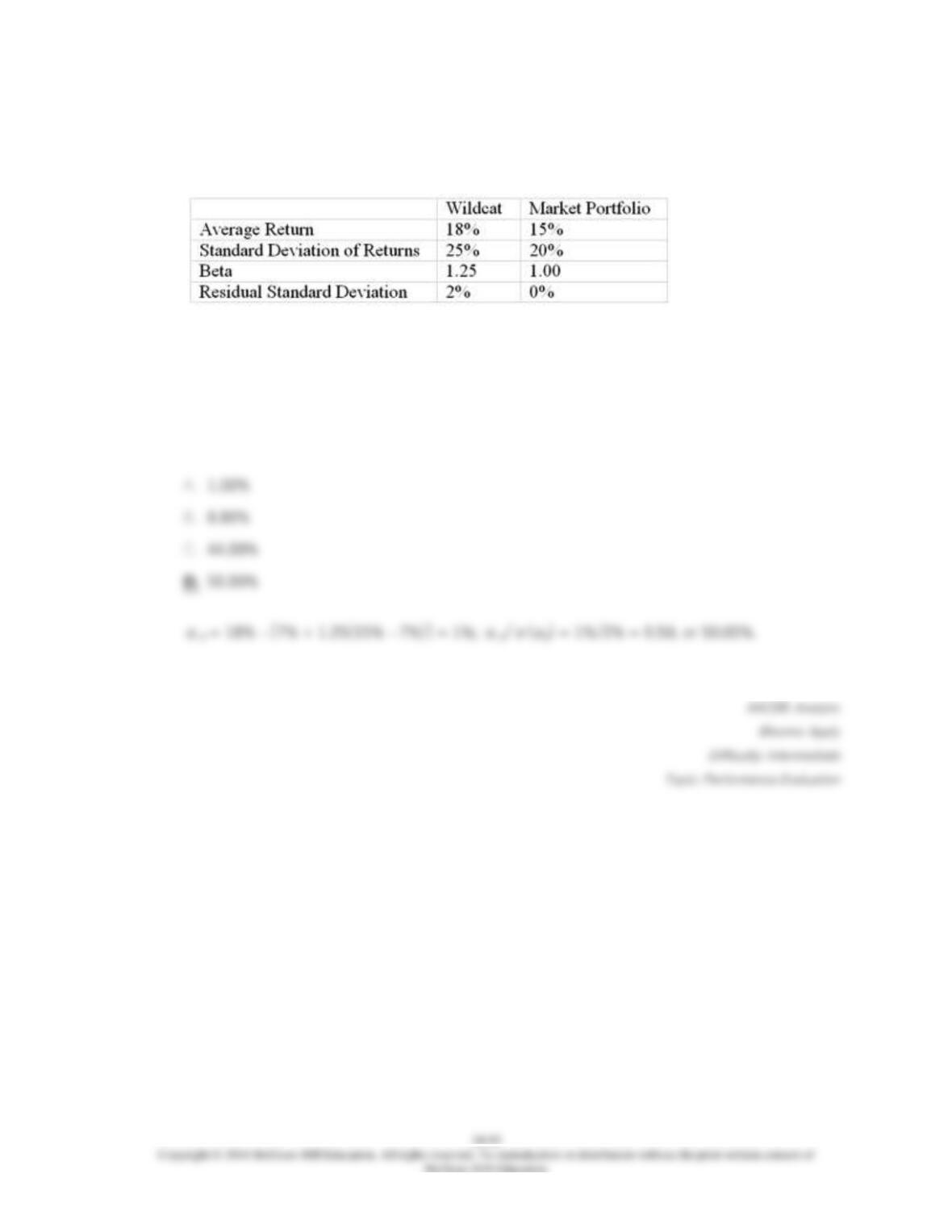
The following data are available relating to the performance of Wildcat Fund and the
market portfolio:
The risk-free return during the sample period was 7%.
What is the information ratio measure of performance evaluation for Wildcat Fund?
51.
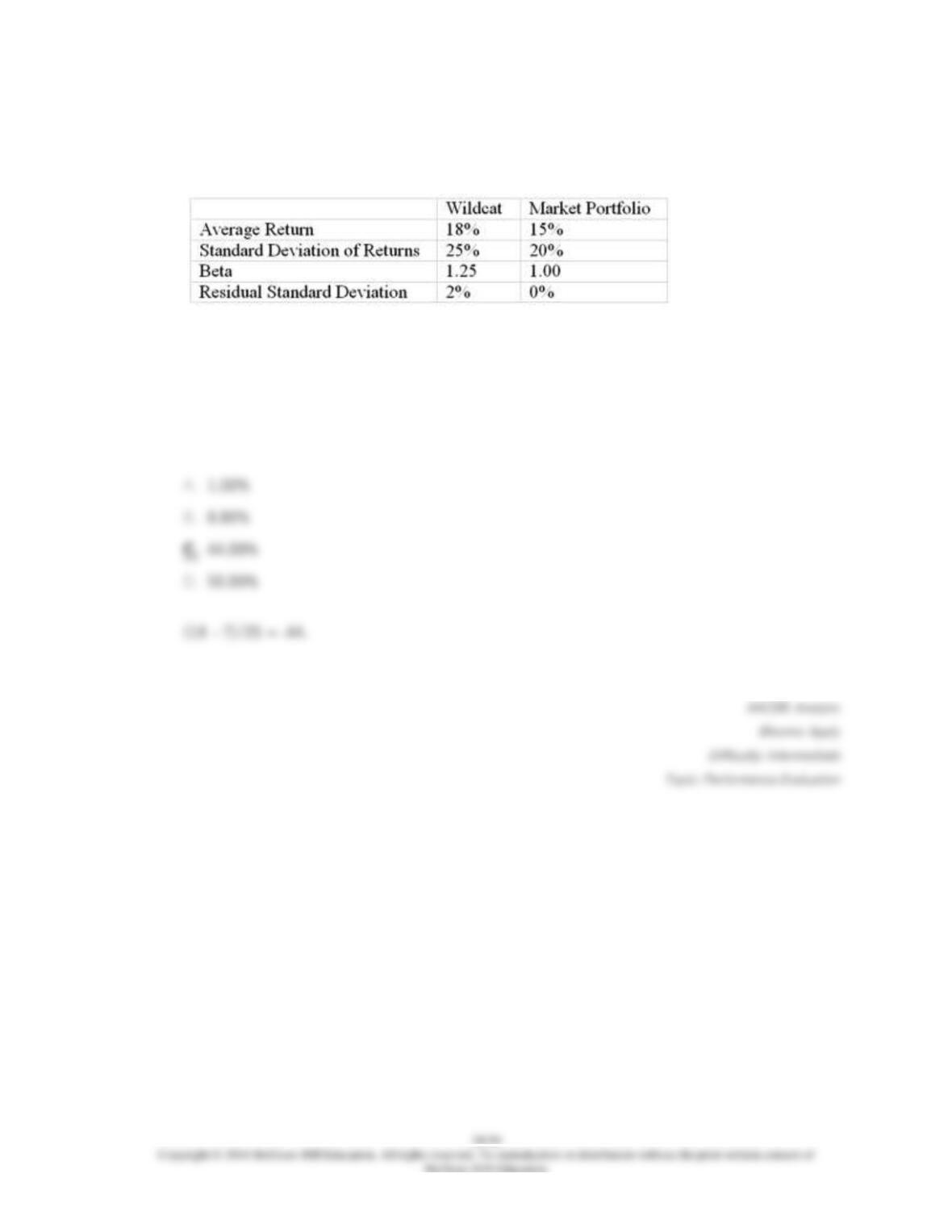
The following data are available relating to the performance of Wildcat Fund and the
market portfolio:
The risk-free return during the sample period was 7%.
Calculate Sharpe’s measure of performance for Wildcat Fund.
52.
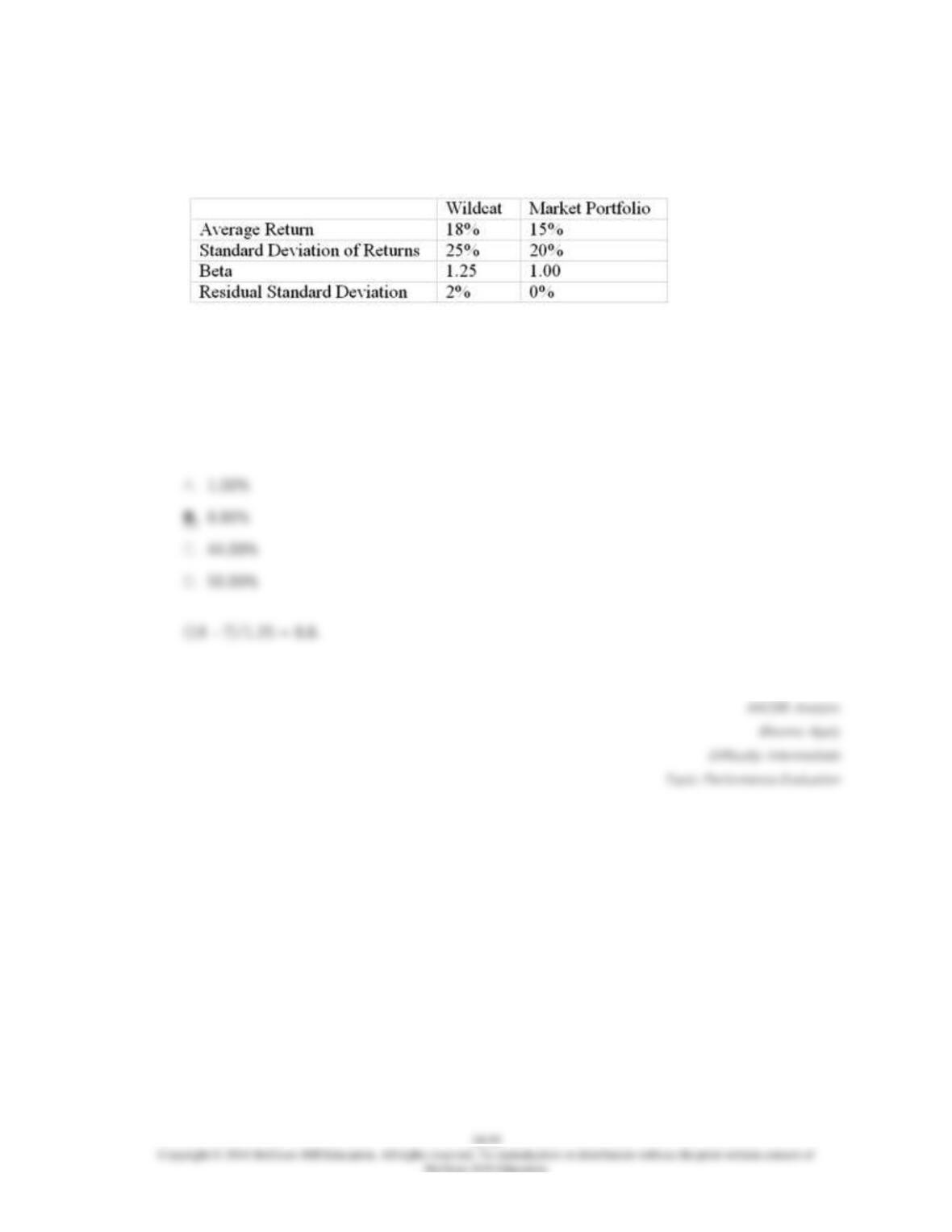
The following data are available relating to the performance of Wildcat Fund and the
market portfolio:
The risk-free return during the sample period was 7%.
Calculate Treynor’s measure of performance for Wildcat Fund.
24–96
53.
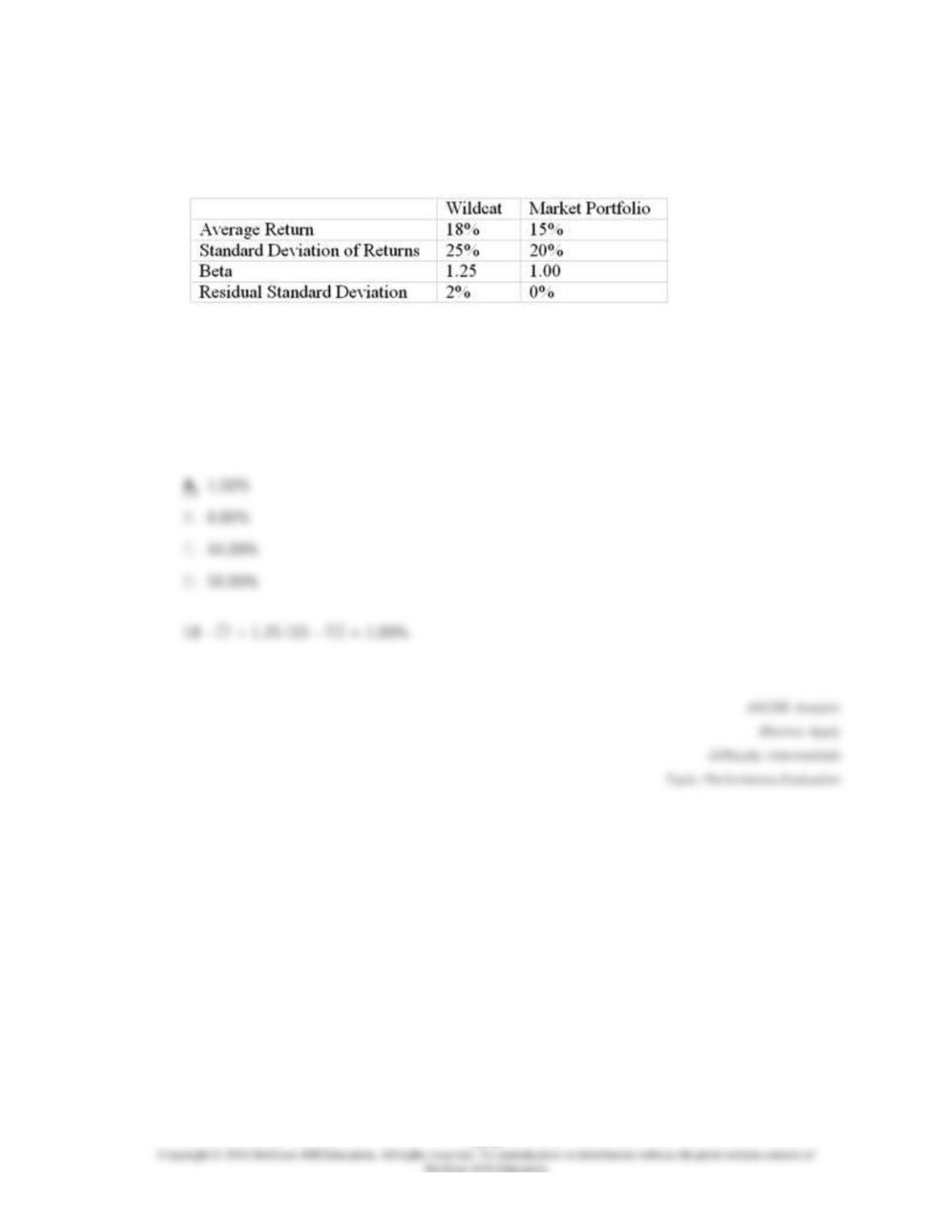
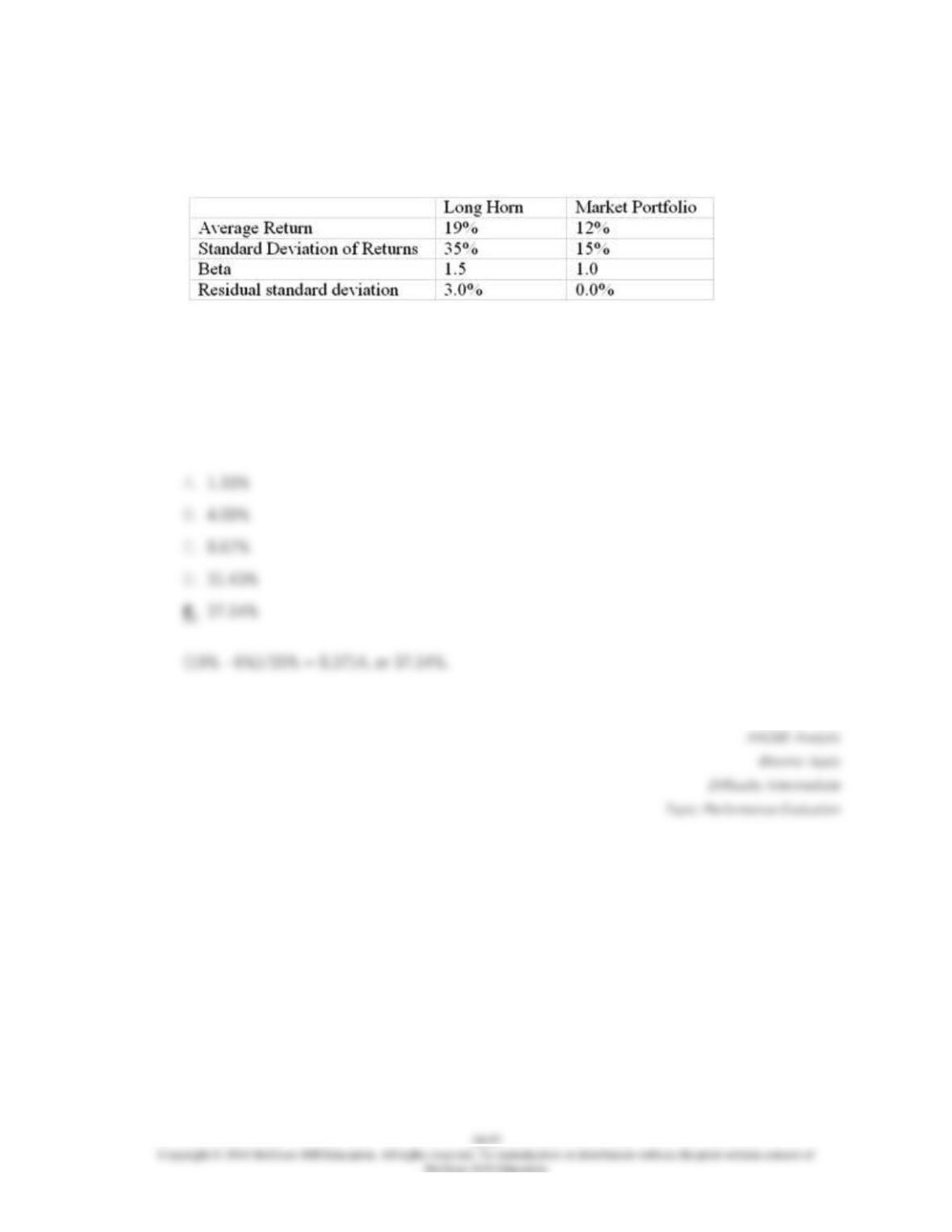
The following data are available relating to the performance of Wildcat Fund and the
market portfolio:
The risk-free return during the sample period was 7%.
Calculate Jensen’s measure of performance for Wildcat Fund.
54.
The following data are available relating to the performance of Long Horn Stock Fund and
the market portfolio:
The risk-free return during the sample period was 6%.
What is the Sharpe measure of performance evaluation for Long Horn Stock Fund?
55.
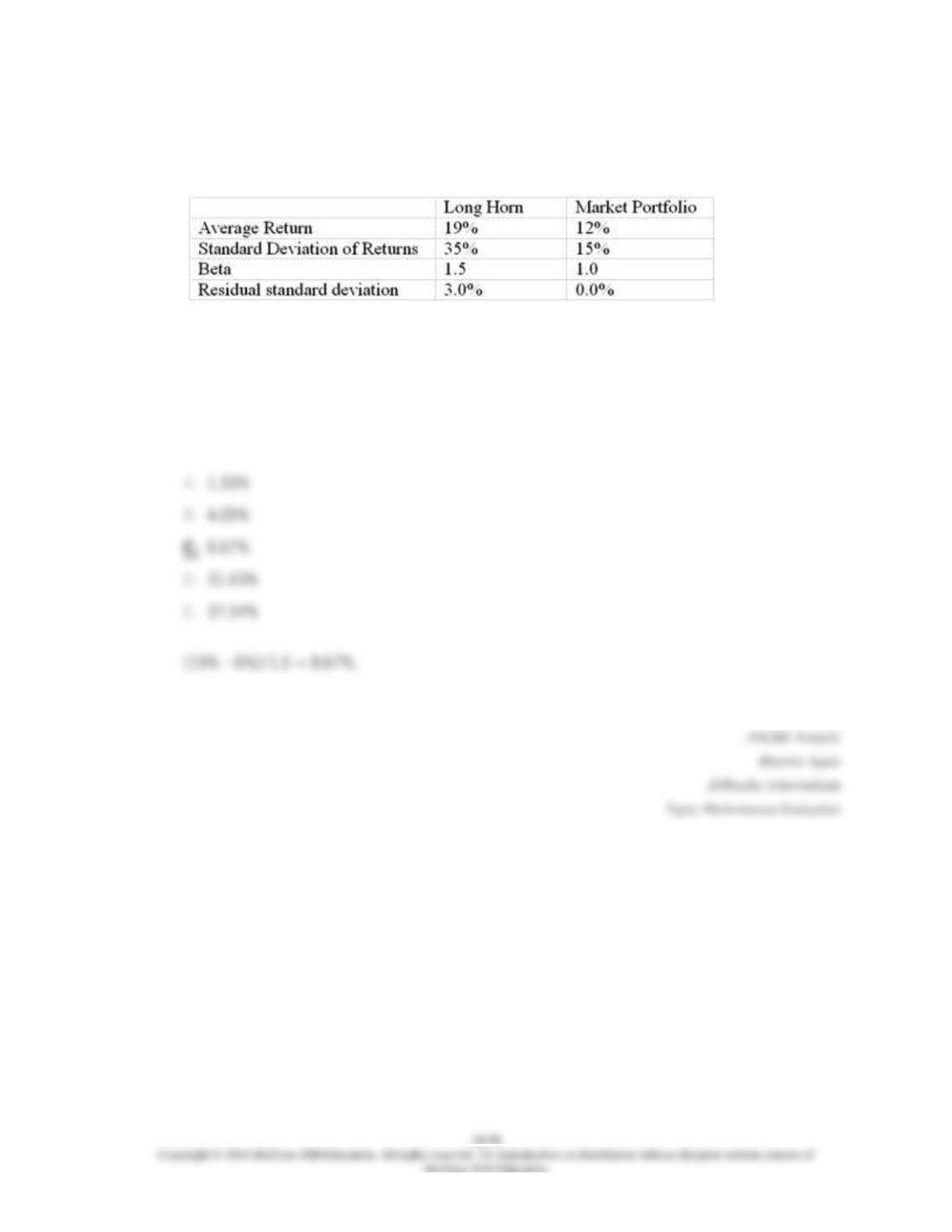
The following data are available relating to the performance of Long Horn Stock Fund and
the market portfolio:
The risk-free return during the sample period was 6%.
What is the Treynor measure of performance evaluation for Long Horn Stock Fund?
56.
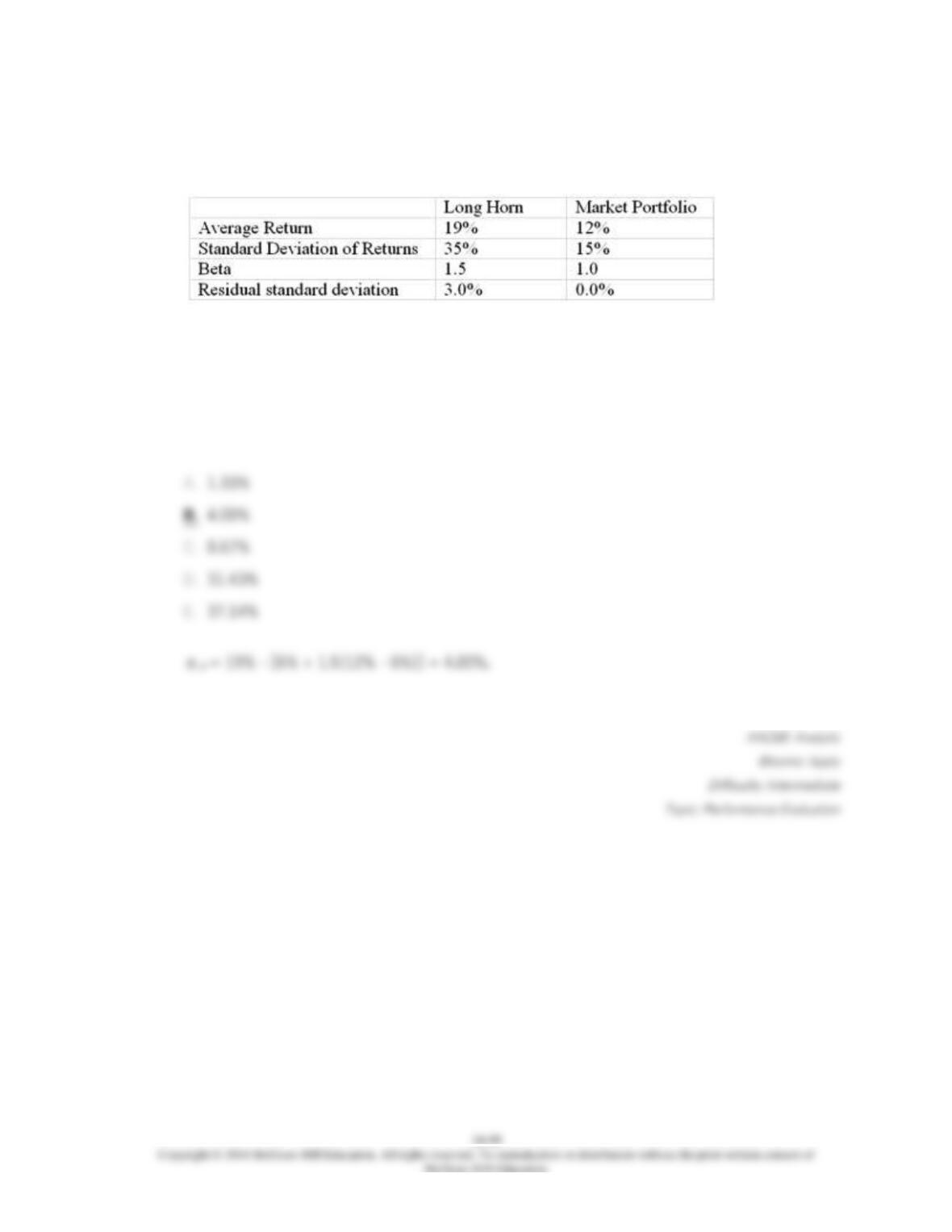
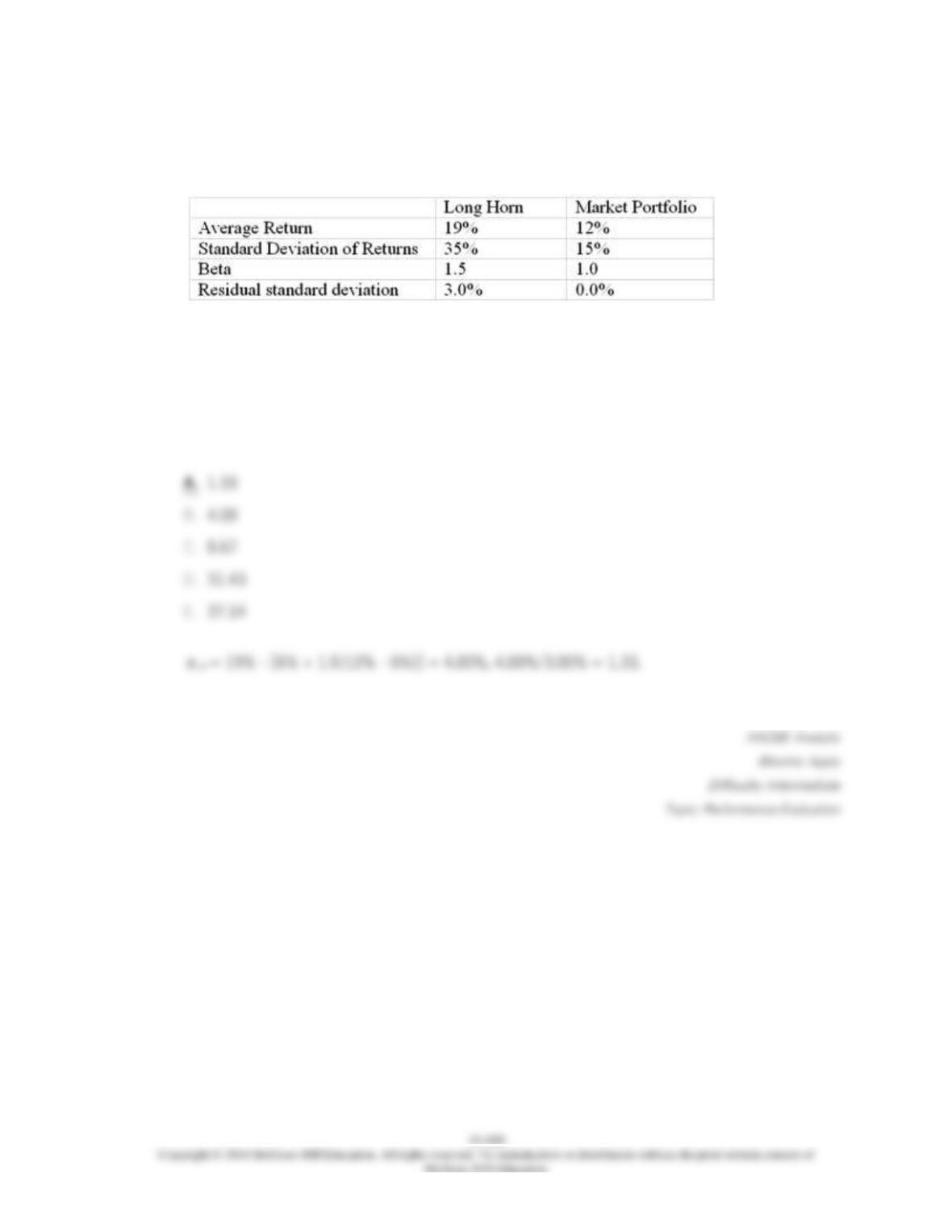
The following data are available relating to the performance of Long Horn Stock Fund and
the market portfolio:
The risk-free return during the sample period was 6%.
Calculate the Jensen measure of performance evaluation for Long Horn Stock Fund.
57.
The following data are available relating to the performance of Long Horn Stock Fund and
the market portfolio:
The risk-free return during the sample period was 6%.
Calculate the information ratio for Long Horn Stock Fund.
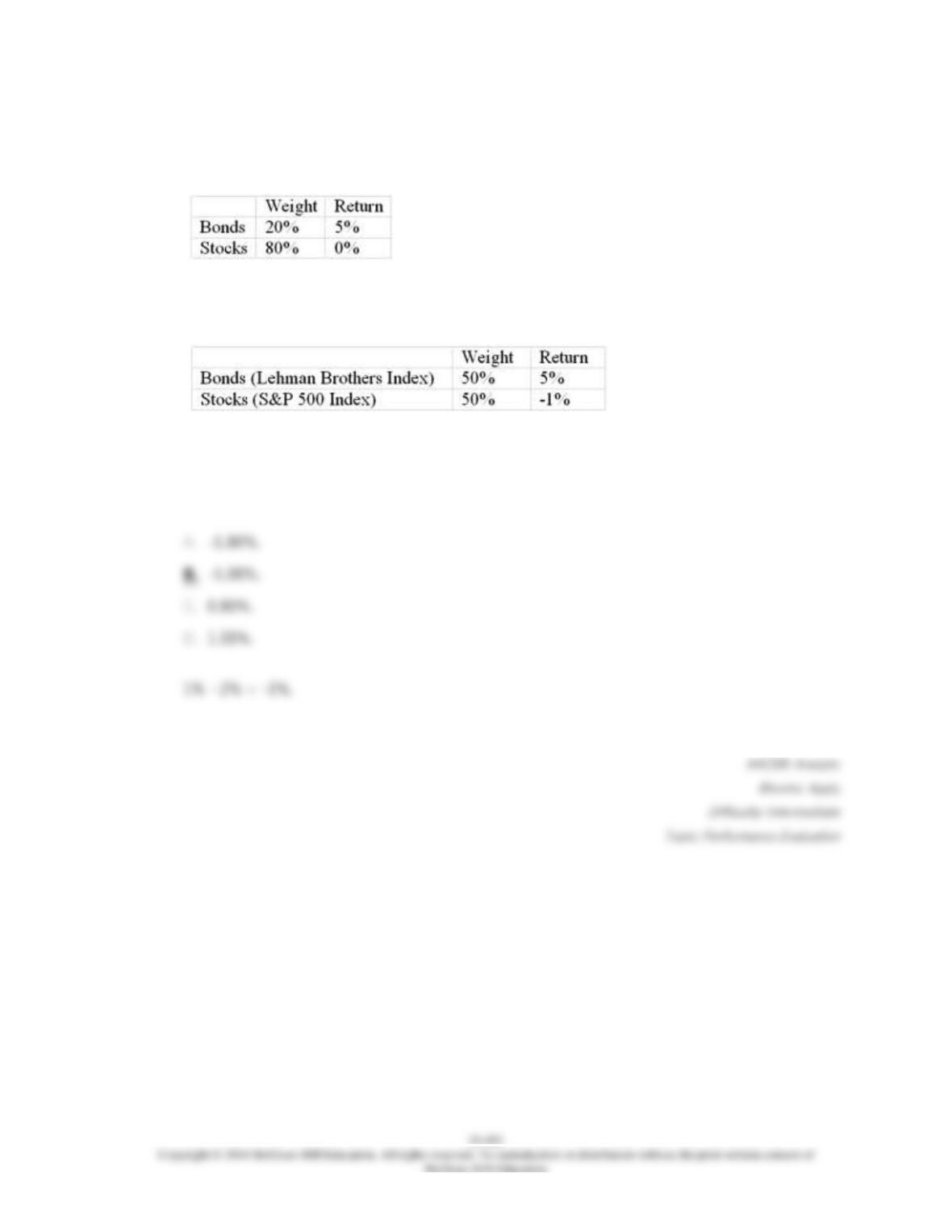
58.
In a particular year, Razorback Mutual Fund earned a return of 1% by making the following
investments in asset classes:
The return on a bogey portfolio was 2%, calculated from the following information.
The total excess return on the Razorback Fund’s managed portfolio was
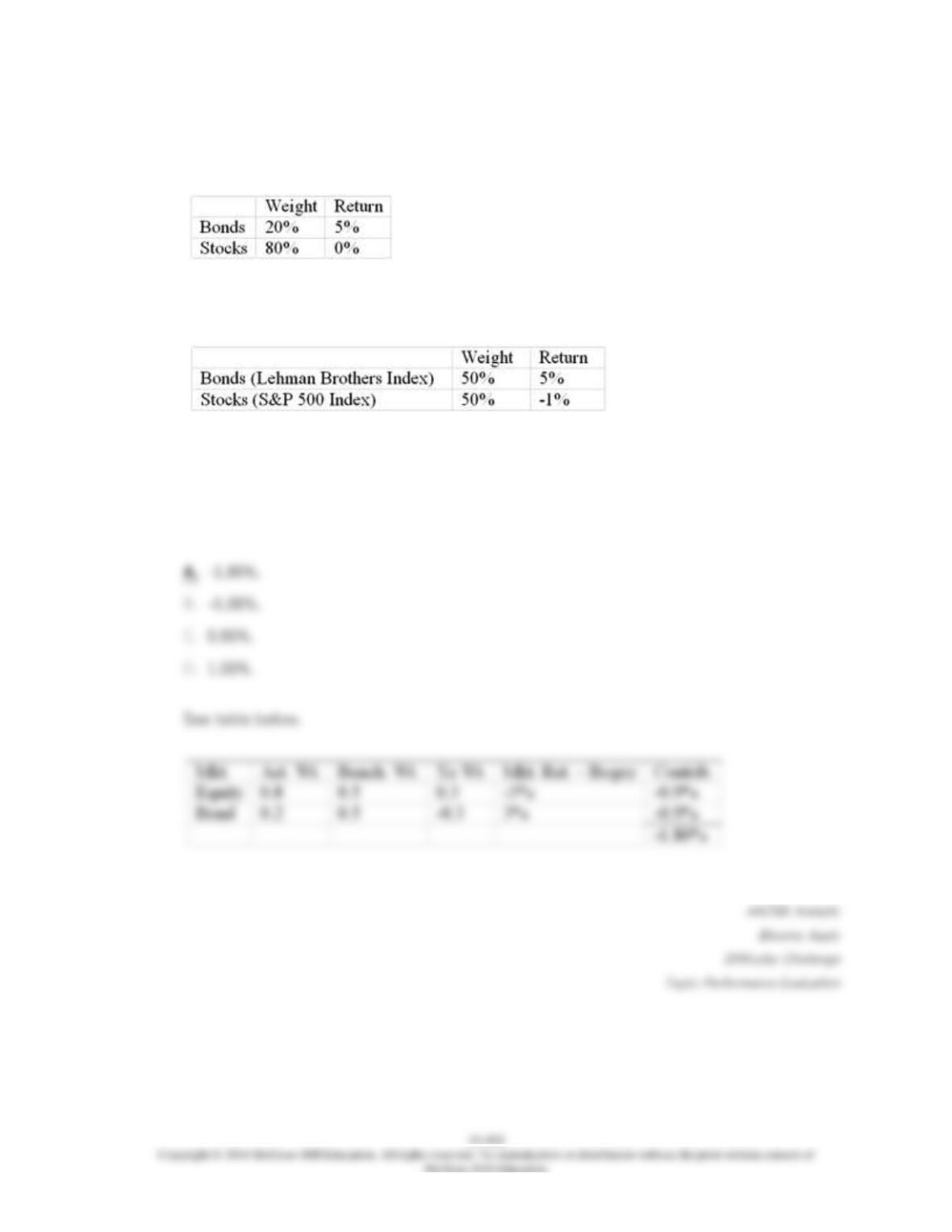
59.
In a particular year, Razorback Mutual Fund earned a return of 1% by making the following
investments in asset classes:
The return on a bogey portfolio was 2%, calculated from the following information.
The contribution of asset allocation across markets to the Razorback Fund’s total excess
return was
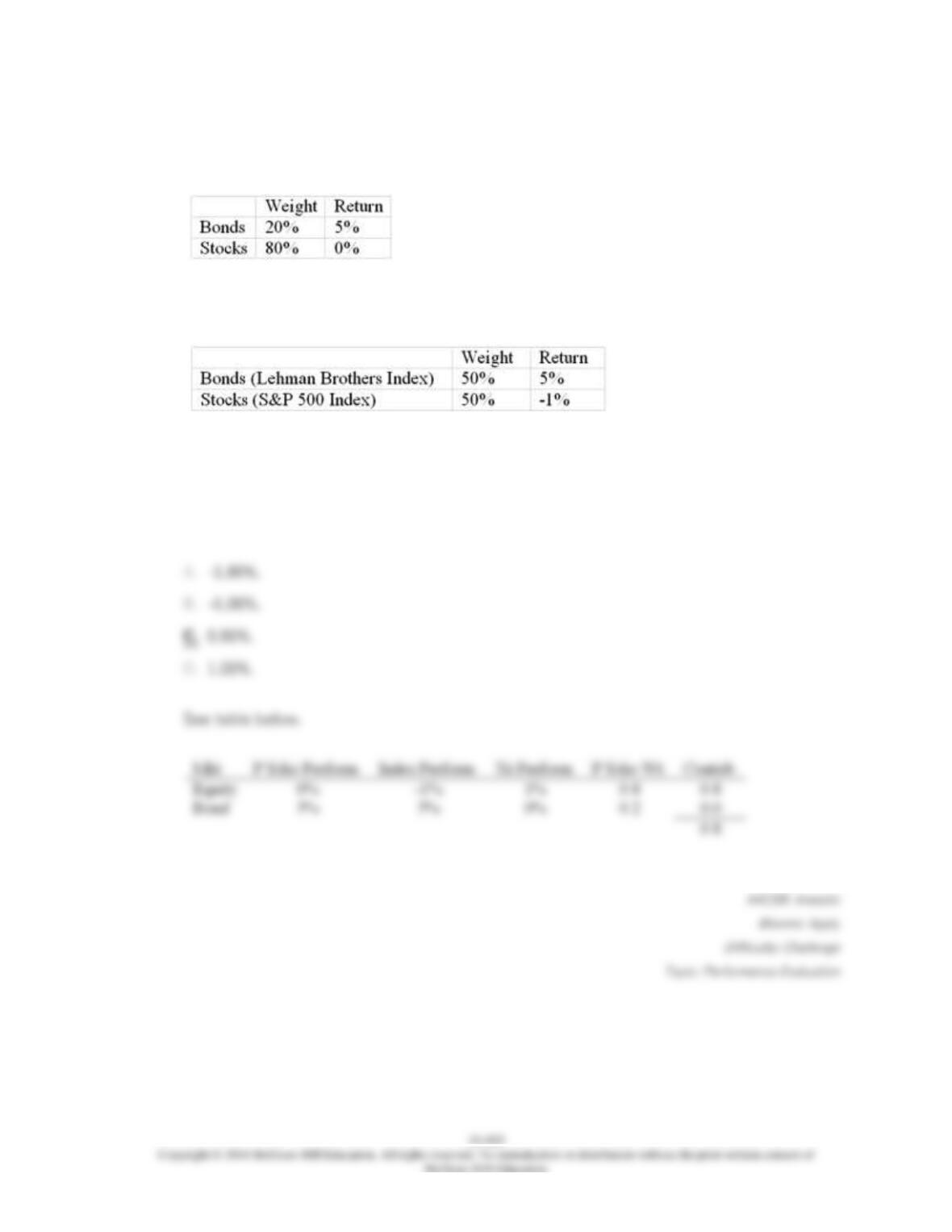
60.
In a particular year, Razorback Mutual Fund earned a return of 1% by making the following
investments in asset classes:
The return on a bogey portfolio was 2%, calculated from the following information.
The contribution of selection within markets to the Razorback Fund’s total excess return
was
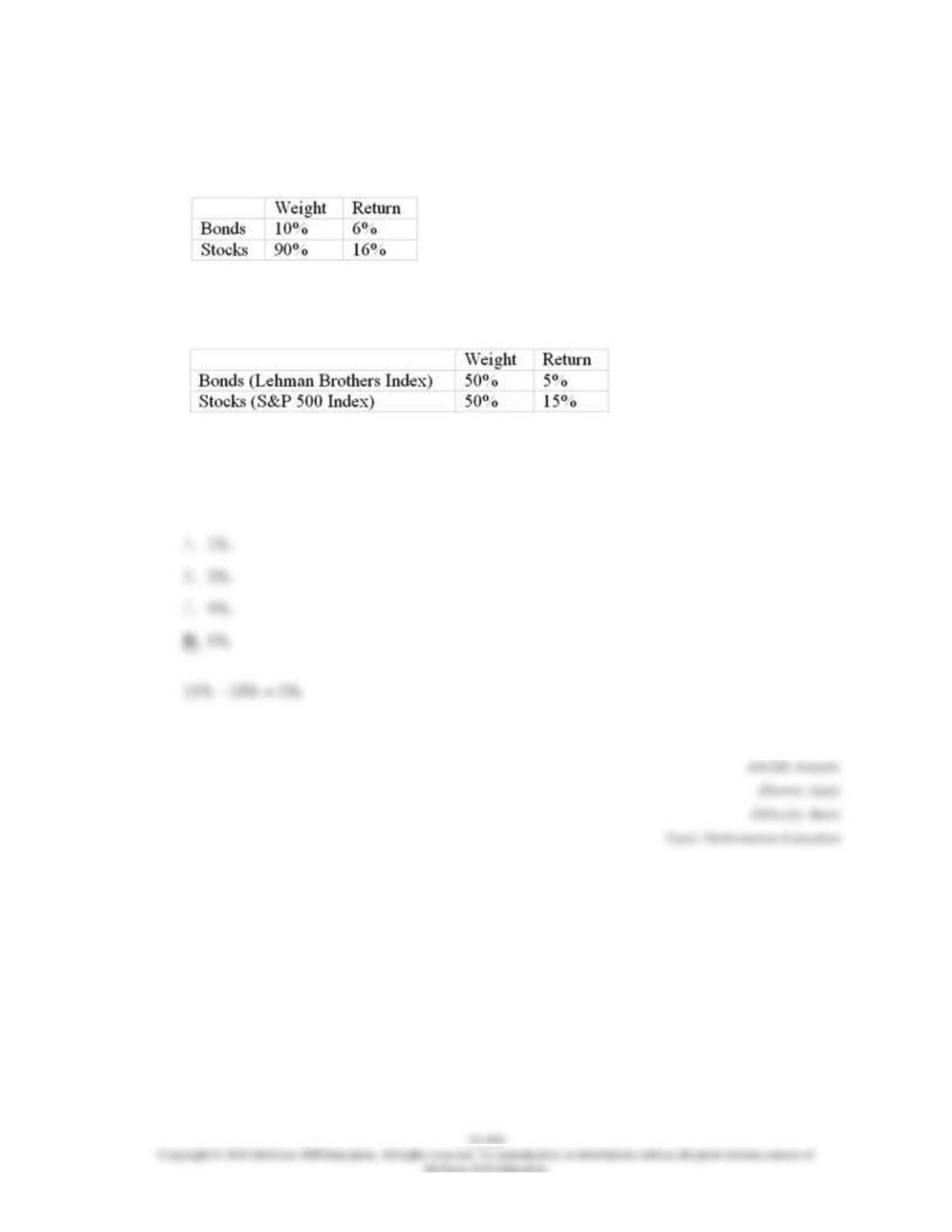
61.
In a particular year, Aggie Mutual Fund earned a return of 15% by making the following
investments in the following asset classes:
The return on a bogey portfolio was 10%, calculated as follows:
The total excess return on the Aggie managed portfolio was
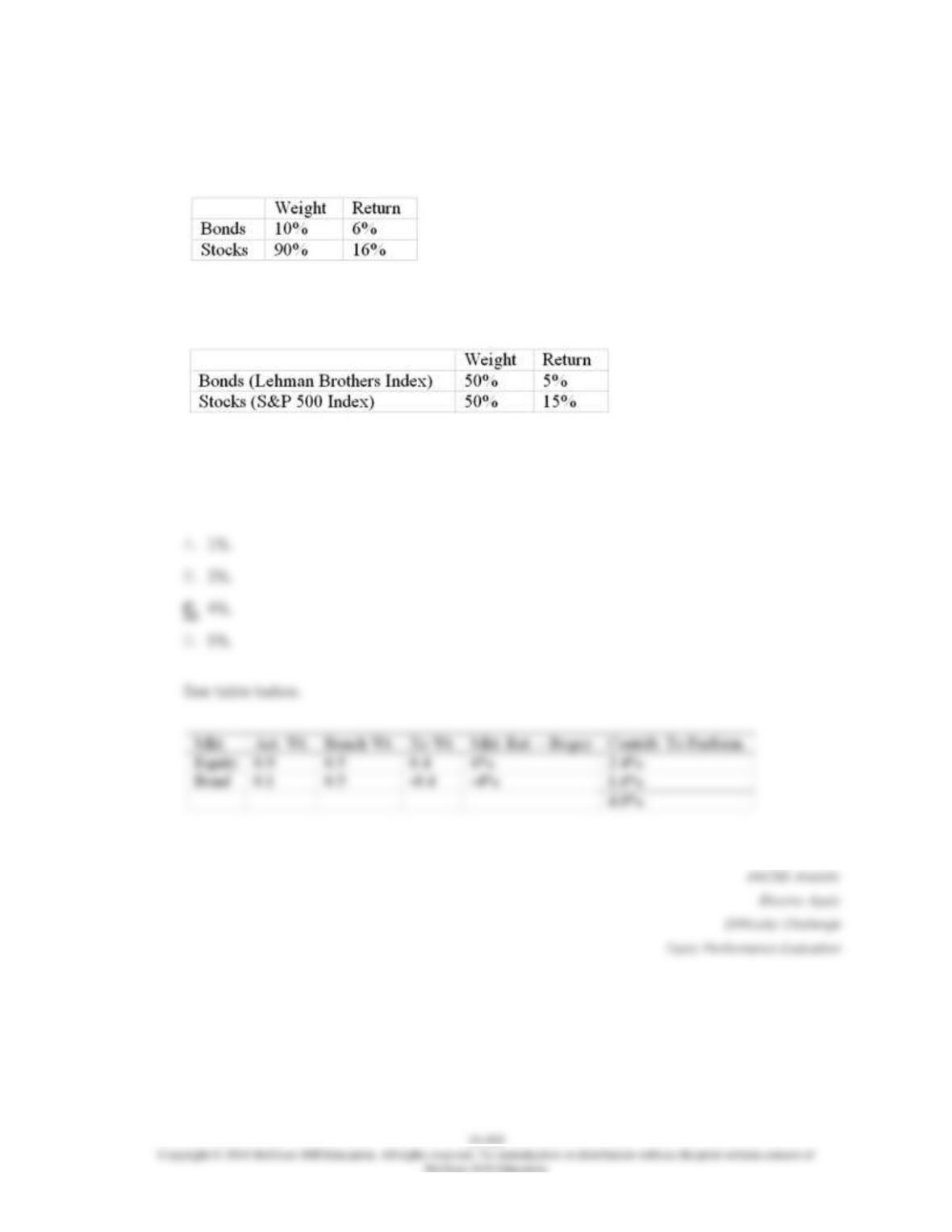
62.
In a particular year, Aggie Mutual Fund earned a return of 15% by making the following
investments in the following asset classes:
The return on a bogey portfolio was 10%, calculated as follows:
The contribution of asset allocation across markets to the total excess return was
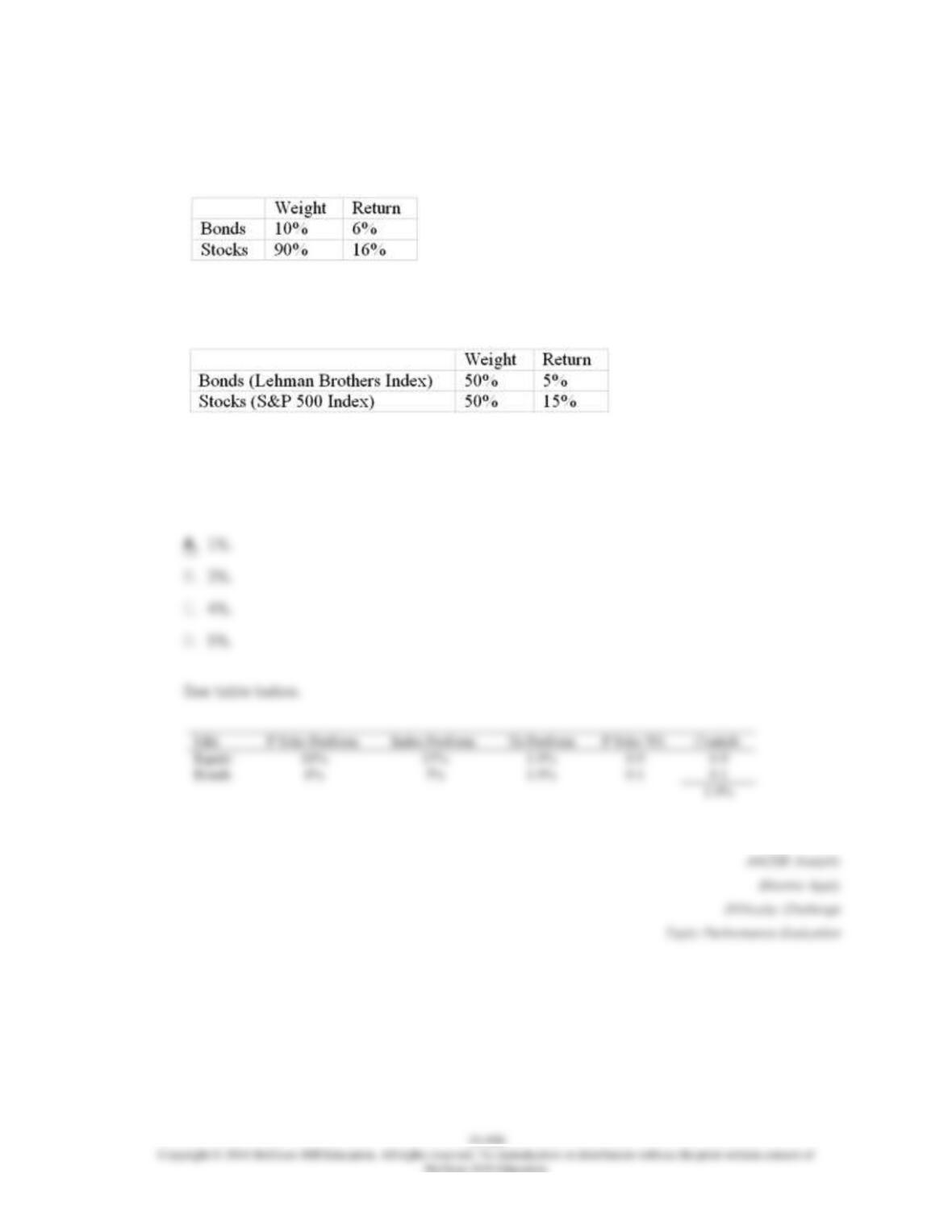
63.
In a particular year, Aggie Mutual Fund earned a return of 15% by making the following
investments in the following asset classes:
The return on a bogey portfolio was 10%, calculated as follows:
The contribution of selection within markets to total excess return was

64.
In measuring the comparative performance of different fund managers, the preferred
method of calculating rate of return is