
Chapter 24 – Portfolio Performance Evaluation
24–21
39. What is the Treynor measure of performance evaluation for Sooner Stock Fund?
Difficulty: Moderate
40. Calculate the Jensen measure of performance evaluation for Sooner Stock Fund.
Difficulty: Moderate
41. Calculate the information ratio for Sooner Stock Fund.
Difficulty: Moderate

24–22
42. What is the information ratio measure of performance evaluation for Monarch Stock
Fund?
Difficulty: Moderate
43. Calculate Sharpe’s measure of performance for Monarch Stock Fund.
Difficulty: Moderate
24–23
44. Calculate Treynor’s measure of performance for Monarch Stock Fund.
Difficulty: Moderate
45. Calculate Jensen’s measure of performance for Monarch Stock Fund.
Difficulty: Moderate
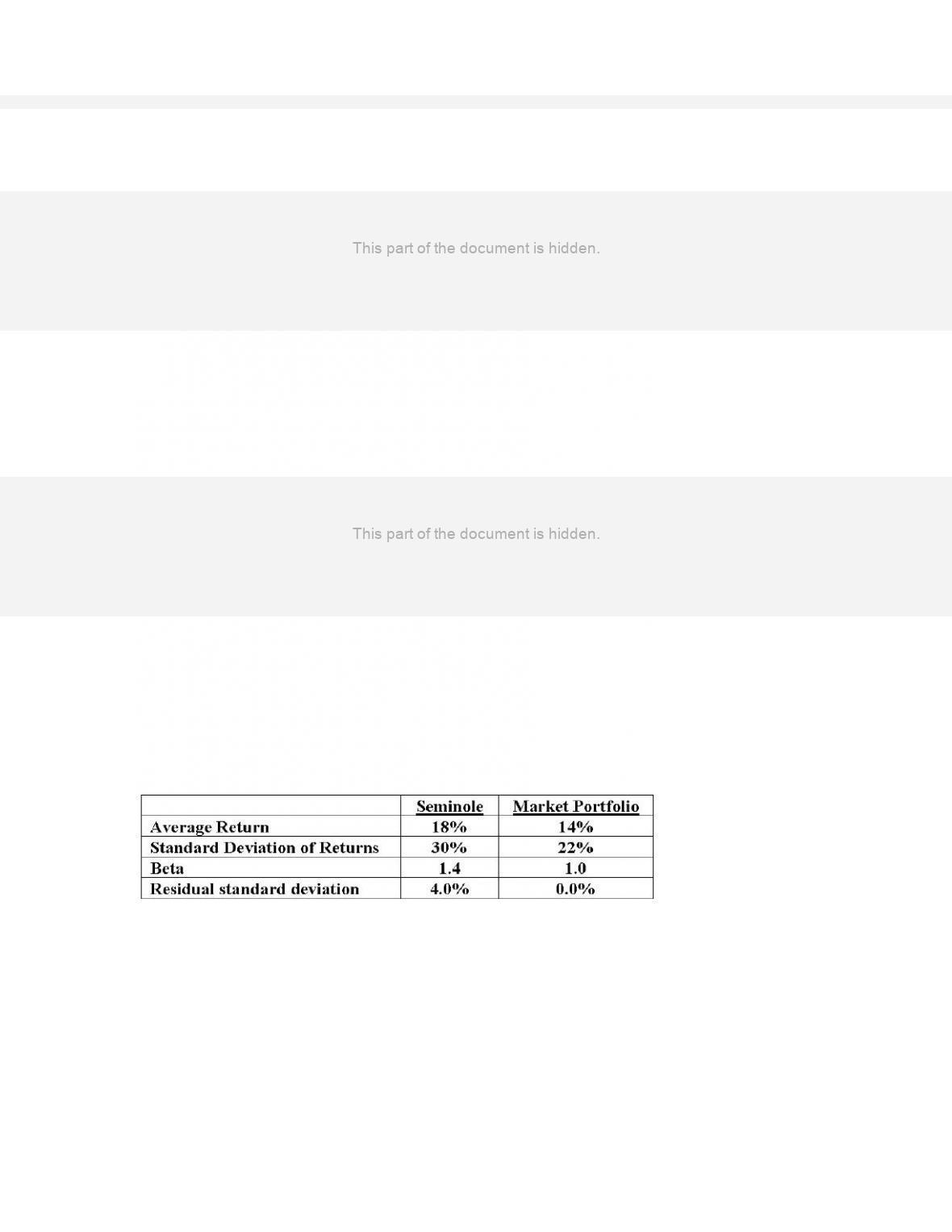
The following data are available relating to the performance of Seminole Fund and the
market portfolio:
The risk-free return during the sample period was 6%.
24–24
46. If you wanted to evaluate the Seminole Fund using the M2 measure, what percent of the
adjusted portfolio would need to be invested in T-Bills?
Difficulty: Moderate
47. Calculate the M2 measure for the Seminole Fund.
Difficulty: Moderate
48. If the Seminole Fund is actively managed, fairly priced, and will be mixed with the market
index portfolio, calculate the value of the measure that should be used for evaluation.
Difficulty: Difficult
24–25
49. If the Seminole Fund is actively managed and will be mixed with the market index
portfolio, but you suspect it may be mispriced, calculate the value of the measure that should
be used for evaluation.
Difficulty: Difficult
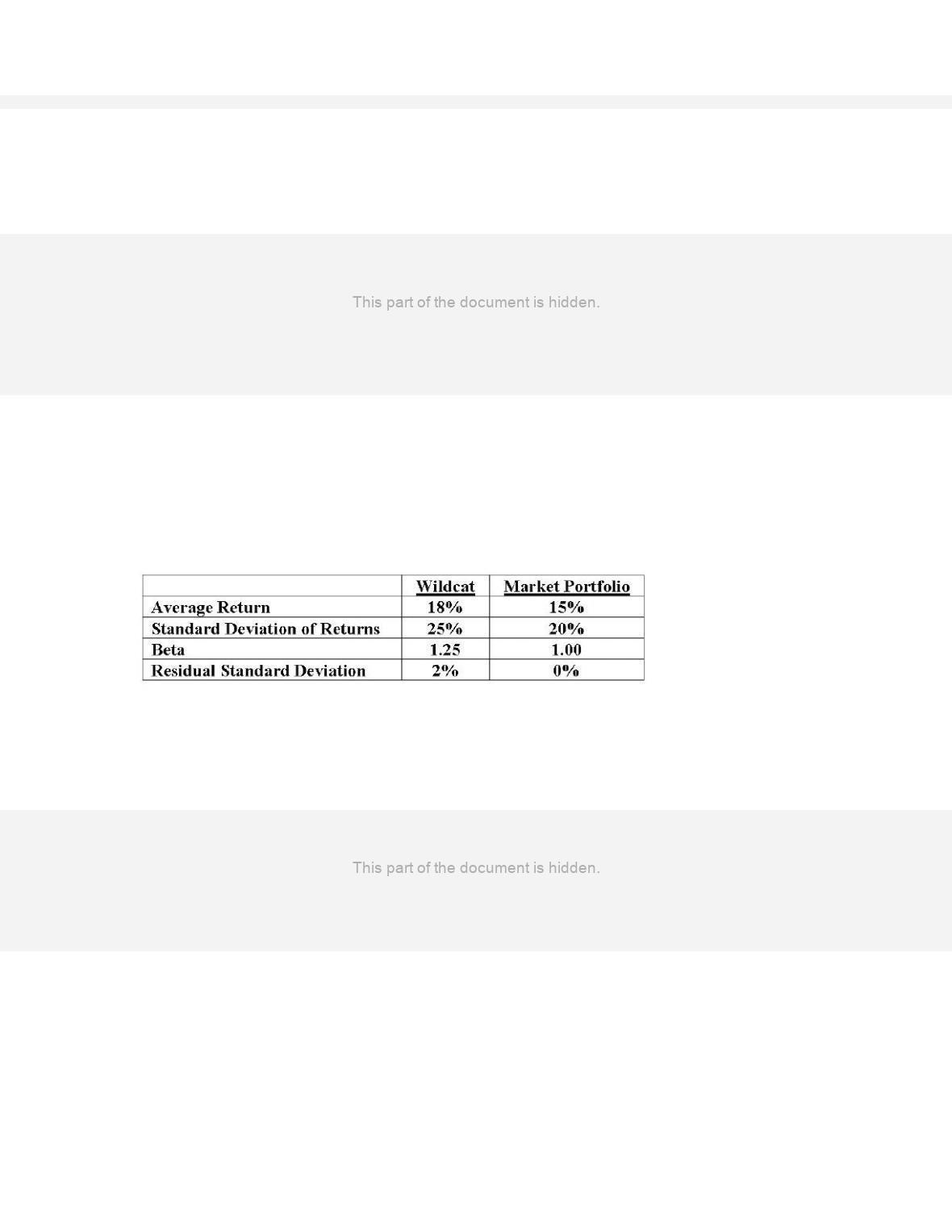
The following data are available relating to the performance of Wildcat Fund and the market
portfolio:
The risk-free return during the sample period was 7%.
50. What is the information ratio measure of performance evaluation for Wildcat Fund?
Difficulty: Moderate
24–26
51. Calculate Sharpe’s measure of performance for Wildcat Fund.
Difficulty: Moderate
52. Calculate Treynor’s measure of performance for Wildcat Fund.
Difficulty: Moderate
53. Calculate Jensen’s measure of performance for Wildcat Fund.
Difficulty: Moderate
Chapter 24 – Portfolio Performance Evaluation
24–27
The following data are available relating to the performance of Long Horn Stock Fund and
the market portfolio:
The risk-free return during the sample period was 6%.
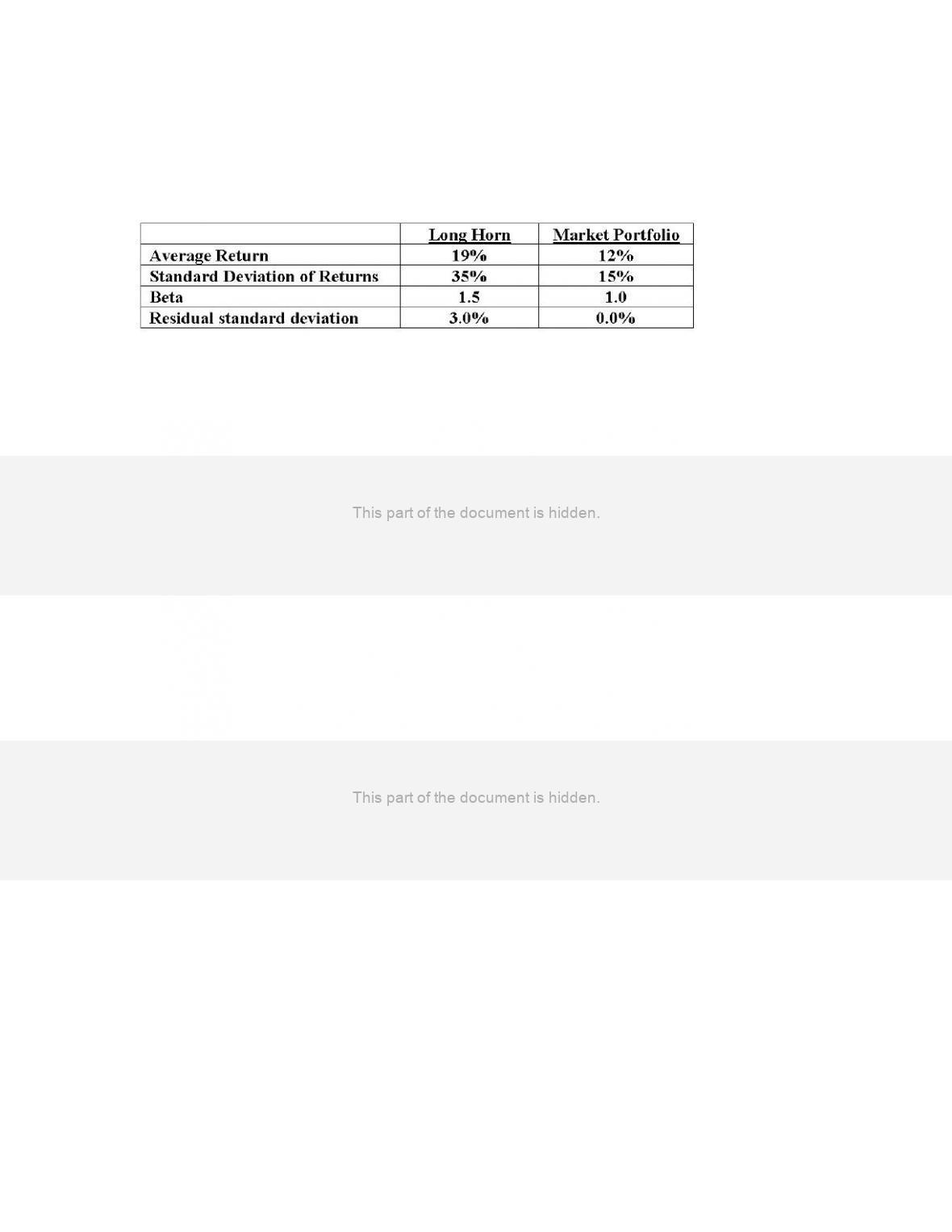
54. What is the Sharpe measure of performance evaluation for Long Horn Stock Fund?
Difficulty: Moderate
55. What is the Treynor measure of performance evaluation for Long Horn Stock Fund?
Difficulty: Moderate
24–28
56. Calculate the Jensen measure of performance evaluation for Long Horn Stock Fund.
Difficulty: Moderate
57. Calculate the information ratio for Long Horn Stock Fund.
Difficulty: Moderate
In a particular year, Razorback Mutual Fund earned a return of 1% by making the following
investments in asset classes:
The return on a bogey portfolio was 2%, calculated from the following information.
24–29
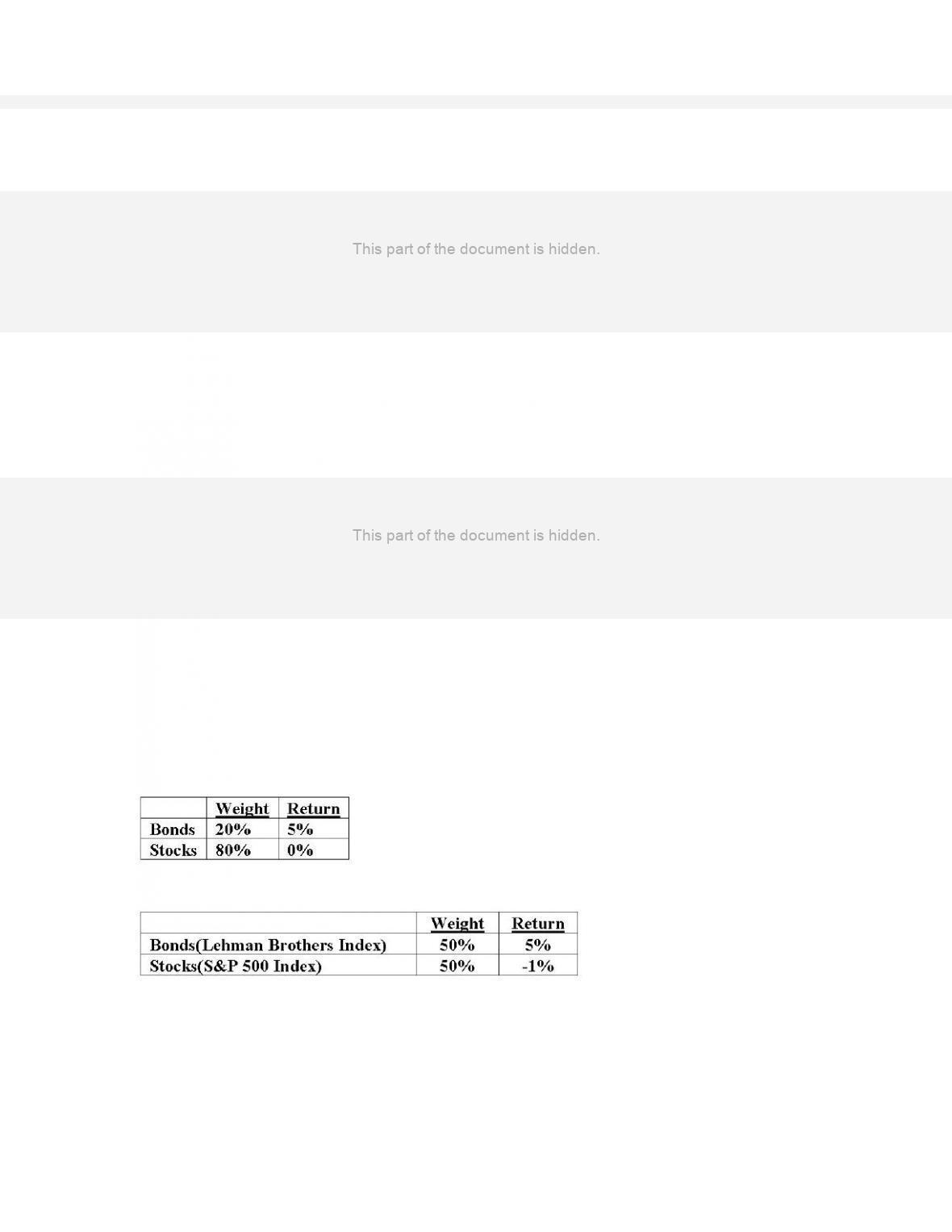
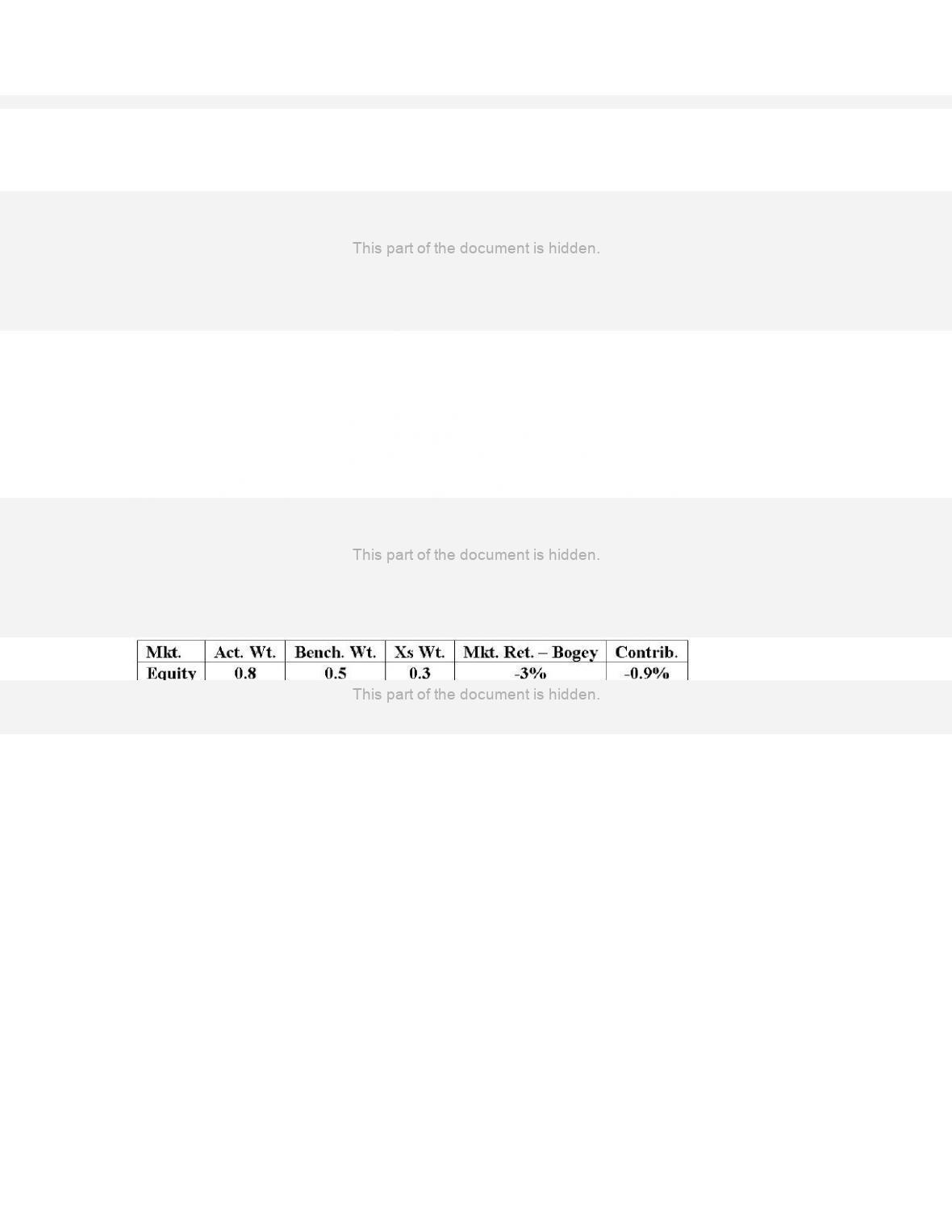
58. The total excess return on the Razorback Fund’s managed portfolio was __________.
Difficulty: Moderate
59. The contribution of asset allocation across markets to the Razorback Fund’s total excess
return was __________.
Difficulty: Difficult
24–30
60. The contribution of selection within markets to the Razorback Fund’s total excess return
was __________.
Difficulty: Difficult
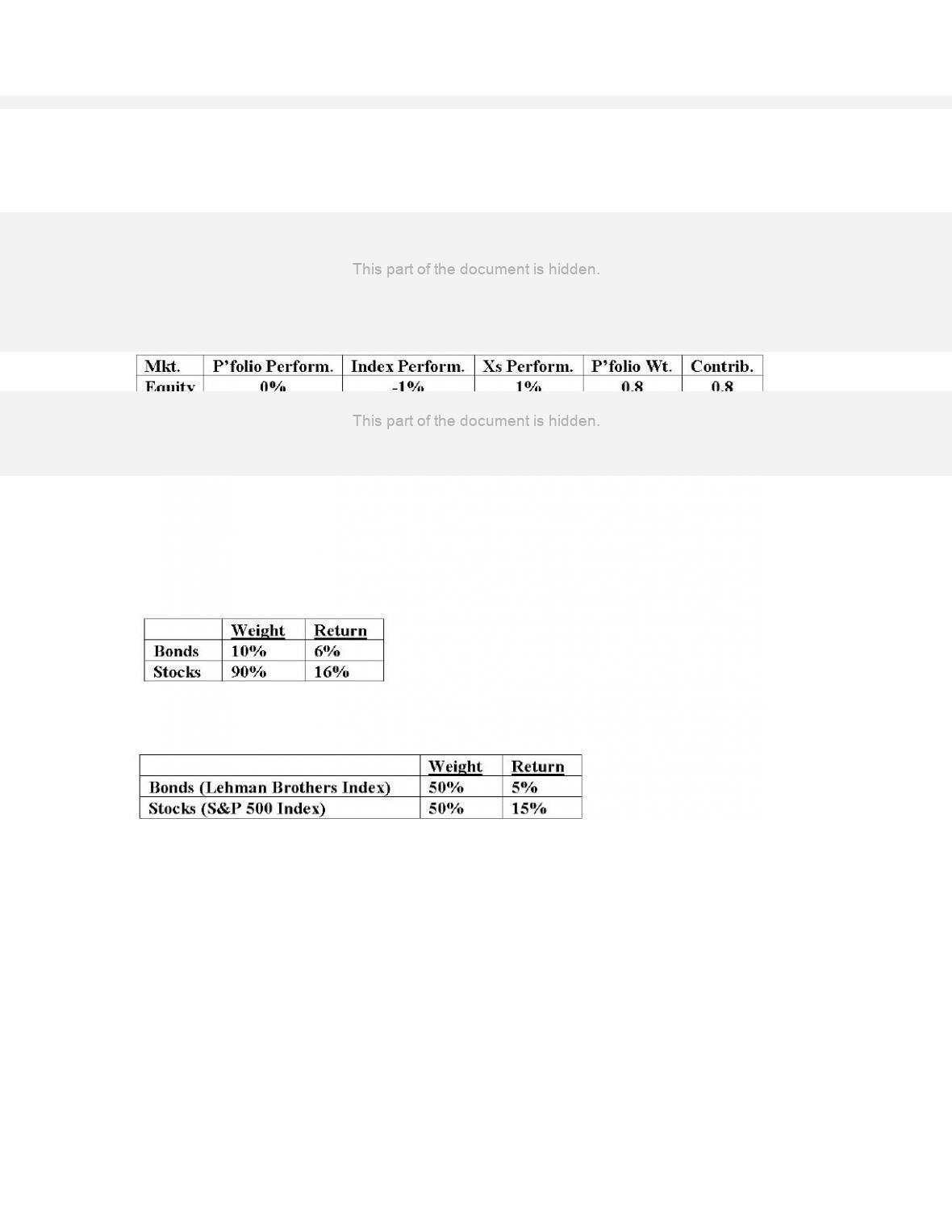
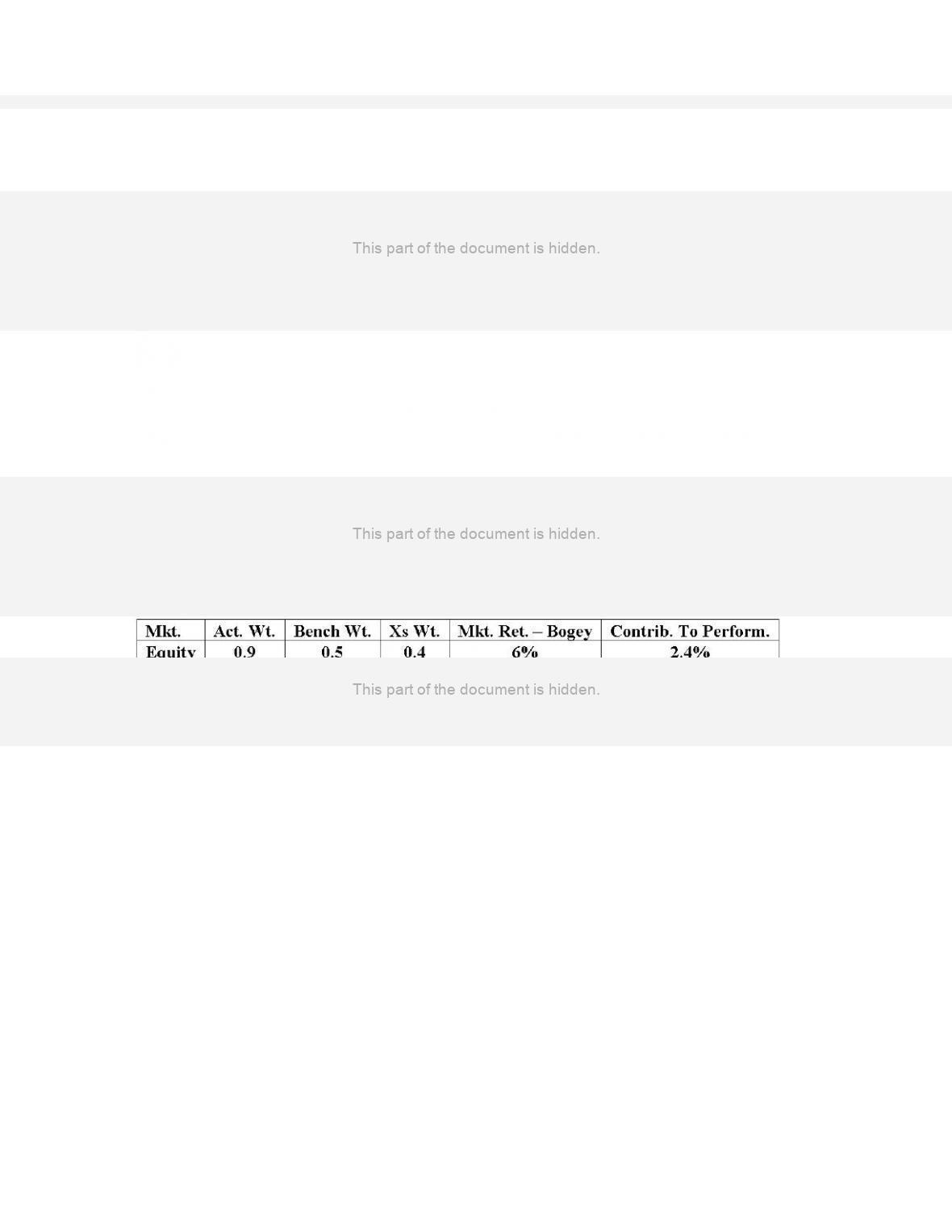
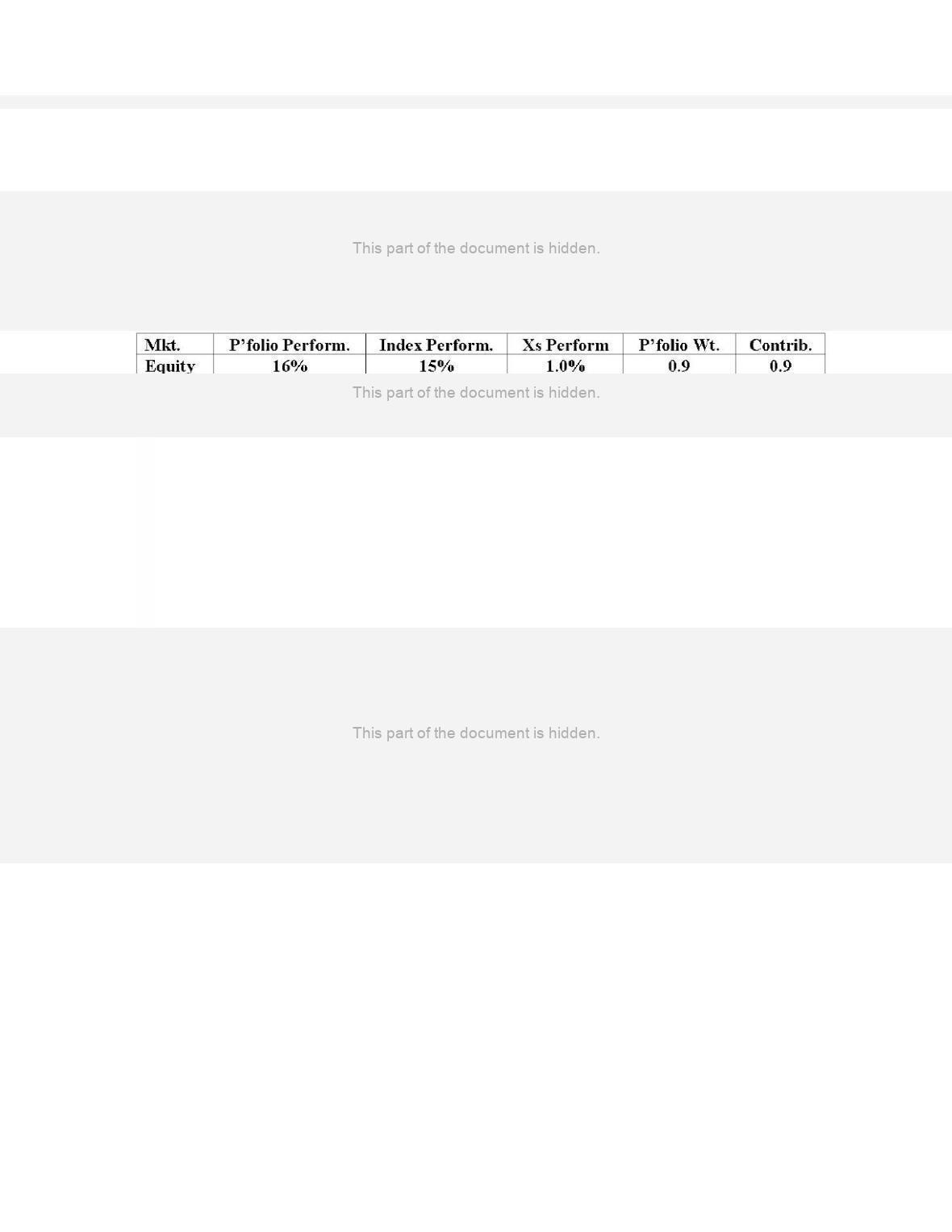
In a particular year, Aggie Mutual Fund earned a return of 15% by making the following
investments in the following asset classes
The return on a bogey portfolio was 10%, calculated as follows:
24–31
61. The total excess return on the Aggie managed portfolio was __________.
Difficulty: Easy
62. The contribution of asset allocation across markets to the total excess return was
Difficulty: Difficult
24–32
63. The contribution of selection within markets to total excess return was
Difficulty: Difficult
64. In measuring the comparative performance of different fund managers, the preferred
method of calculating rate of return is __________.
A. internal rate of return
B. arithmetic average
Difficulty: Easy
24–33
65. The __________ measures the reward to volatility trade-off by dividing the average
portfolio excess return by the standard deviation of returns.
Difficulty: Easy
66. A pension fund that begins with $500,000 earns 15% the first year and 10% the second
year. At the beginning of the second year, the sponsor contributes another $300,000. The
dollar-weighted and time-weighted rates of return, respectively, were
Difficulty: Moderate