33.
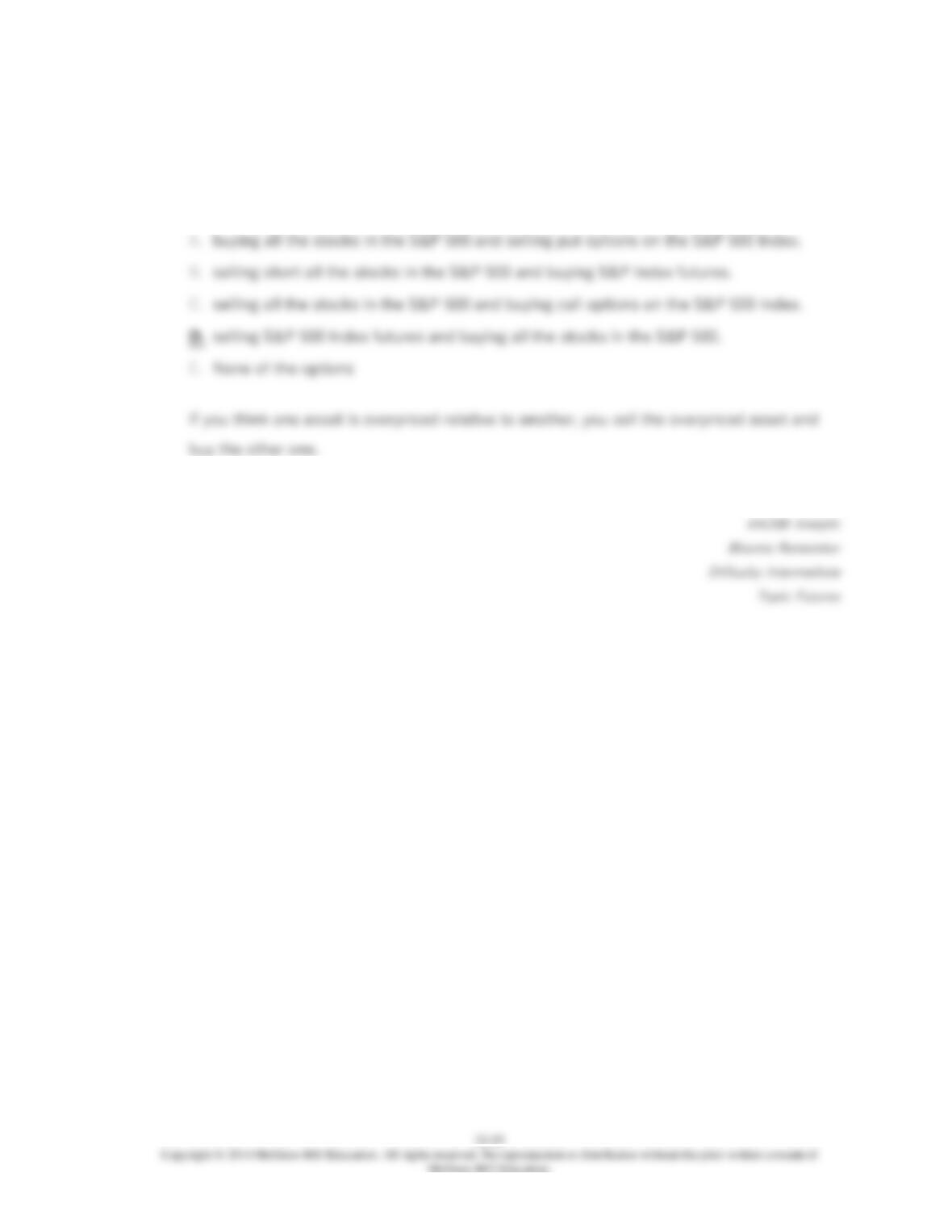
If you determine that the S&P 500 Index futures is overpriced relative to the spot S&P 500
Index, you could make an arbitrage profit by
34.
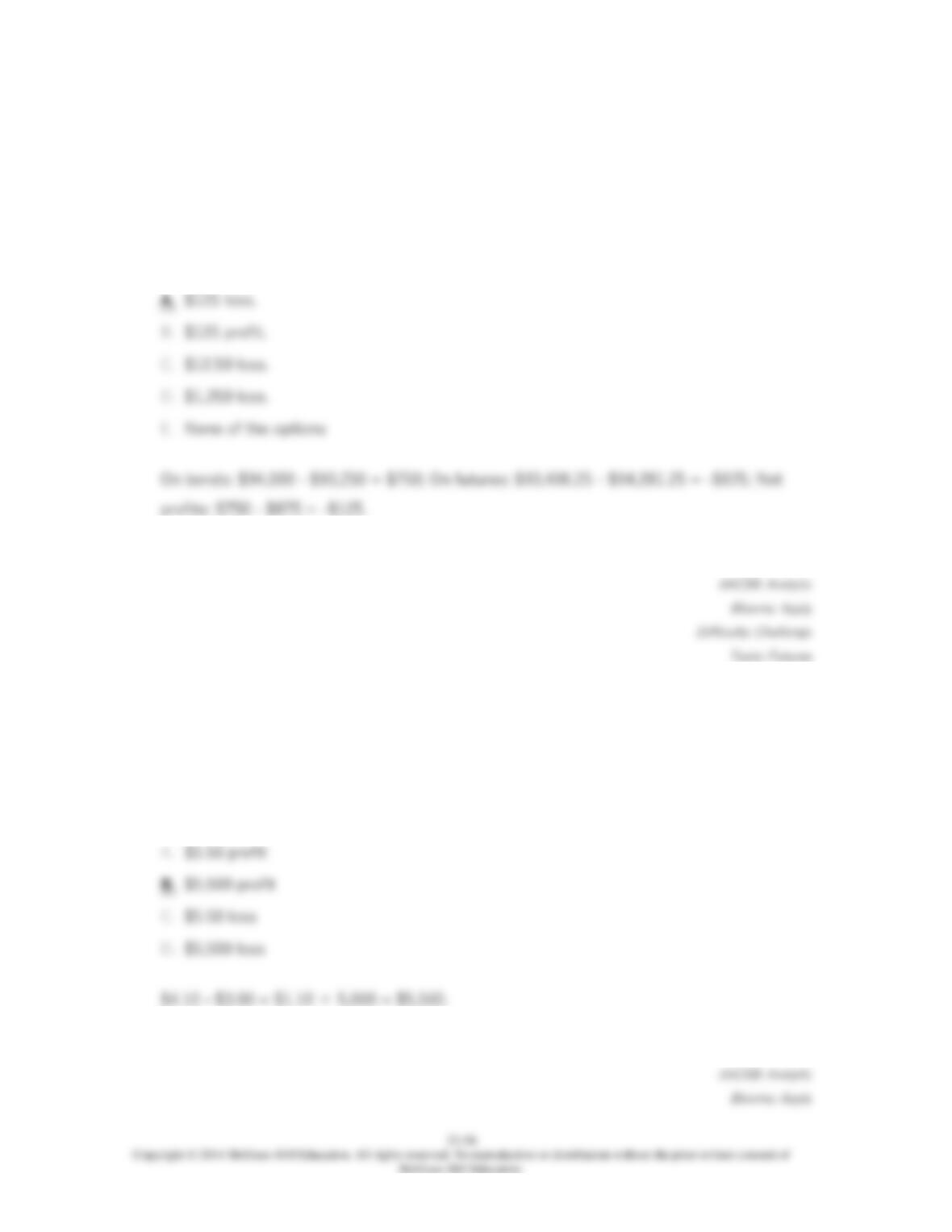
On January 1, the listed spot and futures prices of a Treasury bond were 93.8 and 93.13.
You purchased $100,000 par value Treasury bonds and sold one Treasury bond futures
contract. One month later, the listed spot price and futures prices were 94 and 94.09,
respectively. If you were to liquidate your position, your profits would be
35.
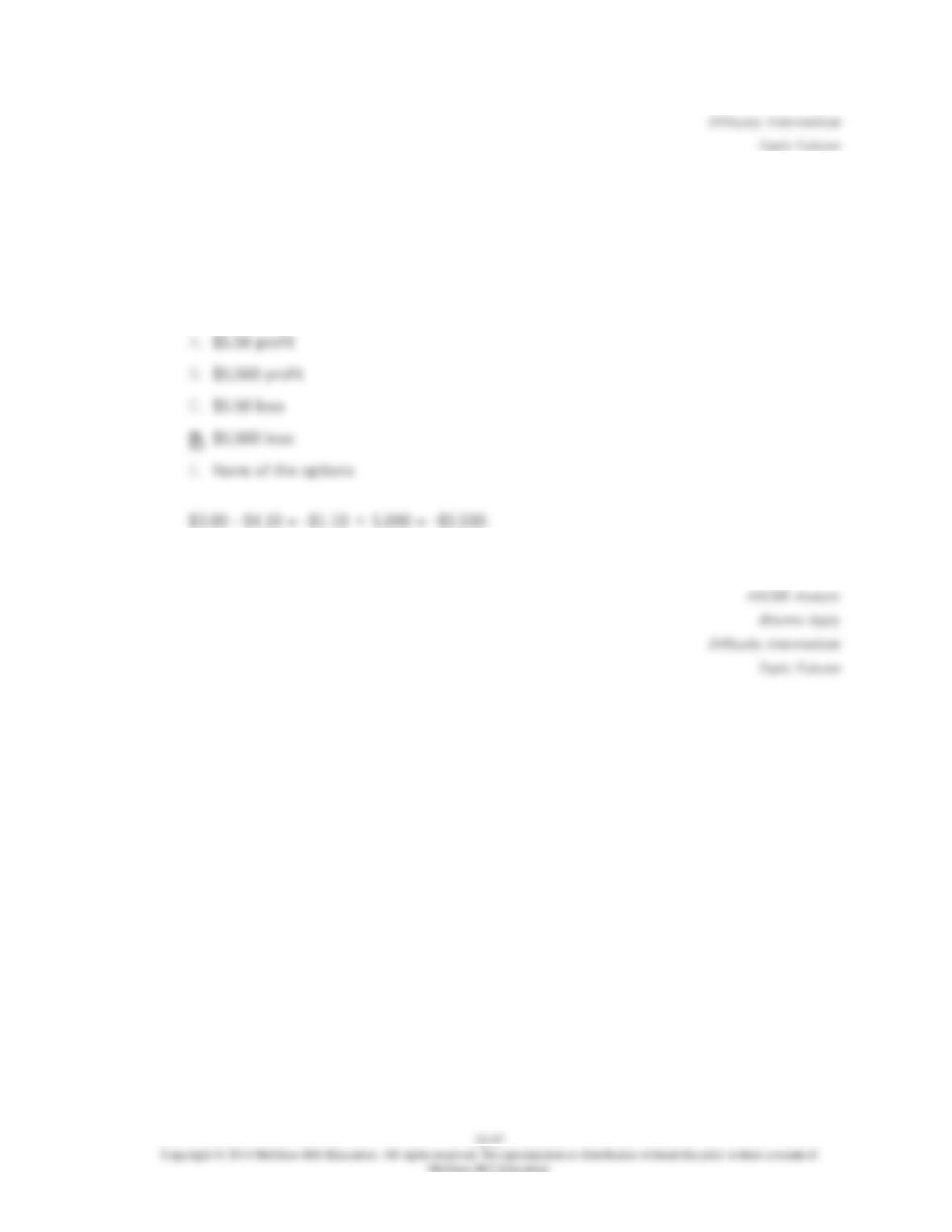
You purchased one silver future contract at $3 per ounce. What would be your profit (loss)
at maturity if the silver spot price at that time is $4.10 per ounce? Assume the contract
size is 5,000 ounces and there are no transactions costs.
36.
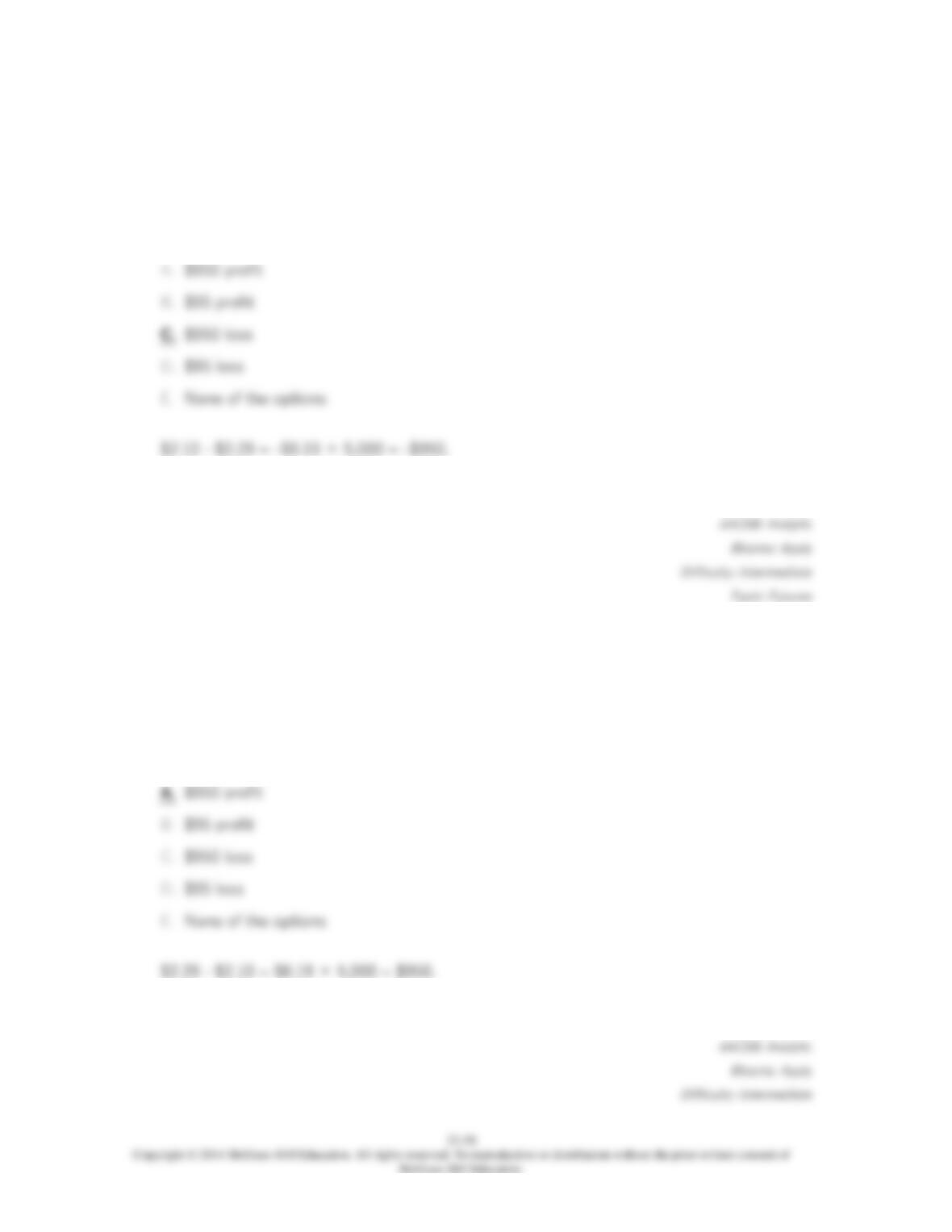
You sold one silver future contract at $3 per ounce. What would be your profit (loss) at
maturity if the silver spot price at that time is $4.10 per ounce? Assume the contract size
is 5,000 ounces and there are no transactions costs.
37.
You purchased one corn future contract at $2.29 per bushel. What would be your profit
(loss) at maturity if the corn spot price at that time were $2.10 per bushel? Assume the
contract size is 5,000 ounces and there are no transactions costs.
38.
You sold one corn future contract at $2.29 per bushel. What would be your profit (loss) at
maturity if the corn spot price at that time were $2.10 per bushel? Assume the contract
size is 5,000 ounces and there are no transactions costs.
39.
You sold one wheat future contract at $3.04 per bushel. What would be your profit (loss)
at maturity if the wheat spot price at that time were $2.98 per bushel? Assume the
contract size is 5,000 ounces and there are no transactions costs.
40.
You purchased one wheat future contract at $3.04 per bushel. What would be your profit
(loss) at maturity if the wheat spot price at that time were $2.98 per bushel? Assume the
contract size is 5,000 ounces and there are no transactions costs.
41.
On January 1, you sold one April S&P 500 Index futures contract at a futures price of 1,420.
If on February 1 the April futures price were 1,430, what would be your profit (loss) if you
closed your position (without considering transactions costs)?
42.
On January 1, you bought one April S&P 500 index futures contract at a futures price of
1,420. If on February 1 the April futures price were 1,430, what would be your profit (loss)
if you closed your position (without considering transactions costs)?
43.
You sold one soybean future contract at $5.13 per bushel. What would be your profit (loss)
at maturity if the wheat spot price at that time were $5.26 per bushel? Assume the
contract size is 5,000 ounces and there are no transactions costs.
44.
You bought one soybean future contract at $5.13 per bushel. What would be your profit
(loss) at maturity if the wheat spot price at that time were $5.26 per bushel? Assume the
contract size is 5,000 ounces and there are no transactions costs.
45.
On April 1, you bought one S&P 500 Index futures contract at a futures price of 1,550. If on
June 15 the futures price were 1,612, what would be your profit (loss) if you closed your
position (without considering transactions costs)?
46.
On April 1, you sold one S&P 500 Index futures contract at a futures price of 1,550. If on
June 15 the futures price were 1,612, what would be your profit (loss) if you closed your
position (without considering transactions costs)?
47.
The expectations hypothesis of futures pricing
48.
Normal backwardation
49.
Contango
50.
Delivery of stock index futures
51.
The establishment of a futures market in a commodity should not have a major impact on
spot prices because
52.
Given a stock index with a value of $1,500, an anticipated dividend of $62 and a risk-free
rate of 5.75%, what should be the value of one futures contract on the index?
53.
If a trader holding a long position in corn futures fails to meet the obligations of a futures
contract, the party that is hurt by the failure is
54.
Open interest includes
55.
The process of marking-to-market
56.
Futures contracts are regulated by
57.
Taxation of futures trading gains and losses
58.
Speculators may use futures markets rather than spot markets because
59.
Given a stock index with a value of $1,000, an anticipated dividend of $30, and a risk-free
rate of 6%, what should be the value of one futures contract on the index?
60.
Given a stock index with a value of $1,125, an anticipated dividend of $33, and a risk-free
rate of 4%, what should be the value of one futures contract on the index?
61.
Given a stock index with a value of $1,100, an anticipated dividend of $27, and a risk-free
rate of 3%, that should be the value of one futures contract on the index?
62.
Given a stock index with a value of $1,200, an anticipated dividend of $45, and a risk-free
rate of 6%, what should be the value of one futures contract on the index?
63.
Which of the following items is specified in a futures contract?
I) The contract size
II) The maximum acceptable price range during the life of the contract
III) The acceptable grade of the commodity on which the contract is held
IV) The market price at expiration
V) The settlement price
64.
Which of the following items is not specified in a futures contract?
I) The contract size
II) The maximum acceptable price range during the life of the contract
III) The acceptable grade of the commodity on which the contract is held
IV) The market price at expiration
V) The settlement price
65.
With regard to futures contracts, what does the word “margin” mean?