Chapter 18 Equity Valuation Models Answer Key
Multiple Choice Questions
1.
________ is equal to the total market value of the firm’s common stock divided by (the
replacement cost of the firm’s assets less liabilities).
2.
High P/E ratios tend to indicate that a company will _______, ceteris paribus.
3.
_________ is equal to (common shareholders’ equity/common shares outstanding).
4.
________ are analysts who use information concerning current and prospective profitability
of a firm to assess the firm’s fair market value.
5.
The _______ is defined as the present value of all cash proceeds to the investor in the
stock.
Topic: Stocks
6.
Topic: Stocks
_______ is the amount of money per common share that could be realized by breaking up
the firm, selling the assets, repaying the debt, and distributing the remainder to
shareholders.
7.
Since 1955, Treasury bond yields and earnings yields on stocks were
8.
Historically, P/E ratios have tended to be
9.
The ______ is a common term for the market consensus value of the required return on a
stock.
10.
The _________ is the fraction of earnings reinvested in the firm.
Topic: Stocks
11.
Topic: Stocks
The Gordon model
12.
You wish to earn a return of 13% on each of two stocks, X and Y. Stock X is expected to
pay a dividend of $3 in the upcoming year while stock Y is expected to pay a dividend of
$4 in the upcoming year. The expected growth rate of dividends for both stocks is 7%. The
intrinsic value of stock X
13.
You wish to earn a return of 11% on each of two stocks, C and D. Stock C is expected to
pay a dividend of $3 in the upcoming year while stock D is expected to pay a dividend of
$4 in the upcoming year. The expected growth rate of dividends for both stocks is 7%. The
intrinsic value of stock C
14.
You wish to earn a return of 12% on each of two stocks, A and B. Each of the stocks is
expected to pay a dividend of $2 in the upcoming year. The expected growth rate of
dividends is 9% for stock A and 10% for stock B. The intrinsic value of stock A
15.
You wish to earn a return of 10% on each of two stocks, C and D. Each of the stocks is
expected to pay a dividend of $2 in the upcoming year. The expected growth rate of
dividends is 9% for stock C and 10% for stock D. The intrinsic value of stock C
16.
Each of two stocks, A and B, are expected to pay a dividend of $5 in the upcoming year.
The expected growth rate of dividends is 10% for both stocks. You require a rate of return
of 11% on stock A and a return of 20% on stock B. The intrinsic value of stock A
17.
Each of two stocks, C and D, are expected to pay a dividend of $3 in the upcoming year.
The expected growth rate of dividends is 9% for both stocks. You require a rate of return
of 10% on stock C and a return of 13% on stock D. The intrinsic value of stock C
18.
If the expected
ROE
on reinvested earnings is equal to
k
, the multistage
DDM
reduces to
19.
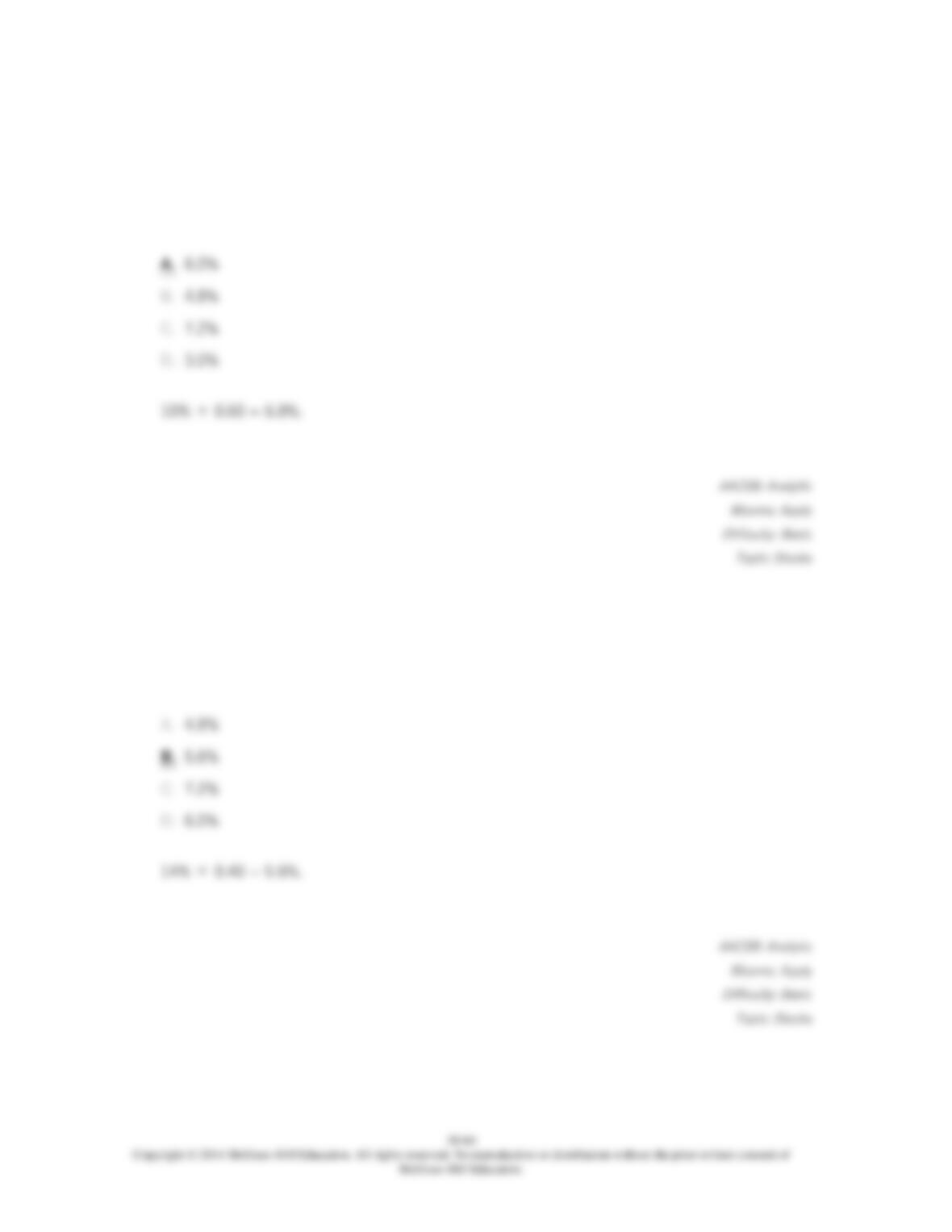
Low Tech Company has an expected
ROE
of 10%. The dividend growth rate will be
________ if the firm follows a policy of paying 40% of earnings in the form of dividends.
20.
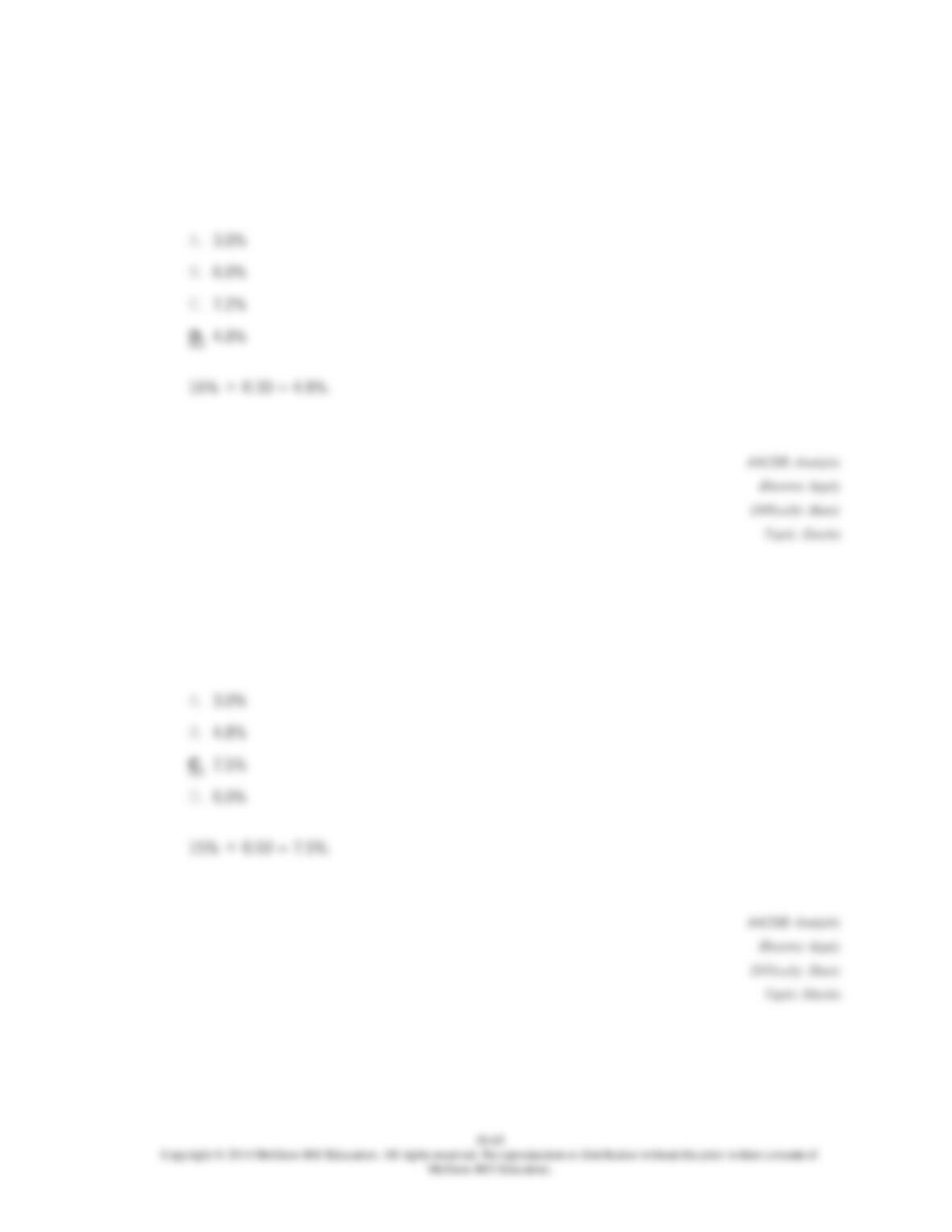
Music Doctors Company has an expected
ROE
of 14%. The dividend growth rate will be
________ if the firm follows a policy of paying 60% of earnings in the form of dividends.
21.
Medtronic Company has an expected
ROE
of 16%. The dividend growth rate will be
________ if the firm follows a policy of paying 70% of earnings in the form of dividends.
22.
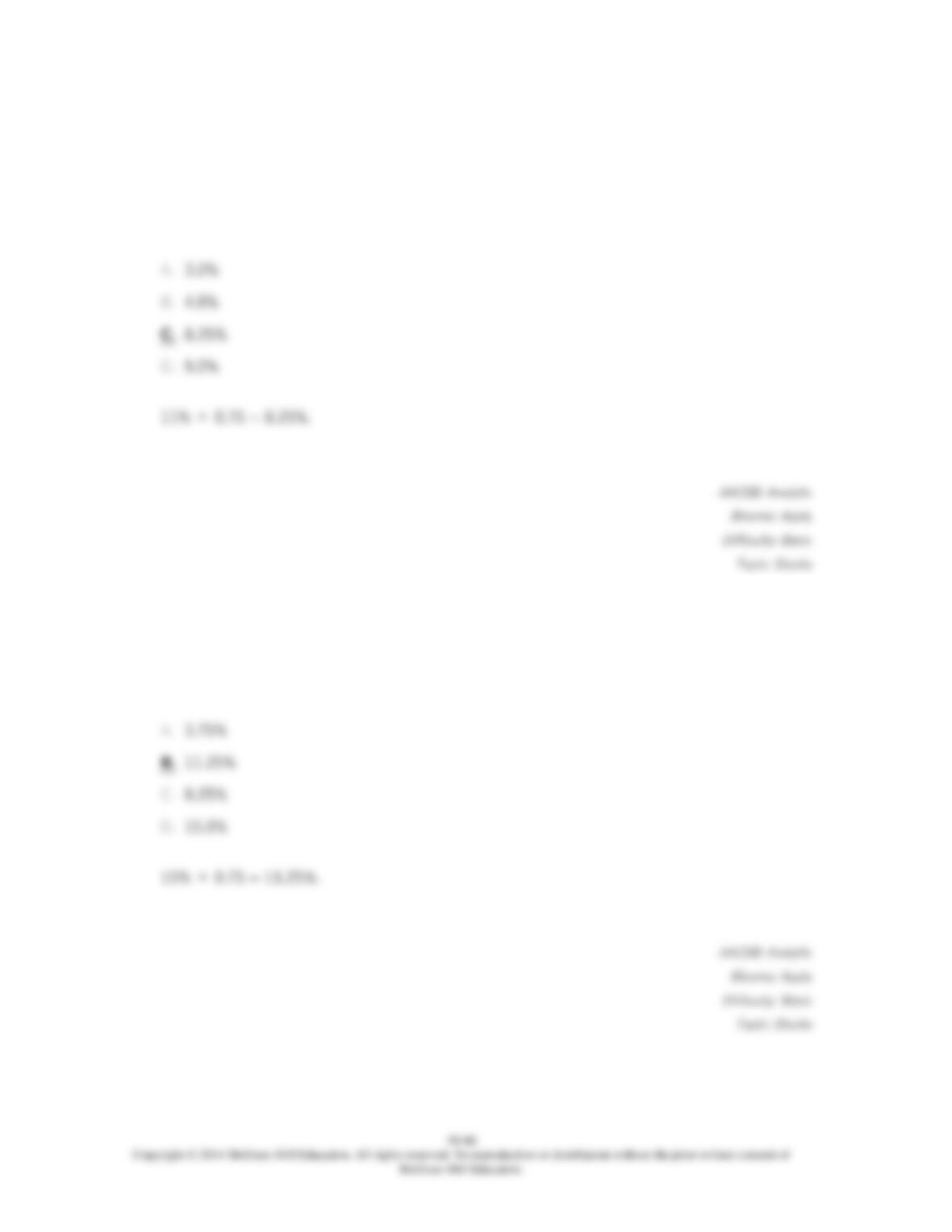
High Speed Company has an expected
ROE
of 15%. The dividend growth rate will be
________ if the firm follows a policy of paying 50% of earnings in the form of dividends.
23.
Light Construction Machinery Company has an expected
ROE
of 11%. The dividend growth
rate will be _______ if the firm follows a policy of paying 25% of earnings in the form of
dividends.
24.
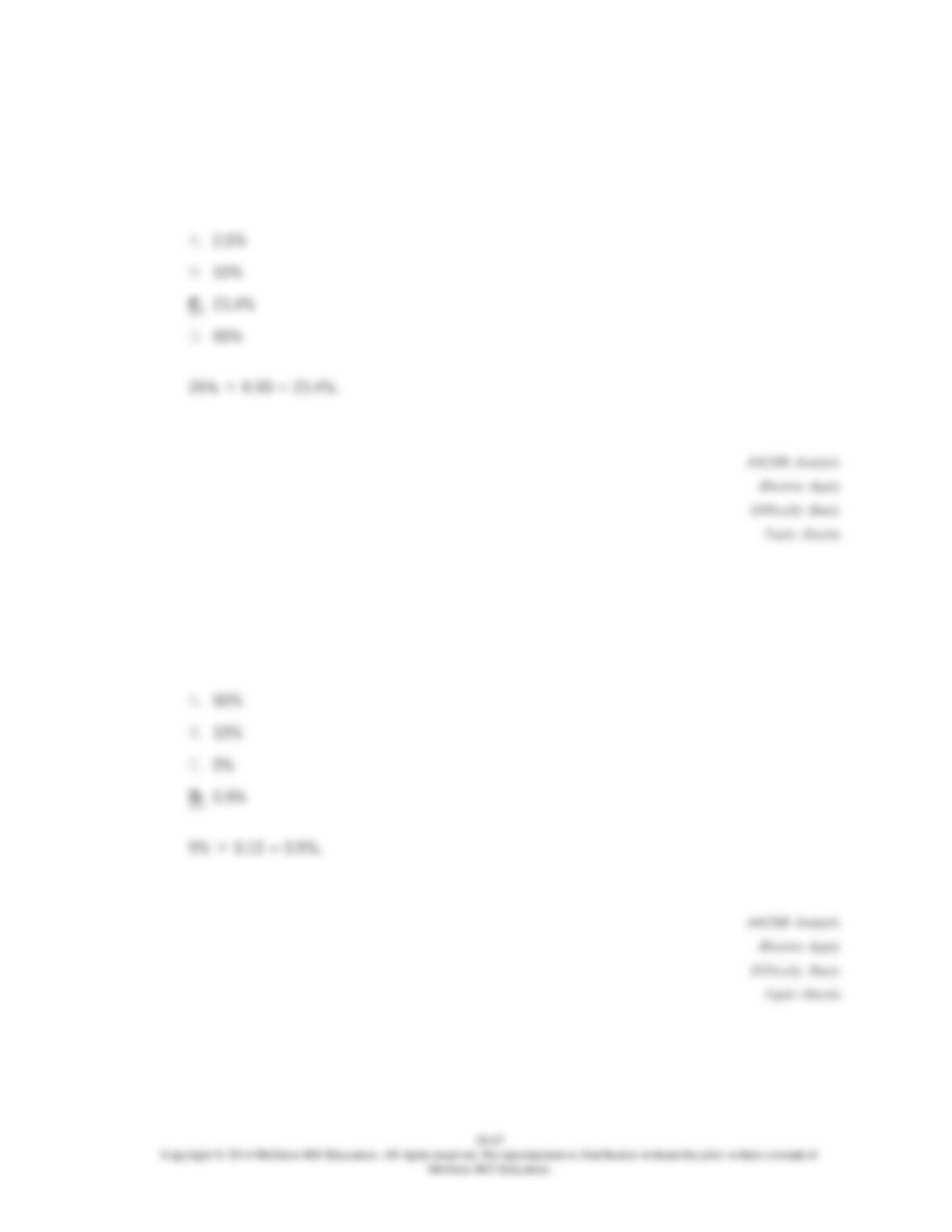
Xlink Company has an expected
ROE
of 15%. The dividend growth rate will be _______ if
the firm follows a policy of plowing back 75% of earnings.
25.
Think Tank Company has an expected
ROE
of 26%. The dividend growth rate will be
_______ if the firm follows a policy of plowing back 90% of earnings.
26.
Bubba Gumm Company has an expected
ROE
of 9%. The dividend growth rate will be
_______ if the firm follows a policy of plowing back 10% of earnings.
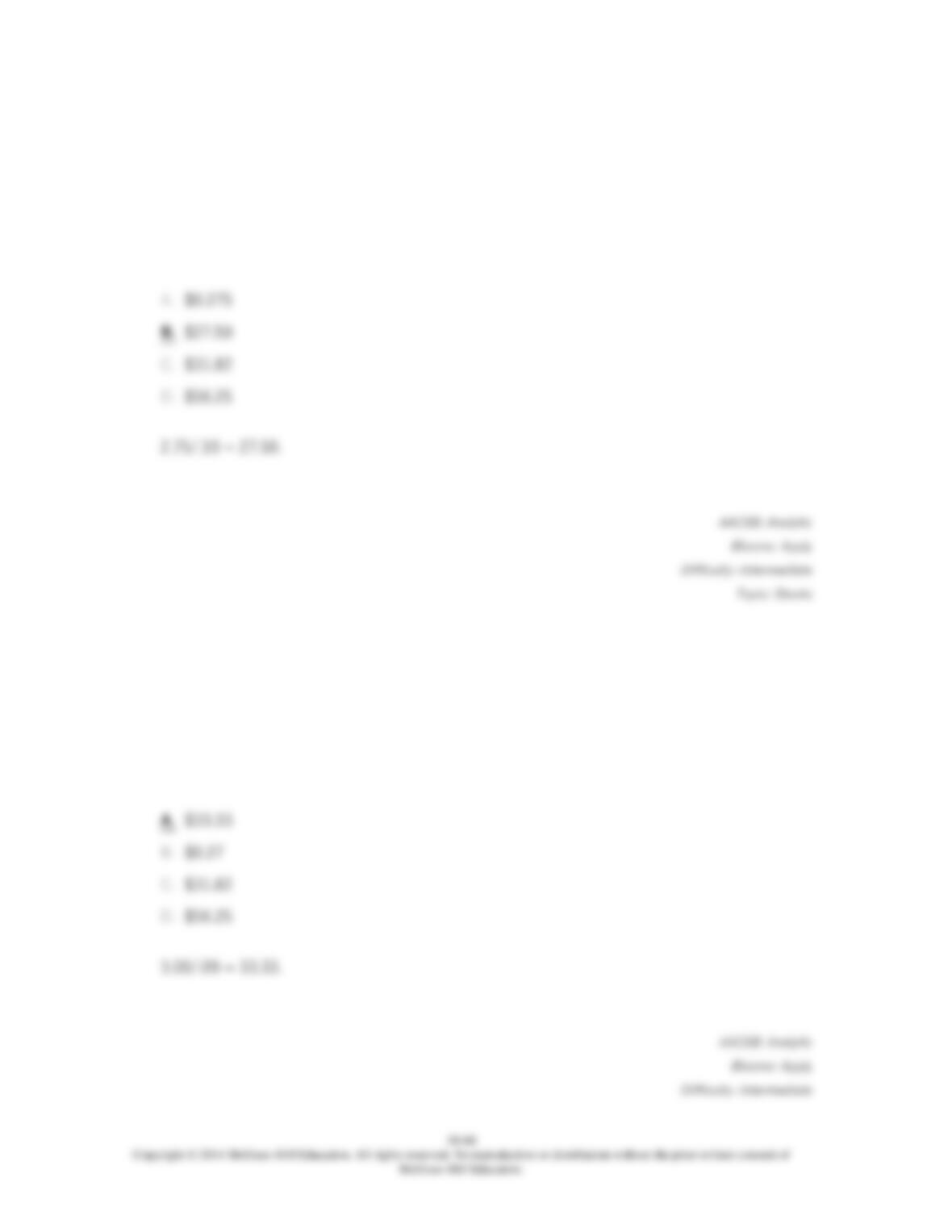
27.
A preferred stock will pay a dividend of $2.75 in the upcoming year and every year
thereafter; i.e., dividends are not expected to grow. You require a return of 10% on this
stock. Use the constant growth
DDM
to calculate the intrinsic value of this preferred
stock.
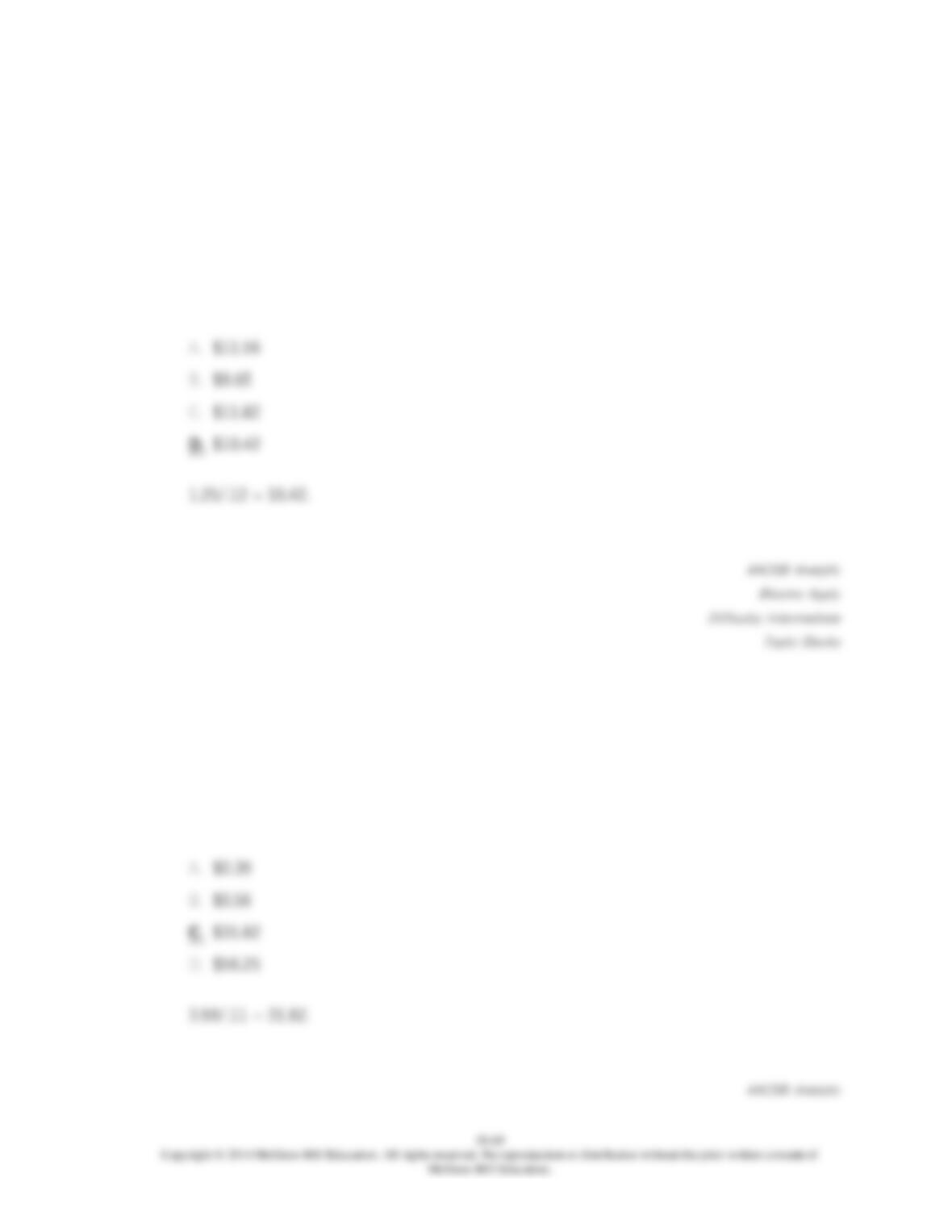
28.
A preferred stock will pay a dividend of $3.00 in the upcoming year and every year
thereafter; i.e., dividends are not expected to grow. You require a return of 9% on this
stock. Use the constant growth
DDM
to calculate the intrinsic value of this preferred
stock.
Topic: Stocks
29.
A preferred stock will pay a dividend of $1.25 in the upcoming year and every year
thereafter; i.e., dividends are not expected to grow. You require a return of 12% on this
stock. Use the constant growth
DDM
to calculate the intrinsic value of this preferred
stock.
30.
A preferred stock will pay a dividend of $3.50 in the upcoming year and every year
thereafter; i.e., dividends are not expected to grow. You require a return of 11% on this
stock. Use the constant growth
DDM
to calculate the intrinsic value of this preferred
stock.
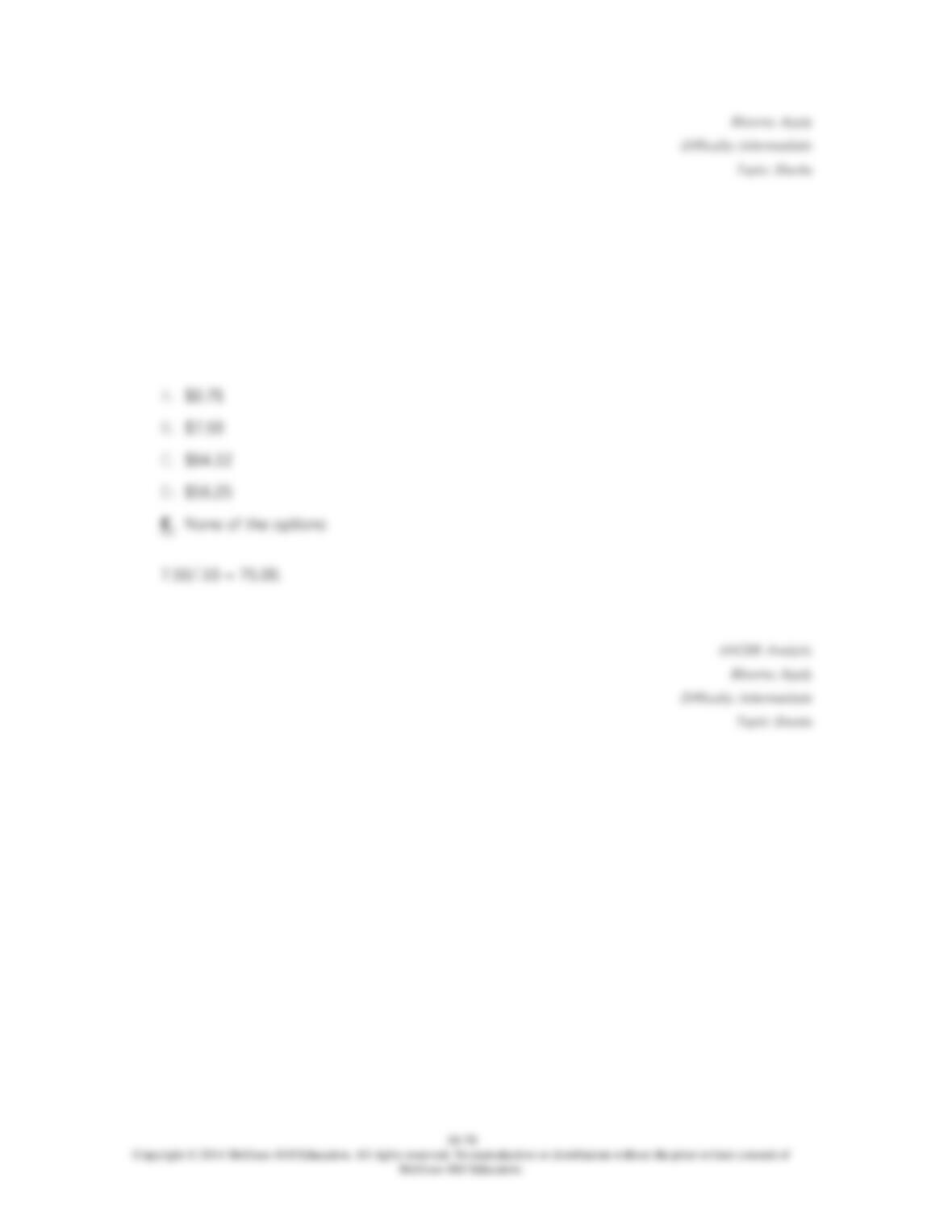
31.
A preferred stock will pay a dividend of $7.50 in the upcoming year and every year
thereafter; i.e., dividends are not expected to grow. You require a return of 10% on this
stock. Use the constant growth
DDM
to calculate the intrinsic value of this preferred
stock.
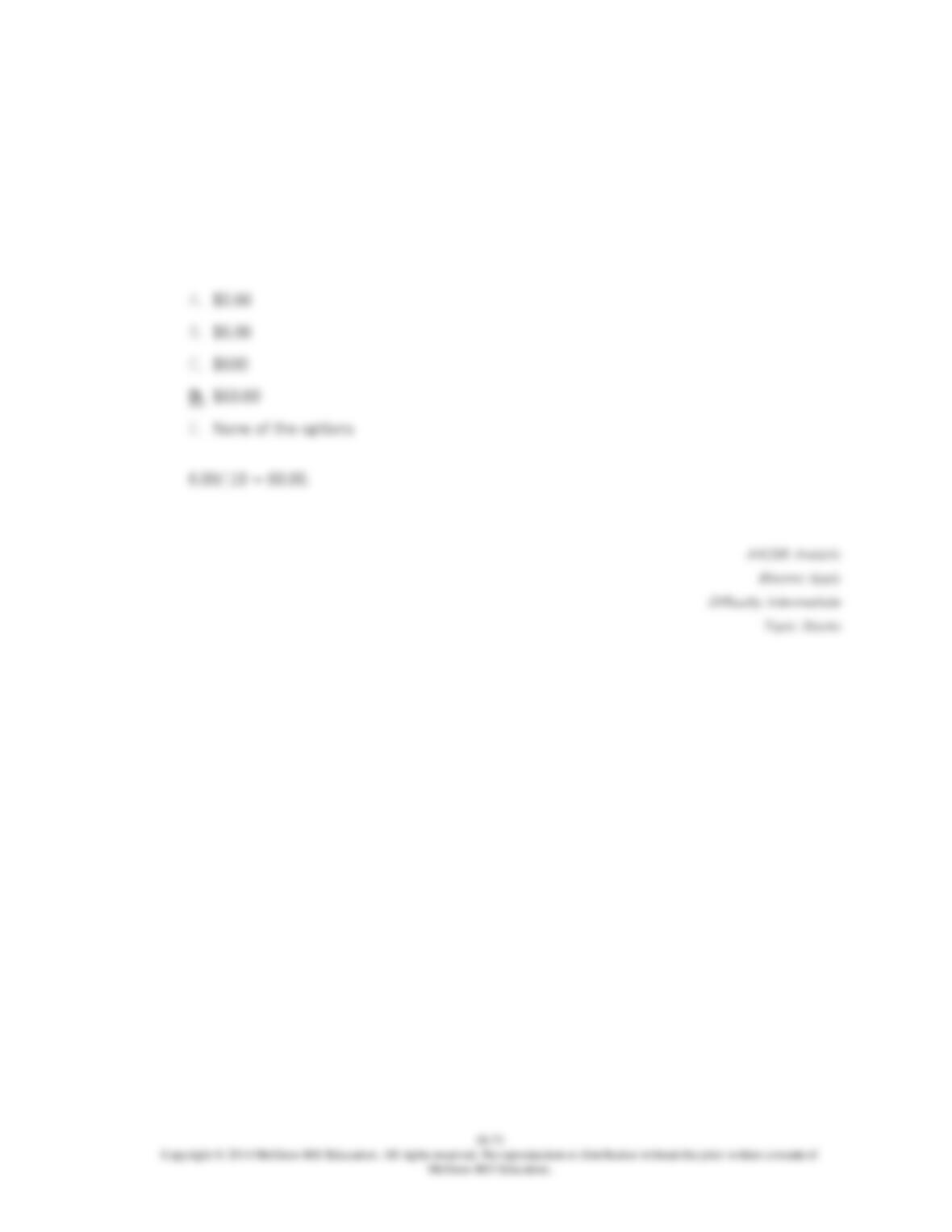
32.
A preferred stock will pay a dividend of $6.00 in the upcoming year and every year
thereafter; i.e., dividends are not expected to grow. You require a return of 10% on this
stock. Use the constant growth
DDM
to calculate the intrinsic value of this preferred
stock.