33.
Inflation
34.
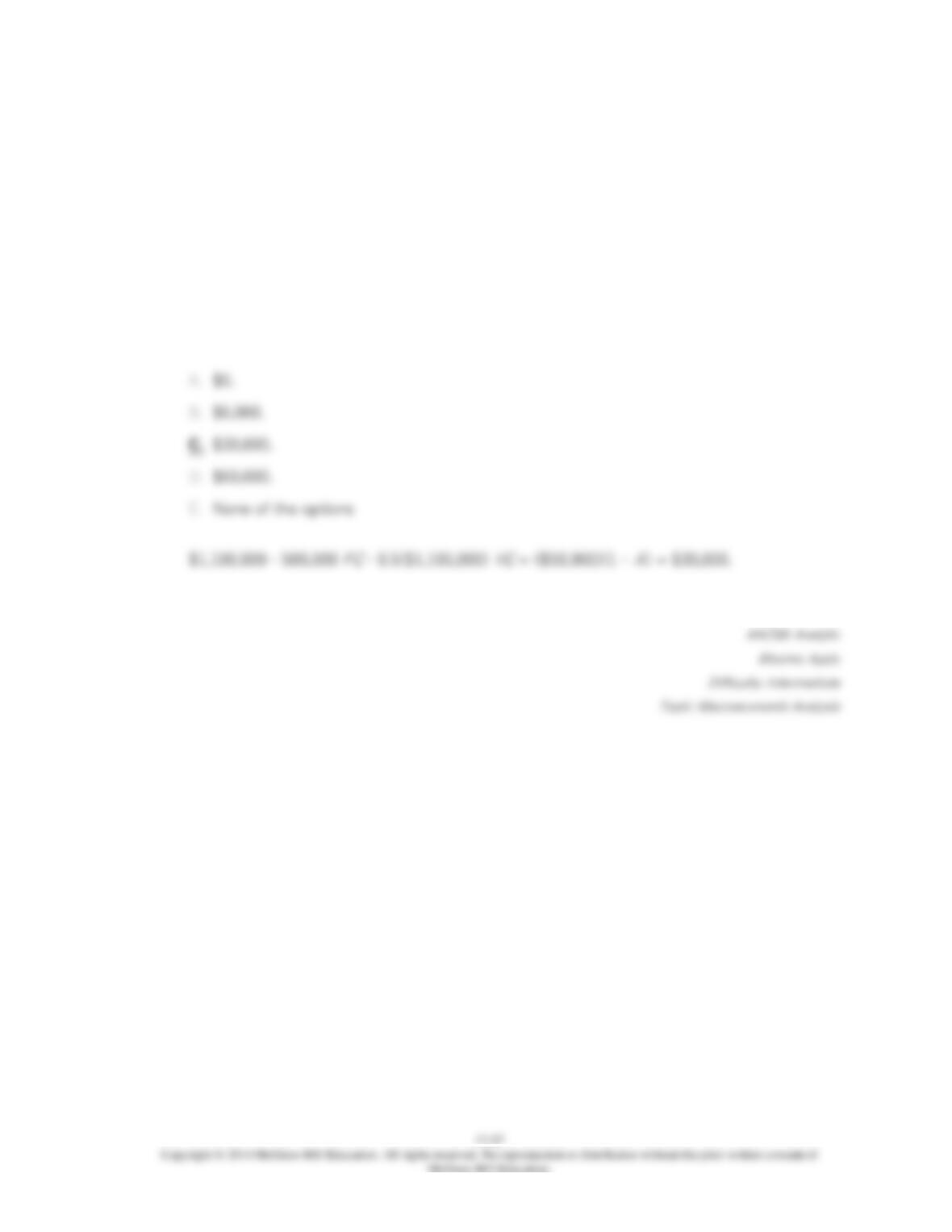
Two firms, A and B, both produce widgets. The price of widgets is $1 each. Firm A has
total fixed costs of $500,000 and variable costs of 50¢ per widget. Firm B has total fixed
costs of $240,000 and variable costs of 75¢ per widget. The corporate tax rate is 40%. If
the economy is strong, each firm will sell 1,200,000 widgets. If the economy enters a
recession, each firm will sell 1,100,000 widgets.
If the economy enters a recession, the after-tax profit of Firm A will be
35.
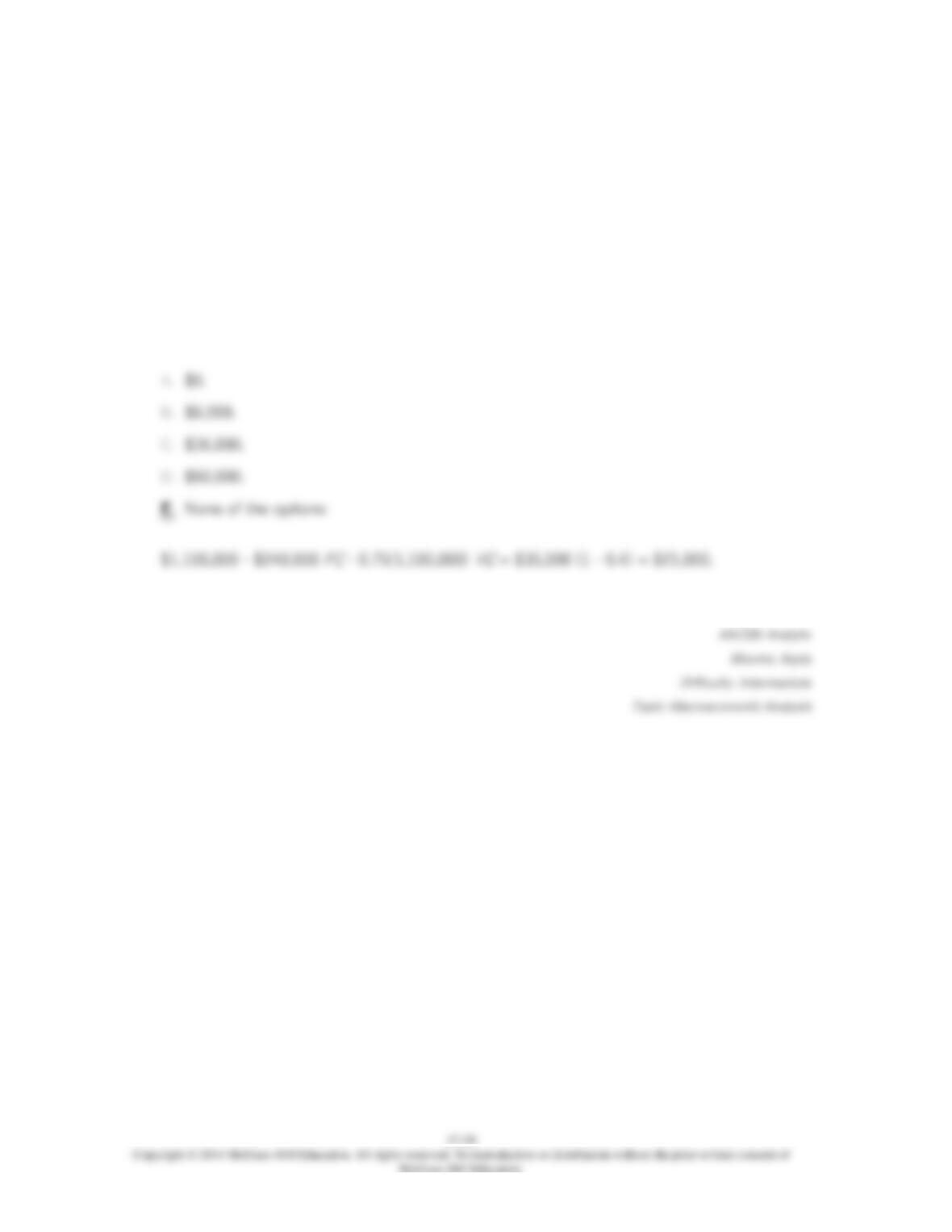
Two firms, A and B, both produce widgets. The price of widgets is $1 each. Firm A has
total fixed costs of $500,000 and variable costs of 50¢ per widget. Firm B has total fixed
costs of $240,000 and variable costs of 75¢ per widget. The corporate tax rate is 40%. If
the economy is strong, each firm will sell 1,200,000 widgets. If the economy enters a
recession, each firm will sell 1,100,000 widgets.
If the economy enters a recession, the after-tax profit of Firm B will be
36.
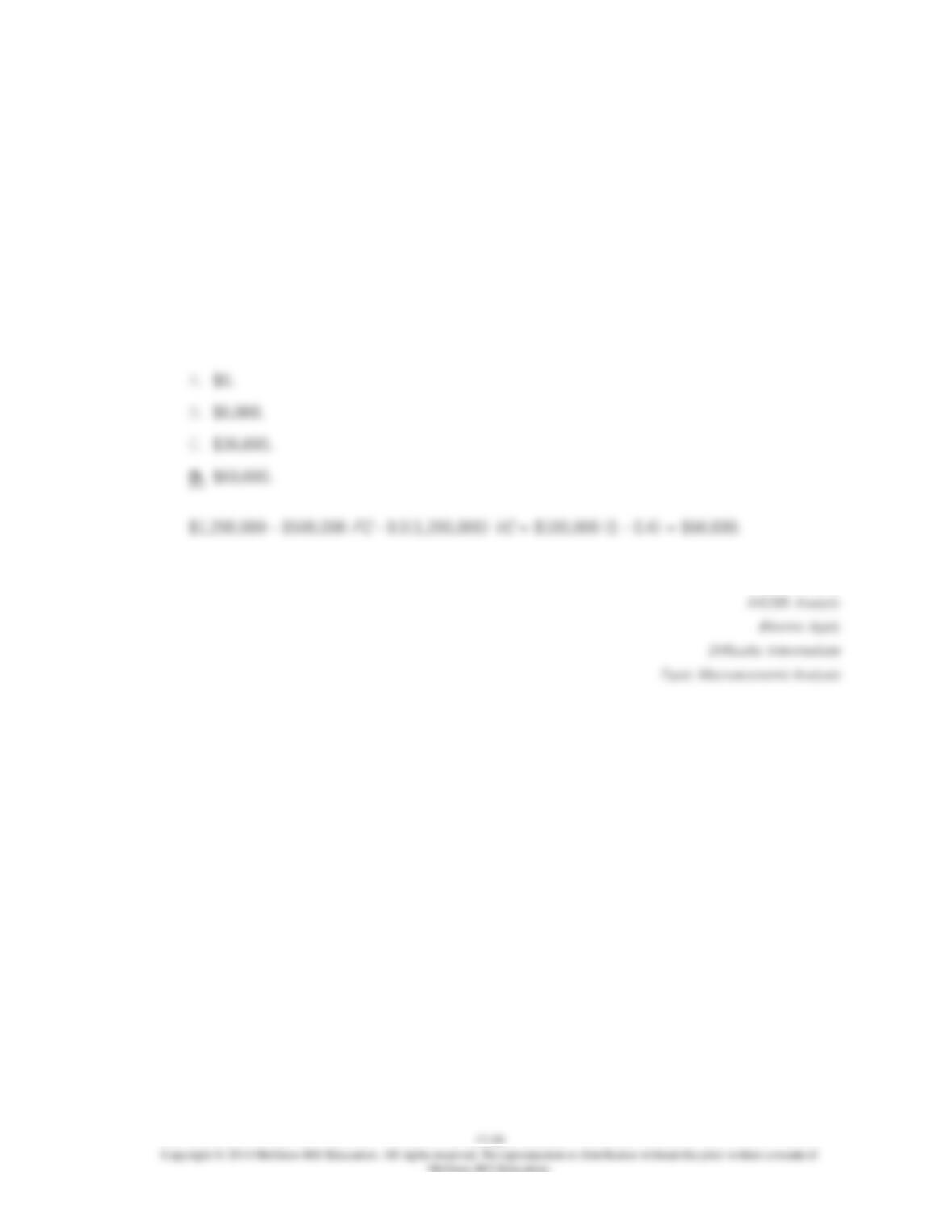
Two firms, A and B, both produce widgets. The price of widgets is $1 each. Firm A has
total fixed costs of $500,000 and variable costs of 50¢ per widget. Firm B has total fixed
costs of $240,000 and variable costs of 75¢ per widget. The corporate tax rate is 40%. If
the economy is strong, each firm will sell 1,200,000 widgets. If the economy enters a
recession, each firm will sell 1,100,000 widgets.
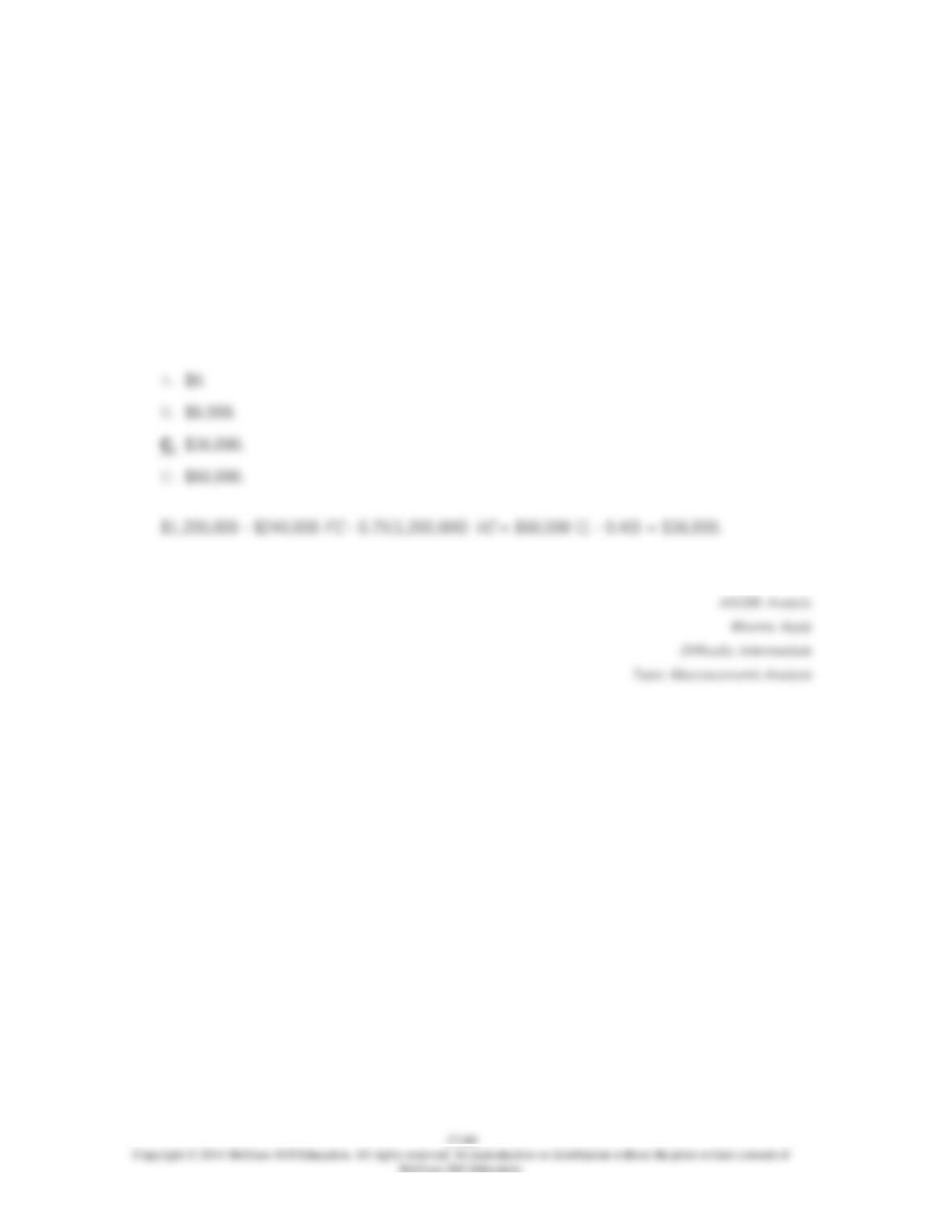
If the economy is strong, the after-tax profit of Firm A will be
37.
Two firms, A and B, both produce widgets. The price of widgets is $1 each. Firm A has
total fixed costs of $500,000 and variable costs of 50¢ per widget. Firm B has total fixed
costs of $240,000 and variable costs of 75¢ per widget. The corporate tax rate is 40%. If
the economy is strong, each firm will sell 1,200,000 widgets. If the economy enters a
recession, each firm will sell 1,100,000 widgets.
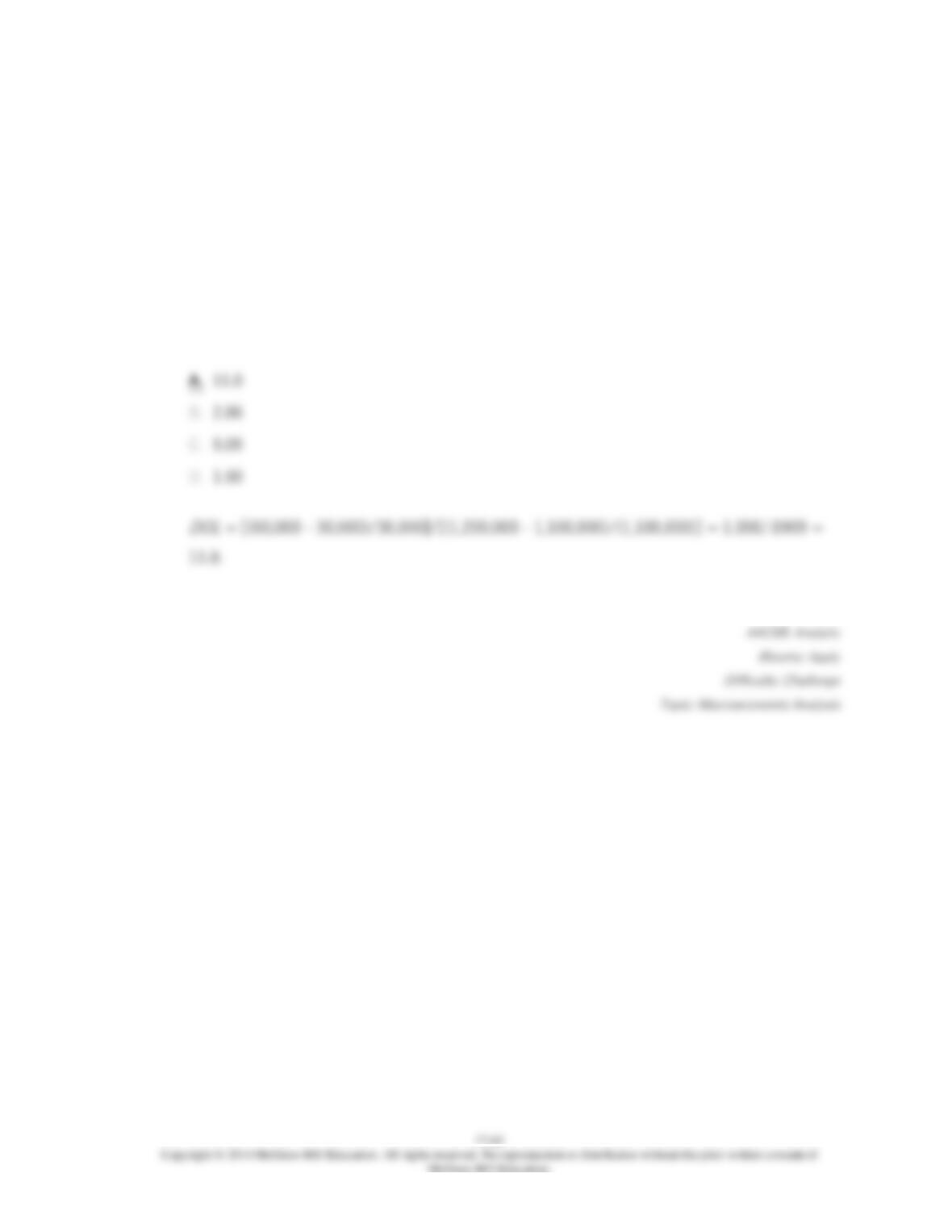
If the economy is strong, the after-tax profit of Firm B will be
38.
Two firms, A and B, both produce widgets. The price of widgets is $1 each. Firm A has
total fixed costs of $500,000 and variable costs of 50¢ per widget. Firm B has total fixed
costs of $240,000 and variable costs of 75¢ per widget. The corporate tax rate is 40%. If
the economy is strong, each firm will sell 1,200,000 widgets. If the economy enters a
recession, each firm will sell 1,100,000 widgets.
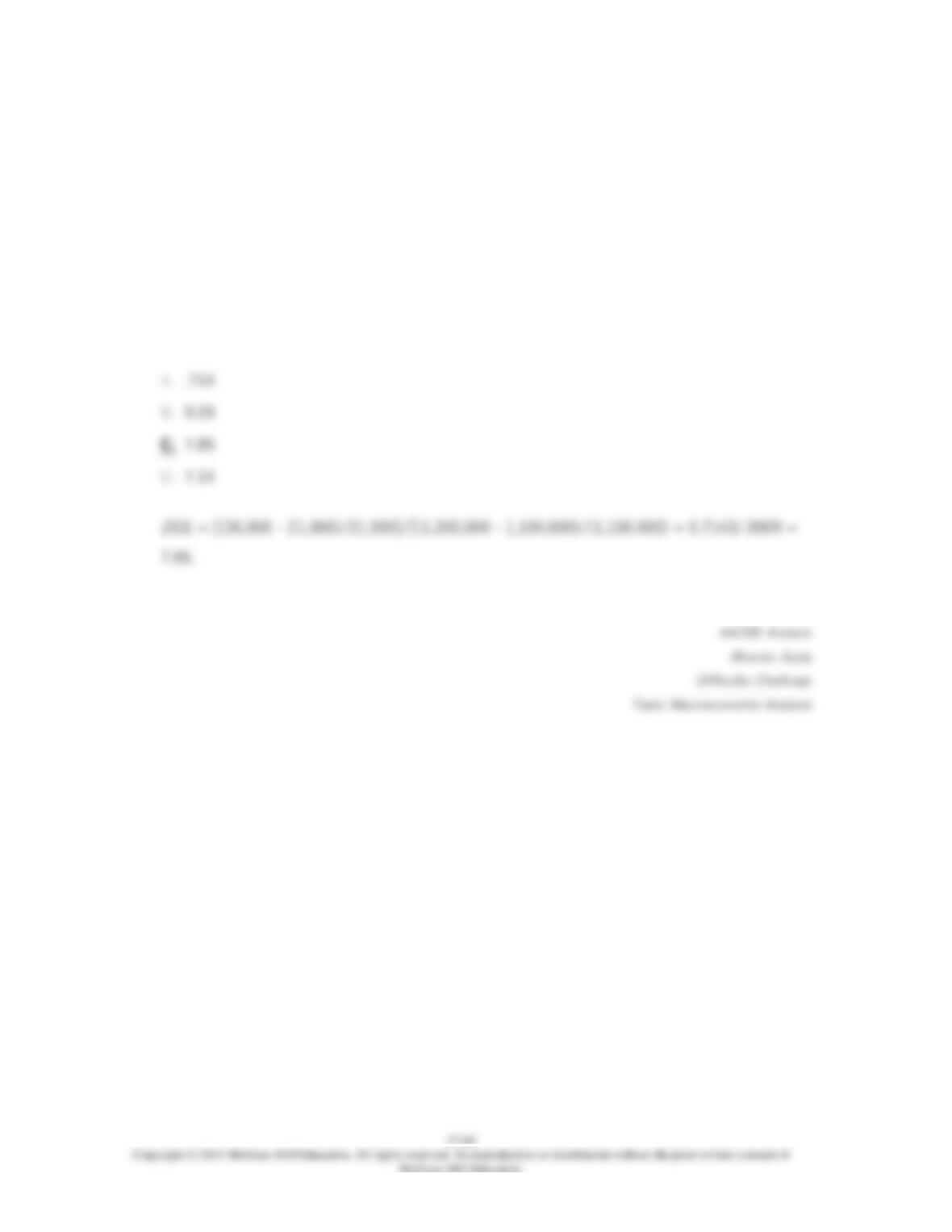
Calculate firm A’s degree of operating leverage.
39.
Two firms, A and B, both produce widgets. The price of widgets is $1 each. Firm A has
total fixed costs of $500,000 and variable costs of 50¢ per widget. Firm B has total fixed
costs of $240,000 and variable costs of 75¢ per widget. The corporate tax rate is 40%. If
the economy is strong, each firm will sell 1,200,000 widgets. If the economy enters a
recession, each firm will sell 1,100,000 widgets.
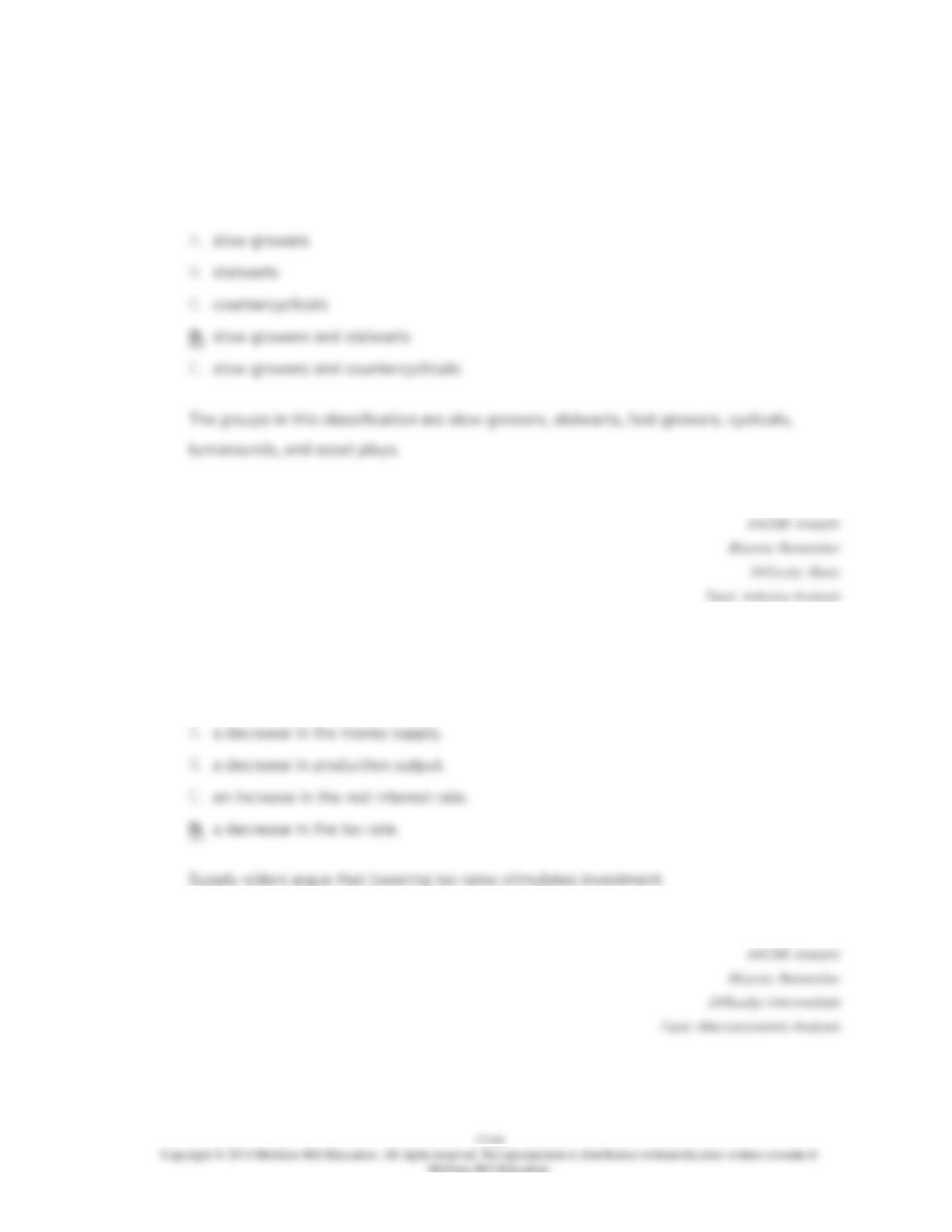
Calculate firm B’s degree of operating leverage.
40.
Classifying firms into groups, such as _________, provides an alternative to the industry life
cycle.
41.
Supply-side economists wishing to stimulate the economy are most likely to recommend
42.
Which of the following are not examples of defensive industries?
43.
Which of the following are examples of defensive industries?
44.
________ is a proposition that a strong proponent of supply-side economics would most
likely stress.
45.
The industry life cycle is described by which of the following stage(s)?
46.
In the start-up stage of the industry life cycle
47.
In the consolidation stage of the industry life cycle
48.
In the maturity stage of the industry life cycle
49.
In the decline stage of the industry life cycle
50.
A variety of factors relating to industry structure affect the performance of the firm,
including
51.
The process of estimating the dividends and earnings that can be expected from the firm
based on determinants of value is called
52.
The stock market exhibiting the highest U.S. dollar return in 2013 was
53.
The life cycle stage in which industry leaders are likely to emerge is the
54.
Investment manager Peter Lynch refers to firms that are in bankruptcy or soon might be
as
55.
A top-down analysis of a firm’s prospects starts with
56.
In recent years, P/E multiples for S&P 500 companies have
57.
The industry with the highest ROE in 2012 was
58.
The industry with the lowest ROE in 2012 was
59.
The industry with the lowest return in 2012 was
60.
The industry with the highest return in 2012 was
61.
Investors can ______ invest in an industry with the highest expected return by purchasing
______.