33.
A Treasury bond due in one year has a yield of 6.2%; a Treasury bond due in five years has
a yield of 6.7%. A bond issued by Xerox due in five years has a yield of 7.9%; a bond issued
by Exxon due in one year has a yield of 7.2%. The default risk premiums on the bonds
issued by Exxon and Xerox, respectively, are
34.
A Treasury bond due in one year has a yield of 4.3%; a Treasury bond due in five years has
a yield of 5.06%. A bond issued by Boeing due in five years has a yield of 7.63%; a bond
issued by Caterpillar due in one year has a yield of 7.16%. The default risk premiums on
the bonds issued by Boeing and Caterpillar, respectively, are
35.
Floating-rate bonds are designed to ___________ while convertible bonds are designed to
__________.
36.
A coupon bond that pays interest annually is selling at par value of $1,000, matures in five
years, and has a coupon rate of 9%. The yield to maturity on this bond is
37.
A coupon bond that pays interest semi-annually is selling at par value of $1,000, matures
in seven years and has a coupon rate of 8.6%. The yield to maturity on this bond is
38.
A coupon bond that pays interest annually has a par value of $1,000, matures in five years,
39.
A coupon bond that pays interest annually has a par value of $1,000, matures in seven
years, and has a yield to maturity of 9.3%. The intrinsic value of the bond today will be
______ if the coupon rate is 8.5%.
40.
A coupon bond that pays interest annually, has a par value of $1,000, matures in five
years, and has a yield to maturity of 10%. The intrinsic value of the bond today will be
_________ if the coupon rate is 12%.
41.
A coupon bond that pays interest semi-annually has a par value of $1,000, matures in five
years, and has a yield to maturity of 10%. The intrinsic value of the bond today will be
__________ if the coupon rate is 8%.
42.
A coupon bond that pays interest semi-annually has a par value of $1,000, matures in
seven years, and has a yield to maturity of 9.3%. The intrinsic value of the bond today will
be ________ if the coupon rate is 9.5%.
43.
A coupon bond that pays interest semi-annually has a par value of $1,000, matures in five
years, and has a yield to maturity of 10%. The intrinsic value of the bond today will be
________ if the coupon rate is 12%.
44.
A coupon bond that pays interest of $100 annually has a par value of $1,000, matures in
five years, and is selling today at a $72 discount from par value. The yield to maturity on
45.
You purchased an annual interest coupon bond one year ago that now has six years
remaining until maturity. The coupon rate of interest was 10% and par value was $1,000.
At the time you purchased the bond, the yield to maturity was 8%. The amount you paid
for this bond one year ago was
46.
You purchased an annual interest coupon bond one year ago that had six years remaining
47.
Consider two bonds, A and B. Both bonds presently are selling at their par value of $1,000.
Each pays interest of $120 annually. Bond A will mature in five years, while bond B will
mature in six years. If the yields to maturity on the two bonds change from 12% to 10%,
48.
A zero-coupon bond has a yield to maturity of 9% and a par value of $1,000. If the bond
matures in eight years, the bond should sell for a price of _______ today.
49.
You have just purchased a 10-year zero-coupon bond with a yield to maturity of 10% and a
par value of $1,000. What would your rate of return at the end of the year be if you sell the
bond? Assume the yield to maturity on the bond is 11% at the time you sell.
1.4%.
50.
A Treasury bill with a par value of $100,000 due one month from now is selling today for
$99,010. The effective annual yield is
51.
A Treasury bill with a par value of $100,000 due two months from now is selling today for
$98,039, with an effective annual yield of
52.
A Treasury bill with a par value of $100,000 due three months from now is selling today for
$97,087, with an effective annual yield of
53.
A coupon bond pays interest semi-annually, matures in five years, has a par value of
$1,000 and a coupon rate of 12%, and an effective annual yield to maturity of 10.25%. The
price the bond should sell for today is
54.
A convertible bond has a par value of $1,000 and a current market price of $850. The
current price of the issuing firm’s stock is $29 and the conversion ratio is 30 shares. The
bond’s market conversion value is
55.
A convertible bond has a par value of $1,000 and a current market value of $850. The
current price of the issuing firm’s stock is $27 and the conversion ratio is 30 shares. The
bond’s conversion premium is
56.
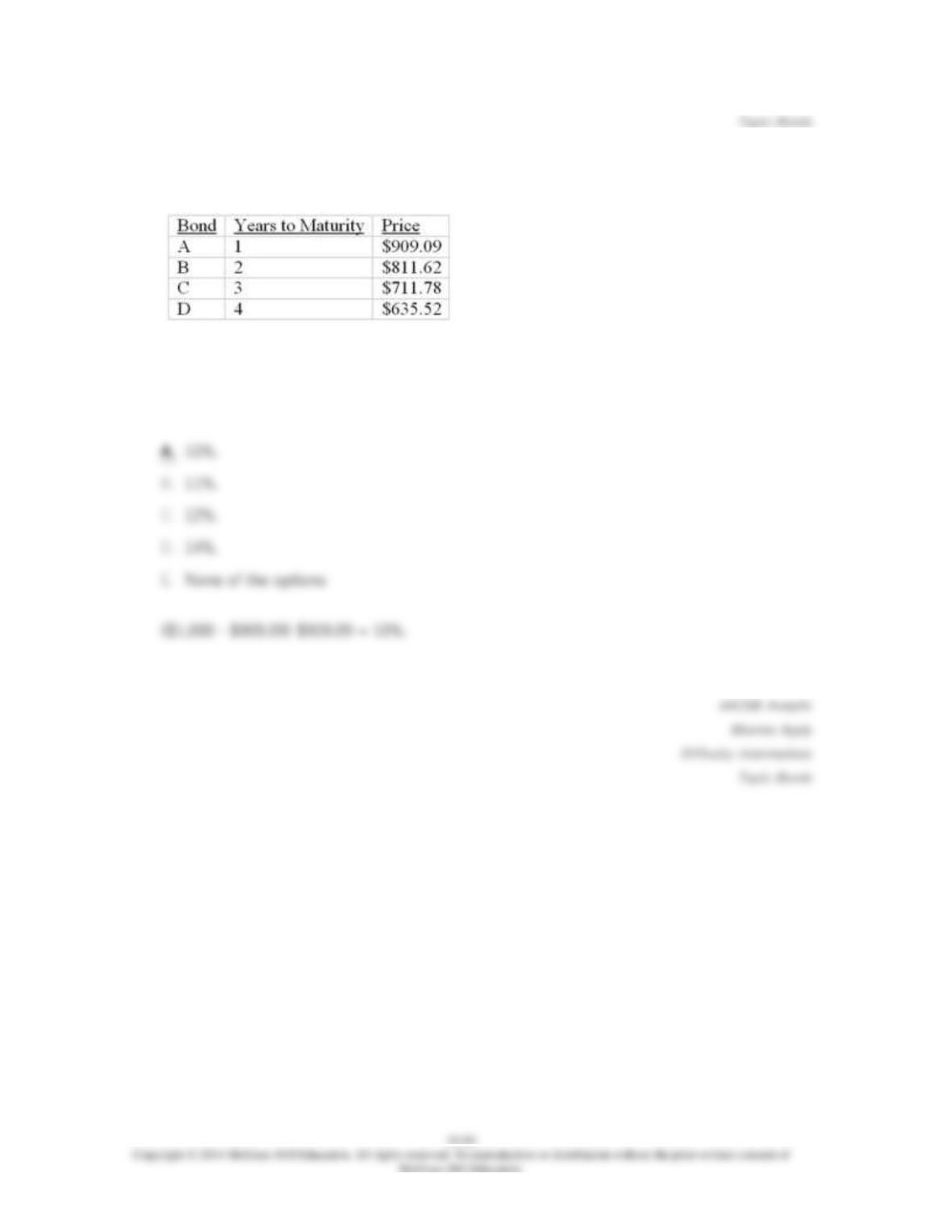
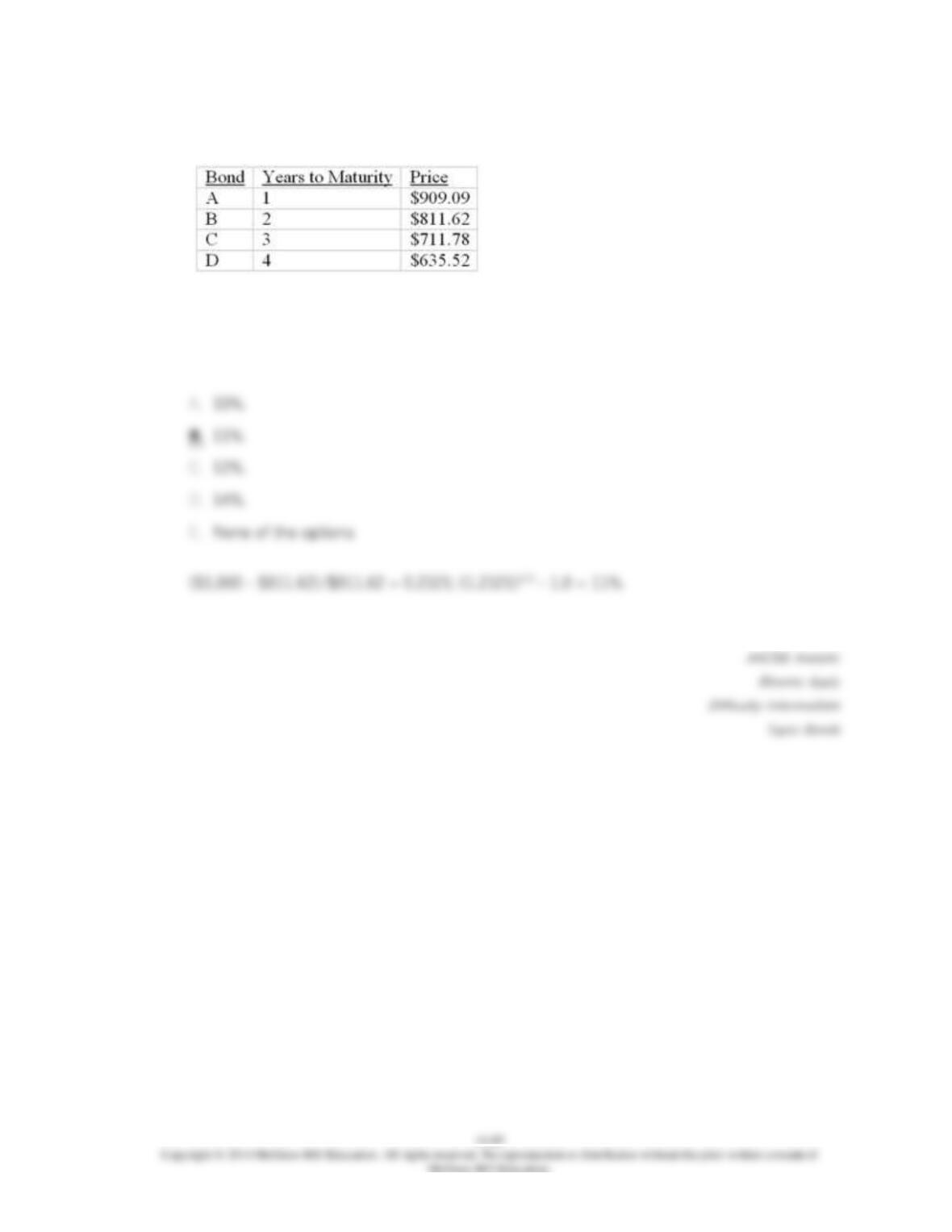
Consider the following $1,000 par value zero-coupon bonds:
The yield to maturity on bond A is
57.
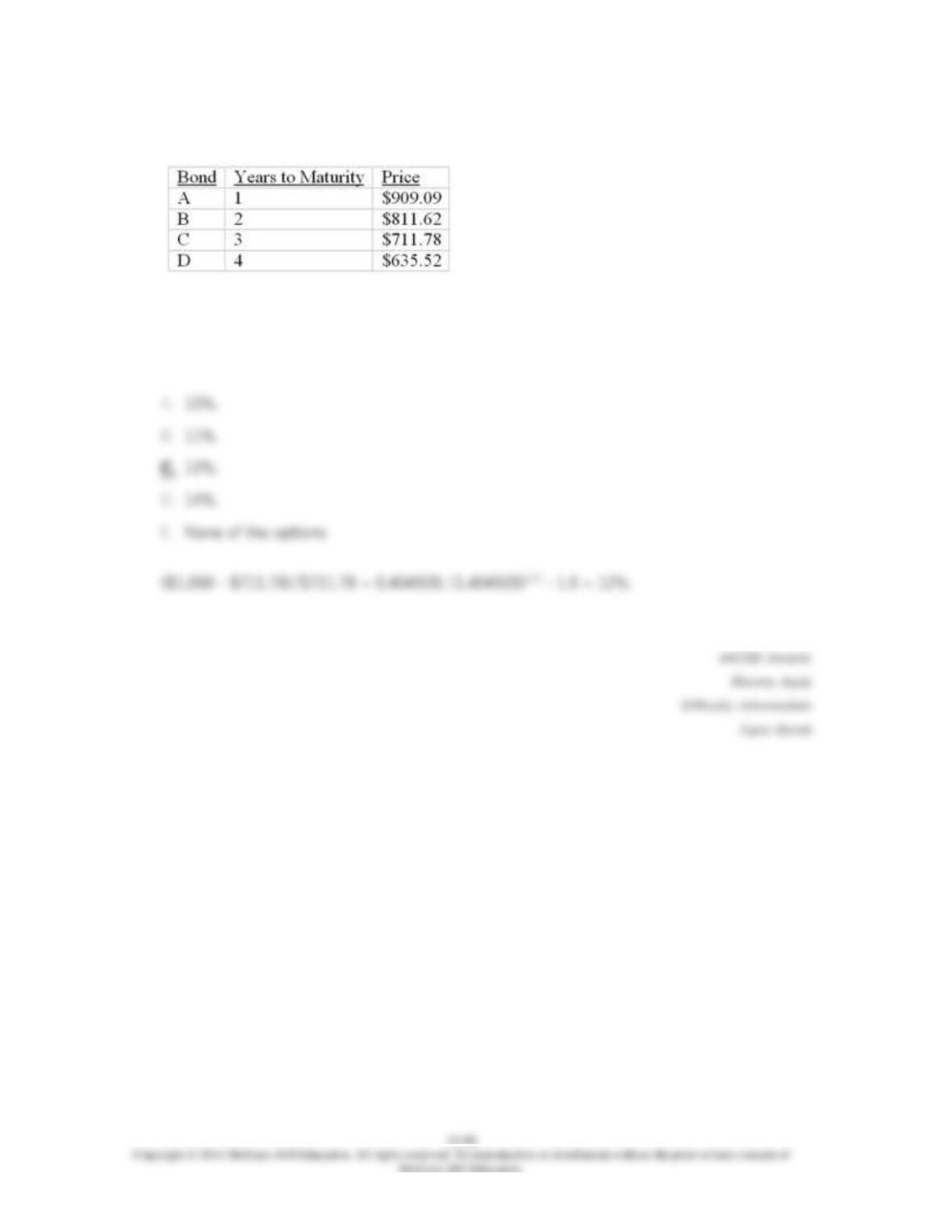
Consider the following $1,000 par value zero-coupon bonds:
The yield to maturity on bond B is
58.
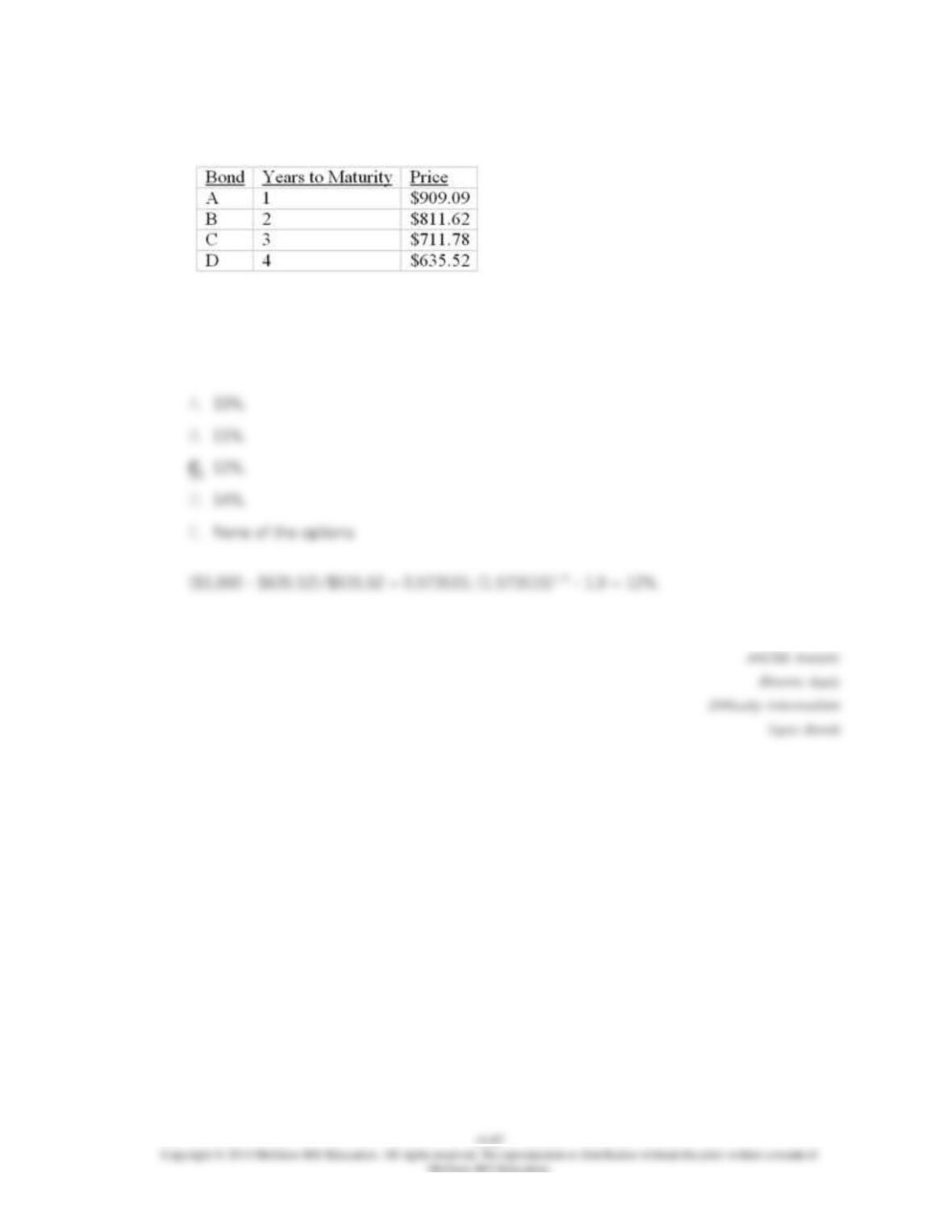
Consider the following $1,000 par value zero-coupon bonds:
The yield to maturity on bond C is
59.
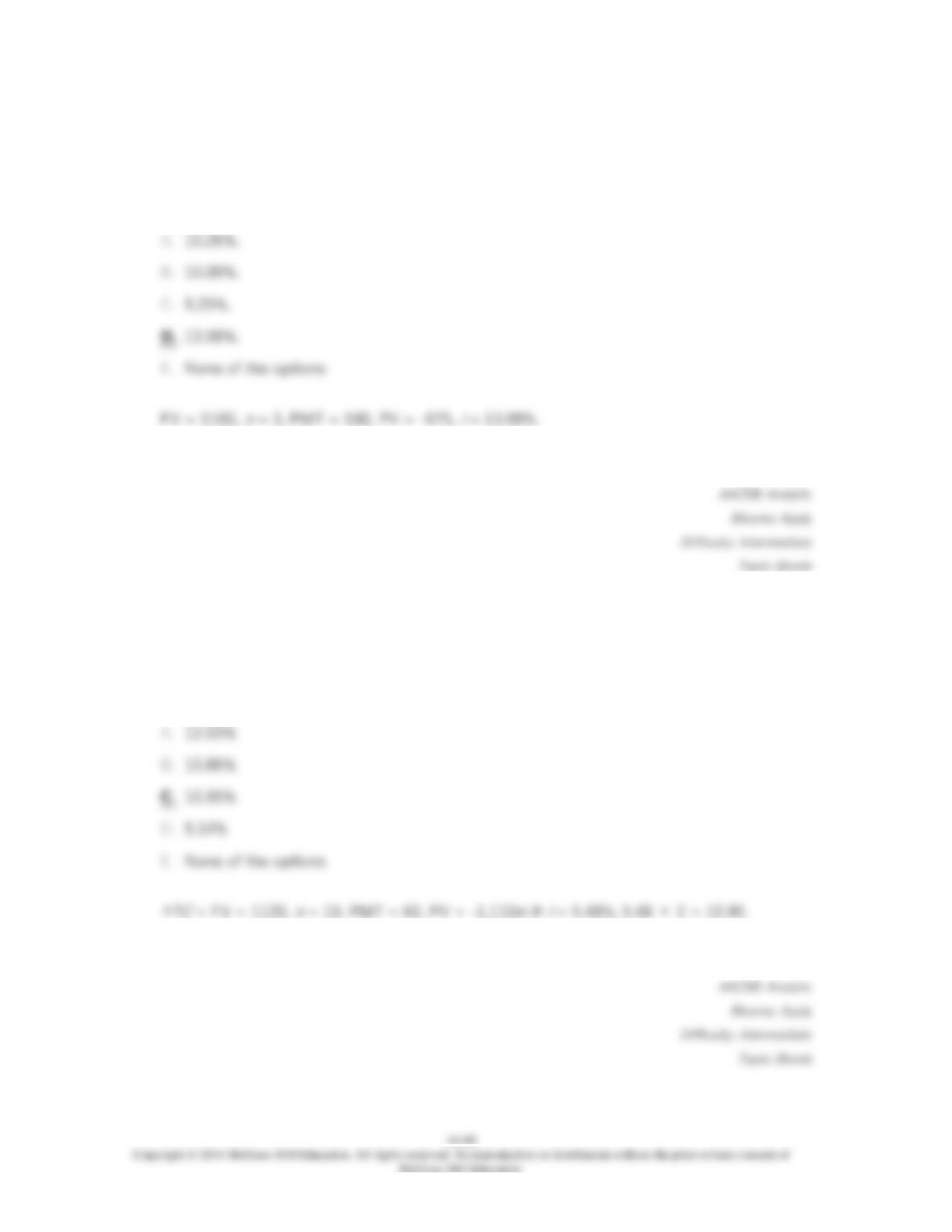
Consider the following $1,000 par value zero-coupon bonds:
The yield to maturity on bond D is
60.
A 10% coupon bond, annual payments, 10 years to maturity is callable in three years at a
call price of $1,100. If the bond is selling today for $975, the yield to call is
61.
A 12% coupon bond, semi-annual payments, is callable in five years. The call price is
$1,120; if the bond is selling today for $1,110, what is the yield to call?