113.
A 7% coupon bond with an ask price of 100:00 pays interest every 182 days. If the bond
paid interest 32 days ago, the invoice price of the bond would be
114.
A 7.5% coupon bond with an ask price of 100:00 pays interest every 182 days. If the bond
paid interest 62 days ago, the invoice price of the bond would be
115.
A 9% coupon bond with an ask price of 100:00 pays interest every 182 days. If the bond
paid interest 112 days ago, the invoice price of the bond would be
116.
One year ago, you purchased a newly issued TIPS bond that has a 5% coupon rate, five
years to maturity, and a par value of $1,000. The average inflation rate over the year was
3.2%. What is the amount of the coupon payment you will receive and what is the current
face value of the bond?
117.
One year ago, you purchased a newly issued TIPS bond that has a 4% coupon rate, five
years to maturity, and a par value of $1,000. The average inflation rate over the year was
3.6%. What is the amount of the coupon payment you will receive, and what is the current
face value of the bond?
118.
A CDO is a
119.
A CDS is a
120.
A credit default swap is
121.
The compensation from a CDS can come from
122.
SIVs are
123.
SIVs raise funds by ______ and then use the proceeds to ______.
124.
CDOs are divided in tranches
14-131
125.
Mortgage-backed CDOs were a disaster in 2007 because
Short Answer Questions
126.
If you are buying a coupon bond between interest paying dates, is the amount you would
pay to your broker for the bond more or less than the amount quoted in the financial
quotation pages? Discuss the differences and how these differences arise.
127.
Discuss the taxation ramifications of zero-coupon bonds. How has this taxation procedure
changed over the years? How has this change affected the demand for these bonds?
128.
Why are many bonds callable? What is the disadvantage to the investor of a callable
bond? What does the investor receive in exchange for a bond being callable? How are
bond valuation calculations affected if bonds are callable?
14-135
129.
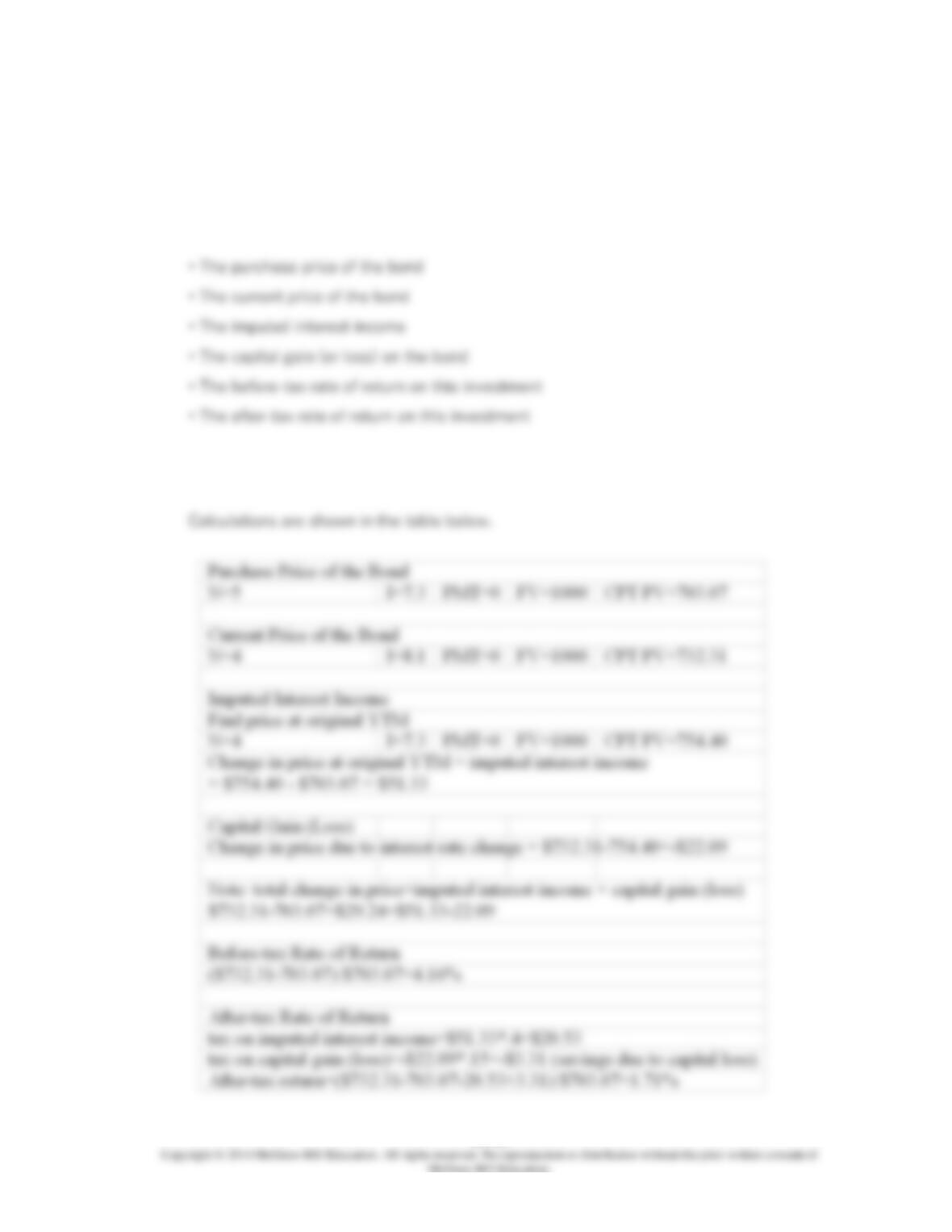
You purchased a zero-coupon bond that has a face value of $1,000, five years to maturity,
and a yield to maturity of 7.3%. It is one year later and similar bonds are offering a yield to
maturity of 8.1%. You will sell the bond now. You have a tax rate of 40% on regular income
and 15% on capital gains. Calculate the following for this bond.