
CHAPTER 17—BOND FUNDAMENTALS
TRUE/FALSE
Question: Public bonds differ from other debt because they are sold to the public rather
than to a single investor.
Answer:
Question: A nonrefunding provision prohibits a call and premature retirement of an issue
from the proceeds of a lower-coupon refunding bond.
Answer:
Question: In the case of a bond, the only contractual factor is the amount of interest
payments, since beginning and ending bond prices are determined by market forces.
Answer:
Question: In Germany, the government sector is the largest bond market segment.
Answer:
Question: Wealthy individual investors typically account for 90 to 95 percent of investors
in the bond market.
Answer:

Question: High-yield bonds are considered “investment” grade.
Answer:
Question: Government bond issues require an annual sinking fund payment of not less than
one percent of the outstanding issue.
Answer:
Question: Most U.S. municipal bonds are serial issues which are subject to state and local
taxes when they are issued in the investors home state.
Answer:
Question: The secondary bond market is significantly more active than the stock market.
Answer:
Question: High-yield bonds are considered “investment” grade.
Answer:

Question: A bonds price is determined by the issues coupon rate, length to maturity, and
the prevailing yield in the market.
Answer:
Question: Bonds can have different types of collateral and can be either secured, unsecured
or registered bonds.
Answer:
Question: A bonds maturity is affected by: call features, non-refunding provisions, and
sinking fund provisions.
Answer:
Question: Treasury Inflation Protected Securities (TIPS) ensures that investors will
received the promised yield in real terms by indexing bond principal and interest payments
to the stock market.
Answer:
Question: The coupon of a bond indicates the income that the bond investor will receive
over the life of the bond.
Answer:
Question: Bonds rated BB or above are considered to be investment grade bonds.
Answer:
Question: As of 2008, approximately 80% of all new municipal bond issues are insured.
Answer:
Question: The bond market segments that tend to be highly correlated and move together
include
Answer:

Question: Of the following provisions that might be found in a bond indenture, which
would tend to reduce the coupon interest rate?
Answer:
Question: The refunding provision of an indenture allows bonds to be retired unless
Answer:

Question: Serial bonds
Answer:
Question: Which of the following statements is not true regarding bond ratings?

Answer:
Question: When a fixed income security is being traded but the issuer is not meeting
interest payments it is trading
Answer:
Question: The corporate bond market in Japan

Answer:
Question: The bonds issued by the Bank of England are known as
Answer:
Question: When a bond issue is secured by a legal claim on equipment it is known as a
Answer:

Question: Which set of conditions will result in a bond with the greatest volatility?
Answer:
Question: The annual interest paid on a bond relative to its prevailing market price is
called its
Answer:

Question: The institutions which invest most heavily in corporate bond issues are
Answer:
Question: Which of the following is not a major rating agency for bonds?
Answer:
Question: Treasury bonds which can be purchased at a discount to be used at par to pay

estate taxes are called
Answer:
Question: The major owners of high-yield bonds have been
Answer:
Question: When a fixed income security is being traded at the price above its face value it
is trading

Answer:
Question: A security that has a coupon that is periodically adjusted is a
Answer:
Question: The following are participating issuers in bond markets
Answer:

Question: The following are participating investors in bond markets.
Answer:
Question: Institutional investors typically account for about
Answer:
Question: Alternative institutions favor different sectors of the bond market based on

Answer:
Question: Bond ratings are positively related to
Answer:
Question: Bond ratings are negatively related to
Answer:

Question: TIPS are U.S Treasury securities where the coupon rate is
Answer:
Question: If the yield to maturity for a par value TIPS bond with 8 years to maturity is 3%,
and the yield to maturity of a U.S Treasury note with 8 years is 4.25%, this implies that
Answer:

Question: The face value of a U.S. government agency security
Answer:
Question: A major source of risk faced by GNMA issues is
Answer:
Question: When homeowners pay off mortgages when they sell their homes, or when
homeowners refinance home mortgages, they effectively

Answer:
Question: General obligation bonds are
Answer:

Question: Revenue bonds are
Answer:
Question: Collateralized Mortgage obligations are

Answer:
Question: A bond denominated in U.S. dollars and sold in Japan to Japanese investors is
called a
Answer:
Question: The legal document setting forth the obligations of a bonds issuer is called

Answer:
Question: Collateralized mortgage obligations (CMOs) offset some of the problems
associated with traditional mortgage pass-throughs because
Answer:
Question: A bond that only pays a principal payment at maturity date is known as a:
Answer:

Question: What was developed in the early 1980s to offset some of the problems with
traditional mortgage pass-throughs.
Answer:
Question: Which of the following statements regarding Collateralized Debt Obligations
(CDOs) is false?

Answer:
Question: A U.S. dollar-denominated bond sold in the United States by a Japanese-firm is
called a(n):
Answer:
Question: Which of the following entities acquire mortgages and create mortgage backed
securities?

Answer:
Question: When a borrower pledges financial assets as collateral for a bond it is called a(n)
Answer:
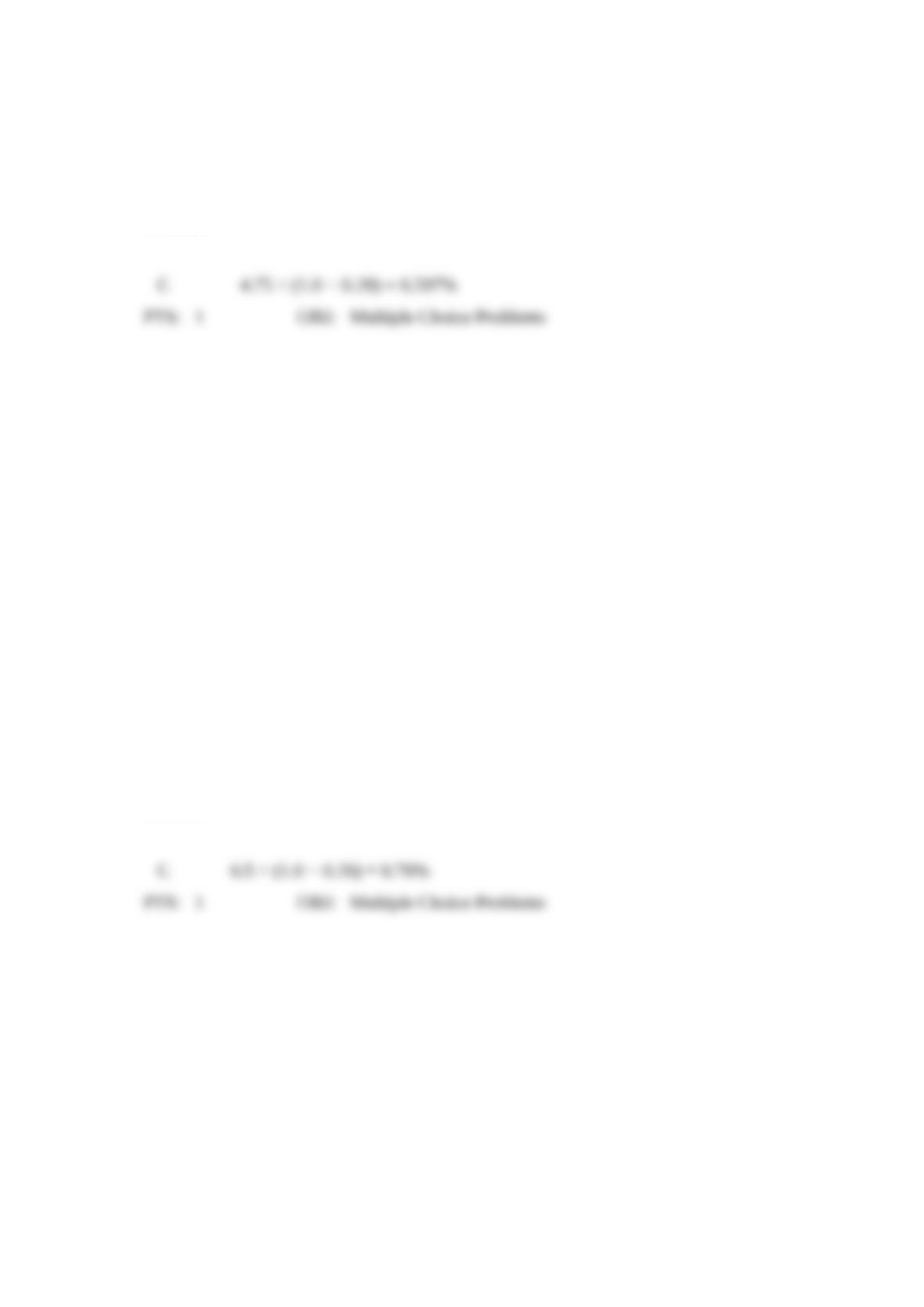
Question: An 4.75 percent coupon bond issued by the State of Washington sells for $1,000.
What coupon rate on a corporate bond selling at $1,000 par value would produce the same
after tax return to the investor as the municipal bond if the investor is in the 28 percent
marginal tax bracket?
Answer:
Question: A 6.5 percent coupon bond issued by the State of California sells for $1,000.
What coupon rate on a corporate bond selling at $1,000 par value would produce the same
after tax return to the investor as the municipal bond if the investor is in the 26 percent
marginal tax bracket?
Answer:
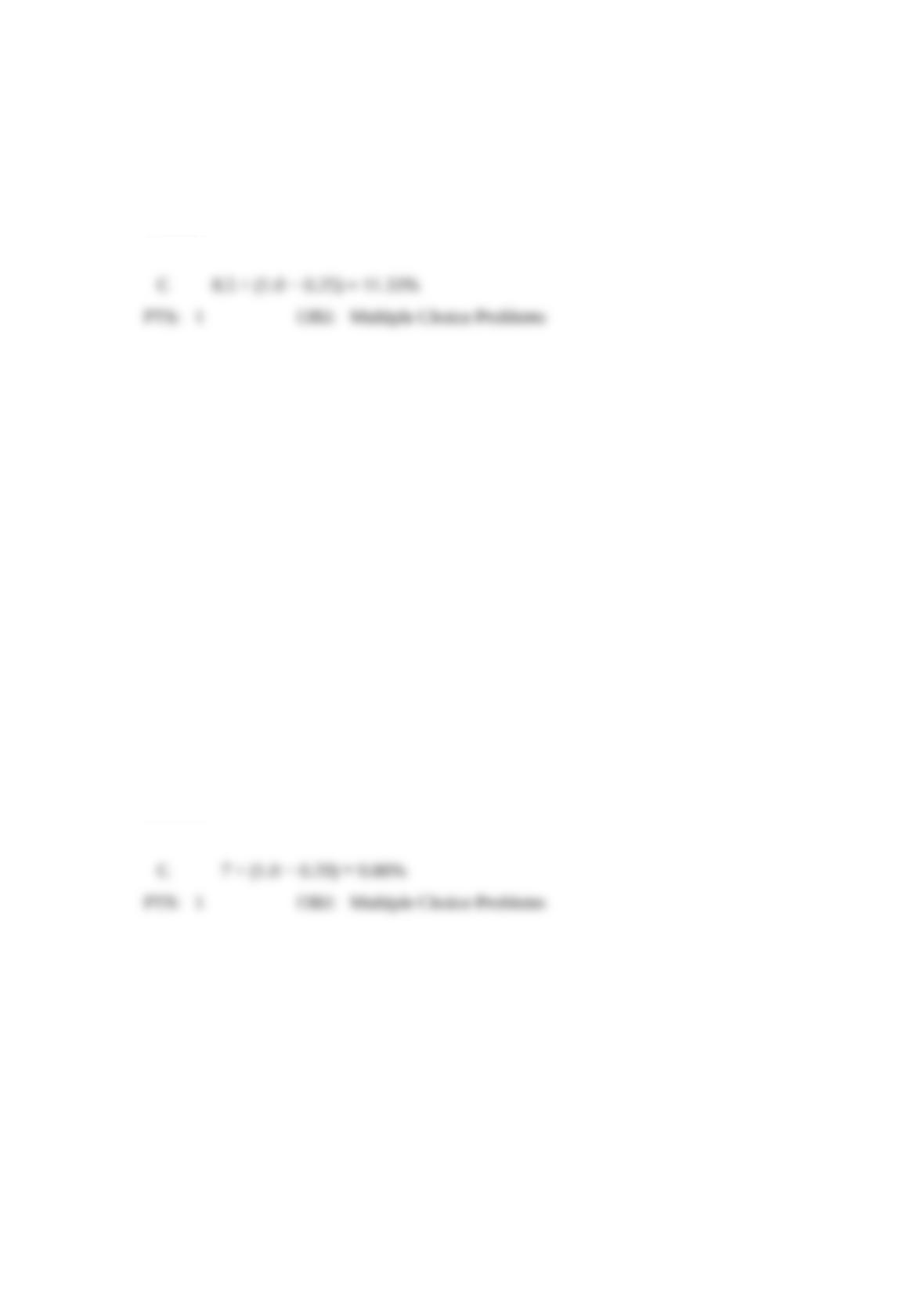
Question: An 8.5 percent coupon bond issued by the State of Ohio sells for $1,000. What
coupon rate on a corporate bond selling at $1,000 par value would produce the same after
tax return to the investor as the municipal bond if the investor is in the 25 percent marginal
tax bracket?
Answer:
Question: A 7.0 percent coupon bond issued by the State of Tennessee sells for $1,000.
What coupon rate on a corporate bond selling at $1,000 par value would produce the same
after tax return to the investor as the municipal bond if the investor is in the 29 percent
marginal tax bracket?
Answer:
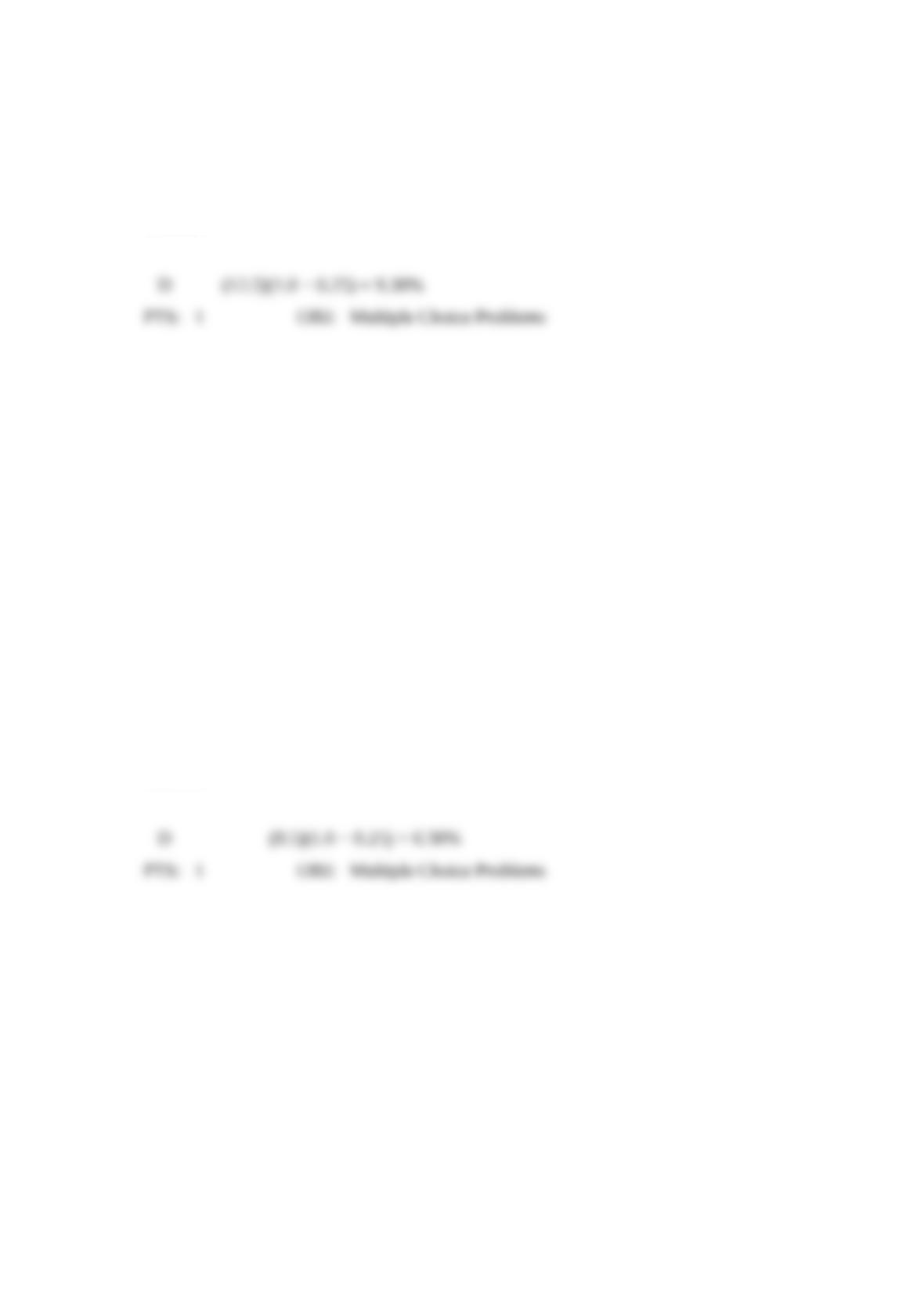
Question: At what point would an investor be indifferent between a Drifton corporate bond
yielding 12.5 percent and a tax-free municipal bond of equal financial strength if the
investors marginal tax rate is 25 percent?
Answer:
Question: At what point would an investor be indifferent between a Compco corporate
bond yielding 8.5 percent and a tax-free municipal bond of equal financial strength if the
investors marginal tax rate is 25 percent?
Answer:
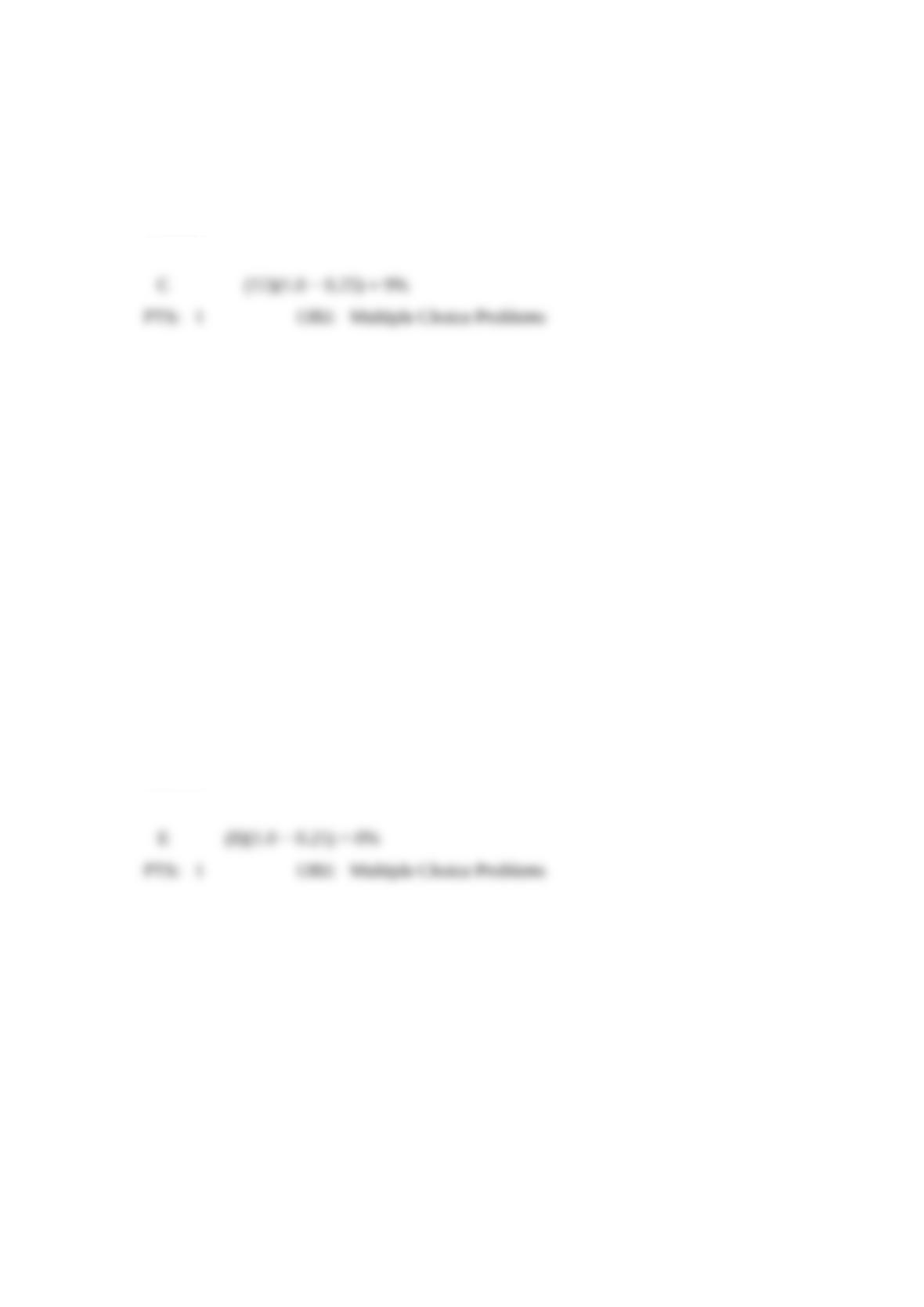
Question: At what point would an investor be indifferent between a Trifton corporate bond
yielding 12.0 percent and a tax-free municipal bond of equal financial strength if the
investors marginal tax rate is 25 percent?
Answer:
Question: At what point would an investor be indifferent between a Bridgford corporate
bond yielding 8.0 percent and a tax-free municipal bond of equal financial strength if the
investors marginal tax rate is 25 percent?
Answer:
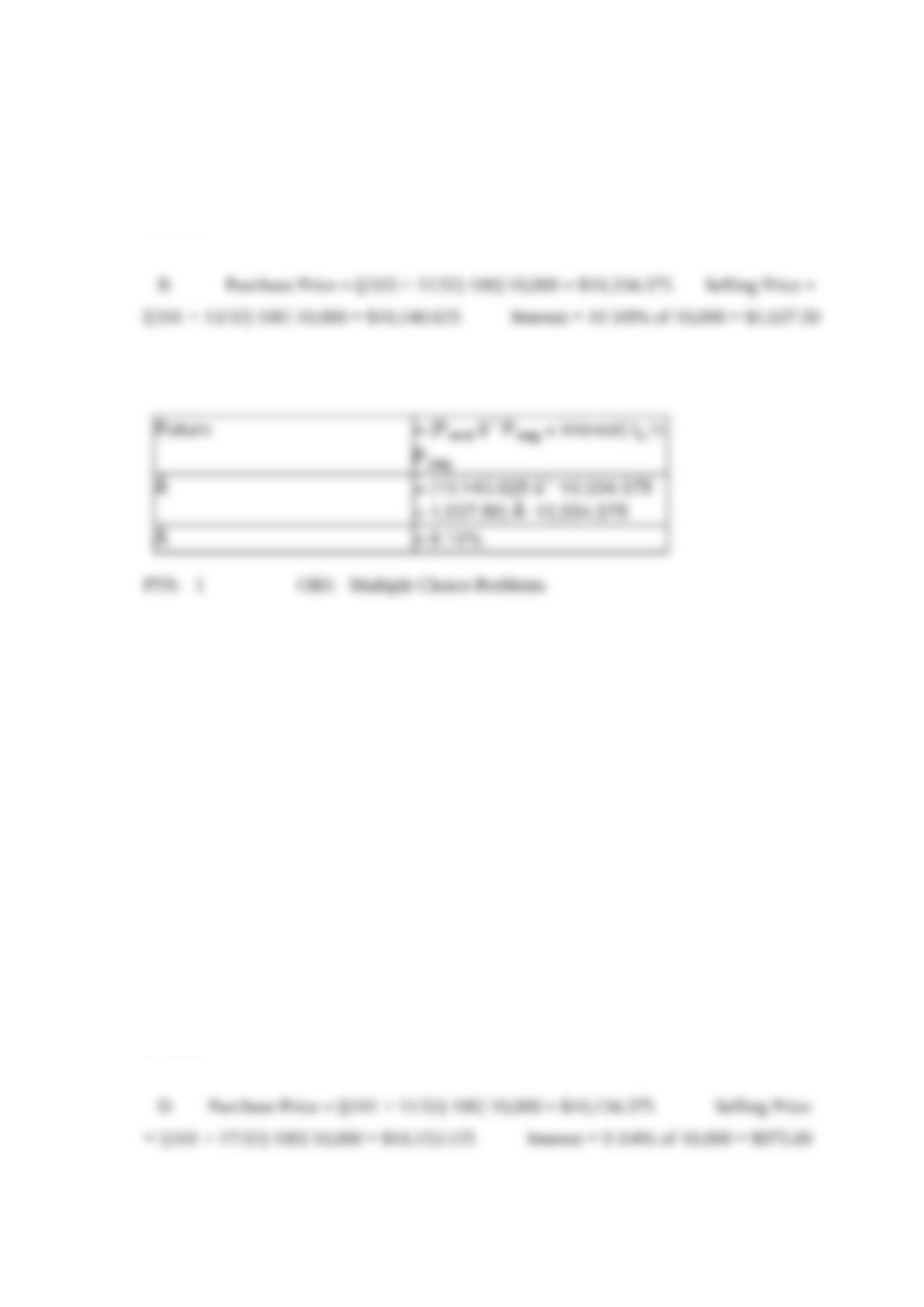
Question: You purchase a 10 3/8s 2001 Feb. $10,000 par Treasury Note at 103:11 and hold
it for exactly one year at which time you sell it. What is your rate of return if your selling
price is 101:13?
Answer:
Question: You purchase a 9 3/4s 2001 Feb. $10,000 par Treasury Note at 101:11 and hold
it for exactly one year at which time you sell it. What is your rate of return if your selling
price is 101:17?
Answer:
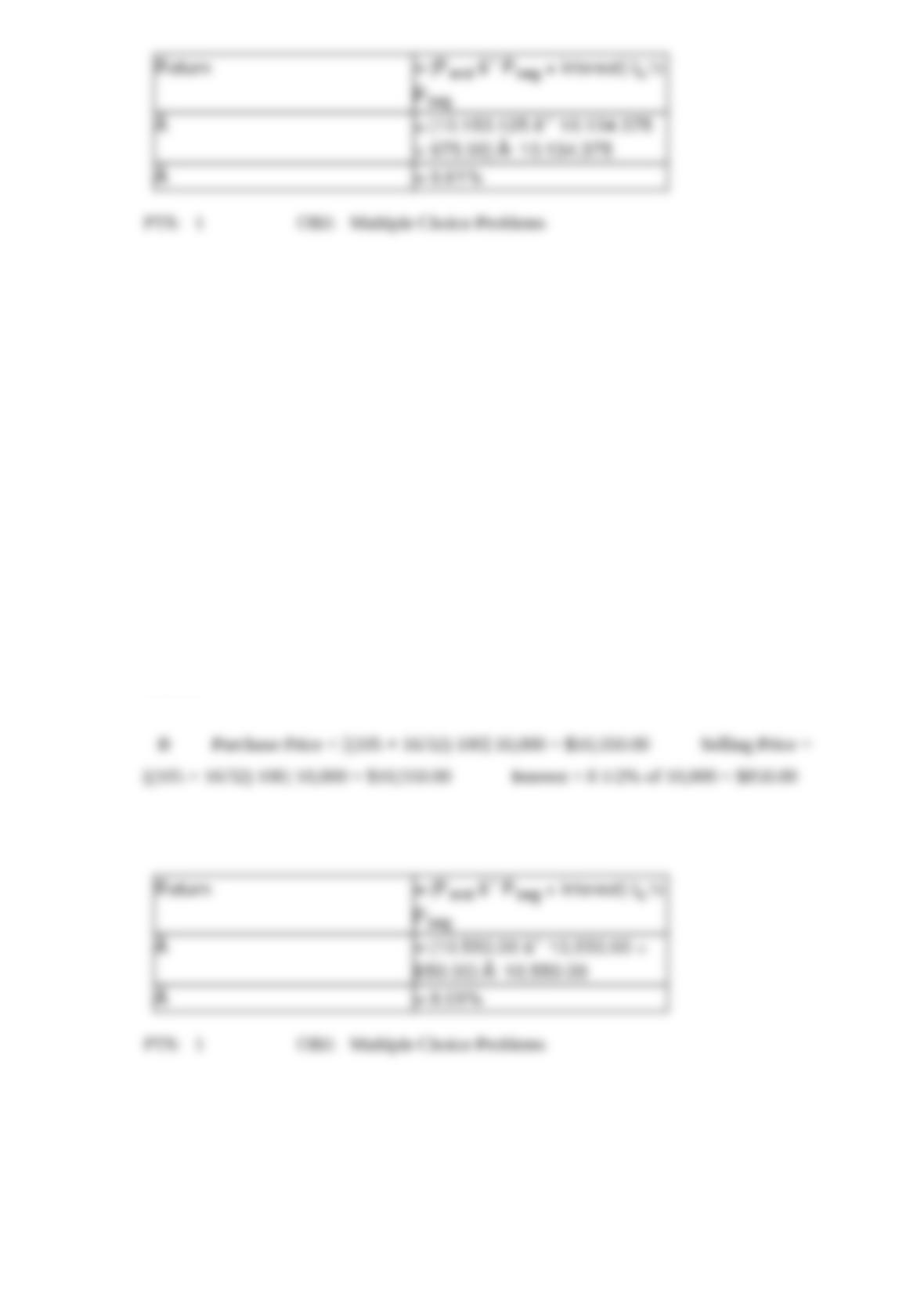
Question: You purchase a 8 1/2s 2001 Feb. $10,000 par Treasury Note at 105:16 and hold
it for exactly one year at which time you sell it. What is your rate of return if your selling
price is 105:16?
Answer:
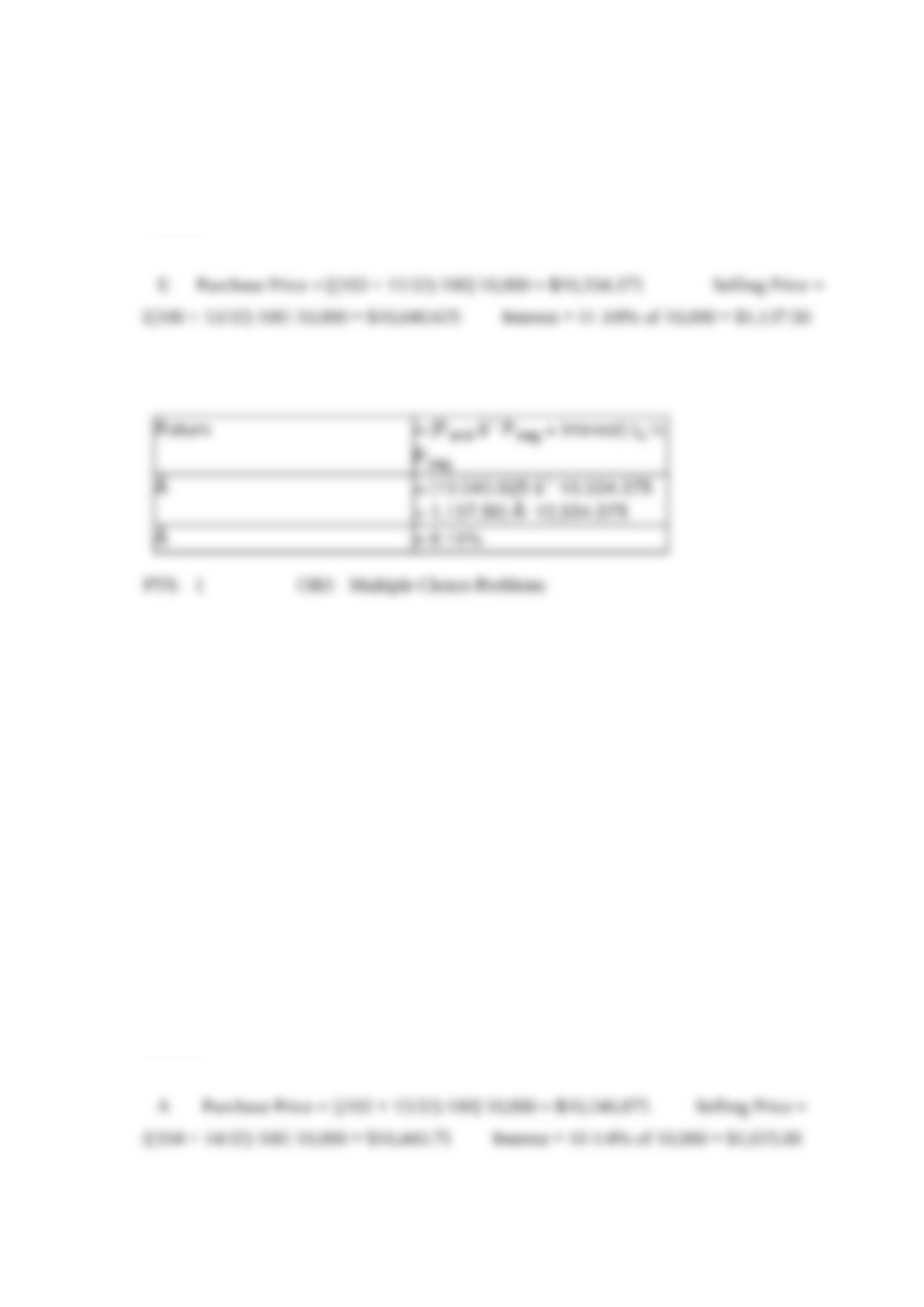
Question: You purchase a 11 3/8s 2001 Feb. $10,000 par Treasury Note at 103:11 and hold
it for exactly one year at which time you sell it. What is your rate of return if your selling
price is 100:13?
Answer:
Question: You purchase a 10 1/4s 2001 Feb. $10,000 par Treasury Note at 102:15 and hold
it for exactly one year at which time you sell it. What is your rate of return if your selling
price is 104:14?
Answer:
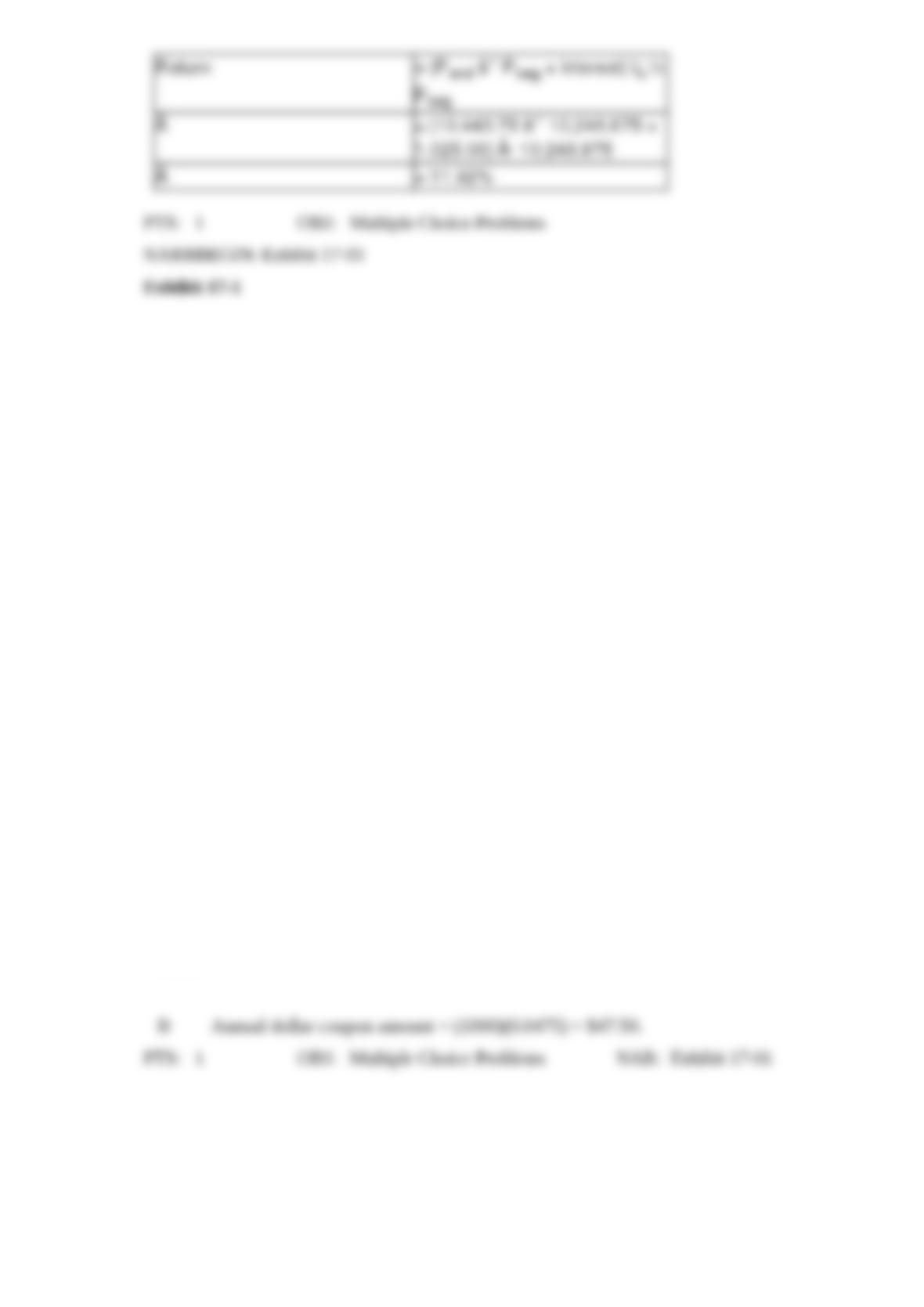
USE THE FOLLOWING INFORMATION TO ANSWER THE NEXT PROBLEM(S)
NARREND
Question: Refer to Exhibit 17-1. What annual dollar coupon amount will investors receive?
Answer:
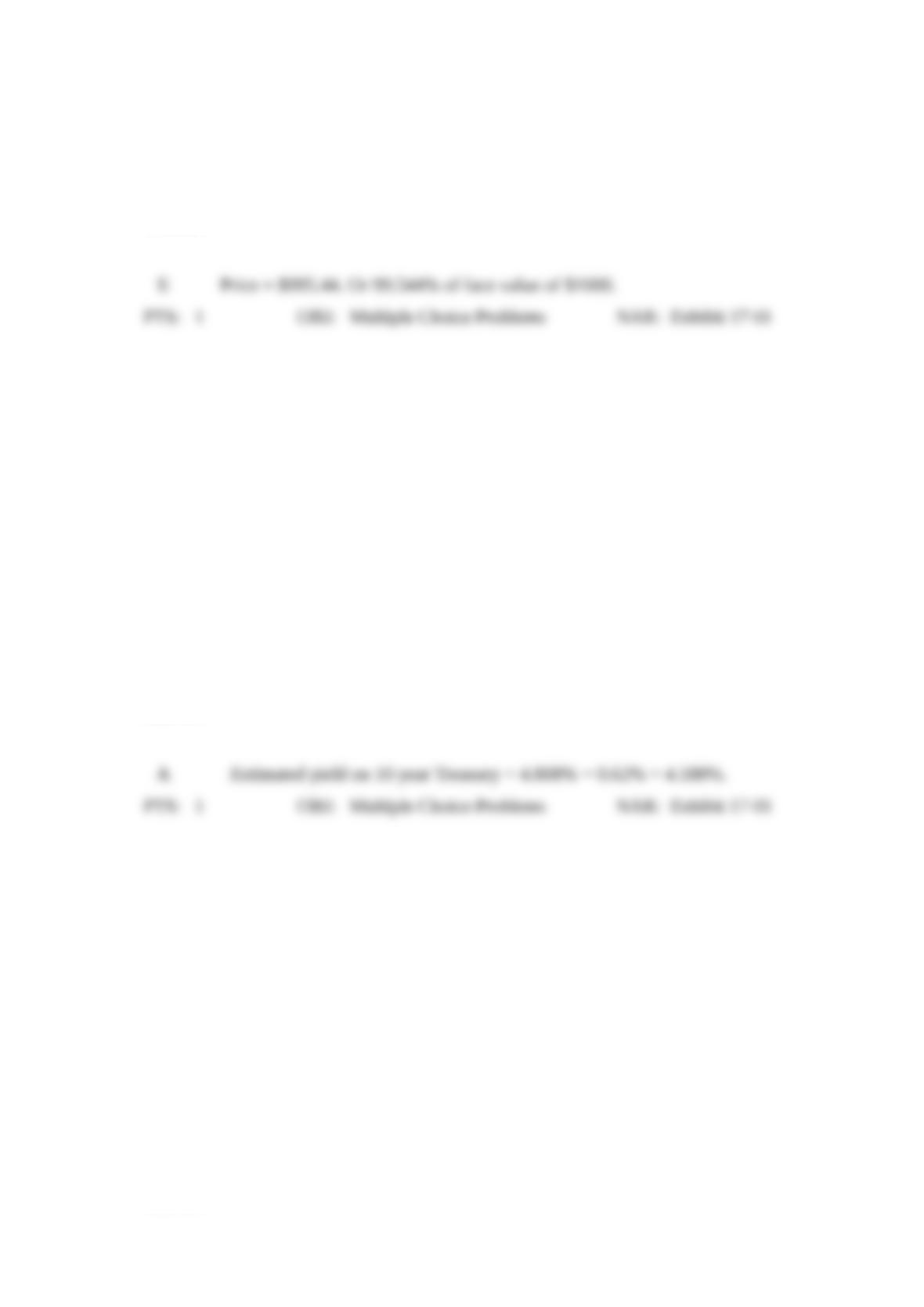
Question: Refer to Exhibit 17-1. What price would you pay in dollars to purchase this
bond?
Answer:
Question: Refer to Exhibit 17-1. What is the estimated yield on Treasury securities?
Answer:
Question: Refer to Exhibit 17-1. What is the current yield for this bond?
Answer:
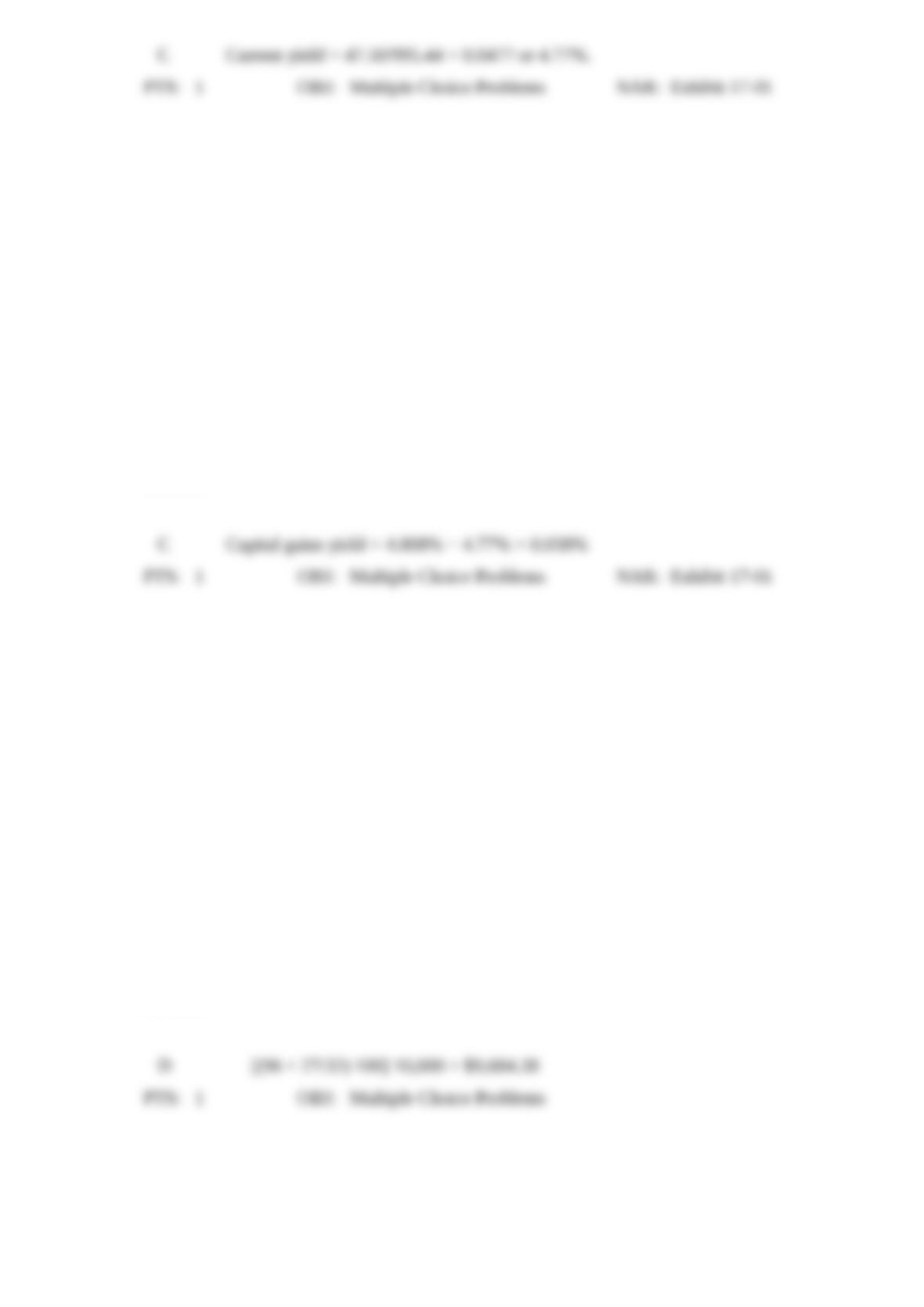
Question: Refer to Exhibit 17-1. What is the capital gains/loss yield on this bond?
Answer:
Question: How much would you expect to pay for a $10,000 Treasury note quoted at
96:27?
Answer:
Question: How much would you expect to pay for a $10,000 stripped Treasury bond
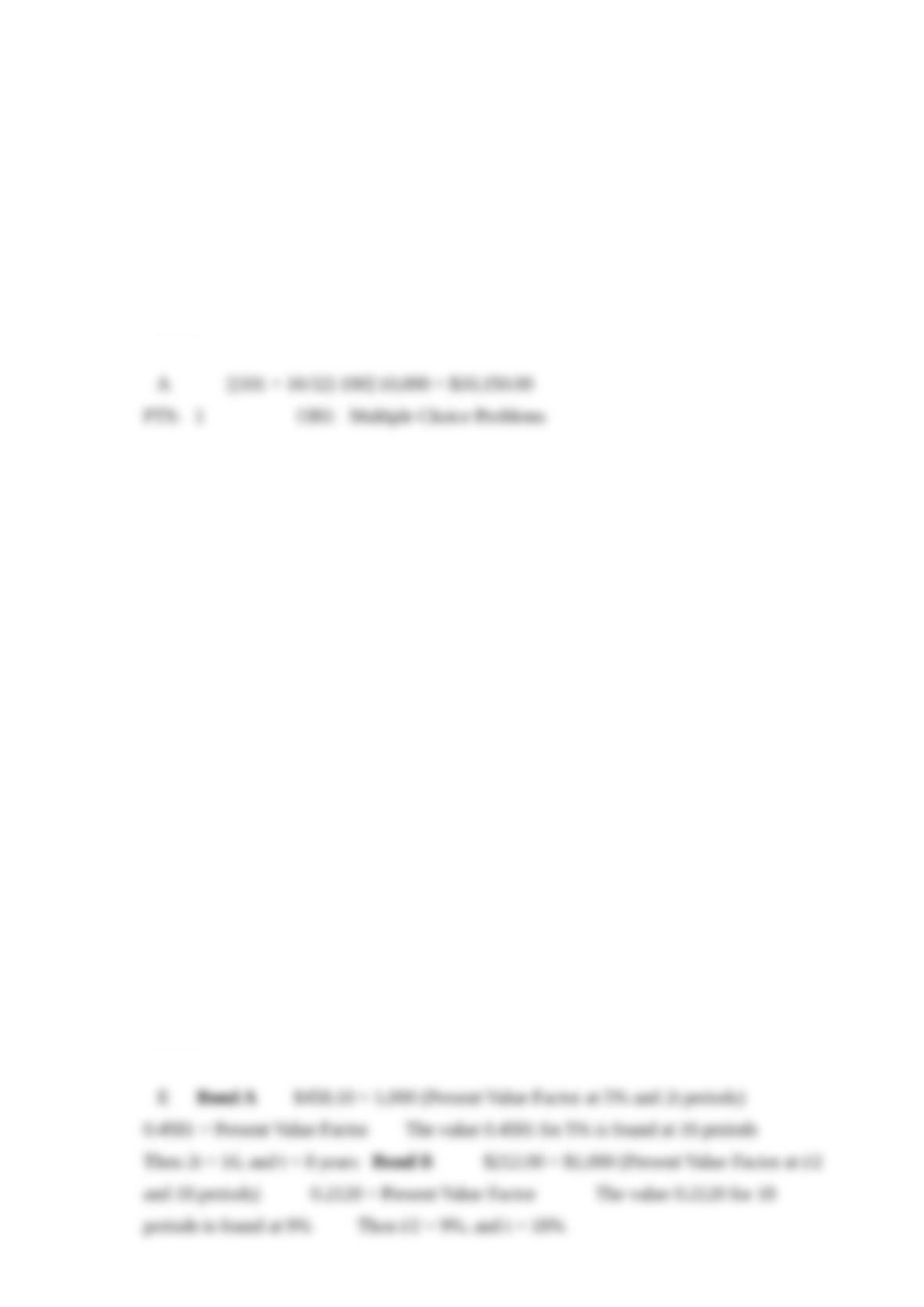
quoted at 101:16?
Answer:
Question: For bonds A and B below, find the values of X and Y assuming each is a zero
coupon bond with a $1,000 face value (semiannual compounding).
Answer:
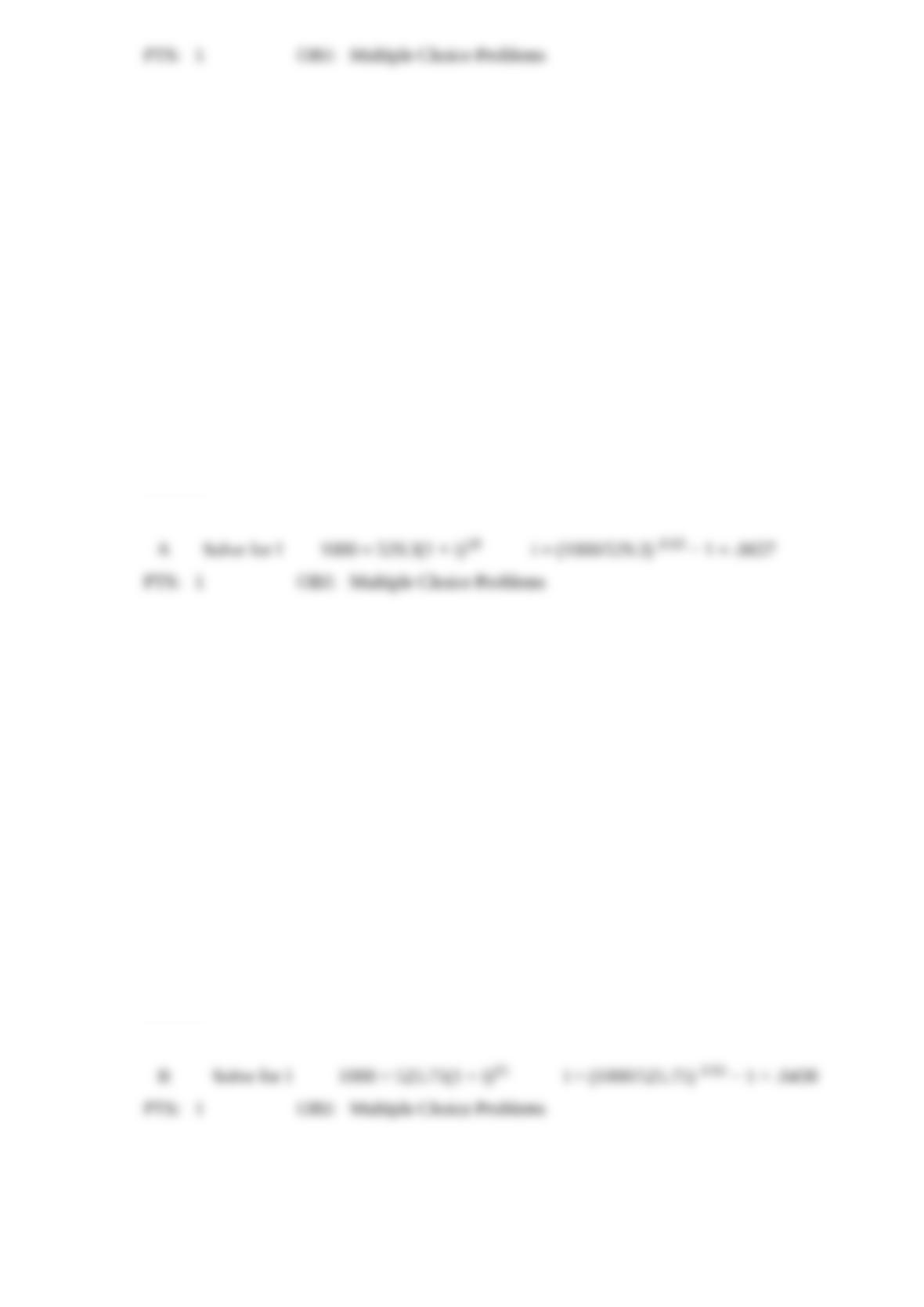
Question: Calculate the yield to maturity of a zero coupon bond with a face value of
$1000, maturing in 10 years and selling for a price of $529.30.
Answer:
Question: Calculate the yield to maturity of a zero coupon bond with a face value of
$1000, maturing in 15 years and selling for a price of $525.75.
Answer:
Question: Calculate the price of a zero coupon bond with yield to maturity of 8.75%, a
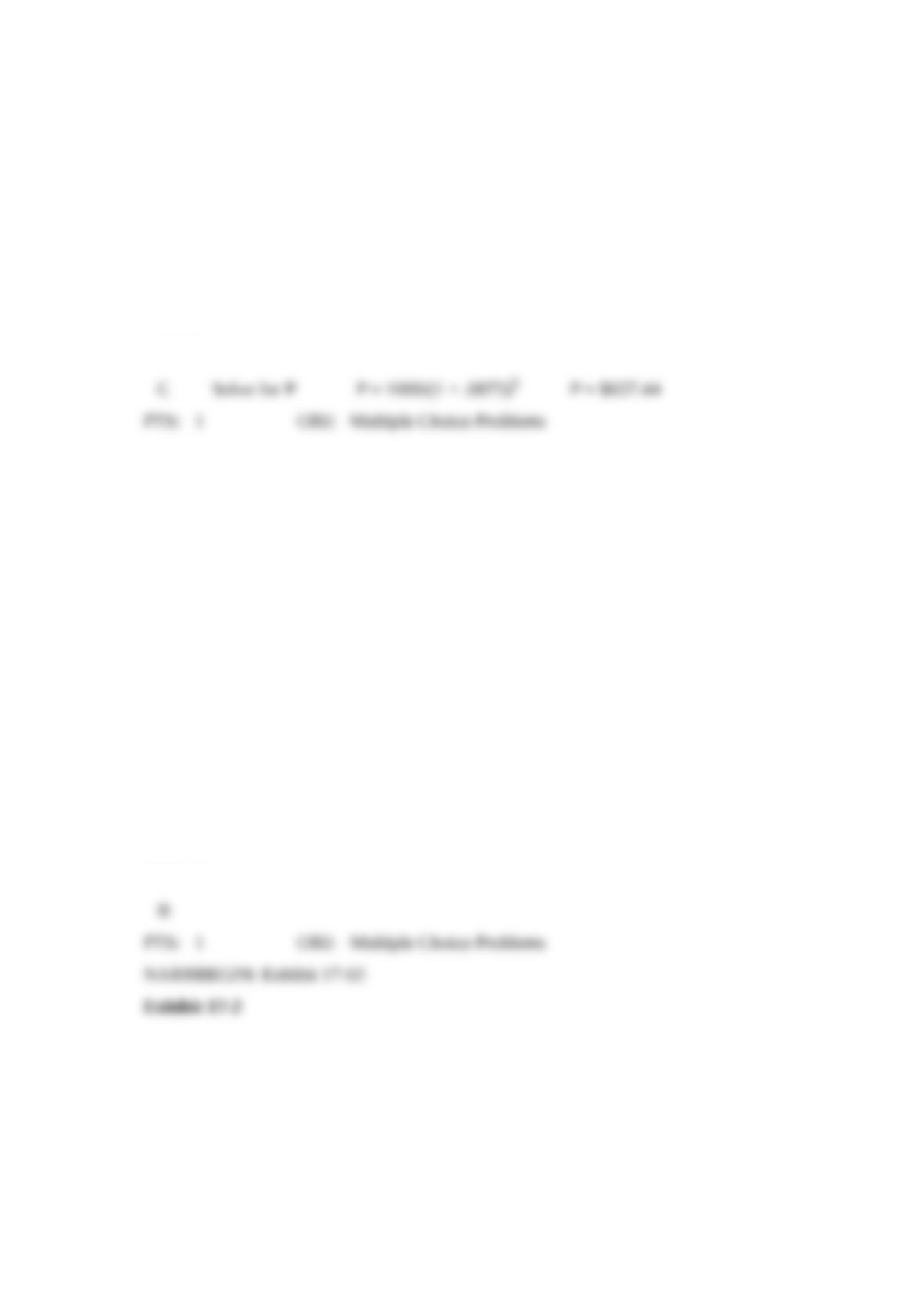
face value of $1000, and maturing in 5 years.
Answer:
Question: What is the value of a zero coupon bond with a yield to maturity of 9%, a par
value of $1,000, and 10 years to maturity? (Assume semi-annual compounding)
Answer:
USE THE FOLLOWING INFORMATION TO ANSWER THE NEXT PROBLEM(S)
XLR Corporation just issued a $1,000 par value bond with a 7% yield to maturity, twenty
years to maturity, with an 8% semi-annual coupon rate.
NARREND
Question: Refer to Exhibit 17-2. What is the price of the XLR Corporate bond?
Answer:
Question: Refer to Exhibit 17-2. If market interest rates are constant, what will the price of
the XLR Corporate bond be in three years?
Answer:
Question: Refer to Exhibit 17-2. If market interest rates rise to 10%, what will the price of
the XLR Corporate bond be in three years?

Answer: