CHAPTER 14—COMPANY ANALYSIS AND STOCK VALUATION TRUE/FALSE
Question: A growth company is one whose stock is undervalued by the market. Answer:
Question: A cyclical companys sales and earnings are heavily influenced by aggregate
business activity. Answer:
Question: A stock with low systematic risk is considered to be a defensive stock. Answer:
Question: A growth company is a firm that has the opportunities and ability to invest
capital in projects that generate rates of return greater than the firms cost of debt. Answer:
Question: With a differentiation strategy, a firm seeks to identify itself as unique in its
industry in an area that is important to buyers. Answer:
Question: By definition growth companies have growth stocks. Answer:
Question: Turnarounds are firms with valuable assets that are hidden on the balance sheet.
Answer:
Question: Present value of free cash flow to equity resembles the present value of earnings
concept except that it includes the capital expenditures required to maintain and grow the
firm and the change in working capital required for a growing firm. Answer:
Question: In the present value of operating free cash flow technique, the firms operating
free cash flow to the firm is discounted at the firms weighted average cost of capital
(WACC). Answer:
Question: The best known measure of relative value for common stock is the P/E ratio.
Answer:
Question: Price-to-book value ratio can not be used to estimate the value of firms with
negative earnings or negative cash flows. Answer:
Question: The price/cash flow ratio has grown in prominence and use for valuing firms
because many analysts contend that a firms cash flow is less subject to manipulation than
the firms earnings per share. Answer:
Question: Price-to-sales ratio is still considered the predominant firm valuation technique.
Answer:
Question: The constant growth dividend growth model is not appropriate for the valuation
of growth companies. Answer:
Question: A negative EVA (Economic Value Added) for the year implies that the firm has
not earned enough during the year to cover its capital of capital and the value of the firm
has declined. Answer:
Question: While EVA is considered an internal performance measure, MVA is considered
to be an external performance measure. Answer:
Question: A defensive company is one whose sales, earnings and cash flows are strongly
correlated with the business cycle. Answer:
Question: An undervalued stock is a growth stock. Answer:
Question: An overvalued stock is a non-growth stock. Answer:
Question: A firms competitive strategy can be either defensive or offensive. Answer:
Question: To benefit from cost leadership a firm must command prices near the industry
average. Answer:
Question: Two major competitive strategies are low-cost leadership and low-price
leadership. Answer:
Question: According to Peter Lynch a favorable attribute of a firm that may result in
favorable stock performance is when a firms product is the latest craze. Answer:
Question: According to Peter Lynch a favorable attribute of a firm that may result in
favorable stock performance is when a firm buys back its shares. Answer:
Question: Underpriced stocks can be ranked using the excess return ratio which is
calculated as the Market price/Risk free rate. Answer:
Question: Operating free cash flow and Free cash flow to equity are equivalent cash flow
concepts. Answer:
Question: One way to measure a companys intrinsic value is to divide the companys
current dividends by the required return less the dividend growth rate. Answer:
Question: The sustainable growth rate can be calculated by taking the dividend payout
ratio time return on equity (ROE). Answer:
Question: Based on the annual reports of Walgreens it has pursued both a low-cost strategy
and a differentiation strategy for different business segments. Answer:
Question: A speculative stock possesses a ____ probability of ____ return and is currently
____.
Answer:
Question: A ____ stock possesses a high probability of low or negative rates of return and
a low probability of normal or high rates of return.

Answer:
Question: A growth company is one that has the ability to
Answer:
Question: Porter contends that ____ and ____ are two important competitive strategies.
Answer:
Question: In a(n) ____ strategy, a firm seeks to identify itself as unique within its industry.
Answer:
Question: In SWOT analysis, one examines all of the following factors, except

Answer:
Question: Which of the following statements concerning SWOT analysis is false?
Answer:
Question: Peter Lynch identified a number of attributes of firms that may result in
favorable stock market performances, including

Answer:
Question: In Berkshire Hathoway annual reports Warren Buffet highlights business tenants
that he believes are important. Which of the following is not a business tenant of Warren
Buffet?
Answer:
Question: In Berkshire Hathoway annual reports Warren Buffet highlights financial tenants
that he believes are important. Which of the following is not a financial tenant of Warren
Buffet?
Answer:
Question: Which of the following is not a technique for valuing a firms common stock?
Answer:
Question: Which of the following is not considered when looking at free cash flow to
equity technique?
Answer:
Question: Under the present value of operating free cash flow technique, the firms
operating free cash flow to the firm is discounted at the firms
Answer:
Question: Which of the following is not considered a relative valuation technique?
Answer:
Question: Which of the following is not considered in the price-earnings ratio technique?
Answer:
Question: Evidence that a firm has high business risk would be provided by its volatile
____.
Answer:
Question: Which of the following factors does not indicate market liquidity?

Answer:
Question: A growth company can invest in projects that generate a return greater than the
firms
Answer:
USE THE FOLLOWING INFORMATION FOR THE NEXT QUESTION(S)

NARREND Question: Refer to Exhibit 14-1. In the listing above, which three factors
influence the capital gain component of a growth company?
Answer:
Question: Refer to Exhibit 14-1. In the listing above, which three factors influence the
earnings multiple for a stock?
Answer:

Question: An inconsistency between a stocks P/E ratio and growth rate can be attributed to
all of the following, except
Answer:
Question: A set of performance measures called ____ are directly related to the capital
budgeting techniques used in corporate finance.
Answer:
Question: “Economic profit” is analogous to ____ in capital budgeting.
Answer:
Question: Which of the following is not a value added performance measure?
Answer:
Question: Market value-added is a measure of ____ performance.
Answer:

Question: Which of the following statements concerning global company analysis is false?
Answer:
Question: The following are tenets of Warren Buffett
Answer:
Question: Which of the following is a business tenet of Warren Buffett?
Answer:
Question: Which of the following is a management tenet of Warren Buffett?
Answer:
Question: Which of the following is a financial tenet of Warren Buffett?
Answer:
Question: Which of the following is a market tenet of Warren Buffett?
Answer:
Question: Studies that have examined the relationship between EVA and MVA have found
Answer:
Question: The franchise P/E is a function of
Answer:

Question: Cyclical companies are firms where
Answer:
Question: Defensive companies are firms where
Answer:
Question: Speculative companies are firms where
Answer:
Question: A firm that follows a defensive competitive strategy could
Answer:
Question: A firm that follows a low cost leadership strategy
Answer:
Question: A firm that follows a differentiation strategy
Answer:
Question: When a firm seeks to identify itself as unique in its industry in an area that is
important to buyers it is known as a
Answer:
Question: What variables impact the Price / Sales ratio?
Answer:
Question: A growth company may exist for all of the following reasons except
Answer:
Question: Which of the following is not a determinant of the capital gain component?
Answer:
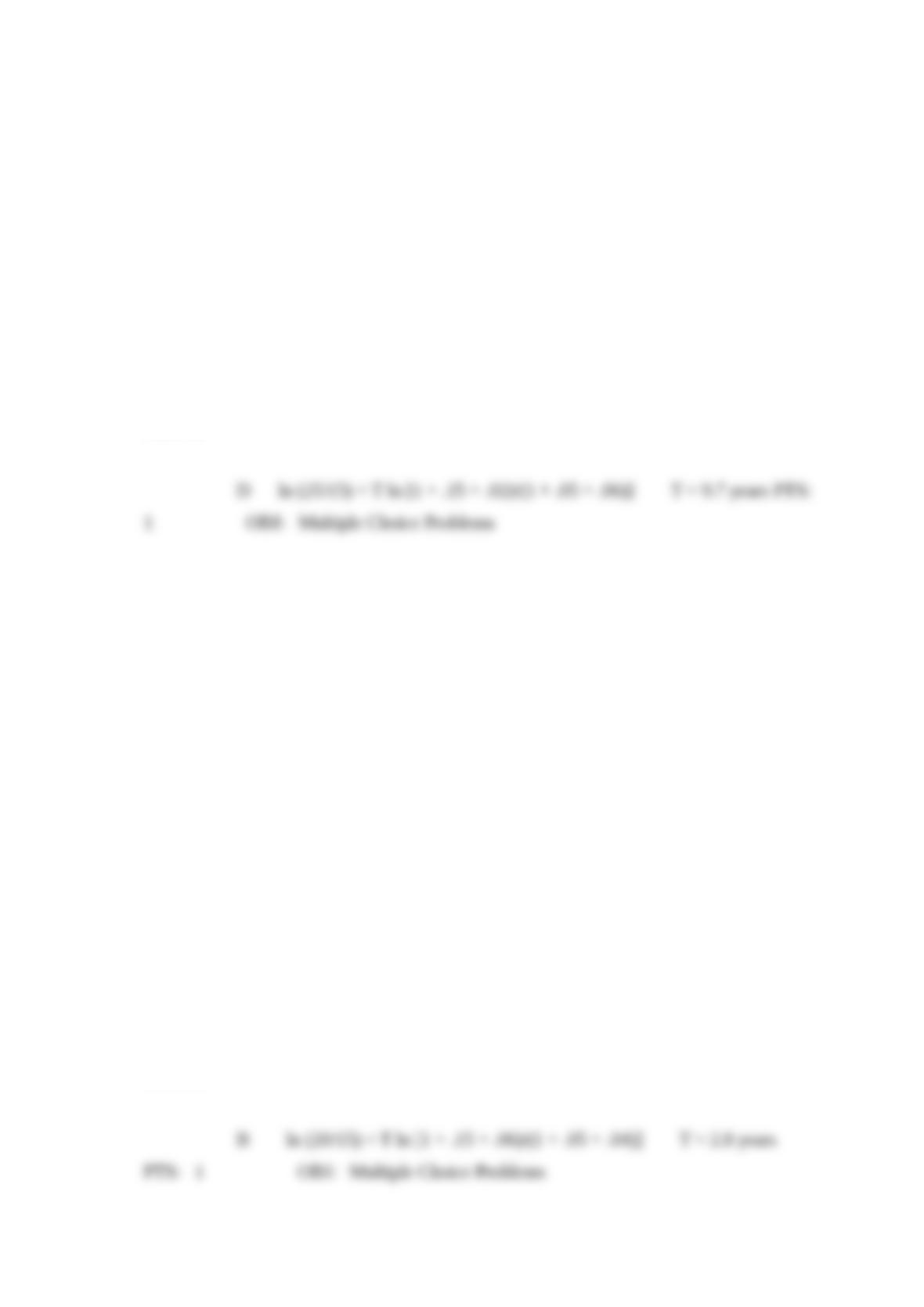
Question: What is the implied growth duration of Bowe Industries given the following:
Answer:
Question: What is the implied growth duration of Casey Industries given the following:
Answer:
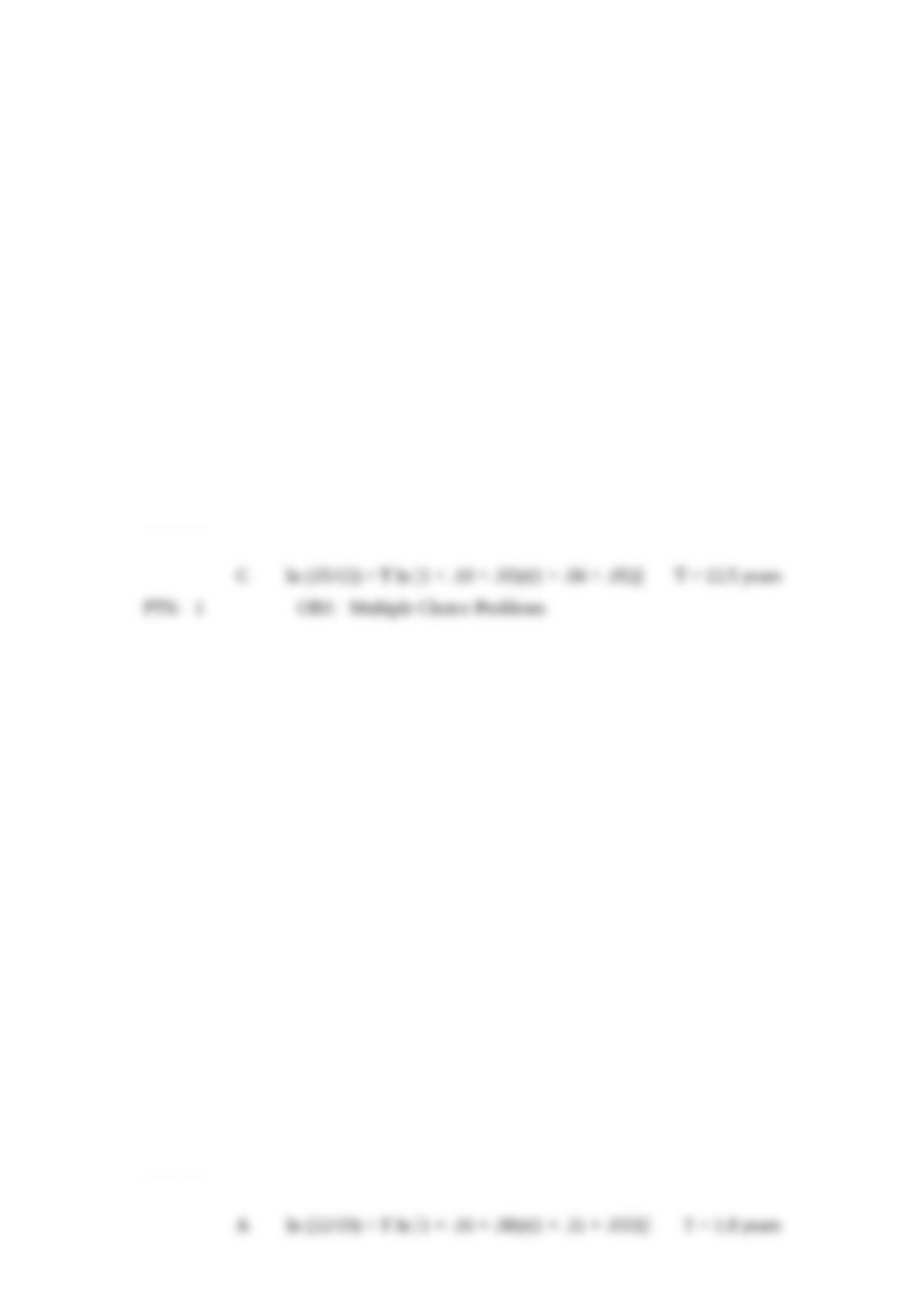
Question: What is the implied growth duration of Jones Industries given the following:
Answer:
Question: What is the implied growth duration of Freed Industries given the following:
Answer:
Question: What is the implied growth duration of Howard Industries given the following:
Answer:
USE THE FOLLOWING INFORMATION FOR THE NEXT PROBLEM(S) Modular
Industries currently has a 16% annual growth rate while the market average is 6 percent.
The market multiple is 10. NARREND Question: Refer to Exhibit 14-2. Determine the
justified P/E ratio for Modular Industries assuming Modular can maintain its superior
growth rate for the next 5 years.
Answer:
Question: Refer to Exhibit 14-2. Determine the P/E ratio for Modular Industries assuming
Modular can maintain its superior growth rate for the next 8 years.
Answer:
USE THE FOLLOWING INFORMATION FOR THE NEXT PROBLEM(S) Harcourt
Industries currently has an 18% annual growth rate while the market average is 8 percent.
The market multiple is 12. NARREND Question: Refer to Exhibit 14-3. Determine the
justified P/E ratio for Harcourt Industries assuming Harcourt can maintain its superior
growth rate for the next 9 years.
Answer:
Question: Refer to Exhibit 14-3. Determine the P/E ratio for Harcourt Industries assuming
Harcourt can maintain its superior growth rate for the next 3 years.
Answer:
USE THE FOLLOWING INFORMATION FOR THE NEXT PROBLEM(S) The
Valentine Company currently has a 14% annual growth rate while the market average is 4
percent. The market multiple is 15. NARREND Question: Refer to Exhibit 14-4.
Determine the justified P/E ratio for the Valentine Company assuming Valentine can
maintain its superior growth rate for the next 10 years.
Answer:
Question: Refer to Exhibit 14-4. Determine the P/E ratio for the Valentine Company
assuming Valentine can maintain its superior growth rate for the next 5 years.
Answer:
Question: Given Gitechs beta of 1.55 and a risk free rate of 8 percent, what is the expected
rate of return assuming a 14 percent market return?
Answer:
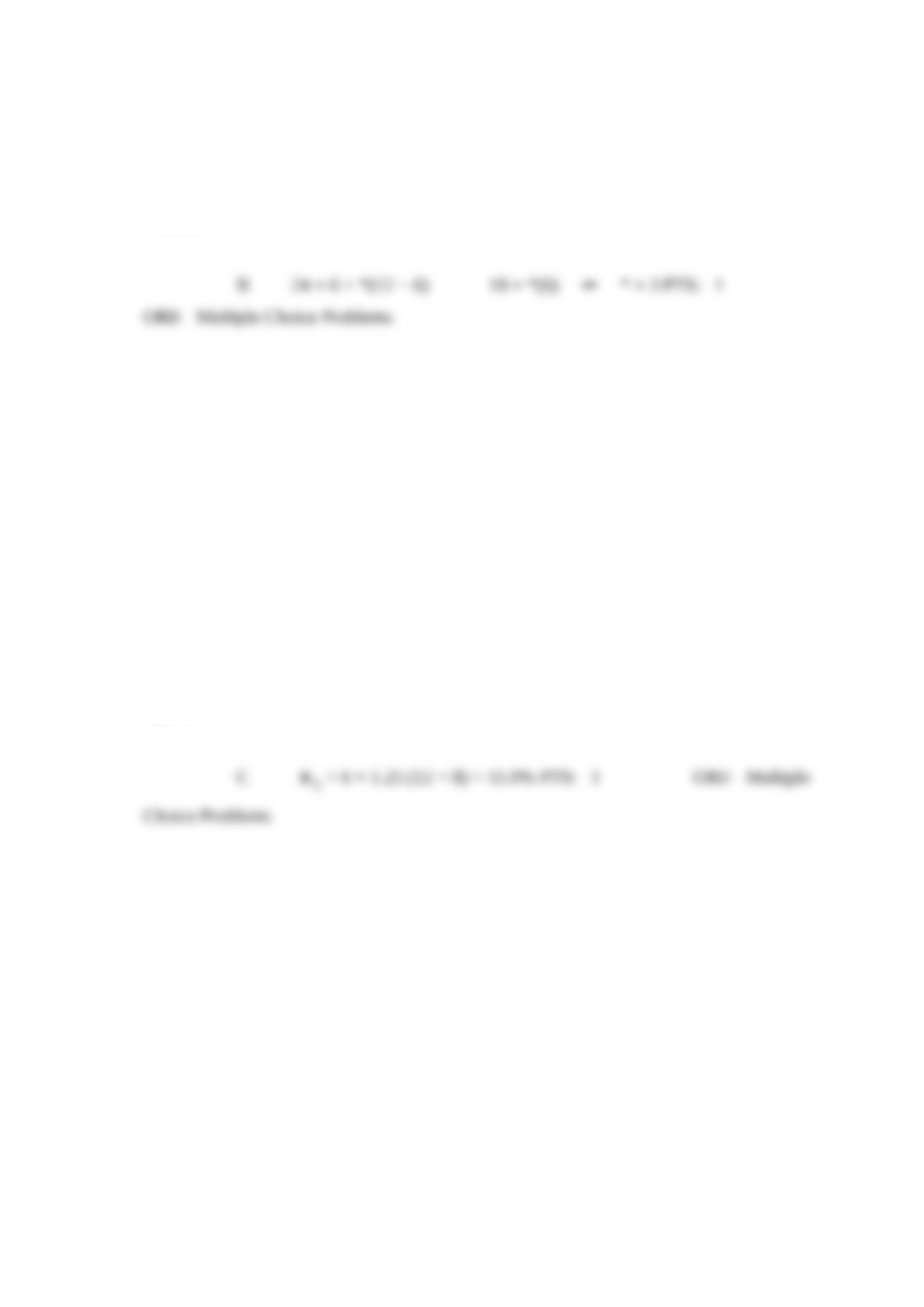
Question: The expected rate of return on Research Industries is twice the 12 percent
expected rate of return from the market. What is Researchs beta if the risk free rate is 6
percent?
Answer:
Question: Given Birdchips beta of 1.25 and a risk free rate of 6 percent, what is the
expected rate of return assuming a 12 percent market return?
Answer:
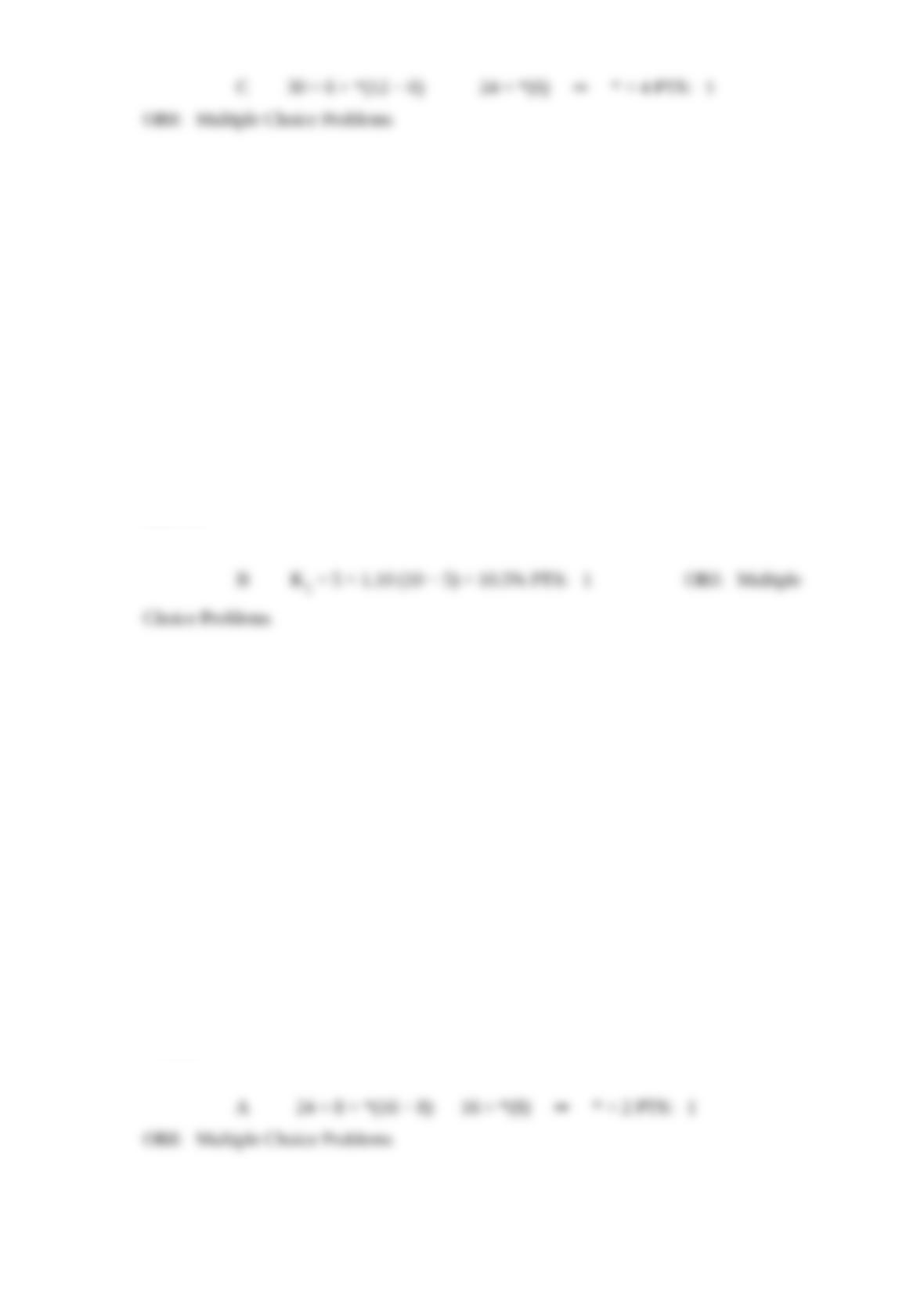
Question: The expected rate of return on Rewind Industries is 2.5 times the 12 percent
expected rate of return from the market. What is Rewinds beta if the risk free rate is 6
percent?
Answer:
Question: Given Gilberts beta of 1.10 and a risk free rate of 5 percent, what is the expected
rate of return assuming a 10 percent market return?
Answer:
Question: The expected rate of return on Rooter Industries is 1.5 times the 16 percent
expected rate of return from the market. What is Researchs beta if the risk free rate is 8
percent?
Answer:
Question: ABC Co. has paid annual dividends in the past five years of $.20, $.25, $.28,
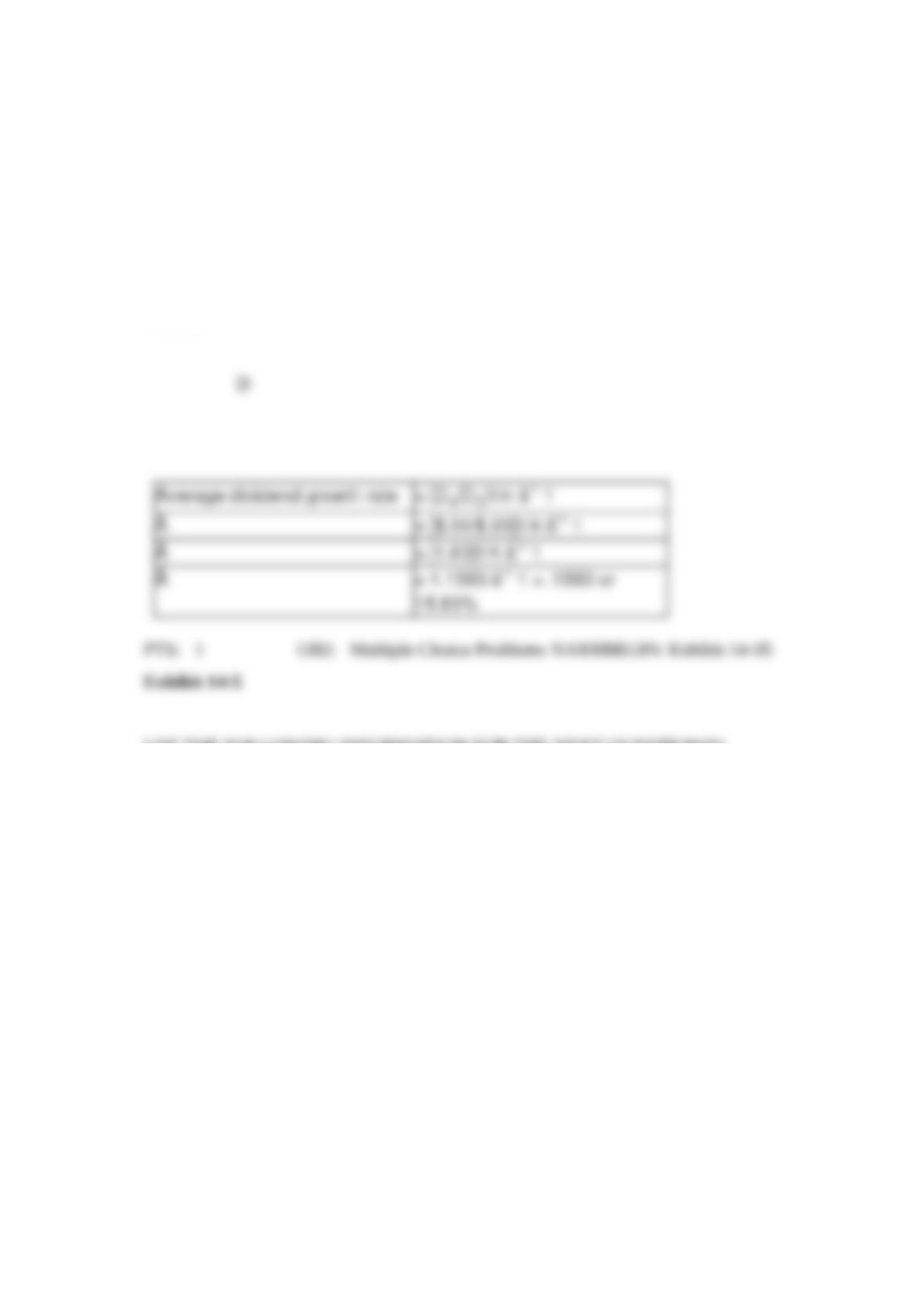
$.33, and $.36. Calculate the average growth rate of its dividends.
Answer:
USE THE FOLLOWING INFORMATION FOR THE NEXT QUESTION(S)
NARREND Question: Refer to Exhibit 14-5. What are the ROEs for Wal-Blue and its
industry?
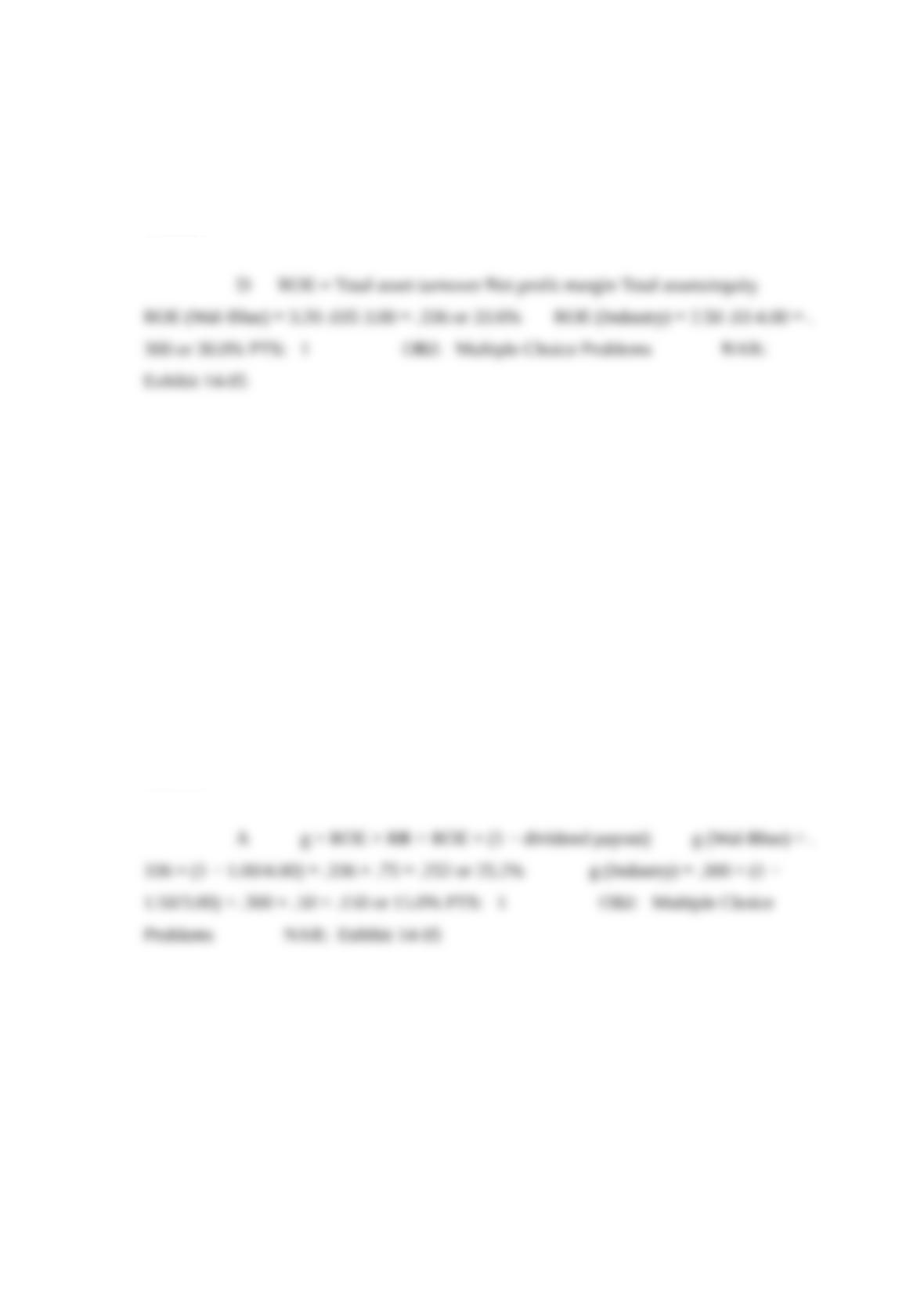
Answer:
Question: Refer to Exhibit 14-5. What are the expected sustainable growth rates for
Wal-Blue and its industry?
Answer:
Question: A firm has a current price of $40 a share, an expected growth rate of 11 percent
and expected dividend per share (D1) of $2. Given its risk you have a required rate of
return for it of 12 percent. Your expected rate of return and investment decision is as
follows:
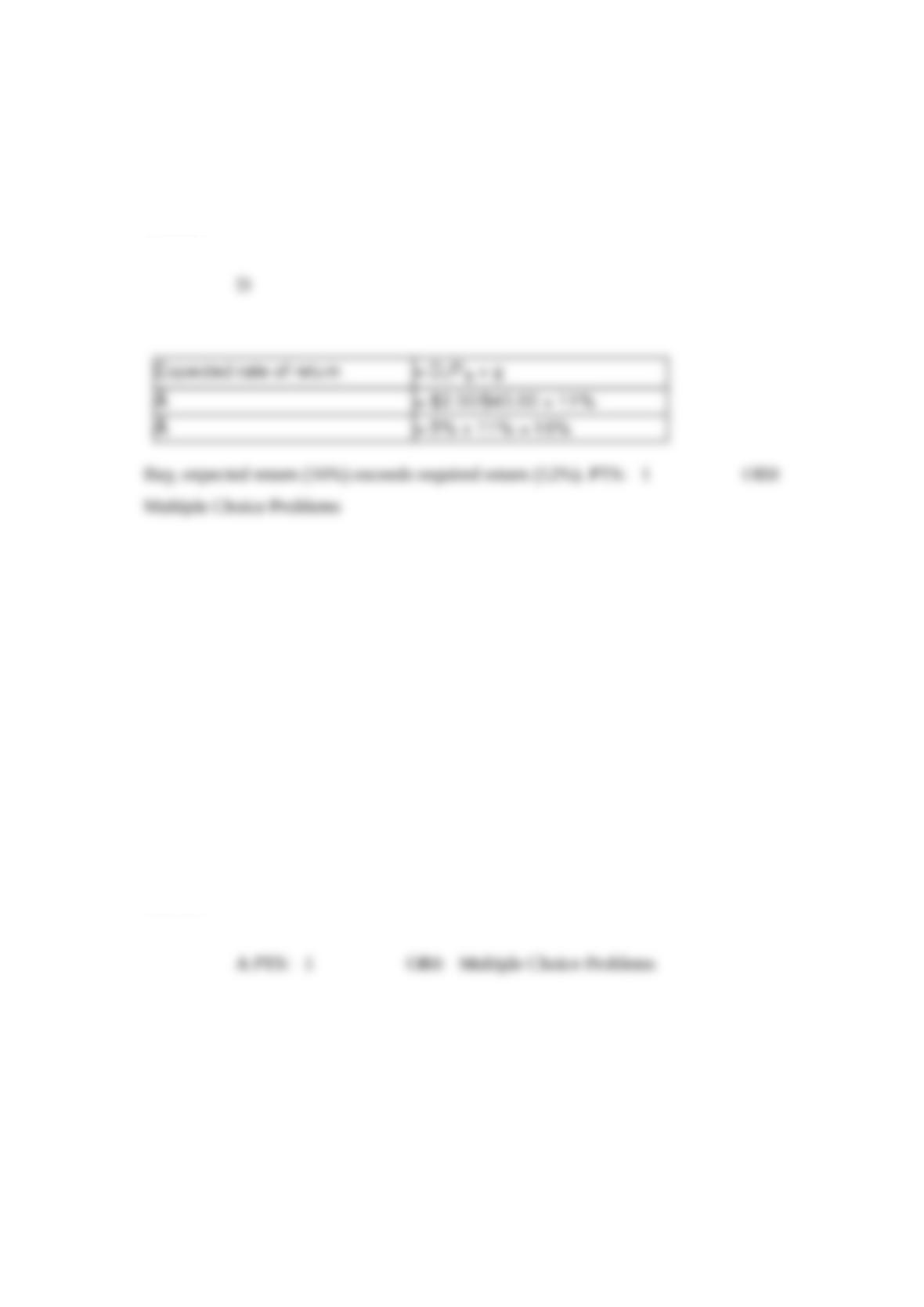
Answer:
Question: Assuming that you expected the stock price in the prior question to increase to
$42 during the investment period, your expected rate of return and decision would be:
Answer:
Question: Based on the information provided, calculate the intrinsic value in 2004 of a
share of INV Corp. using the FCFF (free cash flow to the firm ) model. For 2004 the FCFF
was $30,000, total debt was $20,000, and there were 12000 shares outstanding. The
required rate of return is 9% and the estimated growth rate in FCFF is 6.5%.

Answer:
Question: Based on the information provided, calculate the intrinsic value in 2004 of a
share of INV Corp. using the Present Value of Earnings Model (infinite holding period).
For 2004 Net Income was $250,000, total debt was $50,000, and there were 206,263
shares outstanding. The required rate of return is 12% and the estimated growth rate in
earnings is 5.5%.
Answer:
Question: You are provided with the following information about Javier Corporation. Sales
for the year 2004 were $500,000, the Net Profit Margin (NPM) was 15%. Analysts project
sales to grow by 12% next year (that is 2005). However, because of more competition, the
NPM is expected to decline by 10% for the year 2004. The expected P/E multiple for the
year 2005 is 22. The total number of shares outstanding is 20,000. Use the earnings
multiplier model to calculate the expected price for Javier Corporation in the year 2005.
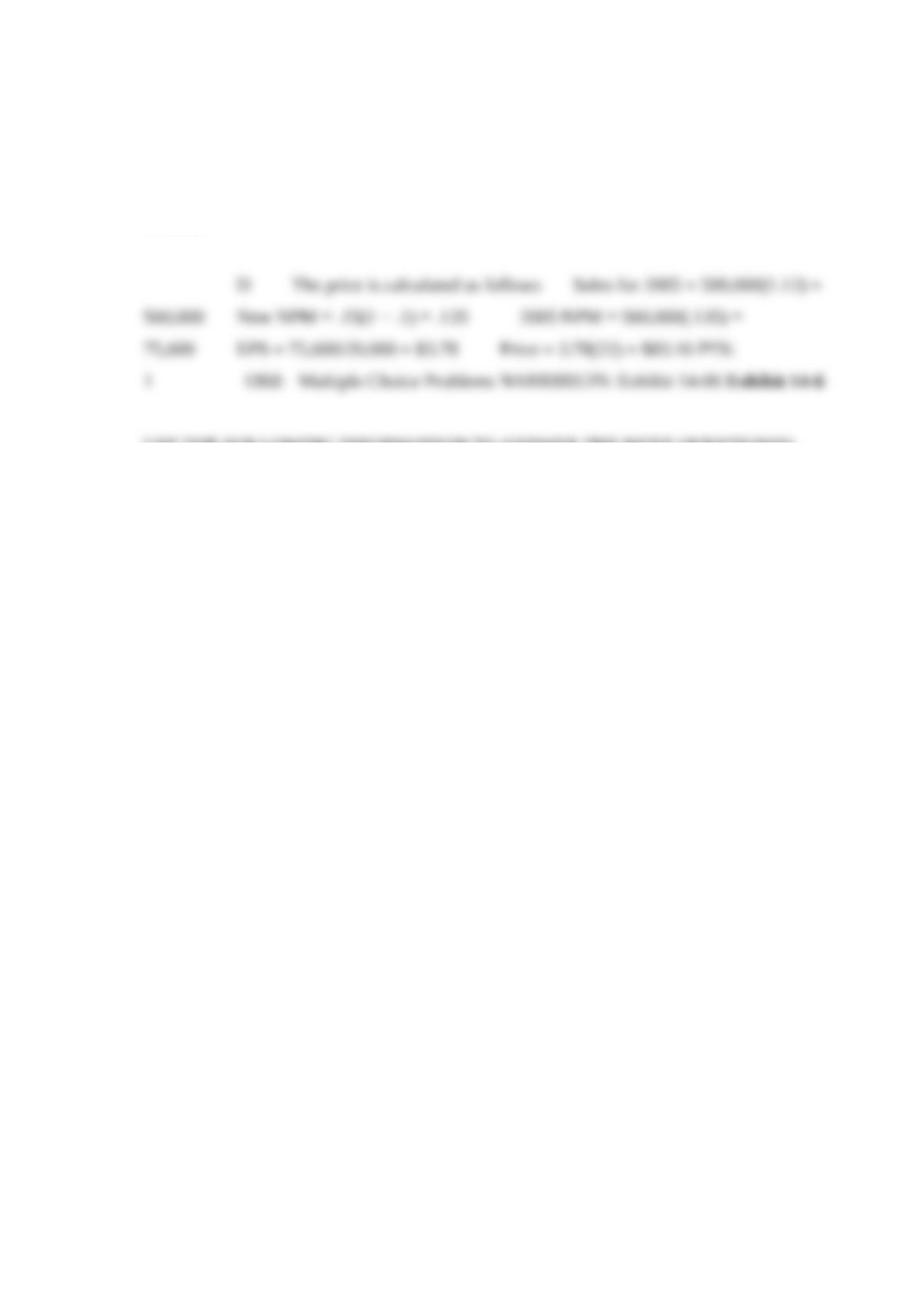
Answer:
USE THE FOLLOWING INFORMATION TO ANSWER THE NEXT QUESTION(S)
You are provided with the following information on Kayray Corporation. Your ultimate
objective is to calculate the EVA for the firm.

NARREND Question: Refer to Exhibit 14-6. Calculate the adjusted operating profits
before taxes.
Answer:
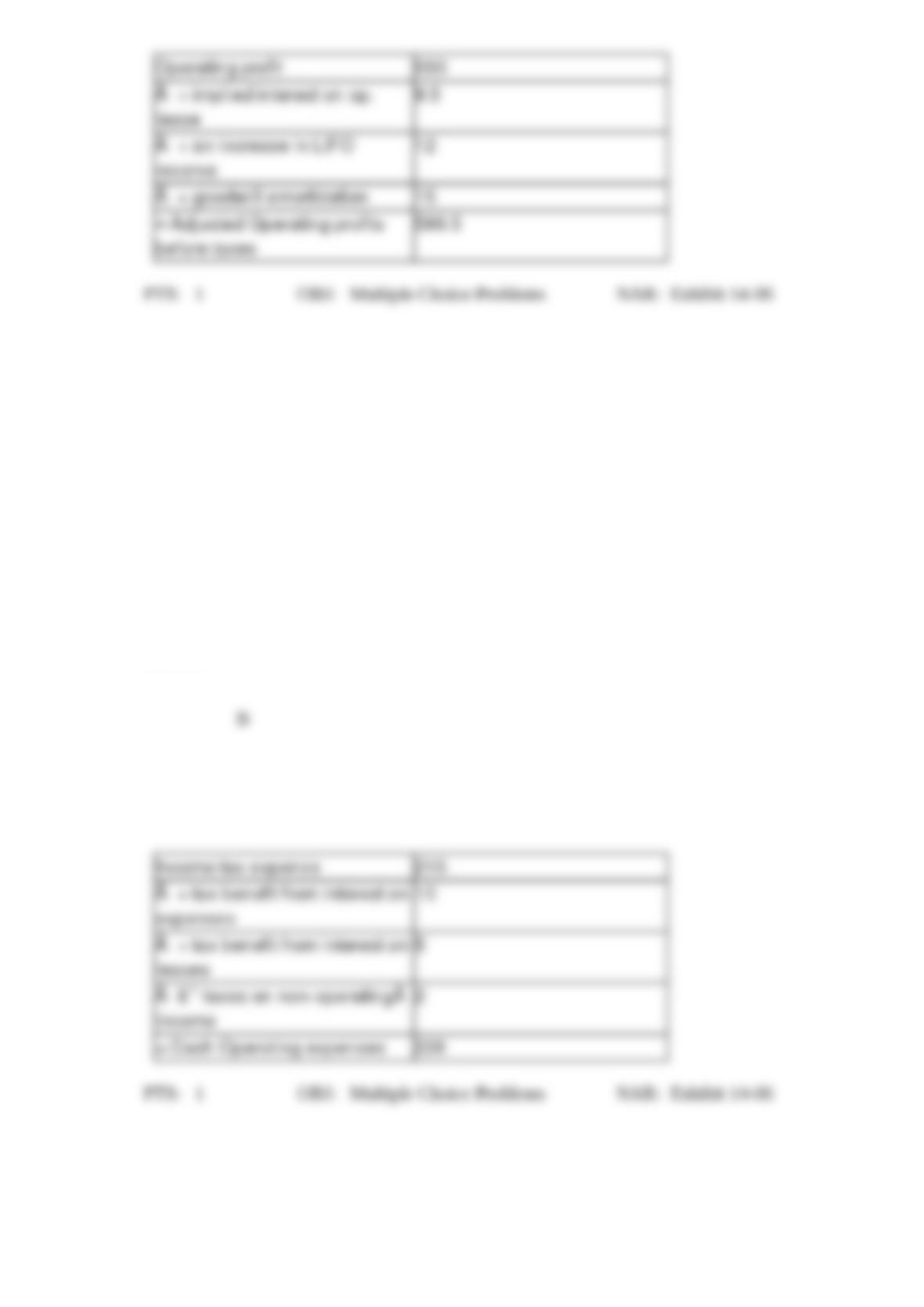
Question: Refer to Exhibit 14-6. Calculate the cash operating expenses for the firm.
Answer:
Question: Refer to Exhibit 14-6. Calculate the capital for the firm.
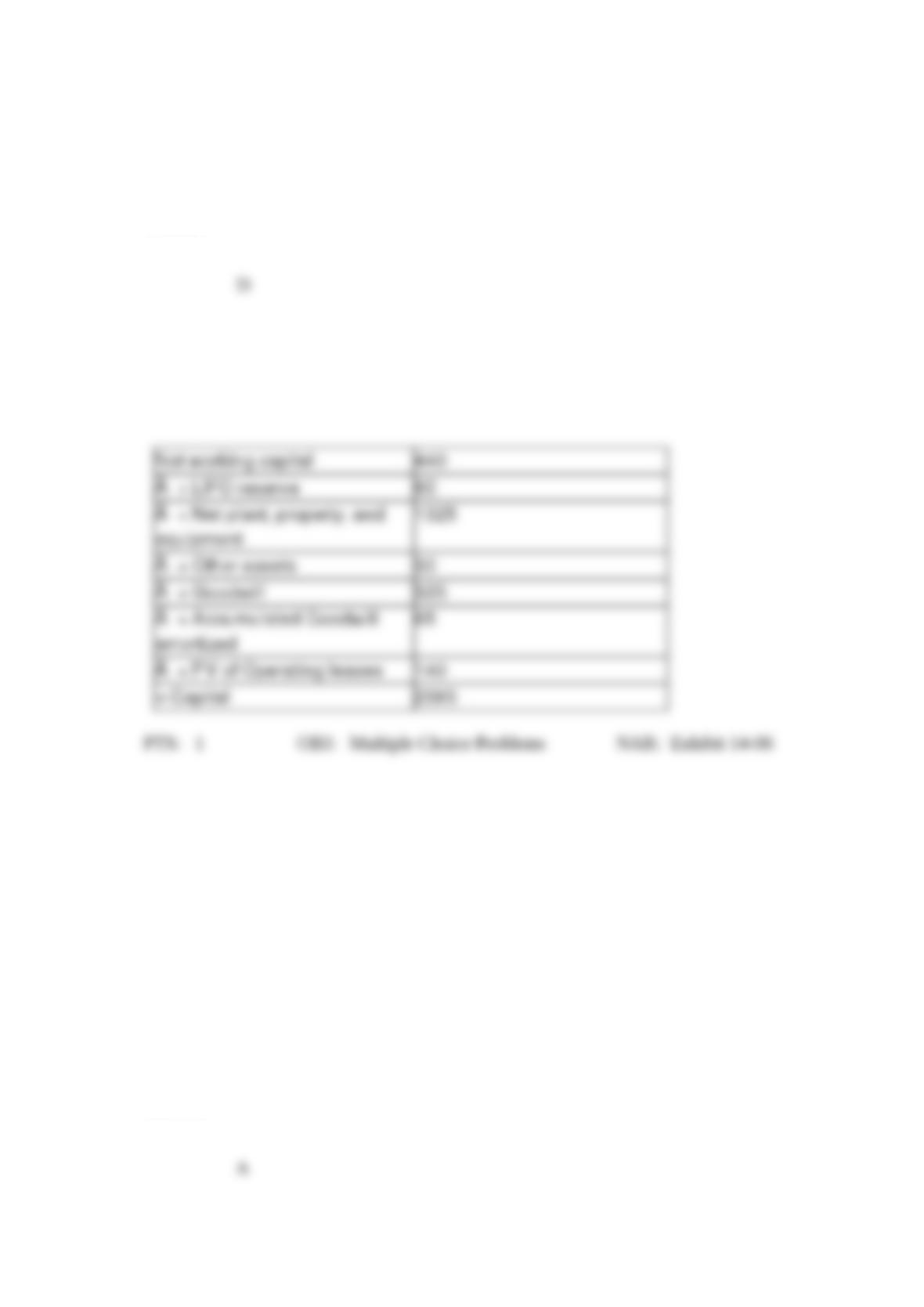
Answer:
Question: Refer to Exhibit 14-6. Calculate the dollar cost of capital.
Answer:
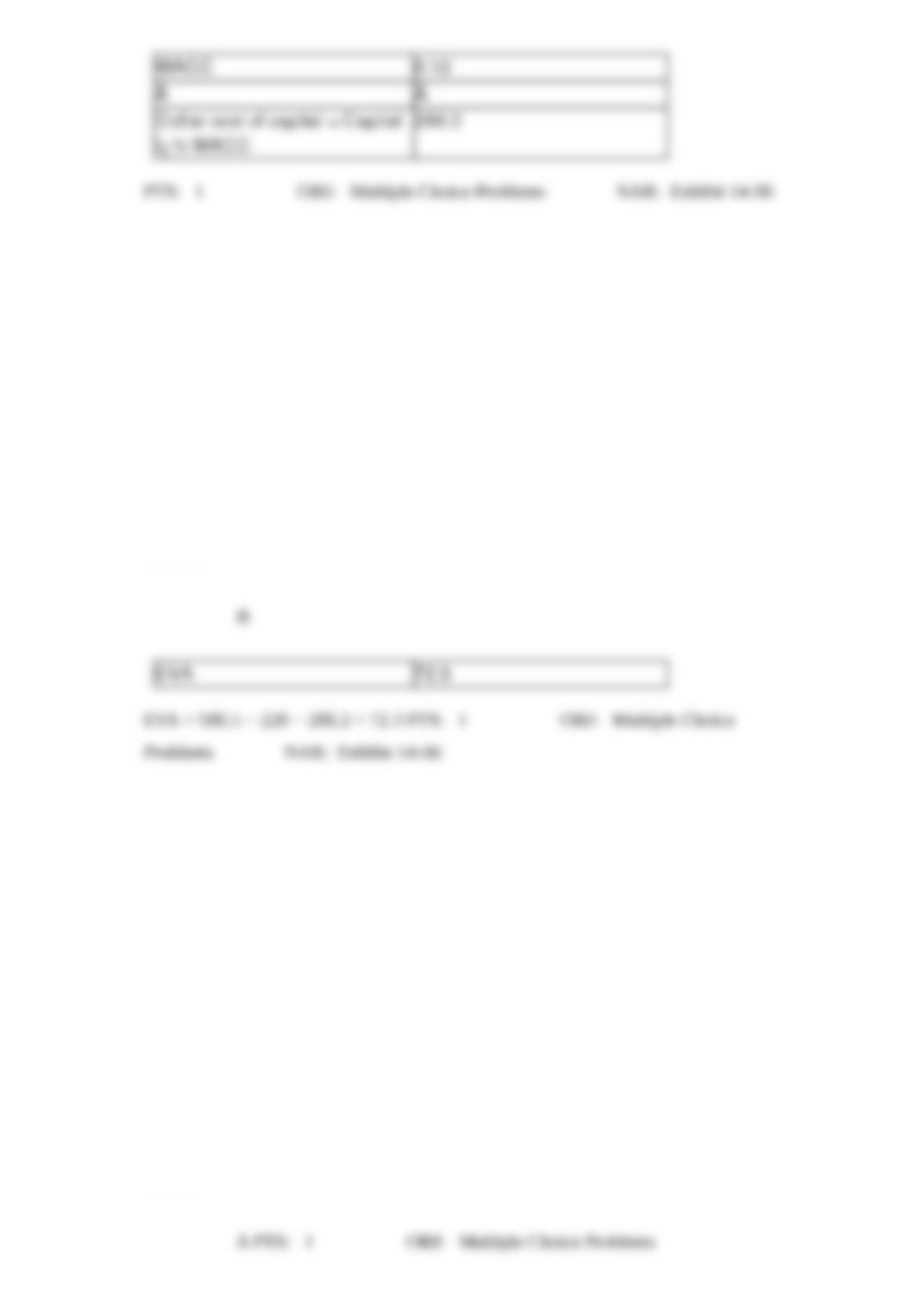
Question: Refer to Exhibit 14-6. Calculate the firms EVA.
Answer:
Question: The Peterson Company has FCFF of $1000. FCFF is expected to grow by 12%
next year. The cost of capital is 12% and the level of debt is $5000. The number of shares
outstanding is 500. Calculate the firms share price.
Answer:
Question: The Pekay Company has FCFE of $800. FCFE is expected to grow by 7% next
year. The cost of capital is 7% and the level of debt is $4000. The number of shares
outstanding is 700. Calculate the firms share price.
Answer:
USE THE FOLLOWING INFORMATION IS FOR THE NEXT PROBLEM(S) At the end
of the year 2004 the BRK Corporation had free cash flow to equity (FCFE) of $250,000
and shares outstanding of 200,000. The company projects the following annual growth
rates in FCFE.
From year 2013 onward growth in FCFE is expected to remain constant at 5% per year.
The stock has a beta of 1.3 and the current market price is $55. Currently the yield on
10-year Treasury notes is 5% and the equity risk premium is 4%. NARREND Question:
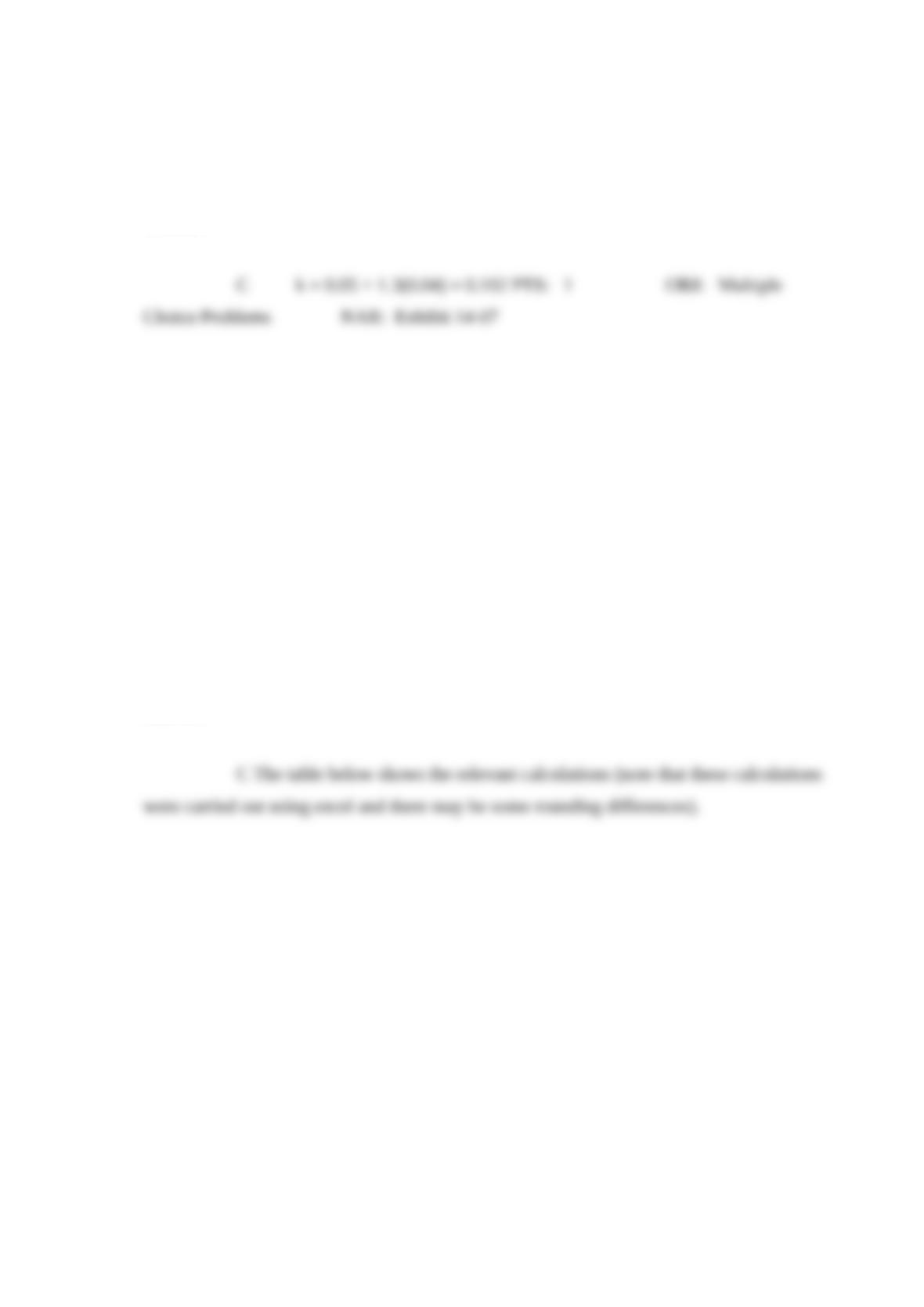
Refer to Exhibit 14-7. Calculate the required rate of return on equity.
Answer:
Question: Refer to Exhibit 14-7. Calculate the present value now (Year 2004) of FCFE
during the period of increasing growth (that is for years 2005 to 2008).
Answer:
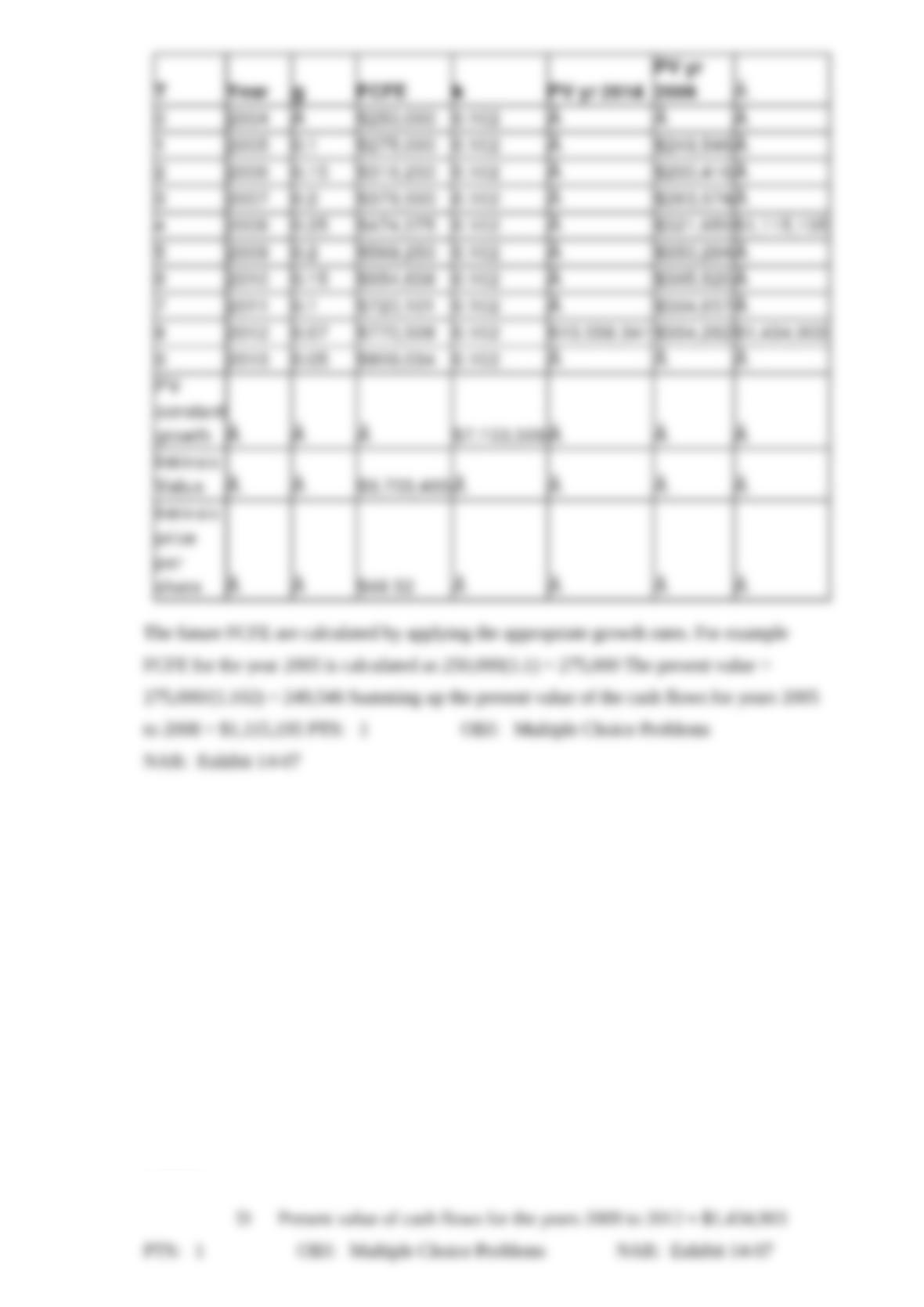
Question: Refer to Exhibit 14-7. Calculate the present value now (Year 2004) of FCFE
during the period of declining growth (that is for years 2009 to 2012).
Answer:
Question: Refer to Exhibit 14-7. Calculate the present value now (Year 2004) of FCFE
during the period of constant growth (that is for years 2013 onwards).
Answer:
Question: Refer to Exhibit 14-7. Calculate the intrinsic value of the stock now (Year 2004).
Answer:
USE THE FOLLOWING INFORMATION IS FOR THE NEXT PROBLEM(S) At the end
of the year 2004 the CKL Corporation had operating free cash flow (OFCF) of $300,000
and shares outstanding of 100,000. Total debt is currently $10,000,000. The company
projects the following annual growth rates in OFCF
From year 2013 onward growth in OFCF is expected to remain constant at 5% per year.
The stock has a beta of 1.1 and the current market price is $80. Currently the yield on
10-year Treasury notes is 5% and the equity risk premium is 4%. The firm can raise debt at
a pre-tax cost of 9%. The tax rate is 25%. The proportion of equity is 55% and the
proportion of debt is 45%. NARREND Question: Refer to Exhibit 14-8. Calculate the
required rate of return on equity.
Answer:
Question: Refer to Exhibit 14-8. Calculate the weighted average cost of capital (WACC).
Answer:
Question: Refer to Exhibit 14-8. Calculate the present value now (Year 2004) of OFCF
during the period of declining growth (that is for years 2005 to 2008).
Answer:
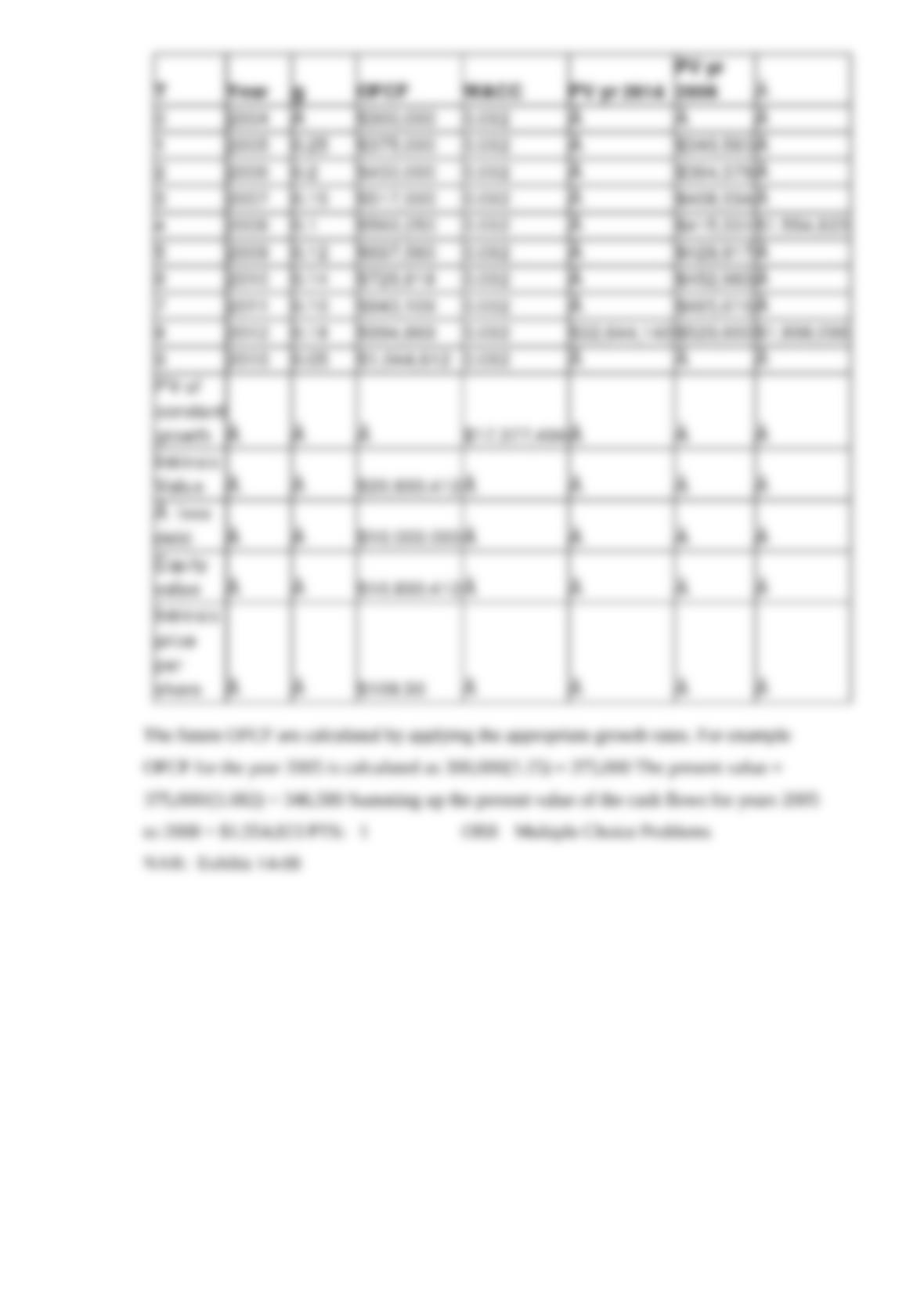
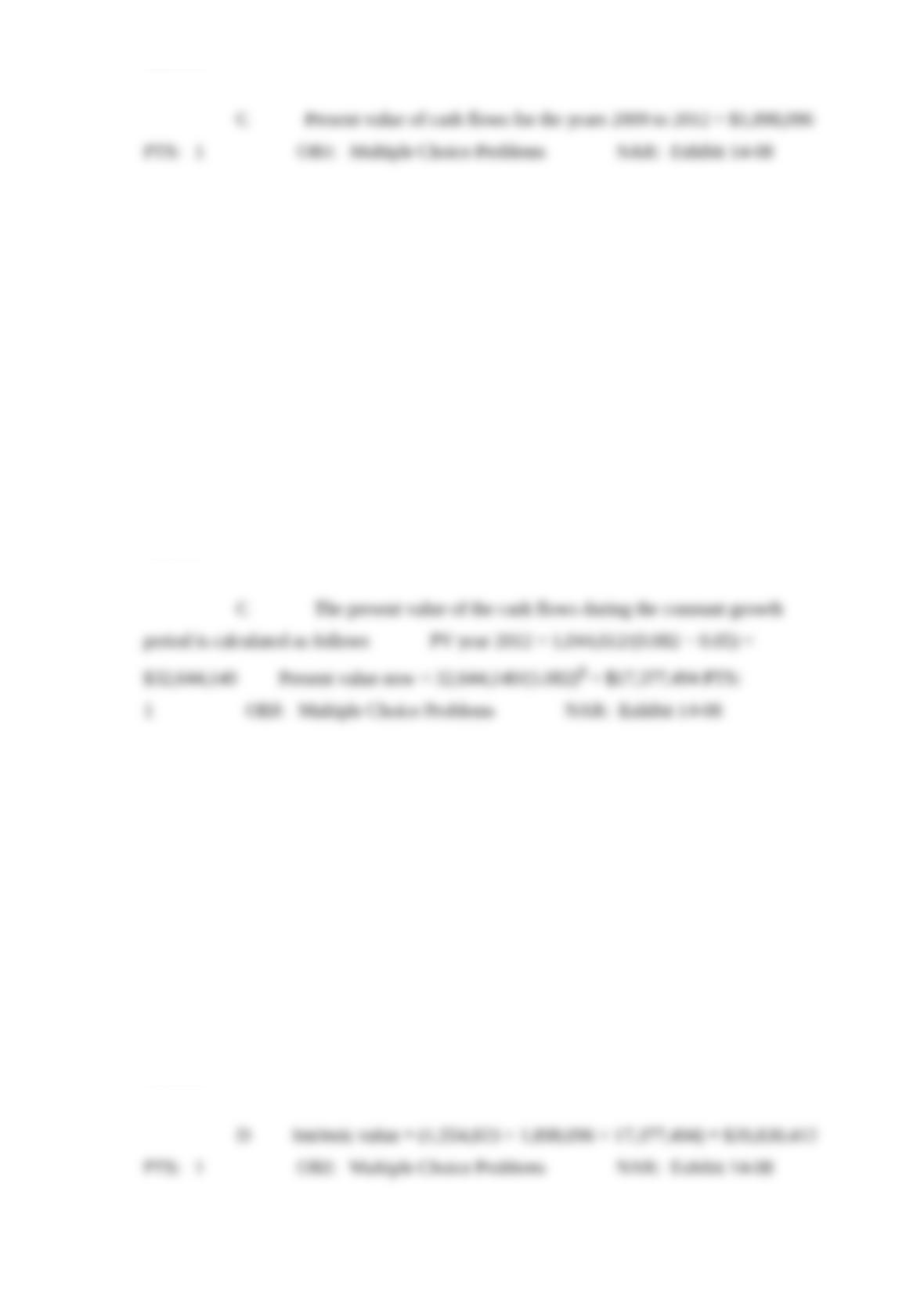
Question: Refer to Exhibit 14-8. Calculate the present value now (Year 2004) of OFCF
during the period of declining growth (that is for years 2009 to 2012).
Answer:
Question: Refer to Exhibit 14-8. Calculate the present value now (Year 2004) of OFCF
during the period of constant growth (that is for years 2013 onwards).
Answer:
Question: Refer to Exhibit 14-8. Calculate the total intrinsic value of the firm.
Answer:
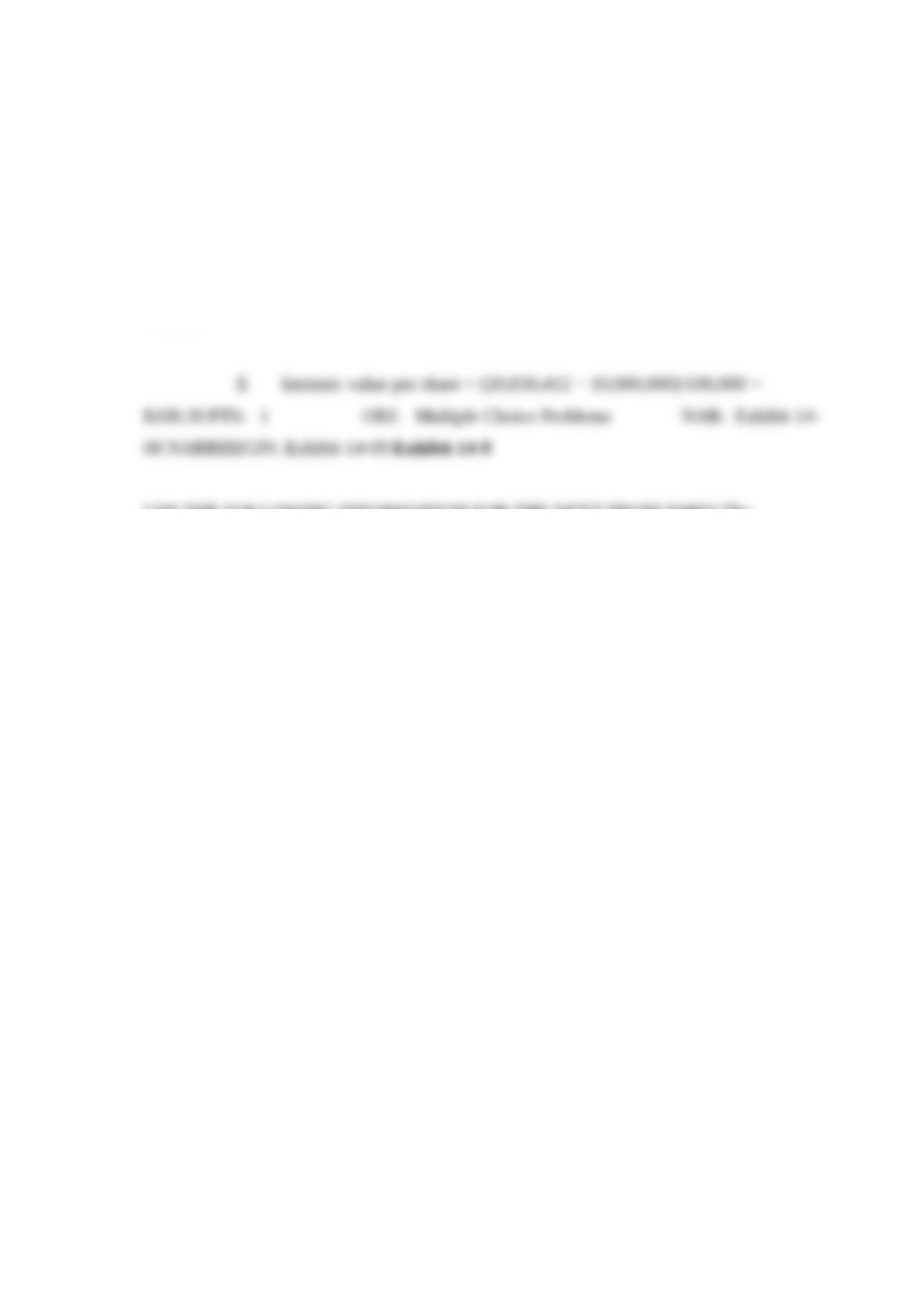
Question: Refer to Exhibit 14-8. Calculate the intrinsic value of the stock now (Year 2004).
Answer:
USE THE FOLLOWING INFORMATION FOR THE NEXT PROBLEM(S) The
Rollerball Corporations industry averages are as follows: Net Profit Margin = 7.5%; Total
Asset Turnover = 2.2; Total Assets/ Equity = 2.0 Rollerball Corporation has the following
financial statements for year ending 12/31/2008. (000s omitted)
NARREND Question: Refer to Exhibit 14-9. Calculate Rollerball Corporations Net Profit
Margin.
Answer:
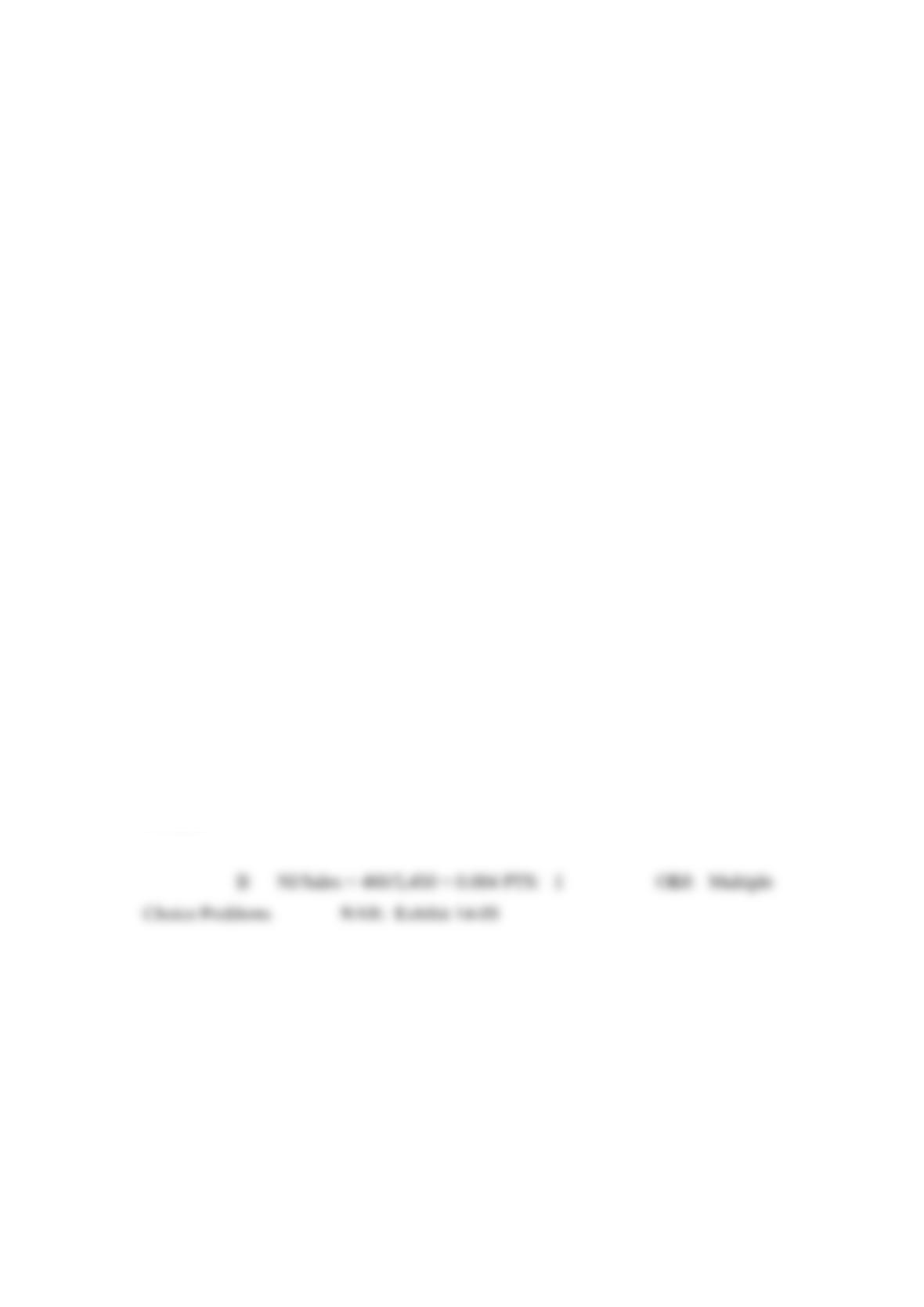
Question: Refer to Exhibit 14-9. Calculate Rollerball Corporations Total Asset Turnover.
Answer:
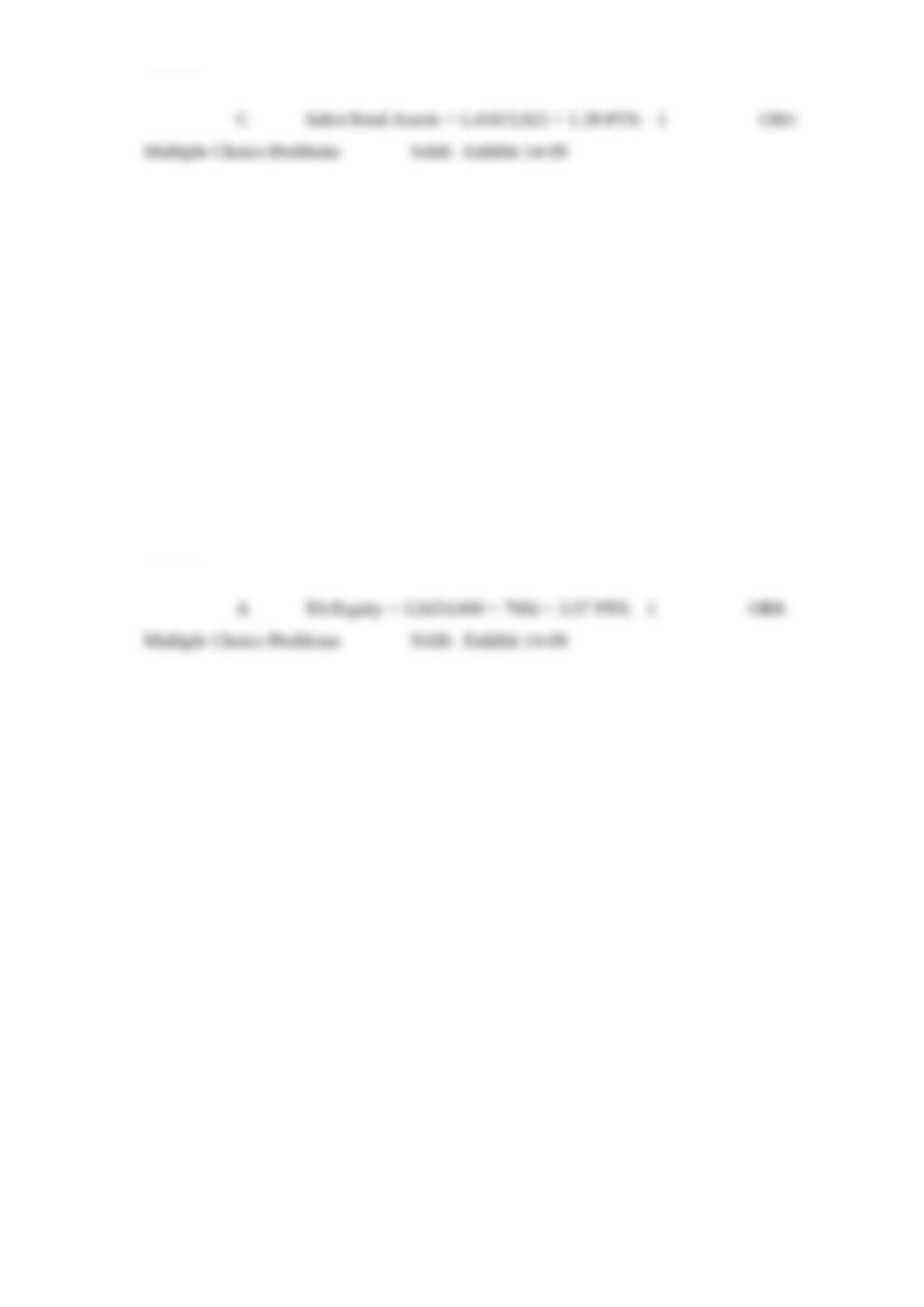
Question: Refer to Exhibit 14-9. Calculate Rollerball Corporations Total Assets/Equity
ratio.
Answer:
Question: Refer to Exhibit 14-9. Calculate the return on equity (ROE) for Rollerball
Corporation and the Industry.
Answer:
Question: Refer to Exhibit 14-9. Calculate the sustainable growth rate for Rollerball
Corporation.
Answer:
Question: Johnson Company just paid an annual dividend of $1.75. The next dividend will
be paid one year from today. Johnson Company expects a constant growth of 5% in
dividends forever. The required rate of return for this companys common stock is 13%.
What is the value of one share of common stock?

Answer: