
CHAPTER 11—AN INTRODUCTION TO SECURITY VALUATION TRUE/FALSE
Question: Fundamentalists typically use the “Bottom-Up Approach” whereas technicians
use the “Top-Down Approach” to the valuation process. Answer:
Question: Empirical studies have shown that the market factor has increased over time and
now accounts for the majority of an individual stocks price variance. Answer:
Question: The general economic influences would include inflation, political upheavals,
monetary policy, and fiscal policy initiatives. Answer:
Question: Given an optimistic economic and stock-market outlook for a country, the
investor should underweight the allocation to this country in his/her portfolio. Answer:
Question: The importance of an industrys performance on an individual stocks
performance varies across industries. Answer:
Question: If the estimated value of an asset is greater than the market price, you would
want to buy the investment. Answer:
Question: The most difficult part of valuing a bond is determining the required rate of

return on this investment. Answer:
Question: A preferred stock is a perpetuity. Answer:
Question: Growth companies are those firms that consistently earn higher rates of return
by assuming greater amounts of risk. Answer:
Question: The growth rate of dividends and profit margin are the main determinants of the
P/E ratio. Answer:
Question: The dividend growth models are only meaningful for companies that have a
required rate of return that exceeds their dividend growth rate. Answer:
Question: The three step valuation process consists of 1) analysis of alternative economies
and markets, 2) analysis of alternative industries and 3) analysis of industry influences.
Answer:
Question: The two components that are required in order to carry out asset valuation are 1)
the stream of expected cash flows and 2) the required rate of return. Answer:
Question: The importance of an industrys performance on an individual stocks
performance varies across industries. Answer:
Question: If the intrinsic value of an asset is greater than the market price, you would want
to buy the investment. Answer:
Question: The required rate of return is determined by 1) the real risk free rate, 2) the
expected rate of inflation and 3) liquidity risk. Answer:
Question: The price of a bond can be calculated by discounting future coupons over the
bonds life by the yield to maturity. Answer:
Question: An example of a relative valuation technique is the Price/Cash Flow ratio.
Answer:
Question: Discounted cash flow techniques for equity valuation may use one of the
following: 1) dividends, 2) Free cash flow or 3) coupons. Answer:
Question: In dividend discount models (DDM) with supernormal growth, supernormal
growth may continue indefinitely. Answer:
Question: The real risk free rate depends on the real growth in the economy and for short
period by temporary tightness or ease in capital markets. Answer:
Question: The risk premium is impacted by business risk, financial risk, and liquidity risk.
Answer:
Question: A bond typically pays interest payments every six months equal to the coupon
rate times the face value of the bond. Answer:
Question: The value of preferred stock can be calculated by dividing its dividend by the
required rate of return. Answer:
Question: A relative valuation technique is appropriate to consider when you have a good
set of comparable entities. Answer:
Question: The infinite period dividend discount model (DDM) can be used to value a

supernormal growth company. Answer:
Question: Which of the following is not a consideration in the three-step valuation
process?
Answer:
Question: Which of the following is not considered a basic economic force?
Answer:

Question: The process of fundamental valuation requires estimates of all the following
factors, except
Answer:
Question: Which of the following is correct?
Answer:

Question: The value of a corporate bond can be derived by calculating the present value of
the interest payments and the present value of the face value at the bonds
Answer:
Question: Which securities can be valued by dividing the annual dividend by the required
rate of return?
Answer:
Question: According to the dividend growth model, if a company were to declare that it
would never pay dividends, its value would be
Answer:
Question: Dividend growth is a function of
Answer:
Question: Growth rates of the (1) labor force, (2) average number of hours worked and (3)
labor productivity are the main determinants of a foreign countrys
Answer:

Question: The growth rate of equity earnings without external financing is equal to
Answer:
Question: Which of the following factors influence an investors required rate of return?
Answer:

Question: The P/E ratio is determined by
Answer:
Question: Which of the following statements regarding fundamental and relative valuation
techniques is true?
Answer:
Question: Which of the following is an underlying assumption of the constant growth
dividend discount model (DDM)?
Answer:
USE THE FOLLOWING INFORMATION FOR THE NEXT PROBLEM(S) A major
retailer is reevaluating its bonds since it is planning to issue a new bond in the current
market. The firms outstanding bond issue has 8 years remaining until maturity. The bonds
were issued with a 6.5 percent coupon rate (paid quarterly) and a par value of $1,000. The
required rate of return is 4.25 percent. NARREND Question: Refer to Exhibit 11-1. What
is the current value of these securities?
Answer:
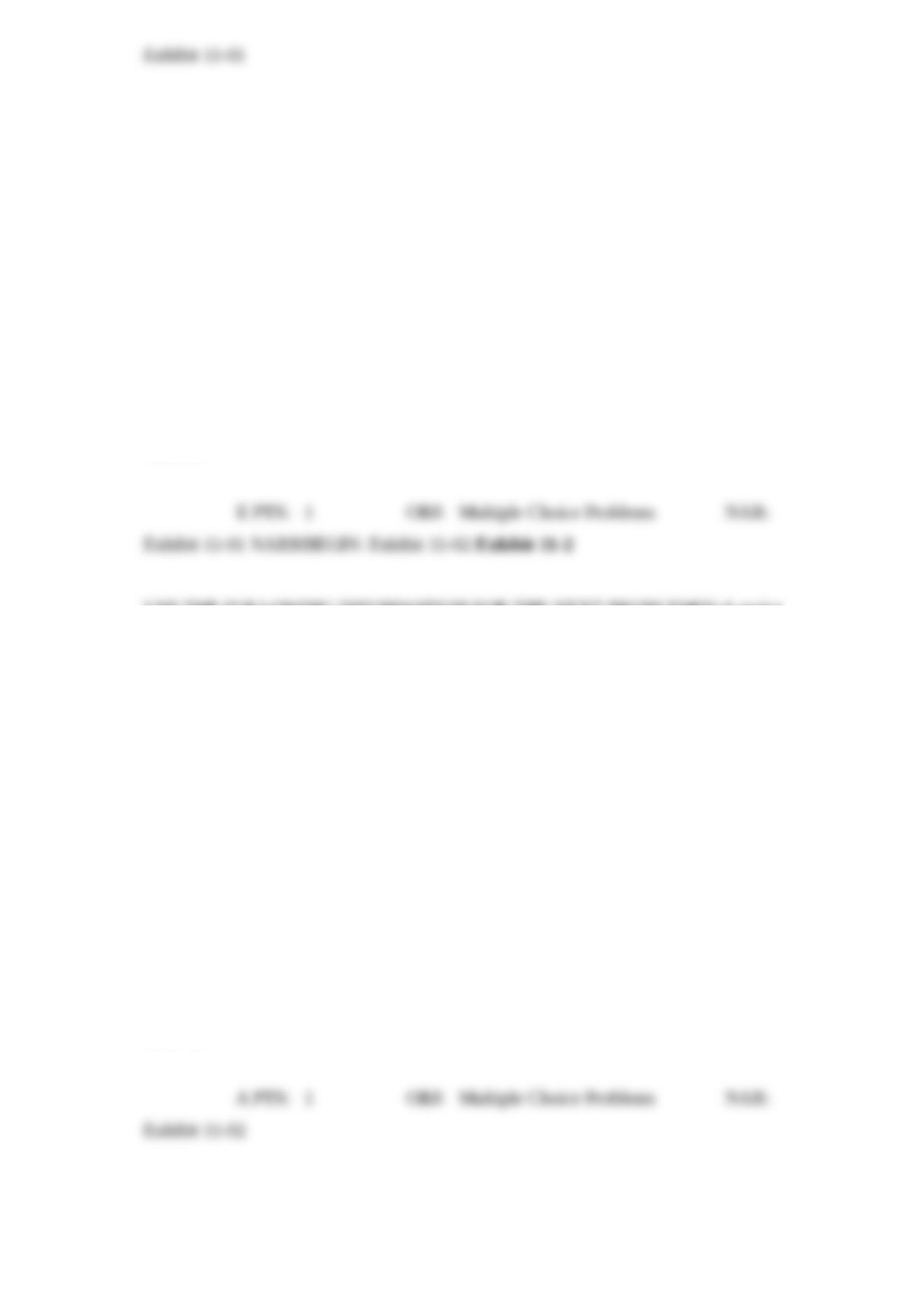
Question: Refer to Exhibit 11-1. What will be the value of these securities in one year if
the required return is 7 percent?
Answer:
USE THE FOLLOWING INFORMATION FOR THE NEXT PROBLEM(S) A major
manufacturer is reevaluating its bonds since it is planning to issue a new bond in the
current market. The firms outstanding bond issue has 7 years remaining till maturity. The
bonds were issued with an 8 percent coupon rate (paid quarterly) and a par value of
$1,000. The required rate of return is 10 percent. NARREND Question: Refer to Exhibit
11-2. What is the current value of these securities?
Answer:
Question: Refer to Exhibit 11-2. What will be the value of these securities in one year if
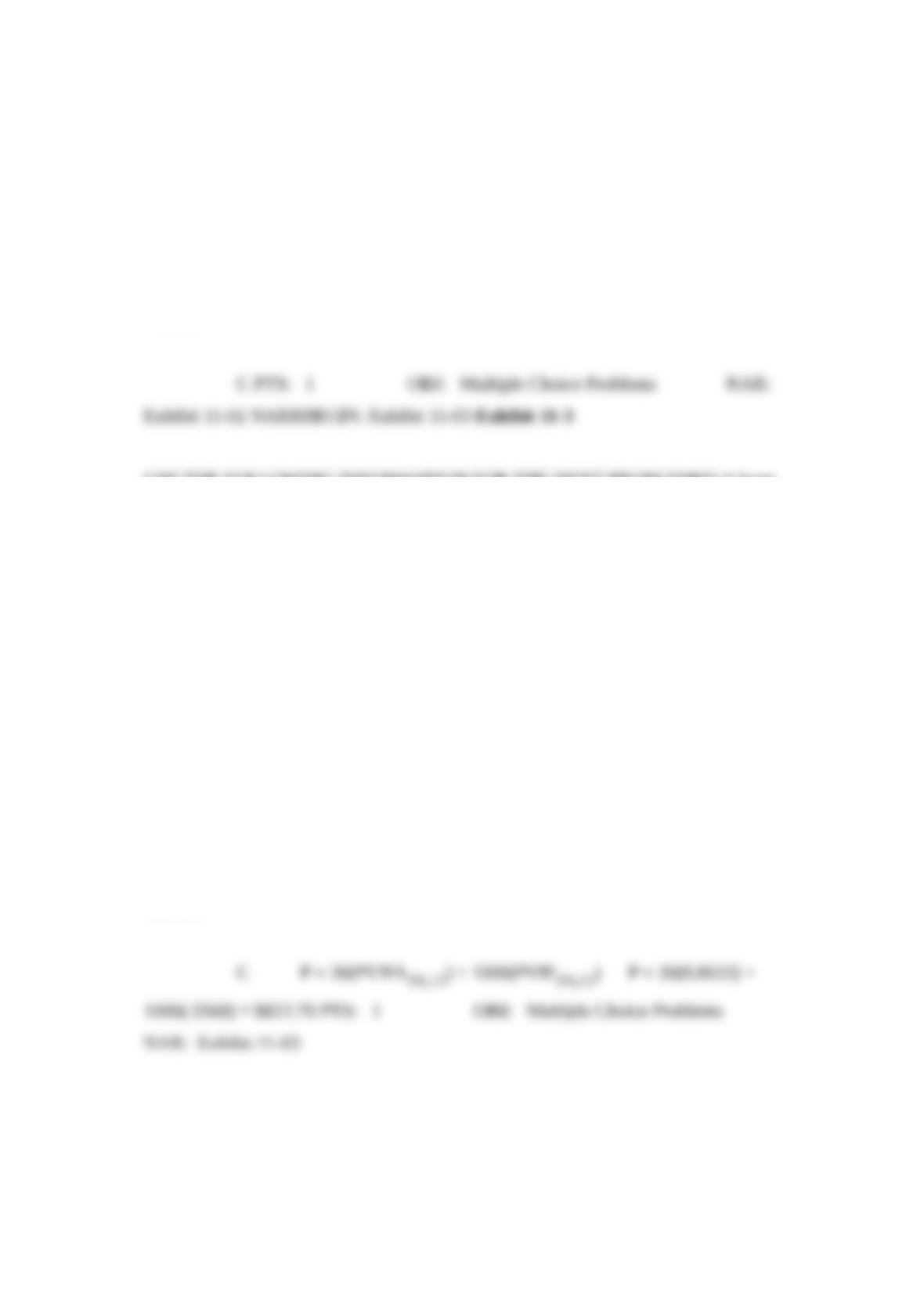
the required return is 6 percent?
Answer:
USE THE FOLLOWING INFORMATION FOR THE NEXT PROBLEM(S) A large
grocery chain is reevaluating its bonds since it is planning to issue a new bond in the
current market. The firms outstanding bond issue has 6 years remaining until maturity. The
bonds were issued with a 6 percent coupon rate (paid semiannually) and a par value of
$1,000. Because of increased risk the required rate has risen to 10 percent. NARREND
Question: Refer to Exhibit 11-3. What is the current value of these securities?
Answer:
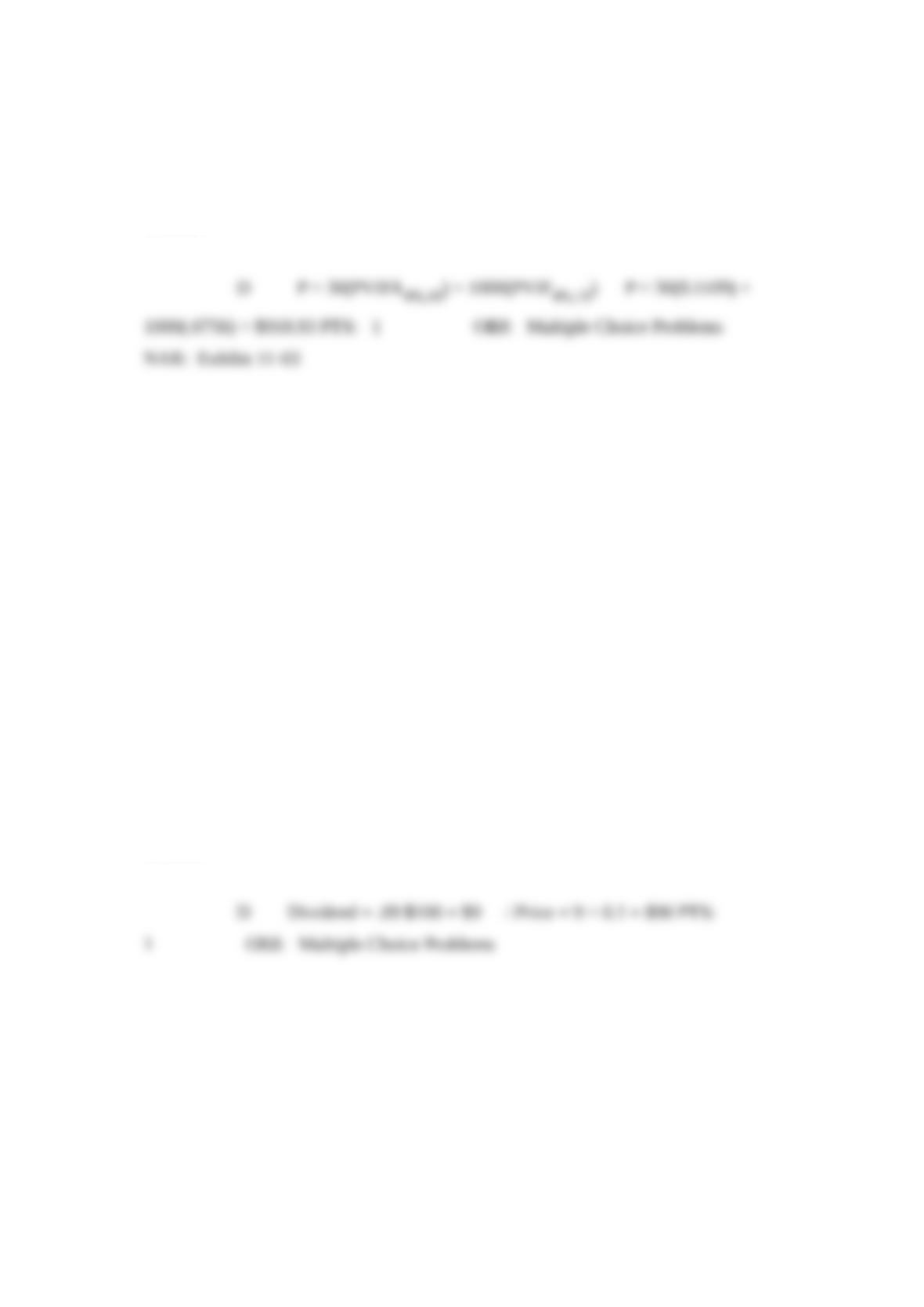
Question: Refer to Exhibit 11-3. What will be the value of these securities in one year if
the required return declines to 8 percent?
Answer:
Question: In 2004, Montpelier Inc. issued a $100 par value preferred stock that pays a 9
percent annual dividend. Due to changes in the overall economy and in the companys
financial condition investors are now requiring a 10 percent return. What price would you
be willing to pay for a share of the preferred if you receive your first dividend one year
from now?
Answer:
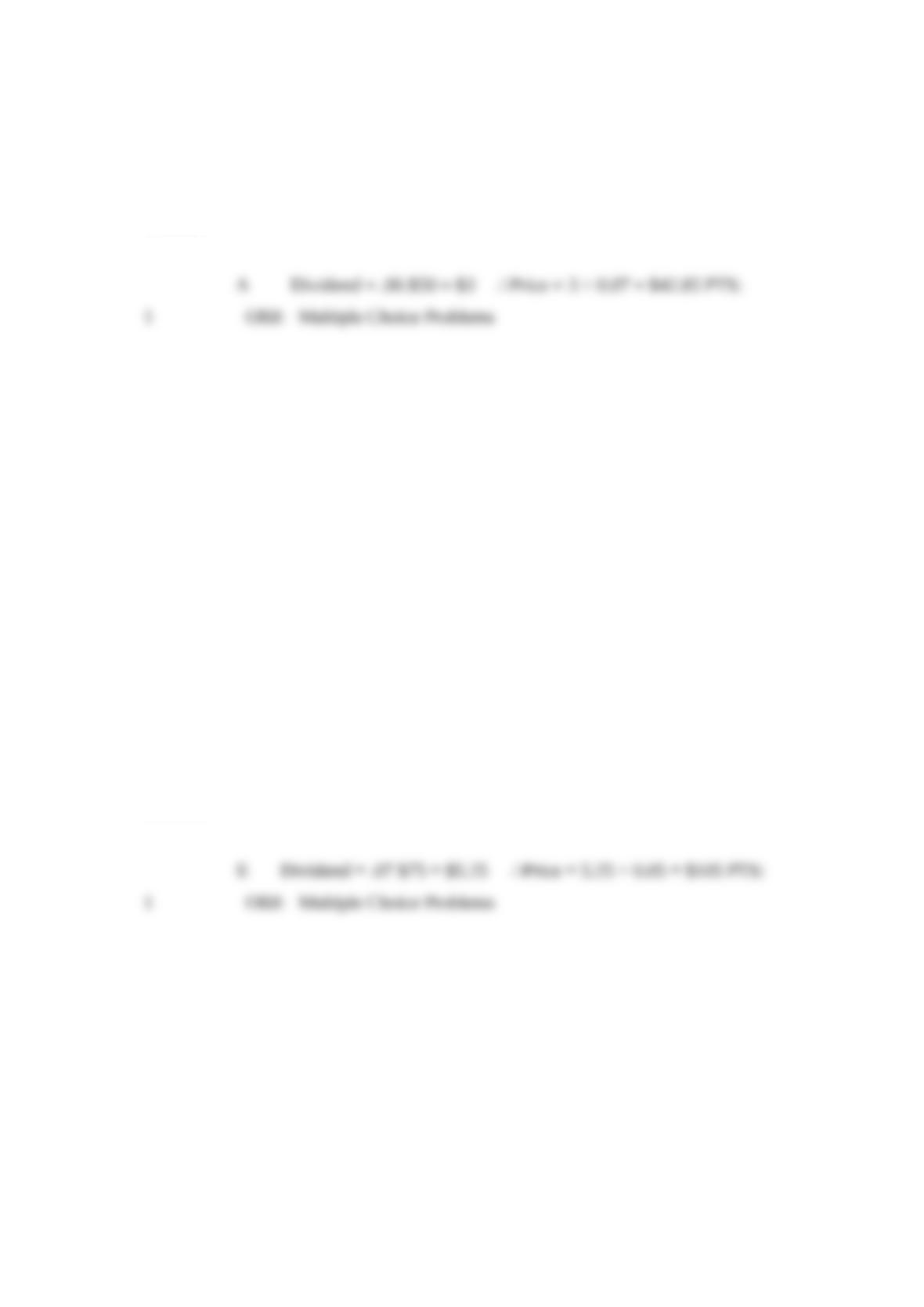
Question: In 2004, Smiths Corp. issued a $50 par value preferred stock that pays a 6
percent annual dividend. Due to changes in the overall economy and in the companys
financial condition investors are now requiring an 7 percent return. What price would you
be willing to pay for a share of the preferred if you receive your first dividend one year
from now?
Answer:
Question: In 2004, Venus Fly Co. issued a $75 par value preferred stock which pays a 7
percent annual dividend. Due to changes in the overall economy and in the companys
financial condition investors are now requiring a 5 percent return. What price would you
be willing to pay for a share of the preferred if you receive your first dividend one year
from now?
Answer:
Question: In 2004, Swisten Inc. issued a $150 par value preferred stock that pays an 8
percent annual dividend. Due to changes in the overall economy and in the companys
financial condition investors are now requiring an 15 percent return. What price would you
be willing to pay for a share of the preferred if you receive your first dividend one year
from now?
Answer:
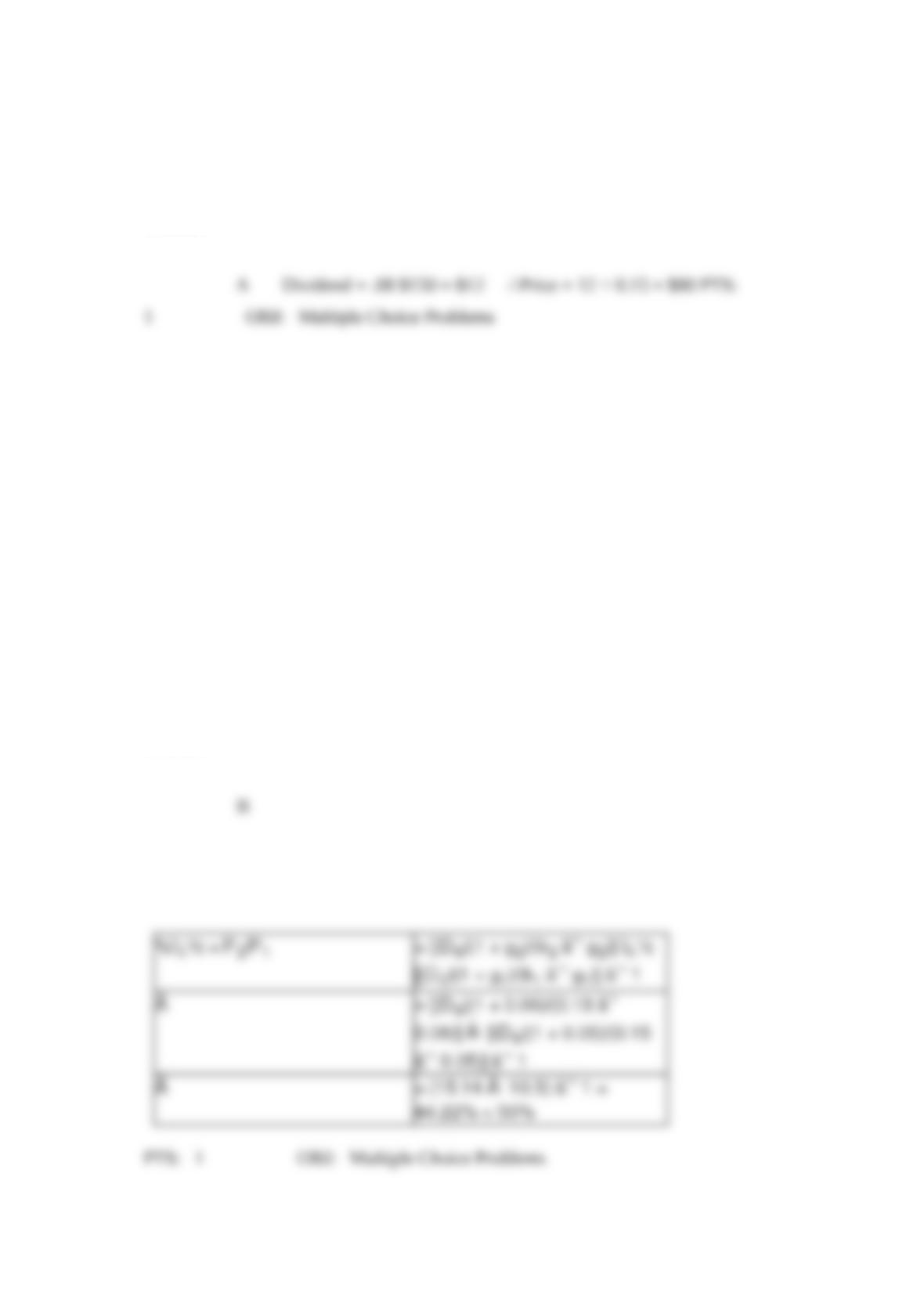
Question: Using the constant growth model, a decrease in the required rate of return from
15 to 13 percent combined with an increase in the growth rate from 5 to 6 percent would
cause the price to
Answer:
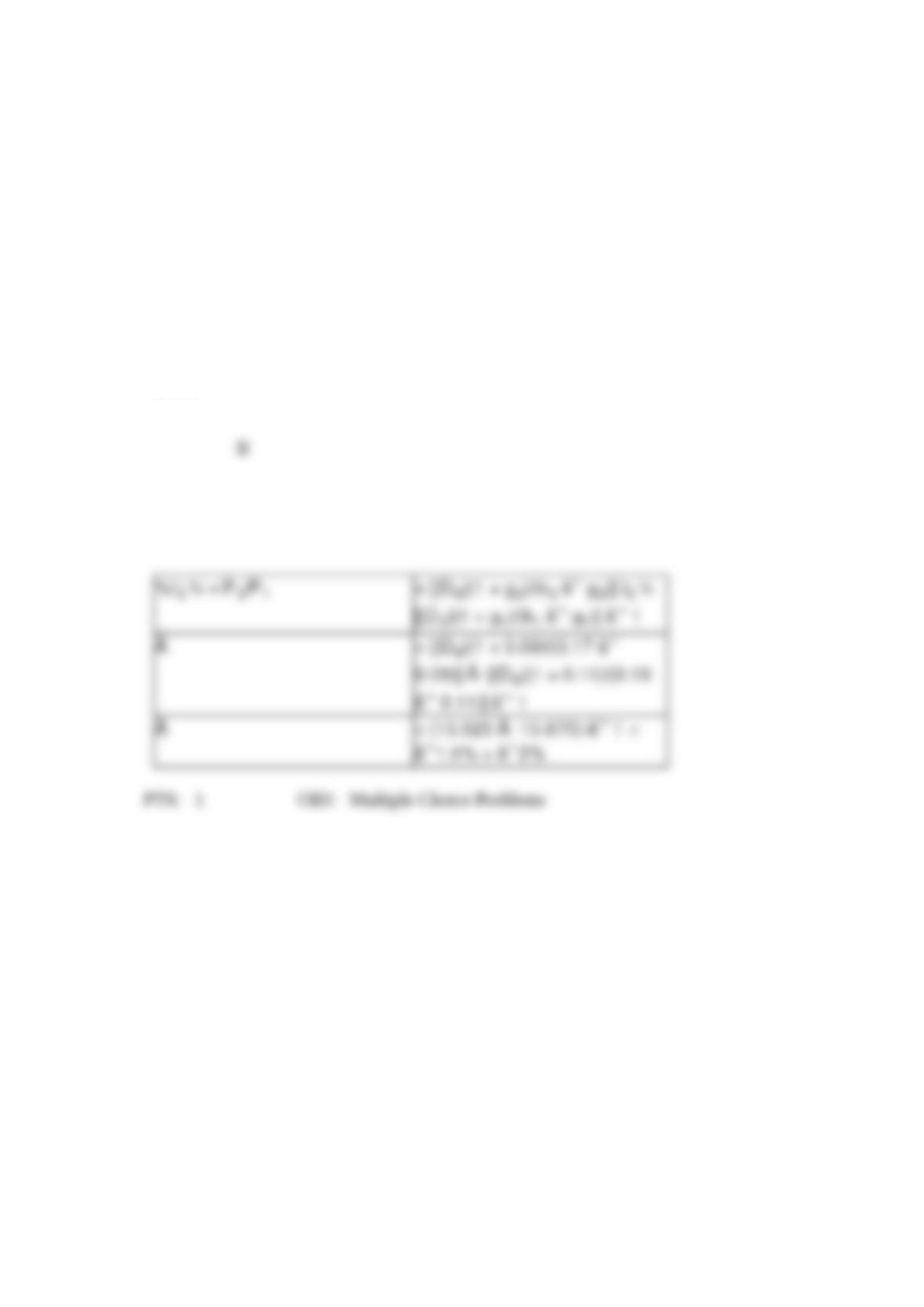
Question: Using the constant growth model, an increase in the required rate of return from
19 to 17 percent combined with an increase in the growth rate from 11 to 9 percent would
cause the price to
Answer:
Question: Using the constant growth model, an increase in the required rate of return from
14 to 15 percent combined with an increase in the growth rate from 6 to 7 percent would
cause the price to
Answer:
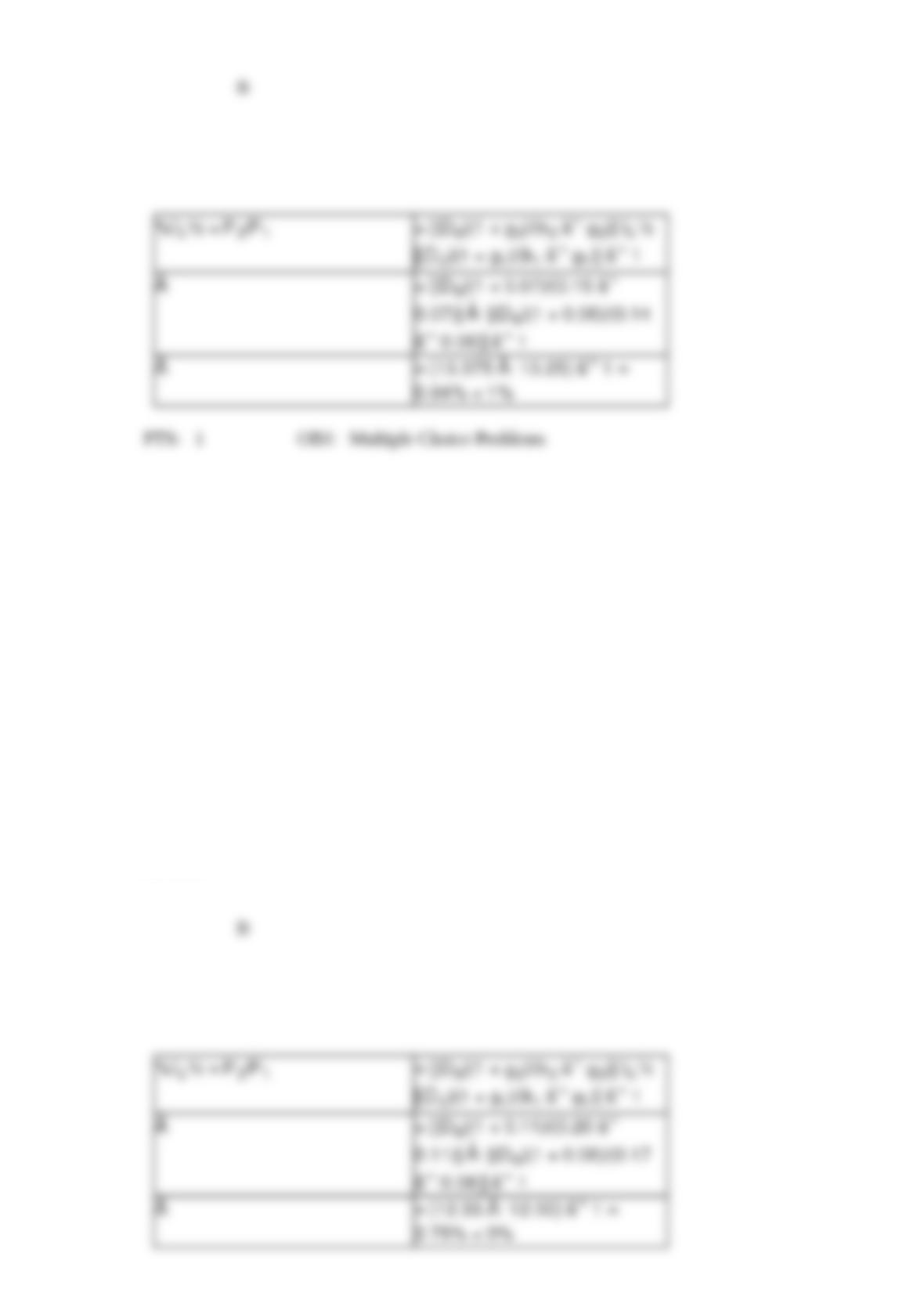
Question: Using the constant growth model, an increase in the required rate of return from
17 to 20 percent combined with an increase in the growth rate from 8 to 11 percent would
cause the price to
Answer:
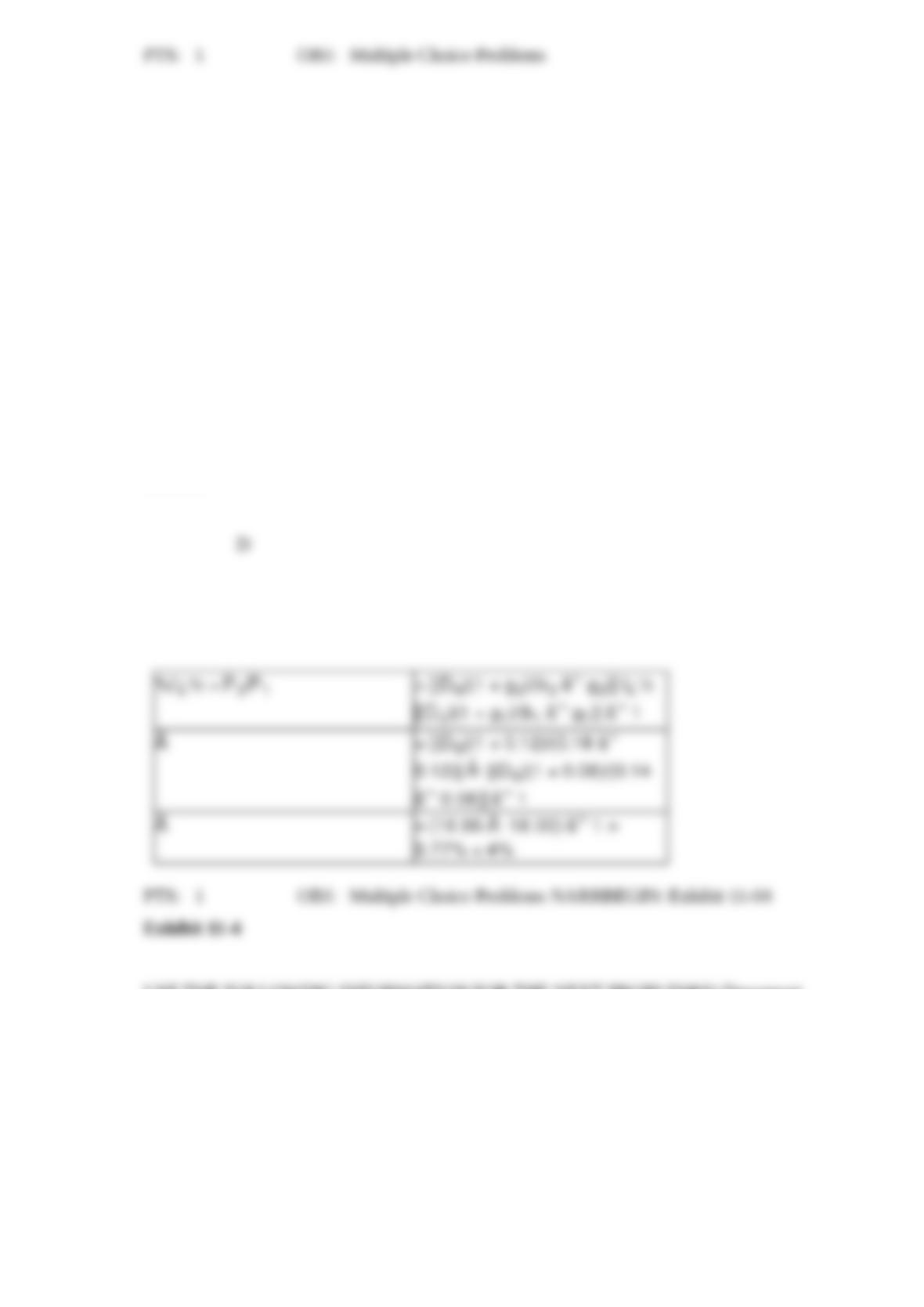
Question: Using the constant growth model, an increase in the required rate of return from
14 to 18 percent combined with an increase in the growth rate from 8 to 12 percent would
cause the price to
Answer:
USE THE FOLLOWING INFORMATION FOR THE NEXT PROBLEM(S) Davenport
Corporations last dividend was $2.70 and the directors expect to maintain the historic 3
percent annual rate of growth. You plan to purchase the stock today because you feel that
the growth rate will increase to 5 percent for the next three years and the stock will then
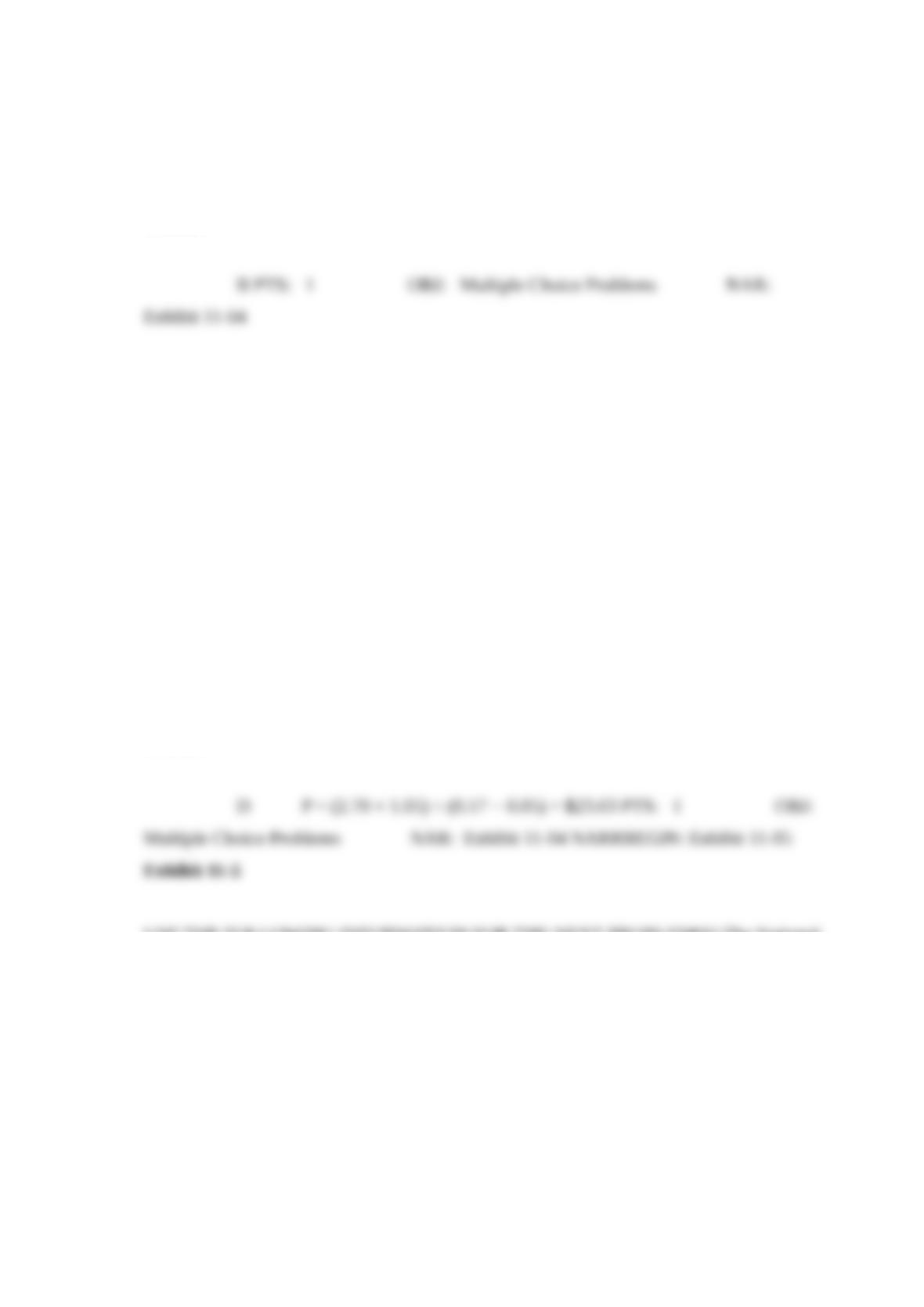
reach $25 per share. NARREND Question: Refer to Exhibit 11-4. How much should you
be willing to pay for the stock if you require a 17 percent return?
Answer:
Question: Refer to Exhibit 11-4. How much should you be willing to pay for the stock if
you feel that the 5 percent growth rate can be maintained indefinitely and you require a 17
percent return?
Answer:
USE THE FOLLOWING INFORMATION FOR THE NEXT PROBLEM(S) The National
Motor Companys last dividend was $1.25 and the directors expect to maintain the historic
4 percent annual rate of growth. You plan to purchase the stock today because you feel that
the growth rate will increase to 7 percent for the next three years and the stock will then
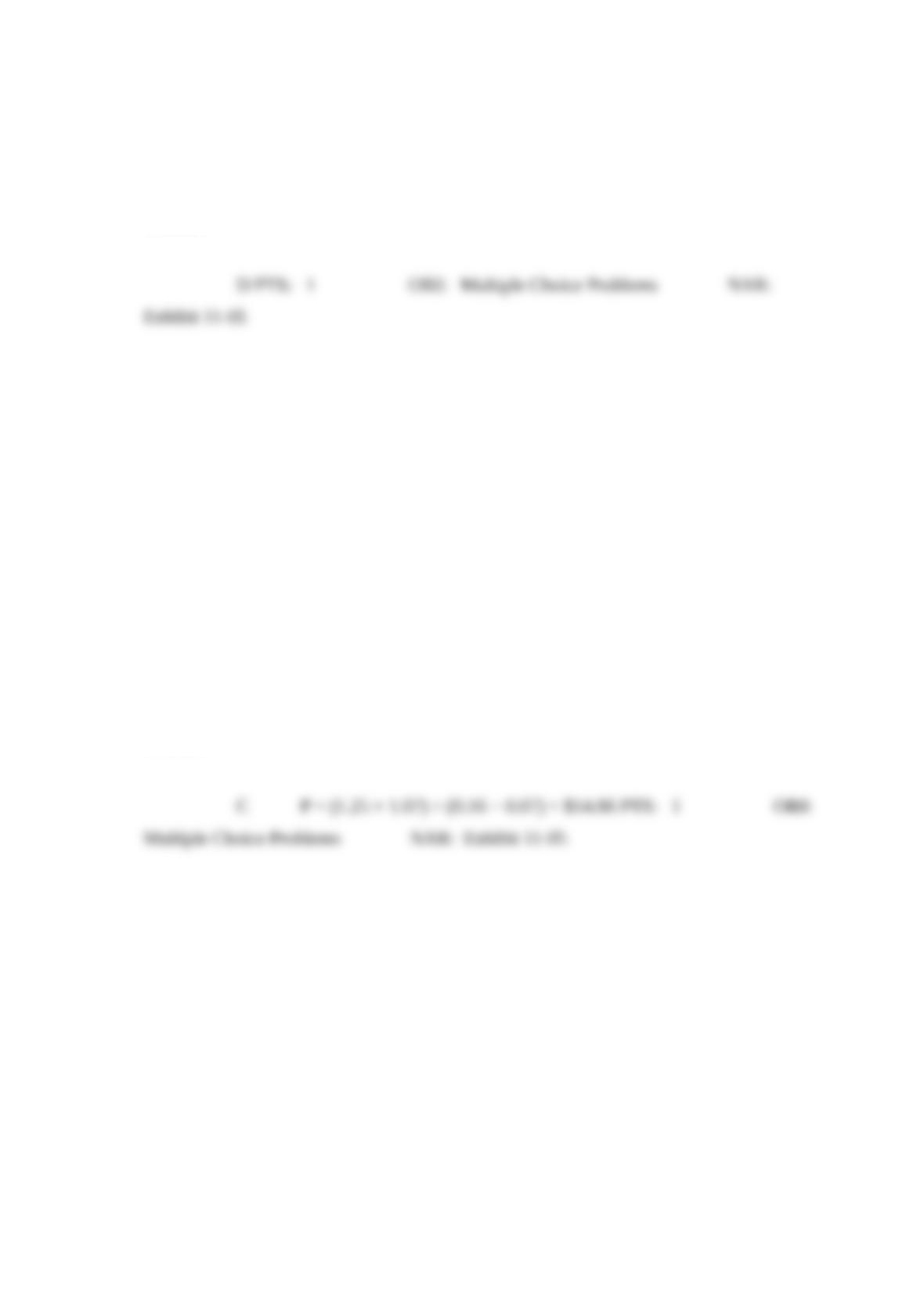
reach $25.00 per share. NARREND Question: Refer to Exhibit 11-5. How much should
you be willing to pay for the stock if you require a 16 percent return?
Answer:
Question: Refer to Exhibit 11-5. How much should you be willing to pay for the stock if
you feel that the 7 percent growth rate can be maintained indefinitely and you require a 16
percent return?
Answer:
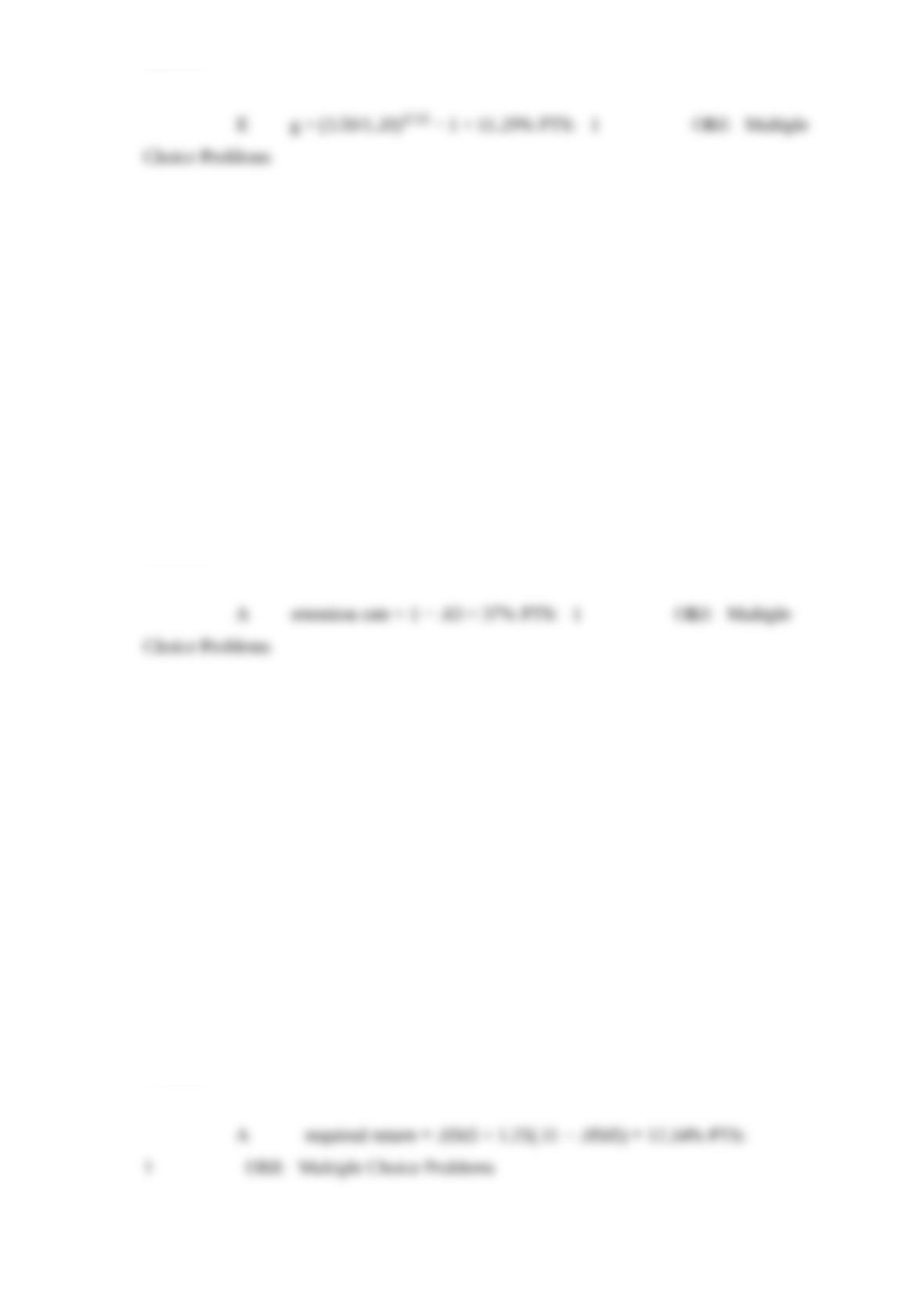
Question: Ross Corporation paid dividends per share of $1.20 at the end of 1990. At the
end of 2000 it paid dividends per share of $3.50. Calculate the compound annual growth
rate in dividends.
Answer:
Question: Hunter Corporation had a dividend payout ratio of 63% in 1999. The retention
rate in 1999 was
Answer:
Question: The beta for the DAK Corporation is 1.25. If the yield on 30 year T-bonds is
5.65%, and the long term average return on the S&P 500 is 11%. Calculate the required
rate of return for DAK Corporation.
Answer:
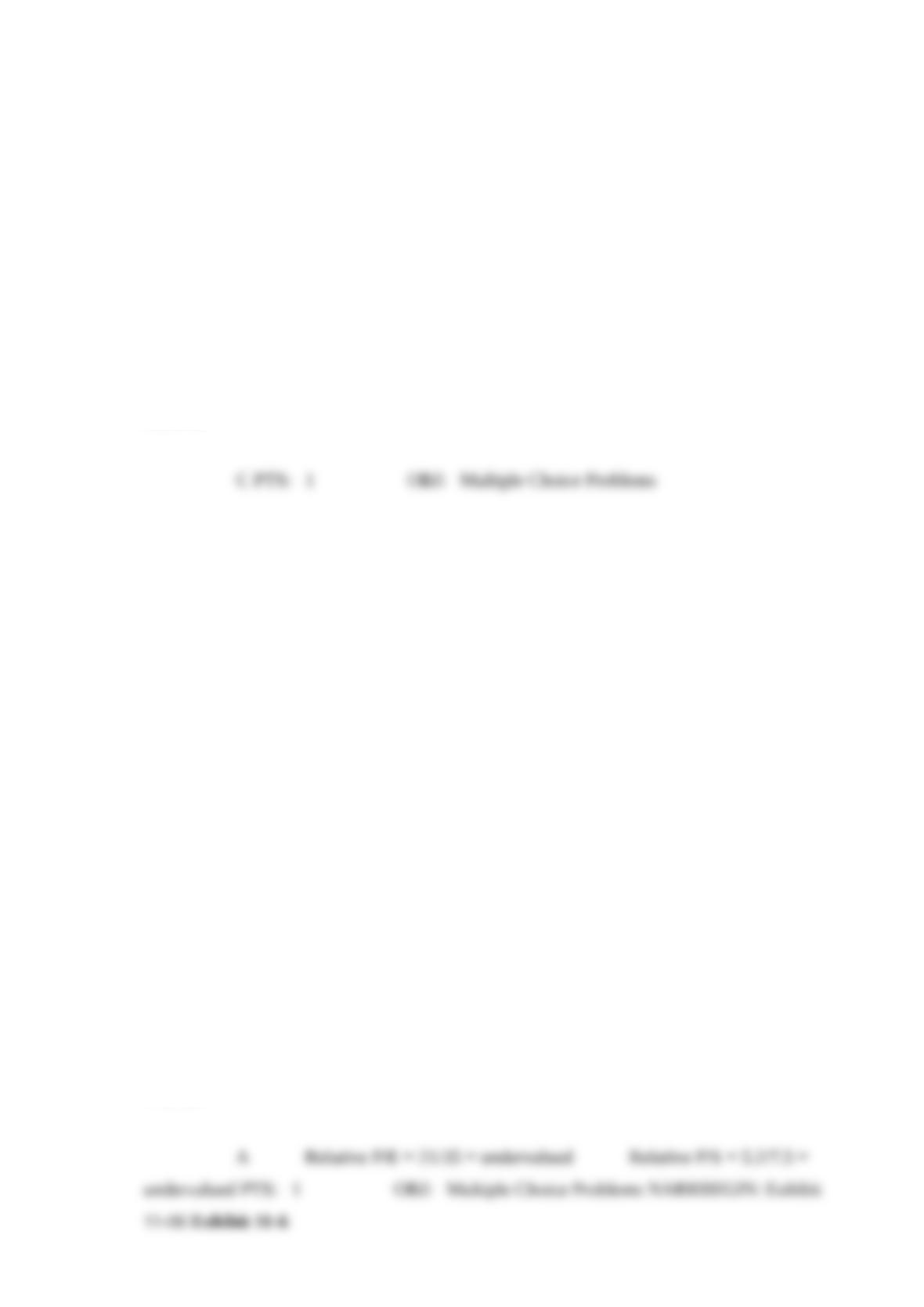
Question: Micro Corp. just paid dividends of $2 per share. Assume that over the next three
years dividends will grow as follows, 5% next year, 15% in year two, and 25% in year 3.
After that growth is expected to level off to a constant growth rate of 10% per year. The
required rate of return is 15%. Calculate the intrinsic value using the multistage model.
Answer:
Question: The P/E ratio for BMI Corporation 21, and the P/S ratio is 5.2. The industry P/E
ratio is 35 and the industry P/S ratio is 7.5. Based on relative valuation, BMI is
Answer:
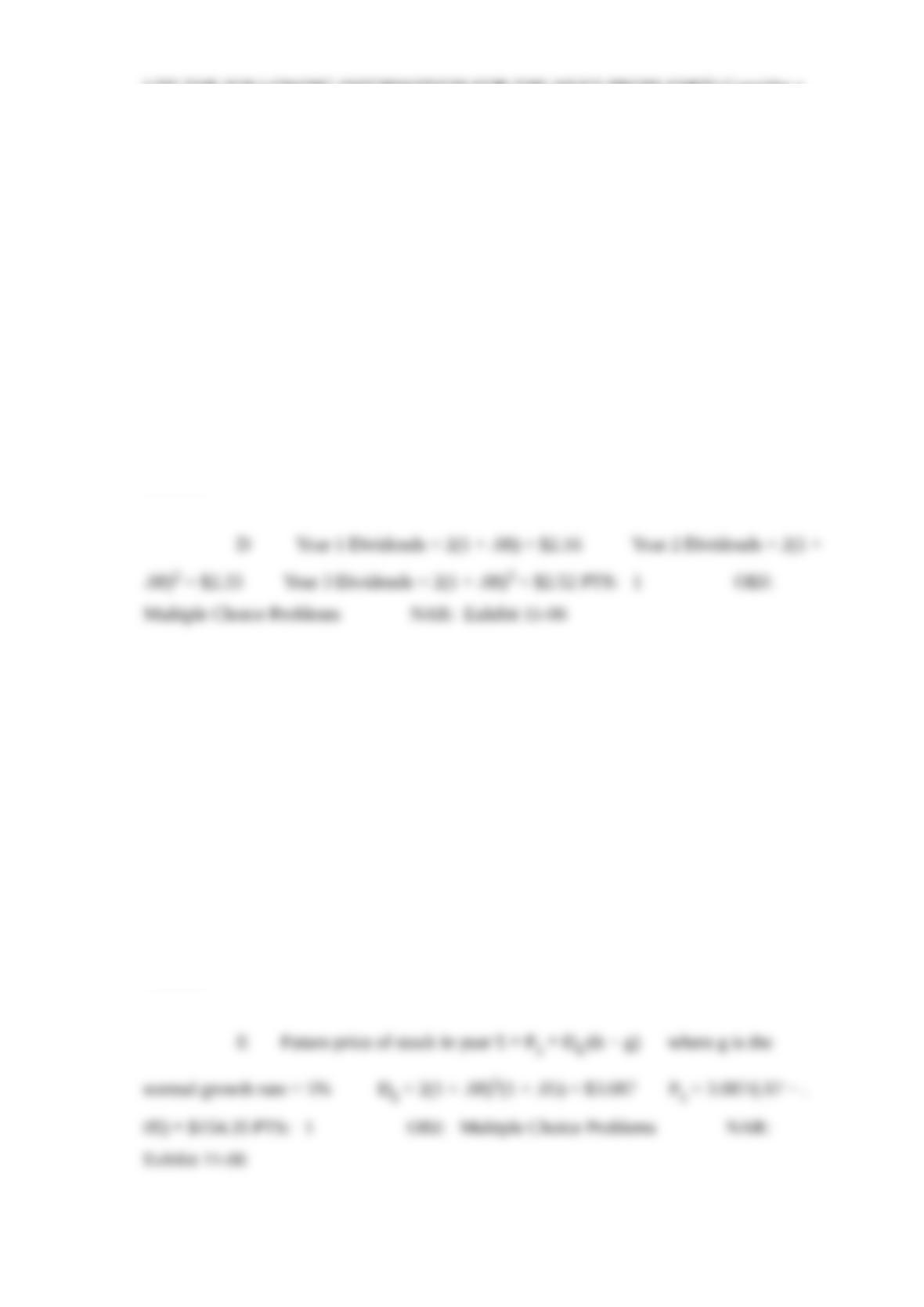
USE THE FOLLOWING INFORMATION FOR THE NEXT PROBLEM(S) Consider a
firm that has just paid a dividend of $2. An analyst expects dividends to grow at a rate of
8% per year for the next five years. After that dividends are expected to grow at a normal
rate of 5% per year. Assume that the appropriate discount rate is 7%. NARREND
Question: Refer to Exhibit 11-6. The dividends for years 1, 2, and 3 are
Answer:
Question: Refer to Exhibit 11-6. The future price of the stock in year 5 is
Answer:
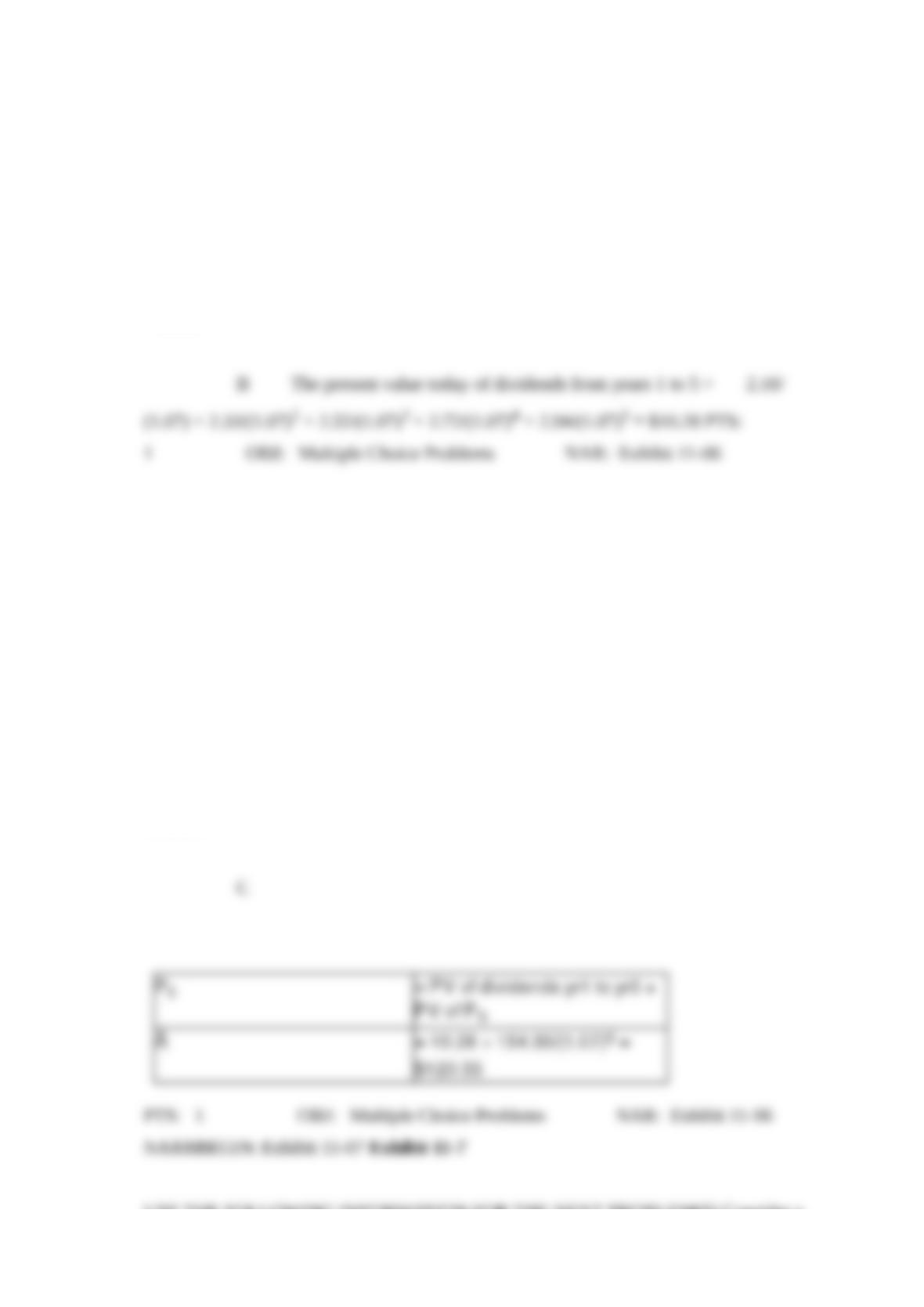
Question: Refer to Exhibit 11-6. The present value today of dividends for years 1 to 5 is
Answer:
Question: Refer to Exhibit 11-6. The price of the stock today (P0) is
Answer:
USE THE FOLLOWING INFORMATION FOR THE NEXT PROBLEM(S) Consider a
firm that has just paid a dividend of $1.5. An analyst expects dividends to grow at a rate of
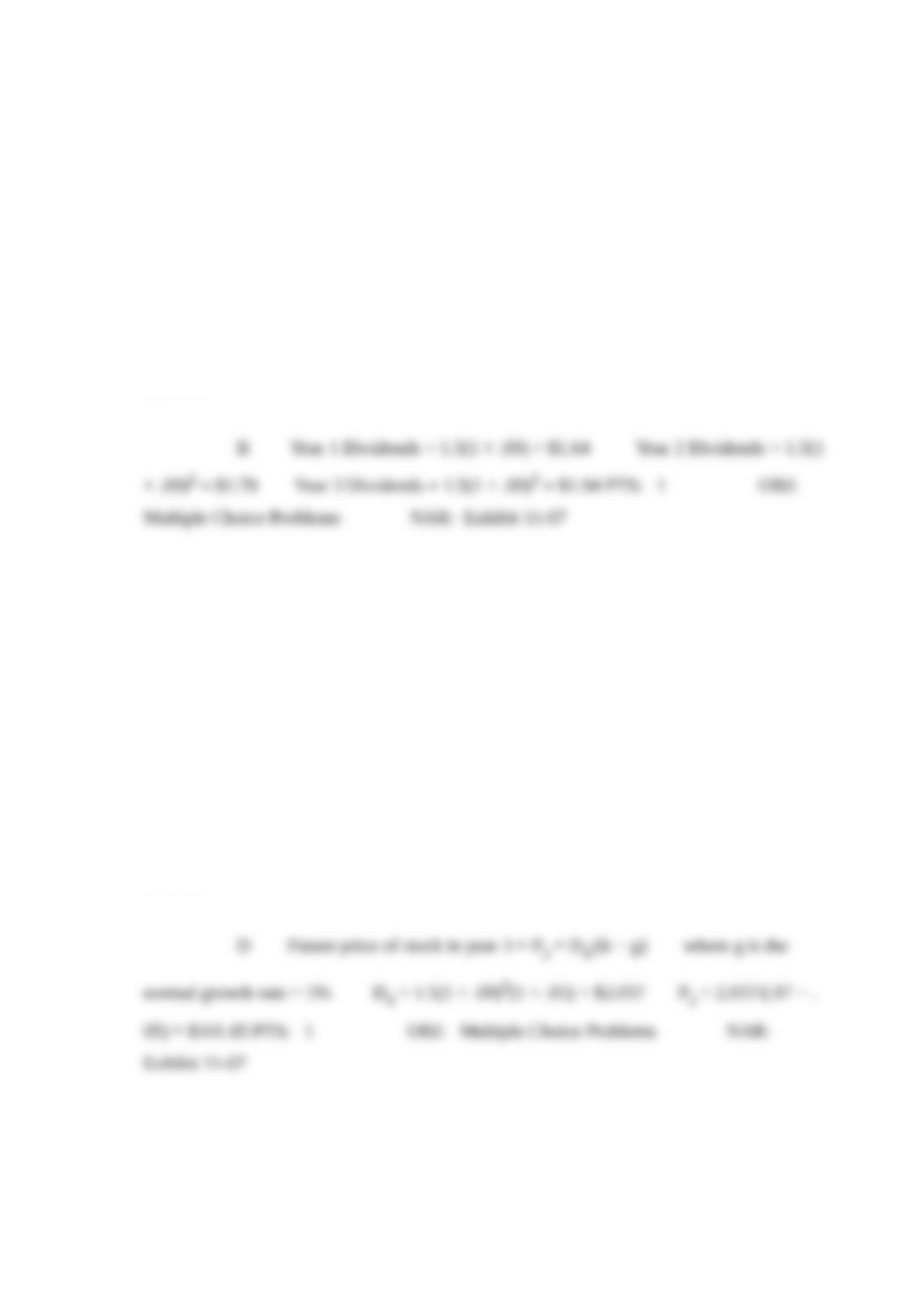
9% per year for the next three years. After that dividends are expected to grow at a normal
rate of 5% per year. Assume that the appropriate discount rate is 7%. NARREND
Question: Refer to Exhibit 11-7. The dividends for years 1, 2, and 3 are
Answer:
Question: Refer to Exhibit 11-7. The future price of the stock in year 3 is
Answer:
Question: Refer to Exhibit 11-7. The present value today of dividends for years 1 to 3 is
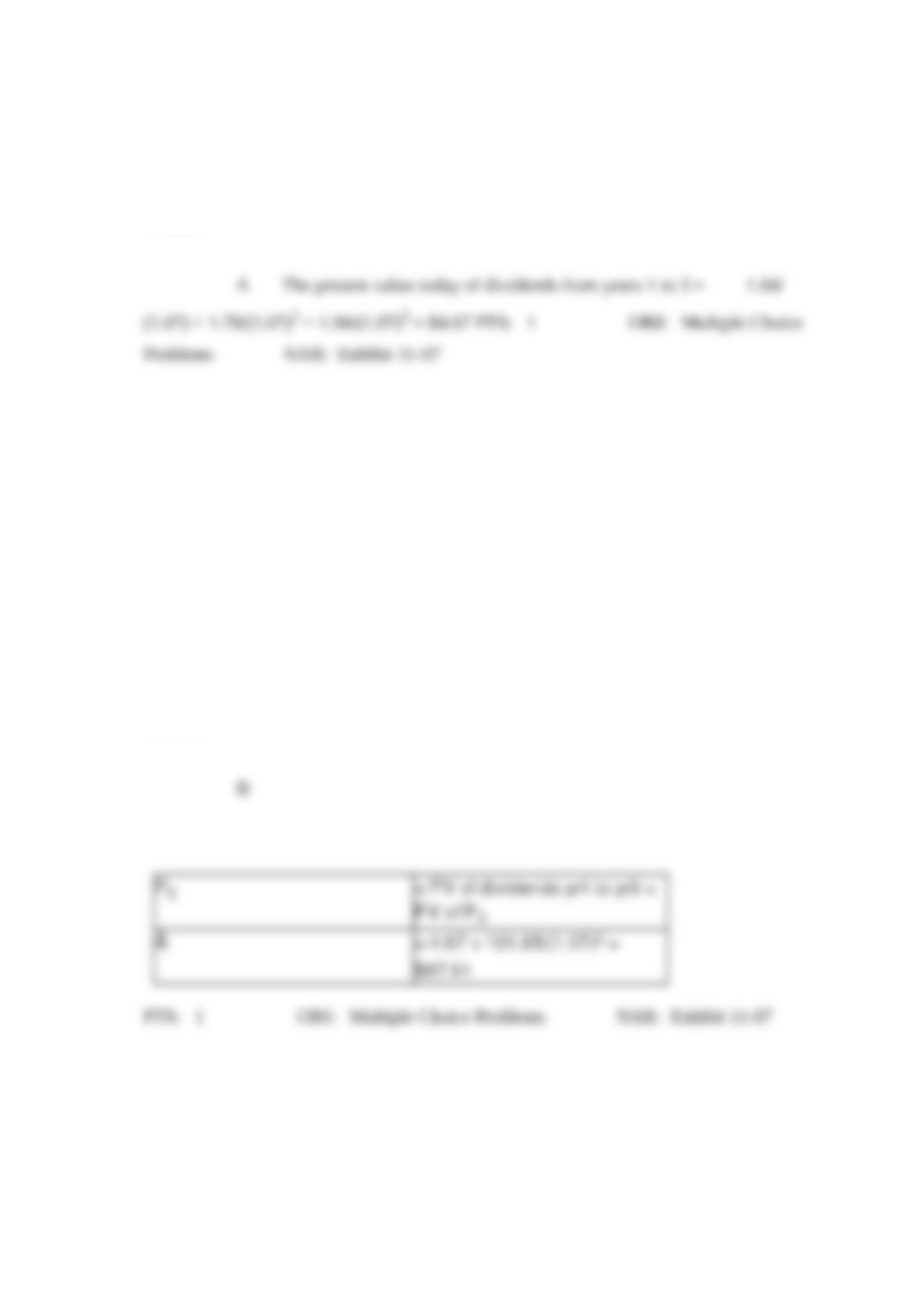
Answer:
Question: Refer to Exhibit 11-7. The price of the stock today (P0) is
Answer:
Question: Tayco Corporation has just paid dividends of $3 per share. The earnings per
share for the company was $4. If you believe that the appropriate discount rate is 15% and
the long term growth rate in dividends is 6%, and earnings is 6%, the firms P/E ratio is
Answer:
Question: What is the value of a 10% semi-annual coupon bond with a par value of $1,000
that matures in 5 years and has a required rate of return of 9%?
Answer:
Question: What is the value of a preferred stock that has a par value of $100, a required
rate of return of 11%, and pays a 7 percent annual dividend?
Answer:
Question: XCEL Corporation paid a dividend yesterday for $1.50. They expect to pay
dividends annually at a constant 6% annual growth rate indefinitely. If the required rate of
return on this investment is 12%, what is the current value of this common stock?
Answer:
USE THE FOLLOWING INFORMATION FOR THE NEXT PROBLEM(S) Fast Grow
Corporation is expecting dividends to grow at a 20% rate for the next two years. The
corporation just paid a $2 dividend and the next dividend will be paid one year from now.
After two years of rapid growth dividends are expected to grow at a constant rate of 9%
forever. NARREND Question: Refer to Exhibit 11-8. If the required return is 14%, what is
the value of Fast Grow Corporation common stock today?
Answer:
Question: Refer to Exhibit 11-8. Assume that the annual dividend grows at a constant rate
of 9% indefinitely instead of the supernormal growth. How much is the stock worth if
dividends grow annually at 9%?
Answer: