
CHAPTER 10—ANALYSIS OF FINANCIAL STATEMENTS TRUE/FALSE
Question: Financial Accounting Standards Board (FASB) recognizes that it would be
improper for all companies to use identical and restrictive accounting principles. Answer:
Question: The balance sheet shows what assets the firm controls at a point in time and how
it financed the assets. Answer:
Question: The income statement indicates the flow of sales, expenses, and earnings during
a period of time. Answer:
Question: The statement of cash flows shows the effect on the firms cash flows of earnings
and changes in the assets, current liabilities, long-term liabilities and net worth. Answer:
Question: Cash flow from operations = Net Income + Non cash revenue and expenses −
Changes in net working capital. Answer:
Question: Free cash flow = Cash flow from operations − Capital expenditures +
Disposition of property and equipment. Answer:
Question: Traditional cash flow and Free cash flow are equivalent concepts. Answer:

Question: It is important to compare a firms performance relative to: the aggregate
economy, its industry, its major competitors and its past performance. Answer:
Question: The current ratio, receivables turnover and total asset turnover are measures of
internal liquidity. Answer:
Question: Inventory turnover, net fixed asst turnover and equity turnover are measures of
operating efficiency. Answer:
Question: According to the DuPont system ROE (return on equity) can be decomposed
into the profit margin ratio and the total asset turnover ratio. Answer:
Question: Some factors the determine business risk include sales variability and debt to
equity ratio. Answer:
Question: Some factors that determine financial risk include interest coverage and cash
flow coverage. Answer:

Question: The growth of business depends on the percentage of earnings reinvested and
the return on equity. Answer:
Question: Financial ratios are used in stock and bond valuation models. Answer:
Question: Financial ratios can be used to estimate systematic risk. Answer:
Question: Bond rating agencies include the analysis of financial ratios in arriving at
corporate bond ratings. Answer:
Question: Financial ratios can be used to identify firms that might default on a loan or
declare bankruptcy. Answer:
Question: A cross-sectional analysis compares a firm to a subset of industry firms
comparable in size or characteristics. Answer:
Question: In common size analysis all assets and liabilities on the balance sheet are
divided by total sales. Answer:
Question: Financial risk is the uncertainty of operating income caused by the firms
industry. Answer:
Question: The comparisons with which ratios should be made include the following,
except
Answer:
Question: The five major classes of ratios include the following, except
Answer:
Question: Which of the following is not a flow ratio?
Answer:
Question: Which ratio is considered an internal liquidity ratio?
Answer:
Question: Operating performance is divided into which two subcategories of ratios?

Answer:
Question: Which of the following is not a component of return on equity (ROE)?
Answer:
Question: Which equation is valid?
Answer:
Question: Determinants of market liquidity include all except the
Answer:
Question: Which of the following is not a use of financial ratios?
Answer:
Question: Limitations on the use of ratios include
Answer:
Question: Business risk is a function of
Answer:
Question: A common-size balance sheet expresses all balance sheet items
Answer:
Question: A common-size income statement expresses all income statement items
Answer:
Question: An estimate of the discounted value of future lease payments can be obtained
by:

Answer:
Question: Financial risk is the additional uncertainty of returns to equity holders due to
Answer:
Question: The market liquidity of a security can be measured using
Answer:
Question: Which of the following factors would be an indicative of high quality earnings?

Answer:
Question: Which of the following factors would be indicative of a high quality balance
sheet?
Answer:
Question: Which of the following ratios is not a measurement of the firms liquidity?

Answer:
Question: DuPont Analysis breaks down return on equity into major areas that can be used
to identify a firms strengths or weaknesses with respect to
Answer:
Question: Which of the following statements regarding financial risk and business risk is
true?
Answer:
USE THE FOLLOWING INFORMATION FOR THE NEXT PROBLEM(S)

NARREND Question: Refer to Exhibit 10-1. What was BMCS return on equity in 2004?
Answer:
Question: Refer to Exhibit 10-1. What was BMCS quick ratio for 2004?
Answer:
Question: Refer to Exhibit 10-1. What was BMCS interest coverage for 2004?
Answer:
Question: Refer to Exhibit 10-1. What was BMCS total asset turnover for 2004?
Answer:
Question: Refer to Exhibit 10-1. What was BMCS current ratio at year-end 2004?
Answer:
Question: Refer to Exhibit 10-1. What was BMCS net profit margin?
Answer:
Question: Refer to Exhibit 10-1. What was BMCS fixed asset turnover ratio?
Answer:
Question: Refer to Exhibit 10-1. What was the financial leverage multiplier used in the
BMC system?
Answer:
Question: Refer to Exhibit 10-1. What is BMCS traditional cash flow?
Answer:
Question: Refer to Exhibit 10-1. What is BMCS operating profit margin?
Answer:
USE THE FOLLOWING INFORMATION FOR THE NEXT PROBLEM(S)
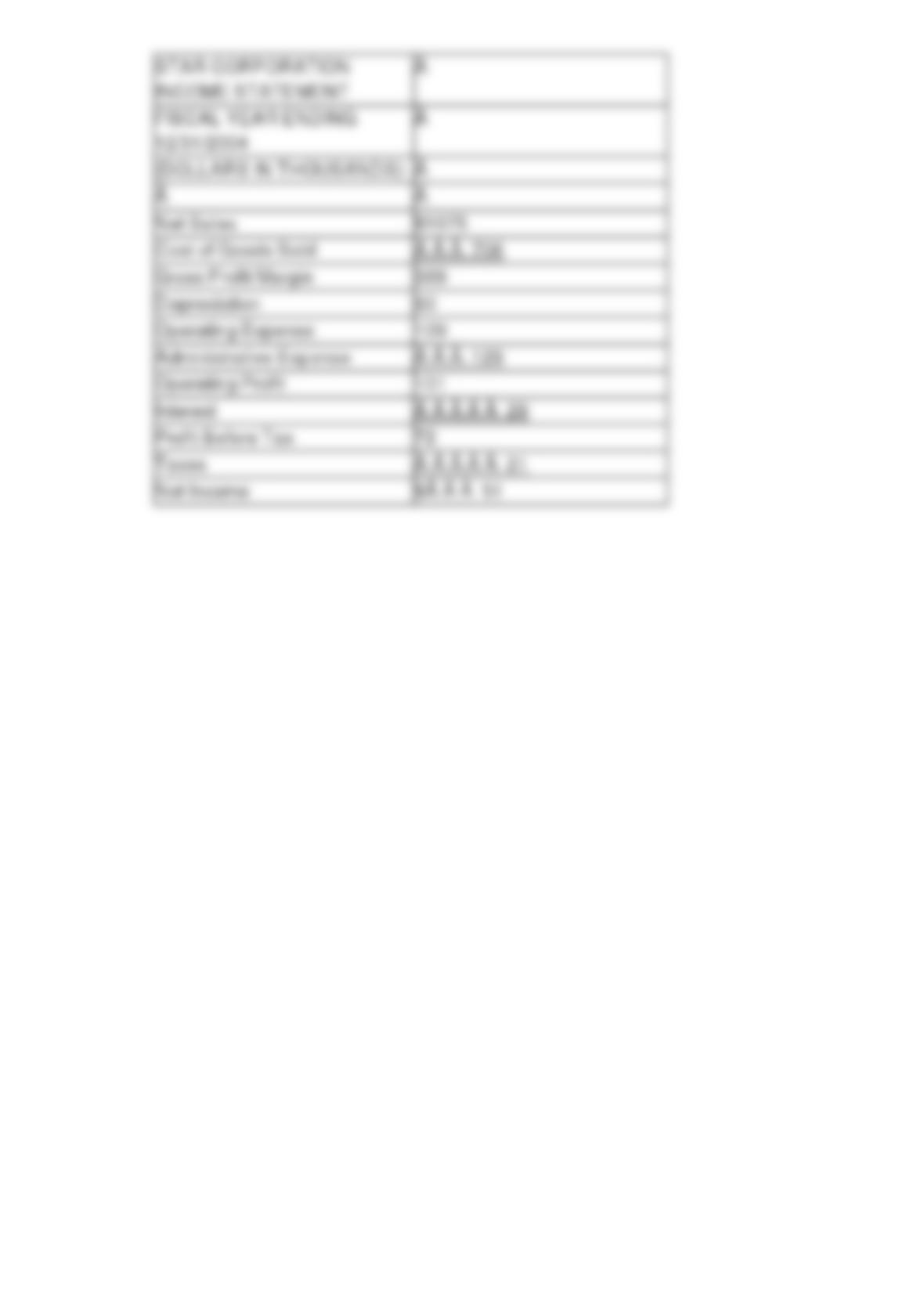

NARREND Question: Refer to Exhibit 10-2. What was Stars return on equity in 2004?
Answer:
Question: Refer to Exhibit 10-2. What was Stars quick ratio for 2004?
Answer:
Question: Refer to Exhibit 10-2. What was Stars interest coverage for 2004?
Answer:
Question: Refer to Exhibit 10-2. What was Stars total asset turnover for 2004?
Answer:
Question: Refer to Exhibit 10-2. What was Stars current ratio at year-end 2004?
Answer:
Question: Refer to Exhibit 10-2. What was Stars net profit margin?
Answer:
Question: Refer to Exhibit 10-2. What was Stars fixed asset turnover ratio?
Answer:
Question: Refer to Exhibit 10-2. What was the financial leverage multiplier used in the
Star system?
Answer:
Question: Refer to Exhibit 10-2. What is Stars traditional cash flow?
Answer:
Question: Refer to Exhibit 10-2. What is Stars operating profit margin?
Answer:
USE THE FOLLOWING INFORMATION FOR THE NEXT PROBLEM(S) You are
provided with the following information for a company.
NARREND Question: Refer to Exhibit 10-3. Calculate the receivables turnover ratio.
Answer:
Question: Refer to Exhibit 10-3. Calculate the inventory turnover ratio.
Answer:
Question: Refer to Exhibit 10-3. Calculate the payables turnover ratio.
Answer:
Question: Refer to Exhibit 10-3. Calculate the cash conversion cycle.
Answer:
USE THE FOLLOWING INFORMATION FOR THE NEXT PROBLEM(S) You are
provided with the following information about MaxCorp.
NARREND Question: Refer to Exhibit 10-4. Calculate the return on equity (ROE).
Answer:
Question: Refer to Exhibit 10-4. Calculate the sustainable growth rate.
Answer:
USE THE FOLLOWING INFORMATION FOR THE NEXT PROBLEM(S) You are
provided with the following information about Albermarle Corp.
NARREND Question: Refer to Exhibit 10-5. Calculate the operating margin.
Answer:
Question: Refer to Exhibit 10-5. Calculate the asset turnover ratio.
Answer:
Question: Refer to Exhibit 10-5. Calculate the interest expense rate.
Answer:
Question: Refer to Exhibit 10-5. Calculate the financial leverage.
Answer:
Question: Refer to Exhibit 10-5. Calculate the income tax rate.
Answer:
Question: Refer to Exhibit 10-5. Calculate the return on equity (ROE).
Answer:
USE THE FOLLOWING INFORMATION FOR THE NEXT PROBLEM(S) You are
provided with the following information for the Klandy Corporation.
During 2004 Klandy Corp. made capital expenditures totaling $500 and disposed property
worth $400. NARREND Question: Refer to Exhibit 10-6. The firms cash flow from
operating activities for the year 2004 is
Answer:
Question: Refer to Exhibit 10-6. The firms free cash flow is
Answer:
USE THE FOLLOWING INFORMATION FOR THE NEXT PROBLEM(S) You are
provided with the following information for the Nelson Corporation.
During 2004 Nelson Corp. made capital expenditures totaling $500 and disposed property
worth $800. NARREND Question: Refer to Exhibit 10-7. The firms cash flow from
operating activities for the year 2004 is
Answer:
Question: Refer to Exhibit 10-7. The firms free cash flow is
Answer:
USE THE FOLLOWING INFORMATION FOR THE NEXT PROBLEM(S) Zeco
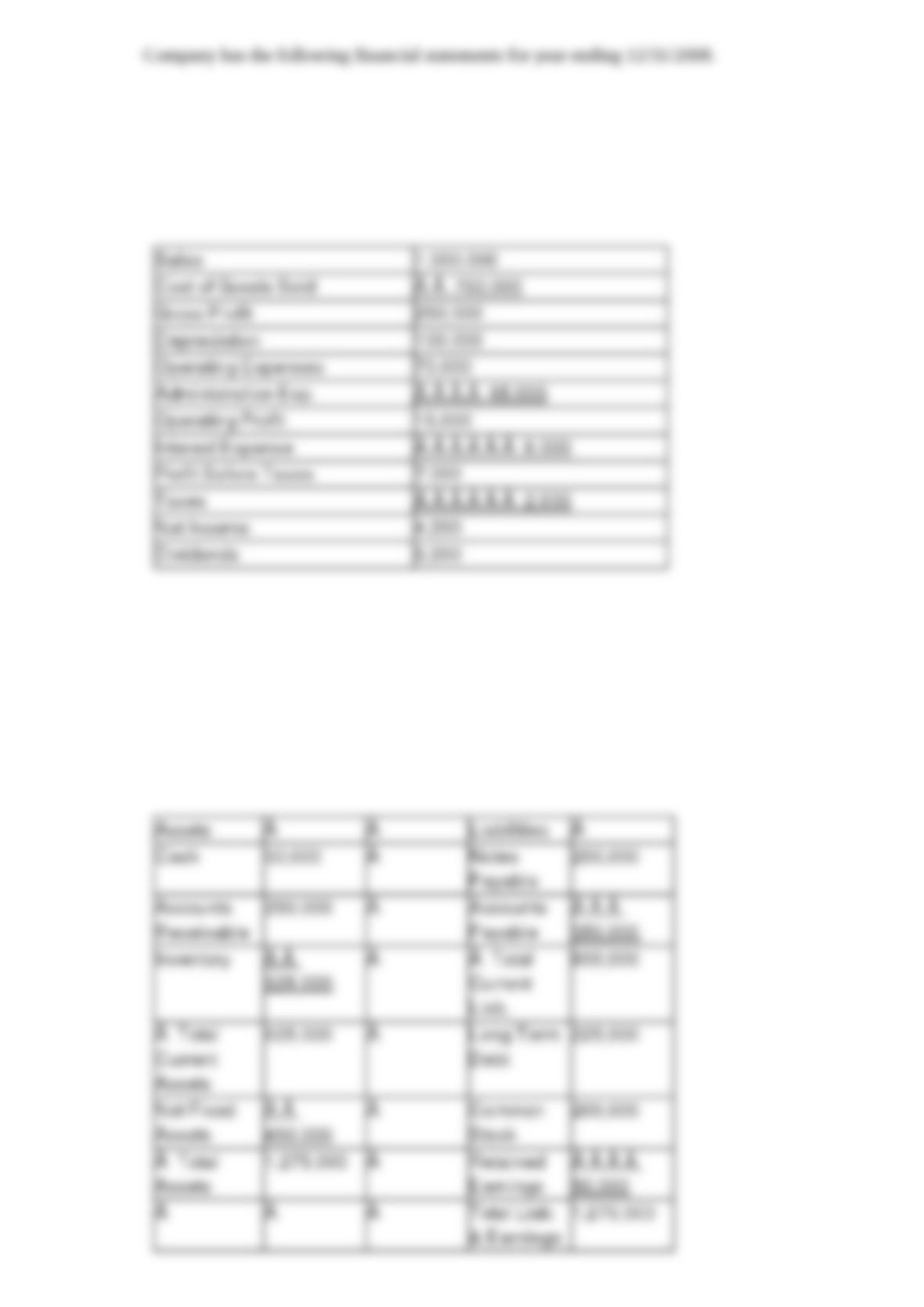
Company has the following financial statements for year ending 12/31/2008.
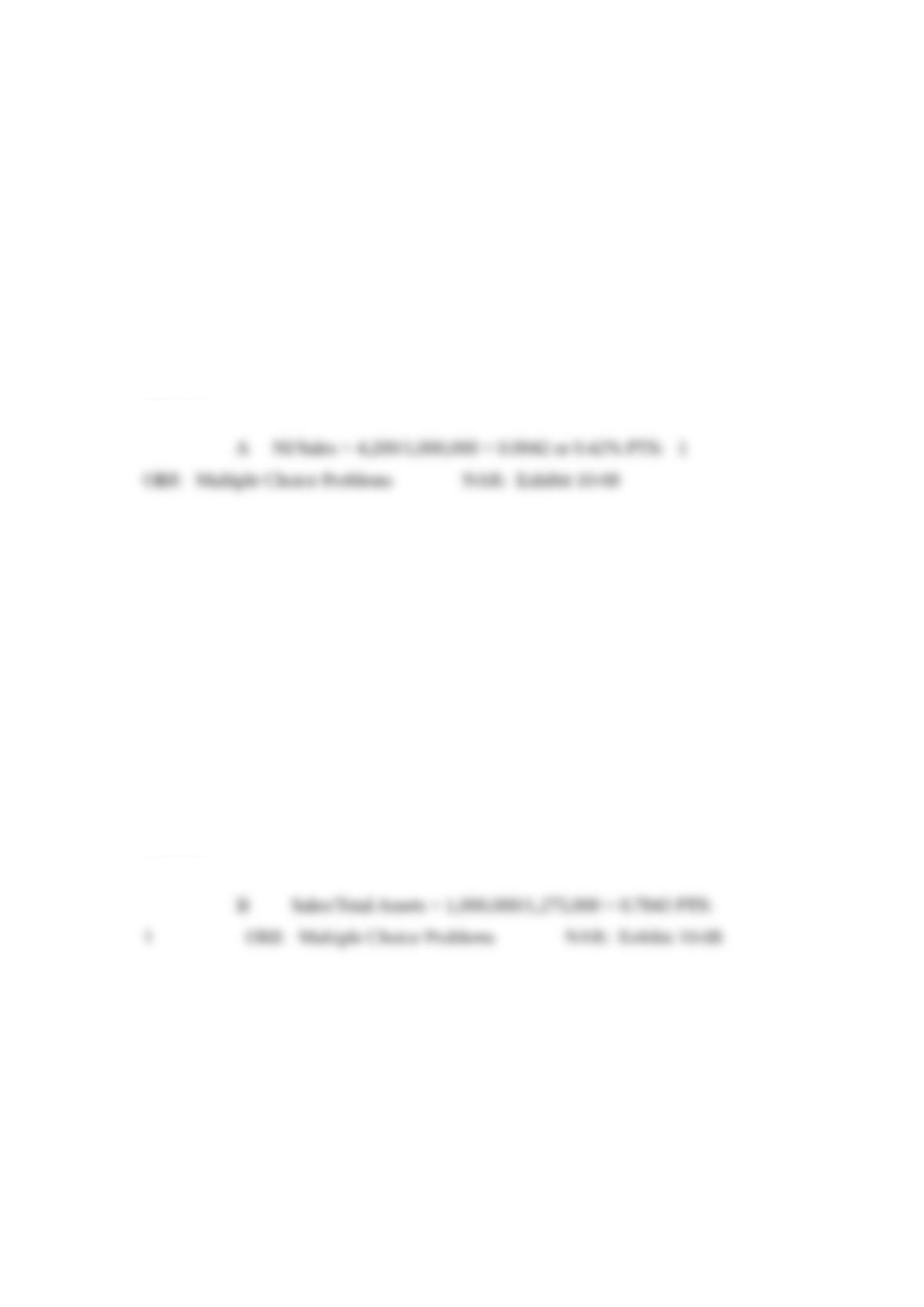
The Zeco Companys industry averages are as follows: Net Profit Margin = 4.5%; Total
Asset Turnover = 0.8; Total Assets/ Equity = 1.5 NARREND Question: Refer to Exhibit
10-8. Calculate Zeco Companys Net Profit Margin.
Answer:
Question: Refer to Exhibit 10-8. Calculate Zeco Companys Total Asset Turnover.
Answer:
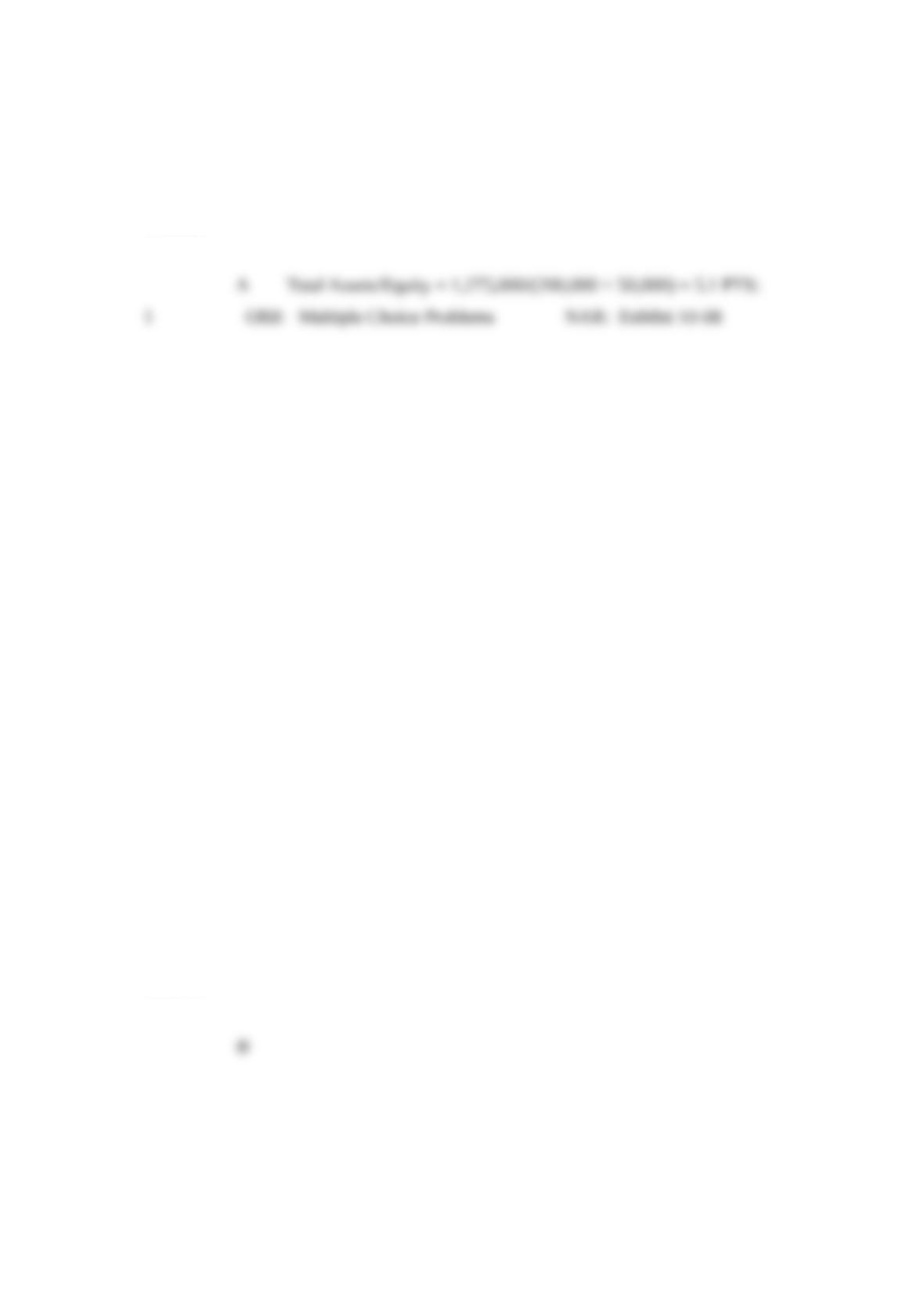
Question: Refer to Exhibit 10-8. Calculate Zeco Companys Total Assets/Equity ratio.
Answer:
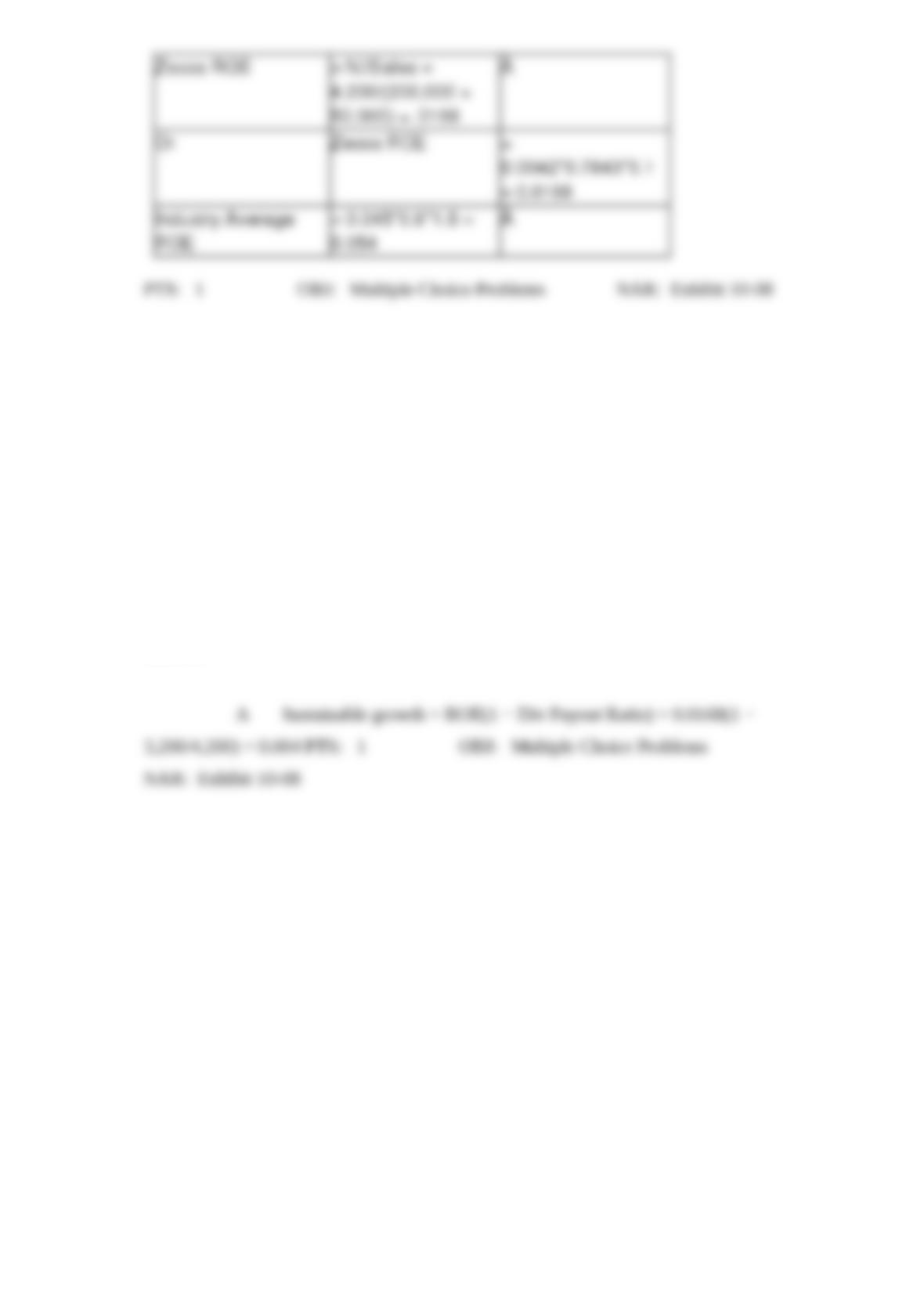
Question: Refer to Exhibit 10-8. Calculate the return on equity (ROE) for Zeco Company
and the Industry.
Answer:
Question: Refer to Exhibit 10-8. Calculate the sustainable growth rate for Zeco Company.
Answer:
Question: Refer to Exhibit 10-8. Based on this information what are the strengths and
concerns of Zeco Company?
Answer: