
CHAPTER 1—THE INVESTMENT SETTING
TRUE/FALSE
Question: The rate of exchange between certain future dollars and certain current dollars is
known as the pure rate of interest.
ANSWER:
Question: An investment is the current commitment of dollars over time to derive future
payments to compensate the investor for the time funds are committed, the expected rate of
inflation and the uncertainty of future payments.
ANSWER:
Question: The holding period return (HPR) is equal to the holding period yield (HPY)
stated as a percentage.
ANSWER:
Question: The geometric mean of a series of returns is always larger than the arithmetic
mean and the difference increases with the volatility of the series.
ANSWER:
Question: The expected return is the average of all possible returns.

ANSWER:
Question: Two measures of the risk premium are the standard deviation and the variance.
ANSWER:
Question: The variance of expected returns is equal to the square root of the expected
returns.
ANSWER:
Question: The coefficient of variation is the expected return divided by the standard
deviation of the expected return.
ANSWER:
Question: Nominal rates are averages of all possible real rates.
ANSWER:
Question: The risk premium is a function of the volatility of operating earnings, sales
volatility and inflation.

ANSWER:
Question: An individual who selects the investment that offers greater certainty when
everything else is the same is known as a risk averse investor.
ANSWER:
Question: Investors are willing to forgo current consumption in order to increase future
consumption for a nominal rate of interest.
ANSWER:
Question: The basic trade-off in the investment process is

ANSWER:
Question: The rate of exchange between future consumption and current consumption is
ANSWER:
Question: The ____ the variance of returns, everything else remaining constant, the ____
the dispersion of expectations and the ____ the risk.

ANSWER:
Question: The coefficient of variation is a measure of
ANSWER:
Question: The nominal risk free rate of interest is a function of

ANSWER:
Question: In the phrase “nominal risk free rate,” nominal means
ANSWER:
Question: If a significant change is noted in the yield of a T-bill, the change is most likely
attributable to
ANSWER:
Question: The real risk-free rate is affected by a two factors:

ANSWER:
Question: Which of the following isnota component of the risk premium?
ANSWER:
Question: The ability to sell an asset quickly at a fair price is associated with

ANSWER:
Question: The variability of operating earnings is associated with
ANSWER:
Question: The uncertainty of investment returns associated with how a firm finances its
investments is known as
ANSWER:

Question: What will happen to the security market line (SML) if the following events
occur, other things constant: (1) inflation expectations increase, and (2) investors become
more risk averse?
ANSWER:
Question: A decrease in the market risk premium, all other things constant, will cause the
security market line to
ANSWER:
Question: A decrease in the expected real growth in the economy, all other things constant,
will cause the security market line to

ANSWER:
Question: Unsystematic risk refers to risk that is
ANSWER:
Question: The security market line (SML) graphs the expected relationship between
ANSWER:

Question: Two factors that influence the nominal risk-free rate are:
ANSWER:
Question: Measures of risk for an investment include

ANSWER:
Question: Sources of risk for an investment include
ANSWER:
Question: Modern portfolio theory assumes that most investors are

ANSWER:
Question: Which of the following is not a component of the required rate of return?
ANSWER:
Question: All of the following are major sources of uncertainty EXCEPT
ANSWER:
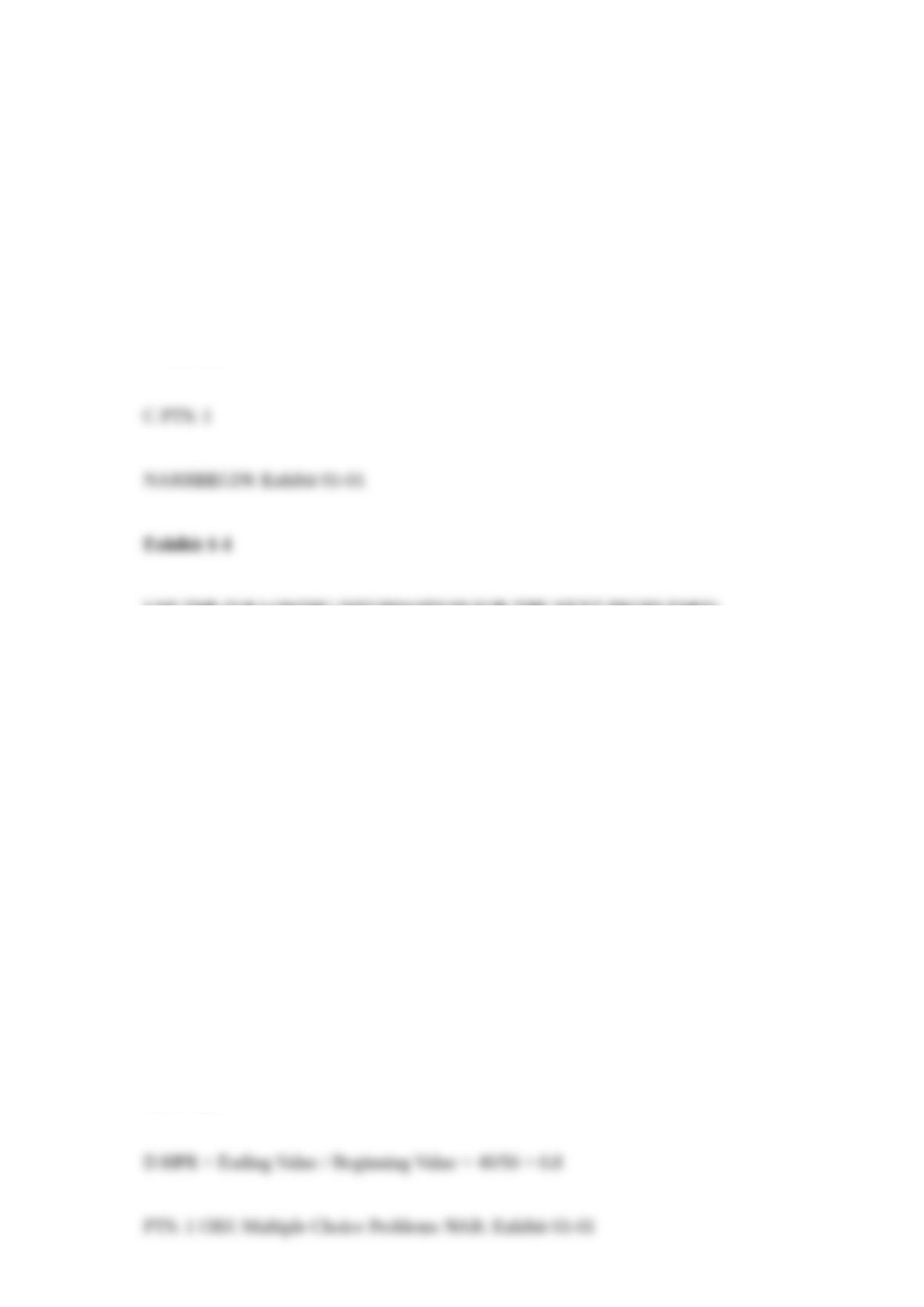
Question: The total risk for a security can be measured by its
ANSWER:
USE THE FOLLOWING INFORMATION FOR THE NEXT PROBLEM(S)
Assume you bought 100 shares of NewTech common stock on January 15, 2003 at $50.00
per share and sold it on January 15, 2004 for $40.00 per share.
NARREND
Question: Refer to Exhibit 1-1. What was your holding period return?
ANSWER:
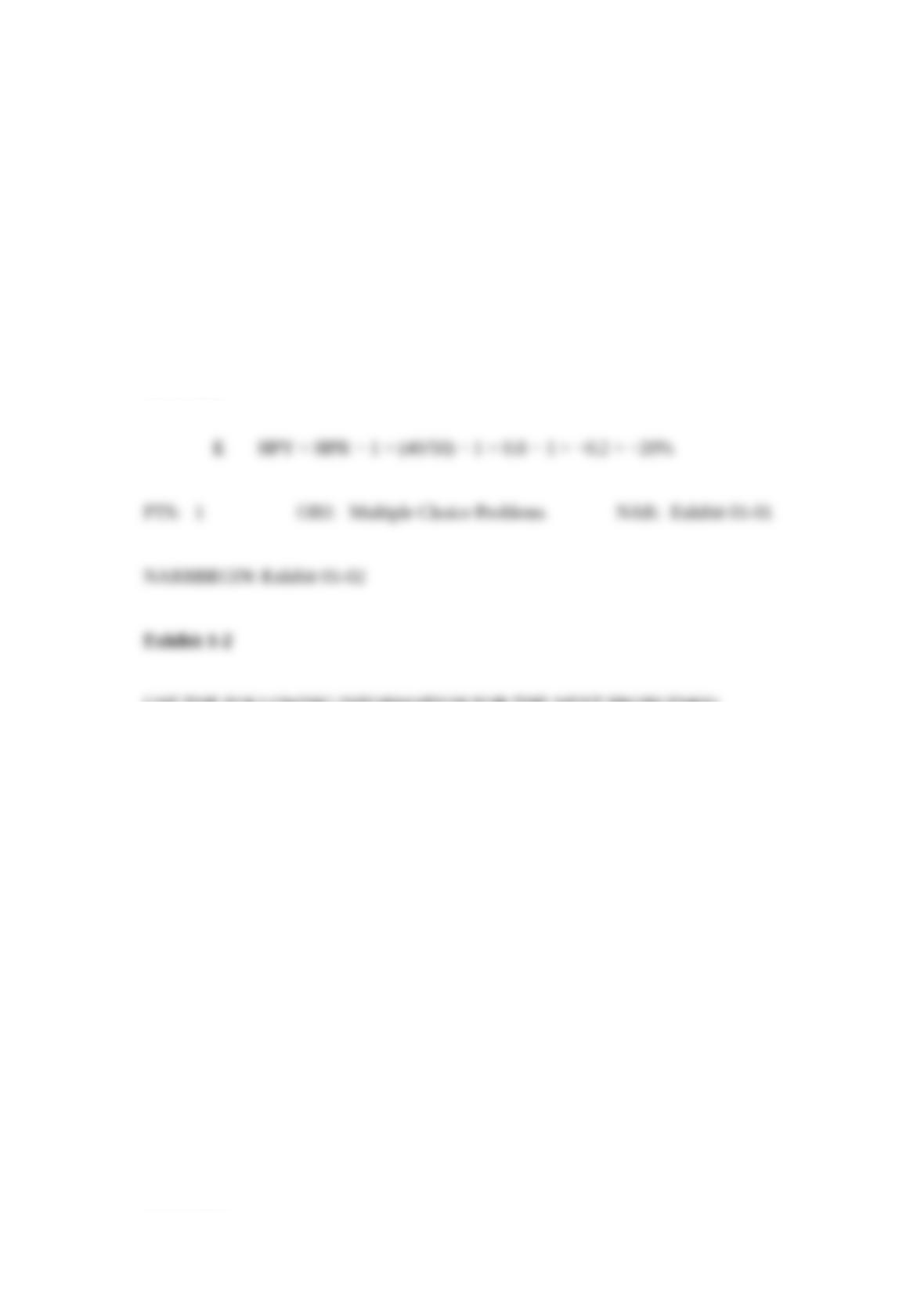
Question: Refer to Exhibit 1-1. What was your holding period yield?
ANSWER:
USE THE FOLLOWING INFORMATION FOR THE NEXT PROBLEM(S)
Suppose you bought a GM corporate bond on January 25, 2001 for $750, on January 25,
2004 sold it for $650.00.
NARREND
Question: Refer to Exhibit 1-2. What was your annual holding period return?
ANSWER:
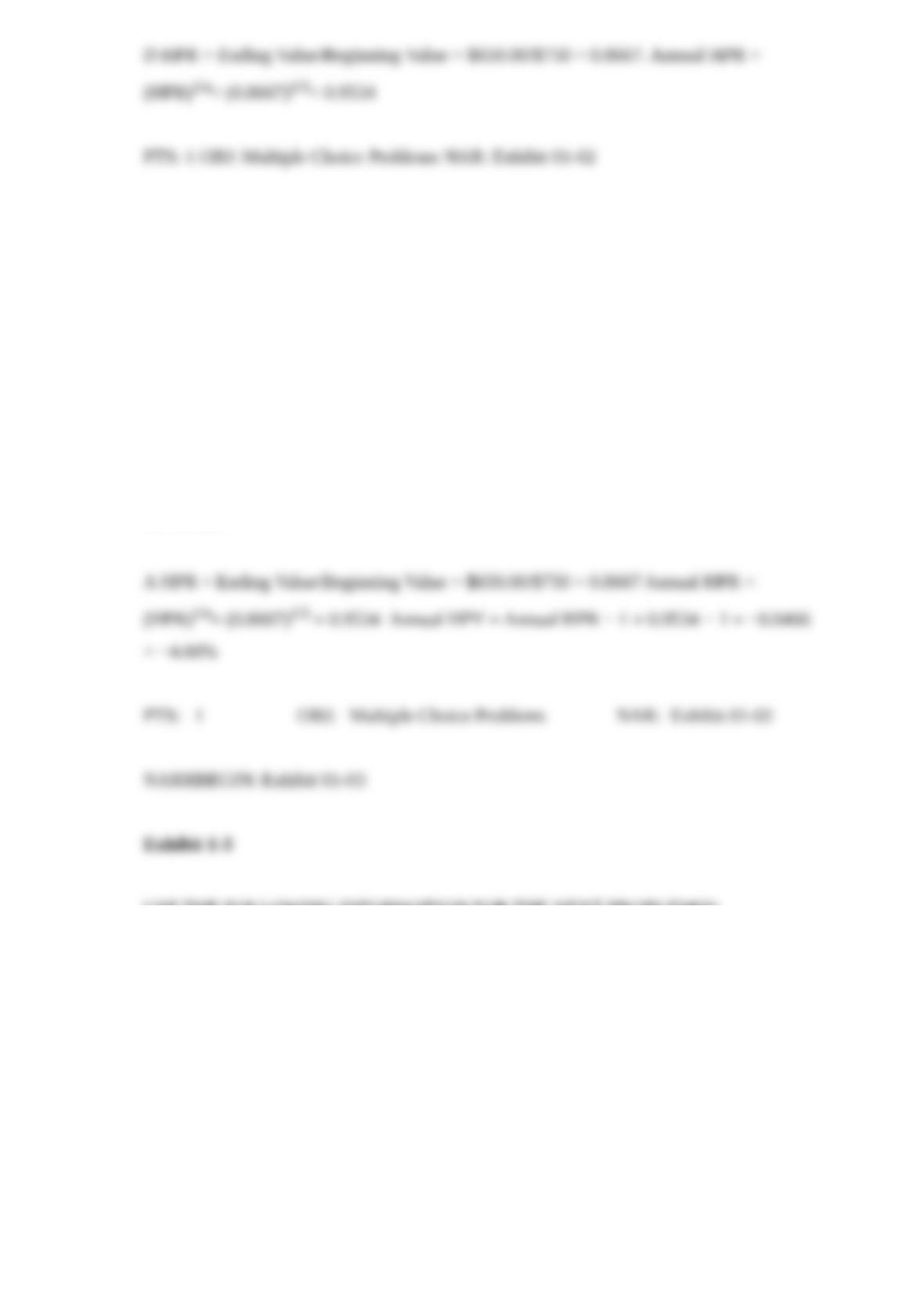
Question: Refer to Exhibit 1-2. What was your annual holding period yield?
ANSWER:
USE THE FOLLOWING INFORMATION FOR THE NEXT PROBLEM(S)
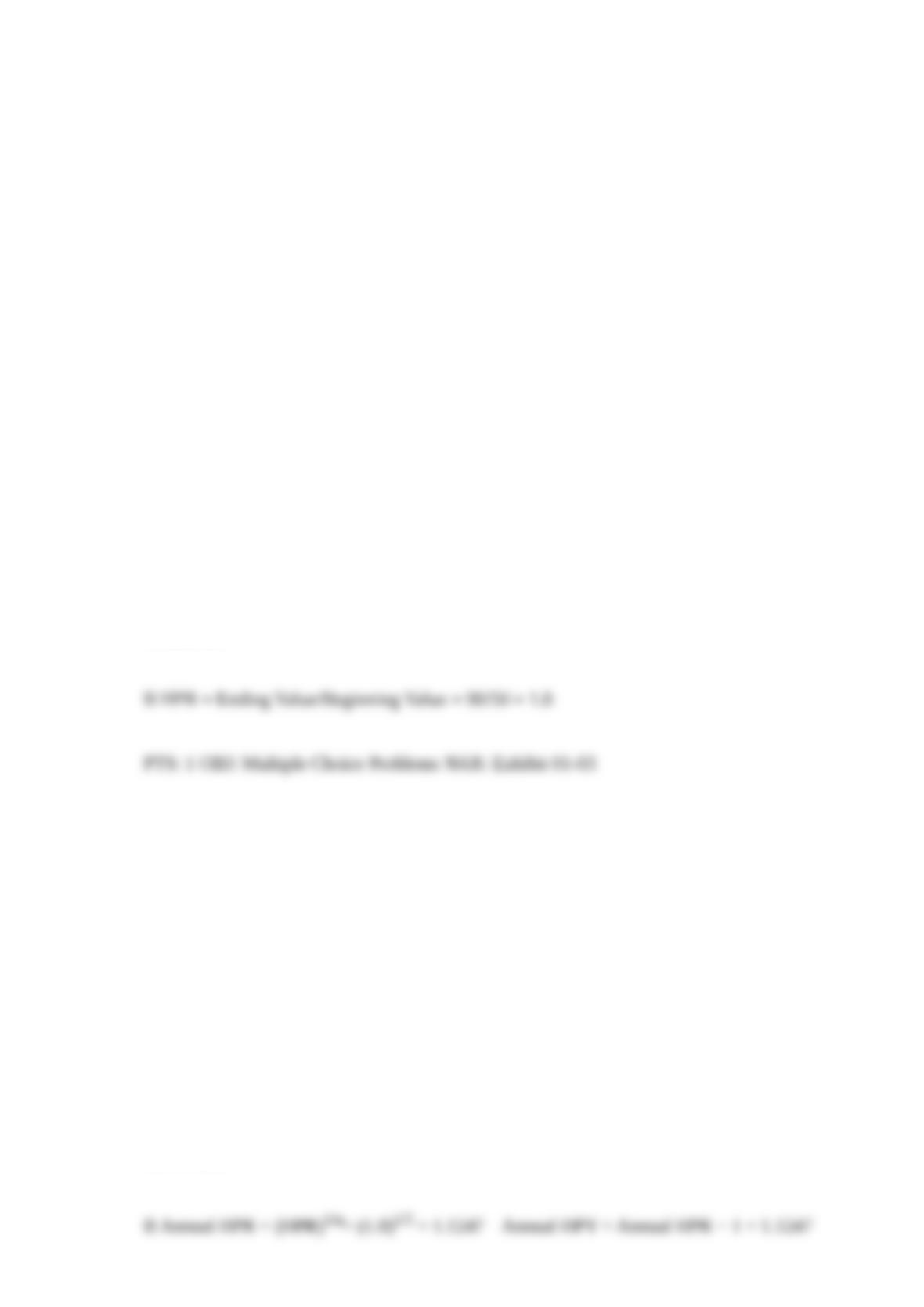
The common stock of XMen had the following historic prices.
NARREND
Question: Refer to Exhibit 1-3. What was your holding period return for the time period
3/1/1999 to 3/1/2004?
ANSWER:
Question: Refer to Exhibit 1-3. What was your annual holding period yield (Annual
HPY)?
ANSWER:
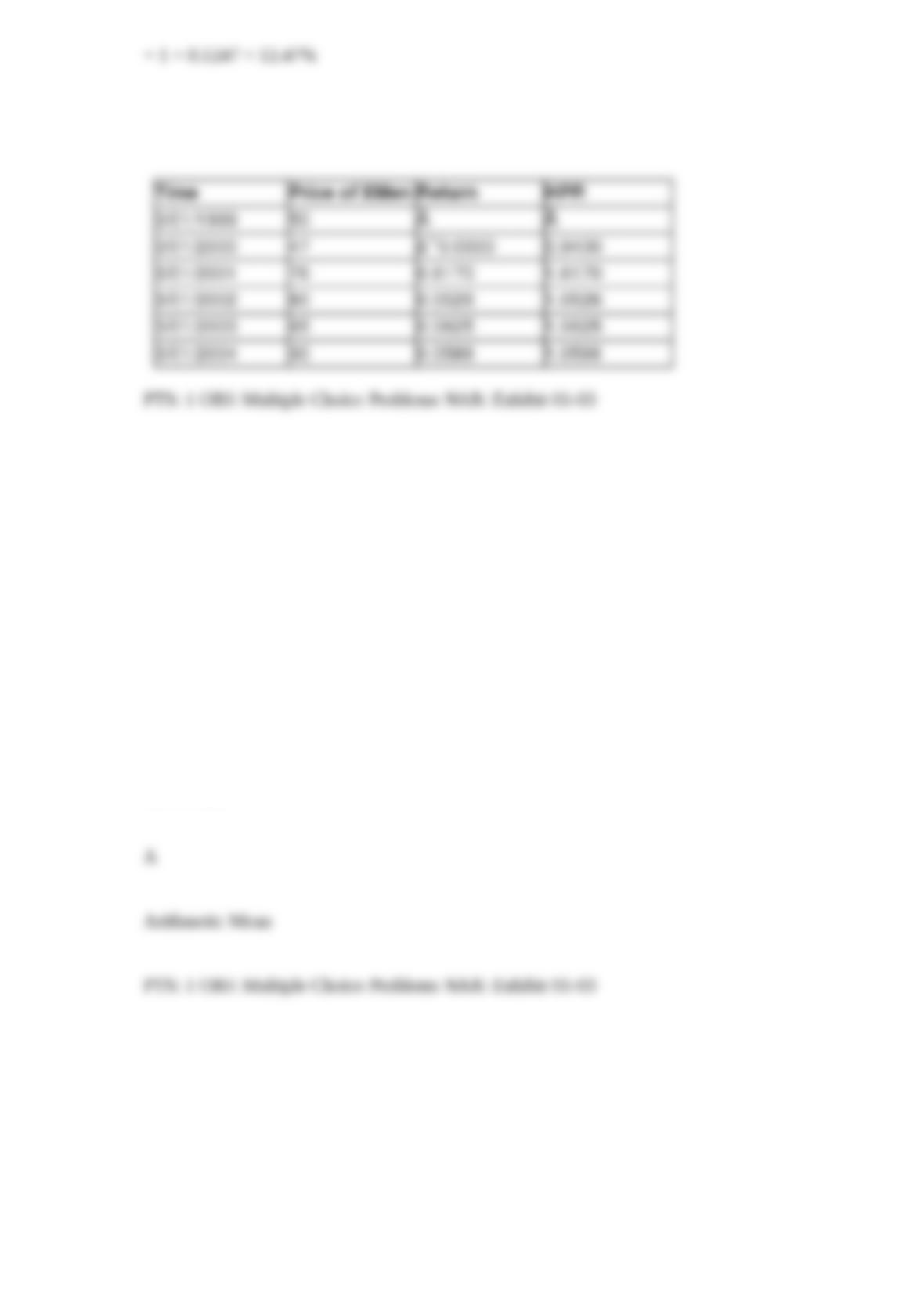
Question: Refer to Exhibit 1-3. What was your arithmetic mean annual yield for the
investment in XMen?
ANSWER:
Question: Refer to Exhibit 1-3. What was your geometric mean annual yield for the
investment in XMen?
ANSWER:
USE THE FOLLOWING INFORMATION FOR THE NEXT PROBLEM(S)
You have concluded that next year the following relationships are possible:
NARREND
Question: Refer to Exhibit 1-4. What is your expected rate of return [E(Ri)] for next year?
ANSWER:
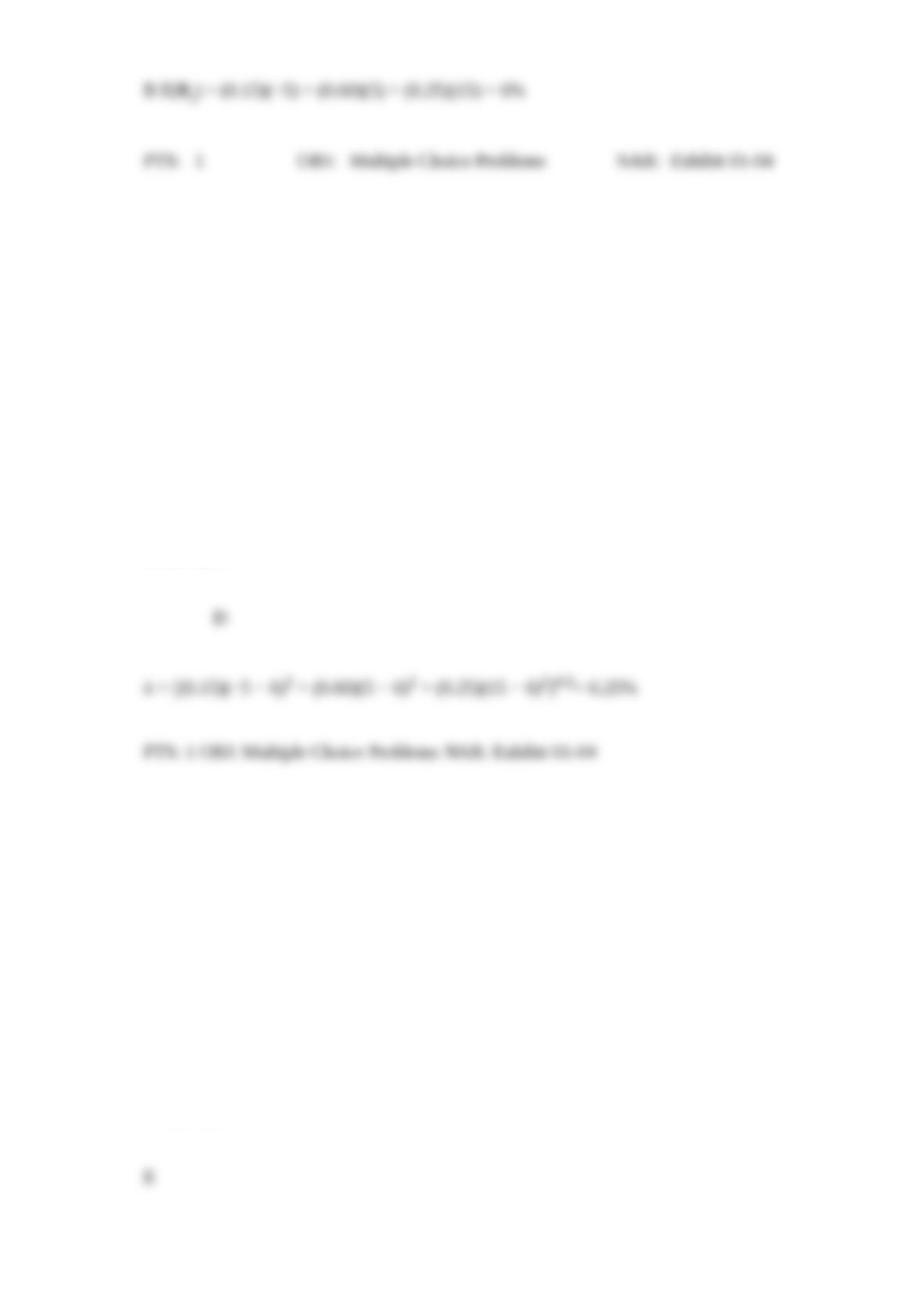
Question: Refer to Exhibit 1-4. Compute the standard deviation of the rate of return for the
one year period.
ANSWER:
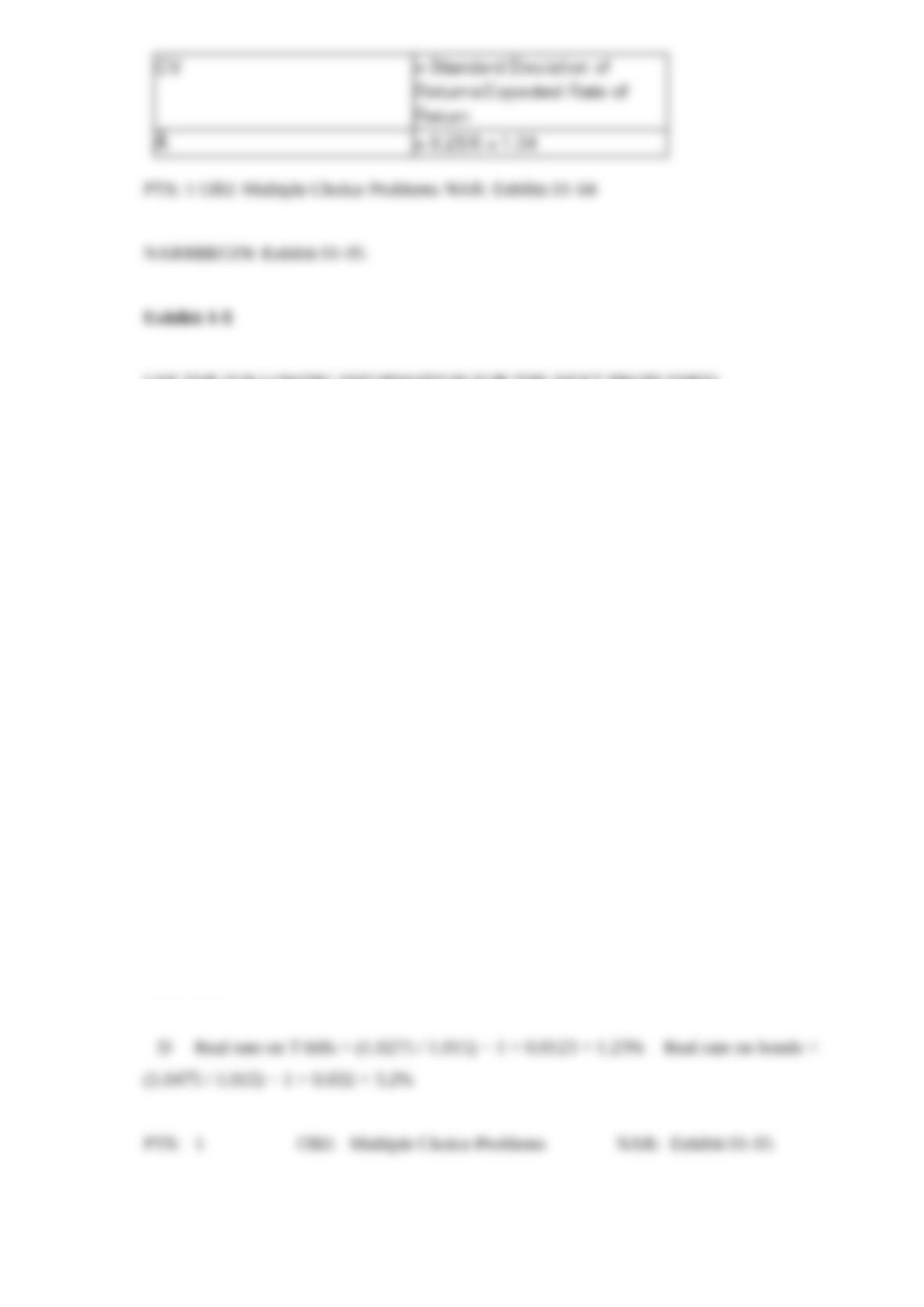
Question: Refer to Exhibit 1-4. Compute the coefficient of variation for your portfolio.
ANSWER:
USE THE FOLLOWING INFORMATION FOR THE NEXT PROBLEM(S)
Assume that during the past year the consumer price index increased by 1.5 percent and
the securities listed below returned the following nominal rates of return.
NARREND
Question: Refer to Exhibit 1-5. What are the real rates of return for each of these
securities?
ANSWER:
Question: Refer to Exhibit 1-5. If next year the real rates all rise by 10 percent while
inflation climbs from 1.5 percent to 2.5 percent, what will be the nominal rate of return on
each security?
ANSWER:
Question: If over the past 20 years the annual returns on the S&P 500 market index
averaged 12% with a standard deviation of 18%, what was the coefficient of variation?
ANSWER:

Question: Given investments A and B with the following risk return characteristics, which
one would you prefer and why?
ANSWER:
USE THE FOLLOWING INFORMATION FOR THE NEXT PROBLEM(S)
You are provided with the following information
Nominal return on risk-free asset = 4.5%
Expected return for asset i = 12.75%
Expected return on the market portfolio = 9.25%
NARREND
Question: Refer to Exhibit 1-6. Calculate the risk premium for asset i
ANSWER:
Question: Refer to Exhibit 1-6. Calculate the risk premium for the market portfolio
ANSWER:
USE THE FOLLOWING INFORMATION FOR THE NEXT PROBLEM(S)
Consider the following information
Nominal annual return on U.S. government T-bills for year 2000 = 3.5%
Nominal annual return on U.S government long-term bonds for year 2000 = 4.75%
Nominal annual return on U.S. large-cap stocks for year 2000 = 8.75%
Consumer price index January 1, 2000 = 165
Consumer price index December 31, 2000 = 169
NARREND
Question: Refer to Exhibit 1-7. Compute the rate of inflation for the year 2000
ANSWER:
Question: Refer to Exhibit 1-7. Calculate the real rate of return for U.S. T-bills
ANSWER:
Question: Refer to Exhibit 1-7. Calculate the real rate of return for U.S. long-term bonds
ANSWER:
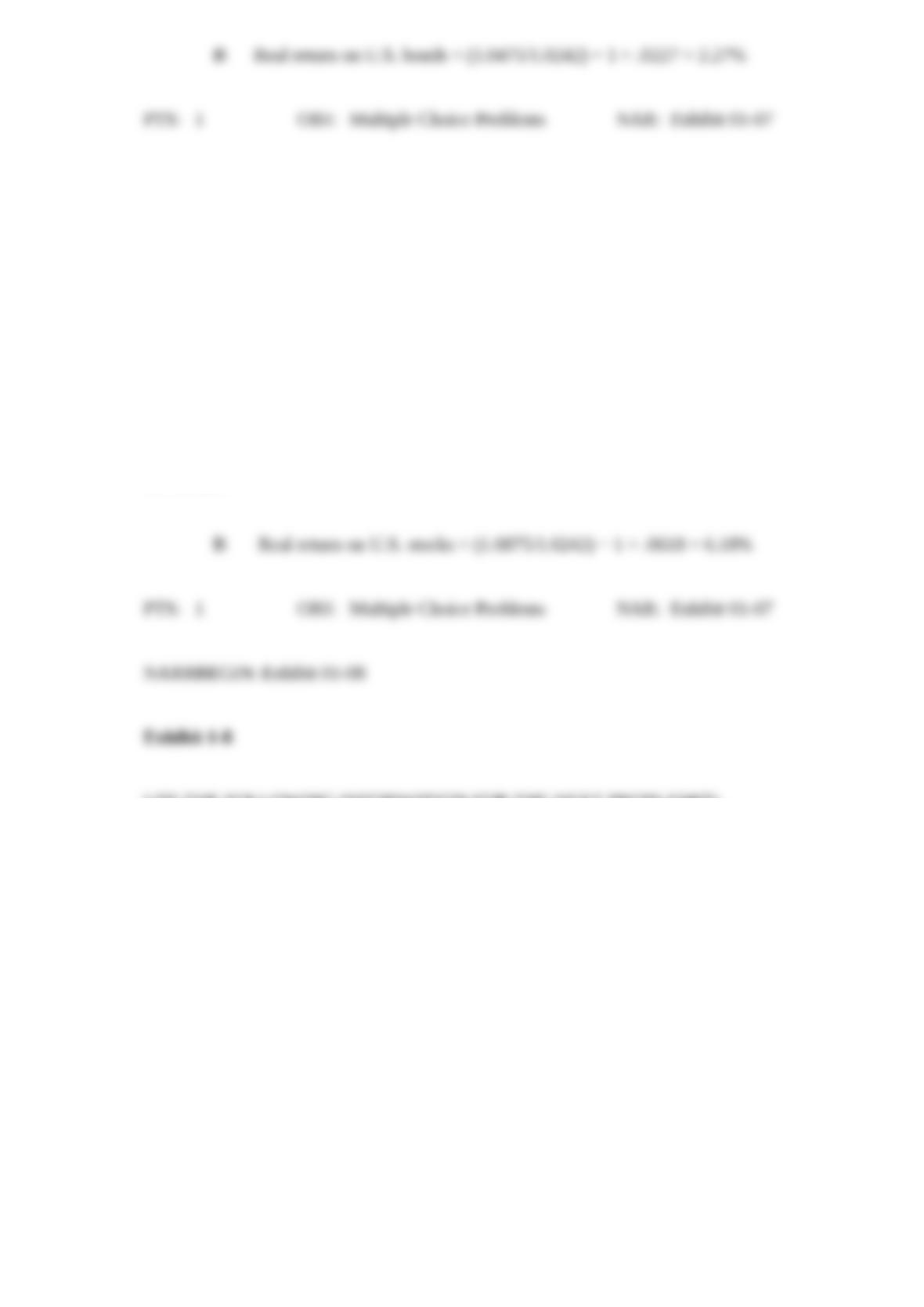
Question: Refer to Exhibit 1-7. Calculate the real rate of return for U.S. large-cap stocks
ANSWER:
USE THE FOLLOWING INFORMATION FOR THE NEXT PROBLEM(S)
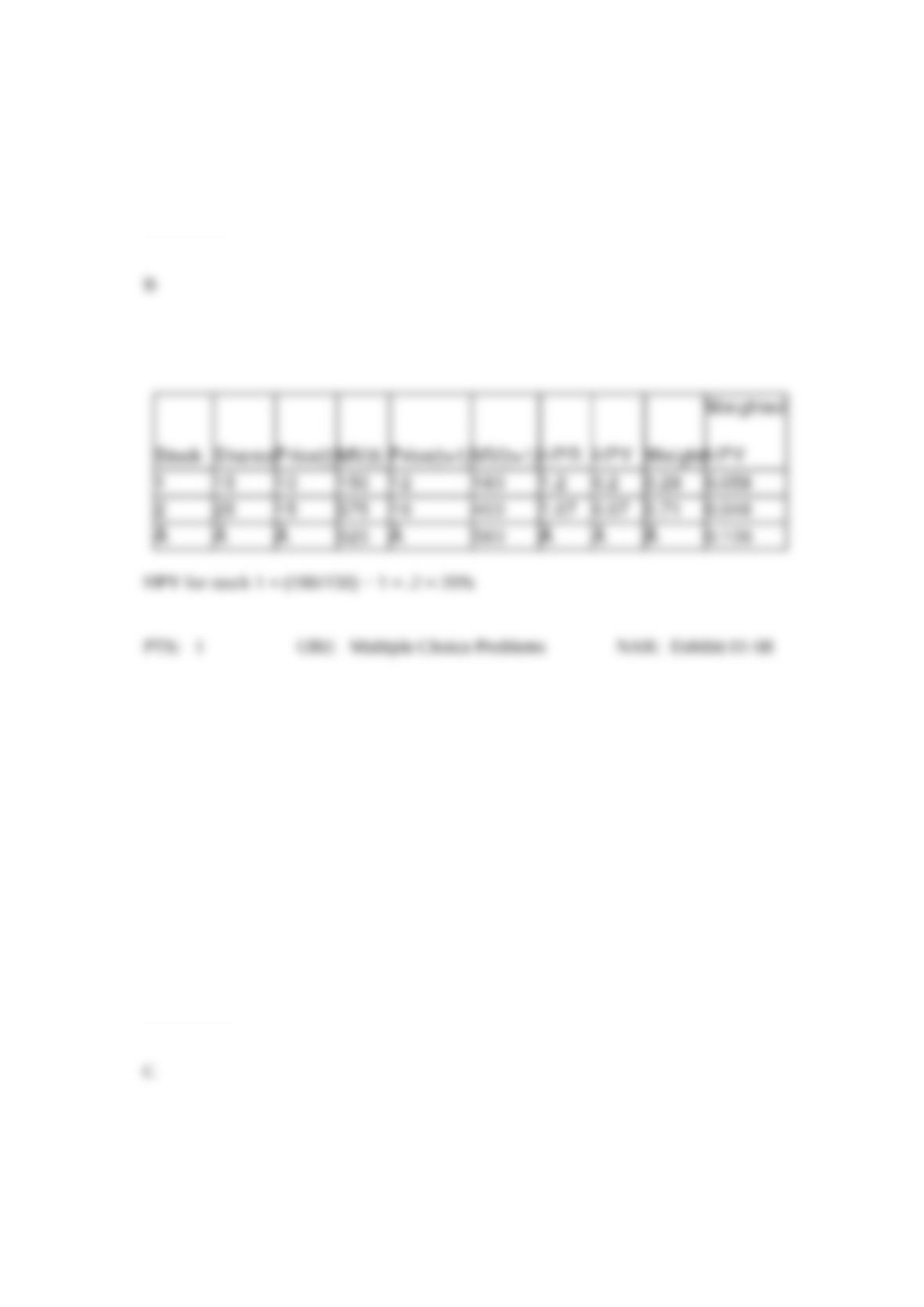
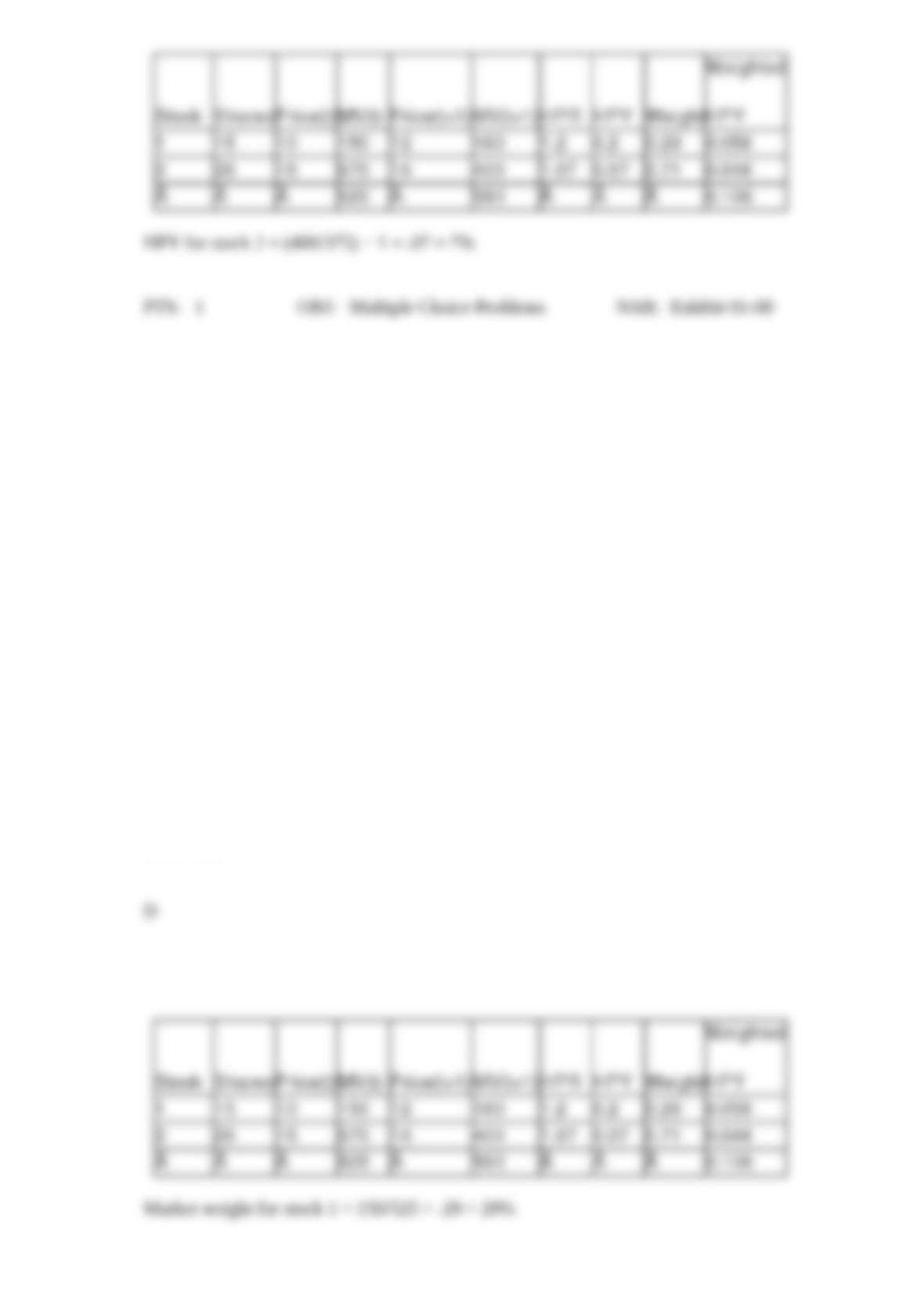
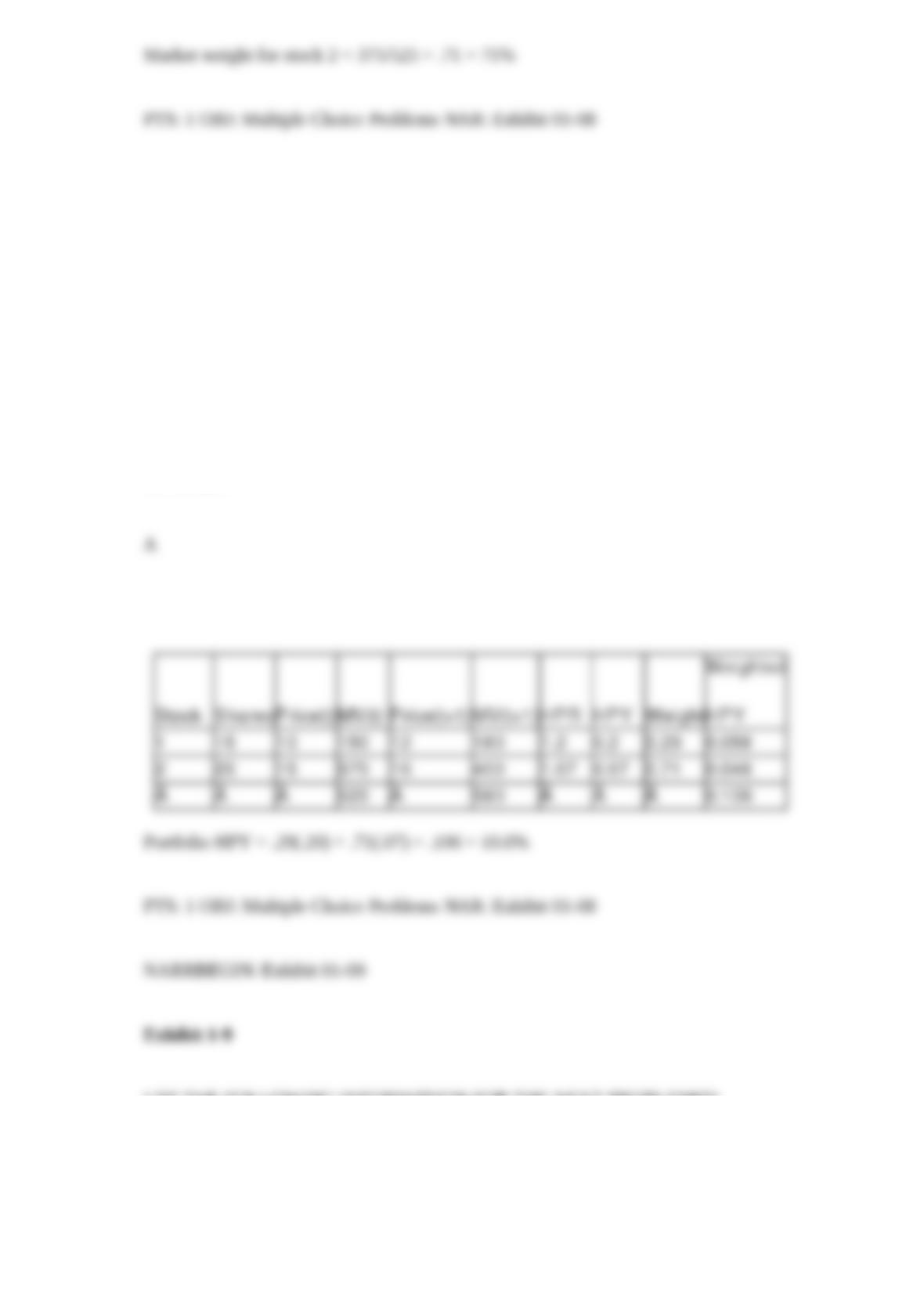
Assume that you hold a two stock portfolio. You are provided with the following
information on your holdings
NARREND
Question: Refer to Exhibit 1-8. Calculate the HPY for stock 1
ANSWER:
Question: Refer to Exhibit 1-8. Calculate the HPY for stock 2
ANSWER:
Question: Refer to Exhibit 1-8. Calculate the market weights for stock 1 and 2 based on
period t values
ANSWER:
Question: Refer to Exhibit 1-8. Calculate the HPY for the portfolio
ANSWER:
USE THE FOLLOWING INFORMATION FOR THE NEXT PROBLEM(S)
You purchased 100 shares of GE common stock on January 1, for $29 a share. A year later
you received $1.25 in dividends per share and you sold it for $28 a share.
NARREND
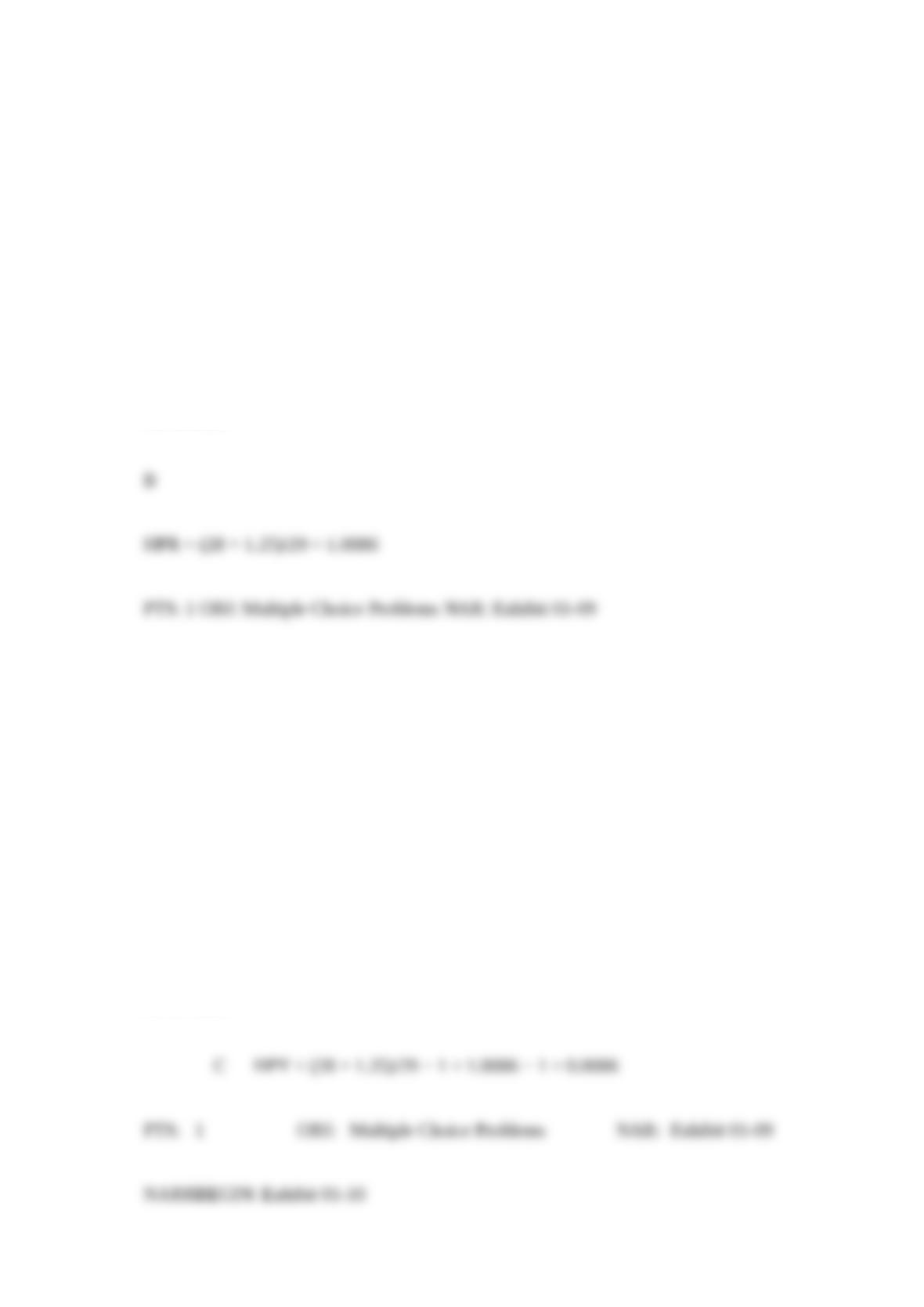
Question: Refer to Exhibit 1-9. Calculate your holding period return (HPR) for this
investment in GE stock.
ANSWER:
Question: Refer to Exhibit 1-9. Calculate your holding period yield (HPY) for this
investment in GE stock.
ANSWER:
USE THE FOLLOWING INFORMATION FOR THE NEXT PROBLEM(S)
The annual rates of return of Stock Z for the last four years are 0.10, 0.15, −0.05, and 0.20,
respectively.
NARREND
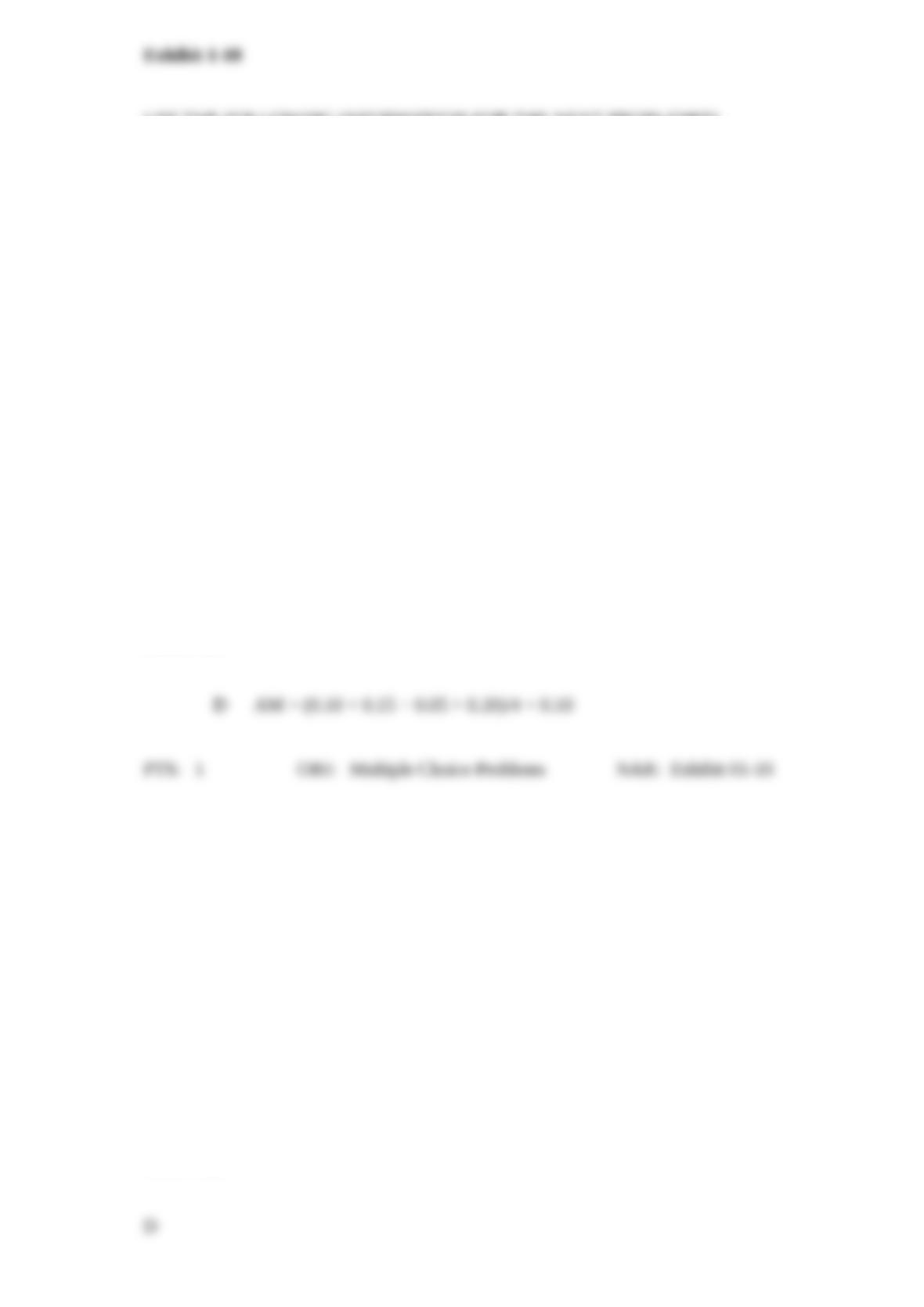
Question: Refer to Exhibit 1-10. Compute the arithmetic mean annual rate of return for
Stock Z.
ANSWER:
Question: Refer to Exhibit 1-10. Compute the standard deviation of the annual rate of
return for Stock Z.
ANSWER:
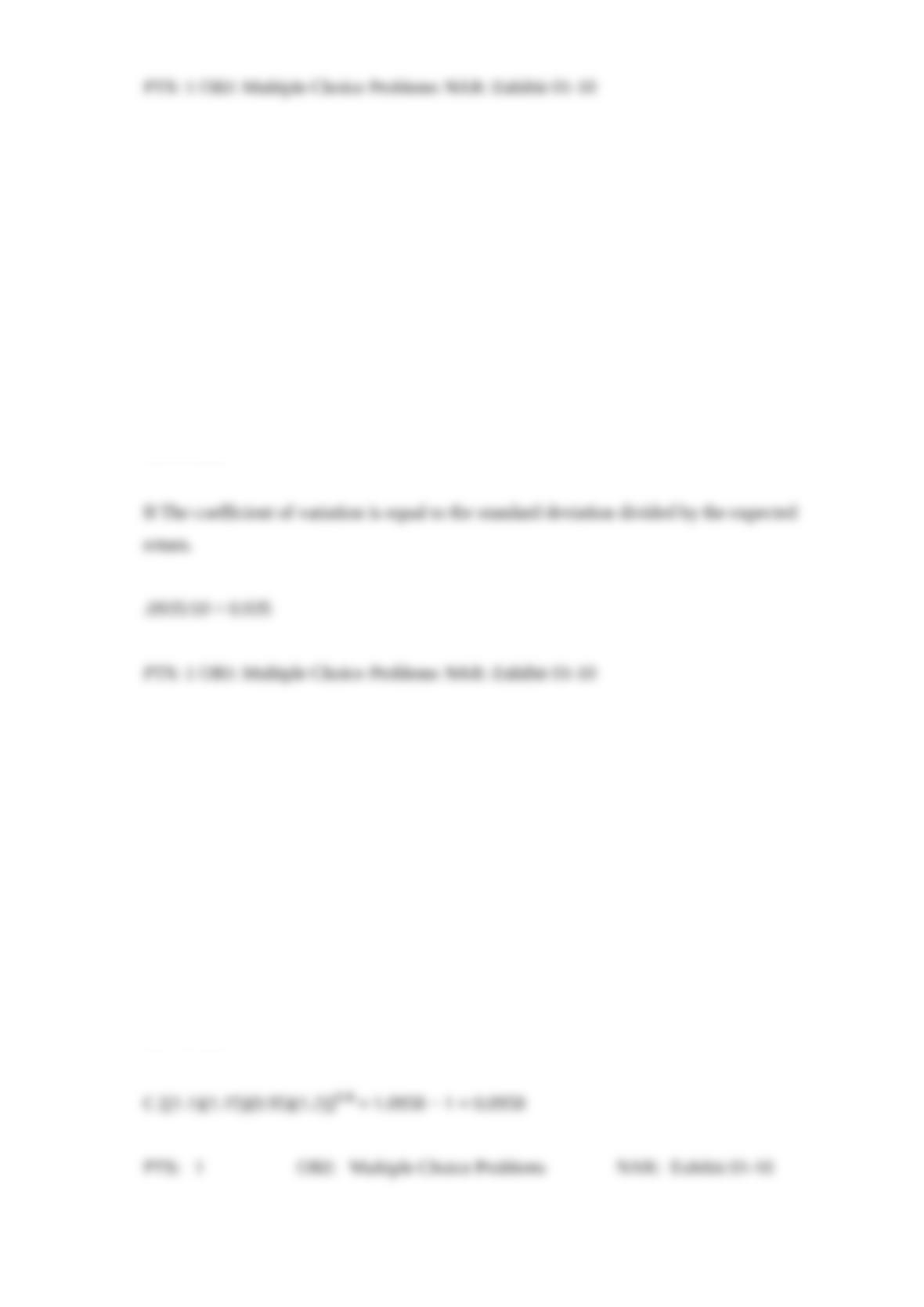
Question: Refer to Exhibit 1-10. Compute the coefficient of variation for Stock Z.
ANSWER:
Question: Refer to Exhibit 1-10. Compute the geometric mean rate of return for Stock Z.
ANSWER: