
Name:
Class:
Date:
chapter 6
Copyright Cengage Learning. Powered by Cognero.
Page 1
Indicate whether the statement is true or false.
1. Predatory dumping is a widely used practice by American companies.
a. True
b. False
2. With the passage of the Smoot-Hawley Act in 1930, U.S. average tariffs were raised to over 50 percent on protected
imports.
a. True
b. False
3. Intellectual property refers to holdings of rare books and pieces of art that are traded on the world market.
a. True
b. False
4. It is widely recognized that the economic sanctions levied against Iraq in 1990 were a major factor in causing Iraq to
withdraw its military forces from Kuwait.
a. True
b. False
5. Established in 1995, the World Trade Organization took charge of administering the new global trade rules agreed upon
in the Uruguay Round of multilateral trade negotiations.
a. True
b. False
6. In the early 1800s, southern states pressed for free trade so that they could buy cheaper foreign manufactured goods in
exchange for their agricultural goods.
a. True
b. False
7. The Export-Import Bank provides export-credit subsidies to U.S. producers of agricultural goods.
a. True
b. False
8. Critics of the U.S. Trade Adjustment Assistance Program contend that it results in American companies exiting
industries that are competitive in world markets.
a. True
b. False
9. The high point of U.S. protectionism occurred with the passage of the Kennedy Act in the 1960s.
a. True
b. False
10. The United States has often regarded China as a major violator of intellectual property laws.
a. True
Name:
Class:
Date:
chapter 6
b. False
11. Copyrights, trademarks, and patents are used to protect the intellectual property of a nation from foreign imitators.

Name:
Class:
Date:
chapter 6
Copyright Cengage Learning. Powered by Cognero.
Page 3
20. The Uruguay Round of multilateral trade negotiations succeeded in establishing the World Trade Organization.
a. True
b. False
21. According to the fast-track provision of U.S. trade law, once the president has completed trade negotiations, their
outcome is subject to a vote (without amendment) in Congress within 90 legislative days of submission.
a. True
b. False
22. Although the Uruguay Round of multilateral trade negotiations succeeded in reducing nontariff trade barriers, it could
NOT achieve reductions in tariff trade barriers.
a. True
b. False
23. Under U.S. trade law, foreign export subsidies and dumping are illegal in American markets.
a. True
b. False
24. Normal trade relations (the most-favored-nation clause) tend to result in discriminatory treatment regarding tariff
reductions among nations.
a. True
b. False
25. The Uruguay Round of trade negotiations resulted in the General Agreement on Tariffs and Trade being succeeded by
the World Trade Organization.
a. True
b. False
26. The purpose of the U.S. Export-Import Bank is to provide subsidized loans to American import–competing producers.
a. True
b. False
27. Regarding the overall welfare of an importing country, dumping is beneficial to the country.
a. True
b. False
28. U.S. antidumping duties are intended to neutralize exports to the United States at prices below average total cost or
exports to the United States at prices lower than those charged in the exporter’s home market.
a. True
b. False

Name:
Class:
Date:
chapter 6
Copyright Cengage Learning. Powered by Cognero.
Page 4
29. Economic sanctions are most effective in pressuring the target country to modify its behavior when the sanctions are
imposed by a small number of countries and when the target country had weak economic ties to the imposing countries
before the sanctions were initiated.
a. True
b. False
30. The U.S. trade-remedy laws attempt to redress hardships for U.S. firms resulting from actions and policies of foreign
firms and governments.
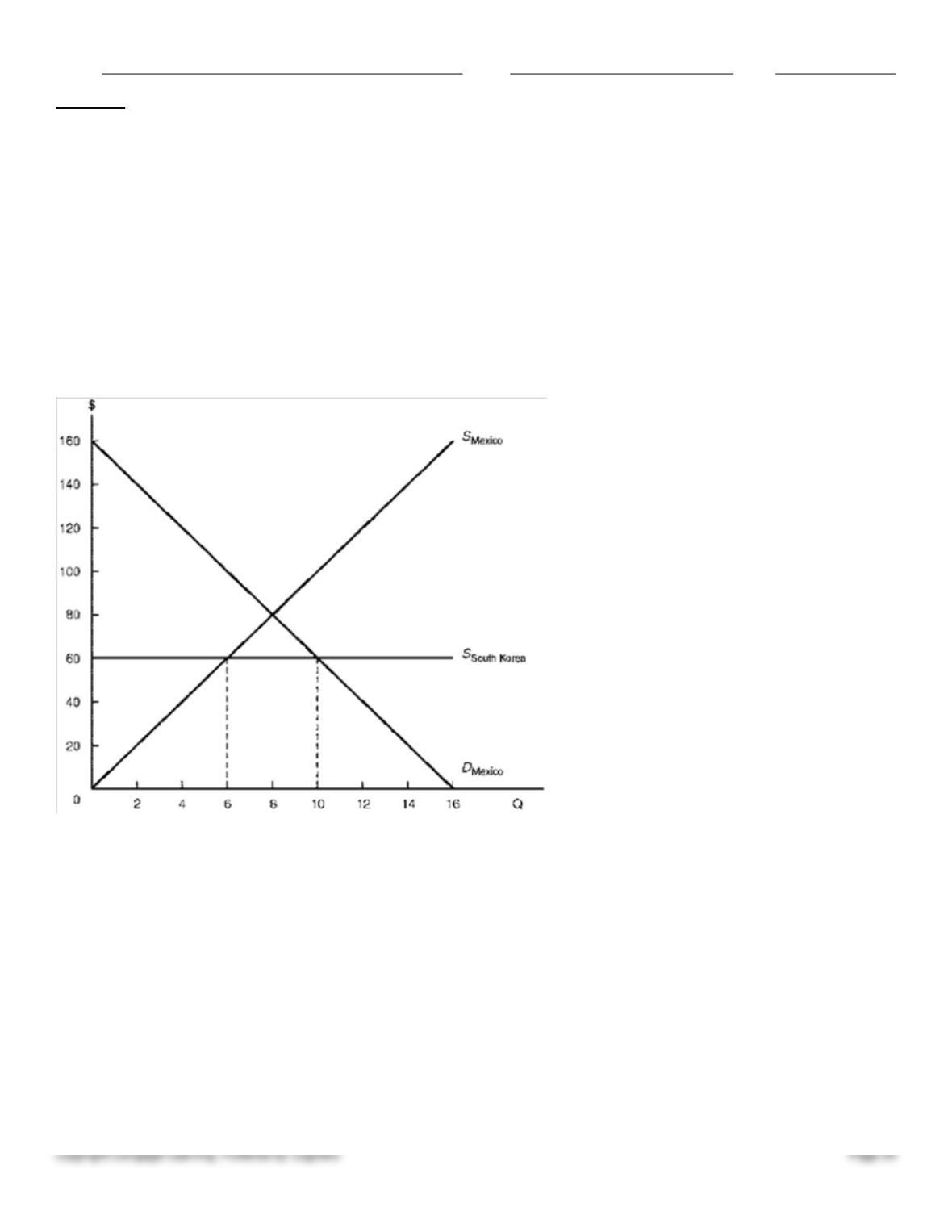
a. True
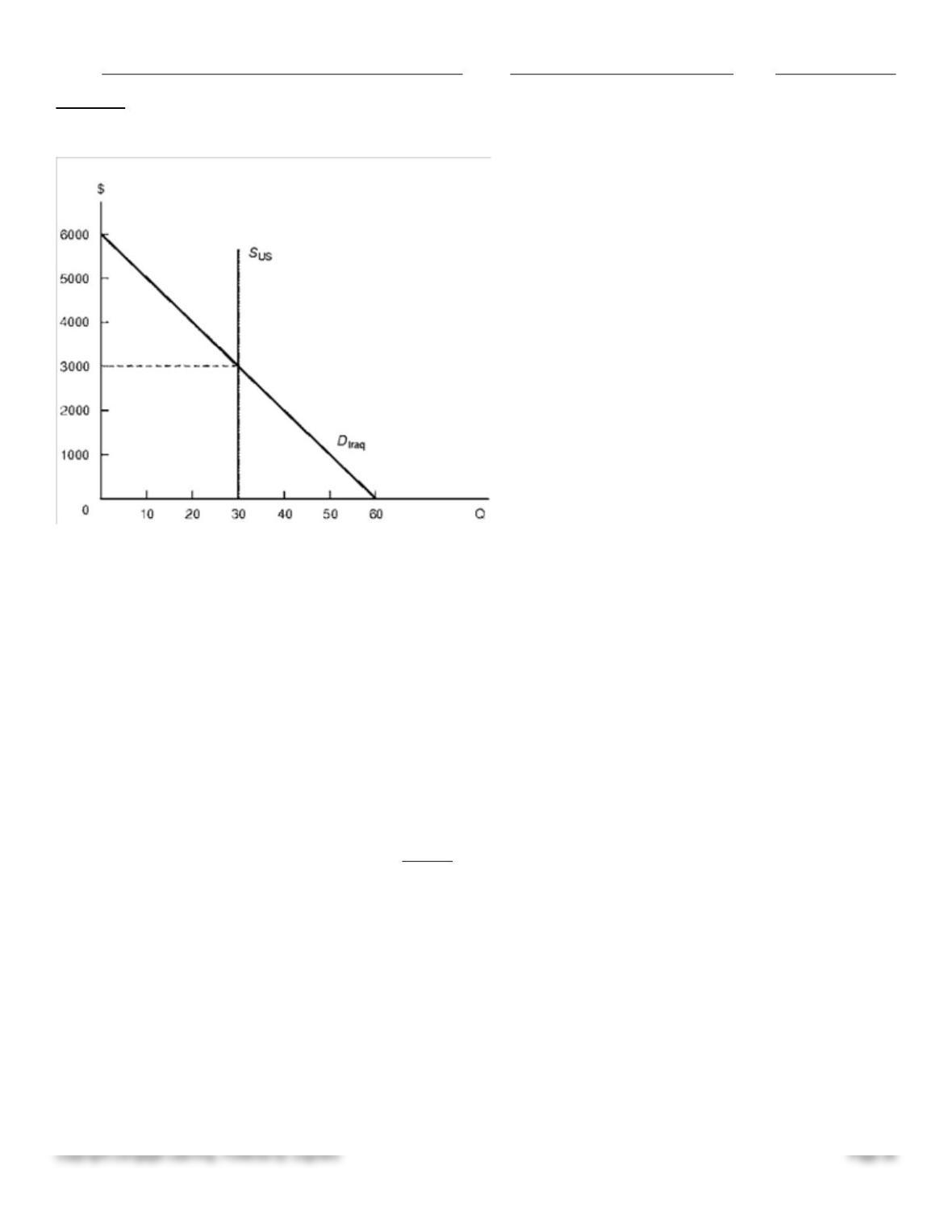
b. False
31. Delta Airlines and Southwest Airlines have been critics of the U.S. Export-Import Bank. They maintain that, because
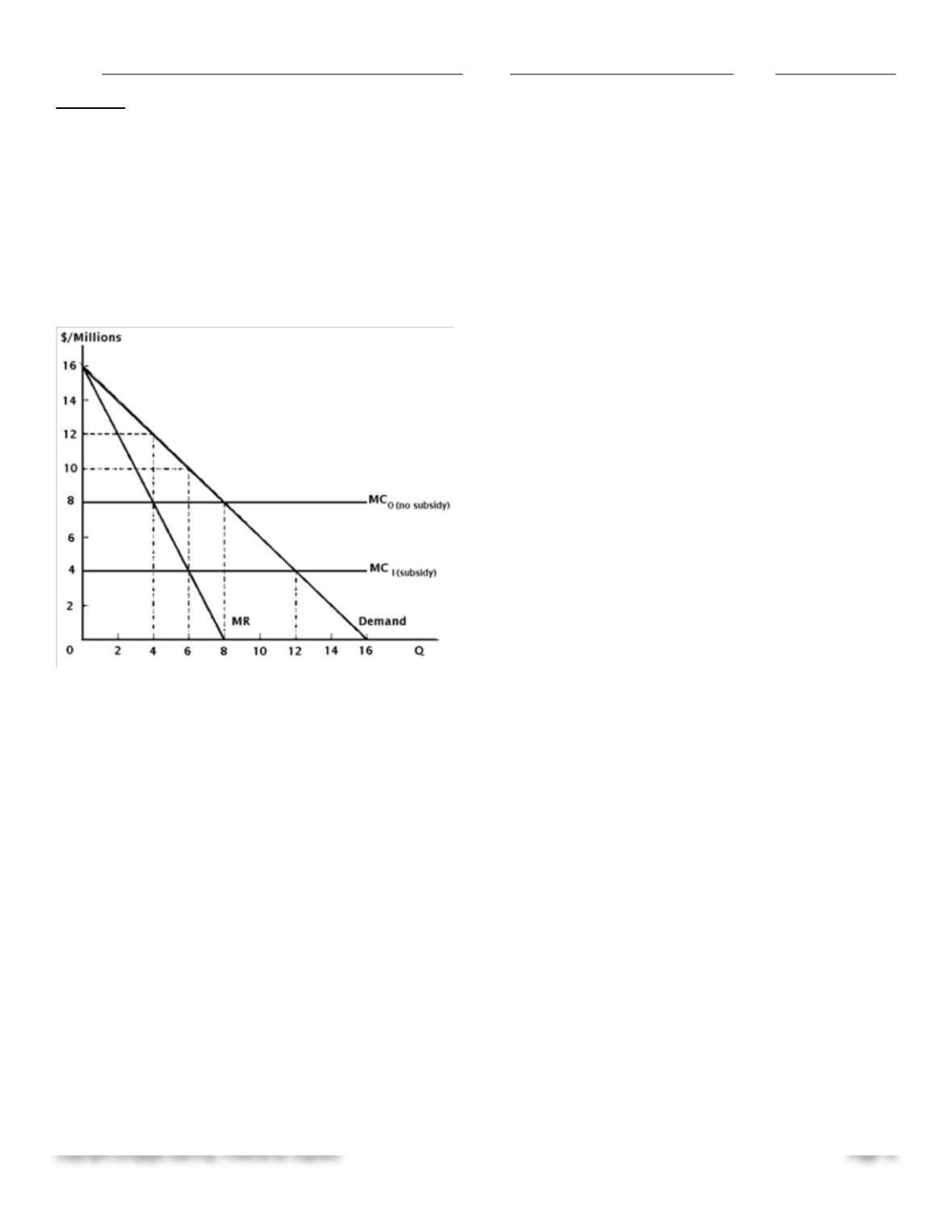
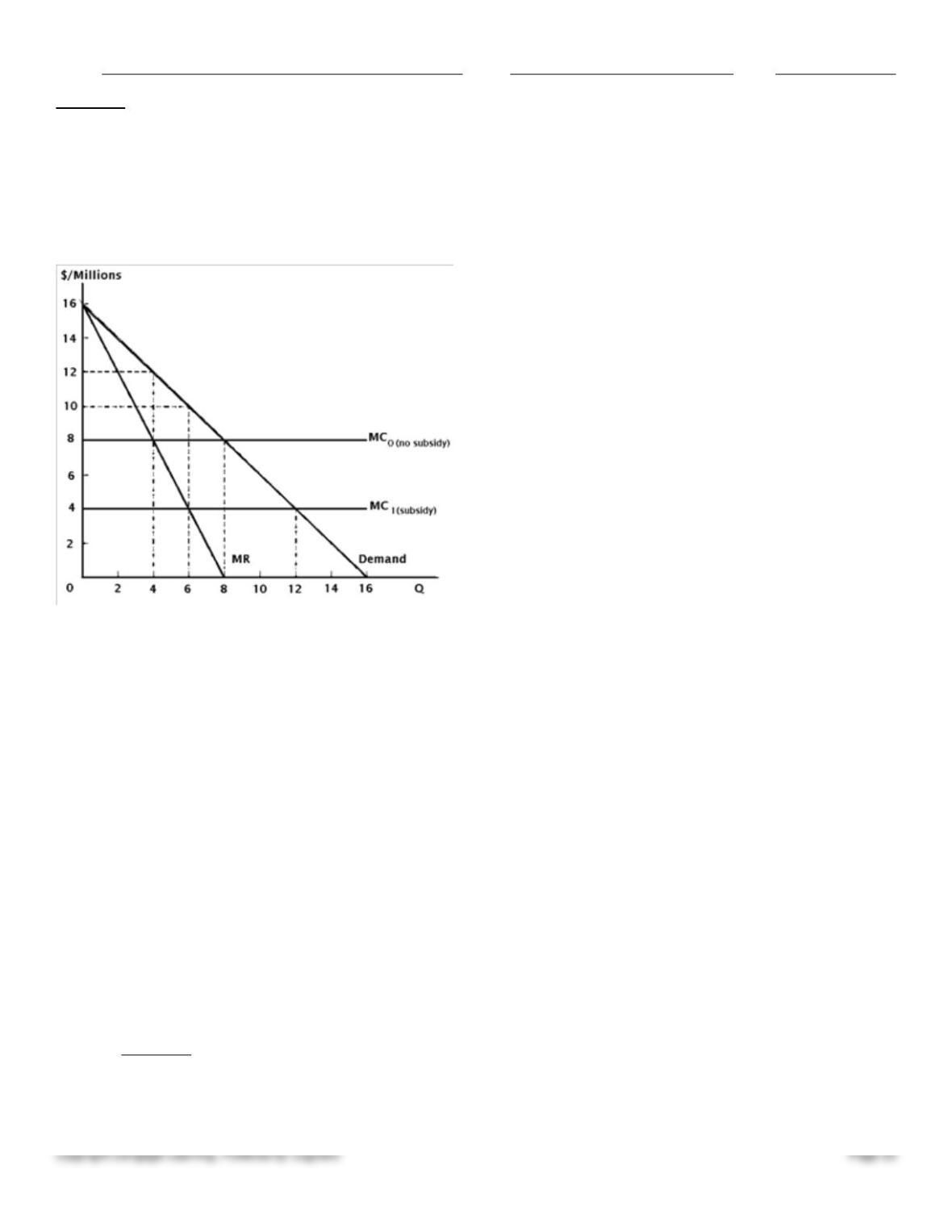
they are American companies, they cannot benefit from the Bank’s export subsidies. However, their foreign rivals do
benefit from the Bank’s export subsidies.
a. True
b. False
32. Advocates of the U.S. Trade Adjustment Assistance Program argue that it allows American farmers to maintain prices
that are higher than that which would occur under free trade.
a. True
b. False
33. The Smoot-Hawley Tariff Act of 1930 cut U.S. import tariffs to record low levels.
a. True
b. False
34. Proponents of the Smoot-Hawley Act of 1930 viewed it as a means of combating domestic unemployment.
a. True
b. False
35. According to the Reciprocal Trade Agreements Act of 1934, the president could lower tariffs by up to 50 percent of
the existing level without congressional approval.
a. True
b. False
36. The World Trade Organization brings into the multilateral trading system manufactured goods and agricultural
products but NOT trade in services, intellectual property protection, and investment.
a. True
b. False
37. By reducing available supplies of a product, an export embargo leads to falling prices in the target nation and
increasing target-nation consumer surplus.
a. True
b. False

Name:
Class:
Date:
chapter 6
Copyright Cengage Learning. Powered by Cognero.
Page 5
38. Unlike the Tokyo Round of multilateral trade negotiations, the Uruguay Round addressed the issues of intellectual
property protection, trade barriers in services, and agricultural subsidies.
a. True
b. False
39. Under the trade adjustment assistance program, a domestic firm or worker can file for governmental assistance only if
it demonstrates that it suffered economic hardship that was due to imports of foreign-subsidized goods.
a. True
b. False
40. It is generally agreed that the Smoot-Hawley Act of 1930 led to improvements in U.S. exports and an overall increase
in U.S. output and employment.
a. True
b. False
41. The only members of the General Agreement on Tariffs and Trade and its successor, the World Trade Organization,
are developing countries rather than developed countries.
a. True
b. False
42. As a way of helping U.S. business firms trade in the world market on more equal terms with their organized foreign
competitors, the U.S. government permits them to form export trade associations and export trading companies.
a. True
b. False
43. Critics of the World Trade Organization (WTO) argue that liberalized trade can result in environmental degradation
and business firms avoiding labor protections such as collective bargaining rights and workplace safety.
a. True
b. False
44. Assume that the United States imports chemicals from Germany. Trade theory predicts that if the German government
grants an export subsidy to its chemical firms, the overall welfare of the United States will increase.
a. True
b. False
45. According to the normal-trade-relations (most-favored-nation (MFN)) principle, if the United States extends MFN
treatment to China and then grants a low tariff on imports of shirts from South Korea, the United States is obligated to
provide the identical low tariff on imports of shirts from China.
a. True
b. False
46. For the United States, the trade adjustment assistance program is founded on the rationale that if society enjoys
welfare gains from the increased efficiency stemming from trade liberalization, compensation should be provided for
those who are injured by import competition.
a. True
b. False

Name:
Class:
Date:
chapter 6
Copyright Cengage Learning. Powered by Cognero.
Page 6
47. According to the strategic trade policy hypothesis, government can alter the terms of competition to favor domestic
companies, thus increasing their profits at the expense of their rivals.
a. True
b. False
48. The effect of antidumping duties is to impose a floor on the price of foreign goods that are imported by the home
country.
a. True
b. False
49. Under U.S. trade law, safeguards (the escape clause) allow for the setting of trade restrictions on unfairly traded
products that harm American producers.
a. True
b. False
50. Safeguard protection (the escape clause) applies to permanent protection provided to home industries encountering
competition from unfairly traded foreign goods.
a. True
b. False
51. According to the escape clause, temporary trade restrictions may be imposed in industries where domestic producers
are substantially being harmed by surging imports.
a. True
b. False
52. The strategic trade policy hypothesis assumes that domestic firms operate under increasing cost conditions as well as
in perfectly competitive markets.
a. True
b. False
53. During the post–World War II era, the United States has adopted explicit industrial policies similar to those of France
and Japan.
a. True
b. False
54. Assume that the United States is the only supplier of grain to China and that it levies a partial export embargo against
China. The embargo leads to increased U.S. welfare if the resulting improvement in the U.S. terms of trade with China
more than offset the costs of the lower export volume to China.
a. True
b. False
55. Members of the General Agreement on Tariffs and Trade and its successor, the World Trade Organization, agree to
the principle of nondiscrimination in trade and the reduction of trade barriers by multilateral negotiations.
a. True

Name:
Class:
Date:
chapter 6
Copyright Cengage Learning. Powered by Cognero.
Page 7
b. False
56. The World Trade Organization primarily involves bilateral trade negotiations between two countries, say, the United
States and China.
a. True
b. False
57. Under the provisions of the World Trade Organization, Canada would have the right to impose countervailing duties
on imports of South Korean steel when the South Korean government provides export subsidies to its steelmakers.
a. True
b. False
58. Responding to Russia’s annexation of Crimea in 2014, the United States and its allies imposed economic sanctions
against Russia.
a. True
b. False
59. According to the strategic trade policy hypothesis, a subsidy granted to domestic exporters may lead to increased
export profits, which more than offset the cost of the subsidy to domestic taxpayers.
a. True
b. False
60. According to the strategic trade policy hypothesis, governmental subsidies granted to domestic producers can help
them in capturing economic profits from foreign competitors.
a. True
b. False
61. The main focus of the Uruguay Round of multilateral trade negotiations was on tariff barriers rather than nontariff
trade barriers.
a. True
b. False
62. Assume that trade restrictions are adopted by a country. The World Trade Organization would generally prefer a tariff
to a quota because a tariff is more easily seen and its trade effects are more easily determined.
a. True
b. False
63. According to U.S. trade law, trade restrictions can be imposed against both unfairly and fairly traded foreign goods.
a. True
b. False
64. One of the achievements of the Uruguay Round was the formation of the World Trade Organization.
a. True
b. False

Name:
Class:
Date:
chapter 6
Copyright Cengage Learning. Powered by Cognero.
Page 8
65. Successful international economic sanctions imposed against a target country are likely to be more successful when
there is a small number of countries imposing the sanctions.
a. True
b. False
66. The purpose of “countervailing duties,” as levied by the domestic government, is to neutralize import tariffs imposed
by foreign governments.
a. True
b. False
67. According to the General Agreement on Tariffs and Trade and its successor, the World Trade Organization, only
bilateral trade negotiations can take place between a country and its trading partners.
a. True
b. False
68. Under the World Trade Organization, when countries agree to open their markets for goods or services, they will
“bind” their commitments. These bindings amount to ceilings on import tariff rates.
a. True
b. False
69. An antidumping duty levied on imports of foreign-produced steel leads to an increase in consumer surplus in the home
country.
a. True
b. False
70. One of the objectives of the World Trade Organization is to encourage a nondiscriminatory trade environment.
a. True
b. False
71. Among the codes of conduct addressed at the Tokyo Round of multilateral trade negotiations were customs valuation,
product standards, subsidies and countervailing duties, government procurement policies, and import licensing
procedures.
a. True
b. False
72. U.S. tariffs on imports from countries issued normal-trade-relations (most-favored-nation) status are often three or
four times as high as those on comparable imports from nations NOT receiving that status.
a. True
b. False
73. Major beneficiaries of export-credit subsidies, granted by the Export-Import Bank, have included U.S. producers of
aircraft, telecommunications, and power-generating equipment.
a. True
b. False

Name:
Class:
Date:
chapter 6
Copyright Cengage Learning. Powered by Cognero.
Page 9
74. The Doha Round of trade negotiations, sponsored by the World Trade Organization, addressed both tariffs and
nontariff trade barriers.
a. True
b. False
75. According to U.S. trade law, the escape clause provides relief to U.S. firms that experience unfair foreign competition.
a. True
b. False
76. The U.S. government fosters large-scale projects such as irrigation facilities in agriculture.
a. True
b. False
77. In 1995, the General Agreement on Tariffs and Trade replaced the World Trade Organization as the body for
governing the conduct of trade relations among member countries.
a. True
b. False
78. Under the normal-trade-relations (most-favored-nation) principle, two nations agree to apply tariffs to each other at
rates as low as those applied to any other nation.
a. True
b. False
79. The General Agreement on Tariffs and Trade was founded in 1995 as a successor to the World Trade Organization.
a. True
b. False
80. If the U.S. government pursued a “knowledge-based growth policy,” it would subsidize particular firms to help them
compete in the world economy.
a. True
b. False
81. Industrial policy attempts to foster the development of industries that offer long-run comparative disadvantages and
which are insulated from other sectors of the economy.
a. True
b. False
82. Concerning industrial policy, the United States has nationalized its major industries in an attempt to promote global
champions.
a. True
b. False
83. Unlike Germany and the United States, France has refrained from helping unemployed workers back into the labor
force.
Name:
Class:
Date:
chapter 6
Copyright Cengage Learning. Powered by Cognero.
Page 10
a. True
b. False
Indicate the answer choice that best completes the statement or answers the question.
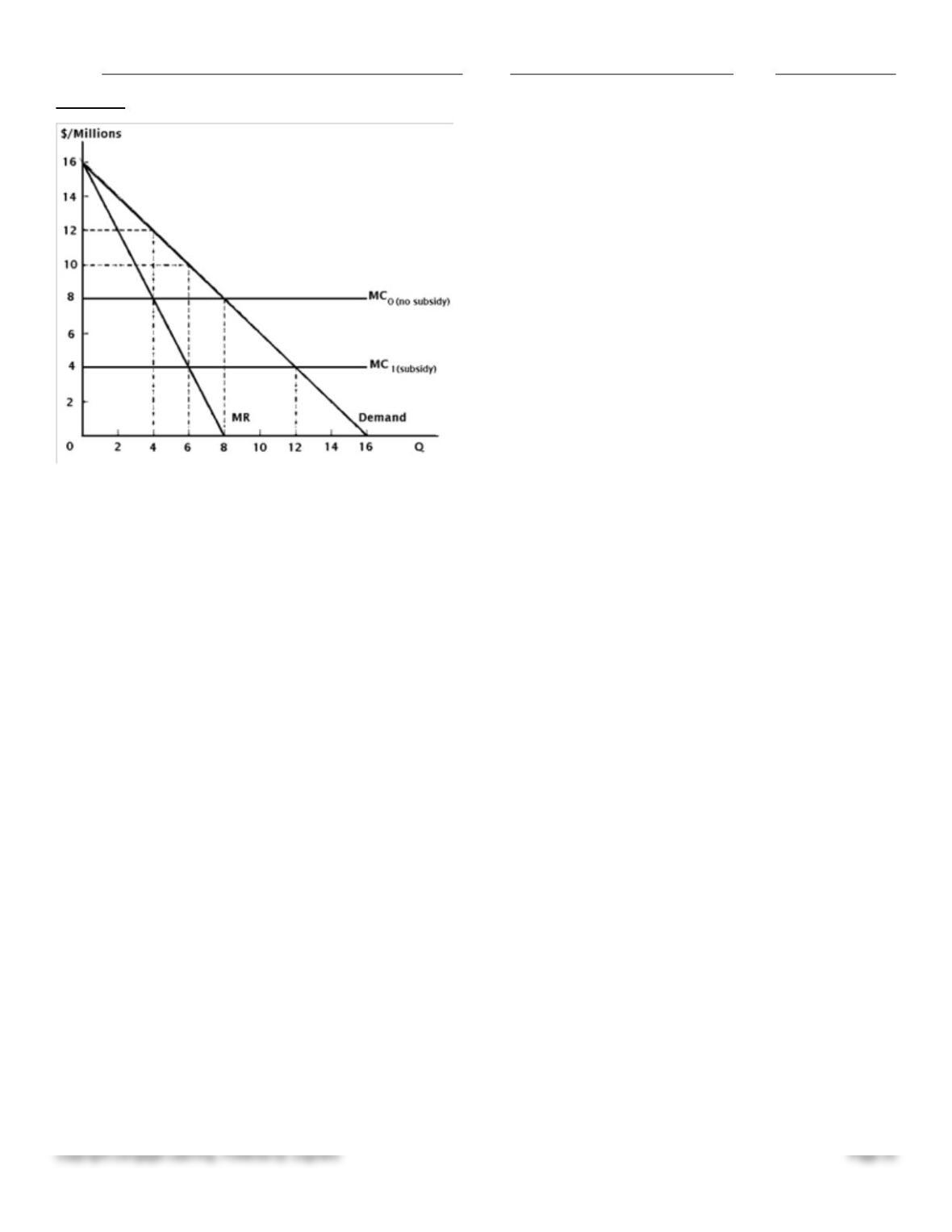
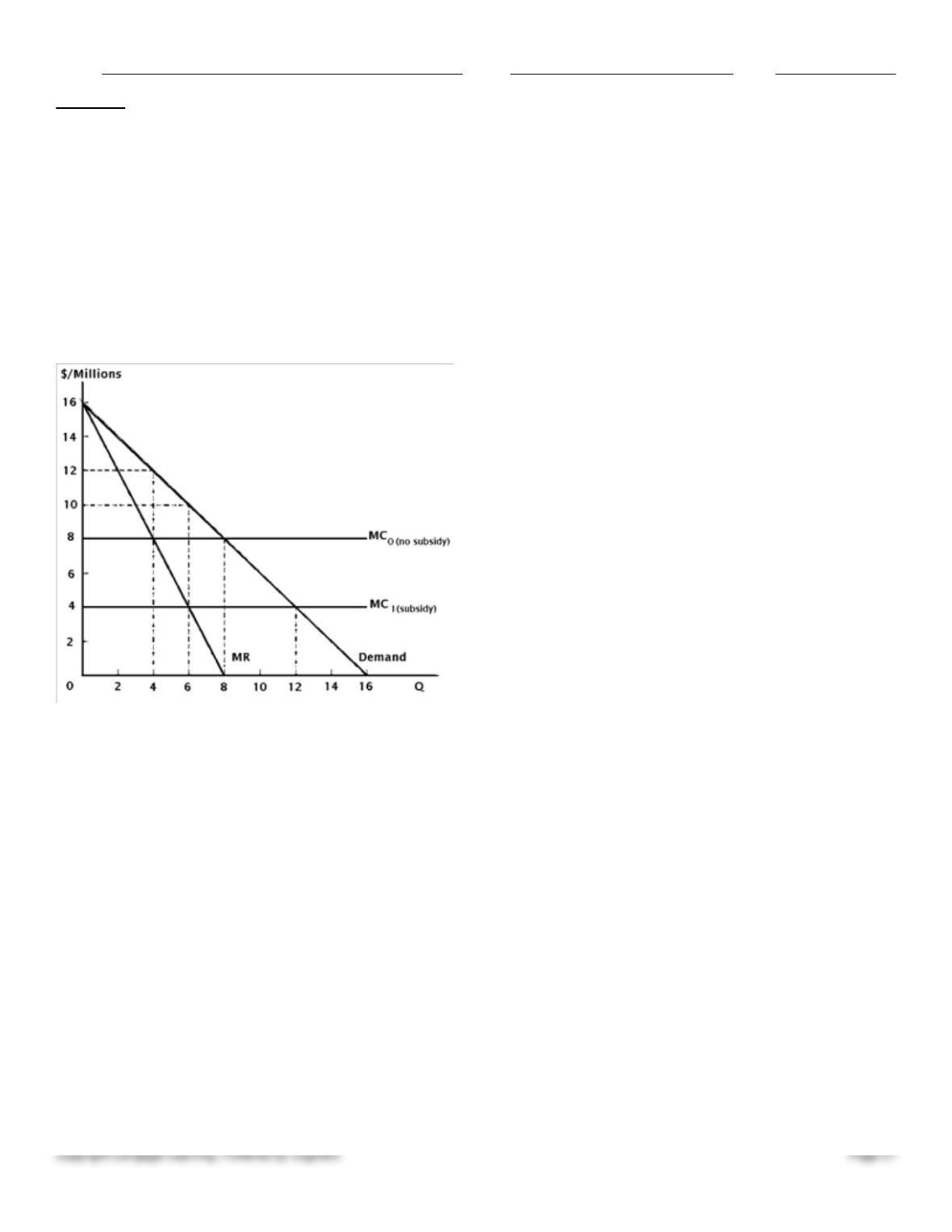
Assume Boeing Inc. (of the United States) and Airbus Industries (of Europe) rival for monopoly profits in the Canadian
aircraft market. Suppose the two firms face identical cost and demand conditions, as seen in Figure 6.1.
Figure 6.1. Strategic Trade Policy: Boeing versus Airbus
84. Referring to Figure 6.1, the total cost of the Airbus subsidy to the European taxpayer equals
a. $16 million.
b. $20 million.
c. $24 million.
d. $28 million.
85. The World Trade Organization was established by the ____ of multilateral trade negotiations.
a. Kennedy Round
b. Tokyo Round
c. Uruguay Round
d. Clinton Round
86. Section 301 of the Trade Act of 1974 emphasized
a. the use of strategic trade policy.
b. the welfare effects of export subsidies.
c. relatively low-wage levels of developing countries.
d. unfair trading practices of American trading partners.
87. Concerning U.S. tariff policy, the Generalized System of Preferences allows
a. imports from selected developing countries to receive preferential tariff treatment.
b. imports from all developing countries to receive preferential tariff treatment.
Name:
Class:
Date:
chapter 6
Copyright Cengage Learning. Powered by Cognero.
Page 11
c. U.S. exports to selected developing countries to receive preferential tariff treatment.
d. U.S. exports to all developing countries to receive preferential tariff treatment.
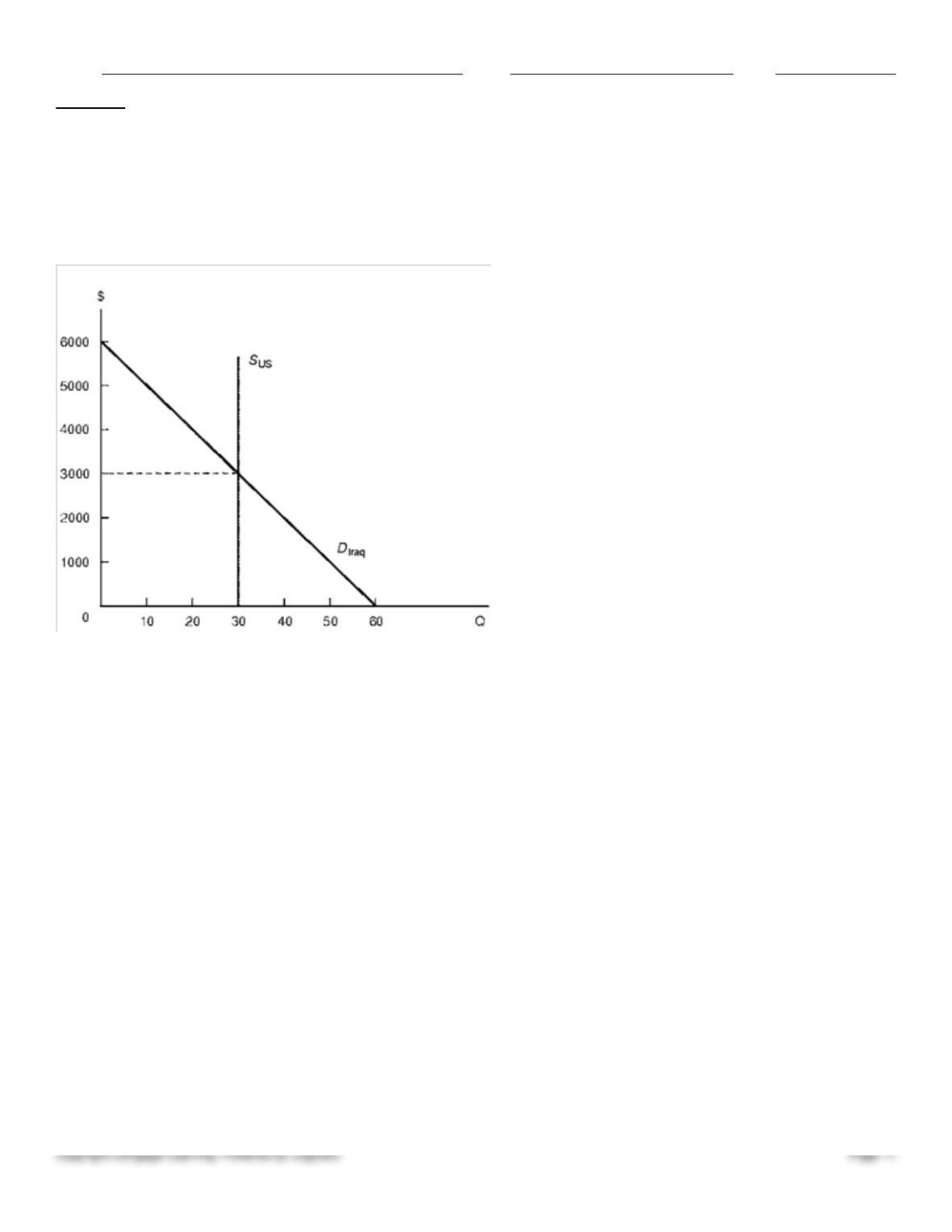
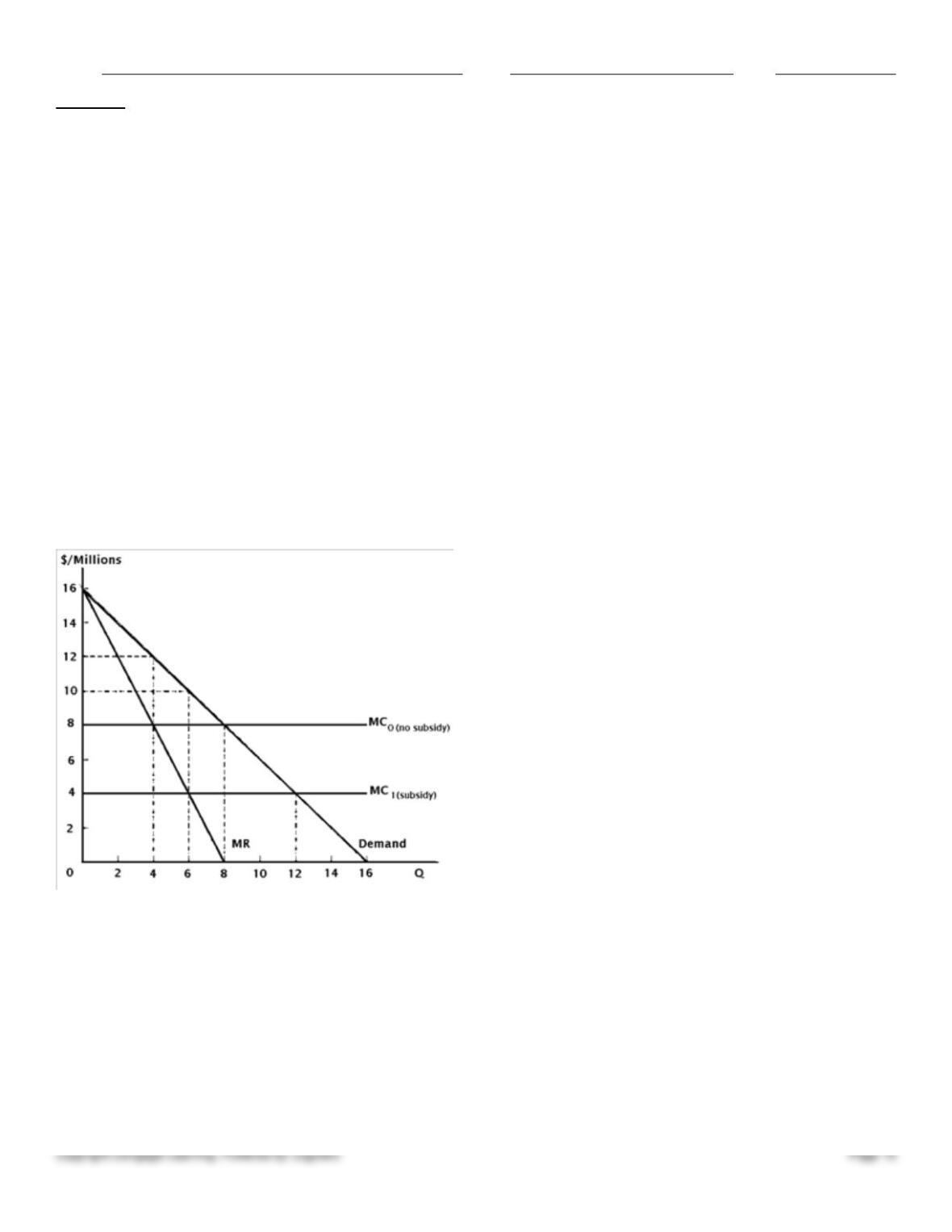
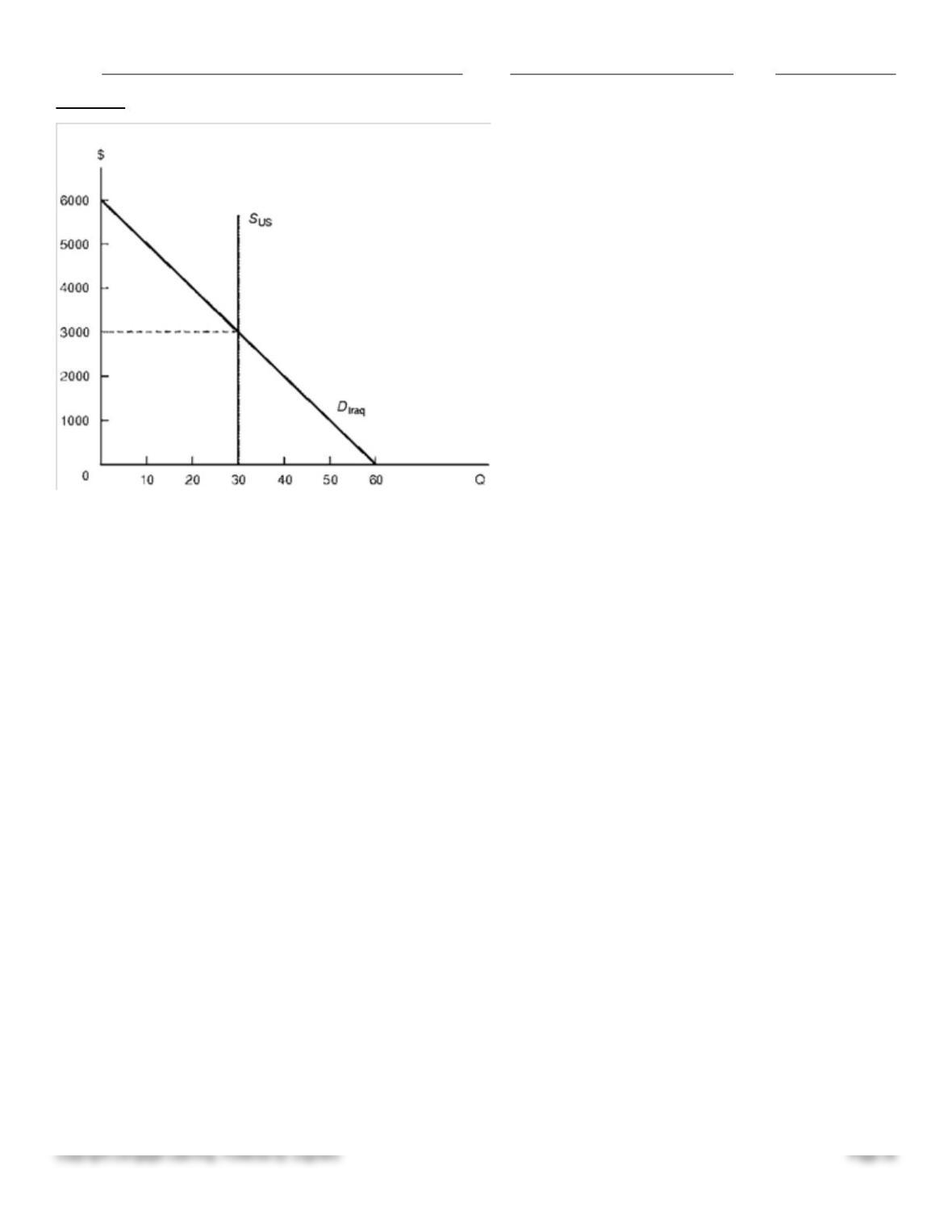
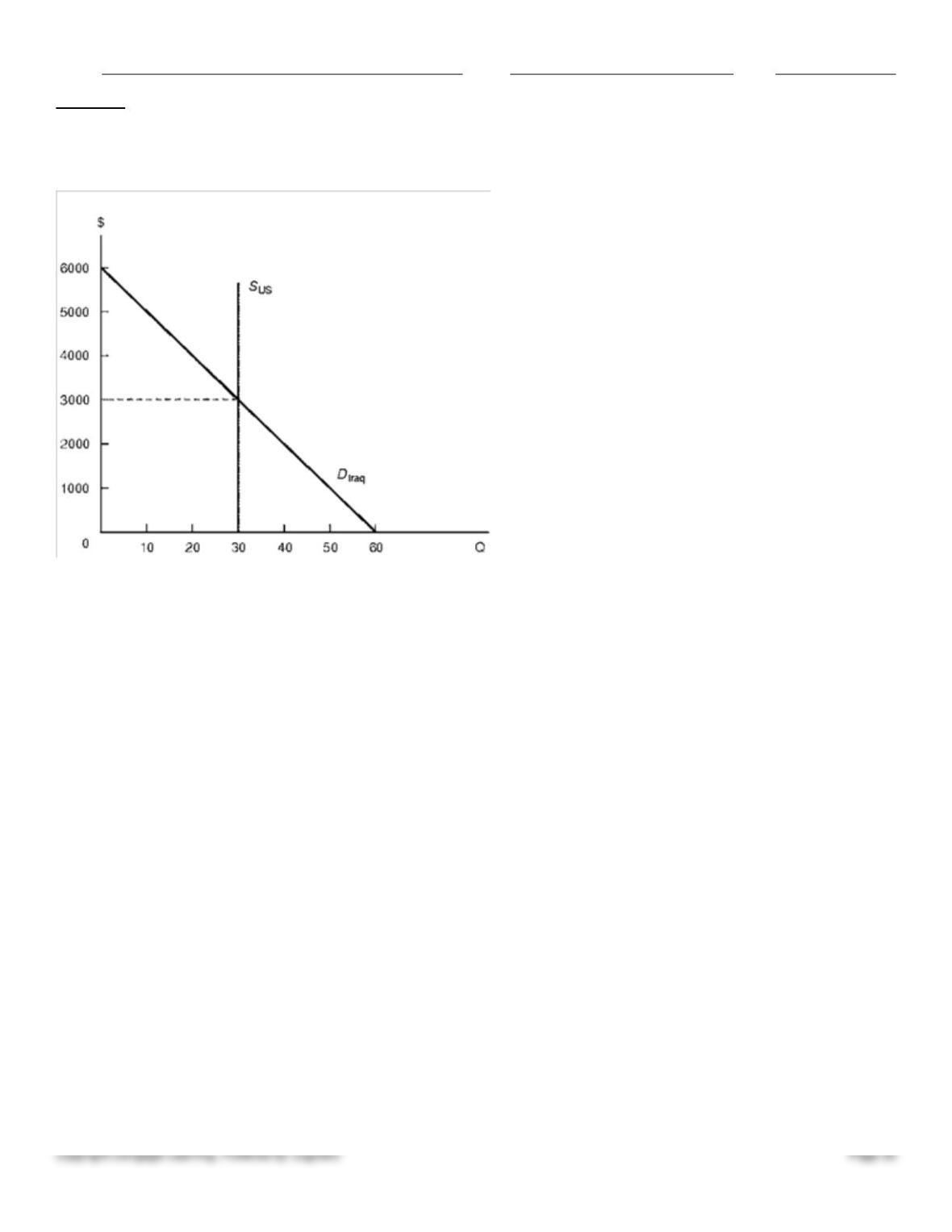
Figure 6.3 represents the Iraqi computer market. Assume Iraq purchases all of its computers from the United States.
Figure 6.3 Iraqi Computer Market and Economic Sanctions
88. Consider Figure 6.3. In response to Iraq’s armed invasion of neighboring countries, suppose the United States imposes
a partial embargo that limits exports to Iraq to 10 computers. The export quota leads to a(n) ______________ in the price
of computers equal to $______________ and a(n) ______________ in consumer surplus equal to $______________.
a. increase, $2,000, decrease, $40,000
b. increase, $4,000, decrease, $60,000
c. decrease, $2,000, increase, $40,000
d. decrease, $4,000, increase, $60,000
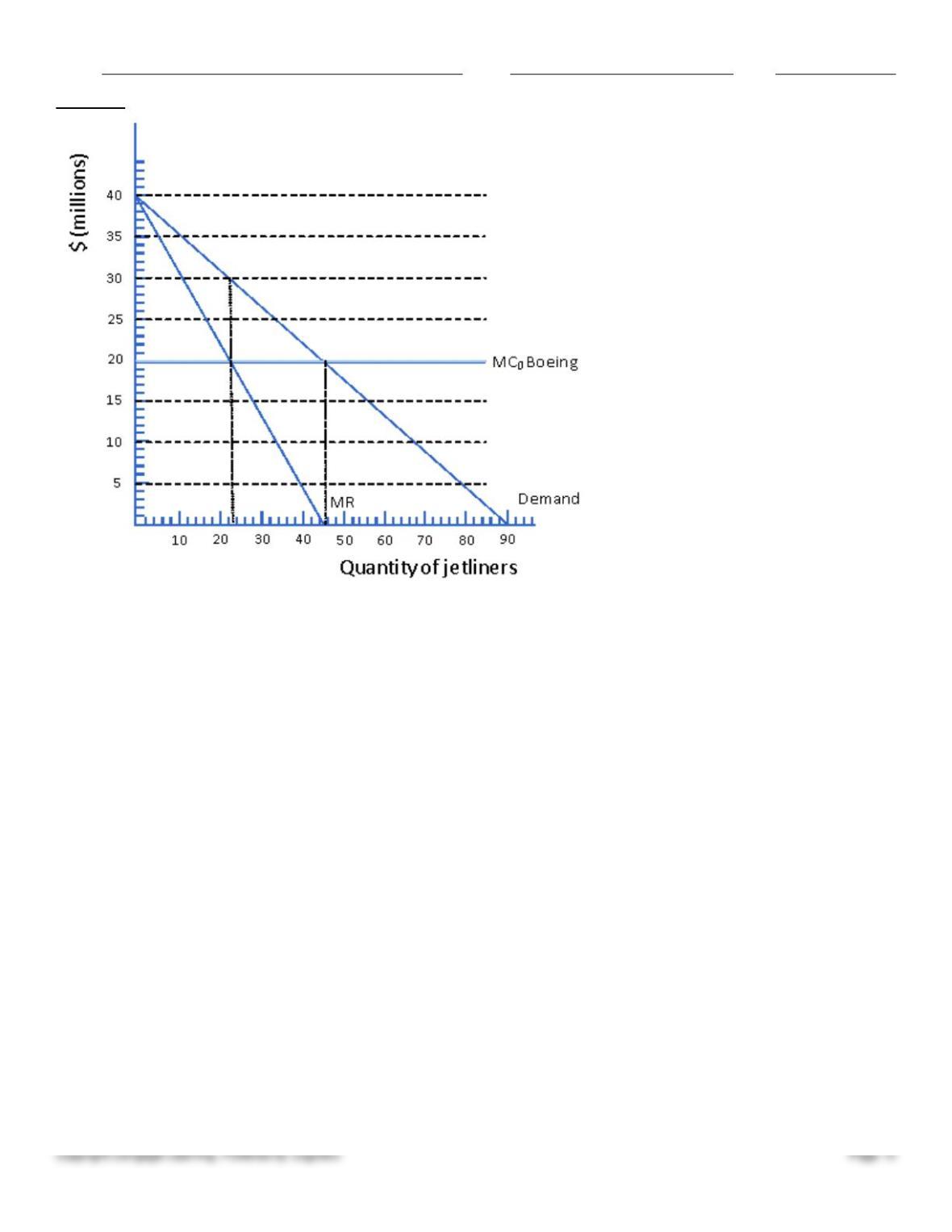
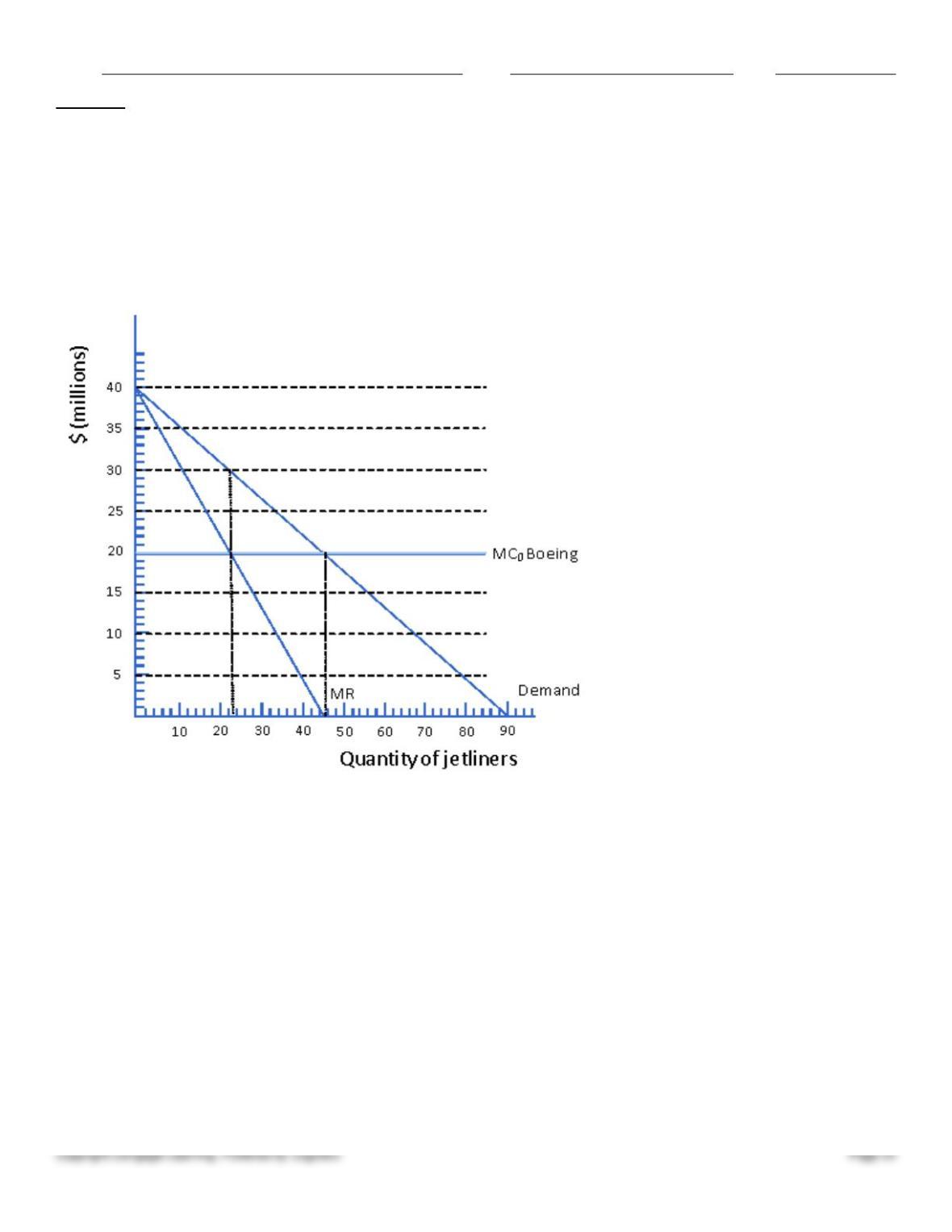
Figure 6.4 Japanese Market for Jetliners
Name:
Class:
Date:
chapter 6
Copyright Cengage Learning. Powered by Cognero.
Page 12
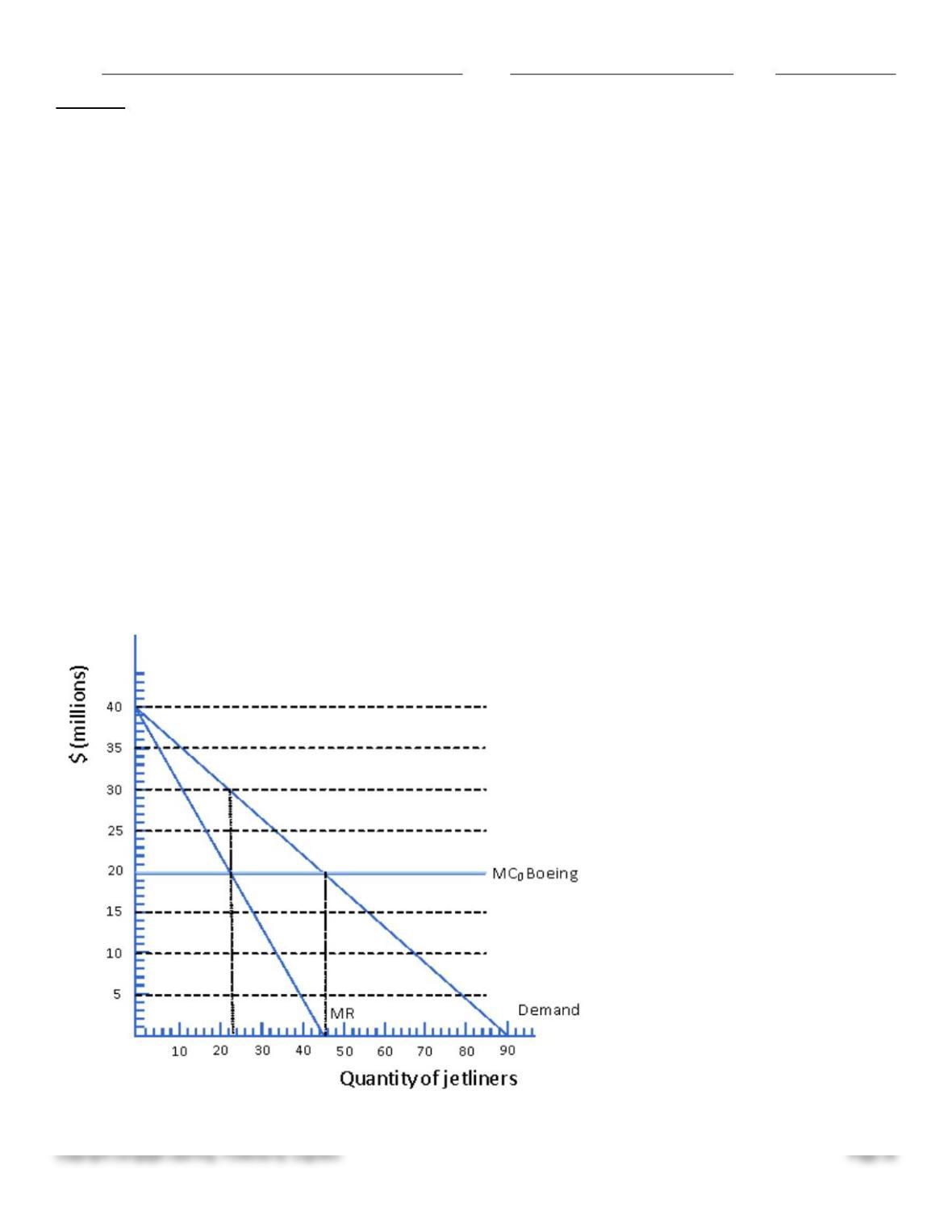
89. Consider the Japanese market for jetliners as depicted in Figure 6.4. Suppose the lone producer of jetliners in the
world is Boeing, which faces a constant marginal cost of $20 million per jetliner. How much consumer surplus will the
Japanese airlines who purchase the jetliners earn from their transactions with Boeing?
a. 0
b. $115 million
c. $230 million
d. $250 million
90. Countervailing duties are intended to neutralize any unfair advantage that foreign exporters might gain over domestic
producers because of foreign
a. tariffs.
b. subsidies.
c. quotas.
d. buy-national policies.
91. The Uruguay Round of Multilateral Trade Negotiations accomplished all EXCEPT which of the following?
a. placed primary emphasis on nontariff trade barriers
b. estimated to yield modest gains in world output and employment
c. achieved cuts in tariffs but not in nontariff trade barriers
d. abolished all barriers to trade in agricultural products
92. As a condition for the World Trade Organization’s enactment of new policies, developing countries pressure the World
Trade Organization for
a. more stringent environmental-protection policies in advanced countries.
b. additional expenditures on policies to protect intellectual property.

Name:
Class:
Date:
chapter 6
Copyright Cengage Learning. Powered by Cognero.
Page 13
c. import tariff reductions in advanced countries.
d. domestic content laws in advanced countries.
93. Who is most likely to support the mission of the World Trade Organization?
extreme environmentalists
a. proponents of protectionist trade barriers such as import quotas
b. proponents of free trade based on comparative advantage
c. extreme environmentalists
d. those desiring anarchy as the new global order
94. Soon after the United States implemented the Smoot-Hawley Tariff Act of 1930
a. the volume of international trade dramatically increased.
b. employment in the United States rapidly increased.
c. about 25 countries levied import tariffs on U.S. products.
d. the world returned to a policy of free trade.
95. In 1995, the General Agreement on Tariffs and Trade was replaced by the ______________.
a. Agency for International Development
b. Organization for Economic Cooperation and Development
c. United Nations Center for Trade and Development
d. World Trade Organization
96. The Reciprocal Trade Agreements Act of 1934 authorized
a. the president to negotiate bilateral trade agreements with other nations.
b. Congress to negotiate bilateral trade agreements with other nations.
c. the president to increase tariffs without the approval of Congress.
d. Congress to increase tariffs without the approval of the president.
97. The primary objective of the World Trade Organization is to
a. maximize tariff revenue for developing-country governments.
b. promote bilateral trade negotiations among nations.
c. liberalize international trade among member countries.
d. increase the protection of firms and workers against foreign competition.
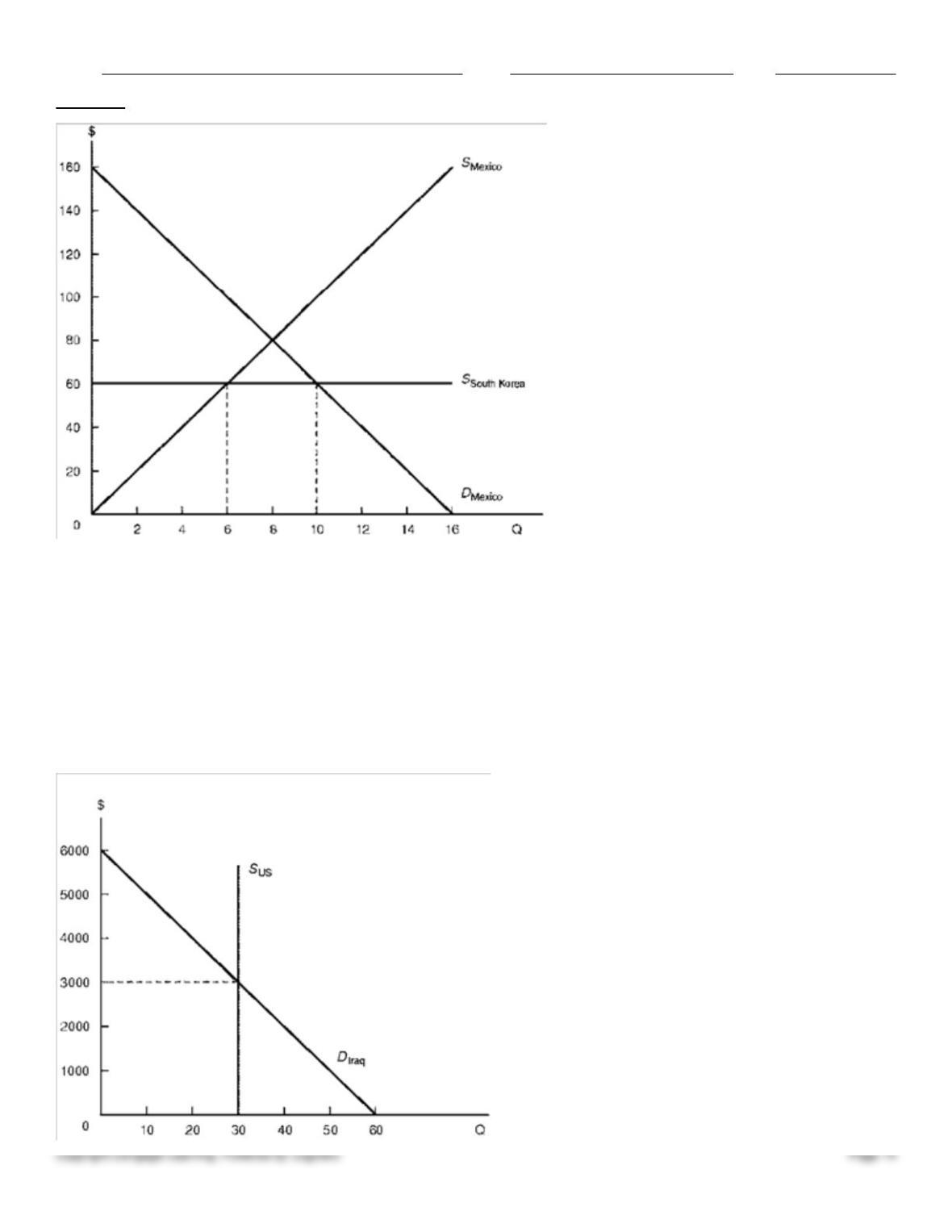
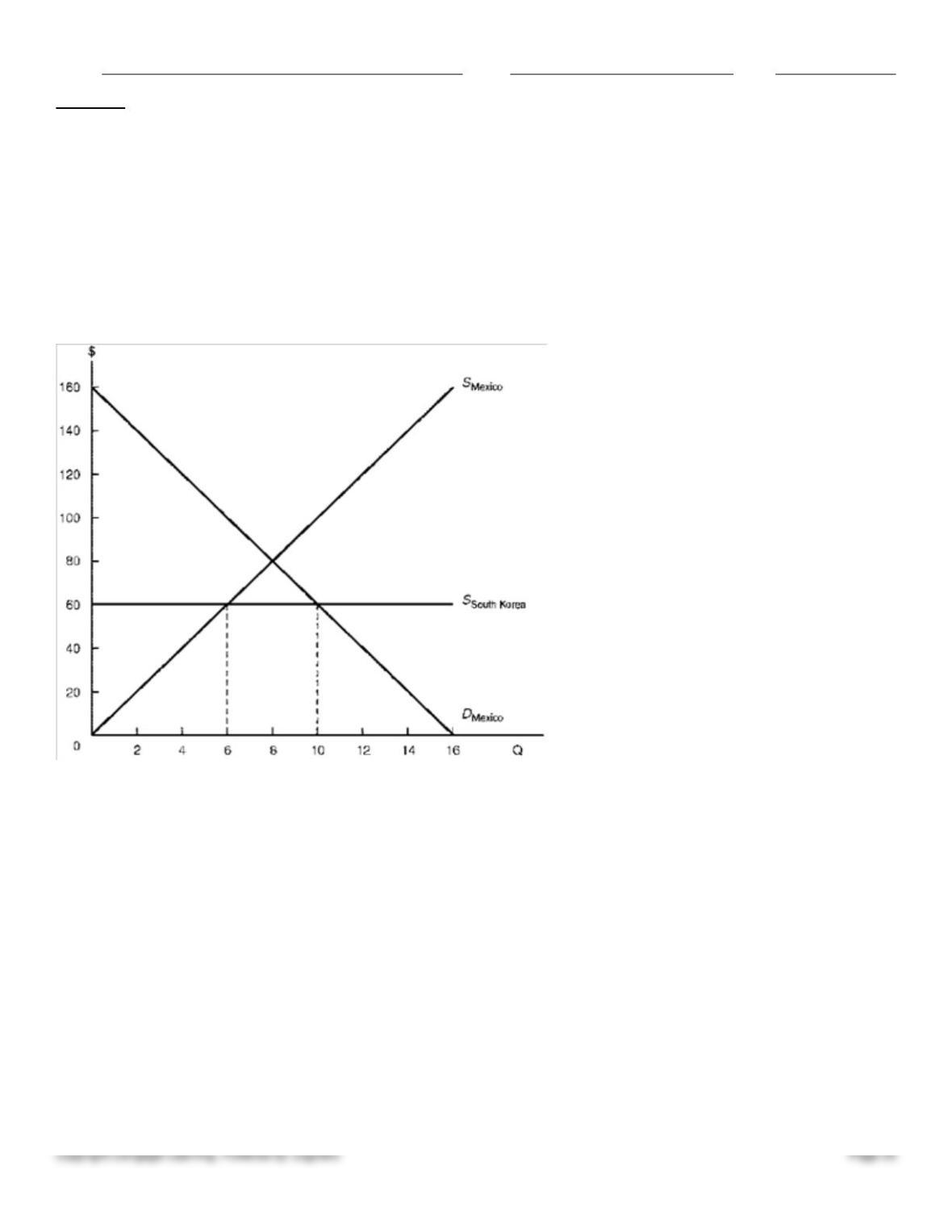
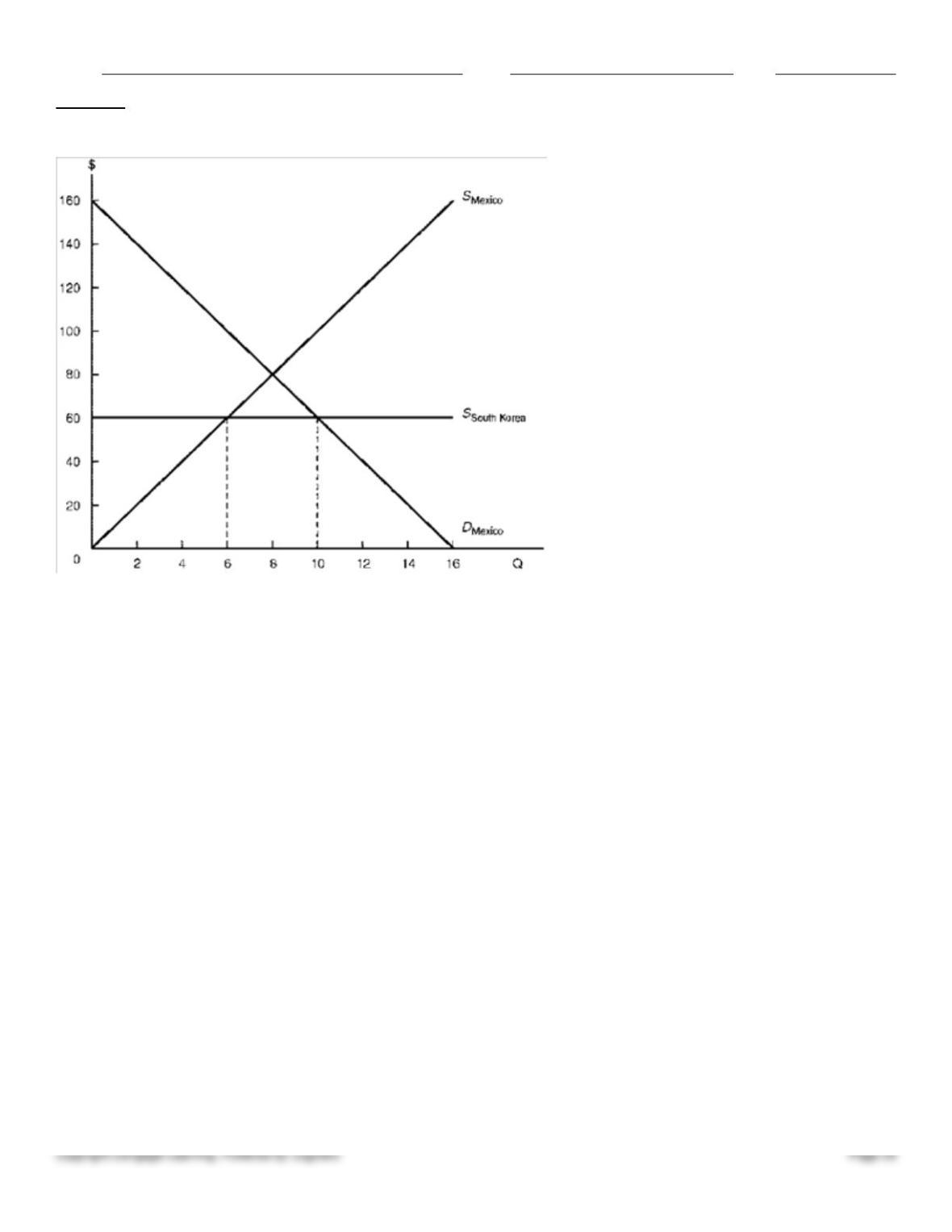
Figure 6.2 illustrates the calculator market for Mexico, assumed to be a small nation that is unable to influence the South
Korean (world) price. Assume the South Korean price to be $60 per calculator.
Figure 6.2. Effects of an Export Subsidy
Name:
Class:
Date:
chapter 6
Copyright Cengage Learning. Powered by Cognero.
Page 14
98. Consider Figure 6.2. The South Korean subsidy ______________ Mexican manufacturers, since their producer
surplus ______________ by $______________.
a. helps, rises, $60
b. helps, rises, $100
c. hurts, falls, $60
d. hurts, falls, $100
Figure 6.3 represents the Iraqi computer market. Assume Iraq purchases all of its computers from the United States.
Figure 6.3 Iraqi Computer Market and Economic Sanctions
Name:
Class:
Date:
chapter 6
Copyright Cengage Learning. Powered by Cognero.
Page 15
99. Consider Figure 6.3. Of the quota-induced change in Iraqi consumer surplus, $______________ is NOT transferred to
other sectors of Iraq’s economy and represents deadweight loss.
a. $5,000
b. $10,000
c. $15,000
d. $20,000
100. John, aged 55 years, has lost his job as a maintenance mechanic in a company he had worked at for 10 years. The
company has now shifted overseas. He has now joined another concern where he is being paid $30,000 against the
$39,000 he was earning previously. Is he eligible for wage insurance? If no, why? If yes, how much would he get?
a. People above 60 years of age only can claim wage insurance.
b. Yes, people above 50 can claim wage insurance. He will get $4,500.
c. People above 55 years of age only can claim wage insurance.
d. Yes, people 55 years and above can claim wage insurance. He will get $5,500.
Assume Boeing Inc. (of the United States) and Airbus Industries (of Europe) rival for monopoly profits in the Canadian
aircraft market. Suppose the two firms face identical cost and demand conditions, as seen in Figure 6.1.
Figure 6.1. Strategic Trade Policy: Boeing versus Airbus
101. Consider Figure 6.1. At the monopoly price as established by Boeing, Canadian consumers realize
$______________ of consumer surplus from the availability of aircraft.
a. $4 million
b. $8 million
c. $12 million
d. $16 million
102. Under the World Trade Organization, the most recent round of multilateral trade negotiations was the
a. Uruguay Round.
b. Doha Round.
c. Nixon Round.

Name:
Class:
Date:
chapter 6
Copyright Cengage Learning. Powered by Cognero.
Page 16
d. Kennedy Round.
103. A trade policy designed to alleviate some domestic economic problem by exporting it to foreign countries is known
as a (an)
a. international dumping policy.
b. trade adjustment assistance policy.
c. most-favored-nation policy.
d. beggar-thy-neighbor policy.
104. Which is the main reason for sanctions NOT being able to pressure North Korea into changing its behavior?
a. North Korea’s trade and financial relations with the rest of the world are limited.
b. China has refrained from implementing substantial sanctions against its neighbor.
c. The tension that prevails between the United States and North Korea.
d. It sees nuclear weapons as the only way to survive its repressive regime.
105. Under U.S. commercial policy, the escape clause results in
a. temporary quotas granted to firms injured by import competition.
b. tariffs that offset export subsidies granted to foreign producers.
c. tax advantages extended to minority-owned exporting firms.
d. duties that offset commercial dumping on the part of foreign firms.
106. Which is one type of trade liberalization favored by the World Trade Organization?
a. more efficient use of strategic trade policy
b. replacing import tariffs with import quotas
c. decreases in agricultural subsidies that distort trade
d. the establishment of local content laws to attract foreign investment
107. Some environmentalists in industrial countries fear that the rules of international trade under the World Trade
Organization
a. increase the development of renewable energies.
b. improve the water and air quality of member nations.
c. lead to the planting of more trees.
d. erode the environmental standards of member nations.
108. Suppose the United States imposes trade sanctions (export quotas) on grain sold to the Russians. Assuming other
nations do NOT increase grain exports to the Russians, all of the following would occur EXCEPT
a. grain prices would rise in Russia.
b. consumer surplus would decrease for the Russians.
c. grain prices would rise in the United States.
d. export revenues would decrease for U.S. producers.
109. If higher labor standards were implemented as a condition for support of more liberal trade rules of the World Trade
Organization, such policies could
a. help labor in advanced countries but harm labor in developing countries.
b. help labor in developing countries but harm labor in advanced countries.
c. help labor in advanced countries and developing countries.

Name:
Class:
Date:
chapter 6
Copyright Cengage Learning. Powered by Cognero.
Page 17
d. harm labor in advanced countries and developing countries.
110. The implicit industrial policies of the U.S. government have included
a. formulating industry-specific economic policies designed to promote national champions.
b. nationalizing basic industries such as steel and autos.
c. encouraging cartelization of aircraft and aluminum manufacturers.
d. improving the setting for industry such as communications and infrastructure.
111. The Uruguay Round of trade negotiations was primarily concerned with
a. import tariffs.
b. export tariffs.
c. economic sanctions.
d. nontariff trade barriers.
112. About how many nations are members of the World Trade Organization?
a. 90
b. 110
c. 130
d. 160
113. The strongest political pressure for a trade policy that results in higher protectionism comes from
a. domestic workers lobbying for import restrictions.
b. domestic workers lobbying for export restrictions.
c. domestic consumers lobbying for export restrictions.
d. domestic consumers lobbying for import restrictions.
114. Economists tend to agree that in defining the rules of trade among countries, ______________ is preferable to
______________.
a. freer trade, protectionism
b. growth, freer trade
c. freer trade, growth
d. protectionism, freer trade
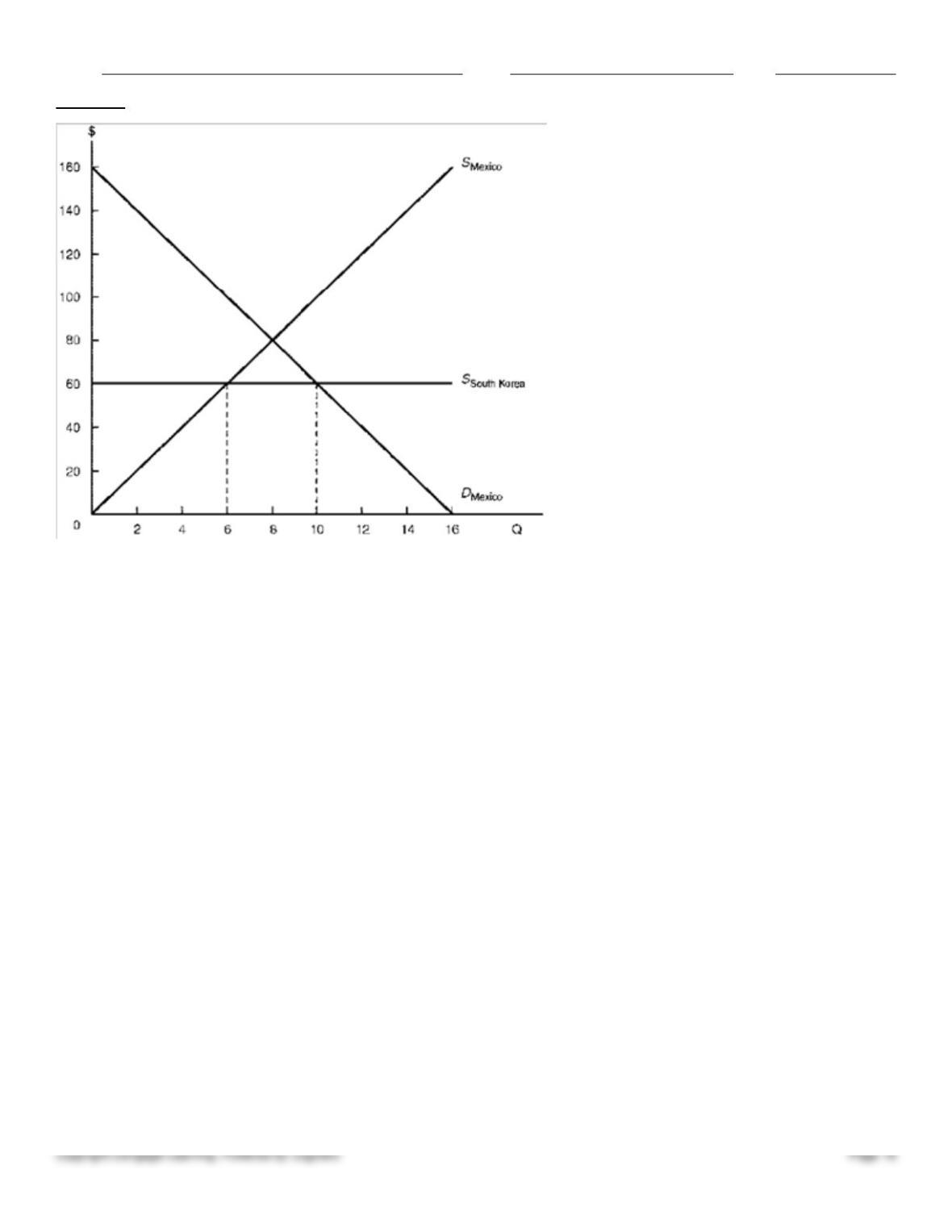
Figure 6.2 illustrates the calculator market for Mexico, assumed to be a small nation that is unable to influence the South
Korean (world) price. Assume the South Korean price to be $60 per calculator.
Figure 6.2. Effects of an Export Subsidy
Name:
Class:
Date:
chapter 6
Copyright Cengage Learning. Powered by Cognero.
Page 18
115. Consider Figure 6.2. With free trade, Mexicans attain $______________ of consumer surplus from the availability of
calculators, while Mexican producer surplus equals $______________.
a. $400, $200
b. $200, $400
c. $500, $180
d. $500, $240
116. The ______________ provides a forum for multinational trade negotiations, intended on reducing barriers to trade.
a. United Nations
b. World Trade Organization
c. International Monetary Fund
d. Bank for International Settlements
117. ______________ generally result(s) in greater economic pressure on the target nation.
a. Unilateral sanctions
b. Multilateral sanctions
c. International ostracism
d. Financial sanctions
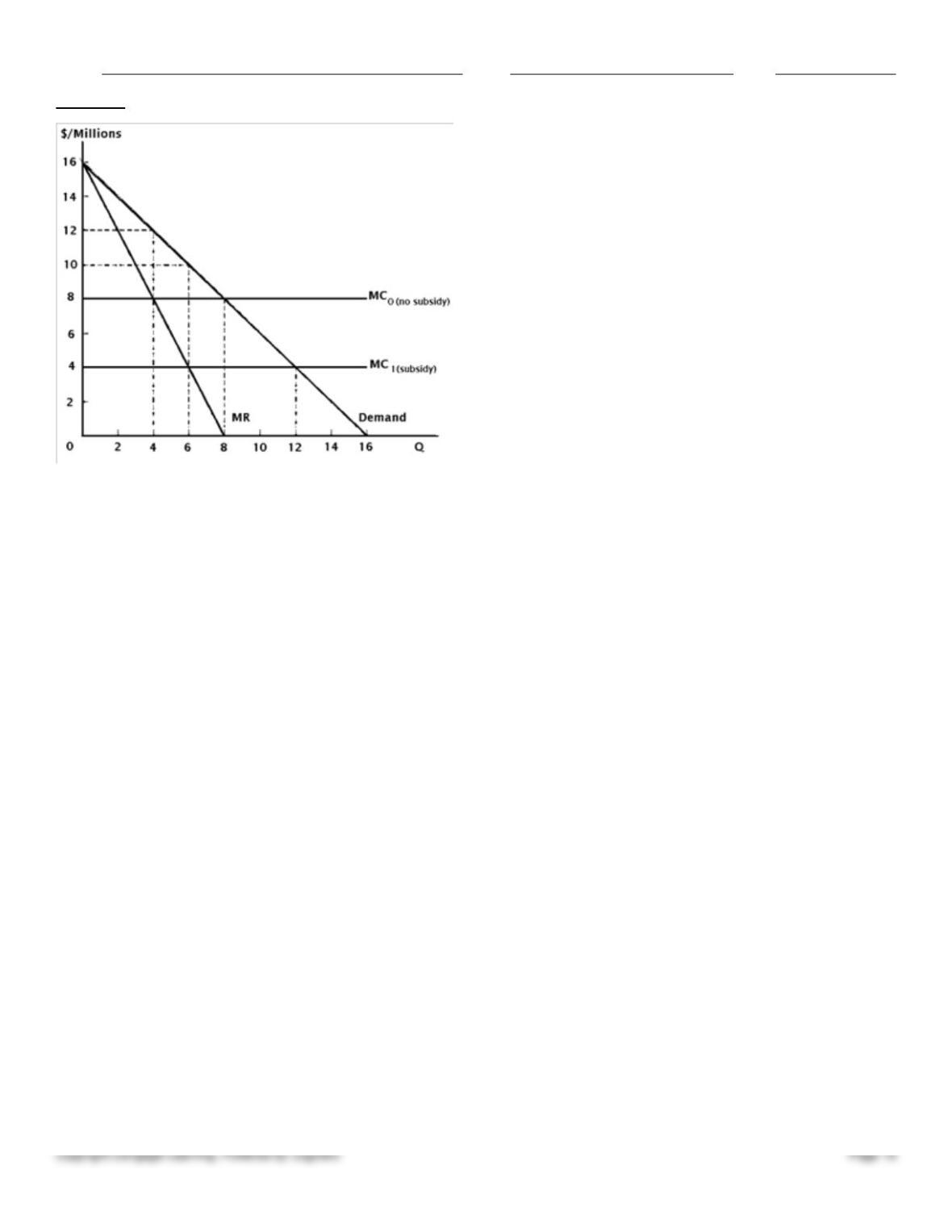
Assume Boeing Inc. (of the United States) and Airbus Industries (of Europe) rival for monopoly profits in the Canadian
aircraft market. Suppose the two firms face identical cost and demand conditions, as seen in Figure 6.1.
Figure 6.1. Strategic Trade Policy: Boeing versus Airbus
Name:
Class:
Date:
chapter 6
Copyright Cengage Learning. Powered by Cognero.
Page 19
118. Referring to Figure 6.1, assume that Boeing is the first to enter the Canadian market. Without a governmental
subsidy, the firm maximizes profits by selling ______________ aircraft at a price of $______________, and realizes
profits totaling $______________.
a. 4, $12 million, $16 million
b. 4, $16 million, $12 million
c. 8, $12 million, $16 million
d. 8, $16 million, $12 million
119. In 1791, Alexander Hamilton presented to Congress his famous “Report on Manufacturers,” which proposed that
young industries of the United States be granted import protection. Hamilton was using the ______________ to justify
protection
a. revenue argument
b. scientific tariff argument
c. infant industry argument
d. cheap foreign labor argument
Assume Boeing Inc. (of the United States) and Airbus Industries (of Europe) rival for monopoly profits in the Canadian
aircraft market. Suppose the two firms face identical cost and demand conditions, as seen in Figure 6.1.
Figure 6.1. Strategic Trade Policy: Boeing versus Airbus
Name:
Class:
Date:
chapter 6
Copyright Cengage Learning. Powered by Cognero.
Page 20
120. Consider Figure 6.1. For Europe as a whole (Airbus and European taxpayers), the subsidy leads to a (an)
______________ in net revenues of $______________.
a. increase, $12 million
b. increase, $16 million
c. decrease, $12 million
d. decrease, $16 million
121. For the United States, countervailing duty cases consist of allegations of
a. foreign impediments to American exports.
b. dumping by foreign exporting companies.
c. foreign export subsidies.
d. monopoly pricing by foreign importing companies.
122. Which policy reflects the notion that if society enjoys gains that are due to increased efficiency stemming from trade
liberalization, some sort of compensation should be provided to those who are temporarily hurt by import competition?
a. countervailing duties
b. trade adjustment assistance
c. domestic subsidies
d. most-favored-nation standard
123. Which of the following is NOT true about economic sanctions?
a. They protect domestic economy.
b. They increases nuclear proliferation.
c. They combat international terrorism.
d. They protect human rights.
124. In U.S. trade law, Section 301, cases involve accusations of
a. international dumping by U.S. companies.
b. full-cost pricing by U.S. companies.
c. unfair trade practices by foreign nations.
d. trade embargoes by foreign nations.
Name:
Class:
Date:
chapter 6
Copyright Cengage Learning. Powered by Cognero.
Page 21
125. The Reciprocal Trade Agreements Act of 1934 allowed the president to lower tariffs by up to ______________ of
the existing level, subject to a tariff reduction by our trading partner.
a. 15 percent
b. 35 percent
c. 50 percent
d. 75 percent
126. Compared with other displaced workers, ______________ workers tend to face ______________ adjustment costs
as they must endure longer ______________ spells and larger wage losses once reemployed.
a. trade-displaced, higher, unemployment
b. unemployed, higher, nonproductive
c. trade-displaced, lower, unemployment
d. unemployed, lower, nonproductive
127. The Smoot-Hawley Tariff Act of 1930
a. decreased U.S. tariffs to the lowest level since the early 1800s.
b. decreased U.S. tariffs to the lowest level since the late 1800s.
c. increased U.S. tariffs to an average of 53 percent on protected imports.
d. resulted in foreign nations increasing their tariffs on U.S. export.
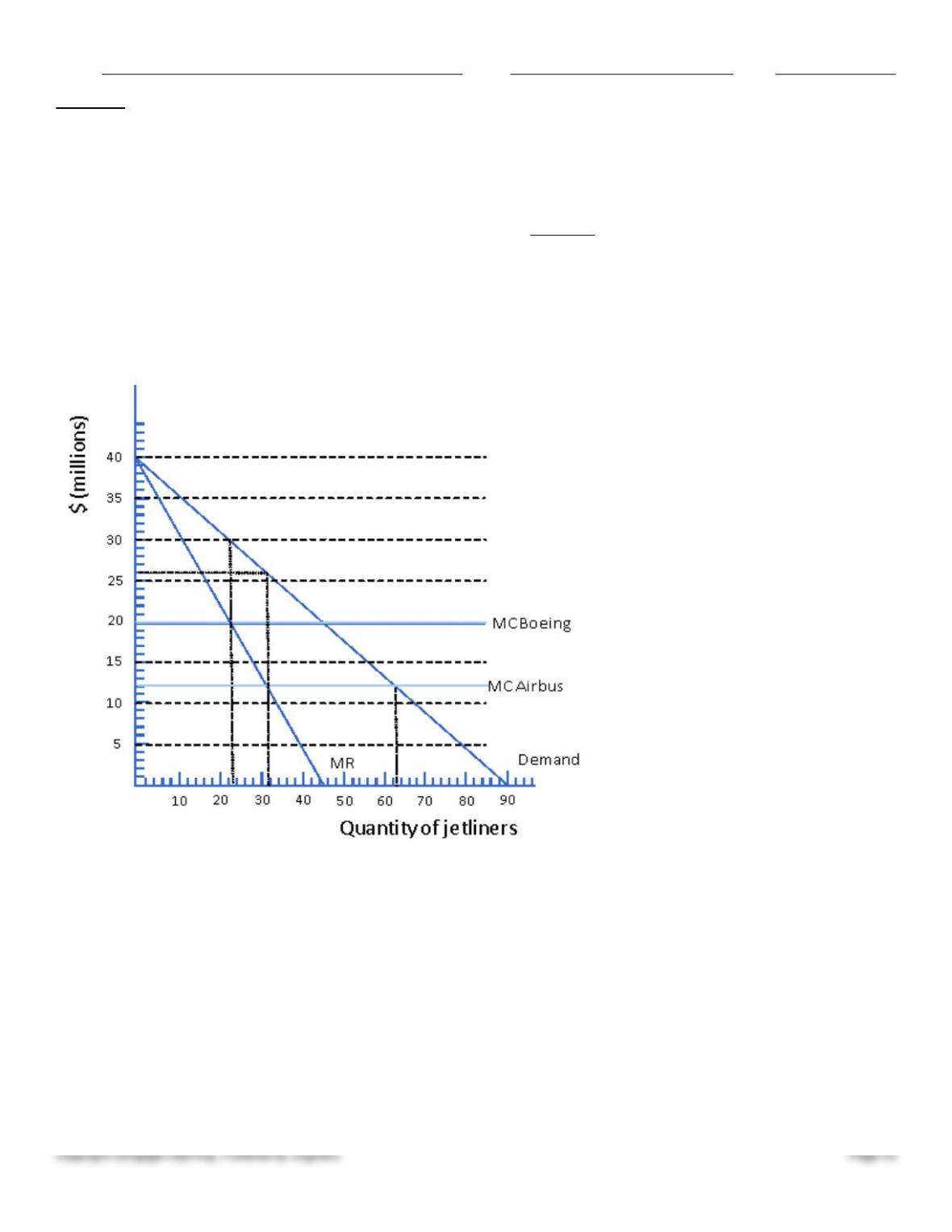
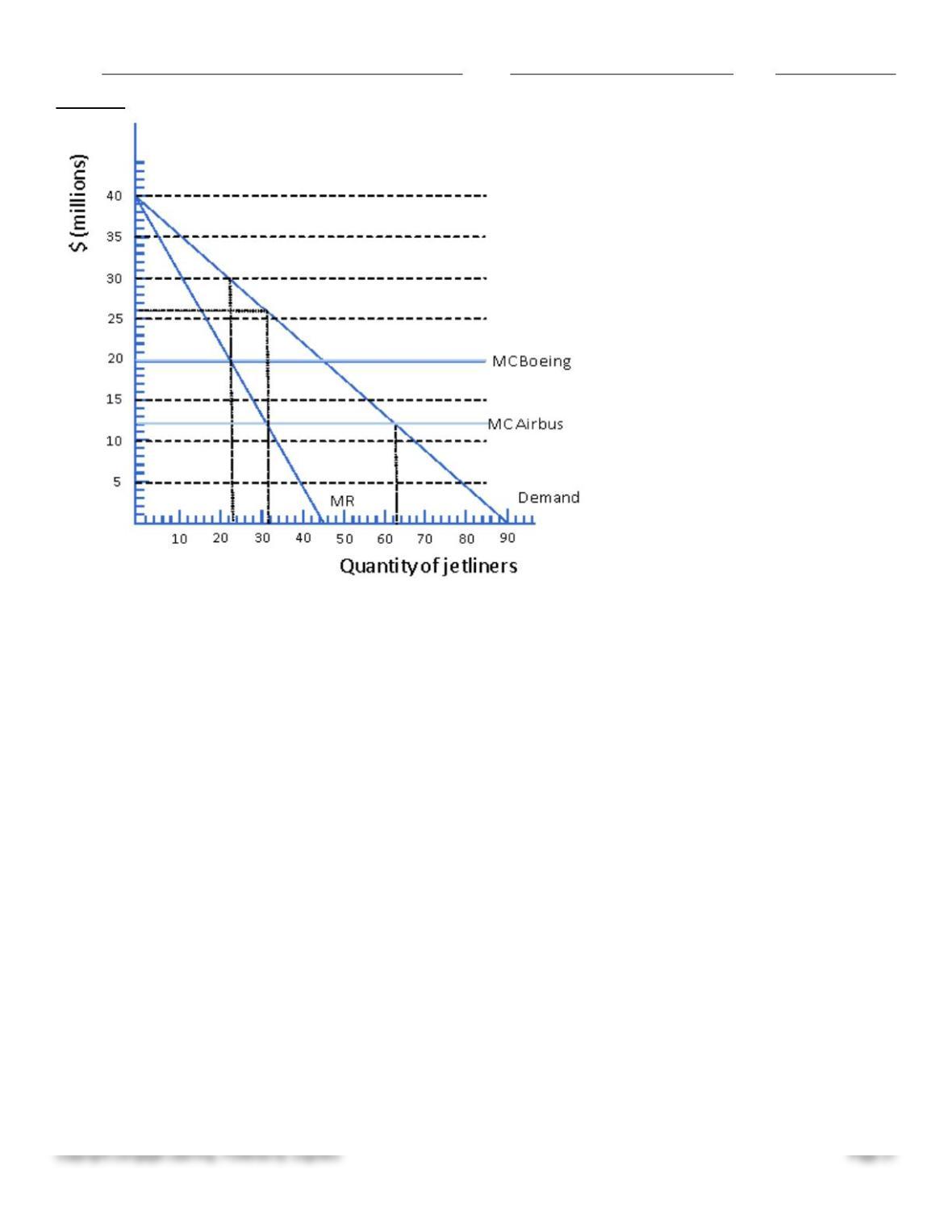
Figure 6.5 Japanese Market for Jetliners
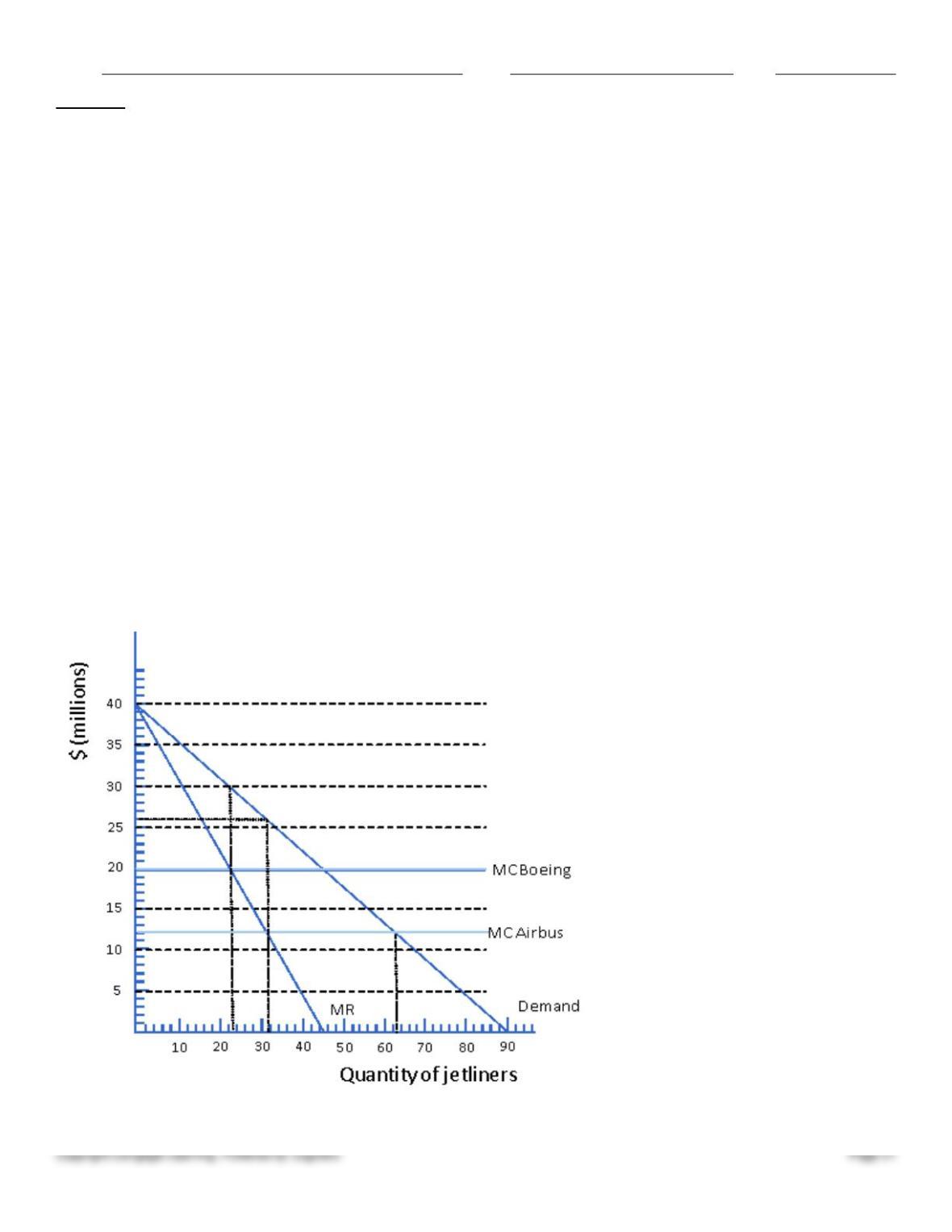
128. Consider the Japanese market for jetliners as depicted in Figure 6.5. Suppose the lone producer of jetliners in the
world is Boeing, which faces a constant marginal cost of $20 million per jetliner, but now a European manufacturer,
Name:
Class:
Date:
chapter 6
Copyright Cengage Learning. Powered by Cognero.
Page 22
Airbus, begins production. Airbus faces the same marginal cost as Boeing, but the European government provides Airbus
with a subsidy of $8 million per jetliner produced. As a result of the competition, Boeing leaves the Japanese market,
leaving Airbus as a monopoly. How many jetliners will Airbus produce and what price will they sell them for?
a. 23, $30 million
b. 32, $26 million
c. 23, $26 million
d. 32, $30 million
Figure 6.4 Japanese Market for Jetliners
129. Consider the Japanese market for jetliners as depicted in Figure 6.4. Suppose the lone producer of jetliners in the
world is Boeing, which faces a constant marginal cost of $20 million per jetliner. What price will Boeing charge for
jetliners in the Japanese market and how many will they sell?
a. $20 million, 23
b. $20 million, 46
c. $30 million, 46
d. $30 million, 23
130. The average tariff rate today on dutiable imports in the United States is approximately
a. 5 percent of the value of imports.
b. 15 percent of the value of imports.
c. 20 percent of the value of imports.
d. 25 percent of the value of imports.
131. For the United States in the early 1800s
a. Northern manufacturers favored high tariffs while Southern farmers opposed them.
Name:
Class:
Date:
chapter 6
Copyright Cengage Learning. Powered by Cognero.
Page 23
b. Southern farmers favored high tariffs while northern manufacturers opposed them.
c. high tariffs were favored by Northern manufacturers and Southern farmers.
d. low tariffs were favored by Northern manufacturers and Southern farmers.
132. The World Trade Organization provides for all of the following EXCEPT
a. the usage of the normal-trade-relation (most-favored-nation) clause.
b. assistance in the settlement of trade disagreements.
c. multilateral tariff reductions.
d. bilateral tariff reductions.
Figure 6.5 Japanese Market for Jetliners
133. Consider the Japanese market for jetliners as depicted in Figure 6.5. Suppose the lone producer of jetliners in the
world is Boeing, which faces a constant marginal cost of $20 million per jetliner, but now a European manufacturer,
Airbus, begins production. Airbus faces the same marginal cost as Boeing, but the European government provides Airbus
with a subsidy of $8 million per jetliner produced. As a result of the competition, Boeing leaves the Japanese market
leaving Airbus as a monopoly. How much profit will Airbus earn?
a. $230 million
b. $350 million
c. $416 million
d. $450 million
134. The World Trade Organization
a. consists of the World Bank and the International Monetary Fund.
b. is intended to promote bilateral trade negotiations between two countries.

Name:
Class:
Date:
chapter 6
Copyright Cengage Learning. Powered by Cognero.
Page 24
c. attempts to use world trade rules to help resolve trade disputes among member countries.
d. promotes international trade by granting loan guarantees to foreign customers who make purchases on credit.
135. Which is NOT a factor influencing the success of sanctions?
a. cultural factors including nationalistic attitudes
b. strength of political opposition in the targeting nation
c. the number of nations imposing sanctions
d. limitations entailed on the official lending or aid
136. The General Agreement on Tariffs and Trade and its successor, the World Trade Organization, have resulted in
a. termination of export subsidies applied to manufactured goods.
b. termination of import tariffs applied to manufactured goods.
c. encouragement of beggar-thy-neighbor policies.
d. reductions in trade barriers via multilateral negotiations.
137. Which major economy spends the most in helping retrain workers and getting them reemployed?
a. Denmark
b. Germany
c. France
d. United States
138. ______________ attempt to produce a fair and free-trading environment in which there exists a level playing field.
a. Trade-remedy laws
b. Industrial policies
c. Strategic trade policies
d. Economic sanctions
139. In 1980, the United States announced an embargo on grain exports to the Soviet Union in response to the Soviet
armed invasion of Afghanistan. The embargo was mainly resisted by
a. U.S. grain consumers and producers of bread.
b. U.S. farmers and grain companies.
c. grain producers in foreign countries.
d. grain consumers in foreign countries.
140. Adjustment assistance is sometimes used to assist
a. in retraining workers displaced by imports.
b. in retraining workers displaced by exports.
c. foreign firms injured by our quotas.
d. foreign firms injured by our tariffs.
141. Industrial policies
a. require formal explicit efforts by governments.
b. will not be implicit.
c. have never been used by the U.S. government.
d. should be approved by the World Trade Organization.
Name:
Class:
Date:
chapter 6
Copyright Cengage Learning. Powered by Cognero.
Page 25
142. Economic sanctions are most effective in causing the target nation to modify its behavior when the
a. target nation had negligible economic relationships with the imposing nation prior to the sanctions.
b. people of the target nation have weak cultural ties to the people of the imposing nation.
c. sanctions are levied by a large number of nations.
d. target government is supported by the majority of its people.
Figure 6.2 illustrates the calculator market for Mexico, assumed to be a small nation that is unable to influence the South
Korean (world) price. Assume the South Korean price to be $60 per calculator.
Figure 6.2. Effects of an Export Subsidy
143. Consider Figure 6.2. As a result of the South Korean subsidy, Mexicans find their consumer surplus
a. rising by $160.
b. rising by $220.
c. falling by $160.
d. falling by $220.
144. Suppose the president lowers tariffs on radios as the result of negotiations under the trade agreements program.
Radio producers in the United States can appeal under the
a. escape clause if rising imports substantially injure the U.S. radio industry.
b. escape clause if rising unemployment occurs even though imports remain unchanged.
c. infant industry clause if rising imports cause unemployment to rise among U.S. radio workers.
d. infant industry clause if rising imports result in losses for U.S. radio companies.
145. The purpose of the countervailing duty is to
a. increase the price of the imported good.
b. decrease the price of the imported good.
c. increase the price of the exported good.
Name:
Class:
Date:
chapter 6
Copyright Cengage Learning. Powered by Cognero.
Page 26
d. decrease the price of the exported good.
146. Julia lost her job because of foreign competition. She has now trained in nursing and is working in a hospital. Which
benefit of the U.S. government do you think helped her make this adjustment?
a. wage insurance
b. weekly income support
c. reimbursement of relocation costs
d. assistance in preparing for and obtaining new employment
147. For the United States, which organization makes loans to foreign buyers of U.S. manufactured goods?
a. Export-Import Bank
b. Domestic International Sales Corporation
c. Organization for Economic Cooperation and Development
d. Commodity Credit Corporation
148. In U.S. trade law, which measure permits the levying of restrictions on fairly traded imports that harm or threaten to
harm American manufacturers?
a. antidumping duty
b. countervailing duty
c. national security clause
d. escape clause
Figure 6.4 Japanese Market for Jetliners
Name:
Class:
Date:
chapter 6
Copyright Cengage Learning. Powered by Cognero.
Page 27
149. Consider the Japanese market for jetliners as depicted in Figure 6.4. Suppose the lone producer of jetliners in the
world is Boeing, which faces a constant marginal cost of $20 million per jetliner. How much profit will Boeing make?
a. 0
b. $150 million
c. $230 million
d. $250 million
Assume Boeing Inc. (of the United States) and Airbus Industries (of Europe) rival for monopoly profits in the Canadian
aircraft market. Suppose the two firms face identical cost and demand conditions, as seen in Figure 6.1.
Figure 6.1. Strategic Trade Policy: Boeing versus Airbus
150. Consider Figure 6.1. Suppose the European government provides Airbus a subsidy of $4 million on each aircraft
manufactured and that the subsidy convinces Boeing to exit the Canadian market. As the monopoly seller, Airbus
maximizes profit by selling ______________ aircraft at a price of $______________, and realizes profits totaling
$______________.
a. 6, $10 million, $36 million
b. 6, $12 million, $24 million
c. 12, $10 million, $36 million
d. 12, $12 million, $24 million
Figure 6.3 represents the Iraqi computer market. Assume Iraq purchases all of its computers from the United States.
Figure 6.3 Iraqi Computer Market and Economic Sanctions
Name:
Class:
Date:
chapter 6
Copyright Cengage Learning. Powered by Cognero.
Page 28
151. Consider Figure 6.3. For the United States, the export quota results in a (an)
a. improvement in its terms of trade with Iraq.
b. increase in its export revenue.
c. increase in domestic computer prices.
d. decrease in domestic consumer surplus.
152. Trade adjustment assistance policies
a. can resolve all workers’ challenges to free trade.
b. attempt to share gains from free trade with disadvantaged workers.
c. have never been used to sustain a losing business concern.
d. are financed by state and local tax revenues.
153. Under U.S. commercial policy, which clause permits the modification of a trade liberalization agreement on a
temporary basis if serious injury occurs to domestic producers as a result of the agreement?
a. adjustment assistance clause
b. escape clause
c. most-favored-nation clause
d. reciprocal-trade clause
154. As a way of helping American firms trade in the world market, U.S. trade law provides antitrust exemptions for
horizontal combinations of American firms engaged solely in export trade. Such firms are permitted to form
a. export trade associations.
b. domestic international sales corporations.
c. export-import banks.
d. commodity sales corporations.
Figure 6.2 illustrates the calculator market for Mexico, assumed to be a small nation that is unable to influence the South
Korean (world) price. Assume the South Korean price to be $60 per calculator.
Name:
Class:
Date:
chapter 6
Copyright Cengage Learning. Powered by Cognero.
Page 29
Figure 6.2. Effects of an Export Subsidy
155. Consider Figure 6.2. For Mexico’s producers and consumers as a whole, the South Korean subsidy leads to a(n)
a. $120 welfare gain.
b. $320 welfare gain.
c. $120 welfare loss.
d. $320 welfare loss.
156. The first tariff in the United States (1789) was intended mainly
a. to raise revenue for the U.S. government.
b. to protect American farmers from foreign competition.
c. to protect American manufacturers from foreign competition.
d. to offset unfair trading practices of European nations.
157. The U.S. “trade-remedy laws” could establish all of the following EXCEPT
a. import tariffs to protect U.S. firms seriously injured by foreign competition.
b. countervailing duties that neutralize foreign export subsidies.
c. antidumping duties that protect U.S. firms from imports sold at less-than-fair-value.
d. economic sanctions levied against hostile nations.
158. During the 1780s–1790s, the largest source of revenue for the U.S. government came from
a. the personal income tax.
b. the corporate income tax.
c. the social security tax.
d. import tariffs.
Name:
Class:
Date:
chapter 6
Copyright Cengage Learning. Powered by Cognero.
Page 30
Figure 6.3 represents the Iraqi computer market. Assume Iraq purchases all of its computers from the United States.
Figure 6.3 Iraqi Computer Market and Economic Sanctions
159. Consider Figure 6.3. With free trade, Iraq purchases ______________ computers at a price of $______________ and
realizes $______________ of consumer surplus from the availability of computers.
a. 30, $3,000, $25,000
b. 30, $3,000, $35,000
c. 30, $3,000, $45,000
d. 30, $3,000, $55,000
Figure 6.5 Japanese Market for Jetliners
Name:
Class:
Date:
chapter 6
Copyright Cengage Learning. Powered by Cognero.
Page 31
160. Consider the Japanese market for jetliners as depicted in Figure 6.5. Suppose the lone producer of jetliners in the
world is Boeing, which faces a constant marginal cost of $20 million per jetliner, but now a European manufacturer,
Airbus, begins production. Airbus faces the same marginal cost as Boeing, but the European government provides Airbus
with a subsidy of $8 million per jetliner produced. As a result of the competition, Boeing leaves the Japanese market,
leaving Airbus as a monopoly. As a result of the entry of the subsidized producer, what will happen to the consumer
surplus gained by Japanese airlines from buying jetliners?
a. decrease by $109 million
b. nothing
c. increase by $50 million
d. increase by $109 million
161. Assume that an import subsidy gives a foreign producer an undue advantage. As an import competing producer, what
would you do?
a. petition the U.S. Department of Commerce
b. petition the U.S. International Trade Commission
c. petition the WTO
d. discuss the issue with the foreign producer
162. Countervailing duties may be imposed
a. in response to a foreign export subsidy.
b. in response to a foreign antidumping tariff.
c. to promote exports of domestic companies.
d. to promote imports of domestic consumers.
163. The Uruguay Round of trade negotiations lowered
Name:
Class:
Date:
chapter 6
Copyright Cengage Learning. Powered by Cognero.
Page 32
a. trade sanctions levied against South Africa.
b. trade sanctions levied against the Soviet Union.
c. tariffs but not nontariff trade barriers.
d. tariffs as well as nontariff trade barriers.
164. The United States
a. has used antidumping laws sparingly to protect domestic producers.
b. has never used antidumping laws to protect domestic producers.
c. has targeted antidumping action against Canada only so far.
d. has been a heavy user of antidumping laws to protect domestic producers.
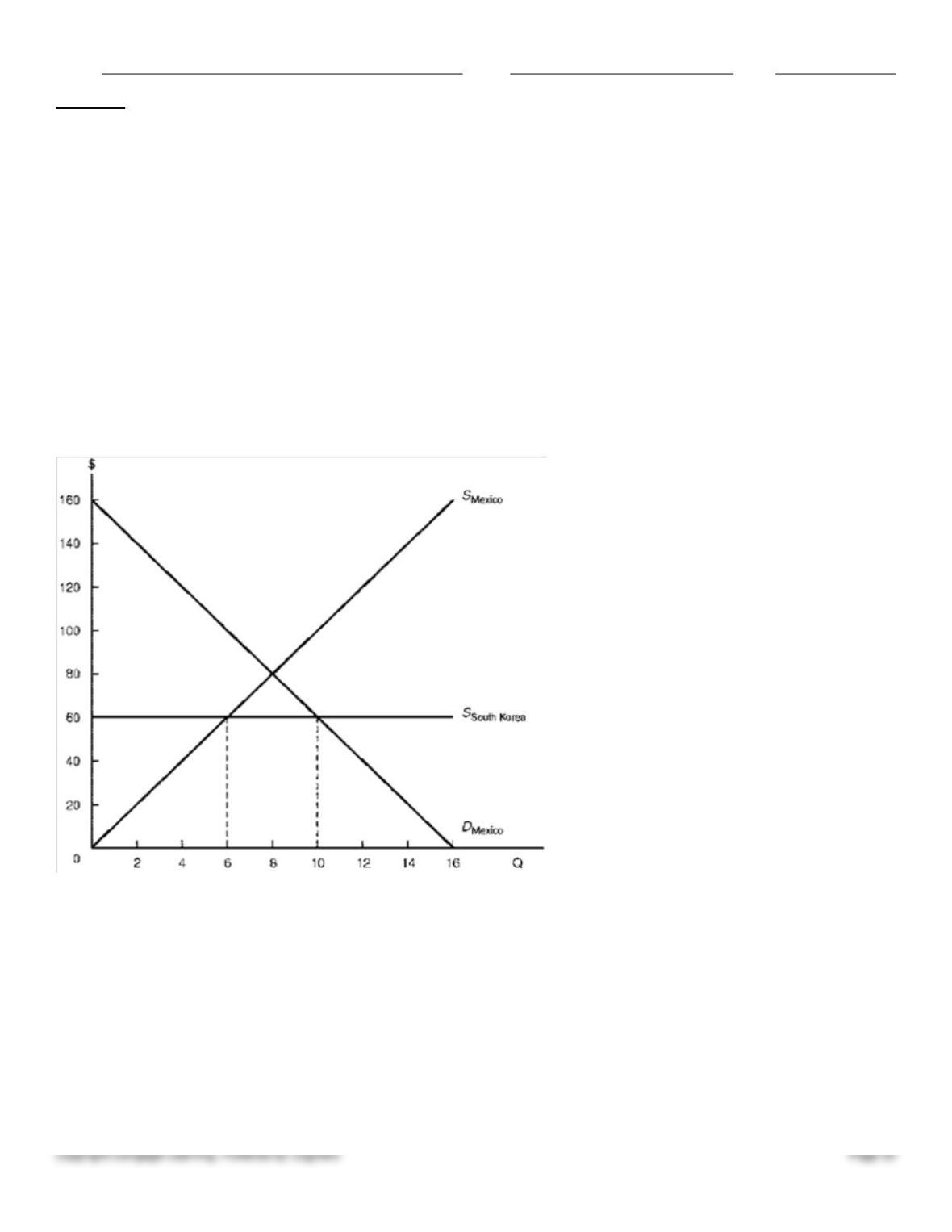
Figure 6.2 illustrates the calculator market for Mexico, assumed to be a small nation that is unable to influence the South
Korean (world) price. Assume the South Korean price to be $60 per calculator.
Figure 6.2. Effects of an Export Subsidy
165. Consider Figure 6.2. To help its firms further penetrate export markets, suppose the South Korean government
provides them a production subsidy of $20 per calculator. With the subsidy, South Korean firms charge a price of
$______________ and export ______________ calculators to Mexico.
a. $40, 8
b. $40, 10
c. $20, 8
d. $20, 10
166. During the past four decades
a. nontariff barriers (NTBs) and tariffs have increased in importance.
b. NTBs and tariffs have decreased in importance.
c. NTBs have increased and tariffs have decreased in importance.
Name:
Class:
Date:
chapter 6
Copyright Cengage Learning. Powered by Cognero.
Page 33
d. NTBs have decreased and tariffs have increased in importance.
Assume Boeing Inc. (of the United States) and Airbus Industries (of Europe) rival for monopoly profits in the Canadian
aircraft market. Suppose the two firms face identical cost and demand conditions, as seen in Figure 6.1.
Figure 6.1. Strategic Trade Policy: Boeing versus Airbus
167. Referring to Figure 6.1, the Airbus subsidy leads to a (an) increase/decrease in Canadian consumer surplus of
$______________, as compared to the consumer surplus that existed in the absence of a subsidy.
a. increase of $8 million
b. increase of $10 million
c. decrease of $8 million
d. decrease of $10 million
168. The ______________ is an international organization that establishes codes of conduct for international trade.
a. International Monetary Fund
b. World Bank
c. World Trade Organization
d. Bank for International Settlements
169. Which international organization stipulates procedures for the settlement of international trade disputes?
a. World Trade Organization
b. World Bank
c. International Monetary Fund
d. Organization of Economic Development
170. The high point of U.S. protection culminated with the passage of the
a. Smoot-Hawley Act of 1930.
b. General Agreements on Tariffs and Trade in 1947.
c. Trade Reduction Act of 1962.
d. Adjustment Assistance Act of 1970.
Name:
Class:
Date:
chapter 6
Copyright Cengage Learning. Powered by Cognero.
Page 34
171. Critics of the U.S. Trade Adjustment Assistance Program argue that
a. it increases the prices of goods and services that are imported by Americans.
b. it encourages American companies to outsource more of their production overseas.
c. it lessens the desire of American firms to invest in new technologies to improve their competitiveness.
d. American workers whose jobs are displaced by imports are no more deserving of aid than other Americans
suffering job losses.
Figure 6.2 illustrates the calculator market for Mexico, assumed to be a small nation that is unable to influence the South
Korean (world) price. Assume the South Korean price to be $60 per calculator.
Figure 6.2. Effects of an Export Subsidy
172. Consider Figure 6.2. With free trade, Mexican consumers purchase ______________ calculators, Mexican firms
produce ______________ calculators, and ______________ calculators are imported.
a. 10, 4, 6
b. 10, 6, 4
c. 10, 8, 2
d. 10, 2, 8
173. The most recent round of multilateral trade negotiations is the
a. Kennedy Round.
b. Tokyo Round.
c. Doha Round.
d. Geneva Round.

Name:
Class:
Date:
chapter 6
Copyright Cengage Learning. Powered by Cognero.
Page 35
174. Under the original provisions of the Reciprocal Trade Agreements Act, the president of the United States was
authorized to cut tariffs up to
a. 10 percent.
b. 50 percent.
c. 75 percent.
d. 100 percent.
175. Concerning the tariff policy of the United States, the country imposes
a. identical tariff rates on products from all countries.
b. lower tariff rates on products from countries with most-favored-nation status.
c. higher tariff rates on products from countries with most-favored-nation status.
d. zero tariff rates on products from all developing countries.
176. Industrial policy attempts to fulfill all of the following objectives EXCEPT
a. improving the infrastructure for an industry.
b. easing transitions for workers in declining industries.
c. supporting troubled industries if the difficulty is temporary.
d. fostering industries that offer long-run comparative disadvantage.
177. According to some labor unions in advanced countries such as Canada and the United States, the international trade
rules of the World Trade Organization could result in
a. increases in the safety of workers.
b. increase the productivity of workers.
c. higher earnings and profits for business.
d. reductions in job protections for workers.
178. The result of normal trade relations (the most-favored-nation clause) is
a. a discriminatory tariff structure.
b. a nondiscriminatory tariff structure.
c. an increase of all tariff rates between all nations.
d. an elimination of all tariff rates for all nations.
179. Export embargoes induce greater losses in consumer surplus for the target country
a. the lesser its initial dependence on foreign-produced goods.
b. the more elastic the target country’s demand schedule.
c. the greater the available output from alternative suppliers.
d. the more inelastic the target country’s supply schedule.
180. The principle of normal trade relations (most-favored-nation) treatment was established with the passage of the
a. Fordney-McCumber Act of 1922.
b. Smoot-Hawley Act of 1930.
c. Reciprocal Trade Agreements Act of 1934.
d. Trade Act of 1974.
Figure 6.3 represents the Iraqi computer market. Assume Iraq purchases all of its computers from the United States.
Name:
Class:
Date:
chapter 6
Copyright Cengage Learning. Powered by Cognero.
Page 36
Figure 6.3 Iraqi Computer Market and Economic Sanctions
181. Consider Figure 6.3. Of the quota-induced change in Iraqi consumer surplus, the amount of the change in Iraq’s
consumer surplus that is transferred to other sectors of Iraq’s economy is captured by the United States as
a. tax revenue.
b. export revenue.
c. producer surplus.
d. consumer surplus.
182. Which international organization meets on a regular basis to establish rules for international commerce?
a. North American Free Trade Agreement
b. World Bank
c. International Monetary Fund
d. World Trade Organization
183. In 1990, the United States and its allies imposed trade embargoes on exports/imports to/from Iraq in response to its
invasion of Kuwait. The embargoes would induce smaller losses in Iraq’s consumer surplus the
a. lesser its initial dependence on foreign products.
b. less elastic Iraq’s demand schedule.
c. lesser the available output from alternative suppliers.
d. more inelastic Iraq’s supply schedule.
184. The Smoot-Hawley Tariff Act of 1930 has generally been associated with
a. falling tariffs.
b. increases in the volume of trade.
c. intensifying the worldwide depression.
d. efforts to liberalize nontariff trade barriers.
185. Those who argue in favor of import protection generally give the impression that such restricted trade will

Name:
Class:
Date:
chapter 6
Copyright Cengage Learning. Powered by Cognero.
Page 37
a. decrease the level of national security.
b. provide benefits to some particular industry.
c. provide benefits to the entire nation.
d. not yield welfare losses for the nation.
186. As viewed by the World Trade Organization, ______________ constitutes unfair competition.
a. export antisubsidies
b. export subsidies
c. import tariff
d. import subsidies
187. Which can be categorized as illegal subsidy?
a. approving loans at predetermined interest rates
b. paying nominal wages to workers
c. providing discounts to electricity when energy is the largest expense
d. collecting rent as appropriate
188. Advocates of the U.S. Trade Adjustment Assistance Program maintain that it
a. allows the U.S. government to subsidize firms with comparative advantages.
b. decreases the prices of imports that compete with American-produced goods.
c. increases the political acceptances of efforts to reduce trade barriers.
d. allows the United States to be a net exporter of oil and natural gas.
189. Throughout the post-World War II era, the importance of tariffs as a trade barrier has
a. increased.
b. decreased.
c. either increased or decreased.
d. neither increased nor decreased.
190. In 1995, the ______________ was established to administer the new global trade rules agreed in the Uruguay Round
of multilateral trade negotiations.
a. World Trade Organization
b. Organization for Economic Cooperation and Development
c. General Agreement on Tariffs and Trade
d. United Nations
191. The ______________ was created to administer the provisions of multilateral trade agreements, to resolve
international trade disagreements, and to meet periodically to consider new trade liberalization agreements.
a. North American Free Trade Agreement
b. European Union
c. World Bank
d. World Trade Organization
192. The purpose of the U.S. Trade Adjustment Assistance Program is to
a. provide production subsidies to American exporting companies.
b. protect American jobs and wages by imposing import tariffs and quotas.

Name:
Class:
Date:
chapter 6
Copyright Cengage Learning. Powered by Cognero.
Page 38
c. provide benefits to American workers who are dislocated because of international trade.
d. provide price supports for American farmers harmed by international trade.
193. Which is NOT a sanction placed against North Korea?
a. cap on the amount of oil that can be purchased
b. restrict trade only to textiles and coal
c. ban on entry of North Koreans into other countries
d. ban on financial institutions doing business with North Korea
194. Critics of the World Trade Organization maintain that liberalized trade can result in
a. environmental degradation.
b. higher wages paid to workers.
c. business firms providing labor protections such as workplace safety.
d. win for small countries that do not have much bargaining power.
195. Trade theory suggests that the United States would gain from a subsidy provided by Japan to its calculator producers
if the gains to American consumers of calculators more than offset the losses to American calculator producers. This
occurs as long as the United States
a. is a net importer of calculators.
b. is a net exporter of calculators.
c. has an absolute advantage in calculator production.
d. has a comparative advantage in calculator production.
196. The Export-Import Bank of the United States encourages American firms to sell overseas by providing direct loans
and loan guarantees to foreign purchasers of American goods. To American firms, this represents a
a. specific subsidy.
b. ad valorem subsidy.
c. domestic subsidy.
d. export subsidy.
197. What is the basis for trade adjustment assistance?
198. What is the essential idea behind strategic trade policy?
199. Explain how advocates of strategic trade policy differ from the classical free traders in their treatment of
externalities?
Name:
Class:
Date:
chapter 6
Answer Key
1. False
2. True
3. False
Name:
Class:
Date:
Name:
Class:
Date:
Name:
Class:
Date:
Name:
Class:
Date:
Name:
Class:
Date:
Name:
Class:
Date:
Name:
Class:
Date: