Version 1 18
A) Human beings have fundamental rights and privileges that transcend national
boundaries.
B) The moral worth of actions or practices is determined by their consequences.
C) People should be treated as ends never purely as means to the ends of others.
D) The only social responsibility of business is to increase profits, so long as the
company stays within the rules of law.
60) Which of the following persons believed that people should be treated as ends and never
purely as means to the ends of others?
A) John Stuart Mill
B) Immanuel Kant
C) Milton Friedman
D) David Hume
61) The United Nations Universal Declaration of Human Rights, related to employment,
upholds which of the following?
A) the requirement for the formation of trade unions
B) a sliding pay scale based upon need
C) prohibition of trade unions
D) protection against unemployment
62) Article 1 of the United Nations Universal Declaration of Human Rights states: All human
beings are born free and equal in dignity and rights. This best echoes
Version 1 19
A) cultural relativism.
B) the Friedman doctrine.
C) the righteous moralist approach.
D) Kantian ethics.
63) Which of the following statements is true about the United Nations Universal Declaration
of Human Rights?
A) It transcends national borders.
B) It states that human rights are culturally determined.
C) It states that an action is judged desirable if it leads to the best possible balance of
good consequences over bad consequences.
D) It states that the only social responsibility of business is to increase profits, so long as
the company stays within the rules of law.
64) Justice theories of business ethics focus on
A) the moral worth of actions or practices.
B) minimum levels of morally acceptable behavior.
C) fundamental rights and privileges that transcend national boundaries.
D) the attainment of a fair and equitable distribution of goods and services.
65) According to John Rawls,
Version 1 20
A) each person should be permitted the maximum amount of basic liberty compatible
with a similar liberty for others.
B) freedom of speech and assembly is the single most important component in a justice
system.
C) equal basic liberty is impossible in a pure market economy.
D) ethics is culturally determined.
66) Rawls’ philosophy that inequalities are justified if they benefit the position of the least-
advantaged person is known as the
A) inequality principle.
B) equity principle.
C) difference principle.
D) ignorance veil principle.
67) According to John Rawls’s difference principle,
A) certain people or institutions are obligated to provide benefits or services that secure
the rights of others.
B) fundamental human rights should transcend national borders and cultures.
C) the best decisions are those that produce the greatest good for the greatest number of
people.
D) inequalities are justified if they benefit the position of the least-advantaged person.
68) A ________ asserts that if a manager of a multinational sees that firms from other nations
are not following ethical norms in a host nation, that manager should not either.
Version 1 21
A) Kantian ethicist
B) righteous moralist
C) naive immoralist
D) utilitarian ethicist
69) Any person or institution that is capable of moral action such as a government or
corporation is a
A) moral agent.
B) utilitarian.
C) righteous moralist.
D) naive immoralist.
70) Under the veil of ignorance, everyone is imagined to be ignorant of
A) all of his or her particular characteristics.
B) fundamental rights and privileges.
C) the moral worth of actions or practices.
D) the minimum levels of morally acceptable behavior.
71) The veil of ignorance was developed by _____ as part of his approach to justice theories.
A) Milton Friedman
B) John Rawls
C) Kantian
D) Leon Sullivan
Version 1 22
72) ________ enables managers to walk away from a decision that is profitable but unethical.
A) Utilitarianism
B) Righteousness
C) Just distribution
D) Moral courage
73) A firm’s _____ include customers, suppliers, and lenders.
A) internal stakeholders
B) clients
C) external stakeholders
D) community
74) External stakeholders
A) are individuals or groups who own the business.
B) include all employees, the board of directors, and stockholders.
C) are typically customers, suppliers, lenders, etc.
D) are individuals or groups who work for the business.
75) Which of the following is an example of an external stakeholder?
A) employees
B) customers
C) stockholders
D) the board of directors
Version 1 23
76) _____ is a French term that refers to honorable and benevolent behavior, considered the
responsibility of people of high (noble) birth.
A) Bienveillante
B) Honourable
C) Aristocratic
D) Noblesse oblige
77) ________ means standing in the shoes of a stakeholder and asking how a proposed
decision might impact that stakeholder.
A) Veil of ignorance
B) Difference principle
C) Moral imagination
D) Noblesse oblige
78) Which of the following enables managers to walk away from a decision that is profitable,
but unethical?
A) noblesse oblige
B) moral courage
C) the difference principle
D) the Friedman doctrine
79) Companies can strengthen the _____ of employees by committing themselves to not
retaliate against employees who complain about unethical actions.
Version 1 24
A) moral courage
B) code of ethics
C) ethical strategies
D) organizational culture
80) Establishing ________ involves a business resolving to place moral concerns ahead of
other concerns in cases where either the fundamental rights of stakeholders or key moral
principles have been violated.
A) a veil of ignorance
B) a difference principle
C) moral imagination
D) moral intent
81) What is the term for a company’s formal statement of the ethical priorities it expects all
of its employees to follow?
A) code of ethics
B) stakeholders pledge
C) moral courage
D) difference principle
82) It is in the best interest of prospective employees to find out all they can about the
A) external stakeholders of an organization.
B) ethical climate in an organization.
C) internal stakeholders of an organization.
D) corporate social responsibility actions of an organization.
Version 1 25
83) Often, the code of ethics draws heavily upon documents such as the _____, which itself is
grounded in Kantian and rights-based theories of moral philosophy.
A) Convention on Combating Bribery of Foreign Public Officials
B) UN Universal Declaration of Human Rights
C) Convention on International Business Transactions
D) Foreign Corrupt Practices Act
84) Ethical strategies are the accepted principles of right or wrong governing the conduct of
businesspeople.
⊚ true
⊚ false
85) What is considered normal business practice in one country may be considered unethical
in other countries.
⊚ true
⊚ false
86) The Sullivan principles mandated that GM could operate in South Africa as long as the
company did not comply with and promoted the abolition of apartheid laws.
⊚ true
⊚ false
87) Corporations can contribute to the global tragedy of the commons by pumping pollutants
into the atmosphere or dumping them in oceans or rivers in locations with weak environmental
standards.
Version 1 26
⊚ true
⊚ false
88) International businesses cannot gain economic advantages by making payments to
corrupt government officials.
⊚ true
⊚ false
89) The Foreign Corrupt Practices Act was amended to allow “facilitating payments” to
secure contracts that would not otherwise be secured.
⊚ true
⊚ false
90) The ethical obligations of a multinational corporation toward employment conditions,
human rights, environmental pollution, and the use of power are always clear-cut.
⊚ true
⊚ false
91) Ethical dilemmas are situations in which none of the available alternatives seems
ethically acceptable.
⊚ true
⊚ false
92) Societal business ethics are divorced from personal ethics.
⊚ true
⊚ false
Version 1 27
93) An individual with a strong sense of personal ethics is less likely to behave in an
unethical manner in a business setting.
⊚ true
⊚ false
94) A firm’s organizational culture refers to the values and norms that are shared among
employees of an organization and those outside the organization.
⊚ true
⊚ false
95) Milton Friedman’s basic position is that the only social responsibility of business is to
increase profits, so long as the company stays within the rules of law.
⊚ true
⊚ false
96) The Friedman doctrine is the belief that ethics are nothing more than a reflection of
culture and therefore, a firm should adopt the ethics of the culture in which it is operating.
⊚ true
⊚ false
97) Cultural relativism suggests that even if slavery is culturally acceptable in a country, a
foreign firm operating in that country should avoid using slave labor.
⊚ true
⊚ false
Version 1 28
98) A manager from the United States is sent to Nigeria to supervise the construction of a
road. As a righteous moralist, he is likely to learn the ethics and values of Nigeria and follow
them, even if they don’t concur with his own.
⊚ true
⊚ false
99) Most moral philosophers see value in utilitarian and Kantian approaches to business
ethics.
⊚ true
⊚ false
100) Utilitarian philosophy takes into consideration the principle of justice.
⊚ true
⊚ false
101) According to Rawls, inequalities are unjust even if the system that produces inequalities
is to the advantage of everyone.
⊚ true
⊚ false
102) Building an organization culture that places a high value on ethical behavior requires
incentive and reward systems.
⊚ true
⊚ false
Version 1 29
103) Social responsibility refers to the idea that businesspeople should favor decisions that
have both good economic and social consequences.
⊚ true
⊚ false
104) To establish moral intent, managers need to stand in the shoes of a stakeholder and ask
how a proposed decision might impact that stakeholder.
⊚ true
⊚ false
105) To foster ethical behavior, many businesses draft a code of ethics, which is an informal
statement of the ethical priorities the company follows.
⊚ true
⊚ false
106) In a business setting, noblesse oblige is taken to mean benevolent behavior that is the
responsibility of successful enterprises.
⊚ true
⊚ false
107) Ethics officers are hired by many businesses to make sure that all employees are trained
to be ethically aware and that ethical considerations enter the business decision-making process
at all levels of the organization.
⊚ true
⊚ false
Version 1 30
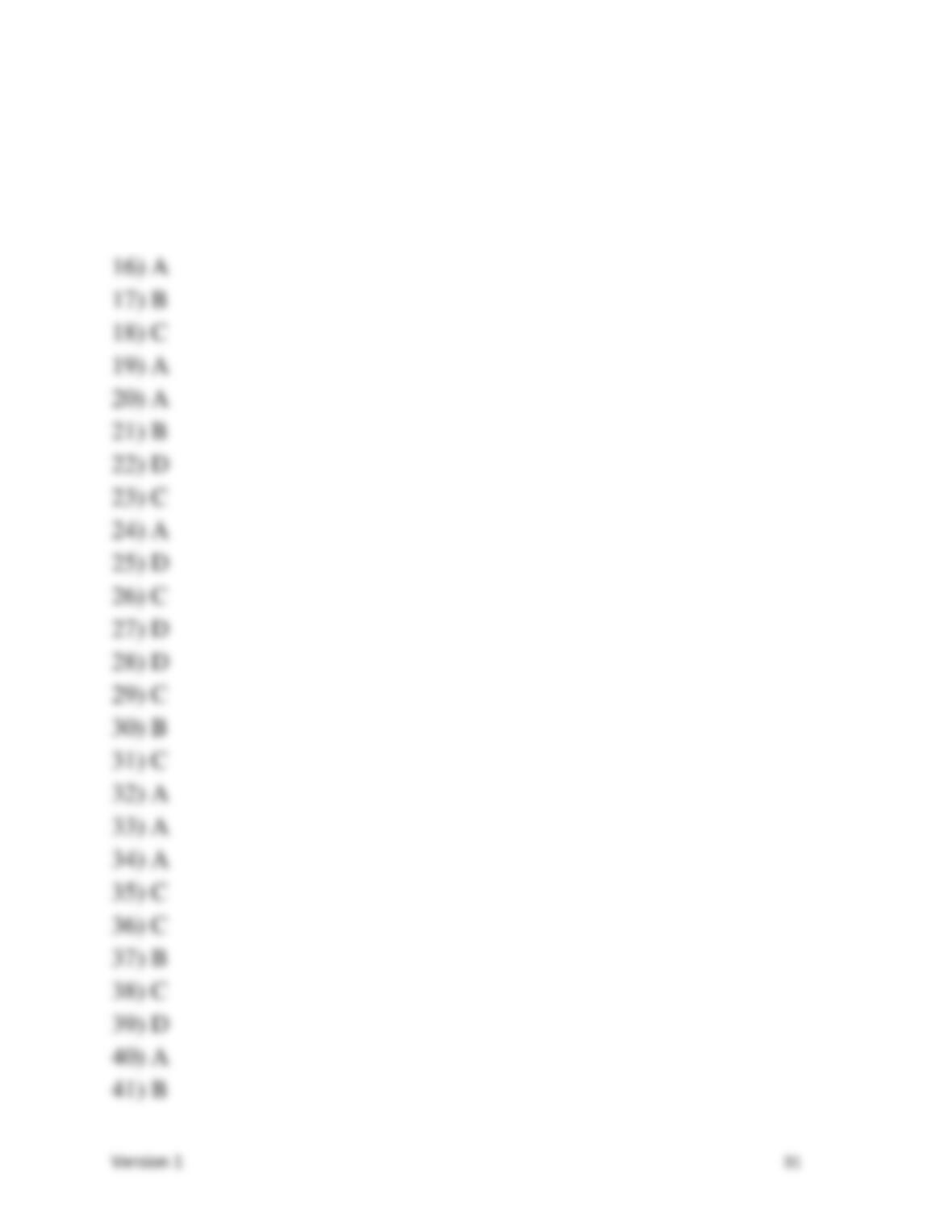
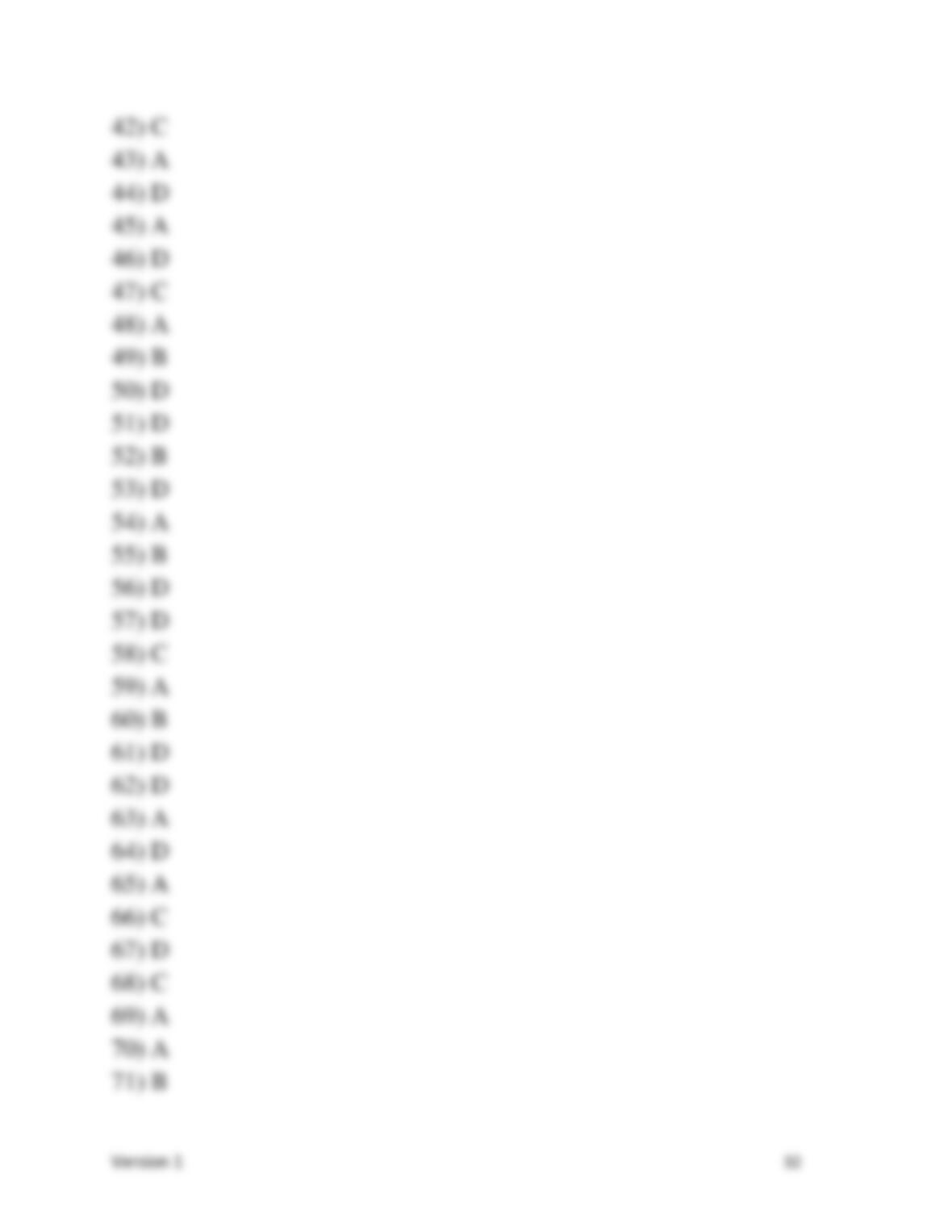
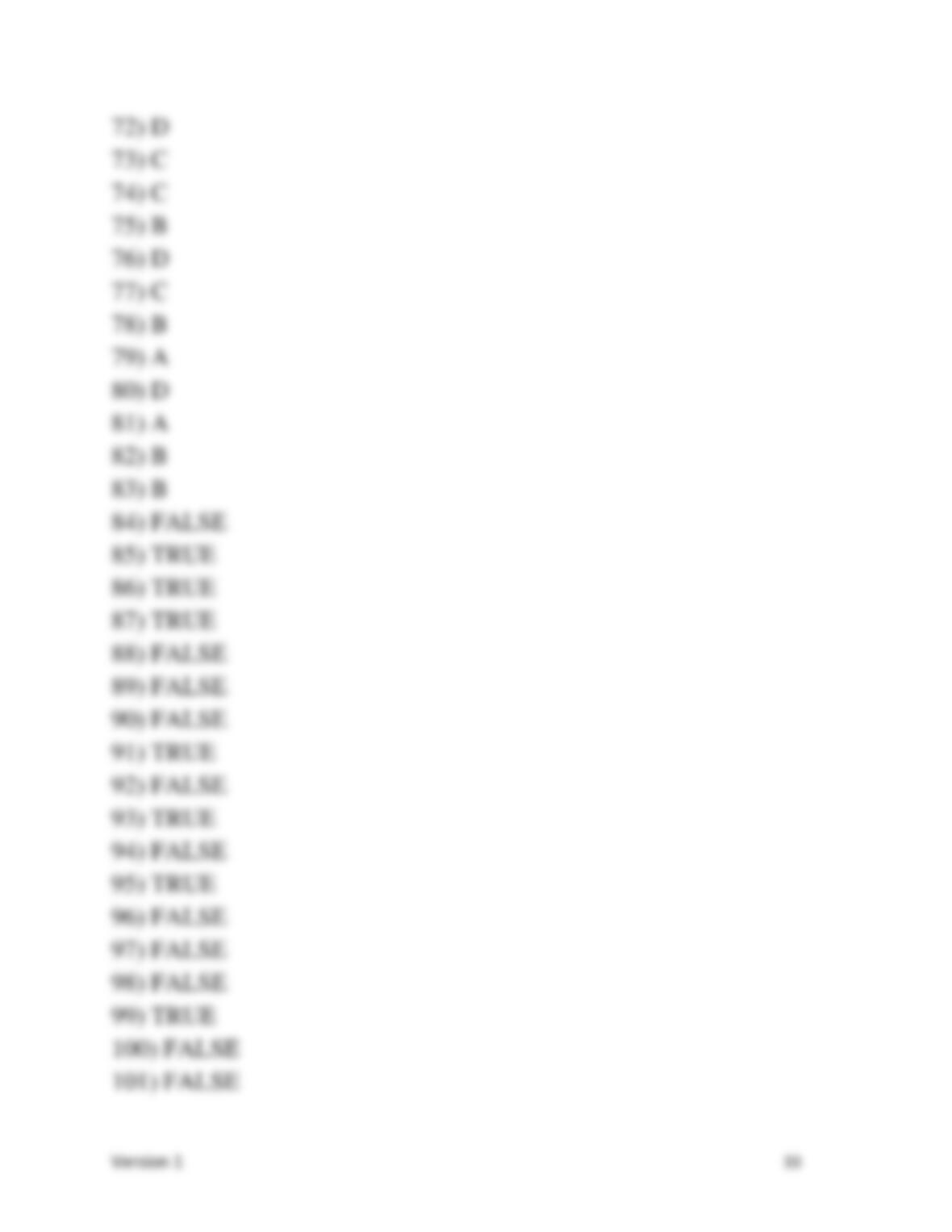
Answer Key
Test name: chapter 5
Version 1 34