
Name:
Class:
Date:
chapter 4
Copyright Cengage Learning. Powered by Cognero.
Page 1
Indicate whether the statement is true or false.
1. If Japan is a large country it cannot influence the terms of trade when it imposes a tariff on imports.
a. True
b. False
2. With a specific tariff, the degree of protection afforded domestic producers varies directly with changes in import
prices.
a. True
b. False
3. Graphically, consumer surplus is the area above the demand curve and below the product’s market price.
a. True
b. False
4. A tariff on imports will necessarily improve the national welfare of a large country but it will worsen the national
welfare of a small country.
a. True
b. False
5. An import tariff reduces the welfare of a “small” country by an amount equal to the redistribution effect plus the
revenue effect.
a. True
b. False
6. A tariff on steel imports tends to improve the competitiveness of domestic automobile companies.
a. True
b. False
7. For a “large” country, a tariff on an imported product may be partially absorbed by the domestic consumer via a higher
purchase price and partially absorbed by the foreign producer via a lower export price.
a. True
b. False
8. An import tariff will worsen the terms of trade for a “small” country but improve the terms of trade for a “large”
country.
a. True
b. False
9. If a tariff reduces the quantity of Japanese autos imported by the United States, over time it reduces the ability of Japan
to import goods from the United States.
a. True
b. False
Exhibit 4.2

Name:
Class:
Date:
chapter 4
Copyright Cengage Learning. Powered by Cognero.
Page 2
In the absence of international trade, assume that the equilibrium price and quantity of motorcycles in Canada is $14,000
and 10 units respectively. Assuming that Canada is a small country that is unable to affect the world price of motorcycles,
suppose its market is opened to international trade. As a result, the price of motorcycles falls to $12,000 and the total
quantity demanded rises to 14 units; out of this total, 6 units are produced in Canada while 8 units are imported. Now
assume that the Canadian government levies an import tariff of $1,000 on motorcycles. With the tariff, 8 units are
produced in Canada and quantity demanded is 12 units.
10. Refer to Exhibit 4.2. As a result of the tariff, the price of imported motorcycles equals $13,000 and imports total 4
cycles.
a. True
b. False
11. Refer to Exhibit 4.2. All of the import tariff is shifted to the Canadian consumer via a higher price of motorcycles.
a. True
b. False
12. When a manufacturing firm uses some imported inputs in the production process, the appropriate measure of
protection is the nominal tariff.
a. True
b. False
13. During the Great Recession of 2007-2009, countries increased import tariffs to protect domestic producers damaged
by foreign competition.
a. True
b. False
14. According to the infant-industry argument, temporary tariff protection granted to an infant industry will help it
become competitive in the world market. When international competitiveness is achieved, the tariff should be removed.
a. True
b. False
15. A worker is likely to benefit from a tariff in the short run if the worker is employed in the industry that is protected by
the tariff.
a. True
b. False
16. For a “small” country, a tariff raises the domestic price of an imported product by the full amount of the tariff.
a. True
b. False
17. Tariff evasion occurs when individuals or firms escape tariffs by illegal means such as smuggling imported goods into
a country.
a. True
b. False

Name:
Class:
Date:
chapter 4
Copyright Cengage Learning. Powered by Cognero.
Page 3
18. A country whose imports of a product constitute a very small portion of the world market supply of that product is a
price taker. Thus, this country faces a constant world price for the imports of this product.
a. True
b. False
19. If the world price of steel is $600 per ton, a specific tariff of $120 per ton is equivalent to an ad valorem tariff of 25
percent.
a. True
b. False
Exhibit 4.2
In the absence of international trade, assume that the equilibrium price and quantity of motorcycles in Canada is $14,000
and 10 units respectively. Assuming that Canada is a small country that is unable to affect the world price of motorcycles,
suppose its market is opened to international trade. As a result, the price of motorcycles falls to $12,000 and the total
quantity demanded rises to 14 units; out of this total, 6 units are produced in Canada while 8 units are imported. Now
assume that the Canadian government levies an import tariff of $1,000 on motorcycles. With the tariff, 8 units are
produced in Canada and quantity demanded is 12 units.
20. Refer to Exhibit 4.2. The tariff leads to an increase in Canadian consumer surplus totaling $11,000.
a. True
b. False
21. Assume that the United States imports laptops from South Korea at a price of $200 per unit and that these laptops are
subject to an import tariff of 20 percent. Also assume that U.S. components are used in the laptops assembled by South
Korea and that these components have a value of $100. Under the Offshore Assembly Provision of U.S. tariff policy, the
price of an imported laptop to the U.S. consumer after the tariff has been levied is $220.
a. True
b. False
22. Most countries in the world have about the same tariff levels.
a. True
b. False
Exhibit 4.2
In the absence of international trade, assume that the equilibrium price and quantity of motorcycles in Canada is $14,000
and 10 units respectively. Assuming that Canada is a small country that is unable to affect the world price of motorcycles,
suppose its market is opened to international trade. As a result, the price of motorcycles falls to $12,000 and the total
quantity demanded rises to 14 units; out of this total, 6 units are produced in Canada while 8 units are imported. Now
assume that the Canadian government levies an import tariff of $1,000 on motorcycles. With the tariff, 8 units are
produced in Canada and quantity demanded is 12 units.
23. Refer to Exhibit 4.2. The tariff’s redistribution effect equals $1,000.
a. True
b. False

Name:
Class:
Date:
chapter 4
Copyright Cengage Learning. Powered by Cognero.
Page 4
24. If a country accounts for a negligible portion of international trade in a particular product, its levying an import tariff
on that product necessarily increases its overall welfare.
a. True
b. False
Exhibit 4.2
In the absence of international trade, assume that the equilibrium price and quantity of motorcycles in Canada is $14,000
and 10 units respectively. Assuming that Canada is a small country that is unable to affect the world price of motorcycles,
suppose its market is opened to international trade. As a result, the price of motorcycles falls to $12,000 and the total
quantity demanded rises to 14 units; out of this total, 6 units are produced in Canada while 8 units are imported. Now
assume that the Canadian government levies an import tariff of $1,000 on motorcycles. With the tariff, 8 units are
produced in Canada and quantity demanded is 12 units.
25. Refer to Exhibit 4.2. The tariff’s revenue effect equals $6,000.
a. True
b. False
26. Producer surplus is the revenue producers receive over and above the minimum necessary for production.
a. True
b. False
27. Although tariffs on imported steel may lead to job gains for domestic steel workers, they can lead to job losses for
domestic auto workers.
a. True
b. False
28. A tariff can increase the welfare of a “large” country if the favorable terms-of-trade effect is greater than the
unfavorable protective effect and consumption effect.
a. True
b. False
29. Assume that the United States imports televisions from Taiwan at a price of $300 per unit and that these televisions
are subject to an import tariff of 25 percent. Also assume that U.S. components are used in the televisions assembled by
Taiwan and that these components have a value of $100. Under the Offshore Assembly Provision of U.S. tariff policy, the
price of an imported television to the U.S. consumer after the tariff has been levied is $375
a. True
b. False
30. Under the Offshore Assembly Provision of U.S. tariff policy, U.S. import duties apply only to the value added in the
foreign assembly process if U.S.-made components are used by overseas companies in their assembly operations.
a. True
b. False
31. Democratic candidates for federal public office in the United States have always advocated for tariffs while
Republican candidates uniformly favor free trade.

Name:
Class:
Date:
chapter 4
Copyright Cengage Learning. Powered by Cognero.
Page 5
a. True
b. False
32. Regressive tariffs benefit the poor because they are levied only on luxury items.
a. True
b. False
33. If Venezuela is a small country its terms of trade will improve when it levies a tariff on imports.
a. True
b. False
34. To protect domestic producers from foreign competition, the U.S. government levies both import tariffs and export
tariffs.
a. True
b. False
35. A tariff quota is a combination of a specific tariff and an ad valorem tariff.
a. True
b. False
36. For many industrial countries, import tariffs tend to increase with stages of processing and manufacturing.
a. True
b. False
37. An ad valorem tariff provides domestic producers less protection against import-competing goods during periods of
changing prices.
a. True
b. False
38. For small countries, free trade results in a higher level of national welfare than tariff protection.
a. True
b. False
Exhibit 4.2
In the absence of international trade, assume that the equilibrium price and quantity of motorcycles in Canada is $14,000
and 10 units respectively. Assuming that Canada is a small country that is unable to affect the world price of motorcycles,
suppose its market is opened to international trade. As a result, the price of motorcycles falls to $12,000 and the total
quantity demanded rises to 14 units; out of this total, 6 units are produced in Canada while 8 units are imported. Now
assume that the Canadian government levies an import tariff of $1,000 on motorcycles. With the tariff, 8 units are
produced in Canada and quantity demanded is 12 units.
39. Refer to Exhibit 4.2. The tariff leads to a deadweight welfare loss for Canada totaling $1,000.
a. True
b. False

Name:
Class:
Date:
chapter 4
Copyright Cengage Learning. Powered by Cognero.
Page 6
40. A limitation of a specific tariff is that it provides a constant level of protection for domestic commodities regardless of
fluctuations in their prices over time.
a. True
b. False
41. If a small country levies a tariff on imports, its overall national welfare necessarily falls.
a. True
b. False
42. Assume that Japan is a large country and levies an “optimal tariff.” In this case, the tariff’s terms of trade effect more
than offsets the consumption and production losses and the tariff results in an overall welfare gain for Japan.
a. True
b. False
43. Concerning U.S. tariff policy, the offshore assembly provision (OAP) provides unfavorable treatment to products
assembled abroad from U.S. made components.
a. True
b. False
44. If a “small” country levies a tariff on an imported good, its overall welfare increases if the monetary value of the
tariff’s consumption effect plus protective effect is less than the monetary value of the terms-of-trade effect.
a. True
b. False
45. If a “large” country levies a tariff on imports it cannot improve the terms at which it trades with other countries.
a. True
b. False
46. The nominal tariff rate signifies the total increase in domestic productive activities compared to what would occur
under free-trade conditions.
a. True
b. False
47. Tariff avoidance is the legal utilization of the tariff system to one’s own advantage in order to reduce the amount of
tariff that is payable by means that are within the law.
a. True
b. False
48. Unlike a specific tariff, an ad valorem tariff offers a constant rate of protection.
a. True
b. False
49. A specific tariff is expressed as a fixed percentage of the total value of an imported product.
a. True

Name:
Class:
Date:
chapter 4
Copyright Cengage Learning. Powered by Cognero.
Page 7
b. False
50. Changes in a “large” country’s economic conditions or trade policies can affect the terms at which it trades with other
countries.
a. True
b. False
51. If a “large” country levies a tariff on an imported good, its overall welfare increases if the monetary value of the tariff’s
consumption effect plus protective effect exceeds the monetary value of the terms-of-trade effect.
a. True
b. False
52. With a compound tariff, a domestic importer of an automobile might be required to pay a duty of $200 plus 4 percent
of the value of the automobile.
a. True
b. False
53. A compound tariff permits a specified amount of goods to be imported at one tariff rate while any imports above this
amount are subjected to a higher tariff rate.
a. True
b. False
54. Frederic Bastiat’s “Petition of the Candle Makers” was a satire that illustrated the disadvantages of free trade as
opposed to protectionism.
a. True
b. False
55. The deadweight losses of an import tariff consist of the protection effect plus the consumption effect.
a. True
b. False
56. Suppose that the tariff on imported steel is 40 percent, the tariff on imported iron ore is 20 percent, and 30 percent of
the cost of producing a ton of steel consists of the iron ore it contains. The effective rate of protection of steel is
approximately 49 percent.
a. True
b. False
57. A foreign-trade zone (FTZ) is an area within the United States where business can operate without the responsibility
of paying customs duties on imported products or materials for as long as they remain within this area and do not enter the
U.S. marketplace.
a. True
b. False
58. Relatively low wages in Mexico make it impossible for U.S. manufacturers of labor-intensive goods to compete
against Mexican manufacturers.

Name:
Class:
Date:
chapter 4
Copyright Cengage Learning. Powered by Cognero.
Page 8
a. True
b. False
59. During a recession, when consumers tend to purchase cheaper products, a specific tariff provides domestic producers a
greater amount of protection against import-competing goods than other types of tariffs.
a. True
b. False
60. There is widespread agreement among economists that import tariffs increase overall employment in the levying
country.
a. True
b. False
61. The protective effect of a tariff occurs to the extent that less efficient domestic production is substituted for more
efficient foreign production.
a. True
b. False
62. A tariff can be thought of as a tax on imported goods.
a. True
b. False
63. The redistribution effect is the transfer of producer surplus to domestic consumers of the import-competing product.
a. True
b. False
64. When material inputs enter a country at a very low tariff while the final imported product is protected by a high tariff,
the result tends to be a high rate of protection for domestic producers of the final product.
a. True
b. False
65. Although an import tariff provides the domestic government additional tax revenue, it benefits domestic consumers at
the expense of domestic producers.
a. True
b. False
66. According to the tariff escalation effect, industrial countries apply low tariffs to imports of finished goods and high
tariffs to imports of raw materials.
a. True
b. False
67. With a compound tariff, the “specific” portion neutralizes the cost disadvantage of domestic manufacturers that results
from tariff protection granted to domestic suppliers of raw materials, and the “ad valorem” portion grants protection to the
finished-goods industry.
a. True

Name:
Class:
Date:
chapter 4
Copyright Cengage Learning. Powered by Cognero.
Page 9
b. False
68. Bonded warehouses and foreign trade zones have the effect of allowing domestic importers to prorate their input
duties over time.
a. True
b. False
69. Empirical studies show that virtually all U.S. import tariffs are “progressive” in that they disproportionately negatively
impact upper income groups rather than lower income groups.
a. True
b. False
70. Most American importers support tariffs because, in the United States, tariffs are levied directly on exporters.
a. True
b. False
71. The deadweight losses of a tariff consist of the sum of the protective effect plus the consumption effect.
a. True
b. False
Indicate the answer choice that best completes the statement or answers the question.
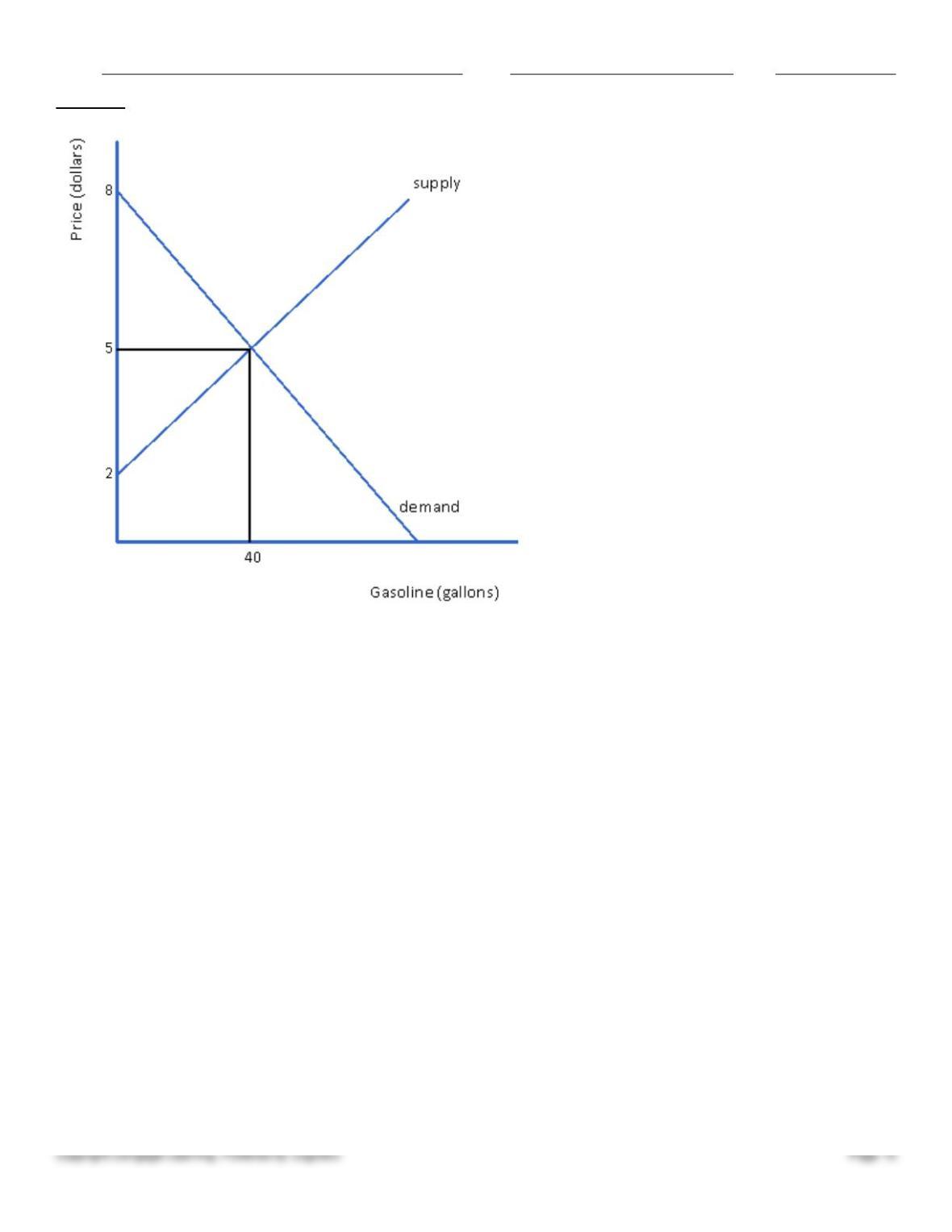
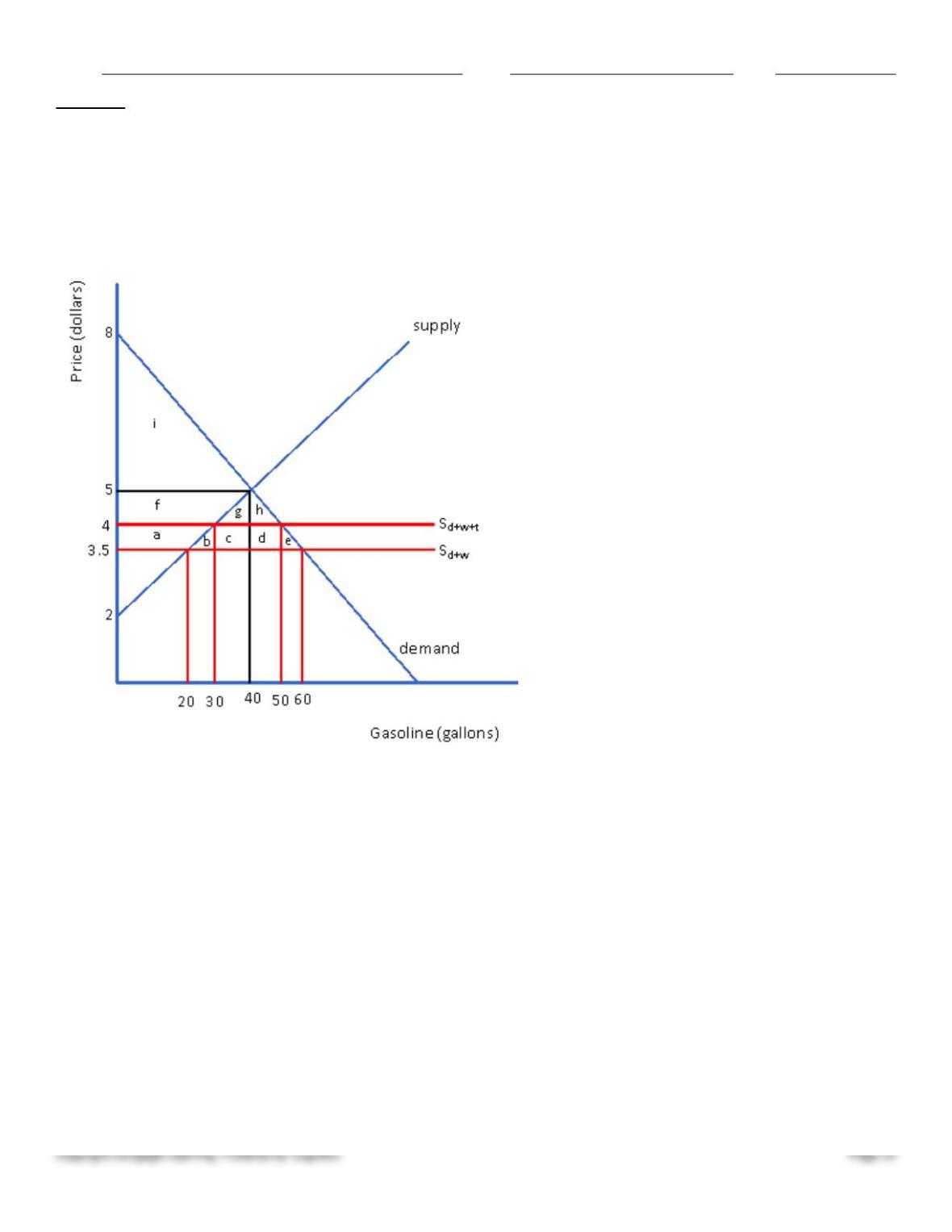
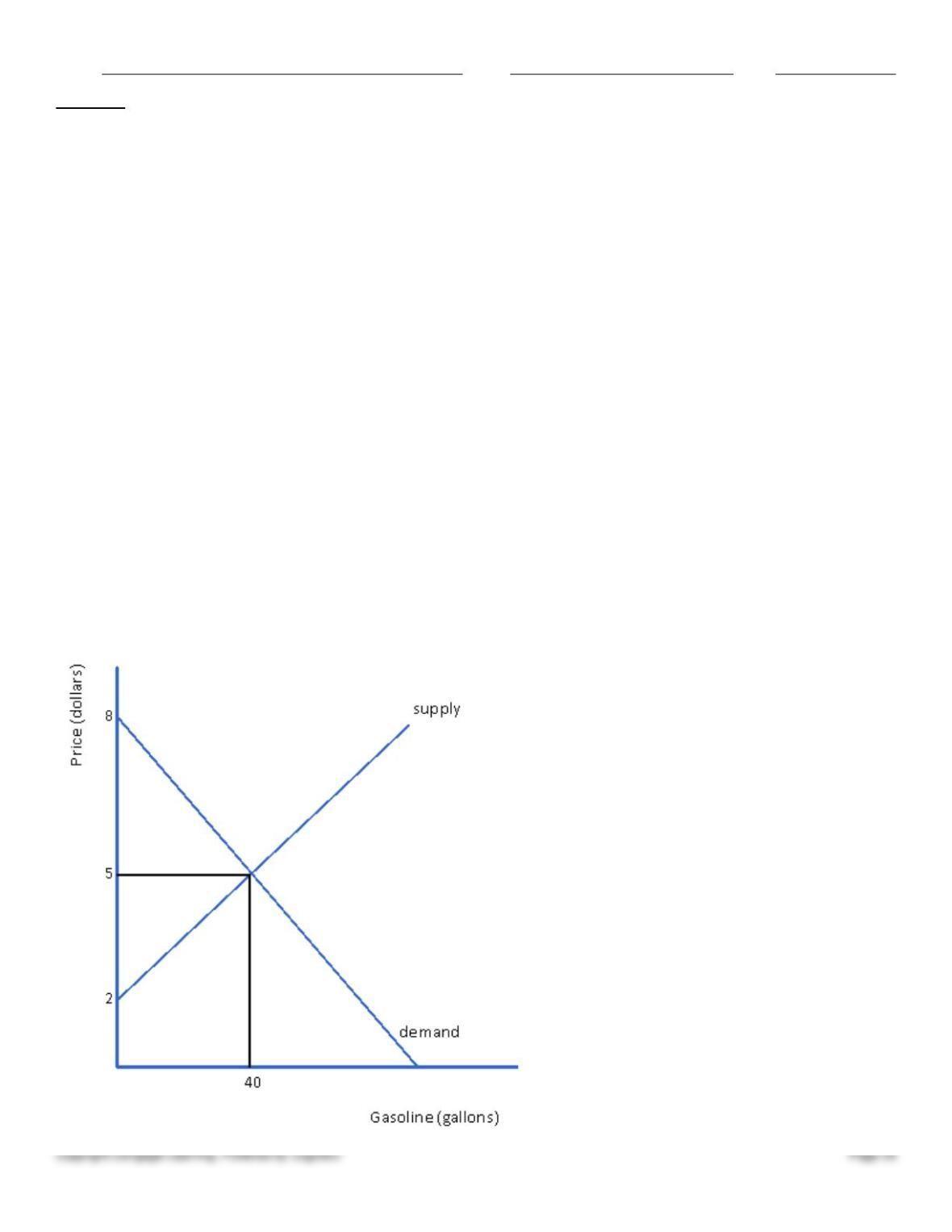
Figure 4.3 Domestic Market for Gasoline in the United States
Name:
Class:
Date:
chapter 4
Copyright Cengage Learning. Powered by Cognero.
Page 10
72. Figure 4.3 represents the domestic market for gasoline in the United States. What is the consumer surplus in this
market?
a. 60 gallons of gasoline
b. $120
c. $60
d. $3
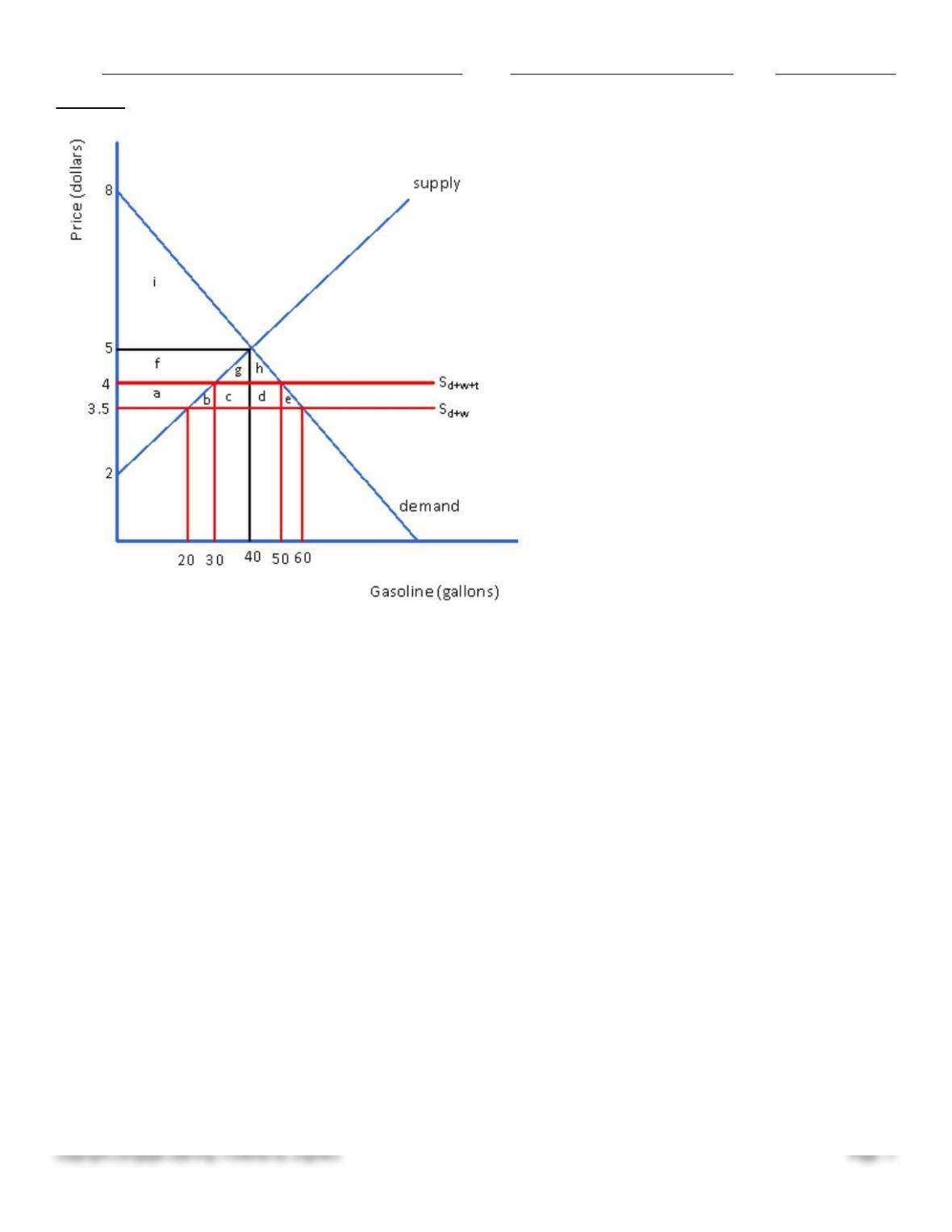
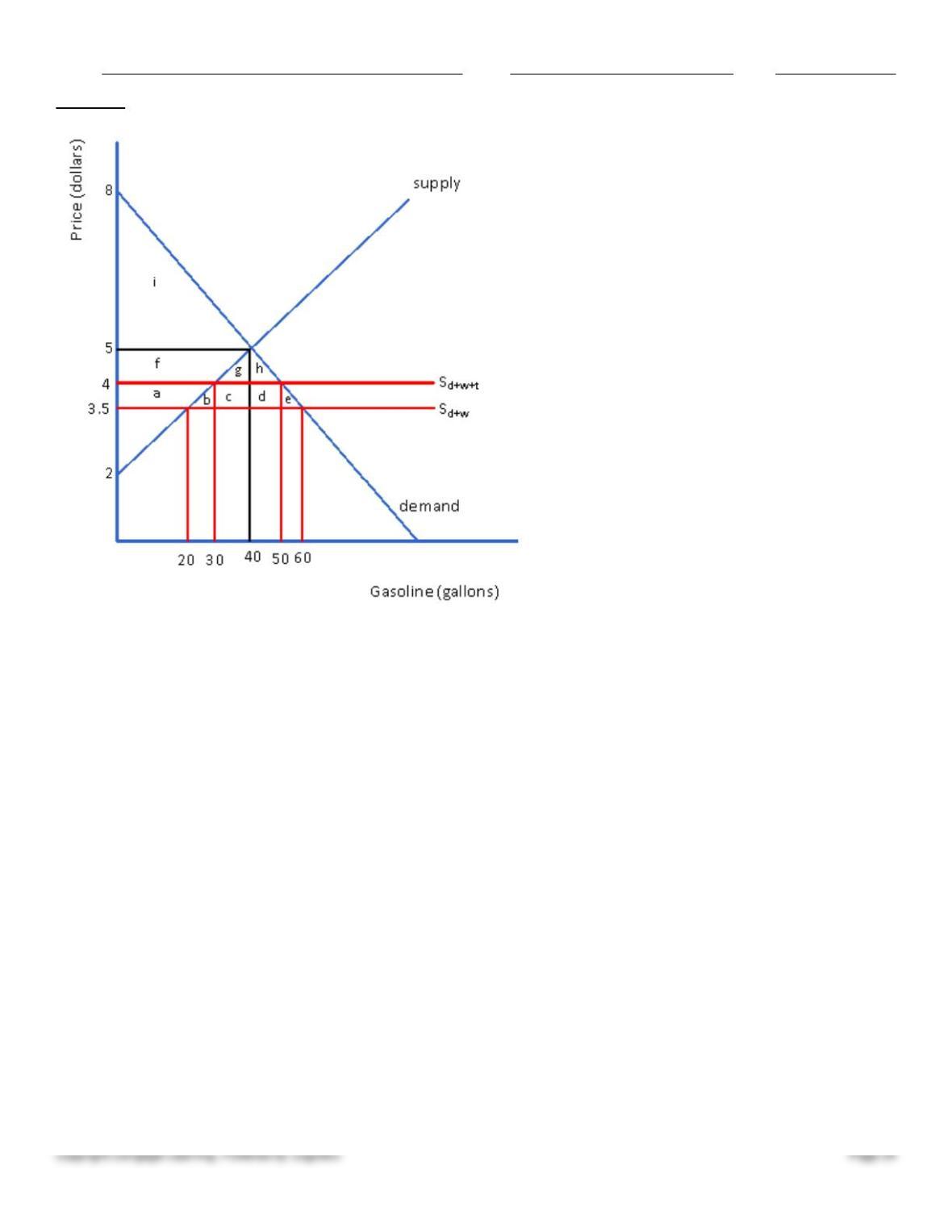
Figure 4.4 Market for Gasoline in a Small Nation
Name:
Class:
Date:
chapter 4
Copyright Cengage Learning. Powered by Cognero.
Page 11
73. Figure 4.4 represents the market for gasoline in a small nation. The free trade world price of gasoline is
$3.50. Suppose this small nation imposes a tariff on gasoline of $.50 per gallon. The change in producer surplus would be
a. area a + b.
b. area a.
c. area a + b + f.
d. area a + b + f + g + h.
74. A tax of 15 percent per imported item is an example of a(an)
a. ad valorem tariff.
b. specific tariff.
c. compound tariff.
d. optimum tariff.
75. The redistributive effect of an import tariff is the transfer of income from the domestic
a. producers to domestic buyers of the good.
b. buyers to domestic producers of the good.
c. buyers to the domestic government.
d. government to the domestic buyers.
76. Developing nations often maintain that industrial countries permit raw materials to be imported at very low tariff rates
while maintaining high tariff rates on manufactured imports. Which of the following refers to the above statement?
a. tariff-quota effect
b. nominal tariff effect
Name:
Class:
Date:
chapter 4
Copyright Cengage Learning. Powered by Cognero.
Page 12
c. tariff escalation effect
d. protective tariff effect
77. The United States imposes a tariff on imported stereos. This tariff would benefit
a. American consumers looking to purchase a stereo.
b. retail and shipping companies that import foreign-made stereos.
c. stereo producers in the United States.
d. the U.S. economy as a whole.
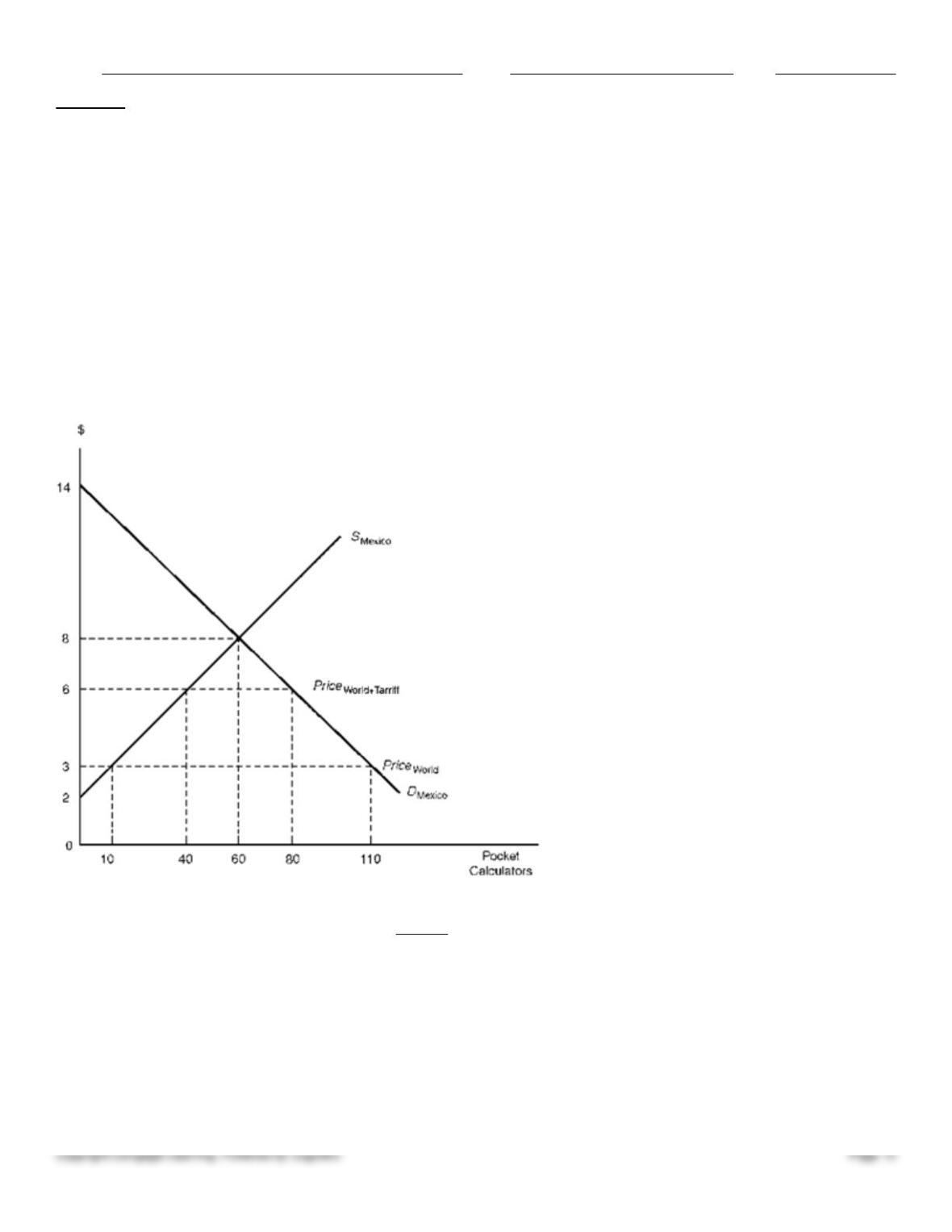
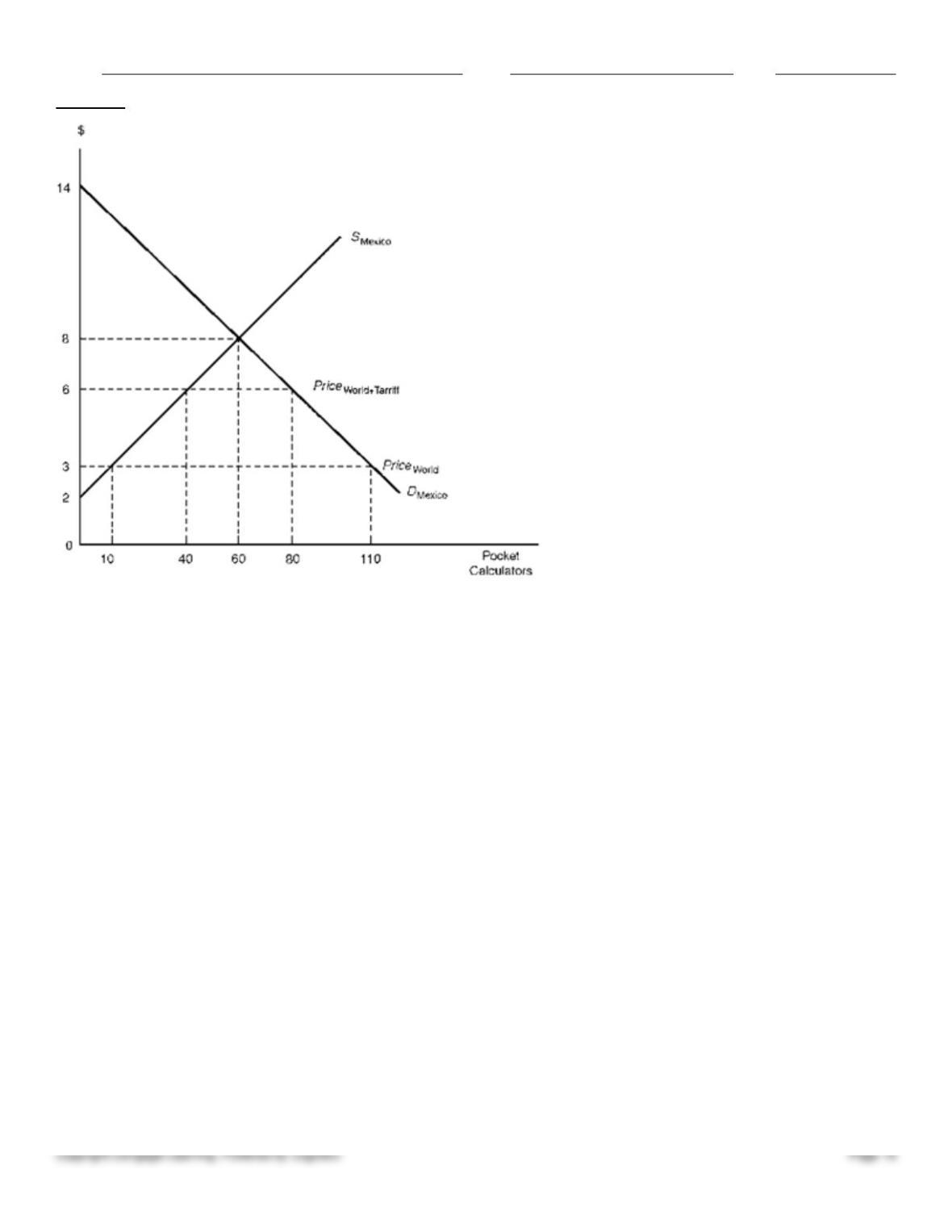
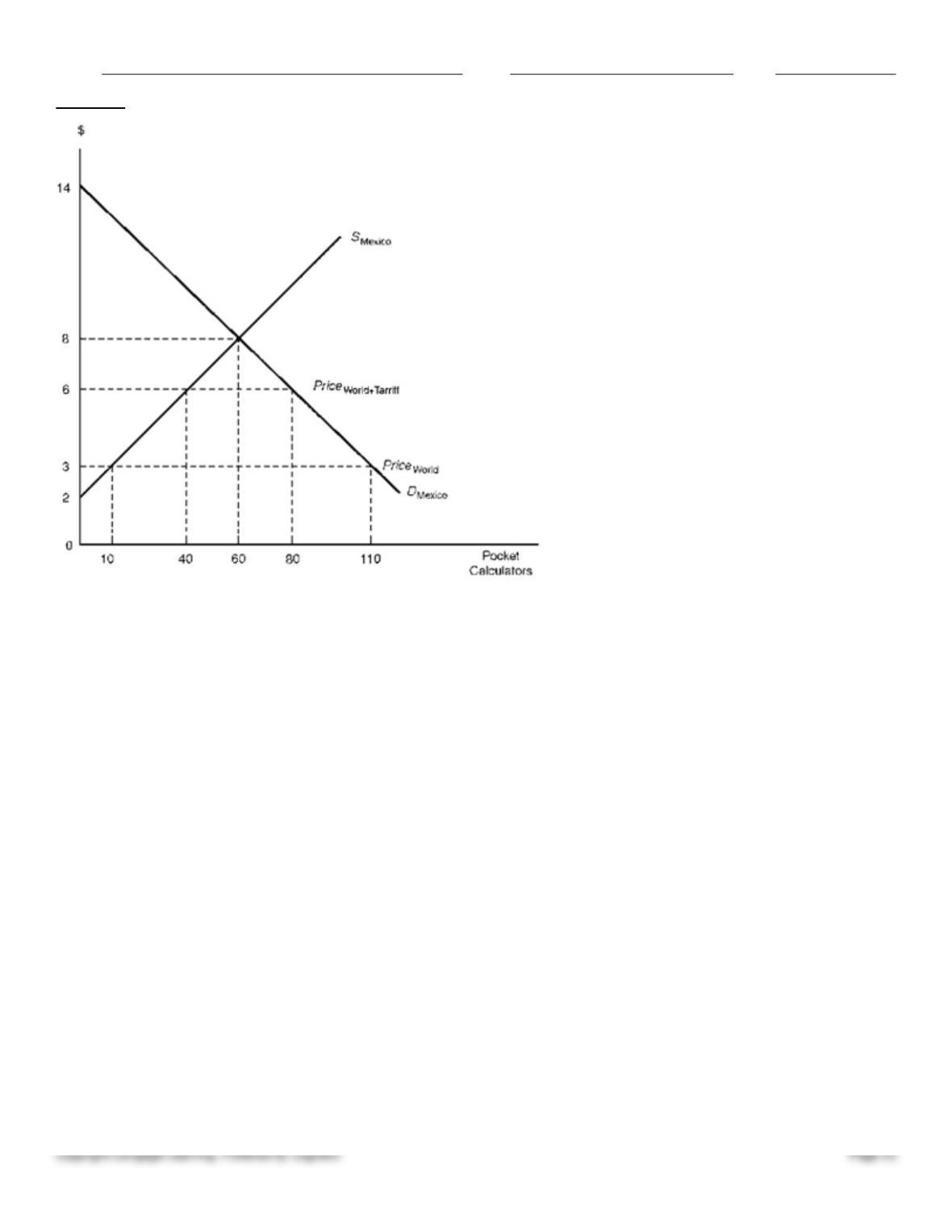
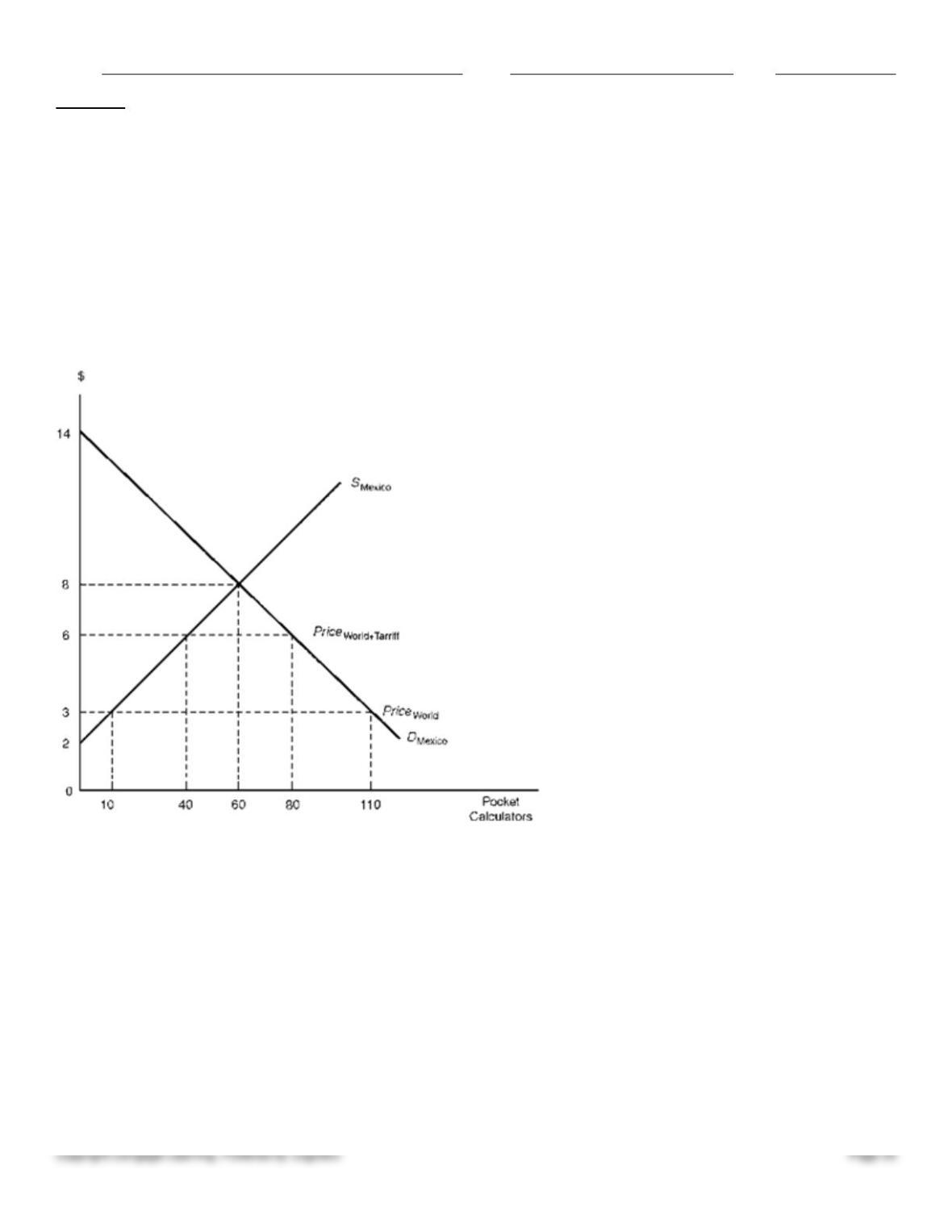
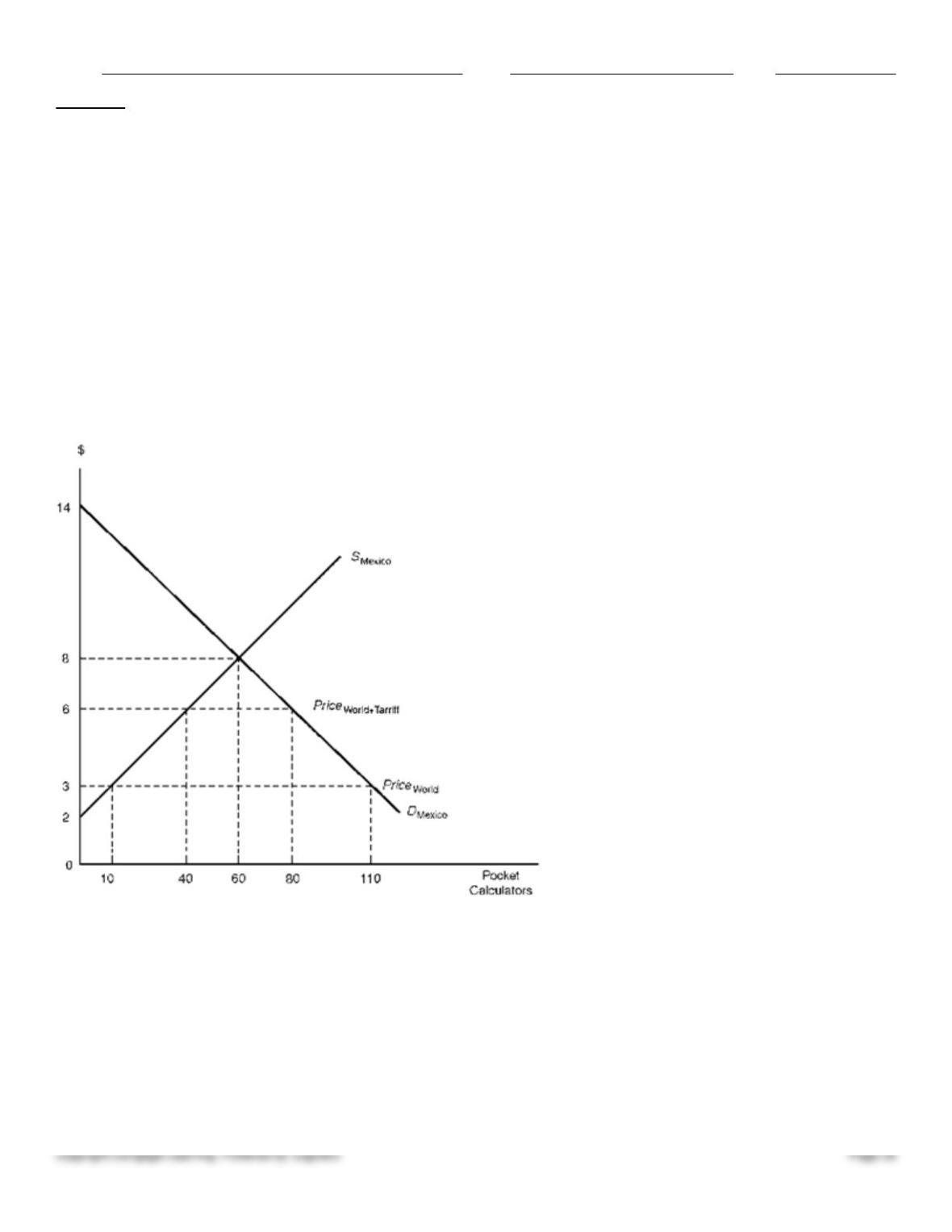
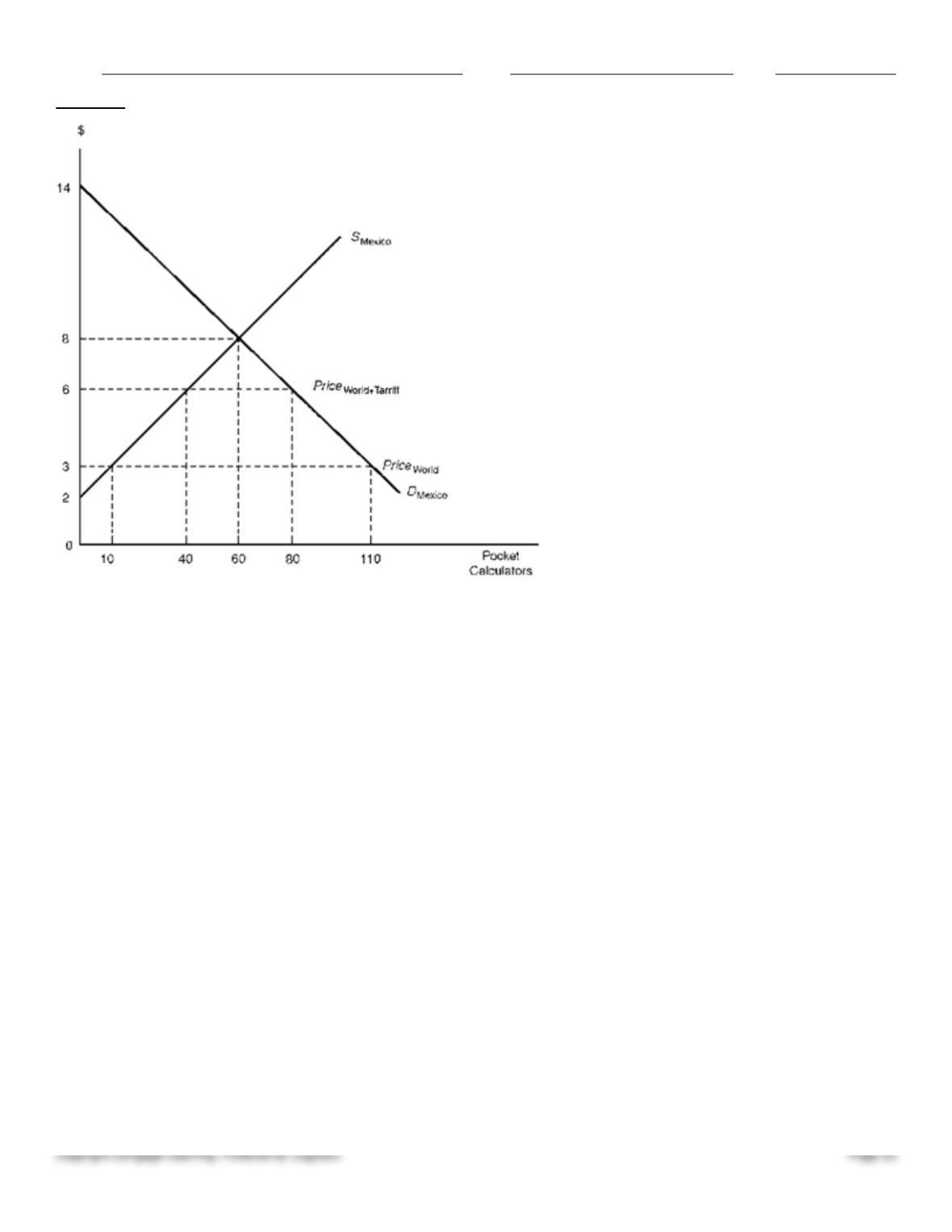
Figure 4.1 illustrates the demand and supply schedules for pocket calculators in Mexico, a “small” nation that is unable
to affect the world price.
Figure 4.1. Import Tariff Levied by a “Small” Country
78. Consider Figure 4.1. With free trade, Mexico imports
a. 40 calculators.
b. 60 calculators.
c. 80 calculators.
d. 100 calculators.
79. The primary benefit of tariff protection goes to
a. domestic consumers of the good produced.
b. domestic producers of the good produced.
c. foreign producers of the good produced.
d. foreign consumers of the good produced.

Name:
Class:
Date:
chapter 4
Copyright Cengage Learning. Powered by Cognero.
Page 13
80. Suppose that Mexico levies a tariff on steel that is collected as a fixed amount of money per ton imported. This refers
to
a. a compound tariff.
b. an ad valorem tariff.
c. a specific tariff.
d. an effective tariff.
81. For developing countries, import tariffs generally are ______ than tariff levels in advanced countries
a. higher
b. lower
c. the same as
d. less protective
82. Suppose that Mexico is a small country and it imposes a tariff on imports. This results in
a. an improving terms of trade for Mexico.
b. a worsening terms of trade for Mexico.
c. no change in the terms of trade for Mexico.
d. better protection from competition for Mexico.
83. If the domestic value added before an import tariff for a product is $500 and the domestic value added after the tariff
is $550, the effective rate of protection is
a. 5 percent.
b. 8 percent.
c. 10 percent.
d. 15 percent.
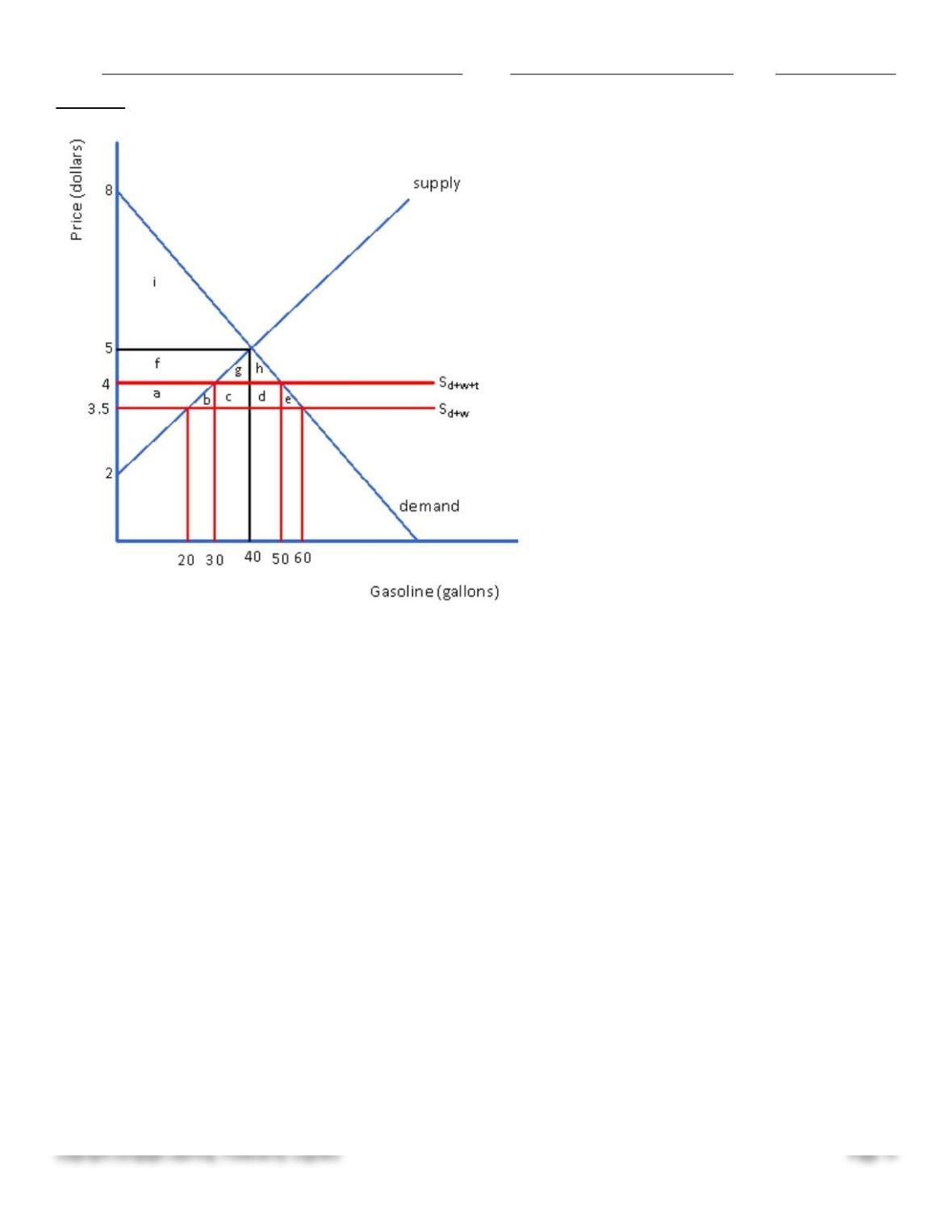
Figure 4.4 Market for Gasoline in a Small Nation
Name:
Class:
Date:
chapter 4
Copyright Cengage Learning. Powered by Cognero.
Page 14
84. Figure 4.4 represents the market for gasoline in a small nation. The free trade world price of gasoline is
$3.50. Suppose this small nation imposes a tariff on gasoline of $.50 per gallon. The change in consumer surplus would be
a. $15.
b. $12.50.
c. $27.50.
d. $57.50.
85. Suppose that the United States eliminates its tariff on steel imports, permitting foreign-produced steel to enter the U.S.
market. Steel prices to U.S. consumers would be expected to
a. increase, and the foreign demand for U.S. exports would increase.
b. decrease, and the foreign demand for U.S. exports would increase.
c. increase, and the foreign demand for U.S. exports would decrease.
d. decrease, and the foreign demand for U.S. exports would decrease.
86. A small nation places a tariff of $1000.00 on automobiles. If 40 autos are imported, the government collects $40,000
in duties. This is a calculation of the
a. redistributive effect.
b. protective effect.
c. revenue effect.
d. consumption effect.
Name:
Class:
Date:
chapter 4
Copyright Cengage Learning. Powered by Cognero.
Page 15
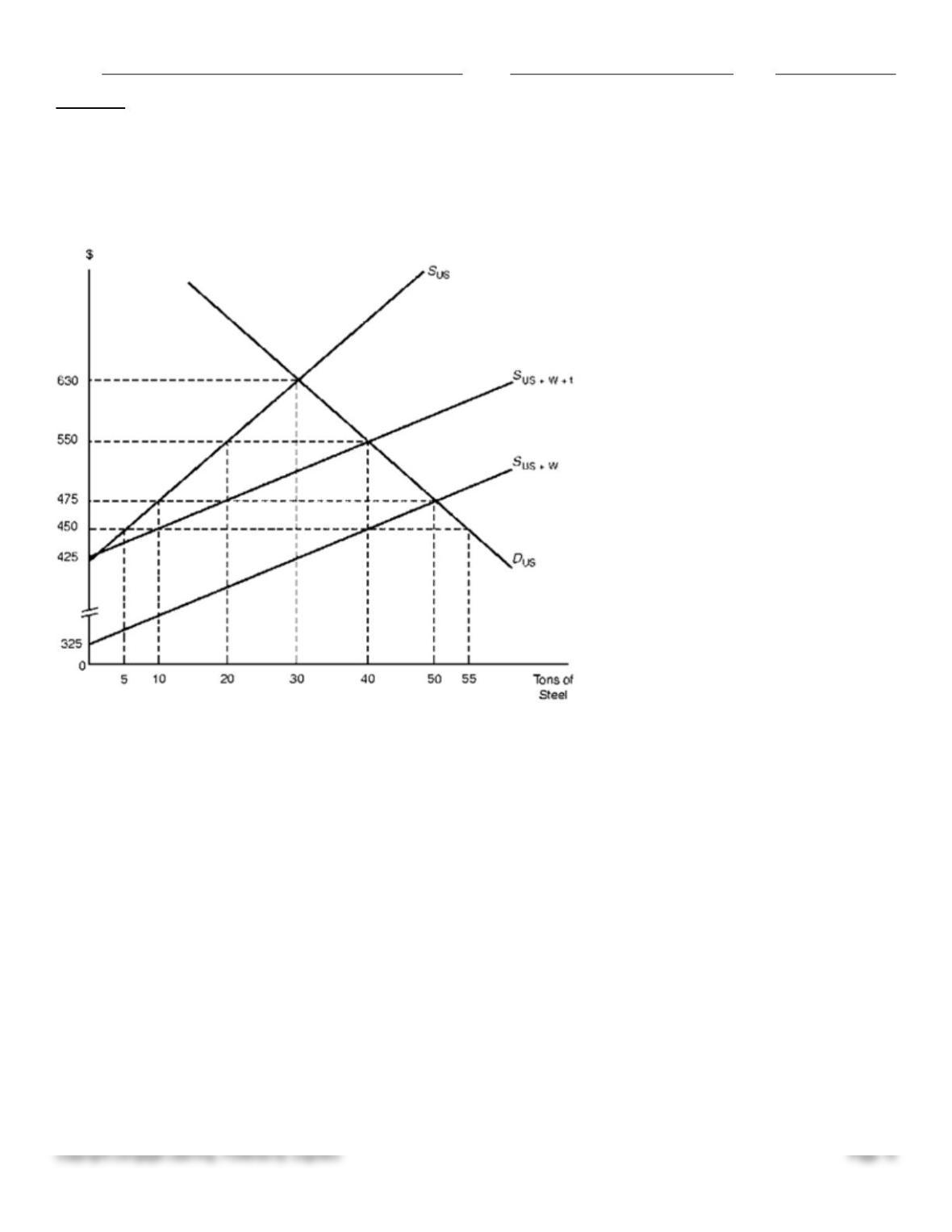
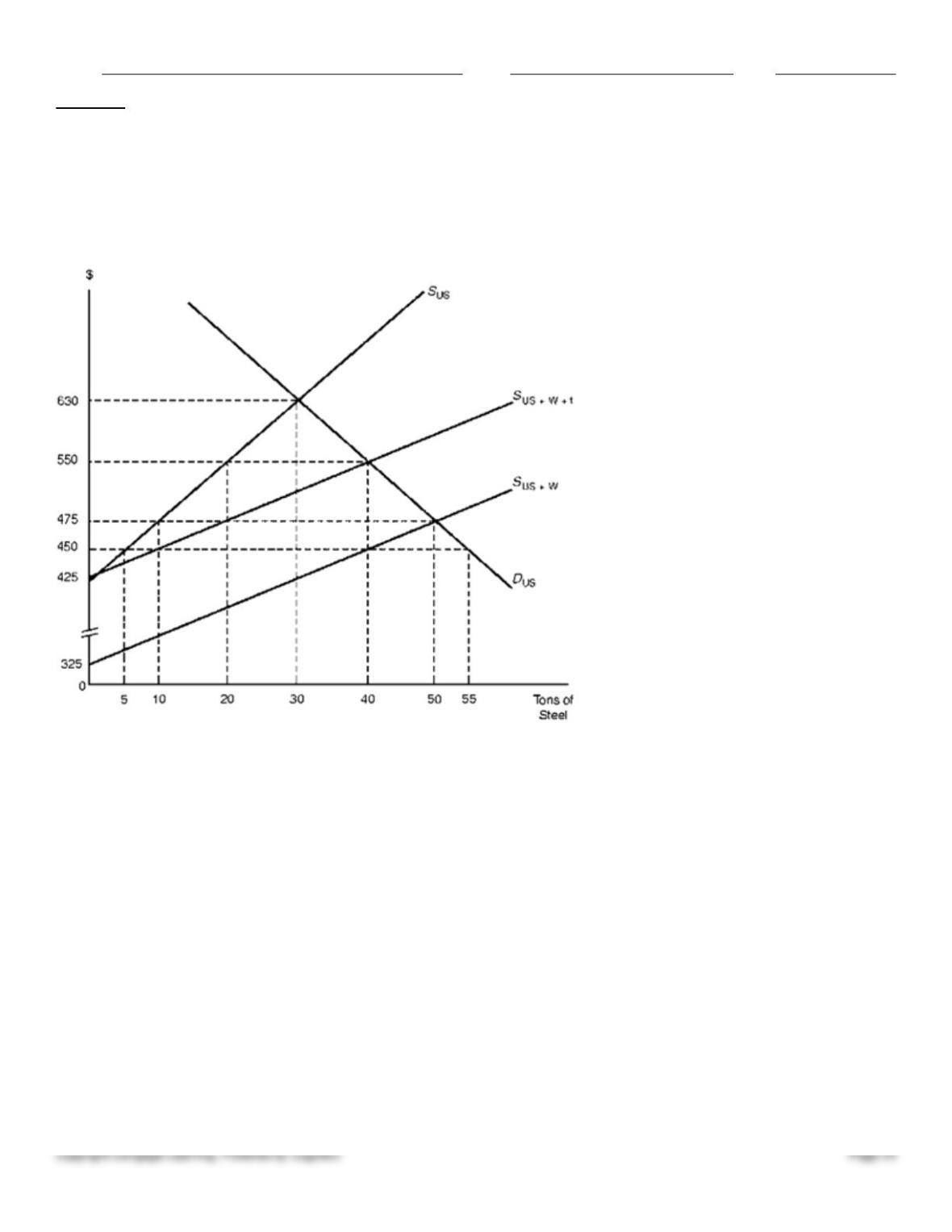
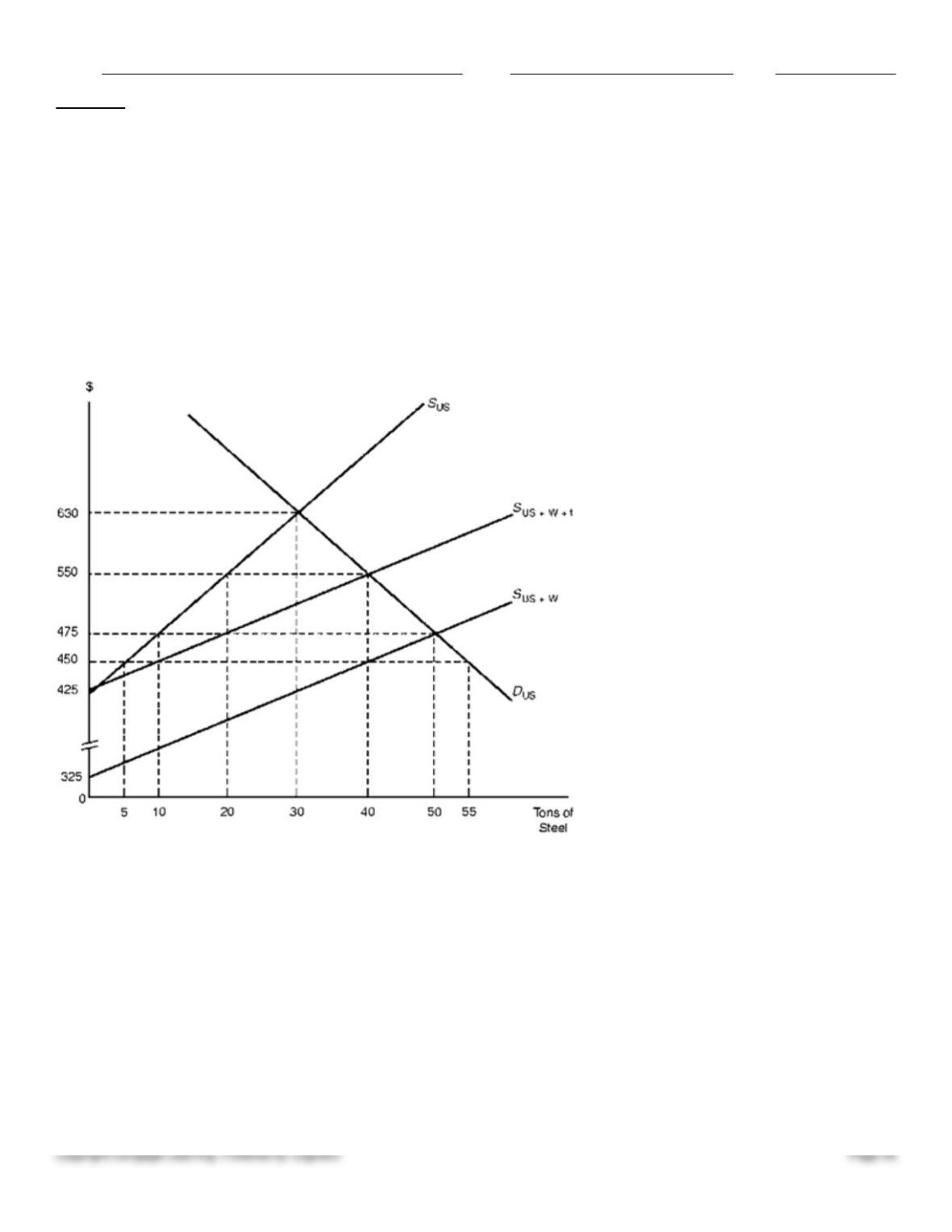
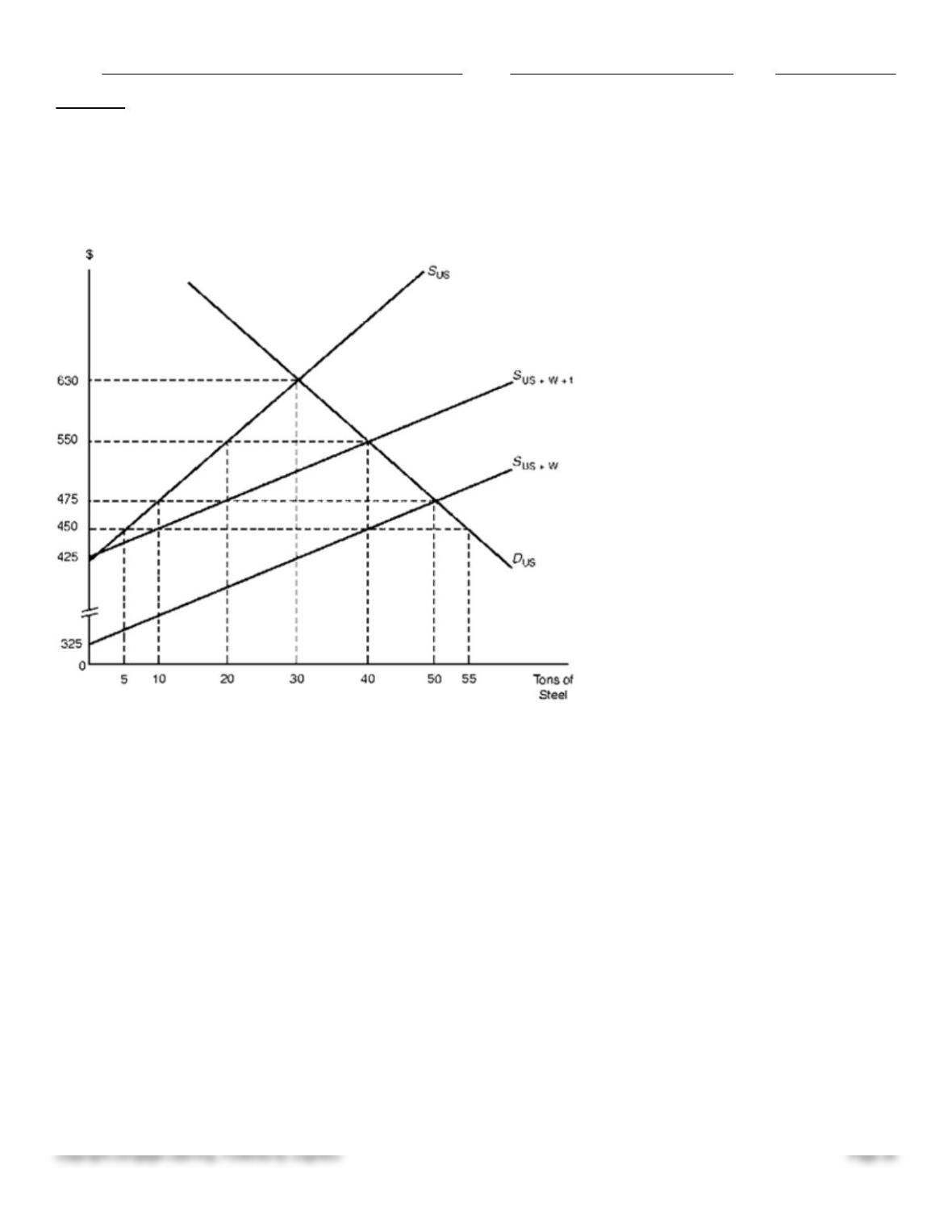
Assume the United States is a large consumer of steel that is able to influence the world price. Its demand and supply
schedules are respectively denoted by DU.S. and SU.S. in Figure 4.2. The overall (United States plus world) supply
schedule of steel is denoted by SU.S.+W.
Figure 4.2. Import Tariff Levied by a “Large” Country
87. Consider Figure 4.2. Of the $100 tariff, ____ is passed on to the U.S. consumer via a higher price, while ____ is borne
by the foreign exporter.
a. $25, $75
b. $25, $75
c. $75, $25
d. $75, $25
88. According to Figure 4.2, the tariff changes the overall welfare of the United States by
a. rising by $250.
b. rising by $500.
c. falling by $250.
d. falling by $500.
89. An optimum tariff benefits
a. the importing nation.
b. exporting nations.
c. the world economy.
d. smaller nations.

Name:
Class:
Date:
chapter 4
Copyright Cengage Learning. Powered by Cognero.
Page 16
90. If Germany is considered a “large” country, a tariff will ______ increase its national welfare.
a. never
b. always
c. sometimes
d. have limited ability to
91. Which of the following is a fixed percentage of the value of an imported product as it enters the country?
a. specific tariff
b. ad valorem tariff
c. nominal tariff
d. effective tariff
92. A decrease in the import tariff will result in
a. an increase in imports but a decrease in domestic production.
b. a decrease in imports but an increase in domestic production.
c. an increase in price but a decrease in quantity purchased.
d. a decrease in price and a decrease in quantity purchased.
93. Suppose that Germany levies a tariff on oranges, but none are grown in Germany. This tariff has
a. only a protective effect.
b. only a revenue effect.
c. both a protective effect and revenue effect.
d. no effects on trade.
94. Suppose an importer of steel is required to pay a tariff of $20 per ton plus 5 percent of the value of steel. This is an
example of
a. a specific tariff.
b. an ad valorem tariff.
c. a compound tariff.
d. a tariff quota.
95. The most vocal political pressure for tariffs is generally made by
a. consumers lobbying for export tariffs.
b. consumers lobbying for import tariffs.
c. producers lobbying for export tariffs.
d. producers lobbying for import tariffs.
Table 4.1. Production Costs and Prices of Imported and Domestic Smartphones
Imported Smartphones Domestic Smartphones
Component parts $150 Imported component parts $150
Assembly cost/profit 50 Assembly cost 50
Nominal tariff 25 Profit 25
____ ____
Import price Domestic price
after tariff 225 after tariff 225

Name:
Class:
Date:
chapter 4
Copyright Cengage Learning. Powered by Cognero.
Page 17
96. Consider Table 4.1. Prior to the tariff, the total price of imported smartphones is
a. $150.
b. $200.
c. $225.
d. $235.
97. When no imported inputs are used in the production of computers, the effective tariff rate on computers
a. exceeds the nominal tariff rate on computers.
b. is less than the nominal tariff rate on computers.
c. equals the nominal tariff rate on computers.
d. equals zero.
98. An importer of computers is required to pay a duty to the government of $100 per computer regardless of the price of
the computer. Which type of tariff is described in this example?
a. tariff quota
b. compound tariff
c. specific tariff
d. ad valorem tariff
99. President Donald Trump declared a 20 percent border tax on imports from Mexico to pay for the border wall. Which is
the MOST likely effect of the border tax?
a. It will result in Mexico paying for the wall.
b. It will result in American consumers paying for the wall.
c. Both Mexico and America will pay for the wall.
d. Mexico will avoid paying for the wall by raising their prices.
100. The imposition of tariffs on imports results in deadweight welfare losses for the home economy. These losses consist
of the
a. protective effect and the consumption effect.
b. redistribution effect and the revenue effect.
c. revenue effect and the protective effect.
d. consumption effect and the redistribution effect.
101. The price of a bag of chips is $1, but a customer is willing to pay up to $3. What would be the consumer surplus on
this purchase?
a. $3
b. $1
c. $2
d. $4
102. A tax of 20 cents per unit of imported cheese would be an example of a(n)
a. compound tariff.
b. effective tariff.
c. ad valorem tariff.
d. specific tariff.

Name:
Class:
Date:
chapter 4
Copyright Cengage Learning. Powered by Cognero.
Page 18
Table 4.1. Production Costs and Prices of Imported and Domestic Smartphones
Imported Smartphones Domestic Smartphones
Component parts $150 Imported component parts $150
Assembly cost/profit 50 Assembly cost 50
Nominal tariff 25 Profit 25
____ ____
Import price Domestic price
after tariff 225 after tariff 225
103. Consider Table 4.1. Prior to the tariff, domestic value added equals
a. $25.
b. $50.
c. $75.
d. $100.
104. A beggar-thy-neighbor policy is the imposition of
a. free trade to increase domestic productivity.
b. trade barriers to increase domestic demand and employment.
c. import tariffs to curb domestic inflation.
d. revenue tariffs to make products cheaper for domestic consumers.
Figure 4.1 illustrates the demand and supply schedules for pocket calculators in Mexico, a “small” nation that is unable
to affect the world price.
Figure 4.1. Import Tariff Levied by a “Small” Country
Name:
Class:
Date:
chapter 4
Copyright Cengage Learning. Powered by Cognero.
Page 19
105. Consider Figure 4.1. The tariff would be prohibitive (i.e., eliminate imports) if it equaled
a. $2.
b. $3.
c. $4.
d. $5.
106. When a tariff on imported inputs exceeds the tariff on the finished good,
a. the nominal tariff rate on the finished product would tend to overstate its protective effect.
b. the nominal tariff rate on the finished product would tend to understate it’s protective effect.
c. it is impossible to determine the protective effect of a tariff on the finished product.
d. the tariff on the finished good would have significant protective effects.
Table 4.1. Production Costs and Prices of Imported and Domestic Smartphones
Imported Smartphones Domestic Smartphones
Component parts $150 Imported component parts $150
Assembly cost/profit 50 Assembly cost 50
Nominal tariff 25 Profit 25
____ ____
Import price Domestic price
after tariff 225 after tariff 225
107. Consider Table 4.1. The nominal tariff rate on imported smartphones equals
a. 11.1 percent.

Name:
Class:
Date:
chapter 4
Copyright Cengage Learning. Powered by Cognero.
Page 20
b. 12.5 percent.
c. 16.7 percent.
d. 50.0 percent.
108. A country gains from international trade when its post-trade consumption point
a. lies outside its production possibilities frontier.
b. lies along its production possibilities frontier.
c. lies inside its production possibilities frontier.
d. is the same as the pre-trade consumption point.
109. Arguments for U.S. trade restrictions include all of the following except
a. job protection.
b. infant industry support.
c. maintenance of domestic living standard.
d. improving incomes for developing countries.
110. If Canada imposes a tariff on imports, Canada’s
a. terms of trade will improve and volume of imports will decrease.
b. terms of trade will worsen and volume of imports will decrease.
c. terms of trade will improve and volume of imports will increase.
d. terms of trade will worsen and volume of imports will increase.
111. Suppose that the production of $500,000 worth of steel in the United States requires $100,000 worth of iron ore. The
U.S. nominal tariff rates are 15 percent for steel and 5 percent for iron ore. Given this information, the effective rate of
protection for the U.S. steel industry is approximately
a. 6 percent.
b. 12.5 percent.
c. 18 percent.
d. 17.5 percent.
112. A problem encountered when implementing an “infant industry” tariff is that
a. domestic consumers will purchase the foreign good regardless of the tariff.
b. special interest groups may prevent the tariff’s removal when the industry matures.
c. most industries require tariff protection when they are mature.
d. labor unions will capture the protective effect in higher wages.
113. The revenue that producers receive over and above the minimum necessary for production is called
a. deadweight loss.
b. deadweight gain.
c. producer surplus.
d. consumer surplus.
Table 4.1. Production Costs and Prices of Imported and Domestic Smartphones
Imported Smartphones Domestic Smartphones
Component parts $150 Imported component parts $150
Assembly cost/profit 50 Assembly cost 50
Name:
Class:
Date:
chapter 4
Copyright Cengage Learning. Powered by Cognero.
Page 21
Nominal tariff 25 Profit 25
____ ____
Import price Domestic price
after tariff 225 after tariff 225
114. Consider Table 4.1. Prior to the tariff, the total price of domestically produced smartphones is
a. $150.
b. $200.
c. $225.
d. $250.
115. For industrial nations, tariffs on raw materials are generally
a. higher than on agricultural products.
b. lower than on manufactured products.
c. equal to tariffs on manufactured products.
d. lower than on agricultural products.
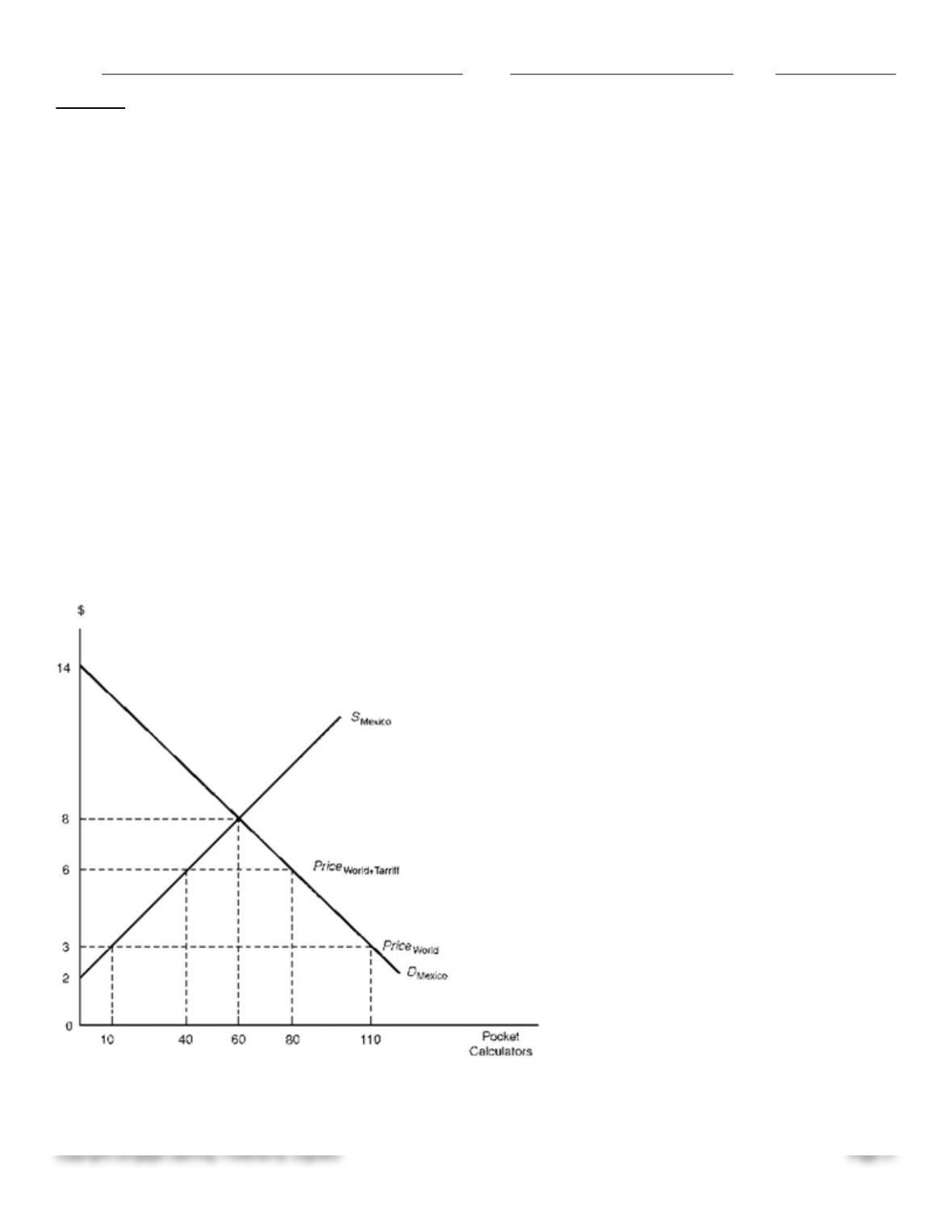
Figure 4.1 illustrates the demand and supply schedules for pocket calculators in Mexico, a “small” nation that is unable
to affect the world price.
Figure 4.1. Import Tariff Levied by a “Small” Country
116. According to Figure 4.1, the loss in Mexican consumer surplus due to the tariff equals
a. $225.
Name:
Class:
Date:
chapter 4
Copyright Cengage Learning. Powered by Cognero.
Page 22
b. $265.
c. $285.
d. $325.
Figure 4.4 Market for Gasoline in a Small Nation
117. Figure 4.4 represents the market for gasoline in a small nation. The free trade world price of gasoline is
$3.50. Suppose this small nation imposes a tariff on gasoline of $.50 per gallon. The change in producer surplus would be
a. $15.
b. $12.50.
c. $47.50.
d. $57.50.
Figure 4.1 illustrates the demand and supply schedules for pocket calculators in Mexico, a “small” nation that is unable
to affect the world price.
Figure 4.1. Import Tariff Levied by a “Small” Country
Name:
Class:
Date:
chapter 4
Copyright Cengage Learning. Powered by Cognero.
Page 23
118. Consider Figure 4.1. With free trade, Mexico’s producer surplus and consumer surplus respectively equal
a. $5 and $605.
b. $25 and $380.
c. $45 and $250.
d. $85 and $195.
119. When a nation imports materials and other inputs for production duty free, its tariff policy generally results in
a. an effective tariff rate less than the nominal tariff rate.
b. a nominal tariff rate less than the effective tariff rate.
c. a rise in both nominal and effective tariff rates.
d. a fall in both nominal and effective tariff rates.
120. A compound tariff is a combination of a(n)
a. tariff quota and a two-tier tariff.
b. revenue tariff and a protective tariff.
c. import tariff and an export tariff.
d. specific tariff and an ad valorem tariff.
121. Which statement is true of tariff reductions?
a. Reciprocal tariff liberalization has quickly become widespread to support free trade.
b. Tariff reductions primarily benefit import-competing industries within a nation.
c. Tariff reductions lead to increased foreign competition that undermines the welfare of a nation.
d. Tariff reductions can increase the overall welfare of a nation when affected industries are compensated for their
losses.
Name:
Class:
Date:
chapter 4
Copyright Cengage Learning. Powered by Cognero.
Page 24
Assume the United States is a large consumer of steel that is able to influence the world price. Its demand and supply
schedules are respectively denoted by DU.S. and SU.S. in Figure 4.2. The overall (United States plus world) supply
schedule of steel is denoted by SU.S.+W.
Figure 4.2. Import Tariff Levied by a “Large” Country
122. According to Figure 4.2, the tariff’s terms-of-trade effect equals
a. $300.
b. $400.
c. $500.
d. $600.
123. If Ecuador is considered a “small” country, a tariff will ______ increase its national welfare.
a. never
b. always
c. sometimes
d. only slightly
124. The U.S. constitution allows the country to levy tariffs
a. only on exports.
b. only on imports.
c. on both exports and imports.
d. on neither exports nor imports.
Name:
Class:
Date:
chapter 4
Copyright Cengage Learning. Powered by Cognero.
Page 25
125. Which argument in favor of tariffs states that developing industries should be initially shielded from competition?
a. infant-industry argument
b. cheap foreign labor argument
c. fair trade argument
d. national security argument
Figure 4.1 illustrates the demand and supply schedules for pocket calculators in Mexico, a “small” nation that is unable
to affect the world price.
Figure 4.1. Import Tariff Levied by a “Small” Country
126. According to Figure 4.1, the tariff results in the Mexican government collecting
a. $100.
b. $120.
c. $140.
d. $160.
127. If Brazil levies a tariff on oil that is so high that it effectively prohibits imports of oil, the tariff has
a. only a protective effect.
b. only a revenue effect.
c. both a revenue effect and a protective effect.
d. no effect on trade.
Name:
Class:
Date:
chapter 4
Copyright Cengage Learning. Powered by Cognero.
Page 26
128. Which statement is true about the free trade argument?
a. It has been adopted by numerous nations around the world through reductions in trade barriers.
b. It argues that tariffs and other trade barriers force industries to continually adjust practices.
c. It advocates for the uninhibited flow of goods, services, and capital between nations.
d. It is praised for considering real-world economic conditions and noneconomic factors like national security.
Assume the United States is a large consumer of steel that is able to influence the world price. Its demand and supply
schedules are respectively denoted by DU.S. and SU.S. in Figure 4.2. The overall (United States plus world) supply
schedule of steel is denoted by SU.S.+W.
Figure 4.2. Import Tariff Levied by a “Large” Country
129. Consider Figure 4.2. Suppose the United States imposes a tariff of $100 on each ton of steel imported. With the
tariff, the price of steel rises to ____ and imports fall to ____ .
a. $550, 20 tons
b. $550, 30 tons
c. $575, 20 tons
d. $575, 30 tons
130. Which of the following is true concerning a specific tariff?
a. It is exclusively used by the U.S. in its tariff schedules.
b. It refers to a flat percentage duty applied to a good’s market value.
c. It is plagued by problems associated with assessing import product values.
d. It gives less protection to home producers during eras of rising prices.

Name:
Class:
Date:
chapter 4
Copyright Cengage Learning. Powered by Cognero.
Page 27
131. Suppose that Canada levies a tariff on imports that is a fixed percentage of the product’s price. This refers to
a. a compound tariff.
b. an ad valorem tariff.
c. a specific tariff.
d. an effective tariff.
132. For a large nation, the levying of an import tariff on steel
a. necessarily causes the nation’s welfare to decline.
b. causes the price of steel on the world market to decline.
c. causes the price of steel for domestic consumers to rise by the full amount of the tariff.
d. necessarily causes the nation’s welfare to increase.
133. Which of the following is an implication of President Obama’s tariffs on Chinese tariffs?
a. American workers are more efficient than their Chinese counterparts.
b. China is willing to levy similar tariffs to make international trade more fair.
c. There is little demand for low-cost tires.
d. Trade decisions are sometimes made with more political than economic consideration.
134. The deadweight loss of a tariff is
a. a welfare loss since it promotes inefficient production.
b. a welfare loss since it reduces the revenue for the government.
c. not a welfare loss because society as a whole doesn’t pay for the loss.
d. not a welfare loss since only business firms suffer revenue losses.
135. Which of the following is NOT a rationale for tariffs?
a. They improve the terms of trade for small and large nations.
b. They protect jobs and reduce unemployment.
c. They promote growth and development of young industries.
d. They promote a level playing field in terms of trade.
136. If the world price is $40, a specific tariff of $10 is equivalent to an ad valorem tariff of
a. $10.
b. $20.
c. 20 percent.
d. 25 percent.
137. Which type of tariff is prohibited by the United States Constitution?
a. import tariff
b. export tariff
c. specific tariff
d. ad valorem tariff
138. Research has shown that preserving American jobs through tariffs and other trade protections costs approximately
_______________ annually per job.
a. $20,000
Name:
Class:
Date:
chapter 4
Copyright Cengage Learning. Powered by Cognero.
Page 28
b. $40,000
c. $200,000
d. $1,000,000
139. The offshore assembly provision in the U.S.
a. provides favorable treatment to U.S. trading partners.
b. discriminates against primary product importers.
c. provides favorable treatment to products assembled abroad from U.S. manufactured components.
d. hurts the U.S. consumer.
Figure 4.1 illustrates the demand and supply schedules for pocket calculators in Mexico, a “small” nation that is unable
to affect the world price.
Figure 4.1. Import Tariff Levied by a “Small” Country
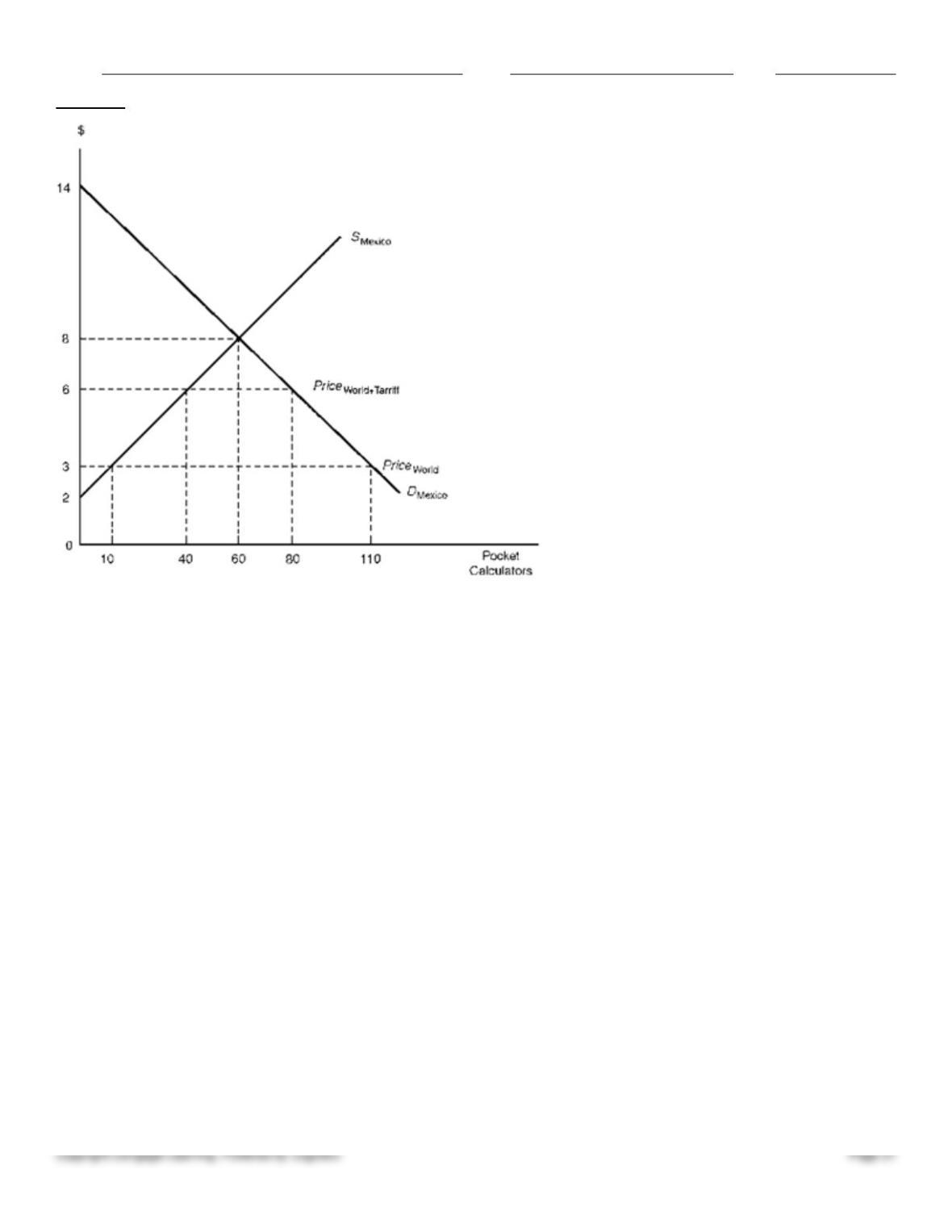
140. Consider Figure 4.1. In the absence of trade, Mexico produces and consumes
a. 10 calculators.
b. 40 calculators.
c. 60 calculators.
d. 80 calculators.
141. Suppose that Japan levies a 40 percent tariff on pickup trucks and a 20 percent tariff on engines. The effective rate of
protection on pickup trucks
a. is higher with the tariff on engines.
b. is lower with the tariff on engines.
Name:
Class:
Date:
chapter 4
Copyright Cengage Learning. Powered by Cognero.
Page 29
c. is the same with or without the tariff on engines.
d. is equal to the tariff on engines.
142. For the United States, a foreign trade zone (FTZ) is
a. a site within the United States.
b. a site outside the United States.
c. always located in poorer developing countries.
d. is used to discourage trade.
Exhibit 4.1
Assume that the United States imports automobiles from South Korea at a price of $20,000 per vehicle and that these
vehicles are subject to an import tariff of 20 percent. Also assume that U.S. components are used in the vehicles
assembled by South Korea and that these components have a value of $10,000.
143. Refer to Exhibit 4.1. In the absence of the Offshore Assembly Provision of U.S. tariff policy, the price of an imported
vehicle to the U.S. consumer after the tariff has been levied is
a. $22,000.
b. $23,000.
c. $24,000.
d. $25,000.
Figure 4.3 Domestic Market for Gasoline in the United States

Name:
Class:
Date:
chapter 4
Copyright Cengage Learning. Powered by Cognero.
Page 30
144. Figure 4.3 represents the domestic market for gasoline in the United States. What is the producer surplus in this
market?
a. 60 gallons of gasoline
b. $120
c. $60
d. $3
145. In general, tariffs tend to have
a. only protective effects.
b. only consumption effects.
c. only revenue effects.
d. revenue effects, protective effects, and consumption effects.
146. Should the home country be “large” relative to the world, its imposition of a tariff on imports would lead to an
increase in domestic welfare if the terms-of-trade effect exceeds the sum of the
a. revenue effect plus redistribution effect.
b. protective effect plus revenue effect.
c. consumption effect plus redistribution effect.
d. protective effect plus consumption effect.
147. A $100 specific tariff provides home producers more protection from foreign competition when
a. the home market buys cheaper products rather than expensive products.
b. it is applied to a commodity with many grade variations.
c. the home demand for a good is elastic with respect to price changes.
d. it is levied on manufactured goods rather than primary products.
Figure 4.1 illustrates the demand and supply schedules for pocket calculators in Mexico, a “small” nation that is unable
to affect the world price.
Figure 4.1. Import Tariff Levied by a “Small” Country
Name:
Class:
Date:
chapter 4
Copyright Cengage Learning. Powered by Cognero.
Page 31
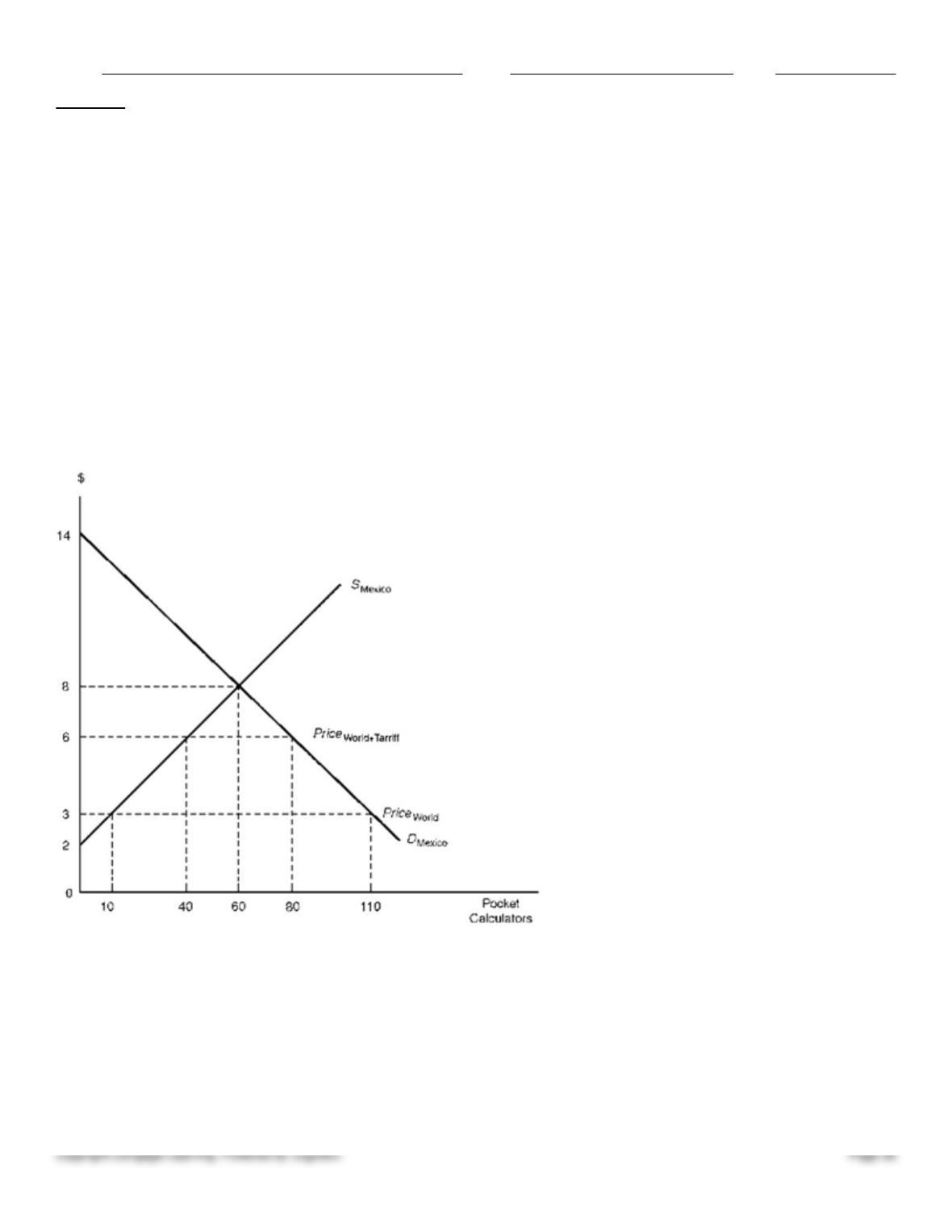
148. Consider Figure 4.1. With a per-unit tariff of $3, the quantity of imports decreases to
a. 20 calculators.
b. 40 calculators.
c. 50 calculators.
d. 70 calculators.
149. Consider Figure 4.1. With free trade, the total value of Mexico’s imports equal
a. $220.
b. $260.
c. $290.
d. $300.
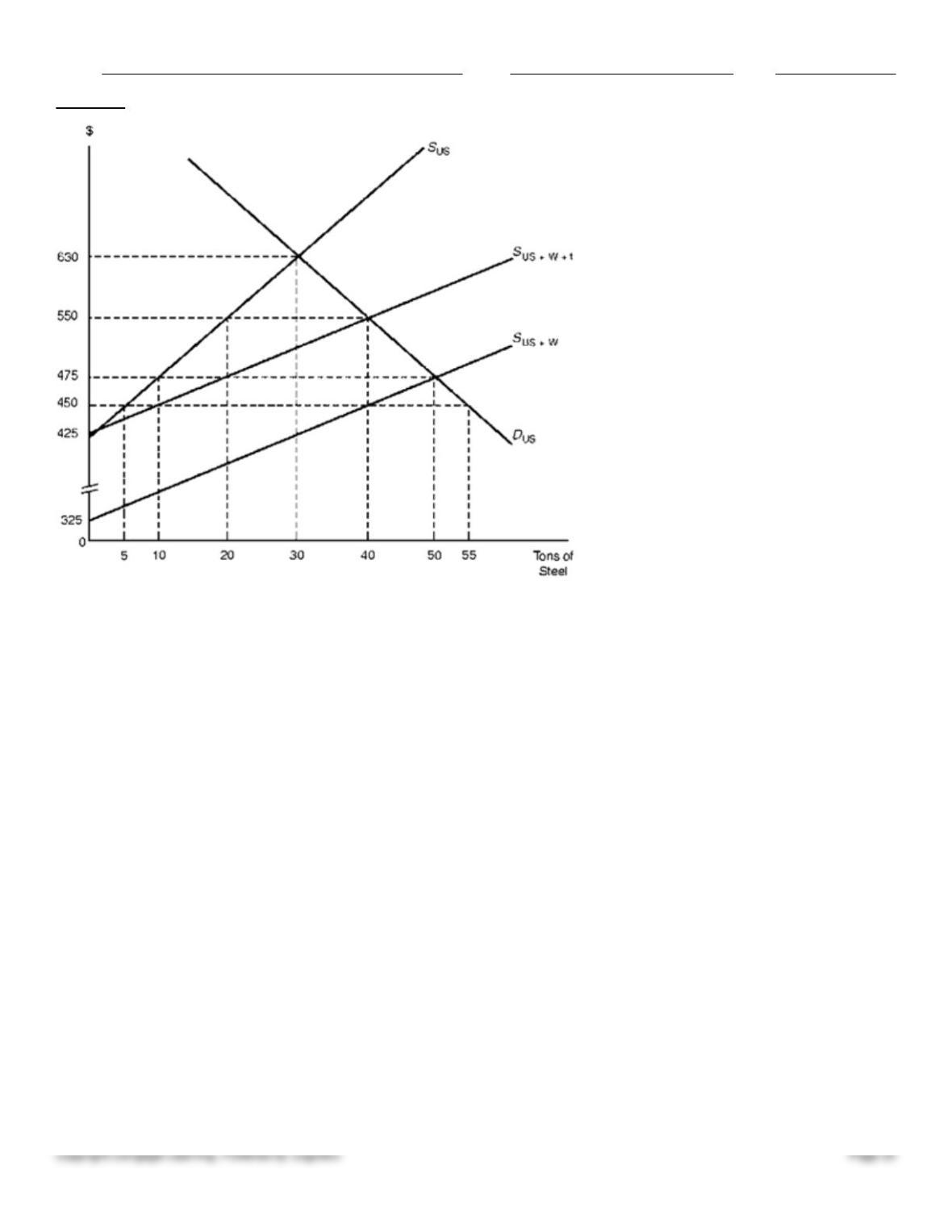
Assume the United States is a large consumer of steel that is able to influence the world price. Its demand and supply
schedules are respectively denoted by DU.S. and SU.S. in Figure 4.2. The overall (United States plus world) supply
schedule of steel is denoted by SU.S.+W.
Figure 4.2. Import Tariff Levied by a “Large” Country
Name:
Class:
Date:
chapter 4
Copyright Cengage Learning. Powered by Cognero.
Page 32
150. Referring to Figure 4.2, the tariff’s deadweight welfare loss to the United States totals
a. $450.
b. $550.
c. $650.
d. $750.
Figure 4.1 illustrates the demand and supply schedules for pocket calculators in Mexico, a “small” nation that is unable
to affect the world price.
Figure 4.1. Import Tariff Levied by a “Small” Country
Name:
Class:
Date:
chapter 4
Copyright Cengage Learning. Powered by Cognero.
Page 33
151. Consider Figure 4.1. In the absence of trade, Mexico’s producer surplus and consumer surplus respectively equal
a. $120 and $240.
b. $180 and $180.
c. $180 and $320.
d. $240 and $240.
Table 4.1. Production Costs and Prices of Imported and Domestic Smartphones
Imported Smartphones Domestic Smartphones
Component parts $150 Imported component parts $150
Assembly cost/profit 50 Assembly cost 50
Nominal tariff 25 Profit 25
____ ____
Import price Domestic price
after tariff 225 after tariff 225
152. Consider Table 4.1. After the tariff, domestic value added equals
a. $25.
b. $50.
c. $75.
d. $100.
Figure 4.4 Market for Gasoline in a Small Nation
Name:
Class:
Date:
chapter 4
Copyright Cengage Learning. Powered by Cognero.
Page 34
153. Figure 4.4 represents the market for gasoline in a small nation. The free trade world price of gasoline is
$3.50. Suppose this small nation imposes a tariff on gasoline of $.50 per gallon. The decline in consumer surplus would
be
a. area a + b.
b. area a.
c. area a + b + c + d + e.
d. area a + b + f + g + h.
154. When the production of a commodity does NOT utilize imported inputs, the effective tariff rate
a. exceeds the nominal tariff rate on the commodity.
b. equals the nominal tariff rate on the commodity.
c. is less than the nominal tariff rate on the commodity.
d. is a percentage of the nominal tariff rate on the commodity.
155. Suppose that the production of a $30,000 automobile in Canada requires $10,000 worth of steel. The Canadian
nominal tariff rates for importing these goods are 25 percent for automobiles and 10 percent for steel. Given this
information, the effective rate of protection for the Canadian automobile industry is approximately
a. 15 percent.
b. 32 percent.
c. 48 percent.
d. 67 percent.
Name:
Class:
Date:
chapter 4
Copyright Cengage Learning. Powered by Cognero.
Page 35
Assume the United States is a large consumer of steel that is able to influence the world price. Its demand and supply
schedules are respectively denoted by DU.S. and SU.S. in Figure 4.2. The overall (United States plus world) supply
schedule of steel is denoted by SU.S.+W.
Figure 4.2. Import Tariff Levied by a “Large” Country
156. Consider Figure 4.2. With free trade, the United States achieves market equilibrium at a price of ____. At this price,
____ of steel are produced by U.S. firms, ____ are bought by U.S. buyers, and ____ are imported.
a. $450, 5 tons, 60 tons, 55 tons
b. $475, 10 tons, 50 tons, 40 tons
c. $525, 5 tons, 60 tons, 55 tons
d. $630, 30 tons, 30 tons, 0 tons
157. The difference between the maximum amount buyers are willing to pay for a given quantity of a good and the
amount actually paid is called
a. deadweight loss.
b. deadweight gain.
c. producer surplus.
d. consumer surplus.
Table 4.1. Production Costs and Prices of Imported and Domestic Smartphones
Imported Smartphones Domestic Smartphones
Component parts $150 Imported component parts $150
Assembly cost/profit 50 Assembly cost 50
Name:
Class:
Date:
chapter 4
Copyright Cengage Learning. Powered by Cognero.
Page 36
Nominal tariff 25 Profit 25
____ ____
Import price Domestic price
after tariff 225 after tariff 225
158. Consider Table 4.1. The effective tariff rate equals
a. 11.1 percent.
b. 16.7 percent.
c. 50.0 percent.
d. 100.0 percent.
Figure 4.1 illustrates the demand and supply schedules for pocket calculators in Mexico, a “small” nation that is unable
to affect the world price.
Figure 4.1. Import Tariff Levied by a “Small” Country
159. According to Figure 4.1, Mexican manufacturers gain ____ because of the tariff.
a. $75
b. $85
c. $95
d. $105
160. According to Figure 4.1, the deadweight cost of the tariff totals
a. $60.

Name:
Class:
Date:
chapter 4
Copyright Cengage Learning. Powered by Cognero.
Page 37
b. $70.
c. $80.
d. $90.
Exhibit 4.1
Assume that the United States imports automobiles from South Korea at a price of $20,000 per vehicle and that these
vehicles are subject to an import tariff of 20 percent. Also assume that U.S. components are used in the vehicles
assembled by South Korea and that these components have a value of $10,000.
161. Refer to Exhibit 4.1. Under the Offshore Assembly Provision of U.S. tariff policy, the price of an imported vehicle to
the U.S. consumer after the tariff has been levied is
a. $22,000.
b. $23,000.
c. $24,000.
d. $25,000.
162. What happens to effective protection when the value added by the domestic producer declines?
163. Can import duties have unintended side effects? Describe one example.
164. How can tariffs be justified?
165. Is it possible for a low nominal tariff rate to understate the effective rate of protection? What is tariff escalation?
Name:
Class:
Date:
chapter 4
Answer Key
1. False
2. False
3. False
Name:
Class:
Date:
Name:
Class:
Date:
Name:
Class:
Date:
Name:
Class:
Date:
Name:
Class:
Date:
Name:
Class:
Date: