College Accounting, 12e (Slater)
Chapter 25 Manufacturing Accounting
25.1 Learning Objective 25-1
1) Nails, depreciation, and foreman salaries are examples of:
A) raw materials.
B) direct labor.
C) manufacturing overhead.
D) none of the above.
2) Lumber used in construction of a building is part of:
A) raw material costs.
B) labor costs.
C) manufacturing overhead.
D) None of these answers are correct.
3) Direct labor includes the wages of:
A) an hourly worker producing the product.
B) the shop foreman.
C) maintenance workers.
D) administrators.
4) Manufacturing overhead includes all manufacturing costs:
A) including raw materials.
B) including overhead.
C) excluding raw materials and direct labor.
D) None of these answers are correct.
5) Total manufacturing costs incurred include:
A) direct labor costs.
B) raw materials costs.
C) manufacturing overhead.
D) all of the above.
6) Which inventory account consists of manufacturing cost of goods that are complete?
A) Work-in-Process Inventory
B) Raw Material Inventory
C) Manufacturing Overhead
D) Finished Goods
7) Which inventory account consists of products currently being processed?
A) Finished Goods Inventory
B) Raw Material Inventory
C) Manufacturing Overhead Inventory
D) Work-in-Process Inventory
8) Freight costs to bring the raw materials in should be charged to:
A) Work-in-Process Inventory.
B) Cost of Goods Sold.
C) Raw Materials Inventory.
D) Manufacturing overhead.
9) Ending finished goods inventory is subtracted from ________ to get cost of goods sold.
A) cost of goods available for sale
B) cost of goods manufactured
C) net purchases
D) none of the above
10) The three main inventories do not include which of the following?
A) Indirect labor
B) Work-in-process
C) Raw materials
D) Finished goods
11) Calculate the cost of goods sold when beginning finished goods inventory equals $70,000, ending
finished goods inventory $85,000, and cost of goods manufactured $600,000.
A) $615,000
B) $445,000
C) $685,000
D) $585,000
12) What inventories are included in determining the cost of goods sold?
A) Beginning and ending finished goods
B) Beginning and ending raw materials
C) Beginning and ending work-in-process
D) None of these answers are correct.
13) What inventories are included in determining total manufacturing costs?
A) Beginning and ending finished goods
B) Beginning and ending raw materials
C) Beginning and ending work-in-process
D) None of the above answers is correct.
14) The formula for cost of goods manufactured is:
A) raw materials plus direct labor minus overhead plus beginning work-in-process inventory plus ending
work-in-process inventory.
B) raw materials minus direct labor plus overhead plus beginning work–in-process inventory plus ending
work-in-process inventory.
C) beginning work–in-process plus total manufacturing cost minus ending work-in-process.
D) raw materials plus direct labor less overhead plus beginning work–in-process inventory less ending
work-in-process inventory.
15) The second step in determining total manufacturing costs is to calculate:
A) the raw material cost for the month.
B) the direct labor cost for the month.
C) factory overhead cost for the month.
D) None of these answers are correct.
16) The statement of cost of goods manufactured does not include:
A) direct labor costs.
B) raw material costs.
C) manufacturing overhead.
D) All of the above are included.
17) Manufacturing cost includes:
A) raw material.
B) direct labor.
C) manufacturing overhead.
D) All of these answers are correct.
18) Raw material inventory appears on the:
A) balance sheet.
B) income statement.
C) cost of goods manufactured statement.
D) Both A and C are correct.
19) A material requisition is a:
A) document prepared to show the movement of materials or products between departments.
B) document used to order materials or supplies from the vendor or supplier.
C) document used for charging material to production.
D) document used to record receipt of materials or supplies from the vendor or supplier.
20) A clock card is:
A) the basis for payroll.
B) the basis for charging cost of goods sold.
C) a document to show movement of materials.
D) a document used to order materials.
21) Which is not an example of a source document?
A) Clock card
B) Bill of lading
C) Lot ticket
D) All are source documents.
22) A report issued by the payroll department to categorize all the types of labor incurred during the
week is a:
A) labor distribution report.
B) receiving report.
C) flow chart.
D) None of these answers are correct.
23) A lot ticket is a:
A) document prepared to show the movement of materials or products between departments.
B) document used to order materials or supplies from the storeroom.
C) document used for charging material to production.
D) None of these answers are correct.
24) A document that is prepared to show how items have been shipped to customers is a:
A) receiving report.
B) bill of lading.
C) lot tickets.
D) clock card.
25) The three manufacturing inventories are raw materials, work-in-process, and finished goods.
26) Lumber used in a furniture plant would be considered raw materials inventory.
27) A shop foreman’s salary is not considered direct labor.
28) Cost of goods manufactured is determined before the income statement can be completed.
29) Overhead includes labor costs of assembly line workers but not their supervisors.
30) Hourly wages of production line employees is one of the costs included in the work–in-process
inventory.
31) Finished goods inventory includes the total costs of manufacturing a product.
32) A cost of goods manufactured statement should be prepared before the income statement has been
prepared.
33) The balance sheet contains all three manufacturing inventories.
34) The steps of the accounting cycle for a manufacturing company are different from those used for a
merchandise company.
35) The first step in the preparation of the cost of goods manufactured is to add in and subtract out the
two raw material inventory balances.
36) The bill of lading shows the cost of materials put into raw materials inventory.
37) In entries to record the movement of material, labor, and overhead through the operation of a
company, the credit is the source and the debit is the destination.
38) If a company had a beginning balance of $5,000 in Raw Materials, an ending balance of $3,000 and
purchased $27,000 of materials during the month, then the raw material cost for the month was $29,000.
39) If a company had a beginning balance of $5,000 in Work–in-Process Inventory, an ending balance of
$7,000 and incurred direct labor costs of $8,000 and overhead costs of $4,000, then the cost of goods
manufactured during the month was $24,000.
40) If a company had a beginning balance of $5,000 in Finished Goods Inventory, an ending balance of
$8,000 and cost of goods manufactured was $47,000 during the month, then the cost of goods sold for the
month was $44,000.
41) Finished goods are listed on the statement of cost of goods manufactured.
42) All expenses are listed on the income statement of a manufacturer.
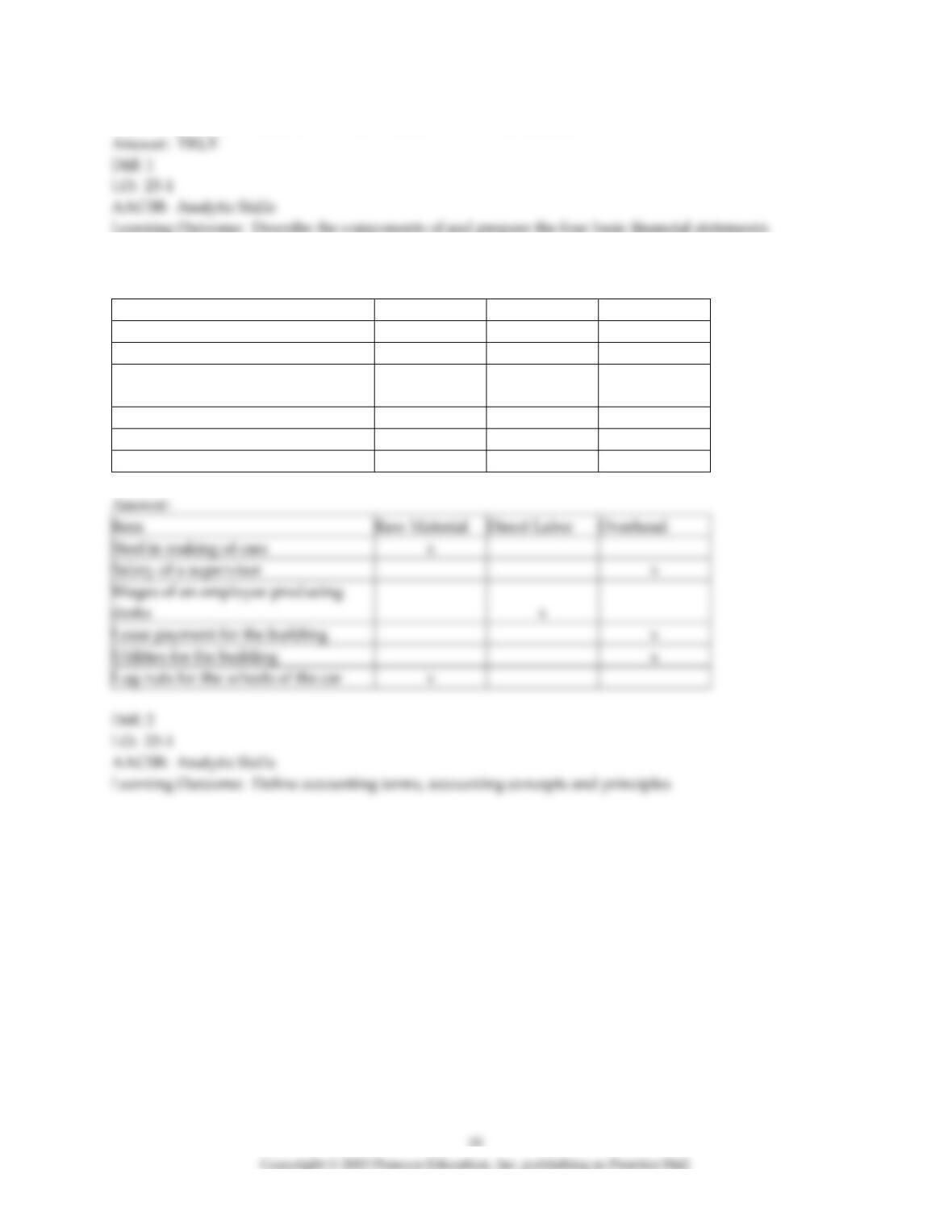
43) Classify each of the following as raw materials, direct labor, or overhead:
Item
Raw Material
Direct Labor
Overhead
Steel in making of cars
Salary of a supervisor
Wages of an employee producing
desks
Lease payment for the building
Utilities for the building
Lug nuts for the wheels of the car
Item
Raw Material
Direct Labor
Overhead
Steel in making of cars
Salary of a supervisor
desks
Lease payment for the building
Utilities for the building
Lug nuts for the wheels of the car
44) From the following information, calculate (a) cost of raw materials used and (b) total manufacturing
costs.
Raw Materials Inventory, June 1 $15,000
Raw Materials Inventory, June 30 20,000
Overhead 35,000
Finished Goods Inventory 17,000
Direct Labor 29,000
Raw Materials Purchased 76,000
a. ________
b. ________
45) Calculate the (a) cost of raw materials used and (b) total manufacturing costs from the following
information.
Beginning Raw Materials Inventory: $65,000
Ending Raw Materials Inventory: 59,000
Overhead: 38,000
Beginning Finished Goods Inventory: 28,000
Ending Finished Goods Inventory: 23,000
Direct Labor: 40,000
Raw Materials Purchased: 83,000
Beginning Work-in-Process Inventory: 16,000
Ending Work-in-Process Inventory: 19,000
a. ________
b. ________
46) Calculate the (a) cost of goods manufactured from the following information.
Beginning Raw Materials Inventory: $63,000
Ending Raw Materials Inventory: 58,000
Overhead: 36,000
Beginning Finished Goods Inventory: 27,000
Ending Finished Goods Inventory: 32,000
Direct Labor: 42,000
Raw Materials Purchased: 73,000
Beginning Work-in-Process Inventory: 12,000
Ending Work-in-Process Inventory: 15,000
47) Seascape Interiors produces artist supplies. Listed below are the costs of production and inventory.
Direct Labor $60,000
Raw Materials Inventory, Aug. 1 25,000
Raw Materials Purchases 70,000
Raw Materials Inventory, Aug. 31 29,000
Overhead 50,000
Work-in-Process Inventory Aug. 1 27,000
Work-in-Process Inventory Aug. 31 21,000
Finished Goods Inventory Aug. 31 18,000
Compute:
a. Cost of raw materials used in production
b. Total manufacturing costs
c. Total cost of goods manufactured
48) From the following, calculate the cost of raw materials used and total manufacturing costs:
Raw Materials Inventory, Sep. 1 $4,000
Raw Materials Inventory, Sep. 30 5,000
Work-in-Process Inventory, Sep. 1 6,000
Work-in-Process Inventory, Sep. 30 5,000
Raw Materials Purchased 8,000
Direct Labor 9,000
Depreciation Expense 7,000
Factory Utilities 3,000
49) From the following, calculate the cost of raw materials used, total manufacturing costs and cost of
goods manufactured:
Raw Materials Inventory, Sep. 1 $10,000
Raw Materials Inventory, Sep. 30 6,000
Work-in-Process Inventory, Sep. 1 12,000
Work-in-Process Inventory, Sep. 30 15,000
Raw Materials Purchased 25,000
Direct Labor 20,000
Depreciation Expense 6,000
Factory Utilities 4,000
50) From the following information calculate total manufacturing costs and cost of goods manufactured.
Raw Materials Inventory, Sep. 1 $3,000
Raw Materials Inventory, Sep. 30 4,000
Work-in-Process Inventory, Sep. 1 5,000
Work-in-Process Inventory, Sep. 30 4,000
Raw Materials Purchased 7,000
Direct Labor 8,000
Depreciation Expense 6,000
Factory Utilities 2,000
51) List four of the six source documents covered in this unit, and explain the function of each in the
accounting process.
52) Describe the three elements of manufacturing cost.
1) What is the journal entry to record issuing supplies from the storeroom?
A) Debit Overhead-Applied; credit Raw Materials Inventory
B) Debit Overhead-Control; credit Supplies Inventory
C) Debit Supplies Inventory; credit Overhead-Applied
D) Debit Overhead-Applied; credit Supplies Inventory
2) What is the journal entry to record issuing raw materials from the storeroom?
A) Debit Raw Materials Inventory; Credit Work-in-Process
B) Debit Overhead-Control; Credit Work-in-Process
C) Debit Work-in–Process; Credit Overhead-Control
D) Debit Work-in-Process; Credit Raw Materials Inventory
3) What is the journal entry to record the direct labor summarized on the labor distribution report?
A) Debit Finished Goods; credit Payroll
B) Debit Work-in-Process; credit Payroll
C) Debit Payroll; credit Direct Labor
D) Debit Payroll; credit Cash
4) In a manufacturing company, the purchase of materials on account should be recorded as follows:
A)
Raw Material Inventory
Accounts Payable
B)
Work-in-Process Inventory
Accounts Payable
C)
Finished Goods Inventory
Accounts Payable
D)
Accounts Payable
Raw Materials Inventory
5) Journal entries crediting Payroll and debiting Work–in-Process Inventory are made for:
A) administrative salaries.
B) hourly manufacturing labor.
C) foremen’s salaries.
D) raw materials.
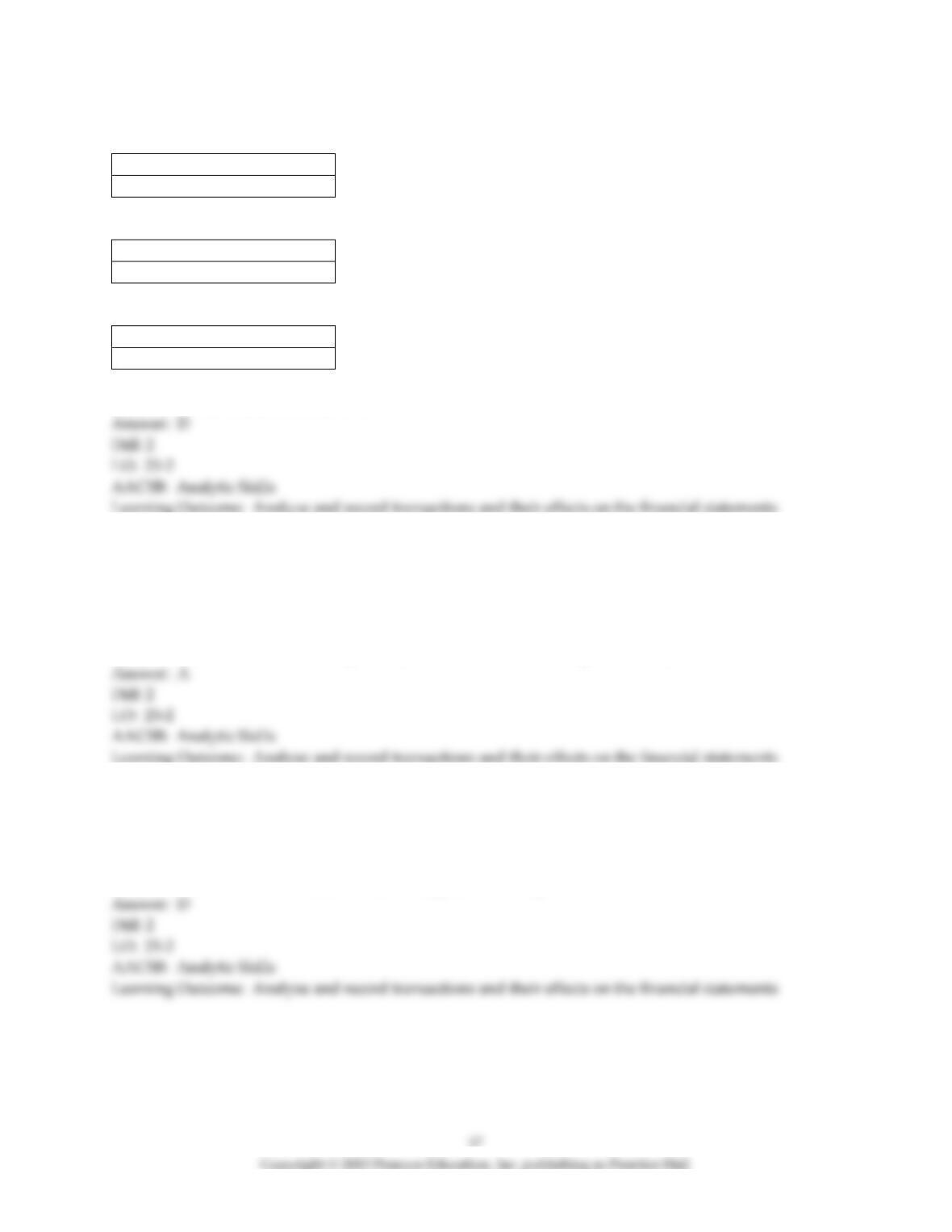
6) The entry for indirect materials (such as glue, etc.) requisitioned for use in production is:
A)
Raw Materials Inventory
Work-in-Process Inventory
B)
Work-in-Process Inventory
Accounts Payable
C)
Work-in-Process Inventory
Raw Materials Inventory
D) None of these answers are correct.
7) During the week ended November 30, total factory payroll incurred was $6,000. Of this total, 80% was
for direct labor. The entry to record the payroll distribution would include:
A) debit Work-in-Process Inventory for $4,800 and Overhead-Control for $1,200.
B) debit Work-in-Process Inventory for $6,000.
C) debit Work-in–Process Inventory for $4,800 and Overhead-Applied for $1,200.
D) debit Work-in-Process Inventory for $4,800 and Indirect Labor Expense for $1,200.
8) The entry to record the requisition of supplies from the storeroom would include:
A) debit to Raw Materials; and credit to Work–in-Process.
B) debit to Overhead-Applied; credit to Overhead-Control.
C) debit to Work-in-Process; and credit to Overhead-Control.
D) debit to Overhead-Control; and credit to Supplies Inventory.
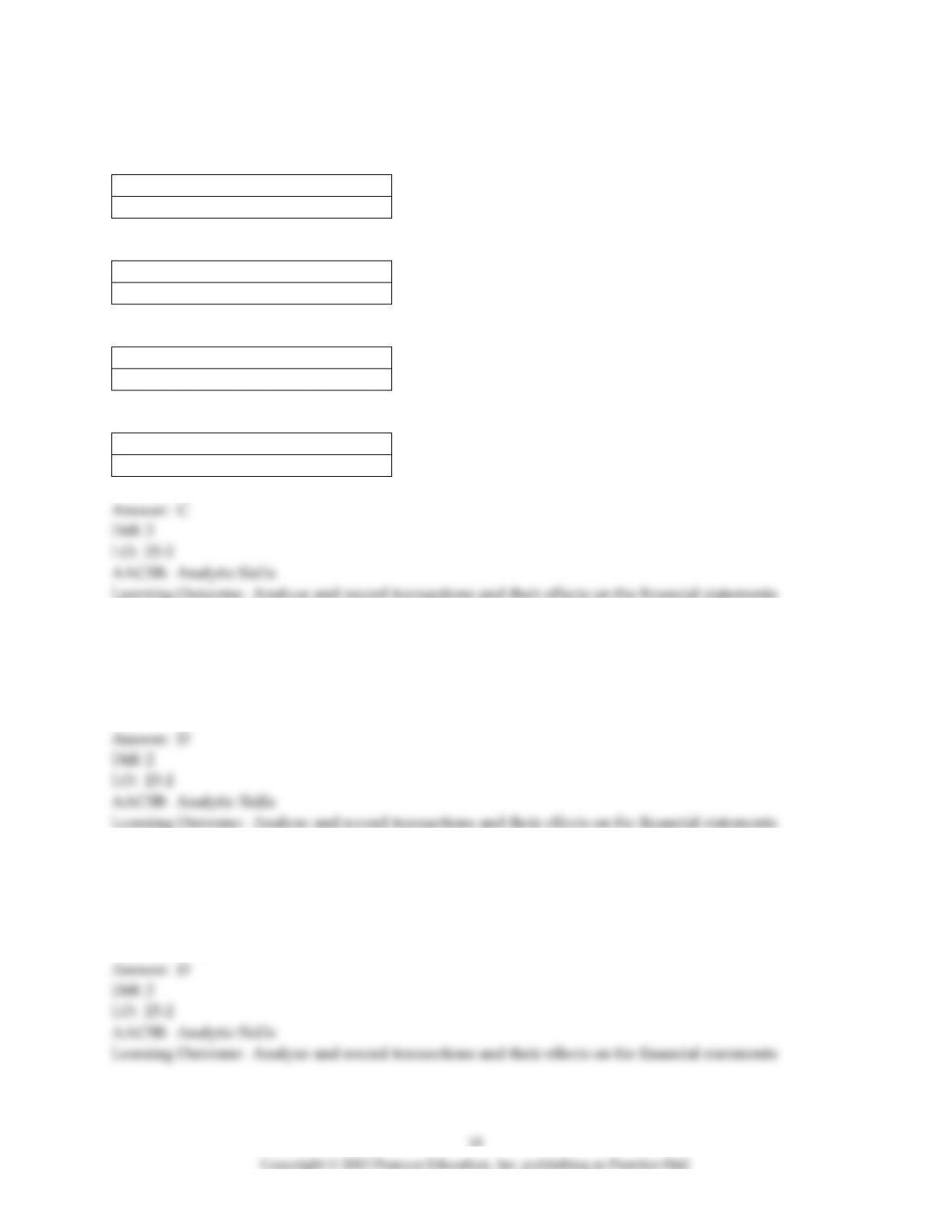
9) Candyland completed the manufacturing process. The entry to transfer the product to finished goods
is:
A)
Raw Materials Inventory
Finished Goods Inventory
B)
Finished Goods Inventory
Cost of Goods Sold
C)
Finished Goods Inventory
Work-in-Process Inventory
D)
Finished Goods Inventory
Raw Materials Inventory
10) Omega.com sold 25 jet skis for $7,000 which cost $5,000. The entry to record the sale would include:
A) credit to Finished Goods Inventory $5,000.
B) credit to Sales for $7,000.
C) debit to Cost of Goods Sold for $5,000.
D) all of the above.
11) The Overhead-Control account is used for the:
A) application of overhead to production and it has a debit balance.
B) accumulation of all actual overhead costs and it has a credit balance.
C) application of overhead to production and it has a credit balance.
D) accumulation of all actual overhead costs and it has a debit balance.
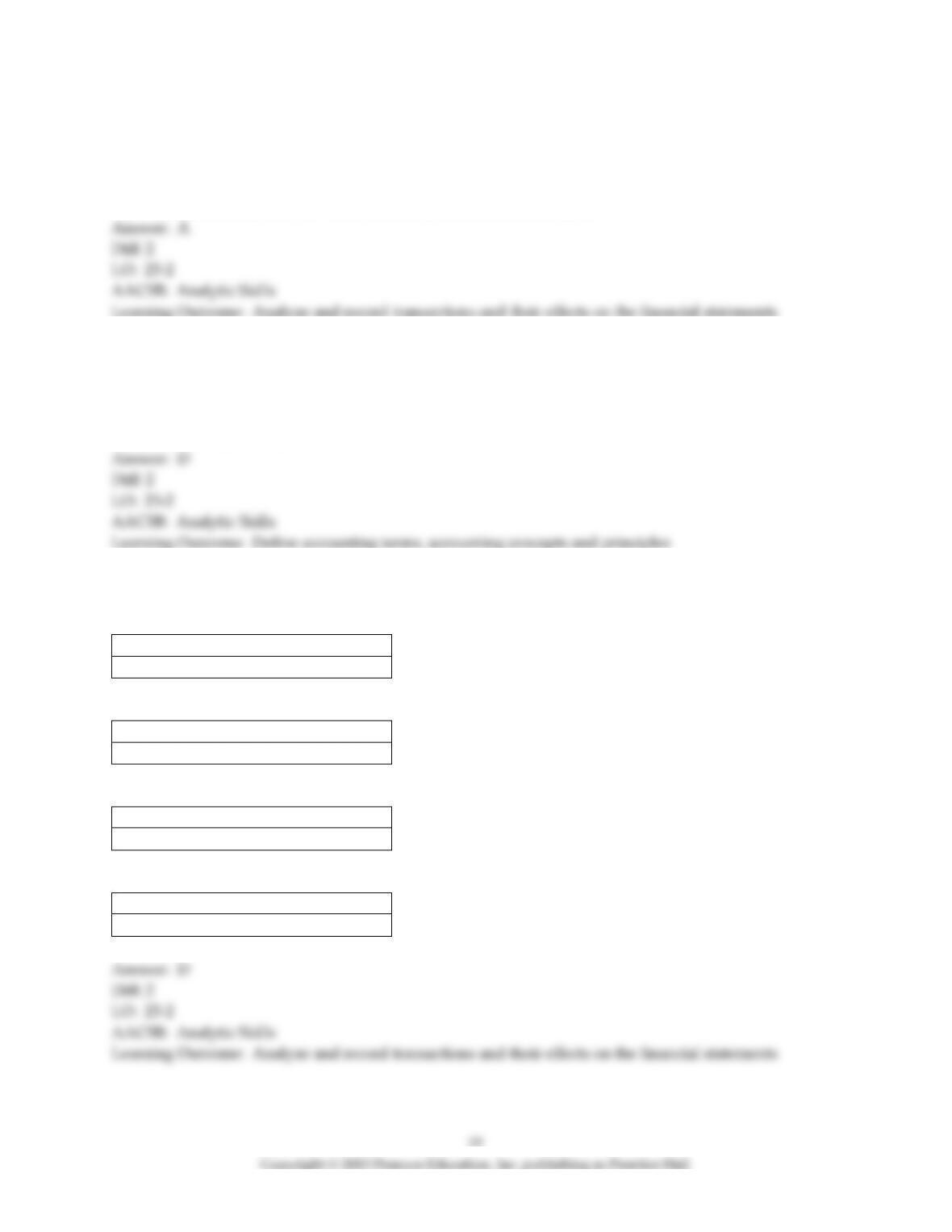
12) The Overhead-Applied account is used for the:
A) application of overhead to production and it has a credit balance.
B) accumulation of all actual overhead costs and it has a credit balance.
C) application of overhead to production and it has a debit balance.
D) accumulation of all actual overhead costs and it has a debit balance.
13) The overhead application rate may be based on:
A) machine hours.
B) direct labor hours.
C) direct labor dollars.
D) All of these answers are correct.
14) Which of the following journal entries would be made to apply the cost of indirect labor to
production?
A)
Work-in-Process Inventory
Overhead-Control
B)
Overhead-Applied
Work-in-Process Inventory
C)
Finished Goods Inventory
Overhead-Control
D)
Work-in-Process Inventory
Overhead-Applied