Name:
Class:
Date:
chapter 14
Indicate whether the statement is true or false.
1. Since 1974, the major industrial countries have operated under a system of fixed exchange rates based on the gold
standard.
a. True
b. False
2. The purpose of currency devaluation is to cause the home country’s exchange value to appreciate, thus reducing a
balance of trade surplus.
a. True
b. False
3. Because there is no exchange stabilization fund under floating exchange rates, any holdings of international reserves
serve as working balances rather than to maintain a given exchange rate for any currency.
a. True
b. False
4. The par values of most developing-country currencies are currently defined in terms of gold.
a. True
b. False
5. Other things equal, to keep the yen’s exchange value from appreciating against the dollar Japan’s exchange stabilization
fund would buy yen for dollars on the foreign exchange market.
a. True
b. False
6. The purpose of an exchange stabilization fund is to ensure that the market exchange rate does not deviate beyond
unacceptable levels from the official exchange rate.
a. True
b. False
7. The Australian dollar is currently regarded as the key currency of the international monetary system.
a. True
b. False
8. Most developing countries have chosen to allow their currencies to float independently in the foreign exchange market.
a. True
b. False
9. A “dirty float” occurs when a nation uses central bank intervention in the foreign exchange market to promote a
depreciation of its currency’s exchange value, thus gaining a competitive advantage compared to its trading partners.
a. True
b. False
Name:
Class:
Date:
chapter 14
10. Under an adjustable pegged system, market exchange rates are intended to be maintained within a narrow band around
a currency’s official exchange rate. In the case of fundamental disequilibrium, the currency can be devalued or revalued to
promote current-account equilibrium.
a. True
b. False
11. Today, special drawing rights (SDRs) represent the most important currency basket against which developing
countries maintain pegged exchange rates.
a. True
b. False
12. Many developing nations with low inflation rates have pegged their currencies to the U.S. dollar as a way of allowing
modest increases in domestic inflation rates.
a. True
b. False
13. The special drawing right is a currency basket of five major industrial country currencies.
a. True
b. False
14. The U.S. dollar is generally regarded as the major “key currency” of the international monetary system.
a. True
b. False
15. A currency board is a type of a floating exchange rate system in which the commitment to the floating exchange rate is
very strong.
a. True
b. False
16. Although controls on the outflow of capital for developing countries may be appealing, they tend to suffer from people
finding ways to evade the controls and move funds out of the country.
a. True
b. False
17. If Argentina adopts the U.S. dollar as its official currency, it seeks to eliminate the possibility of a speculative attack
against its currency.
a. True
b. False
18. The revenue that a government received by issuing money is called a fiscal dividend.
a. True
b. False
19. Under managed floating exchange rates, market forces are allowed to determine exchange rates in the short run while
central bank intervention is used to stabilize exchange rates in the long run.
Name:
Class:
Date:
chapter 14
a. True
b. False
20. In 1973, the major industrial countries terminated managed floating exchange rates and adopted adjustable pegged
exchange rates.
a. True
b. False
21. The exchange rate system established by the Bretton Woods Agreement of 1944-1973 was an adjustable pegged
system.
a. True
b. False
22. Developing countries with more than one major trading partner often peg their currencies to a group or basket of those
trading partner currencies.
a. True
b. False
23. Other things equal, to keep the pound’s exchange value from depreciating against the Swiss franc the British exchange
stabilization fund would sell pounds for Swiss francs on the foreign exchange market.
a. True
b. False
24. Today, fixed exchange rates are used primarily by small, developing countries that tie their currencies to a key
currency such as the U.S. dollar.
a. True
b. False
25. Unlike floating exchange rates, fixed exchange rates are not characterized by par values and central bank intervention
in the foreign exchange market.
a. True
b. False
26. To offset an appreciation in the dollar’s exchange value, the Federal Reserve can nudge interest rates down in the
United States, which results in net investment outflows.
a. True
b. False
27. If Uganda sets its par value at 400 shillings per SDR and Burundi sets its par value at 200 francs per SDR, the official
exchange rate is 1 franc = o.5 shillings.
a. True
b. False
28. Large industrial nations with diversified economies and small trade sectors have generally pegged their currencies to
one of the world’s key currencies.
Name:
Class:
Date:
chapter 14
a. True
b. False
29. In recent years, the United States has accused China of manipulating the yuan so as to gain an unfair competitive
advantage in global trade. The United States has argued that the central bank of China has sold yuan and bought dollars,
thus depreciating the yuan against the dollar
a. True
b. False
30. The Bretton Woods system of 1944-1973 was a flexible exchange rate system in which member countries allowed
their currencies to float within wide bands.
a. True
b. False
31. If the Federal Reserve wants to see the dollar’s exchange value depreciate, it could pursue a contractionary monetary
policy.
a. True
b. False
32. When pursued over the long run, a policy of increasing the domestic money supply to offset an appreciation of the
home country’s currency results in inflation and a decrease in home-country competitiveness in key industries.
a. True
b. False
33. Sources of a currency crisis often include weak financial systems and budget deficits financed by inflation.
a. True
b. False
34. If Uganda revalues its shilling by 20 percent and Burundi devalues its franc by 5 percent, the shillings exchange value
will appreciate by 25 percent against the franc.
a. True
b. False
35. An argument can be made for controls on the outflow of capital for developing countries because capital outflows
force a country to revalue its currency.
a. True
b. False
36. If Uganda devalues its shilling by 10 percent and Burundi devalues its franc by 5 percent, the shilling’s exchange value
appreciates 10 percent against the franc.
a. True
b. False
37. Under managed floating exchange rates, central bank intervention is used to offset temporary fluctuations in exchange
rates that contribute to uncertainty in carrying out transactions in international trade and finance.
Name:
Class:
Date:
chapter 14
a. True
b. False
38. Small nations, such as Angola and Barbados, peg their currencies to the U.S. dollar since the prices of many of their
traded goods are determined in markets in which the dollar is the key currency.
a. True
b. False
39. If Ecuador adopts the U.S. dollar as its official currency, the country loses its seigniorage.
a. True
b. False
40. A “key currency” is one that is widely traded on world money markets, has demonstrated relatively stable values over
time, and has widely been accepted as a means of international settlement.
a. True
b. False
41. Pegging to a single currency is generally done by developing nations whose trade and financial relationships are
mainly with a single industrial-country partner.
a. True
b. False
42. Smaller nations with relatively undiversified economies and large trade sectors tend to peg their currencies to one of
the world’s key currencies.
a. True
b. False
43. By maintaining a strong commitment to fixed exchange rates, a currency board hopes that domestic inflation will slow
down and the possibility of a speculative attack against its currency will be reduced.
a. True
b. False
44. An argument can be made for controls on the inflow of capital for developing countries because capital inflows can
lead to a lending boom, speculation, and excessive risk taking.
a. True
b. False
45. Most nations currently allow their currencies’ exchange values to be determined solely by the forces of supply and
demand in a free market.
a. True
b. False
46. Under the gold standard, the official exchange rate would be $2.80 per pound as long as the United States bought and
sold gold at a fixed price of $35 per ounce and Britain bought and sold gold at 12.5 pounds per ounce.
a. True
Name:
Class:
Date:
chapter 14
b. False
47. By the early 1970s, gold had been phased out of the international monetary system.
a. True
b. False
Indicate the answer choice that best completes the statement or answers the question.
48. Given a two-country world, assume Canada and Sweden devalue their currencies by 20 percent. Other things equal,
this would result in
a. an appreciation in the Canadian currency.
b. an appreciation in the Swedish currency.
c. an appreciation in both currencies.
d. an appreciation in neither currency.
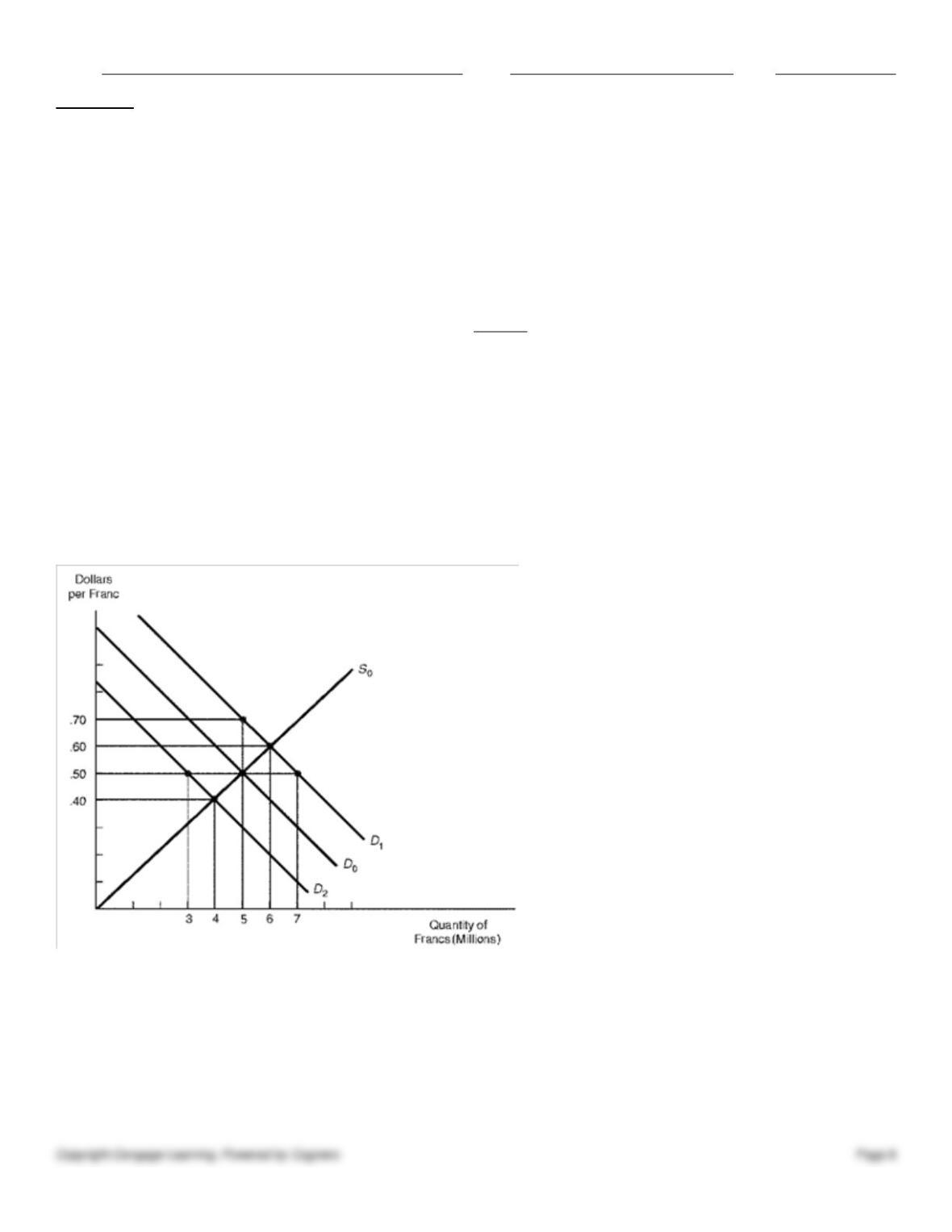
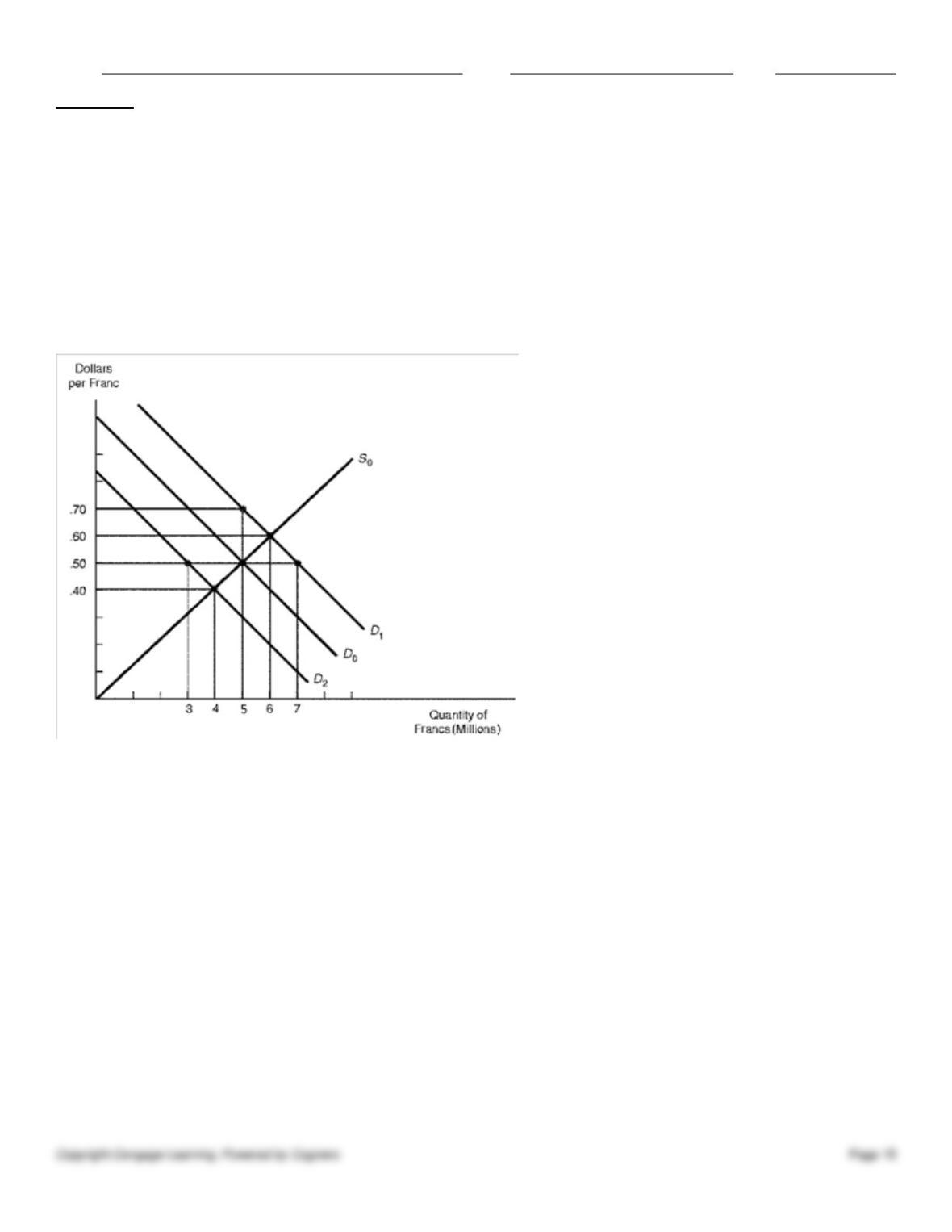
Figure 15.1 shows the market for the Swiss franc. In the figure, the initial demand for marks and supply of marks are
depicted by D0 and S0 respectively.
Figure 15.1. The Market for the Swiss Franc
49. Refer to Figure 15.1. Suppose that the United States increases its imports from Switzerland, resulting in a rise in the
demand for francs from D0 to D1. Other things equal, under a floating exchange rate system, the new equilibrium
exchange rate would be
a. $0.40 per franc.
b. $0.50 per franc.
c. $0.60 per franc.
d. $0.70 per franc.
Name:
Class:
Date:
chapter 14
50. Proponents of a freely floating exchange rate system maintain that it is superior to a fixed exchange rate system
because it
a. keeps inflation under control.
b. provides a simple and clear exchange rate target.
c. provides continuous adjustment in the balance of payments.
d. helps prevent disorderly exchange rate movements that can disrupt trade.
51. Under a floating exchange rate system, other things equal, if there occurs a fall in the dollar price of the Swiss franc
a. American exports to Switzerland will be cheaper in francs.
b. American exports to Switzerland will be more expensive in francs.
c. American imports from Switzerland will be more expensive in dollars.
d. None of the above.
52. If Mexico dollarizes its economy, it essentially
a. allows the Federal Reserve to be its lender of last resort.
b. accepts the monetary policy of the Federal Reserve.
c. ensures that its business cycle is identical to that of the U.S.
d. abandons its ability to run governmentally balanced budgets.
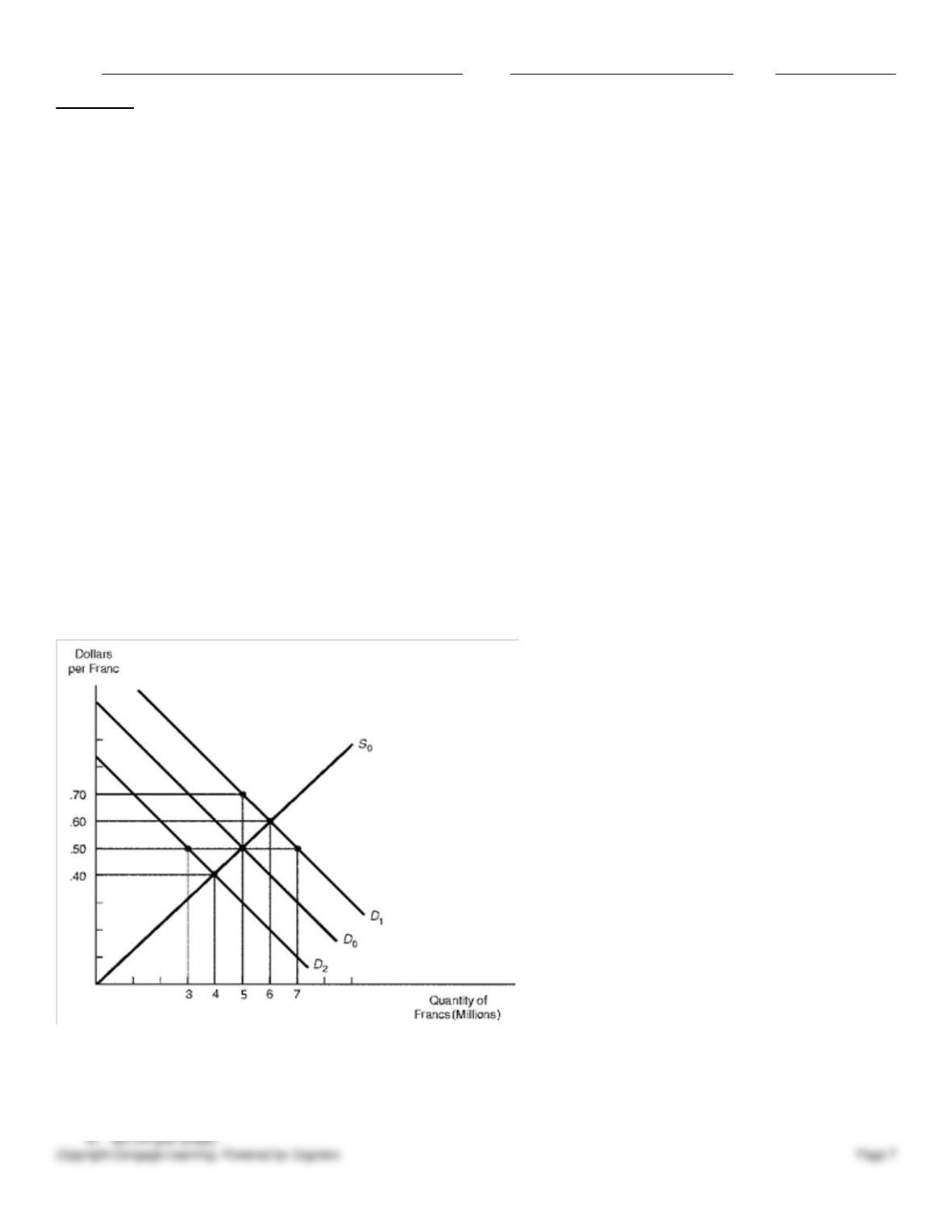
Figure 15.1 shows the market for the Swiss franc. In the figure, the initial demand for marks and supply of marks are
depicted by D0 and S0 respectively.
Figure 15.1. The Market for the Swiss Franc
53. Refer to Figure 15.1. Suppose the United States decreases investment spending in Switzerland, thus reducing the
demand for francs from D0 to D2. Other things equal, under a floating exchange rate system, the new equilibrium
exchange rate would be
a. $0.40 per franc.
b. $0.50 per franc.
Name:
Class:
Date:
chapter 14
c. $0.60 per franc.
d. $0.70 per franc.
54. In 2016, the U.S. Treasury department found that China met ____________of the criteria of currency manipulation.
a. none
b. one
c. two
d. three
Table 15.1. The Market for Swiss Francs
Quantity of Dollar price Quantity of
francs demanded of francs francs supplied
600 $0.05 0
500 0.10 100
400 0.15 200
300 0.20 300
200 0.25 400
100 0.30 500
0 0.35 600
55. Refer to Table 15.1. Under a system of floating exchange rates, the equilibrium exchange rate equals
a. $0.15 per franc.
b. $0.20 per franc.
c. $0.25 per franc.
d. $0.30 per franc.
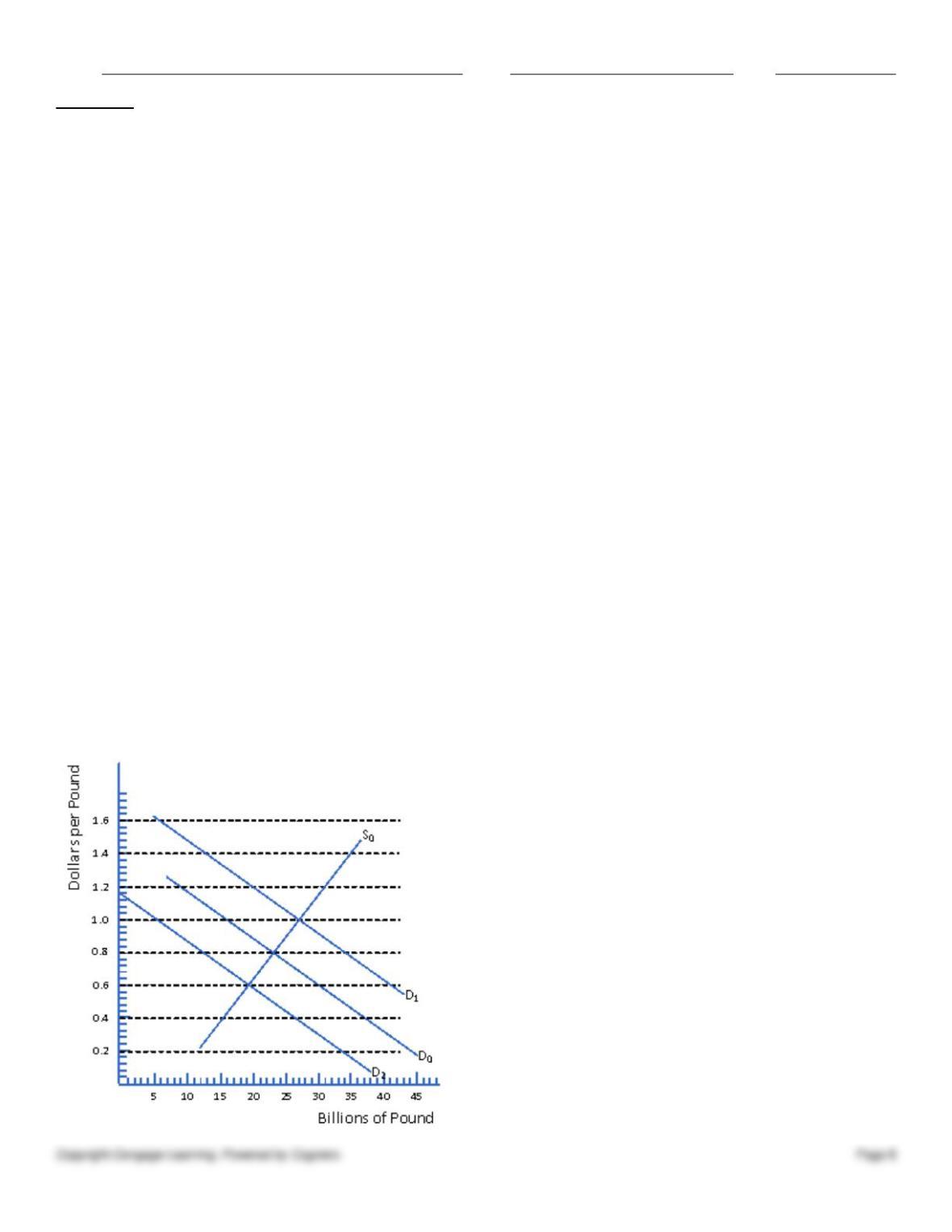
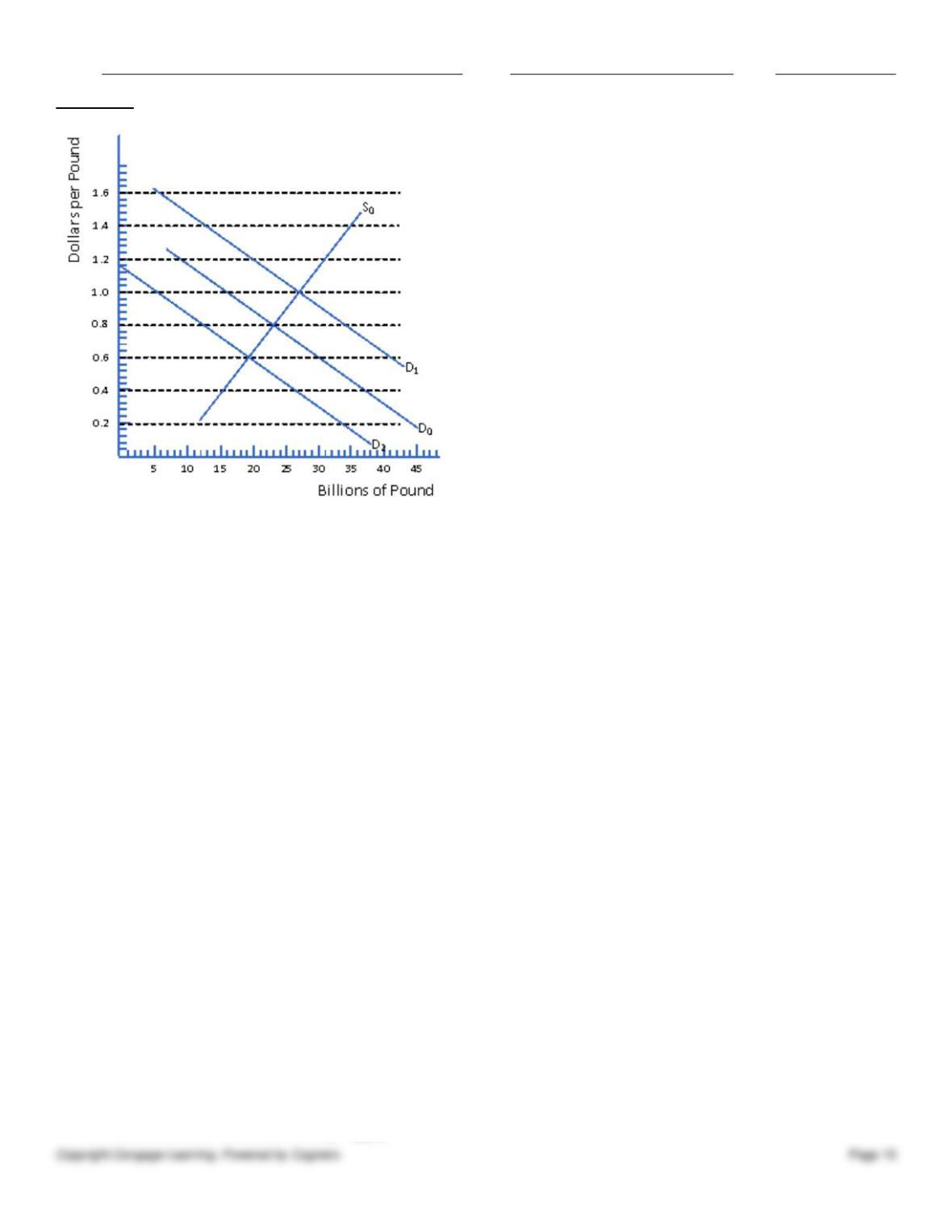
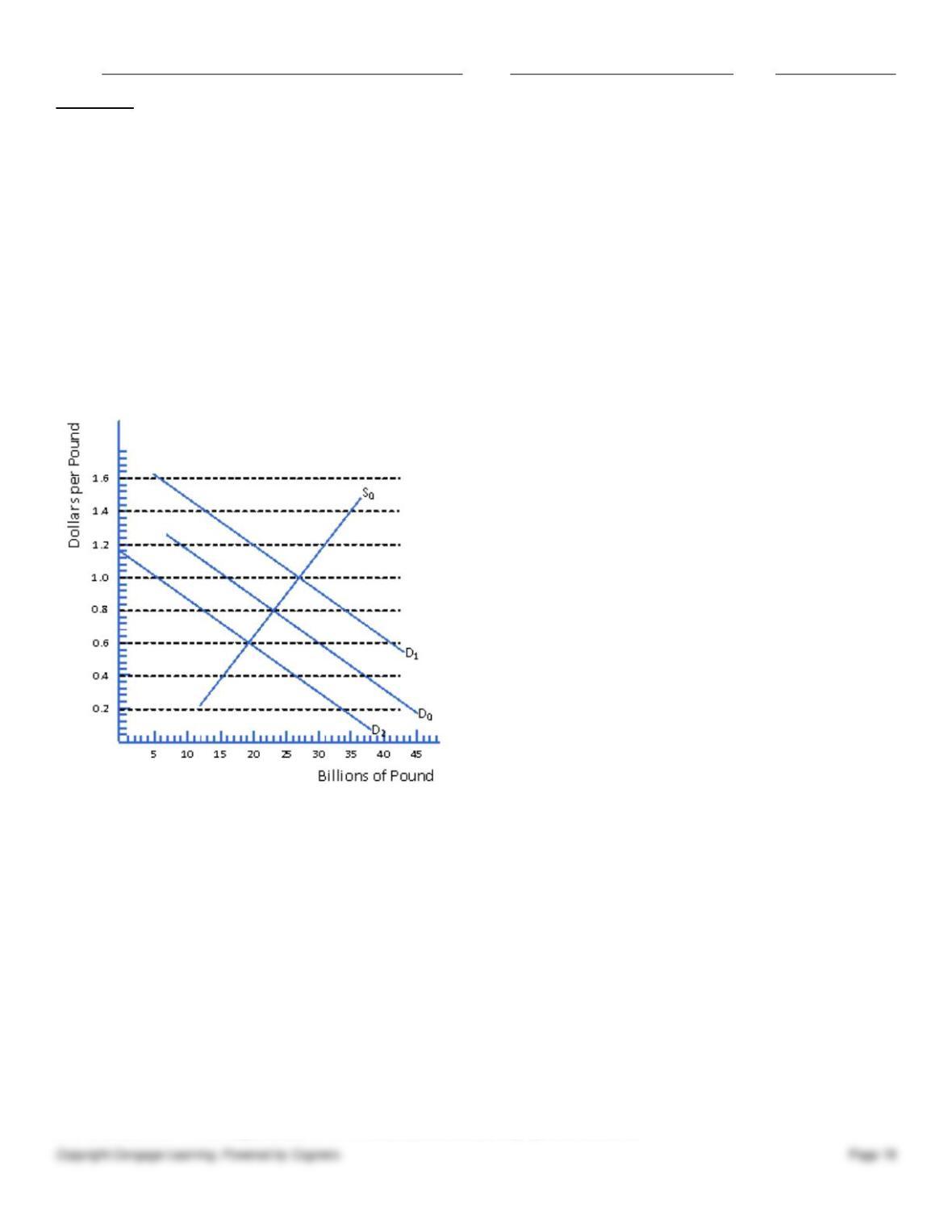
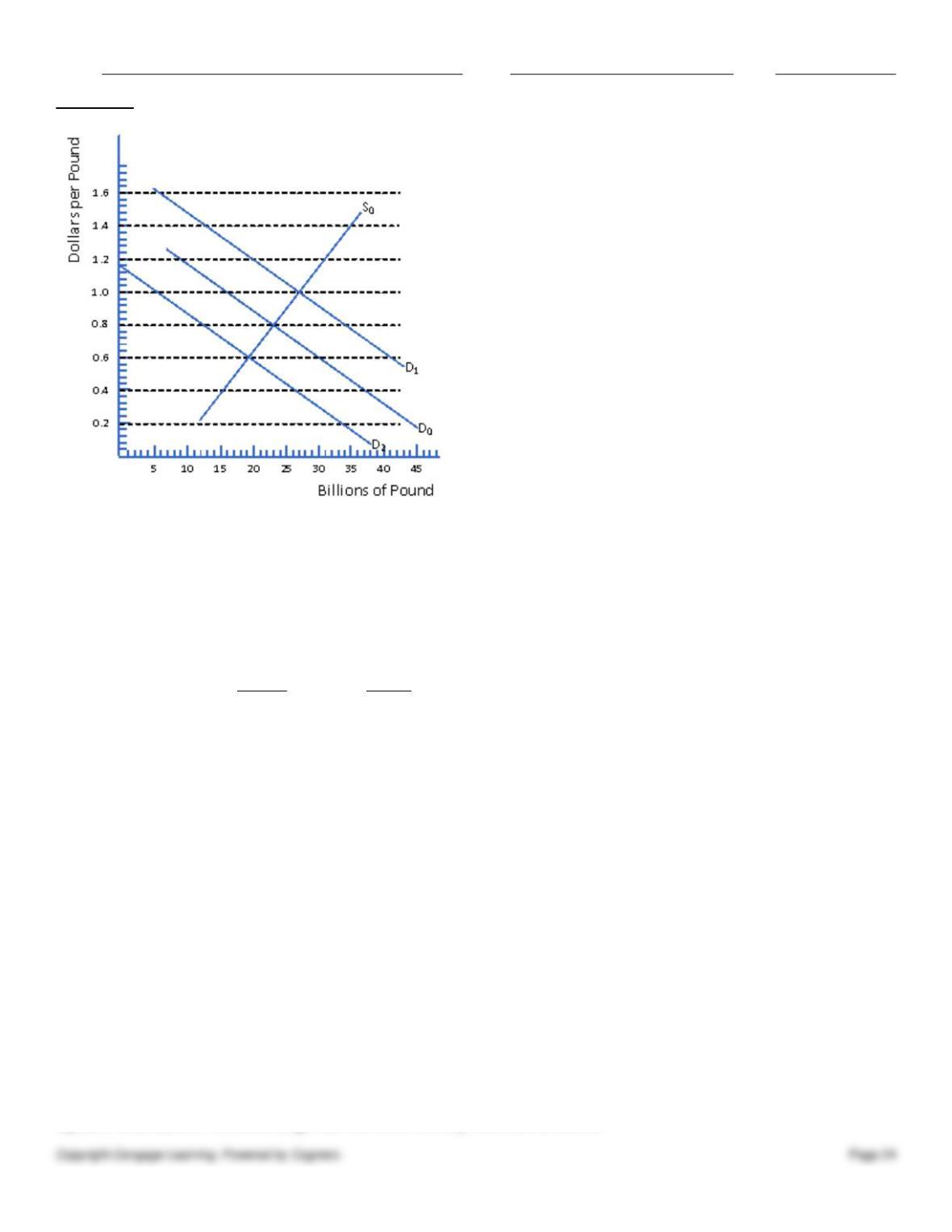
Figure 15.2 Market for the British Pound
Name:
Class:
Date:
chapter 14
56. Refer to Figure 15.2. Suppose the United States decreases financial investment in England. Other things equal, under a
floating exchange rate system the new equilibrium exchange rate would be
a. $0.40 per franc.
b. $0.60 per franc.
c. $0.80 per franc.
d. $1 per franc.
57. Under a system of floating exchange rates, other things equal, a U.S. trade deficit with Japan will cause
a. a flow of gold from the United States to Japan.
b. the U.S. government to ration yen to U.S. importers.
c. an increase in the dollar price of yen.
d. a decrease in the dollar price of yen.
58. An objective of the dollarization of the Mexican economy would be to
a. shield its economy from hyperinflation, currency depreciation, and capital flight.
b. allow the Federal Reserve to be its lender of last resort.
c. ensure that its monetary policy is independent of the Federal Reserve.
d. permit it to benefit from tariffs and subsidies imposed by the U.S. government.
59. Under managed floating exchange rates, other things equal, a central bank would initiate
a. a contractionary monetary policy to offset a depreciation of its currency.
b. a contractionary monetary policy to offset an appreciation of its currency.
c. an expansionary monetary policy to offset a depreciation of its currency.
d. None of these are correct.
60. A ______ is a type of a fixed exchange rate system in which the commitment to the fixed exchange rate is
very firm
a. currency board
b. monetary policy board
c. fiscal policy board
d. customs board
Figure 15.2 Market for the British Pound
Name:
Class:
Date:
chapter 14
61. Refer to Figure 15.2. Demand and supply of British Pounds is initially D0 and S0. With a system of floating exchange
rates, the equilibrium exchange rate is
a. $0.40 per pound.
b. $0.60 per pound.
c. $0.80 per pound.
d. $1 per pound.
Table 15.1. The Market for Swiss Francs
Quantity of Dollar price Quantity of
francs demanded of francs francs supplied
600 $0.05 0
500 0.10 100
400 0.15 200
300 0.20 300
200 0.25 400
100 0.30 500
0 0.35 600
62. Refer to Table 15.1. If monetary authorities fix the exchange rate at $0.10 per franc, there would be a
a. shortage of 200 francs.
b. shortage of 400 francs.
c. surplus of 200 francs.
d. surplus of 400 francs.
63. Under a floating exchange rate system, other things equal, which of the following best leads to a depreciation in the
value of the Canadian dollar?
a. a decrease in the Canadian money supply
Name:
Class:
Date:
chapter 14
b. a decrease in the Canadian interest rate
c. an increase in the national income of Canada’s trade partners
d. rising inflation rates in Canada’s trade partners
64. Other things equal, under a floating exchange rate system, an increase in U.S. imports of Japanese goods will cause a
demand for Japanese yen to
a. increase, inducing a depreciation in the yen.
b. decrease, inducing a depreciation in the yen.
c. increase, inducing an appreciation in the yen.
d. decrease, inducing an appreciation in the yen.
65. For developing countries, currency boards and dollarization are intended to
a. convince speculators that the exchange rate is unchangeable.
b. promote confidence in the soundness of the nation’s money supply.
c. arrest any tendencies in an economy toward inflation.
d. All of these are correct.
66. For Ecuador, the result of adopting the dollar as its official currency is that
a. its government cannot capture revenue (seigniorage) by issuing currency.
b. there tends to be greater promise of lower interest rates and greater financial stability.
c. the rate of inflation in Ecuador is tied to that of the United States.
d. All of these are correct.
67. In recent years, the United States has accused China of manipulating the yuan so as to gain an unfair competitive
advantage in global trade. The United States has argued that the central bank of China has
a. sold yuan and bought dollars, thus depreciating the yuan against the dollar.
b. sold yuan and bought dollars, thus appreciating the yuan against the dollar.
c. bought yuan and sold dollars, thus depreciating the yuan against the dollar.
d. bought yuan and sold dollars, thus appreciating the yuan against the dollar.
68. Rather than constructing their own currency baskets, many nations peg the value of their currencies to a currency
basket defined by the International Monetary Fund. Which of the following is an example of this type of basket?
a. IMF tranche
b. special drawing rights
c. primary reserve asset
d. swap facility
69. Under a pegged exchange rate system, which does NOT explain why a country would have a balance-of-payments
deficit?
a. very high rates of inflation occur domestically
b. foreigners discriminate against domestic products
c. technological advance is superior abroad
d. the domestic currency is undervalued relative to other currencies
70. A central bank that desires a (an) ______ of its currency would likely implement a ______ monetary policy.
a. depreciation, expansionary
Name:
Class:
Date:
chapter 14
b. depreciation, neutral
c. appreciation, neutral
d. appreciation, expansionary
71. Other things equal, under managed floating exchange rates, if the rate of inflation in the United States is less than the
rate of inflation of its trading partners, the dollar will likely
a. appreciate against foreign currencies.
b. depreciate against foreign currencies.
c. be officially revalued by the government.
d. be officially devalued by the government.
72. Under a system of fixed exchange rates, the purpose of currency revaluation is to cause the exchange value of a
currency to ______, thus counteracting a balance-of-payments ______.
a. depreciate, deficit
b. depreciate, surplus
c. appreciate, deficit
d. appreciate, surplus
73. In a managed floating exchange rate system, temporary stabilization of the dollar’s exchange value requires the
Federal Reserve to adopt a (an) ____ monetary policy when the dollar is appreciating and a (an) ____ policy when the
dollar is depreciating.
a. expansionary, expansionary
b. expansionary, contractionary
c. contractionary, expansionary
d. contractionary, contractionary
74. Exchange rate controls
a. achieved prominence during the economic crises of the late 1930s.
b. were popular immediately after World War II.
c. are widely used by the developing nations.
d. All of these are correct.
75. Other things equal, to temporarily offset a depreciation in the dollar’s exchange value, the Federal Reserve could ____
the U.S. money supply, which would promote a (an) ____ in U.S. interest rates and a (an) ____ in investment flows to the
United States.
a. increase, decrease, decrease
b. increase, increase, increase
c. decrease, decrease, increase
d. decrease, increase, increase
76. In recent years, members of the International Monetary Fund have adopted exchange rate systems including
a. currency board arrangements.
b. fixed exchange rates.
c. crawling pegged exchange rates.
d. All of these are correct.
Name:
Class:
Date:
chapter 14
77. Given an initial equilibrium in the money market and foreign exchange market, suppose the Federal Reserve increases
the money supply of the United States. Other things equal, under a floating exchange rate system, the dollar will likely
a. appreciate in value relative to other currencies.
b. depreciate in value relative to other currencies.
c. be officially devalued by the government.
d. neither appreciate nor depreciate.
78. The Bretton Woods system of 1944-1973 was based upon
a. the international silver standard.
b. the international gold standard.
c. freely fluctuating exchange rates.
d. relatively stable exchange rates.
79. The result of devaluations of the dollar in the early 1970s was to
a. increase the price of U.S. exports.
b. decrease the price of U.S. exports.
c. decrease the price of U.S. imports.
d. increase the U.S. balance of payments surplus.
80. Suppose Japan runs a trade deficit. Other things equal, if the Japanese yen appreciates against other currencies in the
exchange markets, this will
a. have no effect on the Japanese balance of trade.
b. tend to improve the Japanese balance of trade because Japanese imports will become more expensive.
c. tend to worsen the Japanese balance of trade because Japanese exports will become cheaper.
d. None of these is correct.
81. In 1944, financial ministers throughout the world met in New Hampshire to set up an adjustable pegged exchange rate
system. This system became known as the
a. General Agreement on Tariffs and Trade.
b. Bretton Woods system.
c. Bank for International Settlements.
d. World Bank.
82. Hong Kong provides an example of a country that has maintained a currency board. The purpose of its
currency board is to
a. maintain a system of freely floating exchange rates.
b. maintain an especially strong commitment to a fixed exchange rate.
c. to totally replace the currency of Hong Kong with the U.S. dollar.
d. to totally replace the currency of Hong Kong with the euro.
83. Members of the International Monetary Fund agree that
a. their exchange rate systems should not be manipulated to gain unfair competitive advantages over other members.
b. their exchange rate systems should not be manipulated to prevent effective balance-of-payments adjustments.
c. members countries can act to counter short-term disorderly conditions in foreign exchange markets.
d. All of these are correct.
Name:
Class:
Date:
chapter 14
84. In 1973, the reform of the international monetary system resulted in the change from
a. adjustable pegged rates to managed floating rates.
b. managed floating rates to adjustable pegged rates.
c. crawling pegged rates to freely floating rates.
d. freely floating rates to crawling pegged rates.
85. Developing nations whose trade and financial relationships are mainly with a single partner tend to utilize
a. pegged exchange rates.
b. freely floating exchange rates.
c. managed floating exchange rates.
d. crawling pegged exchange rates.
86. For Ecuador, an advantage of adopting the dollar as its official currency is that
a. the Federal Reserve becomes Ecuador’s lender of last resort.
b. Ecuador escapes the likelihood of a speculative attack.
c. Ecuador’s government can capture revenue by issuing currency (called seigniorage).
d. Eduador’s monetary policy becomes independent from that of the Federal Reserve.
87. With fixed exchange rates, assume that the home currency becomes undervalued—that is, above its par value when
expressed as the home currency price of the foreign currency. Other things equal, to maintain the fixed exchange rate the
home country’s central bank must
a. sell the home currency and purchase foreign currencies.
b. sell the home currency and sell foreign currencies.
c. purchase the home currency and sell foreign currencies.
d. purchase the home currency and purchase foreign currencies.
88. Under the Bretton Woods system of 1944-1973, member countries could re–peg their currencies up to _____, without
permission of the International Monetary Fund.
a. 2 percent
b. 5 percent
c. 10 percent
d. 25 percent
89. Under the Bretton Woods system of 1944-1973
a. member countries set the par value of their currencies in terms of gold.
b. market exchange rates were almost fixed.
c. currency devaluations or revaluations could be used to adjust the par value of a currency when it became
overvalued or undervalued.
d. All of these are correct.
90. Other things equal, under a floating exchange rate system, if American exports increase and American imports
decrease, the value of the dollar will likely
a. appreciate.
b. depreciate.
c. be officially revalued.
d. neither appreciate not depreciate.
Name:
Class:
Date:
chapter 14
91. To offset an appreciation of the dollar against the yen, other things equal, the Federal Reserve would
a. sell dollars on the foreign exchange market and lower domestic interest rates.
b. sell dollars on the foreign exchange market and raise domestic interest rates.
c. buy dollars on the foreign exchange market and lower domestic interest rates.
d. buy dollars on the foreign exchange market and raise domestic interest rates.
Figure 15.1 shows the market for the Swiss franc. In the figure, the initial demand for marks and supply of marks are
depicted by D0 and S0 respectively.
Figure 15.1. The Market for the Swiss Franc
92. Refer to Figure 15.1. With a system of floating exchange rates, the equilibrium exchange rate is
a. $0.40 per franc.
b. $0.50 per franc.
c. $0.60 per franc.
d. $0.70 per franc.
93. The “impossible trinity” explains the relationship between
a. free movements of international capital.
b. independent monetary policies of countries.
c. fixed exchange rate systems of countries.
d. All of these are correct.
94. When the United States abandoned the Bretton Woods system in 1973, it adopted a system of
a. managed floating exchange rates.
b. freely fluctuating exchange rates.
c. adjustable pegged exchange rates.
d. crawling pegged exchange rates.

Name:
Class:
Date:
chapter 14
95. Which exchange rate system involves a “leaning against the wind” strategy in which short-term fluctuations in
exchange rates are reduced without adhering to any particular exchange rate over the long run?
a. pegged or fixed exchange rates
b. adjustable pegged exchange rates
c. managed floating exchange rates
d. freely floating exchange rates
96. Assume that interest rates in London increase relative to those in Switzerland. Other things equal, under a floating
exchange rate system one would expect the pound (relative to the Swiss franc) to
a. depreciate due to the increased demand for pounds.
b. depreciate due to the increased demand for Swiss francs.
c. appreciate due to the increased demand for Swiss francs.
d. appreciate due to the increased demand for pounds.
97. Under a system of fixed exchange rates, the purpose of currency devaluation is to cause the exchange value of a
currency to ______, thus counteracting a balance-of-payments ______.
a. depreciate, deficit
b. depreciate, surplus
c. appreciate, deficit
d. appreciate, surplus
98. Seigniorage refers to
a. the extra tax revenue received by governments when people are pushed up into higher tax brackets.
b. the loss of purchasing power of income due to higher prices.
c. the revenue a government receives by issuing money.
d. the profits that corporations realize on their foreign direct investments.
99. Other things equal, under a floating exchange rate system, if the U.S. dollar depreciates against the Swiss franc
a. American exports to Switzerland will be cheaper in francs.
b. American exports to Switzerland will be more expensive in francs.
c. American imports from Switzerland will be cheaper in dollars.
d. None of these are correct.
100. According to the Bretton Woods system of 1944-1973, the United States was designated as the
a. par value country.
b. floating exchange rate country.
c. reserve currency country.
d. liquidity deficit country.
101. Suppose Sweden’s inflation rate is less than that of its trading partner. Other things equal, under a floating exchange
rate system Sweden would experience a/an
a. appreciation in its currency.
b. depreciation in its currency.
c. decrease in the level of its exports.
d. increase in the level of its imports.

Name:
Class:
Date:
chapter 14
102. Other things equal, under a floating exchange rate system, if American exports decrease and American imports
increase, the value of the dollar will likely
a. appreciate.
b. depreciate.
c. be officially revalued.
d. be officially devalued.
103. With a system of fixed exchange rates, a country that exhausts its international reserves in an attempt to keep its
currency from _____ will have to ______ its currency
a. depreciating, devalue
b. depreciating, revalue
c. appreciating, devalue
d. appreciating, revalue
104. As a policy instrument, currency devaluation may be controversial since it
a. imposes hardships on the exporters of foreign countries.
b. imposes hardships on exporters of the devaluing country.
c. is generally followed by unemployment in the devaluing country.
d. is generally followed by price deflation in the devaluing country.
105. Which exchange rate system does NOT require monetary reserves for official exchange rate intervention?
a. floating exchange rates
b. pegged exchange rates
c. managed floating exchange rates
d. dual exchange rates
106. If a central bank was to prevent its currency from appreciating, it would likely adopt a (an) ______ monetary policy
to ______ the domestic interest rate, thus strengthening its currency.
a. contractionary, decrease
b. contractionary, increase
c. expansionary, decrease
d. expansionary, increase
107. Suppose that Japan maintains a pegged exchange rate that overvalues the yen. Other things equal this would likely
result in
a. Japanese exports becoming cheaper in world markets.
b. imports becoming expensive in the Japanese market.
c. unemployment for Japanese workers.
d. full employment for Japanese workers.
108. Countries such as Bolivia and Costa Rica have adopted crawling pegged exchange rates. Under this system, a
country
a. makes small, frequent changes in the par value of its currency to moderate balance of payments disequilibrium.
b. allows its currency to float freely in the foreign exchange market in the short run and long run.
c. maintains a system of completely fixed exchange rates.
d. smooths fluctuations in exchange rates over the long run, but not in the short run.
Name:
Class:
Date:
chapter 14
109. Which of the following is not a potential disadvantage of freely floating exchange rates?
a. They require larger amounts of international reserves than other exchange systems.
b. Demand for imports and exports may be influenced by price speculation.
c. There may occur large amounts of destabilizing speculation.
d. Capital movements among nations may be hindered via exchange rate fluctuations.
110. The Bretton Woods system of 1944-1973 was essentially a system of
a. freely fluctuating exchange rates.
b. crawling pegged exchange rates.
c. managed floating exchange rates.
d. adjustable pegged exchange rates.
Figure 15.2 Market for the British Pound
111. Refer to Figure 15.2. Suppose the demand for pounds increases from D0 to D1. Other things equal, under a fixed
exchange rate system the U.S. exchange stabilization fund could maintain a fixed exchange rate of $0.80 per pound by
a. selling pounds for dollars on the foreign exchange market.
b. selling dollars for pounds on the foreign exchange market.
c. decreasing U.S. exports, thus decreasing the supply of pounds.
d. stimulating U.S. imports, thus increasing the demand for pounds.
112. Under a system of fixed exchange rates, other things equal, if the par value of the fixed exchange rate is overvalued,
then its central bank’s effort to prevent the currency from ______ will lead to a (an) ______.
a. depreciating, increase in international reserves
b. depreciating, decrease in international reserves
c. appreciating, increase in international reserves
d. appreciating, decrease in international reserves
113. The Bretton Woods Agreement of 1944 established a monetary system based on
Name:
Class:
Date:
chapter 14
a. gold and managed floating exchange rates.
b. gold and adjustable pegged exchange rates.
c. special drawing rights and managed floating exchange rates.
d. special drawing rights and adjustable pegged exchange rates.
Figure 15.1 shows the market for the Swiss franc. In the figure, the initial demand for marks and supply of marks are
depicted by D0 and S0 respectively.
Figure 15.1. The Market for the Swiss Franc
114. Refer to Figure 15.1. Suppose the demand for francs increases from D0 to D1. Other things equal, under a fixed
exchange rate system, the U.S. exchange stabilization fund could maintain a fixed exchange rate of $0.50 per franc by
a. selling francs for dollars on the foreign exchange market.
b. selling dollars for francs on the foreign exchange market.
c. decreasing U.S. exports, thus decreasing the supply of francs.
d. stimulating U.S. imports, thus increasing the demand for francs.
115. Which exchange rate mechanism calls for frequent redefining of the par value by small amounts to remove a
payment’s disequilibrium?
a. dual exchange rates
b. adjustable pegged exchange rates
c. managed floating exchange rates
d. crawling pegged exchange rates
116. Hong Kong essentially has fixed the exchange value of its currency to the
a. euro.
b. British pound.
c. U.S. dollar.
d. Canadian dollar.
Name:
Class:
Date:
chapter 14
117. Other things equal, the central bank of the United Kingdom could prevent the pound from appreciating by
a. selling pounds on the foreign exchange market.
b. buying pounds on the foreign exchange market.
c. reducing its inflation rate relative to its trading partners.
d. promoting domestic investment and technological development.
118. The crawling peg is a
a. fixed exchange rate system.
b. floating exchange rate system.
c. compromise between fixed and floating exchange rates.
d. exchange rate system used by nations experiencing no inflation.
119. Under the historic adjustable pegged exchange rate system, member countries were permitted to correct persistent
and sizable payment deficits (i.e., fundamental disequilibrium) by
a. officially revaluing their currencies.
b. officially devaluing their currencies.
c. allowing their currencies to depreciate in the free market.
d. allowing their currencies to appreciate in the free market.
120. For a developing country, a _____ can promote economic instability because it forces the country to ______.
a. capital inflow, adopt a contractionary monetary policy
b. capital inflow, adopt an expansionary monetary policy
c. capital outflow, devalue its currency
d. capital outflow, revalue its currency
121. In recent years, the United States has accused China of manipulating the yuan so as to gain an unfair competitive
advantage in global trade. Thus, proposals have been made that the United States should offset China’s currency
manipulation by
a. selling yuan and buying dollars, thus depreciating the yuan against the dollar.
b. selling and buying dollars, thus appreciating the yuan against the dollar.
c. buying yuan and selling dollars, thus depreciating the yuan against the dollar.
d. buying yuan and selling dollars, thus appreciating the yuan against the dollar.
122. Developing nations with more than one major trading partner tend to peg the value of their currencies to
a. gold.
b. silver.
c. a single currency.
d. a basket of currencies.
123. Countries tend to be less served by a fixed exchange rate system when
a. they are small, open economies.
b. their inflation differentials are modest.
c. they are highly exposed to international capital movements.
d. their wages are quite flexible to changing market conditions.
Name:
Class:
Date:
chapter 14
124. In recent years, the United States has accused China of manipulating the yuan so as to gain an unfair competitive
advantage in global trade. The United States has argued that China has
a. maintained an overvalued yuan that makes U.S. exports to China more expensive.
b. maintained an undervalued yuan that makes U.S. exports to China more expensive.
c. helped the yuan’s exchange value to appreciate, thus making U.S. exports to China more expensive.
d. revalued the yuan by adjusting its part value upward, thus making U.S. exports to China more expensive.
125. A main purpose of exchange stabilization funds is to
a. permit a country to overvalue its currency in the exchange markets.
b. permit a country to undervalue its currency in the exchange markets.
c. increase the supply of foreign currency when imports increase and exceed exports.
d. decrease the supply of foreign currency when imports increase and exceed exports.
126. With fixed exchange rates, assume that the home currency becomes undervalued relative to its par value. Other
things equal, to maintain the fixed exchange rate, the home country’s central bank must
a. purchase the home currency, and as a result it loses international reserves.
b. purchase the home currency, and as a result it gains international reserves.
c. sell the home currency, and as a result it loses international reserves.
d. sell the home currency, and as a result it gains international reserves.
127. A potential disadvantage of freely floating exchange rates is that there would
a. exist excessive amounts of hedging in the foreign exchange markets.
b. be a lack of incentive to initiate exchange arbitrage.
c. be excessive amounts of destabilizing speculation.
d. exist a devaluation bias in the exchange markets.
128. In the 2000s, the U.S. accused which of the following countries of currency manipulation?
a. Canada
b. Mexico
c. Switzerland
d. South Korea
129. In recent years, members of the International Monetary Fund have adopted exchange rate systems including
a. independently floating exchange rates.
b. managed floating exchange rates.
c. crawling pegged exchange rates.
d. All of these are correct.
130. Other things equal, to temporarily offset an appreciation in the dollar’s exchange value, the Federal Reserve could
____ the U.S. money supply, which would promote a (an) ____ in U.S. interest rates and a ____ in investment flows to
the United States.
a. increase, decrease, decrease
b. increase, increase, decrease
c. decrease, decrease, decrease
d. decrease, increase, decrease
Name:
Class:
Date:
chapter 14
131. A potential limitation of freely floating exchange rates is that
a. countries require a larger amount of international reserves than otherwise.
b. countries are unable to initiate economic policies to combat unemployment.
c. exchange rates may experience wide and frequent fluctuations.
d. demand tends to be highly sensitive to price movements.
132. If a central bank was to prevent its currency from depreciating, it would likely adopt a (an) ______ monetary policy
to ______ the domestic interest rate, thus strengthening its currency.
a. contractionary, decrease
b. contractionary, increase
c. expansionary, decrease
d. expansionary, increase
133. By adopting a currency board, a developing country hopes to
a. drive interest rates down in order to increase domestic investment spending.
b. have its central bank switch from an inflationary policy to a deflationary policy.
c. discourage speculative attacks on its currency.
d. replace monetary policy with fiscal policy during times of economic downturn.
Table 15.1. The Market for Swiss Francs
Quantity of Dollar price Quantity of
francs demanded of francs francs supplied
600 $0.05 0
500 0.10 100
400 0.15 200
300 0.20 300
200 0.25 400
100 0.30 500
0 0.35 600
134. Refer to Table 15.1. If monetary authorities fix the exchange rate at $0.30 per franc, there will be a
a. shortage of 200 francs.
b. shortage of 400 francs.
c. surplus of 200 francs.
d. surplus of 400 francs.
135. Under managed floating exchange rates, other things equal, the Federal Reserve could offset an appreciation of the
dollar against the yen by
a. increasing the money supply, which promotes falling interest rates and net investment outflows.
b. increasing the money supply, which promotes rising interest rates and net investment inflows.
c. decreasing the money supply, which promotes falling interest rates and net investment outflows.
d. decreasing the money supply, which promotes rising interest rates and net investment inflows.
136. Which of the following is an example of the reasons that other countries have accused the U.S. of currency
manipulation?
Name:
Class:
Date:
chapter 14
a. The Federal Reserve increases the money supply to grow the U.S. economy.
b. The Federal Reserve uses contractionary monetary policy to fight inflation.
c. The Federal Reserve uses expansionary monetary policy to fight inflation.
d. The Federal Reserve shrinks the money supply to grow the U.S. economy.
137. Under a system of managed floating exchange rates, central banks intervene in the foreign exchange market to
a. moderate long run movements in exchange rates.
b. reinforce long run movements in exchange rates.
c. moderate short run fluctuations in exchange rates.
d. reinforced short run fluctuations in exchange rates.
138. In order to stabilize a currency, a currency board needs to
a. use an expansionary monetary policy to offset currency depreciation.
b. use an expansionary monetary policy to offset currency appreciation.
c. use a contractionary policy to offset currency appreciation.
d. None of these are correct.
139. Suppose that Bolivia uses a fixed exchange rate system. If it chooses to also allow free capital flows, which of the
following policies will it NOT be able to adopt?
a. dollarization
b. a currency board
c. independent fiscal policy
d. free capital flows
140. For a developing country, a _____ can foster economic instability because it can result in a lending boom
and ______ by banks, which promotes a financial crisis.
a. capital inflow, excessive risk taking
b. capital inflow, inadequate risk taking
c. capital outflow, excessive risk taking
d. capital outflow, inadequate risk taking
141. For developing countries, efforts to prevent speculation and currency crises have included
a. controls on capital flows.
b. more freely floating exchange rates.
c. greater reliance on foreign capital.
d. abandoning fixed exchange rate systems.
142. For the United States, its current exchange rate system is generally considered to be a
a. freely floating exchange rate system.
b. managed floating exchange rate system.
c. crawling pegged exchange rate system.
d. currency board system.
Figure 15.2 Market for the British Pound
Name:
Class:
Date:
chapter 14
143. Refer to Figure 15.2. Suppose that the United States increases its imports from England. Other things equal, under a
floating exchange rate system the new equilibrium exchange rate would be
a. $0.40 per pound.
b. $0.60 per pound.
c. $0.80 per pound.
d. $1 per pound.
144. Other things equal, a surplus nation can reduce its payments imbalance by
a. applying tariffs and trade restrictions on imports.
b. devaluing its national currency.
c. increasing its labor productivity.
d. setting higher interest rates than its trading partners.
145. A market-determined decrease in the dollar price of the pound is associated with
a. revaluation of the dollar.
b. devaluation of the dollar.
c. appreciation of the dollar.
d. depreciation of the dollar.
146. Given a two-country world, suppose Japan devalues the yen by 20 percent and South Korea devalues the won by 15
percent. Other things equal, this results in
a. an appreciation in the value of both currencies.
b. a depreciation in the value of both currencies.
c. an appreciation in the value of the yen against the won.
d. a depreciation in the value of the yen against the won.
147. With fixed exchange rates, assume that the home currency becomes overvalued relative to its par value. Other things
equal, to maintain the fixed exchange rate the home country’s central bank must

Name:
Class:
Date:
chapter 14
a. purchase the home currency, and as a result it loses international reserves.
b. purchase the home currency, and as a result it gains international reserves.
c. sell the home currency, and as a result it loses international reserves.
d. sell the home currency, and as a result it gains international reserves.
148. Proponents of freely floating exchange rates maintain that
a. central banks can easily modify fluctuations in exchange rates.
b. the system allows policy makers freedom in pursuing domestic economic goals.
c. inelastic demand schedules prevent large fluctuations in exchange rates.
d. inelastic supply schedules prevent large fluctuations in exchange rates.
149. A central bank that desires a (an) ______ of its currency would likely implement a ______ monetary policy.
a. depreciation, contractionary
b. depreciation, neutral
c. appreciation, contractionary
d. appreciation, expansionary
150. To defend a pegged exchange rate that overvalues its currency, a country could
a. discourage commodity exports.
b. encourage commodity imports.
c. purchase its own currency in international markets.
d. sell its own currency in international markets.
151. Other things equal, under adjustable pegged exchange rates, if the rate of inflation in the United States exceeds the
rate of inflation of its trading partners
a. U.S. exports tend to rise and imports tend to fall.
b. U.S. imports tend to rise and exports tend to fall.
c. U.S. foreign exchange reserves tend to rise.
d. U.S. foreign exchange reserves remain constant.
152. Proponents of a fixed exchange rate system maintain that it is superior to a floating exchange rate system because
a. the balance of payments adjusts continuously to exchange rate movements.
b. governments can establish independent monetary and fiscal policies.
c. disorderly exchange rate movements can disrupt trade and investment patterns.
d. floating exchange rates operate under simplified institutional arrangements.
153. Which exchange rate mechanism is intended to insulate the balance of payments from short-term capital movements
while providing exchange rate stability for commercial transactions?
a. dual exchange rates
b. managed floating exchange rates
c. adjustable pegged exchange rates
d. crawling pegged exchange rates
154. During the 1970s, the European Union, in its quest for monetary union, adopted what came to be referred to as the
“Community Snake.” This system was a/an
a. adjustable pegged exchange rate system.

Name:
Class:
Date:
chapter 14
b. dual exchange rate system.
c. jointly floating exchange rate system.
d. freely floating exchange rate system.
155. Other things equal, a market-determined increase in the dollar price of the pound is associated with
a. revaluation of the dollar.
b. devaluation of the dollar.
c. appreciation of the dollar.
d. depreciation of the dollar.
156. Given an initial equilibrium in the money market and foreign exchange market, suppose the Federal Reserve
decreases the money supply of the United States. Other things equal, under a floating exchange rate system, demand for
the dollar will likely
a. increase, inducing an appreciation in value relative to other currencies.
b. decrease, inducing a depreciation in value relative to other currencies.
c. decrease, inducing an appreciation in value relative to other currencies.
d. increase, inducing a depreciation in value relative to other currencies.
157. Sources of currency crisis for emerging countries have included all of the following except
a. weak banks and financial systems.
b. governmental budget deficits financed by inflation.
c. governments prone to being overthrown by force.
d. All of these are correct.
158. Which of the following is an example of currency manipulation that would likely move Japan’s trade balance to a
trade surplus?
a. when Japan buys yen and sells dollars
b. when Japan sells U.S. treasuries
c. when Japan buys yen and sells U.S. treasuries
d. when Japan buys U.S. treasuries and sells yen
159. If Mexico fully dollarizes its economy, it agrees to
a. print pesos only to finance deficits of its national government.
b. use the U.S. dollar alongside its peso to finance transactions.
c. have the U.S. Treasury be in charge of its tax collections.
d. replace pesos with U.S. dollars in its economy.
160. Of the 188 members of the International Monetary Fund, the most frequently used exchange rate arrangement is
a. freely fluctuating exchange rates.
b. adjustable pegged exchange rates.
c. managed floating exchange rates.
d. pegged or fixed exchange rates.
161. To help insulate their economies from inflation, currency depreciation, and capital flight, developing countries have
implemented
a. regional trading blocs.
Name:
Class:
Date:
chapter 14
b. currency boards.
c. central banks.
d. regional fiscal policies.
162. What is an SDR?
163. Why can’t a nation adopt free capital flows, a fixed exchange rate, and an independent monetary policy at the same
time?
164. What is the difference between the crawling peg and adjustable pegged exchange rates?
165. How can currency boards and dollarization prevent currency crises?
Name:
Class:
Date:
chapter 14
Answer Key
Name:
Class:
Date:
chapter 14
Name:
Class:
Date:
chapter 14
Name:
Class:
Date:
chapter 14
Name:
Class:
Date:
chapter 14
Name:
Class:
Date:
chapter 14
Name:
Class:
Date:
chapter 14