18) Determine the amount of credit to be earned on a full return of merchandise purchased with an
invoice price of $5,000 and credit terms of 2/10, n/30 when full payment was made within the discount
period.
$ ________
19) Determine the amount to be paid to the vendor within the discount period for purchase with an
invoice price of $3,000 and credit terms of 2/10, n/30 when $700 has already been returned for credit. The
goods were purchased with freight terms of F.O.B shipping point and freight of $50 was included on the
invoice.
$ ________
10.4 Learning Objective 10-4
1) Jackson purchased $500 of goods and received credit terms of 2/10, n/30. How much did he pay if
payment was made during the discount period?
A) $450
B) $510
C) $500
D) $490
2) The entry to record a payment on a $600 account within the 2% discount period would include a:
A) debit to Accounts Payable for $588.
B) debit to Accounts Payable for $600.
C) credit to Purchases for $588.
D) debit to Cash for $600.
3) Heidi’s Accessories bought 50 necklaces for $10 each on account. The invoice included a 6% sales tax
and payment terms of 2/10, n/30. In addition, 5 necklaces were returned prior to payment. The entry to
record the payment (within the discount period) would include:
A) a credit to Cash for $477.
B) a credit to Cash for $468.
C) a credit to Accounts Receivable for $477.
D) a credit to Accounts Receivable for $468.
4) Medeco bought goods for $250 on credit. Medeco returned $50 worth of goods. Terms of the sale were
2/10, n/30. If Medeco pays the amount owed within the discount period, what is the amount they should
pay?
A) $250
B) $204
C) $196
D) $200
5) On June 15, Paradise Park purchased merchandise for the race track.. The invoice was for $4,500, terms
2/10, n/30. On June 20, Paradise Park returned $200 of merchandise for credit. On June 25, it paid the
amount owed. Fill in the blanks below.
a) The debit to Purchases on June 15 is ________.
b) The credit to Accounts Payable on June 15 is ________.
c) The credit to Purchases Returns and Allowances on June 20 is ________.
d) The credit to Cash on June 25 is ________.
e) The credit to Purchases Discount on June 25 is ________.
6) Journalize the Nov. 3 transaction.
__________________________________________ __________ __________
__________________________________________ __________ __________
__________________________________________ __________ __________
7) Journalize the Nov. 5 transaction.
__________________________________________ __________ __________
__________________________________________ __________ __________
__________________________________________ __________ __________
8) Journalize the Nov. 7 transaction.
__________________________________________ __________ __________
__________________________________________ __________ __________
__________________________________________ __________ __________
9) Journalize the Nov. 10 transaction.
__________________________________________ __________ __________
__________________________________________ __________ __________
__________________________________________ __________ __________
10) Journalize the Nov. 12 transaction.
__________________________________________ __________ __________
__________________________________________ __________ __________
__________________________________________ __________ __________
11) Journalize the Nov. 23 transaction.
__________________________________________ __________ __________
__________________________________________ __________ __________
__________________________________________ __________ __________
10.5 Learning Objective 10-5
1) A list of creditors with balances owed is called:
A) a schedule of accounts receivable.
B) a schedule of accounts payable.
C) a list of suppliers.
D) a trade list.
2) Which account is the controlling account for the amounts owed to individual creditors?
A) Accounts Payable in the general ledger
B) Accounts Receivable in the general ledger
C) Accounts Receivable in the subsidiary ledger
D) Accounts Payable in the subsidiary ledger
3) The accounts payable subsidiary ledger:
A) lists accounts alphabetically.
B) lists accounts for which the company owes money.
C) has a controlling account in the general ledger.
D) All of the above are correct.
4) To prove the subsidiary ledger agrees with the Accounts Payable controlling account balance, complete
a:
A) debit memorandum.
B) schedule of accounts payable.
C) purchase order.
D) schedule of accounts receivable.
5) The Schedule of Accounts Payable is listed alphabetically.
6) The accounts payable subsidiary ledger should equal the control account in the general ledger.
7) The controlling account is found in the subsidiary ledger for all accounts payable.
8) Schedule of Accounts Payable is a list of customer accounts that owe the company money.
9) The Accounts Receivable and Accounts Payable are both controlling accounts.
10) A list showing the ending balances owed to individual creditors is called a Schedule of Accounts
Payable.
10.6 Learning Objective 10-6
1) Using the perpetual inventory system, the purchase of merchandise on account would include a:
A) debit to Merchandise Inventory and a credit to Accounts Payable.
B) debit to Accounts Payable and a credit to Merchandise Inventory.
C) debit to Accounts Receivable and a credit to Sales.
D) debit to Sales and a credit to Accounts Receivable.
2) The return of merchandise to the supplier for credit using the perpetual inventory system would
include a:
A) debit to Accounts Receivable and a credit to Accounts Payable.
B) debit to Accounts Payable and a credit to Merchandise Inventory.
C) debit to Merchandise Inventory and a credit to Accounts Payable.
D) debit to Accounts Payable and a credit to Purchases Returns and Allowances.
3) The recording of the cost of freight-in under the perpetual inventory system would include a:
A) debit to Freight-In.
B) credit to Merchandise Inventory.
C) debit to Merchandise Inventory.
D) credit to Freight-In.
4) The account used in perpetual inventory to record the cost of inventory used to make the sale is:
A) Purchases.
B) Purchases Returns and Allowances.
C) Purchases Discounts.
D) Cost of Goods Sold.
5) Returned merchandise for credit under the perpetual inventory method. This will be recorded with:
A) a debit to Accounts Payable and a credit to Purchases Returns and Allowances.
B) a debit to Merchandise Inventory and a credit to Purchases.
C) a credit to Accounts Payable and a debit to Merchandise Inventory.
D) a debit to Accounts Payable and a credit to Merchandise Inventory.
6) When using a perpetual inventory method, what account(s) must be updated when a sale is
recognized?
A) Cost of Goods Sold
B) Supplies
C) Merchandise Inventory
D) Both A and C are correct.
7) Merchandise Inventory is what type of account?
A) Asset
B) Liability
C) Expense
D) Revenue
8) Returned merchandise for credit on account. The perpetual inventory system is in use. This will be
recorded with:
A) a debit to a liability and a credit to an expense.
B) a debit to an asset and a credit to an expense.
C) a debit to a liability and a credit to an asset.
D) a debit to an asset and a credit to a liability.
9) Returned merchandise paid for within the discount period for cash. The perpetual inventory system is
in use. This will be recorded with:
A) a debit to a liability and a credit to an asset.
B) a debit to an asset and a credit to an asset.
C) a debit to an expense and a credit to a liability.
D) a debit to an expense and a credit to an asset.
10) If merchandise was bought for Cash, the same entry would be made on the company‘s books
regardless of the type of inventory method is used.
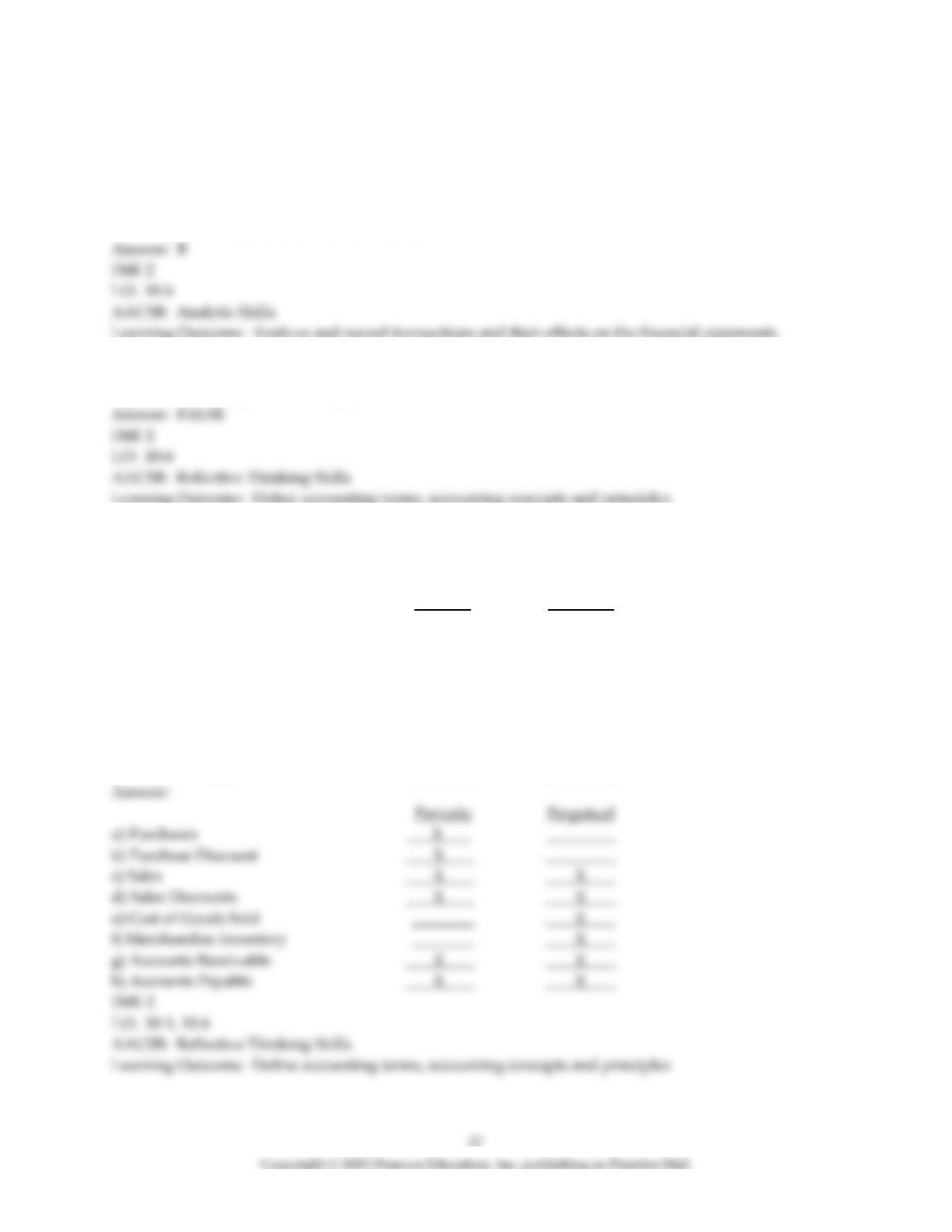
11) Indicate whether the following accounts are used in the periodic inventory method, perpetual
inventory method, or both by placing an X on the respective line(s).
Periodic Perpetual
a) Purchases ________ _________
b) Purchase Discount ________ _________
c) Sales ________ _________
d) Sales Discounts ________ _________
e) Cost of Goods Sold ________ _________
f) Merchandise Inventory ________ _________
g) Accounts Receivable ________ _________
h) Accounts Payable ________ _________
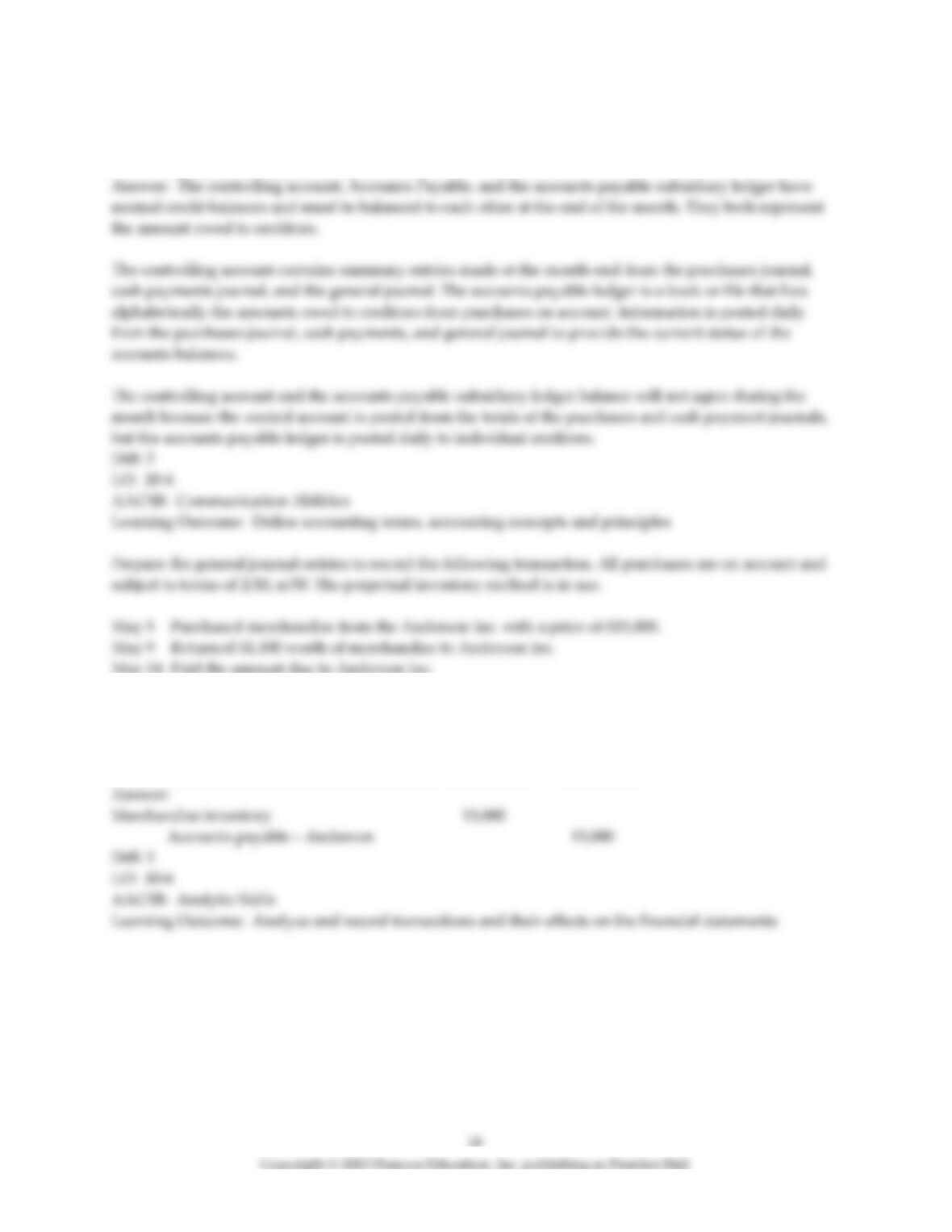
12) Compare and contrast the controlling account Accounts Payable to the accounts payable subsidiary
ledger. Discuss why the balance of the controlling account, Accounts Payable, does not equal the sum of
the accounts payable ledger during the month.
13) Prepare the general journal entry for the May 5 transaction.
__________________________________________ __________ __________
__________________________________________ __________ __________
__________________________________________ __________ __________
14) Prepare the general journal entry for the May 9 transaction.
__________________________________________ __________ __________
__________________________________________ __________ __________
__________________________________________ __________ __________
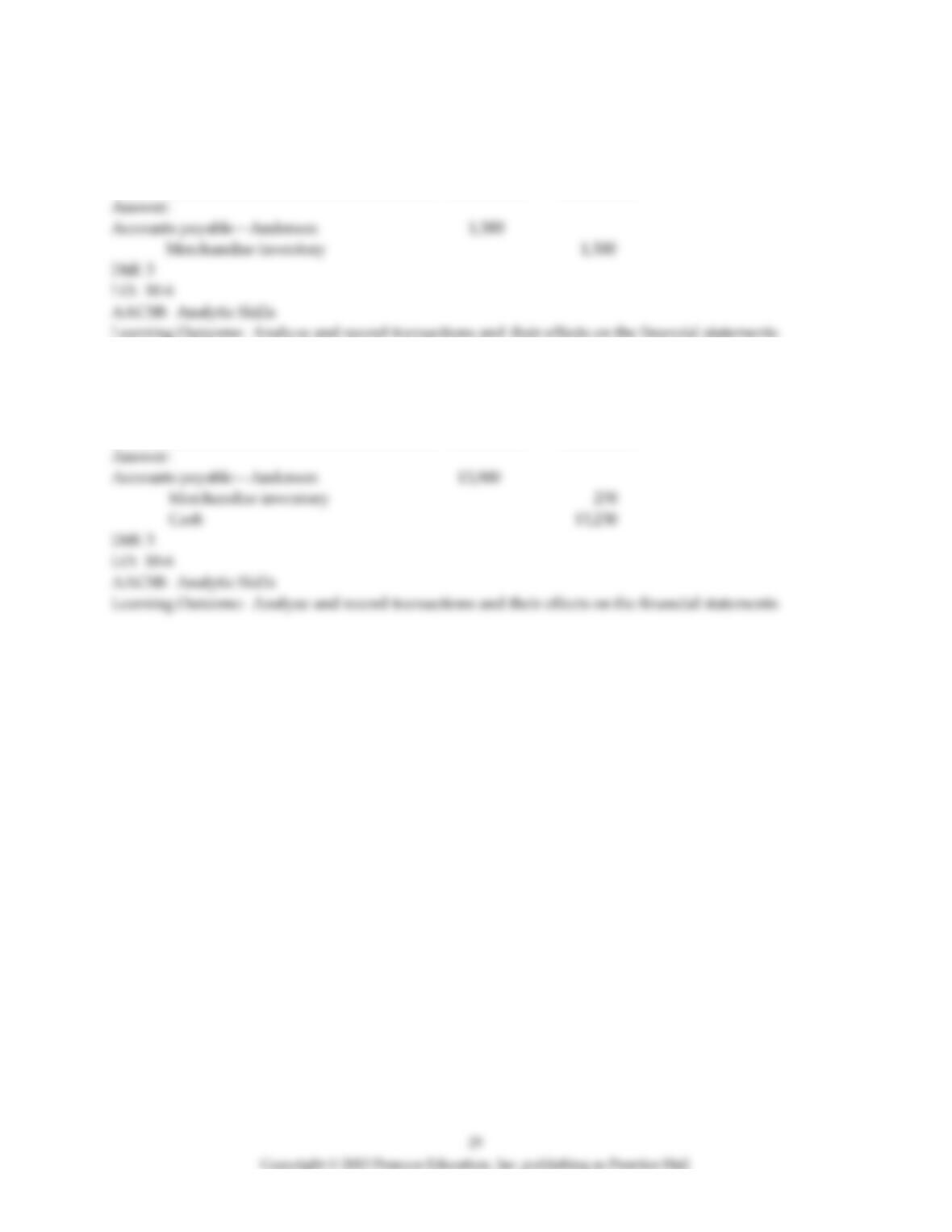
15) Prepare the general journal entry for the May 14 transaction.
__________________________________________ __________ __________
__________________________________________ __________ __________
__________________________________________ __________ __________
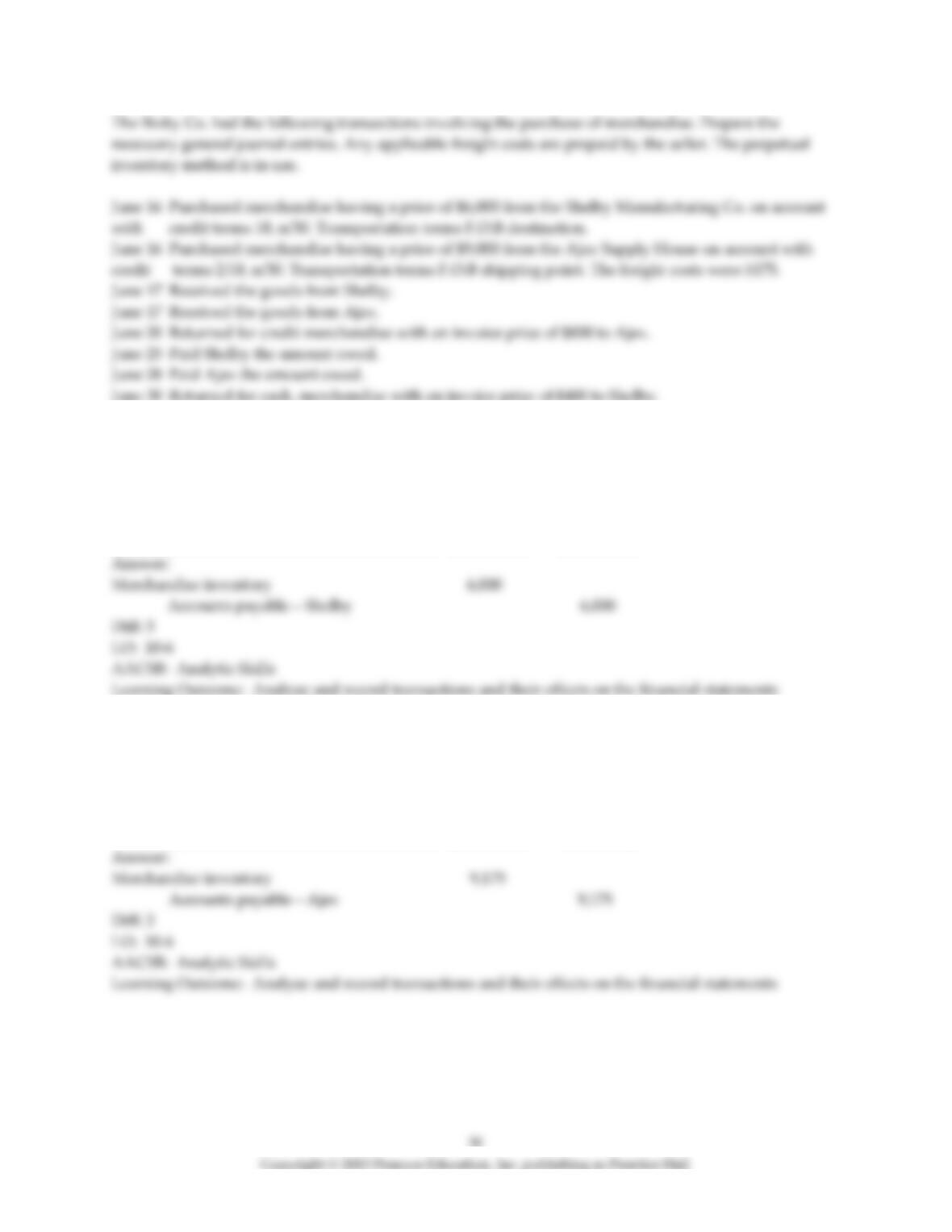
16) Prepare the necessary general journal entry for June 16, Purchased merchandise having a price of
$6,000 from the Shelby Manufacturing Co. on account with credit terms 2/10, n/30. Transportation terms
F.O.B destination.
__________________________________________ __________ __________
__________________________________________ __________ __________
__________________________________________ __________ __________
17) Prepare the necessary general journal entry for June 16, Purchased merchandise having a price of
$9,000 from the Ajax Supply House on account with credit terms 2/10, n/30. Transportation terms F.O.B
shipping point. The freight costs were $175.
__________________________________________ __________ __________
__________________________________________ __________ __________
__________________________________________ __________ __________
18) Prepare the necessary general journal entry for June 17, Received the goods from Shelby.
__________________________________________ __________ __________
__________________________________________ __________ __________
__________________________________________ __________ __________
19) Prepare the necessary general journal entry for June 17, Received the goods from Ajax.
__________________________________________ __________ __________
__________________________________________ __________ __________
__________________________________________ __________ __________
20) Prepare the necessary general journal entry for June 20.
__________________________________________ __________ __________
__________________________________________ __________ __________
__________________________________________ __________ __________
21) Prepare the necessary general journal entry for June 25.
__________________________________________ __________ __________
__________________________________________ __________ __________
__________________________________________ __________ __________
22) Prepare the necessary general journal entry for June 28.
__________________________________________ __________ __________
__________________________________________ __________ __________
__________________________________________ __________ __________
23) Prepare the necessary general journal entry for June 30.
__________________________________________ __________ __________
__________________________________________ __________ __________
__________________________________________ __________ __________
24)
Column 1
Column 2
Column 3
Purchases
expense
debit
income statement
25)
Column 1
Column 2
Column 3
Freight-In
Column 1
Column 2
Column 3
Freight-In
expense
debit
income statement
26)
Sales
Column 1
Column 2
Column 3
Column 1
Column 2
Column 3
Sales
revenue
credit
income statement
27)
Column 1
Column 2
Column 3
Merchandise
Inventory
Column 1
Column 2
Column 3
Merchandise
Inventory
asset
debit
balance sheet
28)
Column 1
Column 2
Column 3
Purchases Discounts
Column 1
Column 2
Column 3
Purchases Discounts
expense
credit
income statement
29)
Column 1
Column 2
Column 3
Store Rent Expense
Column 1
Column 2
Column 3
Store Rent Expense
expense
debit
income statement
30)
Column 1
Column 2
Column 3
Purchases Returns
and Allowances
Column 1
Column 2
Column 3
Purchases Returns
and Allowances
expense
credit
income statement
31)
Column 1
Column 2
Column 3
Owner’s Capital
Column 1
Column 2
Column 3
Owner’s Capital
owner’s equity
credit
balance sheet
10.7 Appendix
1) If the company uses special journals, all payments should be recorded on a:
A) cash receipts journal.
B) cash payments journal.
C) purchases journal.
D) sales journal.
2) Special journals are used to:
A) minimize the amount of entries monthly to the general ledger.
B) easily summarize like-kind transactions.
C) reduce the number of entries recorded in the general journal.
D) All of the above are correct.