CHAPTER 5:
EQUIPMENT ONE
OBJECTIVES
• Describe the basic hand tools used in industry.
• Identify and describe the valves used in industry.
• Describe the various types of storage and piping used in the chemical processing industry.
• Identify the operation and primary components a centrifugal and axial pumps.
REVIEW QUESTIONS
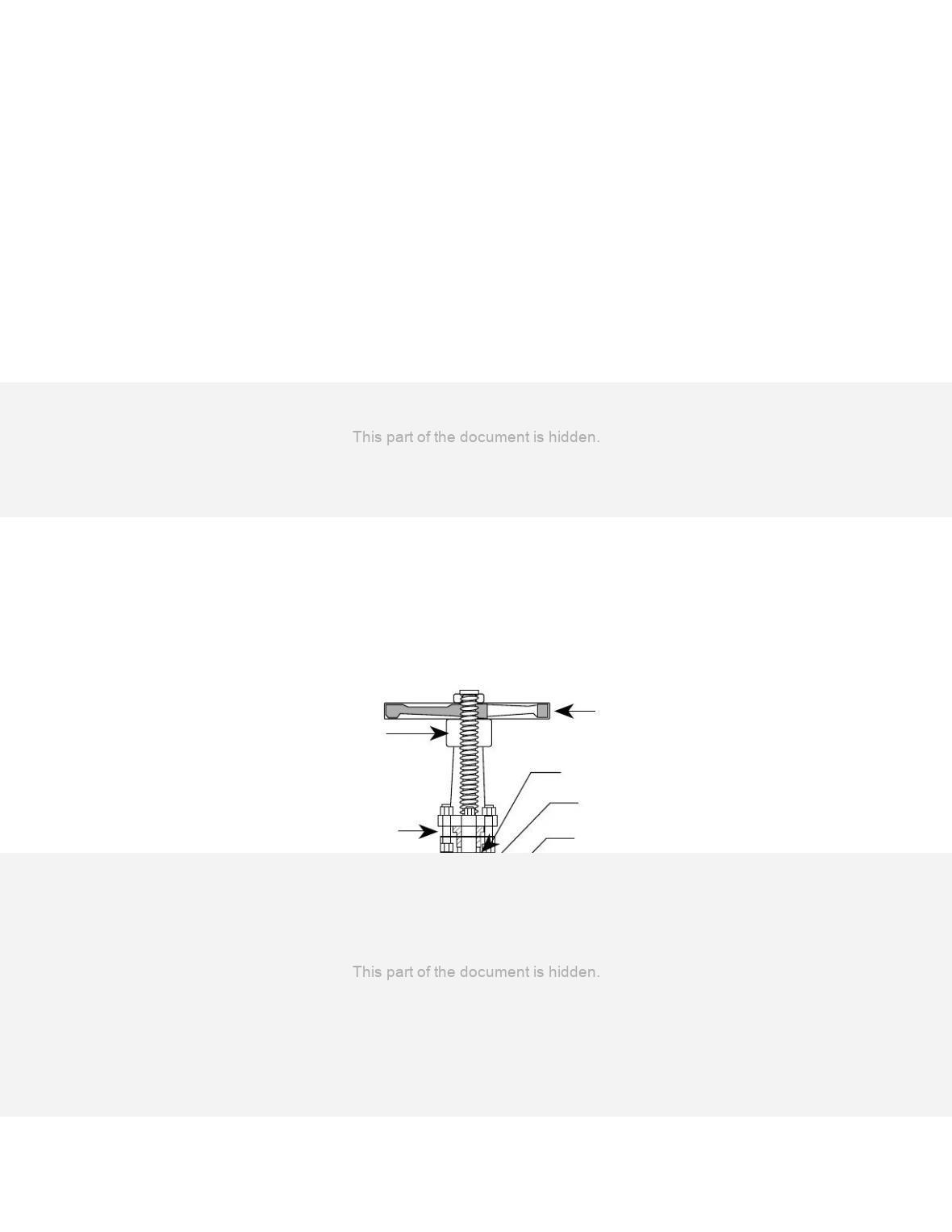
1. Draw a gate valve and label its parts.
See Figure 5-2
Body
Wedge
Seat Ring
Wedge Pin
Bonnet Bolt
Bonnet Gasket
Bonnet Bolt Nut
Stem
Bonnet
Gland Bolt
Packing
Yoke Bushing
Handwheel
The Gate
Stuffing Box

2. Draw a centrifugal pump and label its parts.
See Figure 5-12
3. What is the primary difference between a pump and a compressor?
4. Describe how a steam turbine works. Sketch a simple drawing if needed.
5. Describe Alternating Current AC current.
Discharge
Impeller
Casing

6. Draw and label a rotary pump. Show rotation.
See Figure 5-16
7. Explain the purpose of bearings and seals.
8. What are the basic components of an electrical motor?
Lobe Pump

9. List the basic hand tools used by process technicians.
10. Describe how a steam trap operates.
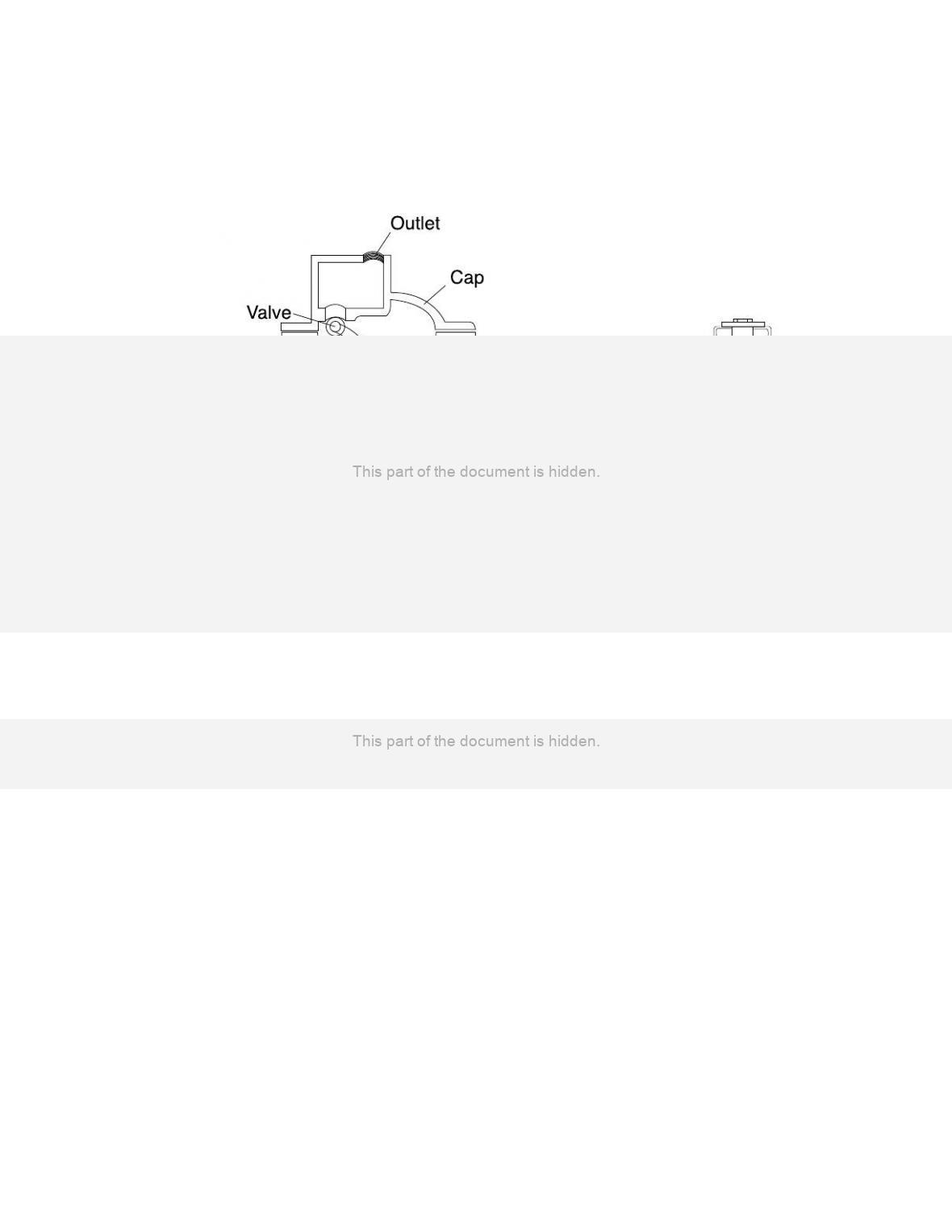
11. Draw and label a globe valve.
12. What is the primary purpose of a floating roof?
13. List the standard pipe fittings used to connect pipe.
14. What type of materials are used in the manufacture of storage tanks?
15. How much pressure can a typical horizontal cylindrical tank hold?
16. Draw the type of valve used to relieve pressure, and label its parts.
GLOBE VALVE
Handwheel

Adjustment Screw
Cap

17. Describe how an industrial motor works.
18. Describe centrifugal movement.
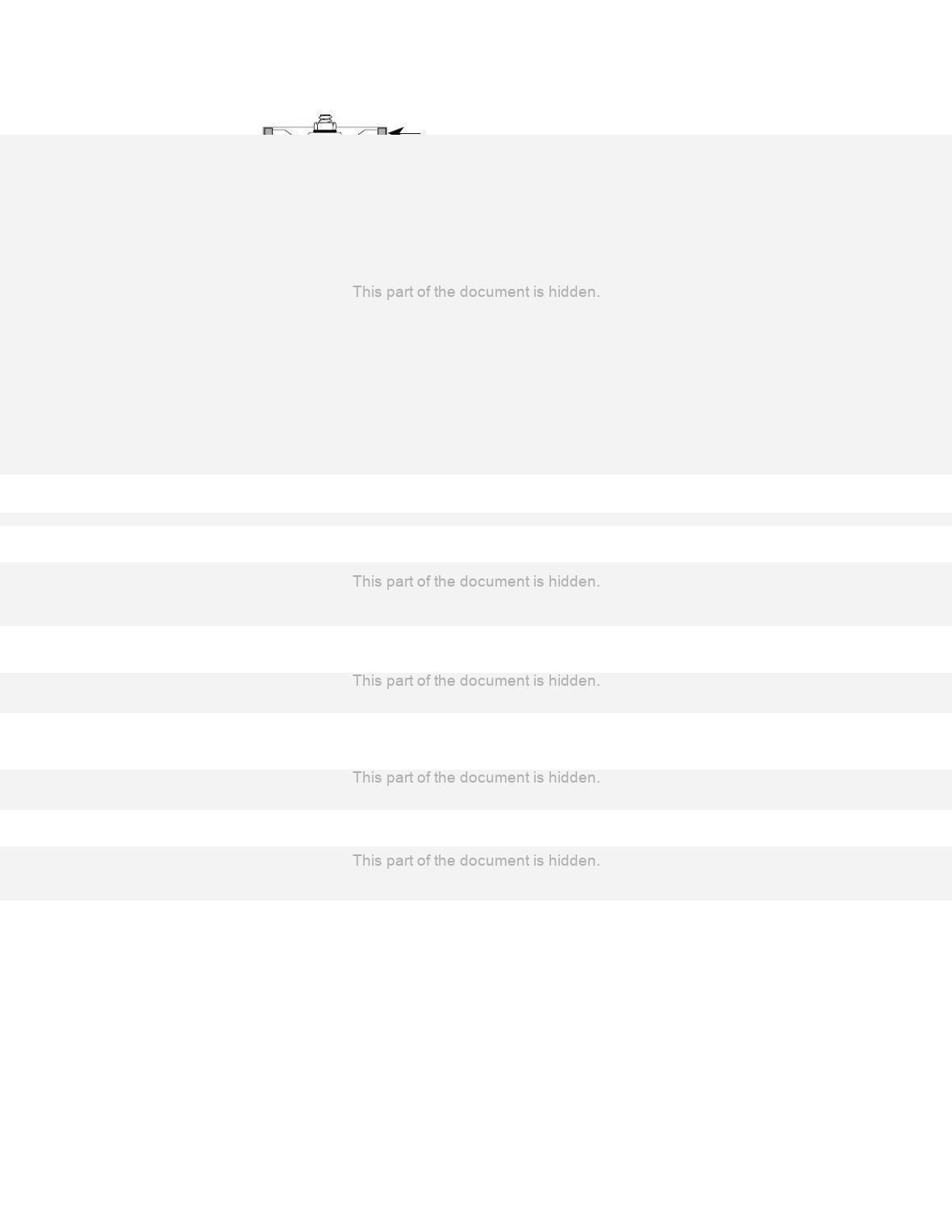
19. Draw a reciprocating pump and label its parts. Show rotation.
See Figure 5-19, Reciprocating pumps.
Packing Gland
Suction
Discharge
Piston Rings
PISTON PUMP

20. Explain the importance of lubrication for a pump, compressor or turbine.
Lubrication protects the moving parts of equipment by placing a thin film of protection
CHAPTER 5 TEST
EQUIPMENT ONE
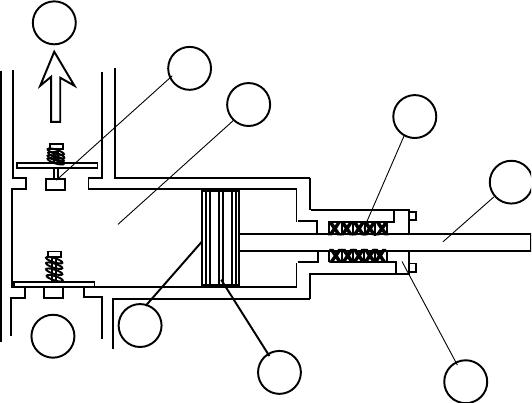
1. Please label this reciprocating pump.
2. What is the primary difference between a pump and a compressor?
a. a pump is designed to move gas while a compressor is designed to move liquids.
b. RPM rating on motor or steam turbine
c. a pump is designed to move liquid while a compressor is designed to move gases.
d. a pump does not need a motor while a compressor does
A
B
C
DE
FG
H
I
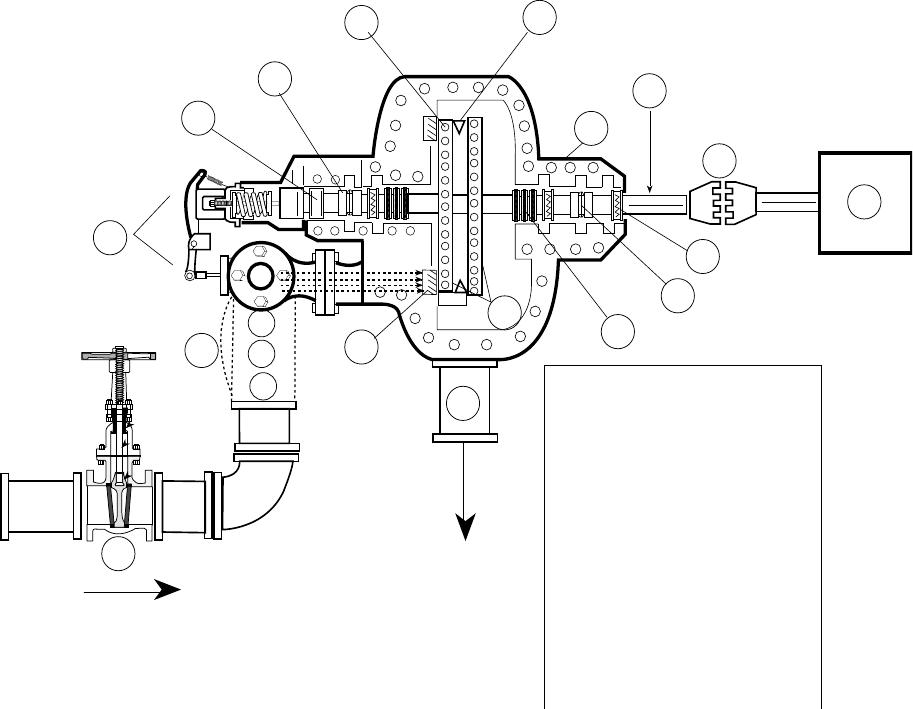
3. Please label this steam turbine.
4. The basic components of an electrical motor include all of the following except:
a. bearings and seals
b. stator windings, rotor and shaft
c. impeller and volute
d. frame and fan
Steam
Inlet
Steam
Chest
Throttle
Valve
Gate Strainer
Overspeed Trip
Steam Outlet
Fixed Blades
Governor
System
Governor Valve
Thrust Bearings
Radial Bearings
Carbon Rings
Labyrinth Seals
Moving Blades
Casing
Rotating Shaft
Nozzle
Block
Rotor
Slinger Ring
Coupling
Pump, Compressor,
Generator, etc.
X
X
XX
X
X
X
X
X
X
X X
X
X
X
A
B
C
D
E
F
J
K
L
M
N
O
P
Q
R
S
T
G
HI
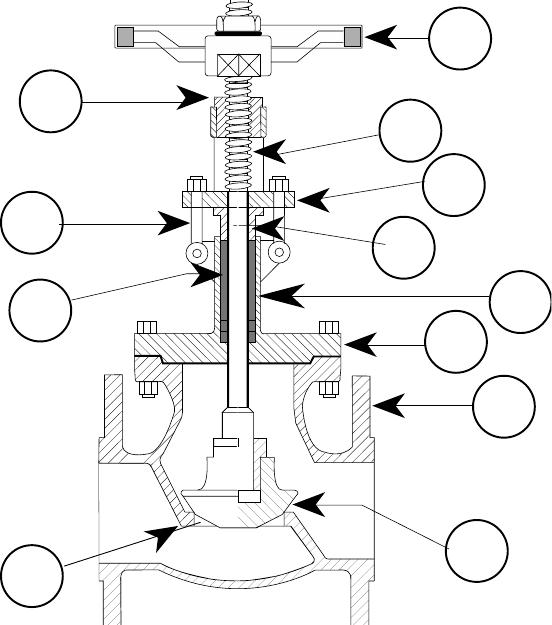
5. Please label this globe valve.
6. Please label this safety valve.
A
B
C
DE
FG
H
I
J
K
L
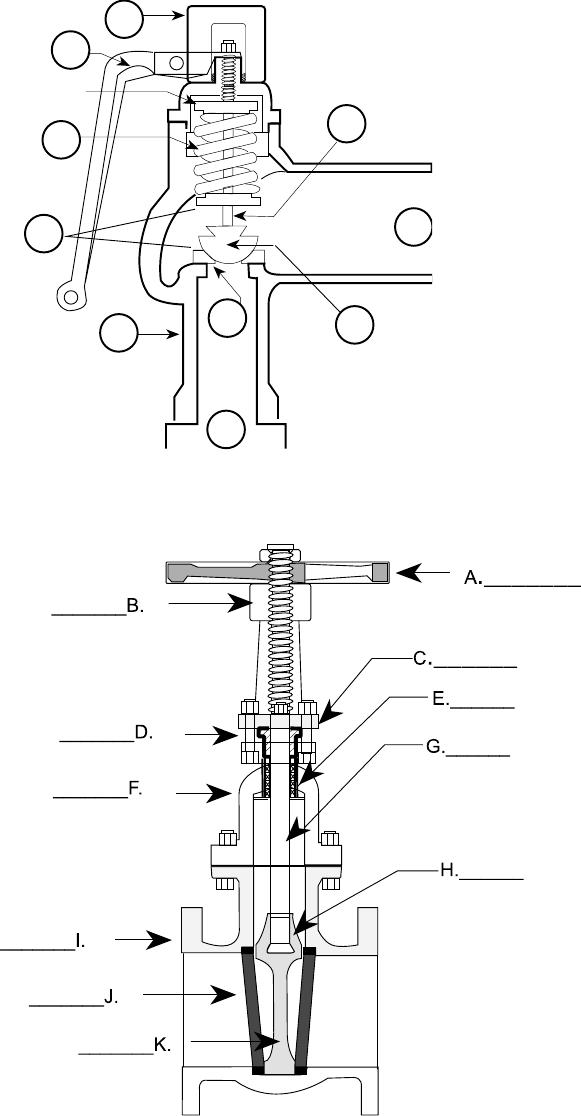
7. Describe how an industrial motor works.
8. Please label this gate valve.
9. Please label this centrifugal pump.
A
B
C
D
E
F
J
H
I
G
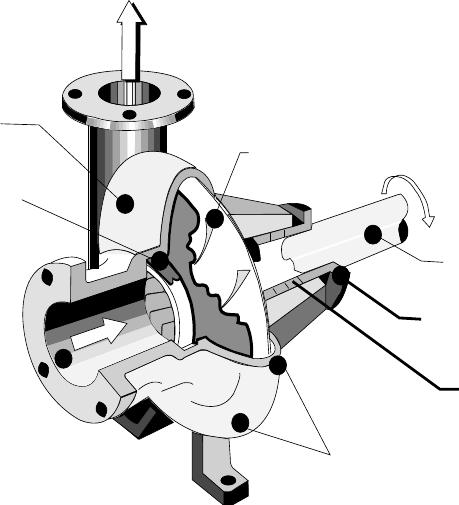
A.__________
I.___________
C.________ E.______________
D. ___________
F._____________
H.___________
G._____________
B.______
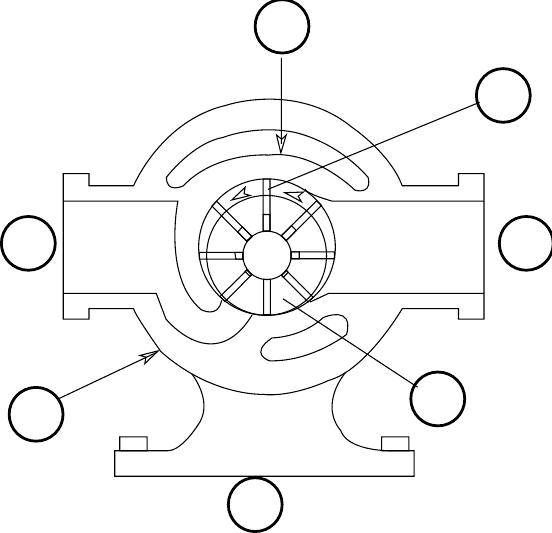
10. Please label this rotary pump
A.
B
C
D
E
F
G

ANSWERS TO CHAPTER 5 EQUIPMENT ONE