CHAPTER 2:
INTRODUCTION TO PROCESS TECHNOLOGY
OBJECTIVES
• Describe the process technology curriculum and Associate of Applied Science degree plan.
• List the key principles of safety, health, and environment
• Explain the principles of instrumentation and modern process control.
• Identify the different types of process equipment and the technology associated with
operating them.
REVIEW QUESTIONS
1. List the basic concepts of statistical quality control.
2. List the basic concepts taught in safety, health, and environment.
3. List three basic systems found in the chemical processing industry.
4. List the basic concepts taught in process operations.
6. List the basic concepts taught in process troubleshooting.
7. Describe how science and chemistry are related to the other process classes.
8. Explain why a good mathematical foundation is important to a process technician.
9. List the basic concepts taught in introduction to process technology.
10. List the basic concepts taught in the process equipment course.
11. Describe the process technology curriculum and Associate of Applied Science degree
plan at your school.
12. Describe the primary purpose of the process instrumentation course.
13. List the key elements found in the definition of process technology.
14. Draw a flow control loop.
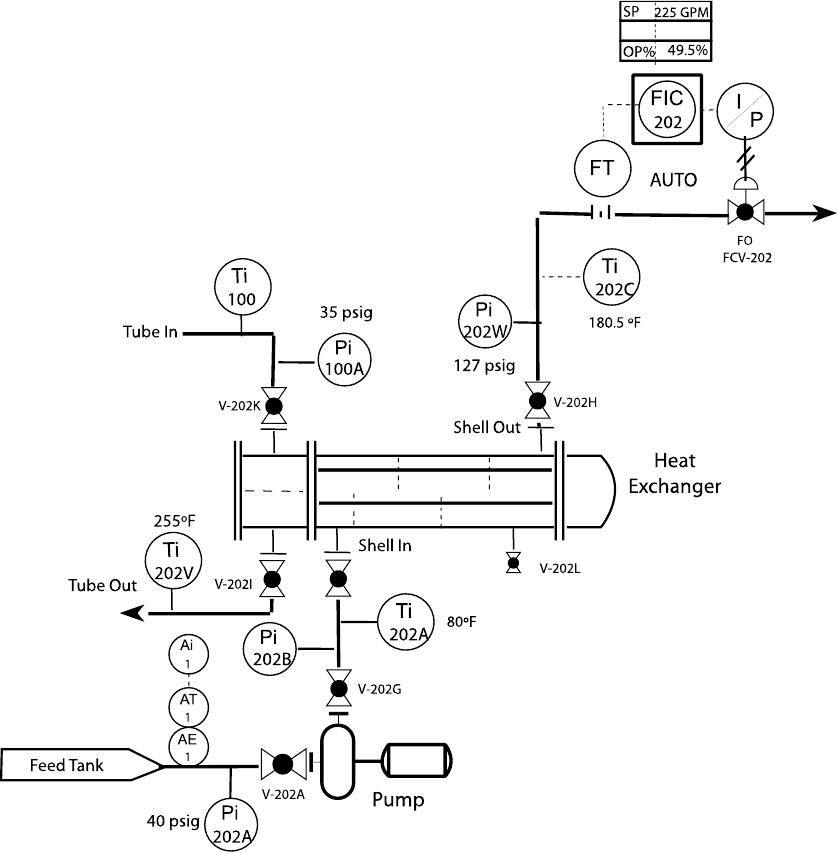
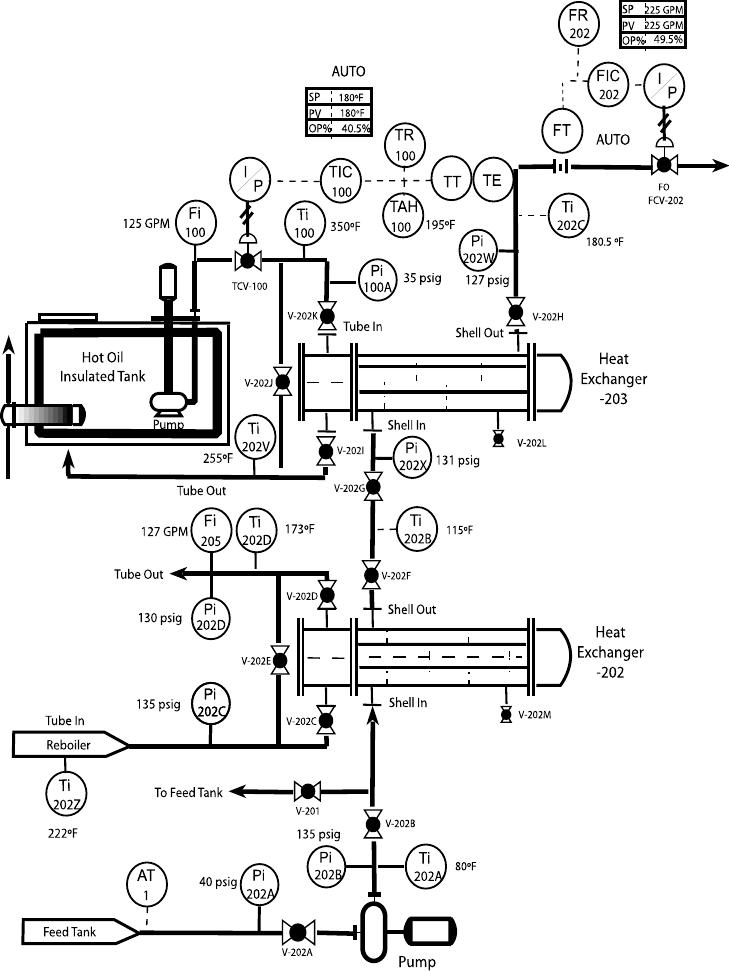
15. Draw a simple sketch of a shell and tube exchanger. Show all flows: tube-in, tube-out,
shell in, shell out, shell, channel-head, pass partition, tube-sheet, and all associated
valves. Explain principles of heat transfer, flow rate, and pressure and illustrate on your
drawing how they work.
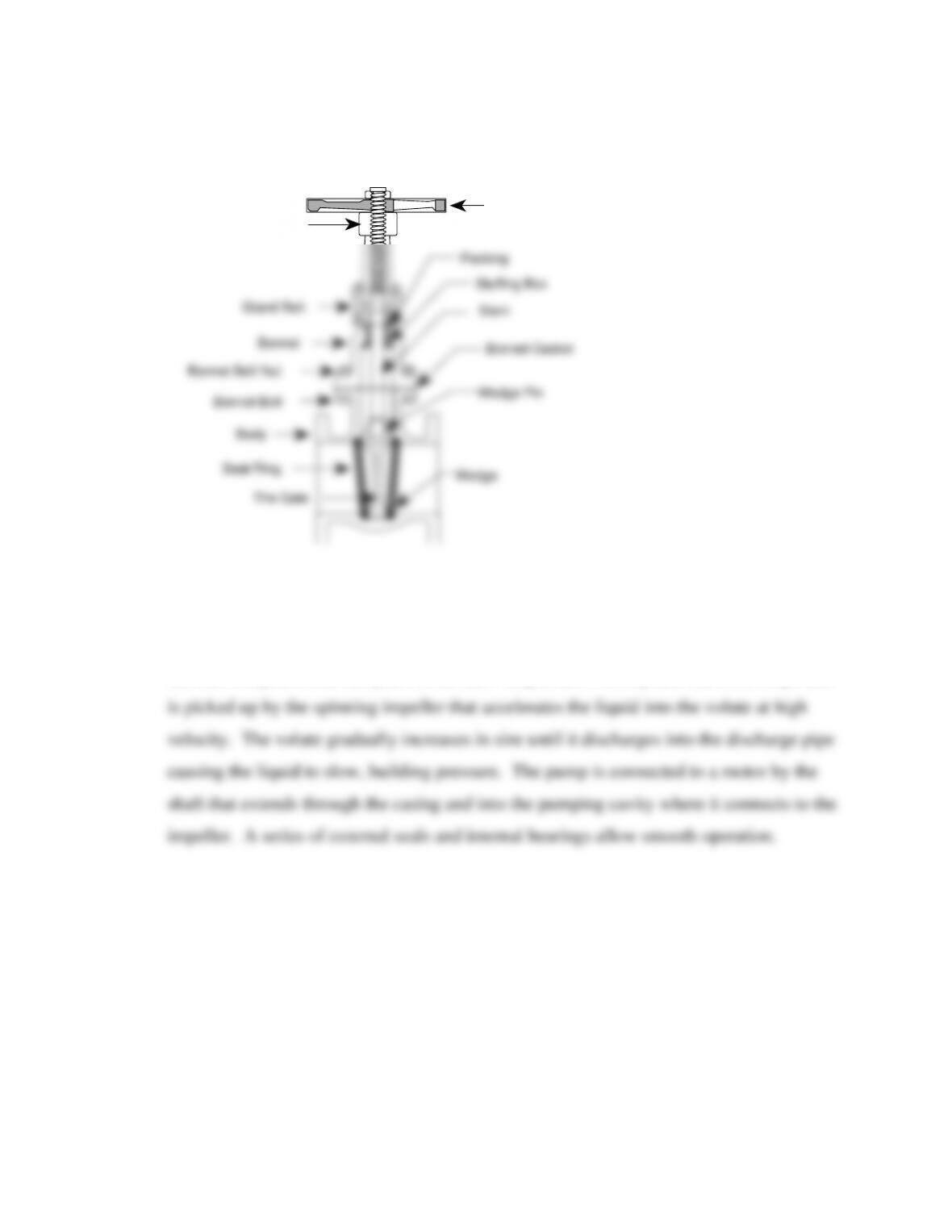
16. Draw and label a gate valve.
17. Draw and label a centrifugal pump. Explain how it operates and the associated scientific
principles. A centrifugal pump is designed use centrifugal force to accelerate fluid flow
and move liquids from one place to another. Liquid flows freely into the suction eye and
Yoke Bushing
Handwheel
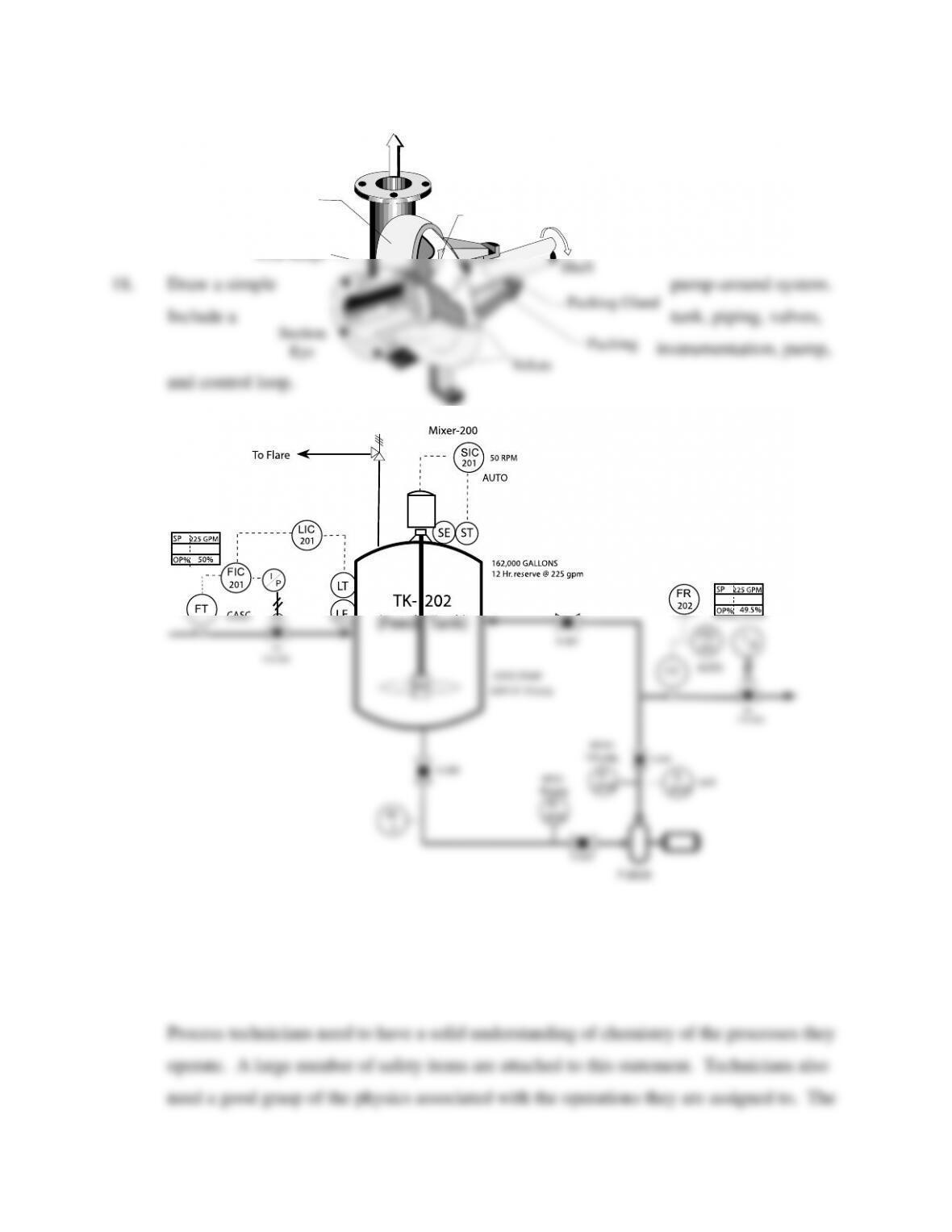
19. Explain how having a solid foundation in the principles of chemistry and physics is
important to a technician.
Discharge
Wear Rings
Impeller
Shaft
Casing

20. List the types of jobs available to a person with a process technology degree.
CHAPTER 2 TEST
INTRODUCTION TO PROCESS TECHNOLOGY
1. A system is best described as:
a. a collection of equipment designed to perform a specific function.
b. a collection of equipment systems that work together to produce products.
c. a collection of math, science, equipment and technology.
d. a collection of feed stocks fed into a process reactor.
2. Process instrumentation is primarily described as the study of:
a. the structure, components, and science of control loops
b. symbols and diagrams, process flow diagrams, and drawing piping & instrument
drawings.
c. the instruments and instrument systems used in the chemical processing industry.
d. all the above
3. List the five elements of a control loop:
a.
b.
c.
d.
e.
4. Process technicians ________________, organize, and __________________ data.
a. record & respond to
b. read & flag
c. compare & contrast
d. collect & analyze
5. A basic principle of quality states:
a. change attitudes and behaviors required to implement kaizan systems.
b. each process has “natural variation” or a range that it naturally moves through.
c. training is fundamental to the grass roots acceptance of the principles of quality.
d. equipment is designed to perform a specific function.
6. Process technology is best described as:
a. completion of college courses required to be a process technician.
b. study of modern process control, design, and application of manufacturing
engineering principles.
c. study and application of the scientific principles associated with the operation and
maintenance of the CPI.
d. All the above.
7. Process technology programs prepare students for careers in: (Name 5)
a.
b.
c.
d.
e.
8. Process Technology programs are:
a. Regionally accredited & taught at community colleges & universities
b. State approved & transferable between institutions
c. Non-transferable from one institution to another
d. Continuing education programs for non-credit.
e. a & b
9. List three critical elements associated with success in college and “Self-directed study
habits.”
a.
b.
c.
10. List three topics on the course outline for Safety, Health, and Environment.”
a.
b.
c.
11. Name three safety incidents that have changed the chemical processing industry.
a.
b.
c.
12. The primary purpose of process safety is:
a. prevent injuries and fatalities
b. prevent fires and explosions
c. prevent unexpected releases of hazardous materials.
d. all the above
13. A process safety analysis is primarily designed to:
a. reduce potential for fire and explosions
b. protect equipment and physical facilities
c. establish safe operating parameters
d. complete assigned government documentation
14. OSHA and the EPA believe that the key to preventing catastrophic emergencies in the
CPI is:
a. adequate employee training
b. a Hazardous Safety Analysis
c. support from all levels of management
d. government support and funding
15. List two quality gurus who changed what we know about the principles of quality.
a.
b.
16. List three topics on the course outline for “The Principles of Quality.”
a.
b.
c.
17. List three topics on the course outline for “Process Instrumentation.”
a.
b.
c.
18. List three topics on the course outline for “Process Equipment.”
a.
b.
c.
19. Process Operations is an advanced course that provides an adult learner with _______
____ experience.
20. List three topics on the course outline for “Process Operations.”
a.
b.
c.
21. List three process models discussed in the “Process Troubleshooting” class.
a.
b.
c.
22. List the four troubleshooting methods described in the process troubleshooting course.
a.
b.
c.
d.
23. Identify the Math and Science requirements in your program.
a.
b.
c.
d.
24. List three topics on the course outline for “Applied General Chemistry.”
a.
b.
c.
25. Name the course that first introduces students to; symbols and diagrams, process flow
diagrams PFD’s, control loops and Piping and Instrumentation Drawings P&ID’s.
ANSWER KEY CHAPTER 2 TEST