CHAPTER 14
PHYSICS TEST
1. A man weighing 190 lbs climbs a staircase 35 ft in 25 seconds. Calculate how much
work was performed.
a. 2,650 ft pounds of work
b. 4,650 ft pounds of work
c. 6,650 ft pounds of work
d. 8,650 ft pounds of work
2. The energy of motion or velocity.
a. kinetic energy
b. potential energy
c. latent heat of vaporization
d. latent heat of condensation
3. A rectangular vessel, 10 ft wide, 20 ft long, and 12 ft deep is filled with mercury (density
= 13.6 grams per cubic centimeter). Using the following equations: (a) What is the
pressure on the bottom of the tank? (b) Identify the average pressure on one side of the
vessel. (c) What is the total force on the bottom of the tank? (d) Identify the total force
against one end of the tank.
a. P = HD
b. P ave = H ave X D =
c. F = AHD
d. F = AHD ÷ 2 =
a. 163.2 psi, 81.6 psi, 32,640 psi, 16,320 psi
b. 173.2 psi, 71.6 psi, 32,640 psi, 16,320 psi
c. 183.2 psi, 61.6 psi, 32,640 psi, 16,320 psi
d. 193.2 psi, 51.6 psi, 32,640 psi, 16,320 psi

4. Identified as the quantity of matter.
a. solid
b. mass
c. liquid
d. plasma
5. A method for determining the heaviness of a fluid. The specific gravity of gasoline is
6.15 lb. per gal. ÷ 8.33 = 0.738
a. density
b. baume
c. API
d. specific gravity
6. Calculate the pressure exerted on the bottom of a 69 foot distillation column by a ten foot
hydrocarbon level. Specific gravity is .67. Vapor pressure at 240 F is 236. 100 psi is
added to the column giving a top gauge reading of ___ psi and a bottom gauge reading of
___ psi?
a. top 236 psi, bottom 238.9 psi
b. top 336 psi, bottom 338.9 psi
c. top 136 psi, bottom 138.9 psi
d. top 36 psi, bottom 38.9 psi
7. The heaviness of a substance while specific gravity compares this heaviness to a standard
and then calculates a new ratio. The density of one gallon of water is 8.33 pounds per
gallon
a. density
b. baume
c. API
d. specific gravity
8. Standards to measure the heaviness of a hydrocarbon. A specially designed hydrometer;
marked in units API is used to determine the heaviness or density of a hydrocarbon.
a. density
b. baume
c. API
d. specific gravity
9. Calculate the pressure produced by a ten foot onion tank, filled with a hydrocarbon fluid.
(.72 s.g.) . Vapor pressure 200. Add 45 psi N2 to total. What is the final pressure?
a. 25.65 psi
b. 2.48.1 psi
c. 4.56 psi
d. 8.89 psi
10. Anything that occupies space and has mass or volume.
a. matter
b. mass
c. inertia
d. gravity
11. Find the volume of a granite object with a density of 2.6 grams per cc and a weight of
1280 grams.
V= W / D
a. 392 cm3
b. 492 cm3
c. 592 cm3
d. 692 cm3
12. What is the density of a cube of iron, 15 cm on an edge, that weighs 9.6 kg?
D =W / V
a. 2.84 g/cm3
b. 2.34 g/cm2
c. 6.84 g/cm3
d. 0.84 g/cm3
13. How many liters of alcohol will weigh 30 kg? Density of alcohol = 0.8 g/cm3
V= W / D
Note: 1 kilogram = 1000 grams
a. 10.6 liters
b. 23.9 liters
c. 32.5 liters
d. 37.5 liters
14. A beam of cedar wood 20 ft long, 2 foot wide, and six inch thick weighs 150 lb.
Calculate its density. Show your work!
D = W÷ V V = LWH
a. 3.2 pounds per cubic ft
b. 4.7 pounds per cubic ft
c. 7.5 pounds per cubic ft
d. 9.5 pounds per cubic ft
15. What will be the weight of a rectangular steel bar 15 ft long, 1 foot wide, 2 inches thick?
(Density of steel = 461 lb/ft3) Show your work!
V = LWH
W = DV
a. 1,152.5 pounds
b. 11.52 pounds
c. 115.25 pounds
d. 2006.5 pounds
16. Find the density of helium gas: twenty liters of the gas weighs 3.4grams.
D =W / V
a. 0.17 grams per liter
b. 0.71 grams per liter
c. 1.7 grams per liter
d. 12 grams per liter
17. Calculate the pressure produced by a 2000 pound stone block, 40 ” length X 20″ width X
60″ height.
a. 20.5 psi
b. 200 psi
c. 2500 psi
d. 2.5 psi
18. Calculate the pressure produced by a 456 pound granite block, 10″ length X 15″ width X
72″ height.
a. 9.05 psi
b. 5.78 psi
c. 3.04 psi
d. 2.54 psi
19. Calculate the pressure produced by a 40 foot onion tank, filled with 17.5 ft of a
hydrocarbon fluid. (.54 s.g.) . Vapor pressure 300. Add 15 psi N2 to total. What is the
final pressure?
a. 319.09 psi
b. 31.9 psi
c. 3.19 psi
d. 3190.9
20. The standard used by industrial manufacturers to measure non hydrocarbon heaviness.
a. density
b. baume
c. API
d. specific gravity
21. Calculate the pressure produced by water in a 12.5 foot high vessel.
a. 45.8 psi
b. 6.98 psi
c. 2.54 psi
d. 5.41 psi
22. What pressure, in PSI pounds per square inch, is a scuba diver subjected when he / she
descends to an ocean depth of 125 feet?
a. 54.12 psi
b. 64.12 psi
c. 44.12 psi
d. 34.12 psi
23. Causes matter to change and does not have the properties of matter.
a. energy
b. inertia
c. gravity
d. density
24. Calculate the amount of work accomplished by a three foot table holding up a two pound
book.
a. 3 ft pounds of work
b. 4 ft pounds of work
c. 5 ft pounds of work
d. 6 ft pounds of work
25. A principle used to explain a bodies ability to resist motion.
a. centrifugal force
b. gravity
c. kinetic energy
d. inertia
26. Calculate the amount of work accomplished when a weight is lifted 240 ft by a force of
600 lbs.
work = force X distance
= F X D
= X = ft–lb
a. 144,000 ft pounds of work
b. 44,000 ft pounds of work
c. 104,000 ft pounds of work
d. 164,000 ft pounds of work
27. Stored energy
a. kinetic energy
b. potential energy
c. latent heat of vaporization
d. latent heat of condensation
28. A cylinder 4 cm in diameter and 40 cm long is made of brass. (Density = 8.5 g/cm3)
Calculate its weight. Show your work!
(V=πr2h)
W = DV
a. 4.26 grams
b. 250 grams
c. 5,300.5 grams
d. 4,270.4 grams
29. What current in amps, will flow through a conductor with a resistance of 20 ohms if the
potential difference is 120 volts? I = V ÷ R
a. 6 amps
b. 12 amps
c. 8 amps
d. 120 voltt
30. An electric motor on a centrifugal pump has a total resistance of 6 ohms. If the motor
uses 21 amps of current, what voltage does the motor need?
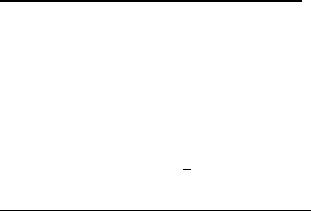
I = V ÷ ÷ R or V = IR
a. 21 amps
b. 6 ohms
c. 110-120 volts
d. 126 volts
31. Steam enters a turbine at 412ºF at atmospheric pressure. Six hundred pound steam flows
through the turbine each hour during normal operation. Formula: Rh = Ws X c X ∆T
Rh = ?
Ws = 600 lbs/hr
c = 0.48
Tin = 412ºF
Tout = 212ºF
∆T = ?
32. On question 31, calculate the HP output.
Formula: HP = (Rh) heat rate X 0.000393
= _______ HP
33. Identify the steam turbine’s thermal efficiency.
Formula: e = (Tin – Tout) ÷ Tin
Step one: Convert ºF to ºC to K
°C = (ºF − 32) 1.8
412ºF = 211ºC + 273 = 484K
212ºF = 100ºC + 273 = 373K
e = (Tin – Tout) ÷ Tin X 100 =
= % thermal efficiency

34. Determine the Thermal Efficiency of the Heat Exchanger
Formula: e = (Tin – Tout) ÷ Tin
Step one: Convert ºF to ºC to K
Tin = 400ºF
Tout = 180ºF
e = _________%
35. A balanced lever arm rests on a fulcrum at its center. A 600-lb force is applied 5 ft from the
fulcrum. To maintain equilibrium, how far from the fulcrum, on the other lever arm, should a
1200-lb force be applied?
Solution:
CCW moments = CW moments
x = _______ ft

ANSWER KEY CHAPTER 14 PHYSICS