CHAPTER 10
PROCESS TECHNOLOGY-SYSTEMS 2
OBJECTIVES
• Describe the different type of reactors used in the chemical processing industry.
• List the unique characteristics of a reactor system and explain how it is different from other
industrial processes.
• List the critical process variables associated with reactor operation.
• List the primary components of a plate distillation column and describe its relationship
within a distillation process.
• Describe the primary components of a packed distillation column.
• Compare and contrast absorbers and adsorption columns.
REVIEW QUESTIONS
1. Describe how a distillation column works.
2. What is the primary function of a reactor?
3. Draw a simple flare system.
4. List the basic equipment found in a distillation system.
5. List the equipment found in utility systems.
6. Describe the basic equipment found in a stirred reactor system.
7. Describe the equipment found in an extrusion system.
8. Describe a scrubber’s primary function.
9. Compare and contrast an absorption column with an adsorption system.
10. List the basic equipment used in a refrigeration system.
11. List the basic equipment found in a water treatment system.
12. Describe the purpose and operation of a pressure relief system and flare system.
13. Describe how the refrigeration system works.
14. What kinds of systems are found in a plant’s utility section?
15. List the various sections found in a plastics plant.
CHAPTER TEN TEST SYSTEMS 2
1. Sketch a simple flare system.
2. The function and operation of an extruder is most closely described as:
a. A complex piece of equipment used to blend, melt and extrude polymer.
b. A large granules blender that uses a forming mat.
c. A specially designed extrusion reactor.
d. An industrial compressor used to transfer dry granules.
3. The basic equipment associated with a flare system includes: List Five (5).
a.
b.
c.
d.
e.
4. List three examples of pressure relief equipment.
a. __________________________________
b. __________________________________
c. __________________________________
5. A demineralizer is:
a. A vibrating tube with screens for pellet segregation.
b. A filtering device that removes dissolved substances from a fluid.
c. A device designed to safely burn hydrocarbons.
d. A solids feeder composed of single and multiple screws.
6. A classifier is:
a. A vibrating tube with screens for pellet segregation.
b. A filtering device that removes dissolved substances from a fluid.
c. A device designed to safely burn hydrocarbons.
d. A solids feeder composed of single and multiple screws.
7. Polymerization is a process that:
a. Creates synthetic links between molecules called monomers.
b. Combines chemical compounds.
c. Creates long chain molecules.
d. All of the above.
8. The basic components of a refrigeration system include all the following except:
a. Compressor- high pressure refrigeration gas
b. Heat exchanger- cooling tower
c. Receiver
d. Expansion valve-low pressure refrigeration liquid
e. Heat exchanger (evaporator)- low pressure refrigerant gas.
f. Gear box- low temperature lubricant
9. In a simple “Two–Step Refrigeration system” flow moves:
a. Evaporator, expansion valve, condensor, compressor.
b. Condensor, compressor, evaporator, expansion valve
c. Compressor, condenser, expansion valve, evaporator
d. Compressor, expansion valve, condensor, evaporator
10. The principles of water treatment include:
a. Settling basin, pumps, filters, chemicals, demineralizers, plant.
b. Settling basin, chemicals, filters, pumps, demineralizers, plant.
c. Demineralizers, filters, settling basin, chemicals, pumps, plant.
d. Filters, settling basin, chemicals, pumps, plant, demineralizers.
11. Surface water is defined or described as:
a. Water that is drawn for industrial applications from lakes, rivers, and oceans.
b. Water drawn from water wells, retention basins, city water
c. Water drawn from any source if used for industrial applications.
d. Rain water collected in the plants lagoons, holding ponds, aeration basins, and
retention basins.
12. A typical utilities section is composed of all the following except:
a. Distillation system
b. Water treatment system
c. Steam generation
d. Cooling tower system
e. Compressed gases
13. Flare systems are primarily designed to:
a. Provide light for nighttime activities.
b. Safely burn excess hydrocarbons
c. Separate liquid hydrocarbons for use in the plant.
d. Provide a vent for escaping gases and vapors.
14. Pressure relief equipment is primarily designed to:
a. Maintain pressure on the flare header.
b. Safely remove hazardous vapors and chemicals from the system.
c. Provide fuel for the flare.
d. Protect equipment from minor damage.
15. List Four (4) examples of plastics plant equipment:
a.
b.
c.
d.
16. Sketch a stirred reactor. Include the following components:
a. vessel
b. mixer
c. piping, valves, pump
d. two (2) inlet ports
e. one (1) outlet port
f. temperature and pressure control
g. flow and level control
17. List the two different types of distillation columns.
a.
b.
18. Distillation is best described as:
a. a prohibition term used to describe the manufacture and production of
“moonshine.”
b. a large process that includes a reactor and distillation system to separate products
c. forms chemical bonds based upon boiling point
d. separates the components in a mixture by differences in volatilities
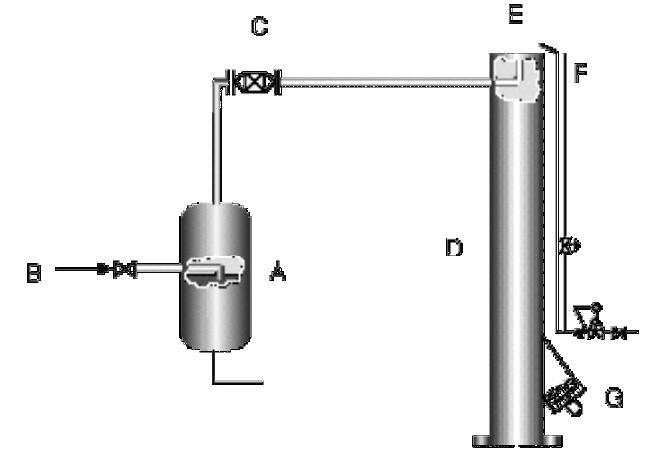
19. Please label the following flare system.
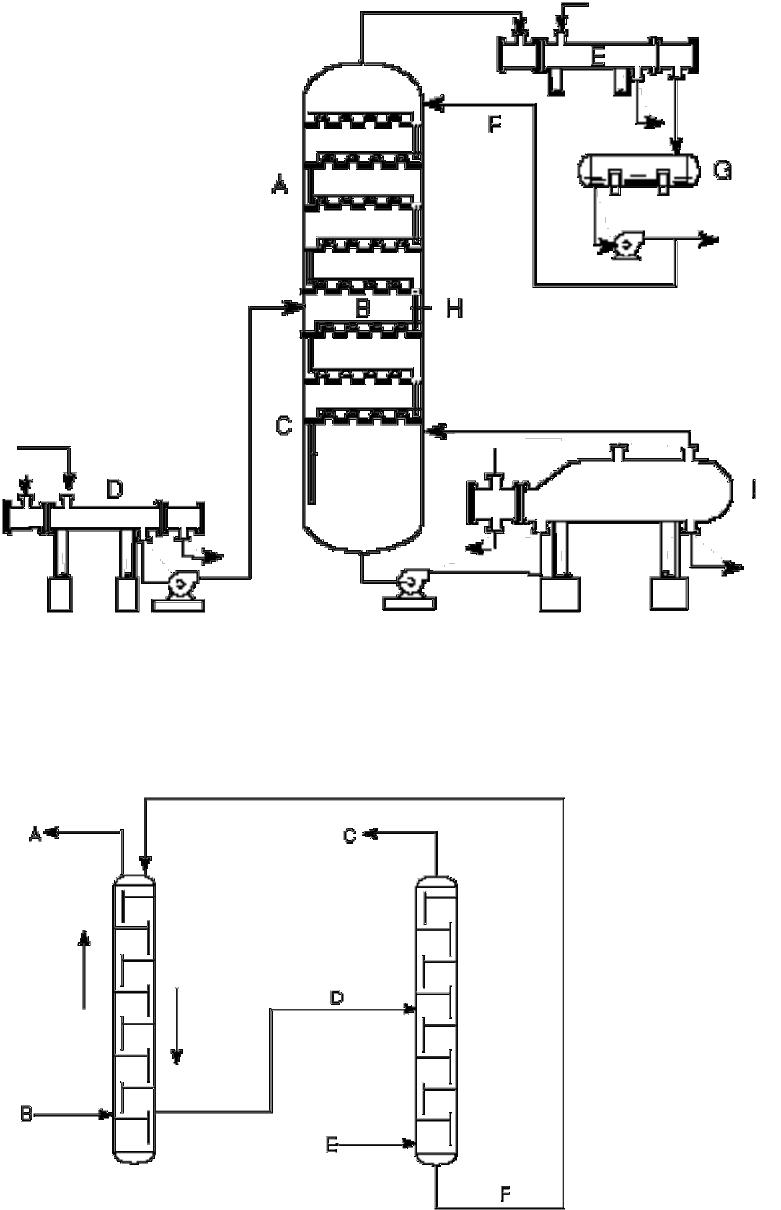
20. Please label the following distillation column.
21. Please label the following ___________ and ____________ system.
22. Sketch a simple “adsorption” system.
23. A scrubber system is designed to:
a. remove chemicals and solids from process gases
b. protect and enhance environmental quality.
c. mechanically remove liquids from the bottom of a device
d. A & B
24. Sketch a chemical separations system. Include the following:
a. vessel & mixer
b. solvent
c. feed
d. raffinate
e. extract
ANSWER KEY CHAPTER 10 SYSTEMS 2