Version 1 1
Student name:__________
1) Identify and briefly describe the laws of perceptional grouping.
2) How do management expectations impact worker performance?
3) What are schemas? Identify four common schemas used by managers.
4) How are the terms stereotyping, prejudice and scapegoating related?
Version 1 2
5) Describe the impression management tactics were identified by Jones and Pittman?
6) How one person views _______________ is often quite different than someone else’s
perceptions.
A) the environment
B) trends
C) people
D) All of the choices are correct.
7) _______________ has the lowest long-term unemployment rate among industrialized
nations.
A) Germany
B) Italy
C) The United States
D) Japan
8) Perception is defined as the process by which an individual _______________ to
environmental stimuli.
A) selects
B) organizes
C) gives meaning
D) All of the Above.
Version 1 3
9) Which of the following represent the correct sequence of the Perception Process?
A) Stimuli, observation, selection, translation, response
B) Stimuli, selection, translation, observation, response
C) Stimuli, observation, translation, selection, response
D) Stimuli, translation, response
10) Stereotyping occurs in the ______ phase of the perception process.
A) observation
B) selection
C) translation
D) response
11) The _____ phase of the perceptual process immediately precedes the translation step.
A) observation
B) selection
C) translation
D) response
12) Individuals make sense of environmental stimuli through _________.
A) stimulus, observation, selection, translation and response
B) selection, translation, observation and response
C) observation, selection and translation
D) stimulus, translation and response
Version 1 4
13) A self-fulfilling prophecy that causes a person to behave in a negative manner to meet
expectations is called the ________ effect.
A) pattern
B) ghoul
C) Golem
D) Pygmalion
14) A parent who expects her child to behave properly can subtly influence the child’s
behavior so that the mother’s expectations are met. This is known as the _______________
effect.
A) Pygmalion
B) Drucker
C) Golem
D) halo
15) The law of _______________ states that all other things being equal, stimuli that are near
each other tend to be grouped together.
A) closure
B) nearness
C) similarity
D) figure and ground
16) A self-fulfilling prophecy that causes a person to behave in a positive manner to meet
expectations is called the ________ effect.
Version 1 5
A) Hawthorne
B) Positive Projection
C) Golem
D) Pygmalion
17) All other things being equal, stimuli that are near each other tend to be grouped together.
This is referred to as the law of __________.
A) nearness
B) similarity
C) grouping
D) assemblage
18) According to the law of __________, stimuli that are similar in size, color, shape, or form
tend to be grouped together.
A) nearness
B) similarity
C) closure
D) figure and ground
19) A student is presented a picture that contains a collection of black spots on a white
background. The student perceives that the picture is of a Dalmatian (a spotted dog). This may be
an example of the law of ____________.
A) nearness
B) similarity
C) closure
D) figure and ground
Version 1 6
20) The law of __________ reflects the tendency to group sensations into figures and
backgrounds.
A) nearness
B) similarity
C) closure
D) figure and ground
21) Coach Smith is told one of his new players is a slacker and a trouble maker. The coach
immediately treats that player in a dismissive manner and the player indeed turns out to be a
marginal performer. This example shows the __________ effect.
A) Pygmalion
B) Golem
C) closure
D) projection
22) Coach Smith is told one of his new players is a gifted athlete. The coach immediately
focuses on that player and spends additional time helping him develop his skills. As the coach
expected, the player turned out to be an excellent addition to the team. This example shows the
__________ effect.
A) Pygmalion
B) Golem
C) closure
D) projection
23) The _______ effect is a form of self-fulfilling prophecy.
Version 1 7
A) Pygmalion
B) halo
C) Drucker
D) Stillman
24) Which schema would a manager most likely use when interviewing job applicants?
A) Events-based
B) Self-based
C) Role-based
D) Person-based
25) A department manager has a job opening that involves lots of travel. He doesn’t mention
it to the women in the department because he assumes that women don’t want to be away from
their families. Which schema is the manager applying?
A) Events-based
B) Self-based
C) Role-based
D) Person-based
26) Bob has to conduct a performance review two days from now. He has written a script of
sorts for the session and has been rehearsing its delivery. Which schema is Bob using?
A) Events-based
B) Self-based
C) Role-based
D) Person-based
Version 1 8
27) Joe will not assign employees over 50 to his international project team because as he
says, “Old people don’t have enough energy to travel around the world overseeing various
projects.” Joe may be applying a(n) _____________ schema.
A) person-based
B) role-based
C) self-based
D) events-based
28) When managers allow generalizations about their own prowess, competencies, and
preferences based on a current or previous experience influence perceptions they are using a(n)
___________ schema
A) person-based
B) experience-based
C) self-based
D) events-based
29) When managers employ a profile schema of the characteristics of good, poor, and
outstanding employees they are using a(n) _________ schema to compare present employees and
job candidates.
A) person-based
B) role-based
C) self-based
D) events-based
30) Perceptual groupings ____ create inaccuracies.
Version 1 9
A) always
B) can
C) rarely
D) never
31) When managers are overly focused on one issue or are busy multitasking, they’ll tend to
perceive less information and rely more on stereotypes. This may be an example of ______
decreasing the manager’s effectiveness.
A) selective attention
B) attention distribution
C) divided attention
D) attention maximization
32) Employees who _______________ capture a manager’s attention more quickly.
A) are superior performers
B) are more respected
C) make forceful requests
D) All of the choices are correct.
33) ________________ occurs when a person must divide his or her mental efforts among
tasks, each of which requires some amount of attention (multitasking).
A) Selective attention
B) Divided attention
C) Attention prioritization
D) Unbalanced attention
Version 1 10
34) Jack is completing Mike’s annual performance evaluation. Mike always is in the office
first and has the coffee ready for Jack when he comes in. Jack smiles thinking what a great
employee Mike is for going to the extra effort and getting in early. With little thought, Jack ranks
Mike high on all performance categories. Jack’s rankings may have been impacted by the
_______ effect.
A) Golem
B) kinesics
C) coffee
D) halo
35) The press of time, the attitudes of the people you work with, and other situational factors
all influence perceptual _______________.
A) accuracy
B) attitudes
C) reality
D) dissonance
36) Attribution theory attempts to explain the __________ of behavior.
A) who
B) what
C) where
D) why
37) Research on “similar to me” perception suggests all of the following except:
Version 1 11
A) Knowing oneself makes it easier to see others accurately.
B) One’s own characteristics affect the characteristics identified in others.
C) Knowing others makes it easier to identify faults in oneself.
D) Persons who accept themselves are more likely to see favorable aspects of others.
38) Mike discovers in the interview process that he and Rob, although years apart, went to
the same school, were the same major and even played the same position on the school’s polo
team. Mike “knows” that these activities have made him the successful manager he is today and
hires Rob on the spot. The hiring of Rob is an example of ___________.
A) Golem error
B) similar-to-me error
C) self-serving bias
D) the halo effect
39) Carlos is being pressed to complete an assignment on time and in order to accomplish
that goal is overlooking certain details and ignoring requests from other managers. This is an
example of __________ factors impacting perceptual accuracy.
A) situational
B) kinesics
C) halo
D) Golem
40) The behavior of others can be examined on the basis of its distinctiveness, consistency,
and _______________.
Version 1 12
A) consensus
B) intensity
C) frequency
D) validity
41) A shop floor supervisor attributes a high injury rate to employee carelessness and does
not even consider the possibility that the injuries may be the result of the equipment being in
poor repair. This is an example of the ______ error.
A) Theory X
B) situational attribution
C) fundamental bias
D) fundamental attribution
42) Joe has a tendency to assume that events occur due to items outside of the individual’s
control. This is ______ attribution.
A) an internal
B) a high loci
C) an external
D) a fundamental
43) Mike has a tendency to underestimate the importance of external factors and overestimate
the importance of internal factors when making attributions regarding the behavior of others.
This is an example of the _________ attribution error.
Version 1 13
A) internal
B) self-serving
C) fundamental
D) mixed loci
44) Mike received two test grades back. When he shares the results, he states that he studied
harder than everyone else in the class to earn the “A.” When talking about the test he scored a
“C” on, Mike explains it away by saying the test was too long for the time allotted. Mike’s
statements are an example of ______ bias.
A) fundamental
B) self-serving
C) mixed loci
D) internal
45) Managers manage impressions of themselves by _________.
A) how they talk
B) their office location and furniture
C) by the individuals they select as employees
D) All of the choices are correct
46) The self-serving bias leads us to conclude when we succeed that our success was
_______________.
A) due to factors beyond our control
B) a result of our outstanding efforts
C) a one-time event
D) due to the assistance of others
Version 1 14
47) When a person is in the presence of others, there is a reason to mobilize
_______________ in order to create a positive impression.
A) resources
B) style
C) creativity
D) All of the choices are correct.
48) With _______________, individuals seek to be viewed as dedicated by going above and
beyond the call of duty.
A) exemplification
B) supplication
C) ingratiation
D) self-promotion
49) _______ proposed that impression management is a theatrical process.
A) Jones and Pittman
B) Golem
C) Drucker
D) Goffman
50) Jane pretends she does not know how to prepare a presentation in order to get her
teammate to do the work. This is an example of the __________ impression management tactic.
Version 1 15
A) exemplification
B) supplication
C) ingratiation
D) self-promotion
51) Which of the following impression management techniques do job applicants use most
often?
A) Self-promotion
B) Excuses
C) Opinion conformity
D) Justifications
52) “We lost over 30 percent of the market, but the economy went sour for everyone” would
be an example of a job applicant using the _____________ tactic of impression management.
A) externalizing
B) excuses
C) overcoming obstacles
D) justifications
53) A job applicant claiming responsibility for successful past events, such as “My work led
to a large sale,” is an example of:
A) Self-proclamation
B) Personal stories
C) Entitlements
D) Justifications
Version 1 16
54) A job applicant making comments that compliment the interviewer, such as “I’ve been so
impressed with your work,” is an example of:
A) Self-promotion
B) Opinion conformity
C) Enhancement of another
D) Justifications
55) Joe wishes to be thought of as going above and beyond the call of duty. This is an
example of the __________ impression management tactic.
A) exemplification
B) supplication
C) ingratiation
D) self-promotion
56) Applying the Jones and Pittman research, a person acting in ways in order to appear
powerful is using the ________ impression management tactic.
A) intimidation
B) supplication
C) ingratiation
D) self-promotion
57) According to _______, individuals engage in five impression management techniques.
Version 1 17
A) Golem
B) Goffman
C) Jones and Pittman
D) Shaffer
58) Dean Jones sees that every student in a Management class received an “A.” She assumes
that the class must have been too easy because students don’t work hard. This is an example of
__________________.
A) an internal error
B) a high loci bias
C) self-serving bias
D) a fundamental attribution error
59) Terry is conducting her first interview. She has never been formally trained in the
process. Why may she rate a candidate that engages in the same hobby as she does above another
similarly qualified applicant?
60) What is the Golem effect? What should managers do to decrease the chance a Golem
perspective may impact the performance of their team?
Version 1 18
61) Once relevant stimuli are selected, individuals categorize and group them so that they
make sense. There are four general laws that apply. List these laws.
62) Describe the Pygmalion effect.
63) What is the difference between the Pygmalion and Golem effects?
64) How can managers use “schemas” to reduce perceptual inaccuracies?
65) Like everyone, managers use schemas to make better sense of information. List three of
the schemas discussed in the text.
Version 1 19
66) What “laws” help determine how information is perceived.
67) Define the term “prejudice.”
68) What is scapegoating?
69) Can stereotypes and prejudice be helpful?
70) What is the difference between selective attention and divided attention?
71) What is the halo effect?
Version 1 20
72) An interviewer uses himself as the standard against job candidates are compared.
Describe the perceptional error that the situation exemplifies.
73) Explain what the fundamental attribution error is and then describe a situation in which it
occurs.
74) Jones and Pitman suggested that individuals engage in five impression management
tactics. List these tactics.
75) Some employees go out of their way to create a bad impression of themselves. Why
would they do such a thing, and what do they hope to gain?
Version 1 21
76) Different individuals will perceive the same thing in different ways because each gives
his or her own meaning to stimuli.
⊚ true
⊚ false
77) The stimuli that a person focuses on is based on what he or she chooses to pay attention
to at a particular moment.
⊚ true
⊚ false
78) Peter Drucker’s perception is that the United States is exporting low-skill, low-paying
jobs and importing high-skill, high-paying jobs.
⊚ true
⊚ false
79) If interviewers rate candidates who are similar in appearance, background, and interests
higher than candidates who are dissimilar, they are making a “self-promotion” perception error.
⊚ true
⊚ false
80) Subordinates recognize the frequency they receive rewards for good performance at the
same level as their supervisors feel they offer them.
⊚ true
⊚ false
81) The Golem effect starts with an expectation of negative performance.
Version 1 22
⊚ true
⊚ false
82) A manager has a responsibility to manage within a framework that permits perceptual
differences to be voiced without fear or impatience.
⊚ true
⊚ false
83) Schemas typically inhibit management sense making of information.
⊚ true
⊚ false
84) Stereotyping is never productive.
⊚ true
⊚ false
85) At times, prejudice can be traced to direct experiences with members of the rejected
group.
⊚ true
⊚ false
86) Stereotyping and prejudice are equivalent terms.
⊚ true
⊚ false
Version 1 23
87) Stereotypes are frequently based on little or inaccurate information.
⊚ true
⊚ false
88) Research has found that attractive women in management receive higher performance
reviews and pay raises than do attractive women in non-managerial positions.
⊚ true
⊚ false
89) According to attribution theory, it is the event itself, not the perceived cause of the event,
that influences a person’s behavior.
⊚ true
⊚ false
90) Managers perceiving the behavior and individual differences of employees are often
influenced by their own traits.
⊚ true
⊚ false
91) A manager who is a perfectionist tends to look for perfection in subordinates.
⊚ true
⊚ false
92) Consistency is the degree to which a person engages in the same behaviors at different
times.
Version 1 24
⊚ true
⊚ false
93) Distinctiveness is the degree to which a person behaves similarly in different situations.
⊚ true
⊚ false
94) Attributions made regarding why events took place have important implications for
dealing with the problem.
⊚ true
⊚ false
95) Attribution theory views the process by which individuals interpret events around them as
being caused by (attributed to) a relatively dynamic portion of their environment.
⊚ true
⊚ false
96) When one is using the IM tactic of ingratiation, they seek to be viewed positively by
flattering others or offering to do favors for them.
⊚ true
⊚ false
97) Organizations that interact heavily with the public always engage in impression
management.
⊚ true
⊚ false
Version 1 25
98) Employees may attempt to create a bad impression as an expression of power.
⊚ true
⊚ false
99) Hiring managers can help limit issues such as the “halo effect” by using unstructured
interviews.
⊚ true
⊚ false
100) Attributions made by management frequently different than those made by employees.
⊚ true
⊚ false
Version 1 26
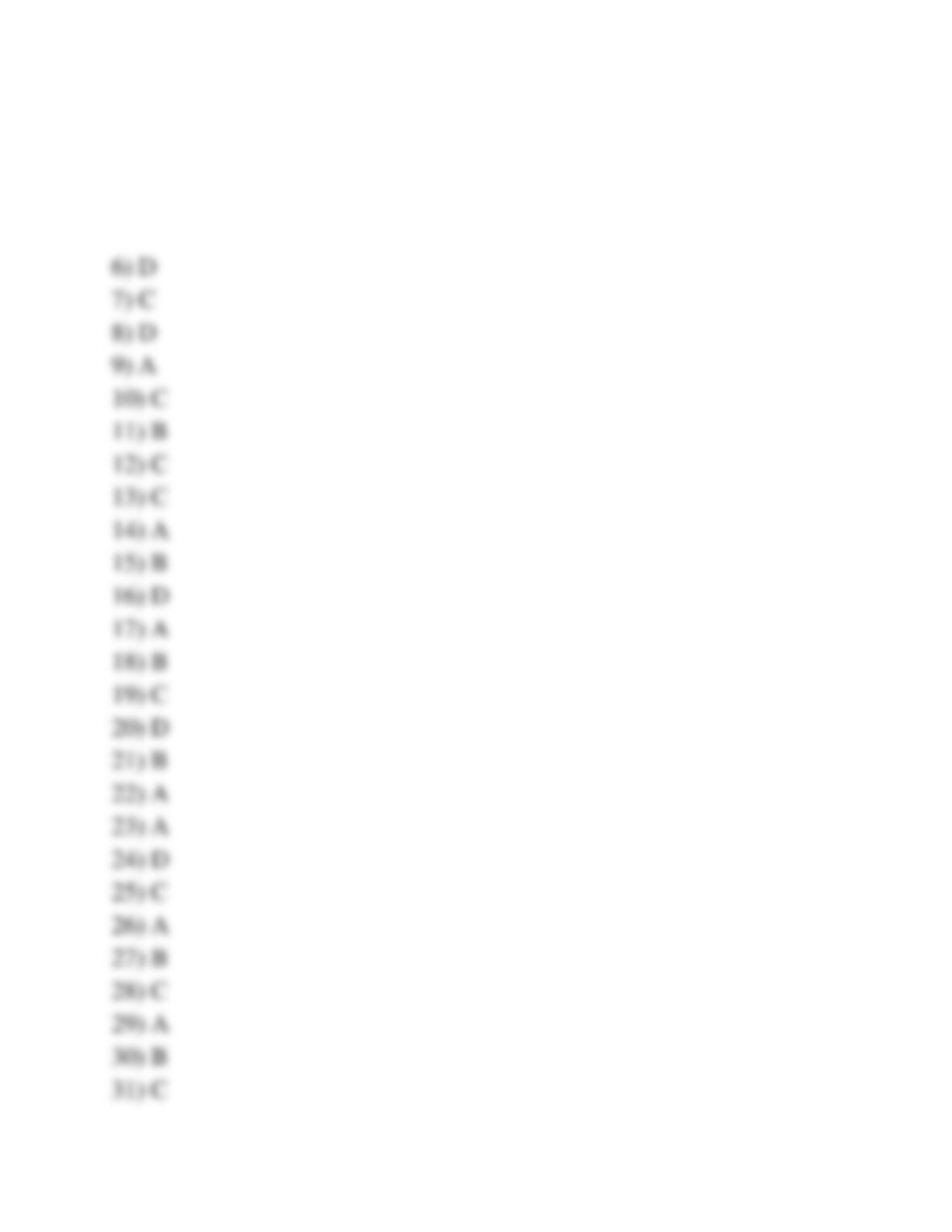
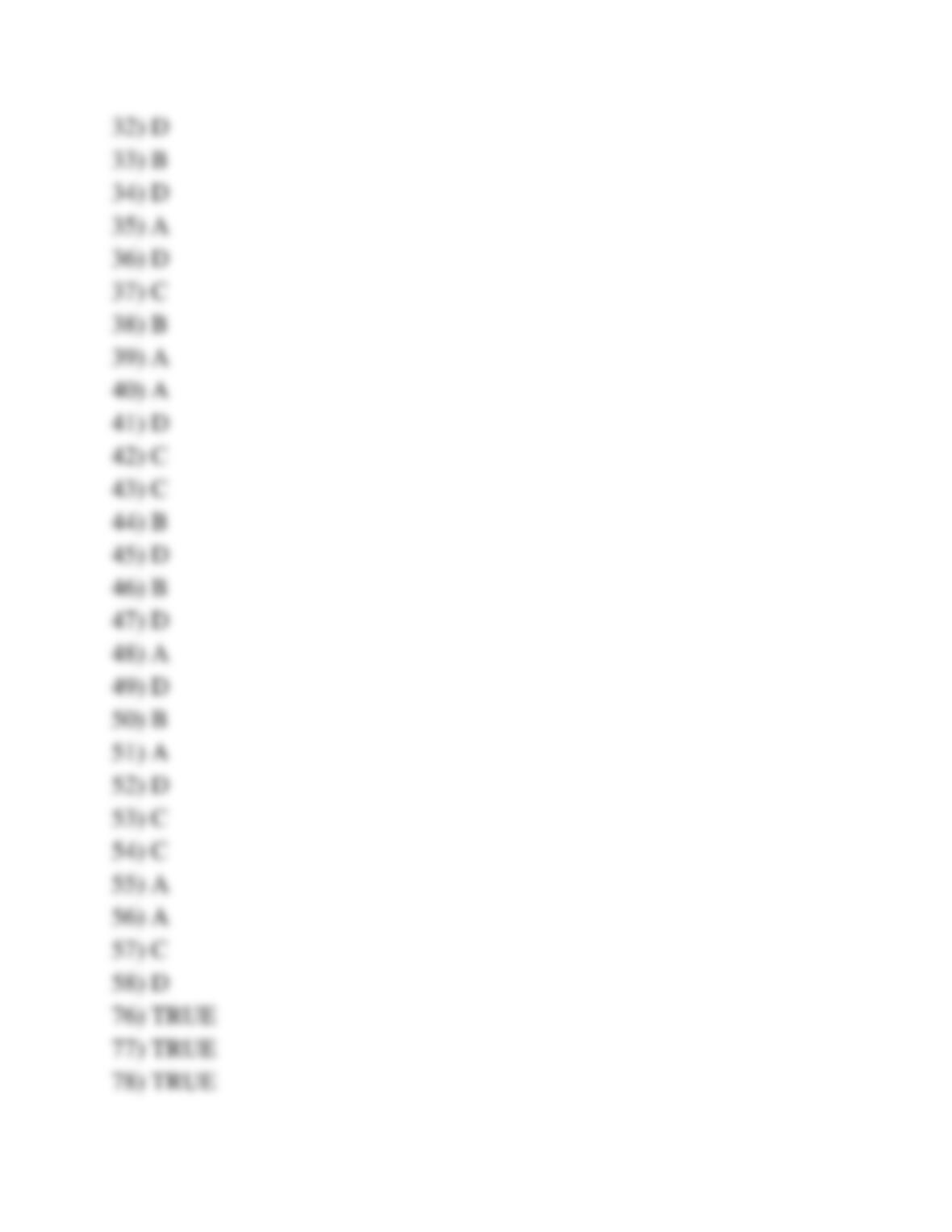
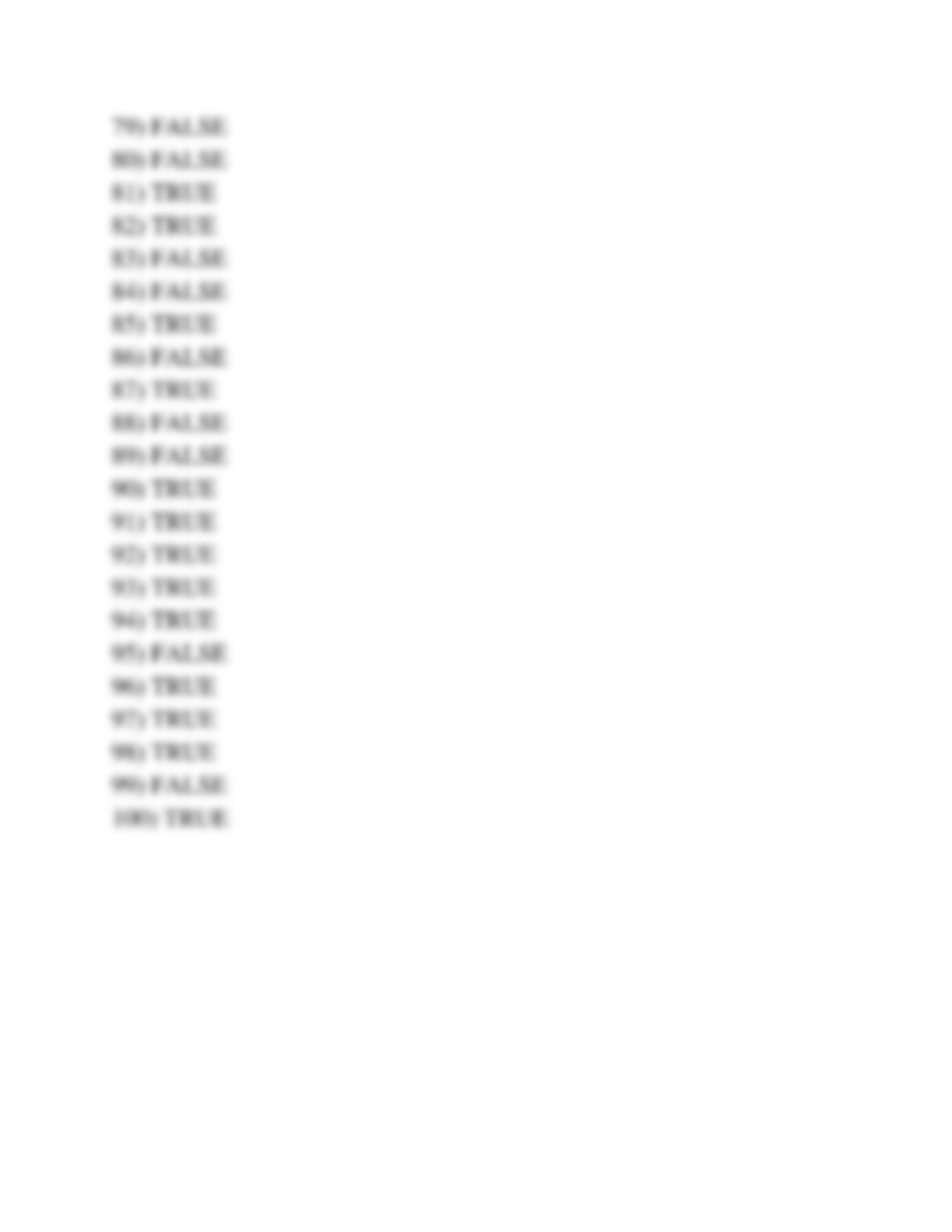
Answer Key
Test name: chapter 4
Version 1 27
Version 1 28