Version 1 1
Student name:__________
TRUE/FALSE – Write ‘T’ if the statement is true and ‘F’ if the statement is false.
1) Internal alignment is sometimes called internal equity.
⊚ true
⊚ false
2) Organizations design their pay structures around jobs and job levels.
⊚ true
⊚ false
3) Pay structure refers to the array of pay rates for different work or skills between
competing companies.
⊚ true
⊚ false
4) Pay differences among levels in an organization are called differentials.
⊚ true
⊚ false
5) The difference between exchange value and use value surfaces when one firm acquires
another.
⊚ true
⊚ false
6) Exchange value is always higher than use value.
⊚ true
⊚ false
7) The content of a job refers to the worth of the job and its relative contribution to the
organization’s objectives.
Version 1 2
⊚ true
⊚ false
8) Both external and organization factors shape internal pay structures.
⊚ true
⊚ false
9) In addition to supply and demand for labor, supply and demand for products and services
also affect internal structures.
⊚ true
⊚ false
10) Wage legislation affects wage structure at both the minimum and the maximum pay level.
⊚ true
⊚ false
11) Pay structures are immune to changes in external factors such as skill shortages.
⊚ true
⊚ false
12) Technology used in producing goods and services influences the organizational design,
the work to be performed, and the skills/knowledge required to perform the work.
⊚ true
⊚ false
13) Egalitarian pay structures send the message that an organization values differences in
work content, individual skills, and contributions to the organization.
⊚ true
⊚ false
Version 1 3
14) CEOs of organizations with egalitarian pay structures usually have higher salaries than
CEOs in organizations with hierarchical pay structures.
⊚ true
⊚ false
15) A layered pay structure is more hierarchical than a delayered pay structure and less
egalitarian in terms of number of levels.
⊚ true
⊚ false
16) A potential problem in egalitarian pay structures is that high-performing employees may
feel underpaid and quit.
⊚ true
⊚ false
17) Teachers will feel pay structures are fair even when they are relatively low in the internal
structure if they work in a high-paying school district.
⊚ true
⊚ false
18) Greater pay dispersion is related to lower turnover among executives.
⊚ true
⊚ false
19) The institutional model states that it is best to wait for other organizations to adopt
innovative practices and then copy those practices.
⊚ true
⊚ false
Version 1 4
20) Labor unions support small pay differentials.
⊚ true
⊚ false
MULTIPLE CHOICE – Choose the one alternative that best completes the statement or
answers the question.
21) Which of the following is true of internal alignment?
A) It is the first issue in a strategic approach to pay.
B) It is often referred to as distributive justice.
C) It focuses on customer satisfaction and business growth.
D) It addresses relationships inside an organization.
22) Common bases for modern pay structures include all but which of the following?
A) The content of the work
B) The skills and knowledge required to perform the work
C) The extent of external competitiveness and equity
D) The work’s relative value for achieving organizational objectives
23) In a strategic approach to pay, internal alignment is the ________ issue to be decided.
A) first
B) second
C) third
D) fourth
24) A structure based on value typically ranks jobs on:
Version 1 5
A) problem-solving abilities.
B) the skills required to complete tasks.
C) the relative contribution of skills.
D) the complexity of the tasks involved.
25) The most common bases for determining internal structures are:
A) work content and its value.
B) seniority and experience.
C) use value and exchange value.
D) pay surveys and job evaluation.
26) Content refers to the:
A) monetary value of a work.
B) work performed in a job and how it gets done.
C) relative contribution of the work to the organization objectives.
D) structure of pay level policies.
27) Most job structures are best described as:
A) job-based structures.
B) person-based structures.
C) both person- and job-based structures.
D) competency-based structures.
28) ________ refers to the education, experience, knowledge, abilities, and skills required to
perform work.
Version 1 6
A) Surplus value
B) Internal alignment
C) Marginal productivity
D) Human capital
29) ________ refers to the process by which a decision is reached: the right to an attorney,
the right to an impartial judge, and the right to receive a copy of the arresting officer’s statement.
A) Distributive justice
B) Outsourcing
C) Procedural justice
D) Delayering
30) Marginal productivity theory argues that employers pay
A) use value.
B) exchange value.
C) surplus value.
D) differential value.
31) Which of the following is NOT a factor in defining equal work according to the Equal
Pay Act?
A) Equal skill
B) Equal effort
C) Equal experience
D) Equal responsibility
32) Most unions prefer which of the following?
Version 1 7
A) Small pay differences among jobs and seniority-based promotions
B) Large pay differences among jobs and seniority-based promotions
C) Large pay differences among jobs and performance-based promotions
D) Equal pay raises for employees
33) Pay for temporary workers is based upon:
A) the internal structure of their home employer.
B) the internal structure of the temporary workplace.
C) the strict requirements set by an international workers’ union.
D) education only.
34) External factors are dominant influences on jobs filled via:
A) demotions.
B) promotions.
C) transferring employees.
D) hiring graduates.
35) Which of the following is true of procedural justice?
A) It suggests that the way pay decisions are made and implemented is insignificant.
B) It is concerned with whether the actual pay differences among employees are
acceptable.
C) It addresses how design and administration decisions are made.
D) It refers to the fairness in the amount of rewards distributed to employees.
36) James says, “I don’t trust the way the company determines pay rates in my department.”
If James feels this way despite being happy with his current salary, he is most likely concerned
about
Version 1 8
A) procedural justice.
B) distributive justice.
C) internal equity.
D) external equity.
37) Which of the following is NOT a characteristic of aligned pay structures?
A) They support the way the work gets done.
B) They fit an organization’s business strategy.
C) They are fair to employees.
D) They are designed to increase the turnover rate.
38) The well-defined jobs at McDonald’s and their small differences in pay are an example of
a(n) ________ internal pay structure.
A) closely tailored
B) loosely coupled
C) very competitive
D) egalitarian
39) Jacob works at PrimeClean Corp., a car wash company. He is asked to follow a set of
instructions in a predetermined order to wash a car. All the details including the amount of
washing liquid to use for each type of car are clearly specified. In this case, Jacob’s company is
most likely to use a:
A) closely tailored pay structure.
B) loosely coupled pay structure.
C) pay structure with large differences in pay among jobs.
D) pay structure that is highly flexible.
Version 1 9
40) Joshua believes that treating employees equally will improve their job satisfaction, which
in turn will increase their work productivity and performance. In accordance with his beliefs, he
wants to reduce the number of job levels and the pay differentials between the levels. In this
case, he is most likely to use a(n):
A) highly layered pay structure.
B) hierarchical pay structure.
C) highly inequitable pay structure.
D) egalitarian pay structure.
41) Organizations in a turbulent and unpredictable environment requiring flexibility in jobs
and work processes are likely to be more successful with a(n) ________ internal pay structure.
A) egalitarian
B) bureaucratic
C) loosely coupled
D) closely tailored
42) Egalitarian pay structures have all but which of the following characteristics?
A) Few levels
B) Small differentials
C) Support for equal treatment of employees
D) Preference for individual performance over team performance
43) In the context of internal structures, which of the following is true of a delayered
structure?
A) It involves the removal of employees’ autonomy.
B) It sends the message that all employees are valued equally.
C) It is based on the assumption that workers perform better with less equal treatment.
D) It has eight levels and includes detailed descriptions of work done at each level.
Version 1 10
44) The problem that is most likely to be faced by organizations using an egalitarian pay
structure is
A) the difficulty in external recruitment.
B) maintaining cooperation among employees.
C) the perception of excessive CEO pay.
D) the difficulty in performing teamwork.
45) Nina is a high-performing individual who works best alone. Which of the following
companies is the most appropriate for her?
A) A company that uses an egalitarian pay structure
B) A company that pays its employees based on their seniority rather than their
performance
C) A company that uses a hierarchical pay structure to pay its employees based on
performance
D) A company that pays all its employees the same amount of money
46) Which of the following theories predicts that individual performance will be maximized
when the pay differentials between job levels are large?
A) Tournament theory
B) Equity theory
C) Marginal productivity theory
D) Reinforcement theory
47) When cooperation is important for successful organization performance, which of the
following pay structures is most suitable?
Version 1 11
A) A tournament theory–based pay structure
B) An egalitarian pay structure
C) A hierarchical pay structure
D) A layered pay structure
48) In the context of the impact of internal structures, which of the following statements is
true?
A) High performers quit more under more hierarchical systems when pay is based on
performance rather than seniority.
B) The impacts of internal structures on organization performance remain unaffected by
pay levels and employee performance.
C) Less hierarchical structures are related to greater performance when the work flow
depends on individual contributors.
D) More egalitarian structures are related to greater performance when close
collaboration and sharing of knowledge are required.
49) In firefighting and rescue squads and global software design teams, a(n) ________
structure is most closely associated with higher performance.
A) hierarchical
B) pyramidal
C) egalitarian
D) layered
50) ________ are related to greater performance when the work flow depends on individual
contributors.
A) More egalitarian structures
B) More hierarchical structures
C) More delayered structures
D) More even-handed structures
Version 1 12
SHORT ANSWER. Write the word or phrase that best completes each statement or
answers the question.
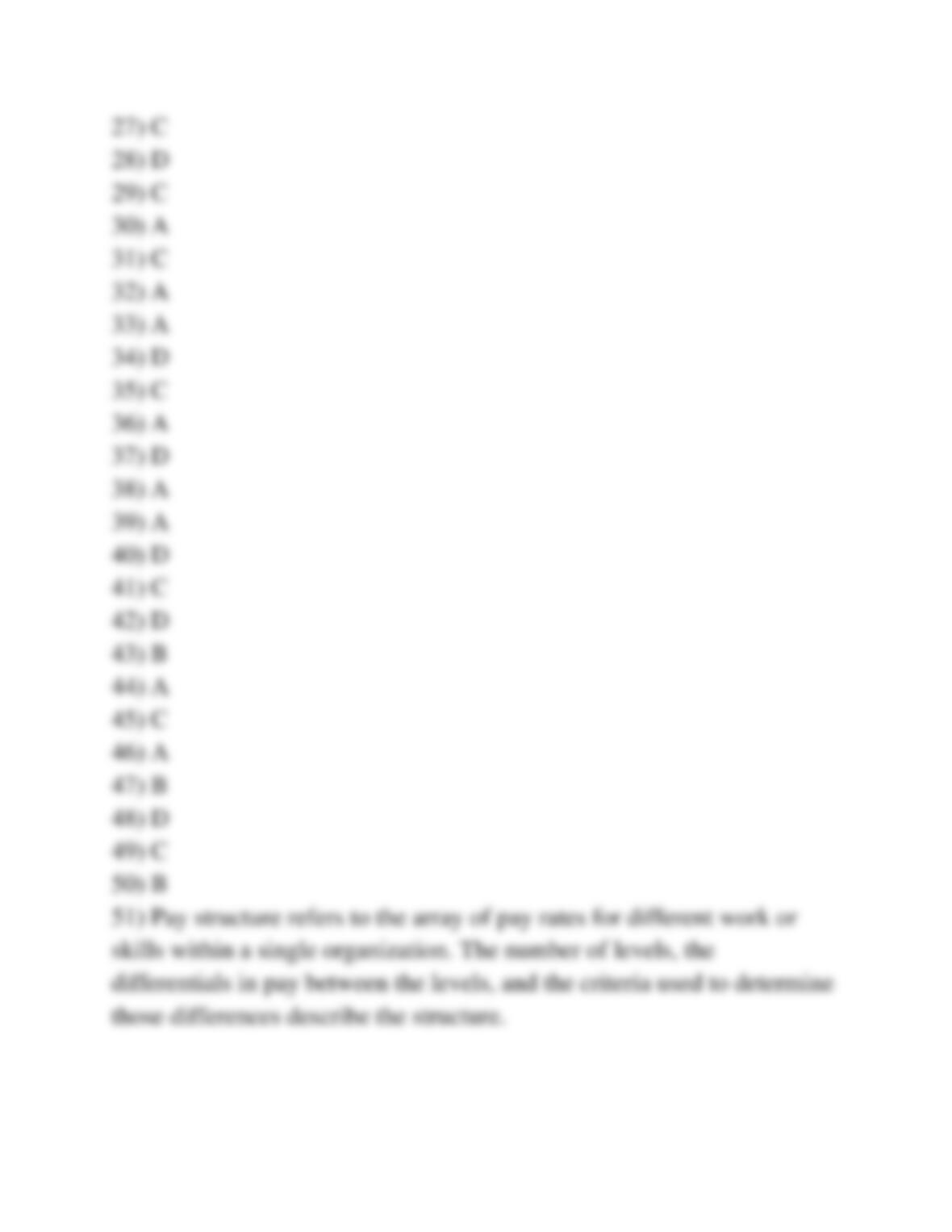
51) Write a short note on pay structure.
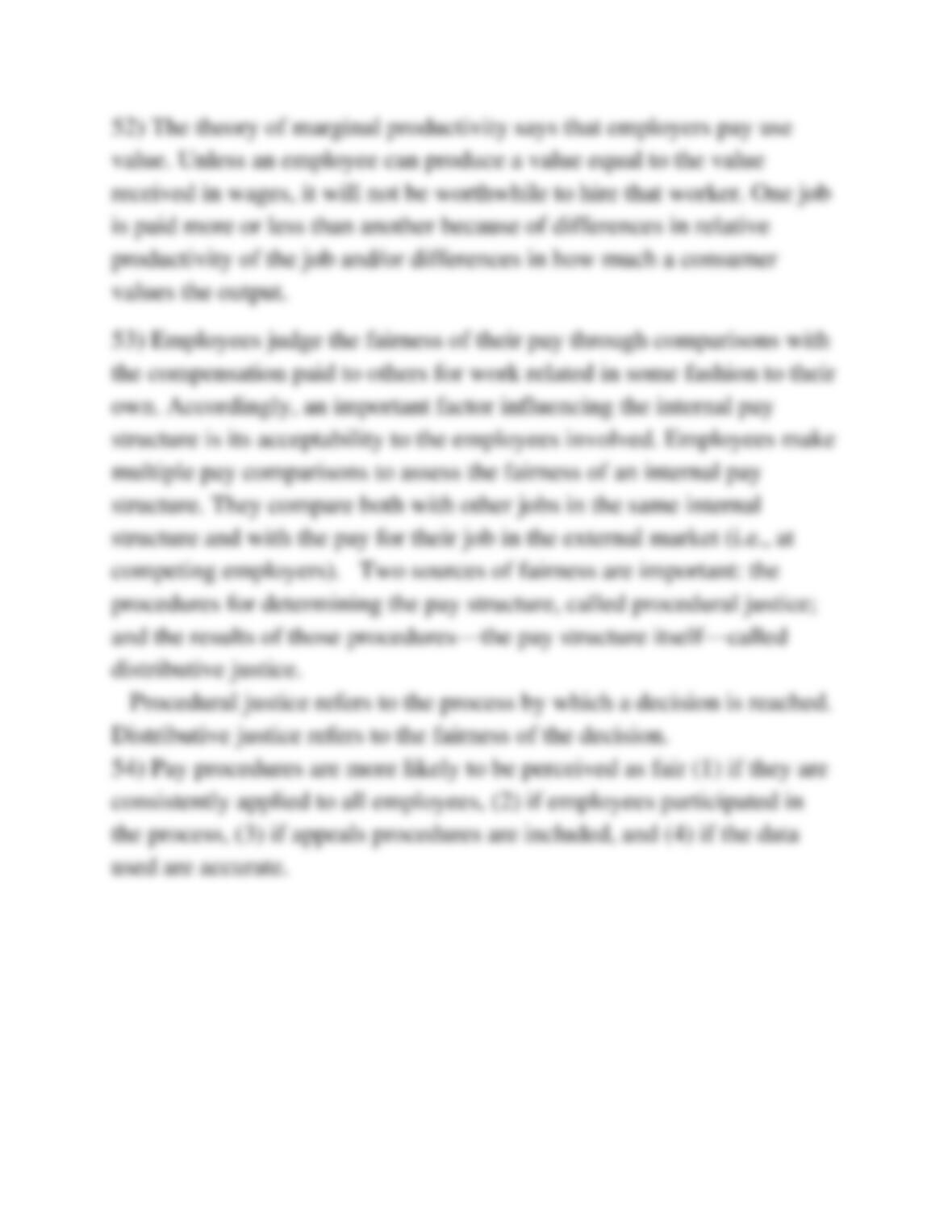
52) State the theory of marginal productivity.
53) How do employees judge the fairness of their pay?
54) According to the text, when are pay procedures more likely to be perceived as fair?
55) Explain tailored and loosely coupled structures.
Version 1 13
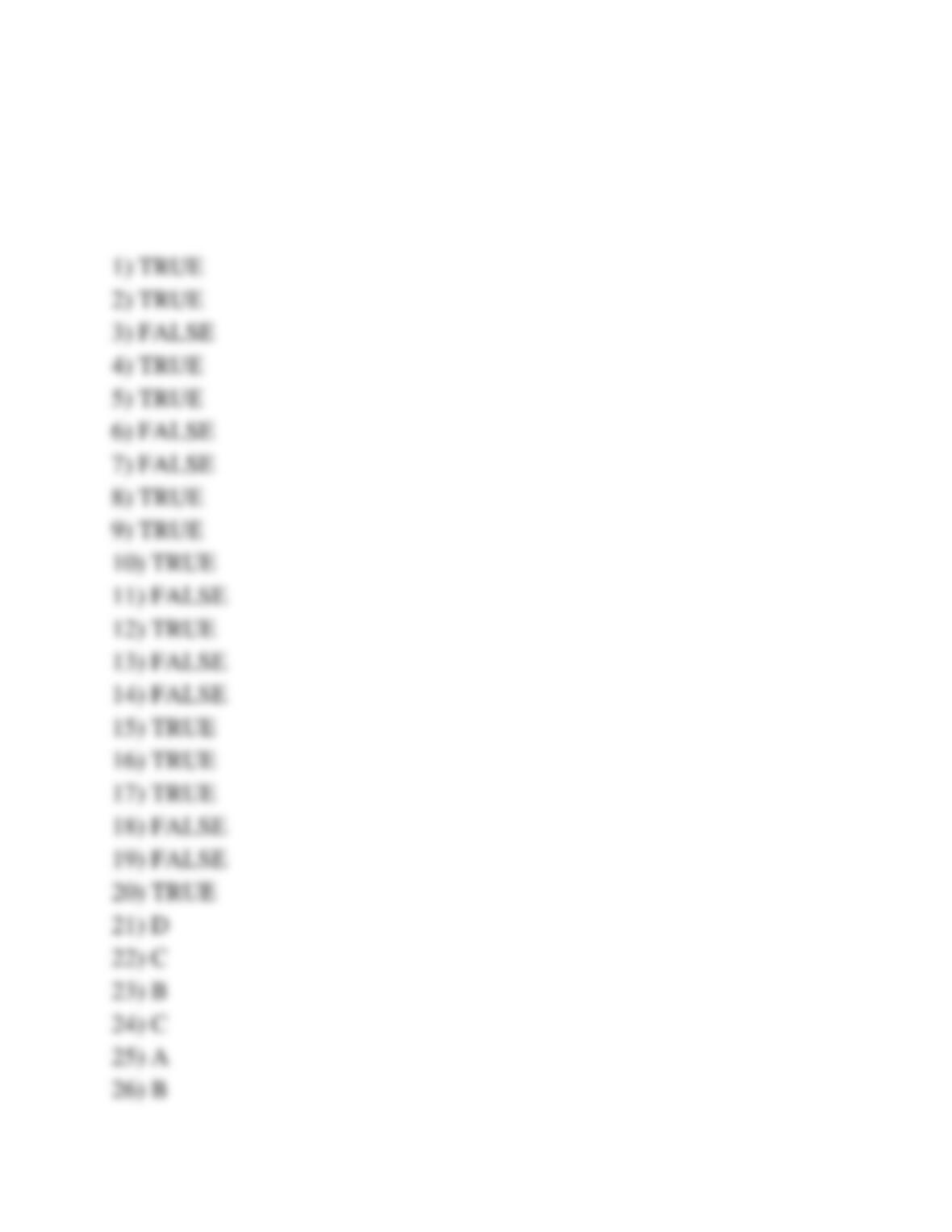
Answer Key
Test name: chapter 3
Version 1 14
Version 1 15
Version 1 16