
Which of the following is a feature of hypertension in pregnancy?
a. Chronic hypertension increases risk for stillbirth.
b. Chronic hypertension often leads to macrosomia.
c. Gestational hypertension usually develops in the first trimester.
d. Gestational hypertension is most common in women who had normal blood pressure
before pregnancy.
e. Gestational diabetes typically persists after pregnancy.
When ingested in large quantities, the sugar alternative sorbitol and the fat alternative
olestra are known to induce ____.
a. diarrhea
b. vomiting
c. pancreatitis
d. celiac disease
e. insulin intolerance
In which food group are legumes found?
a.dairy
b.fruits
c.grains
d.protein
e.oils
Which statement best describes carbohydrates information on food labels?
a. The “Sugars” amount includes only added sugars
b. The amount of starch is listed as a separate category
c. The “Total Carbohydrate” amount includes starch, sugars, and fiber
d. The “Total Carbohydrate” amount includes starch and sugars but not fiber
e. Only refined carbohydrates need be included in the total.
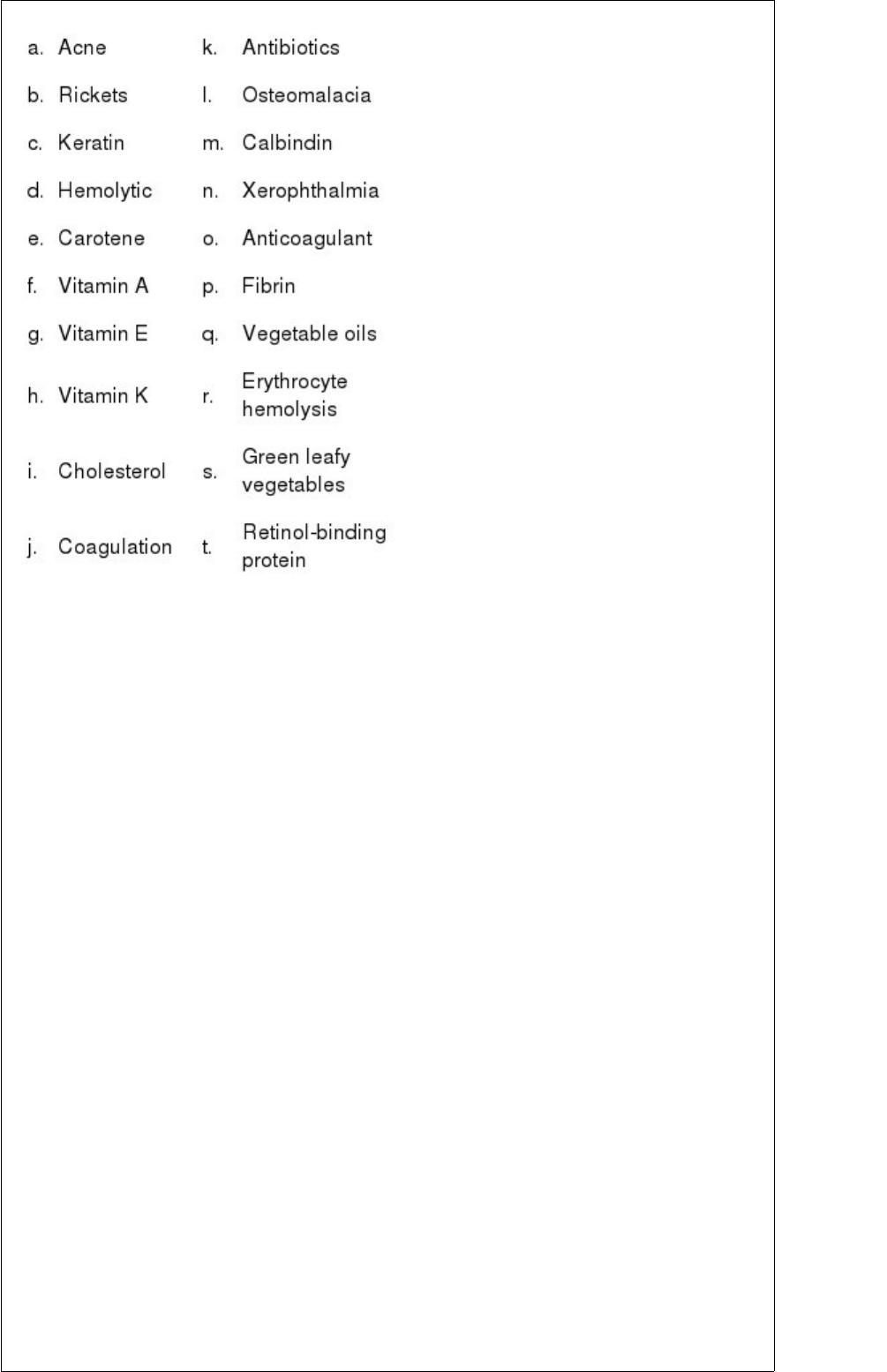
1)Transport protein of vitamin A
2)Promotes bone dismantling prior to bone growth
3)Condition that results from severe vitamin A deficiency
4)The protein of hair and nails
5)Chronic inflammation of skin follicles and oil-producing glands
6)Pigment in carrots and pumpkins
7)Precursor for vitamin D synthesis
8)Vitamin D deficiency disease in children
9)Vitamin D deficiency disease in adults
10)A vitamin K-dependent transport protein
11)May be beneficial for treating fibrocystic breast disease
12)Vitamin E deficiency disorder in premature infants
13)Typical food source of vitamin E
14)Type of anemia prevented by vitamin E

15)Substance that promotes synthesis of prothrombin
16)Another term for blood clotting
17)Use of this increases risk for vitamin K deficiency
18)Substance that prevents clotting of the blood
19)Composition of a blood clot
20)Food source of vitamin K
Which of the following was a finding of the Feeding Infants and Toddlers Study?
a. Most toddlers but not infants consumed insufficient intakes of sodium.
b. The most popular food among these population groups was baked potatoes.
c. Most infants but not toddlers demonstrated food intake patterns consistent with
MyPlate recommendations.
d. About one-fourth of the infants and toddlers failed to consume even one serving of
fruits or vegetables daily.
e. Less than 10% of young preschoolers consumed nutrient-poor, energy-dense
beverages, desserts, and snack foods each day.
Which of the following is a feature of peristalsis?
a. It occurs when longitudinal muscles oppose the action of transverse muscles.
b. Its rate is consistent throughout the GI tract.

c. It occurs at powerful levels in the small intestine but not at all in the colon.
d. It is caused by alternate tightening and relaxing of circular and longitudinal muscles.
e. It may occur unpredictably but is typically in response to a full stomach.
Which of the following is a characteristic of marasmus in children?
a. It leads to inability to maintain body temperature.
b. It promotes hyperactivity and excessive crying for food.
c. It impairs brain development mainly from ages 2-5 years old.
d. It leads to severe edema of the abdomen but insufficient water retention by the brain.
e. It is rare even in very impoverished nations due to UN programs combating hunger.
Which of the following is true regarding B vitamins and homocysteine metabolism?
a.Folate catabolyzes homocysteine
b.Biotin supplements reduce blood homocysteine levels
c.Excessive homocysteine intake reduces vitamin B12absorption
d.High blood homocysteine levels correlate with reduced incidence of colon cancer
e.High folate levels are necessary for the synthesis of homocysteine
Which of the following is true of coronary heart disease (CHD)?
a. By age 20, half of the adults in the United States have at least one major risk factor
for CHD.
b. Women who take estrogen to reduce the risk for osteoporosis are at significantly
higher risk for CHD.
c. Aging becomes a significant risk factor for women who are 75 and older.
d. Women younger than 45 years of age tend to have higher LDL cholesterol than do
men of that age, but this difference disappears after menopause.
e. Levels of the amino acid homocysteine, which protects artery walls, are typically
higher in women than in men.

About how much cholesterol is synthesized by the liver every day?
a. 100 to 300 mg
b. 300 to 500 mg
c. 500 to 800 mg
d. 800 to 1500 mg
e. 1500 to 2500 mg
How soon would death occur from starvation if the body was unable to shift to a state
of ketosis?
a. 3 to 5 days
b. 7 to 10 days
c. within 3 weeks
d. 4 to 6 weeks
e. 6 to 12 weeks
What nutrient is responsible for causing the most accidental ingestion deaths in
children?
a.Iron
b.Calcium
c.Vitamin A
d.Vitamin D
e.Magnesium
High-fat foods stimulate the appetite mostly because they ____.
a.are satiating
b.are flavorful
c.suppress salivary gland secretion
d.trigger the release of oxyntomodulin
e.increase secretion of endorphins

The desire to eat a slice of chocolate cake after consuming a very large meal best
illustrates which state?
a.satiety
b.hunger
c.appetite
d.depression
e.bulimia
What is prehypertension?
a. A predictor of stroke risk
b. Slightly high blood pressure
c. A precursor for Syndrome X
d. A component of the metabolic syndrome
e. A cluster of risk factors that predict the likelihood of hypertension
The lifetime percent risk of developing hypertension later in life when the blood
pressure is normal at age 55 is
a. 10.
b. 25.
c. 50.
d. 75.
e. 90.
Nonnutrient compounds found in plants, some of which have biological activity in the
body, are called ____________________.
What is the prevalence of zinc deficiency? What are the signs and symptoms of zinc
deficiency?
Discuss the role of copper in the disorders Menkes disease and Wilson’s disease.
The making of glucose from noncarbohydrate sources is called
____________________.
Explain how the provision of food to hungry poor people lowers their risk for obesity.
In the small intestine, ____________________ breaks lactose into one glucose and one
galactose molecule.

The final common metabolic pathway for carbohydrates, fats, and amino acids is the
____________________.
How is fiber thought to exert an influence over cancer of the colon?
Diet-planning tools that organize foods by their proportions of carbohydrate, fat, and
protein are called ____________________.