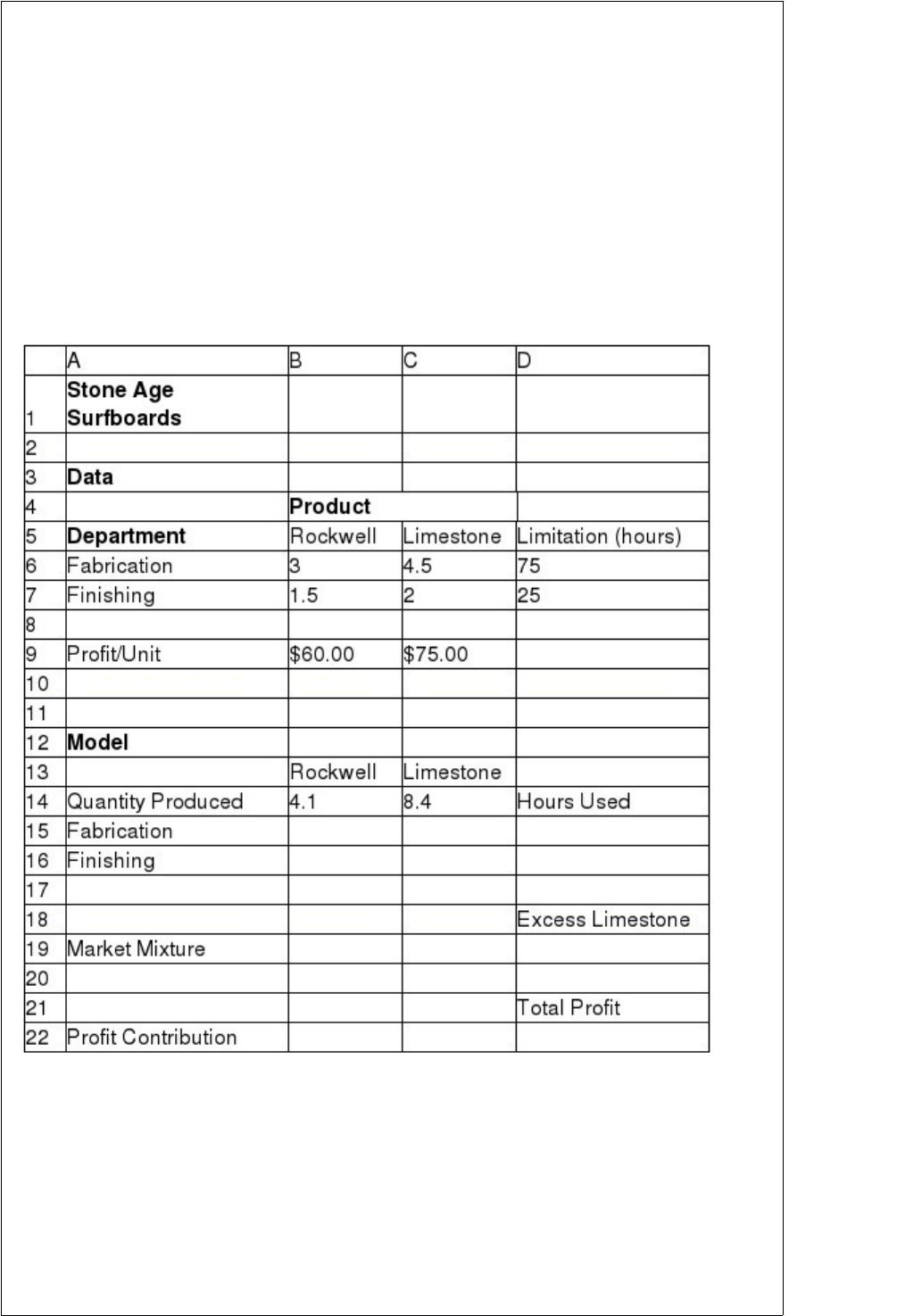
Stone Age Surfboards is a small manufacturer of two types of popular high-tide
surfboards, the Rockwell and the Limestone models. The manufacturing process
consists of two departments: fabrication and finishing. The fabrication department has
15 skilled workers, each of whom works 5 hours per day. The finishing department has
5 workers, who also work a 5-hour shift. Each pair of Rockwell surfboards requires 3
labor hours in the fabrication department and 1.5 labor hours in finishing. The
Limestone model requires 4.5 labor- hours in fabrication and 2 labor-hours in finishing.
The company operates 6 days a week. It makes a per-unit profit of $60 on the Rockwell
model and $75 on the Limestone model. Approximately 4.1 Rockwell models and 8.4
Limestone models are produced per day.
What is the total number of hours used for fabrication?
A) 42.58
B) 50.10
C) 35.64
D) 22.95
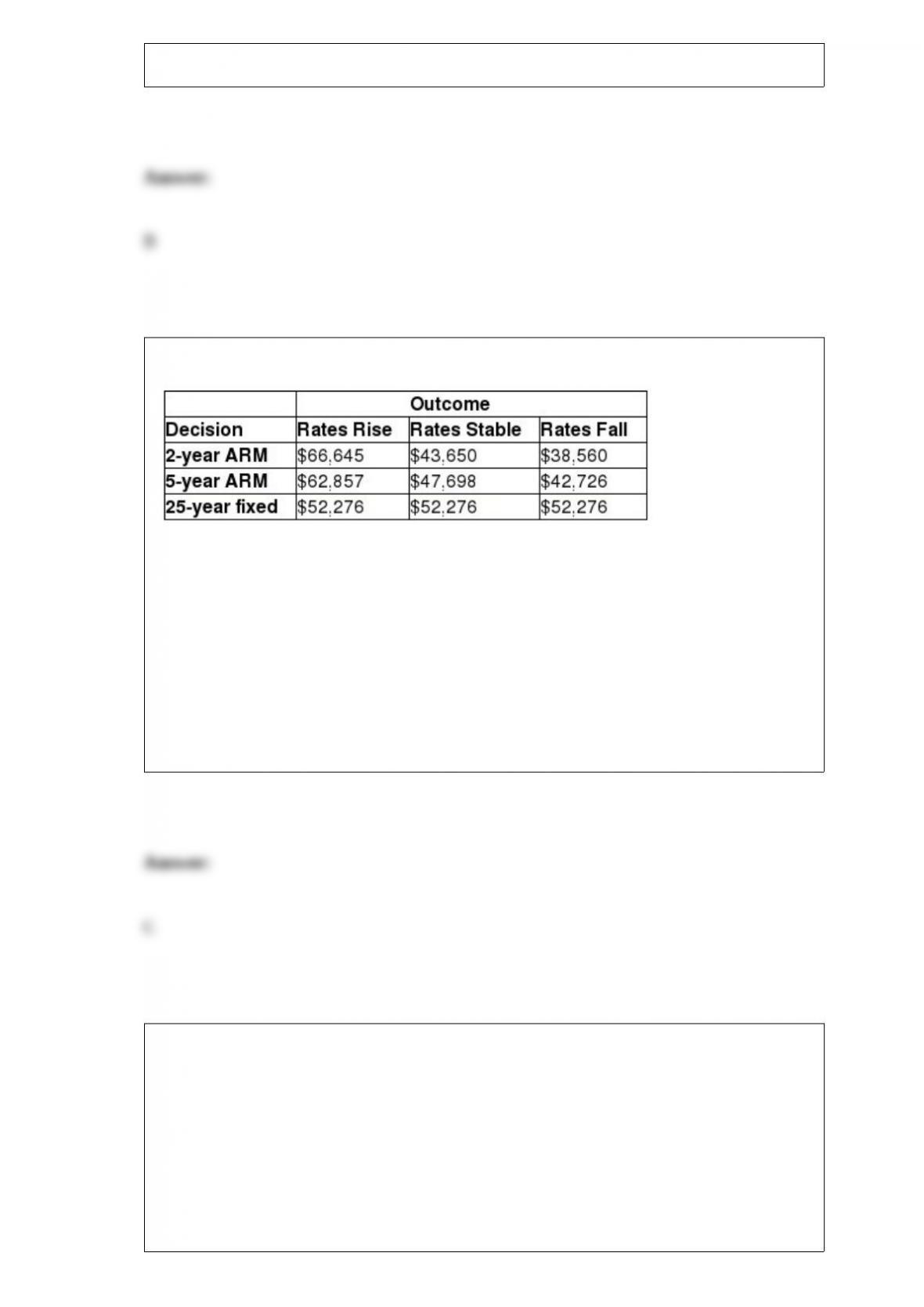
Below is a payoff table that lists three mortgage options:
What is the maximum opportunity loss incurred for the 2-year ARM?
A) $ 8,626
B) $ 13,716
C) $ 14,369
D) $ 10,581
Which of the following generates a scatter chart in Excel with the values predicted by
the regression model included?
A) Trendline
B) Residual Plots
C) R Square
D) Line Fit Plots
Stone Age Surfboards is a small manufacturer of two types of popular low-tide
surfboards, the Graystone and the Lava models. The manufacturing process consists of
two departments: fabrication and finishing. The fabrication department has 8 skilled
workers, each of whom works 9.25 hours per day. The finishing department has 5
workers, each of whom works a 6 -hour shift per day. Each pair of Graystone
surfboards requires 2.5 labor hours in the fabrication department and 2 labor hours in
finishing. The Lava model requires 4.2 labor-hours in fabrication and 3.6 labor-hours in
finishing. The company operates 6 days a week. It makes a per unit profit of $40 on the
Graystone model and $60 on the Lava model. The company anticipates selling at least
twice as many Lava models as Graystone models.
Use the spreadsheet below for Stone Age Surfboards to answer the following
question(s) using integer constraints on variables in the optimization models using the
standard Solver.
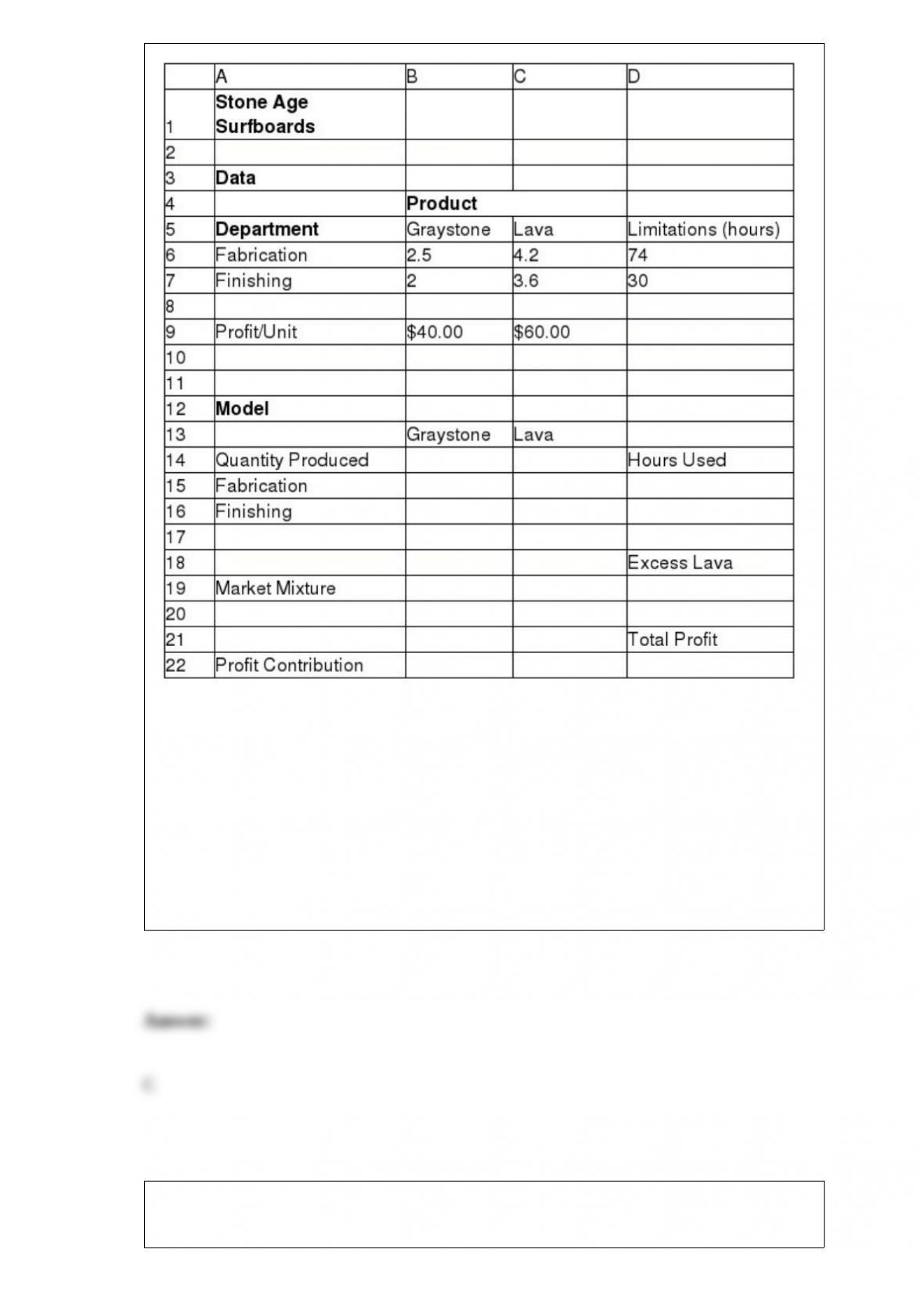
What is the quantity of Lava surfboards produced?
A) 2
B) 5
C) 7
D) 10
Which of the following is a parameter in the Normal Distribution Dialog of the Risk
Solver Platform?
A) maximum value
B) minimum value
C) most likely value
D) mean
Consider the following spreadsheet for an outsourcing decision model.
We assume that the production (demand) volume is normally distributed with a mean of
1,000 and a standard deviation of 100. For the unit cost, select the triangular
distribution. It has a minimum value of $150, most likely value of $165, and a
maximum value of $190. The number of trials per simulation is equal to 5,000 at a Sim.
Random Seed of 1. Run the simulation and answer the following question(s) using the
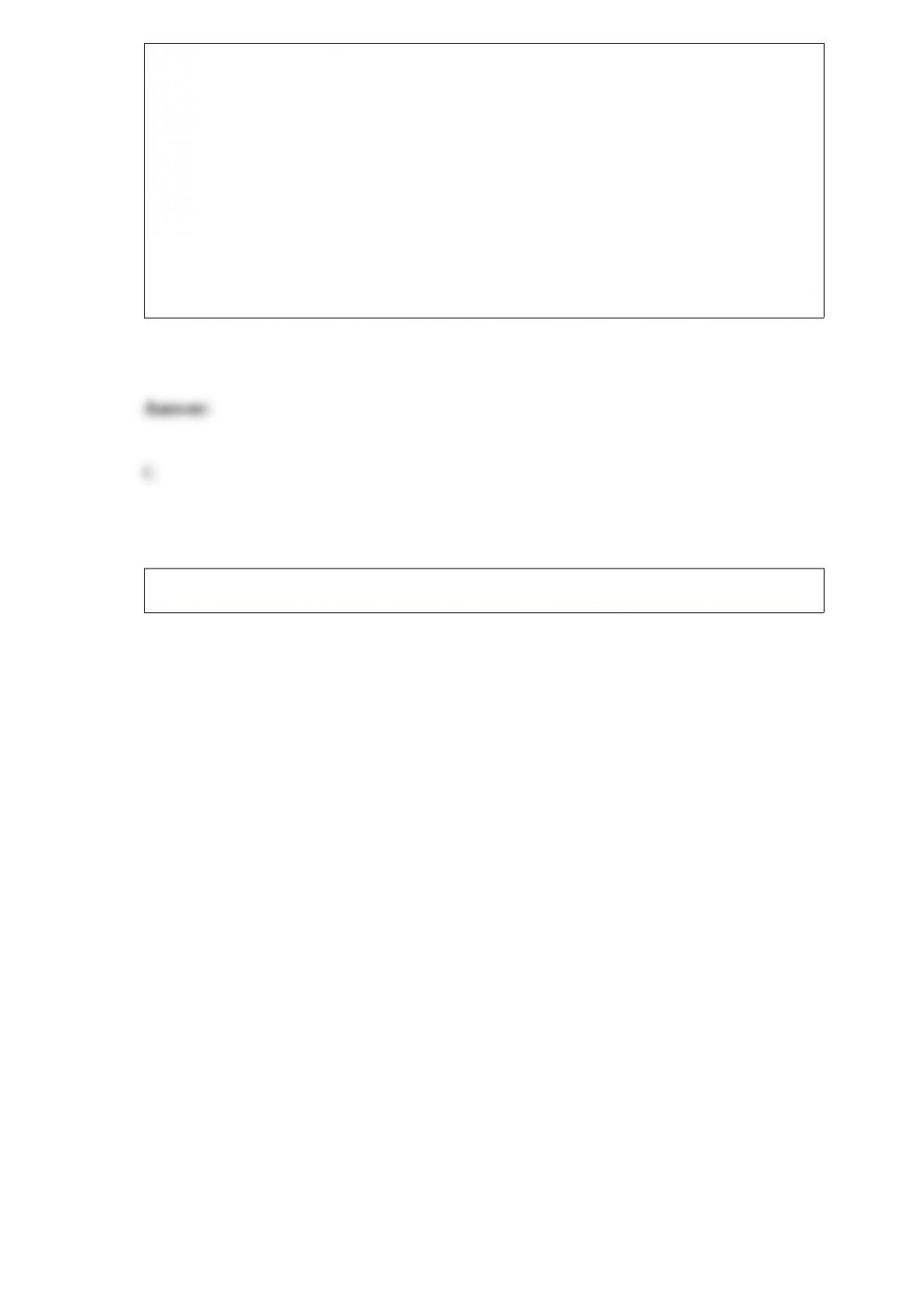
Risk Solver Platform.
What is the cost difference upper cutoff in thousands of dollars if the likelihood is 75%?
A) approximately 46
B) approximately 28
C) approximately 32
D) approximately 59
Below is a spreadsheet for Stone Age Surfboards.
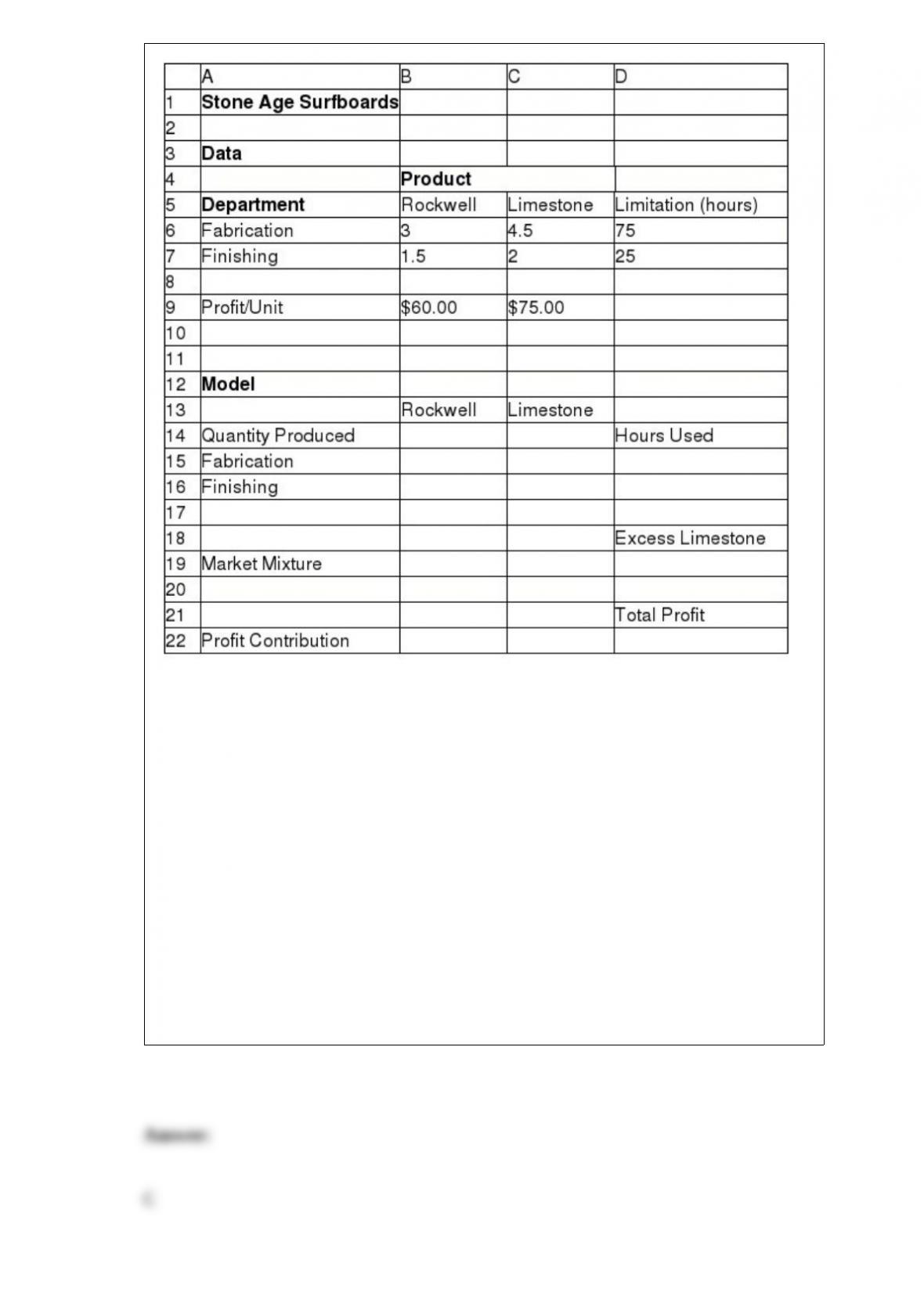
Assume that the finishing time for a pair of Rockwell surfboards is triangular with a
minimum value of 1.4, a most likely value of 1.5, and a maximum value of 1.8 and that
finishing time for a pair of Limestone surfboards is also triangular with a minimum
value of 1.8, a most likely value of 2.0, and a maximum value of 2.4. The number of
trials per simulation is equal to 5000.
Which of the following cells is defined with a triangular distribution?
A) B6
B) D6
C) B7
D) D7
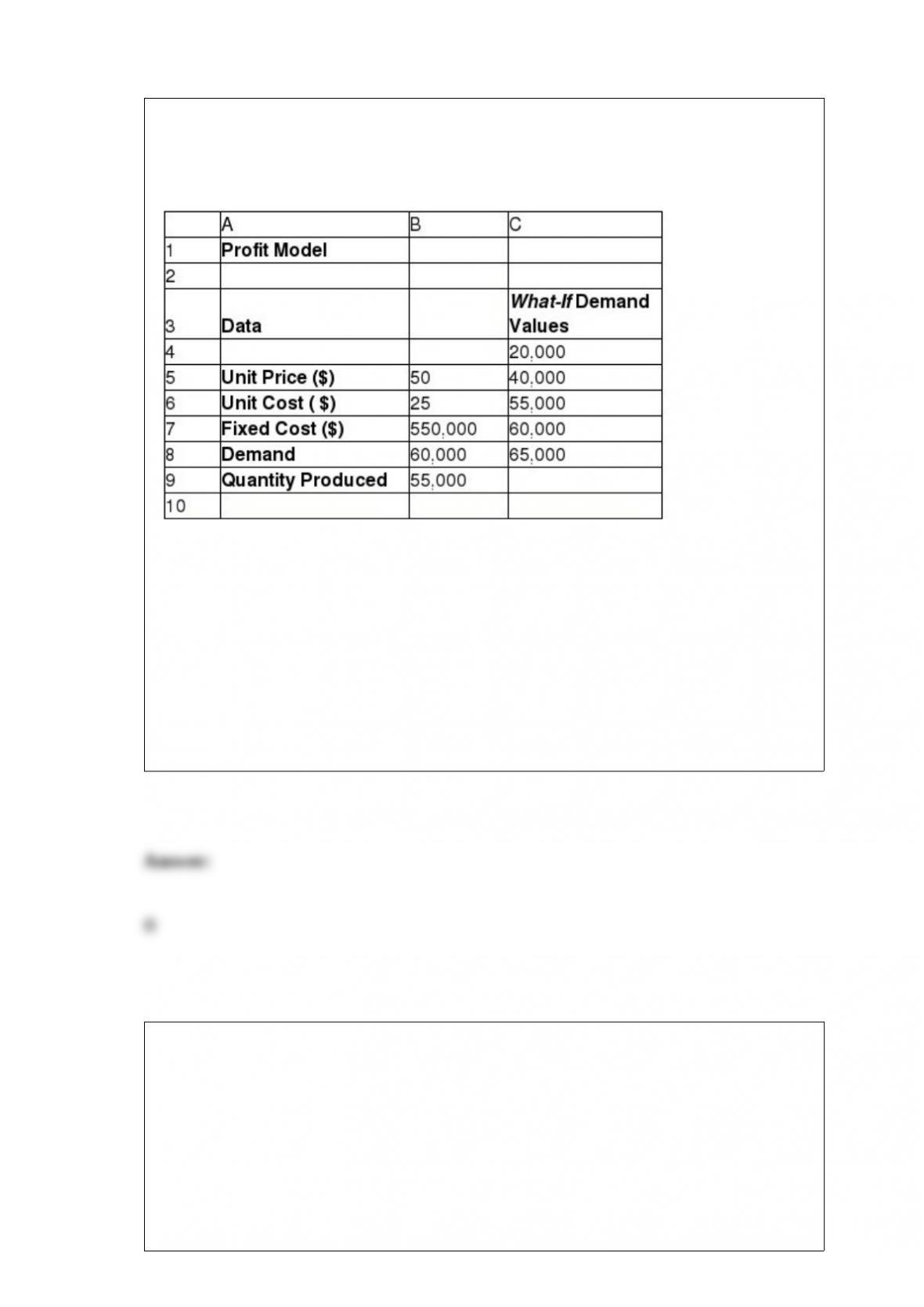
In the spreadsheet below, there is data on the price, cost, demand, and quantity
produced for an item. There are also different “what if” values that can help a manager
to calculate costs and revenue with variability in demand.
From the “what if” values, calculate the total cost when demand is 40,000.
A) $ 2,000,000
B) $1,925,000
C) $1,100,000
D) $75,000
Which of the following best defines constraints in an optimization problem?
A) They are limitations, requirements, or other restrictions that are imposed on any
solution.
B) They are quantities that an optimization model seeks to maximize or minimize.
C) They are quantities for which no feasible solutions exist.
D) They are unknown values that the model seeks to determine.
U-botit.com is an electronic commerce company that sells music online. It keeps a tab
of what genre of music their registered customers buy. If u-botit.com were to use the
data mining approach of association, which of the following actions would it take?
A) send recommendations to customers based on their buying habits
B) conduct surveys to customers to gauge customer satisfaction
C) classify the customers based on the genre of music they listen to
D) provide discounts to certain genre buyers where sales are less
Which of the following best defines decision variables in an optimization model?
A) They are limitations, requirements, or other restrictions that are imposed on any
solution.
B) They are the quantities that the model seeks to maximize or minimize.
C) They are quantities for which no feasible solutions exist.
D) They are unknown values that the model seeks to determine.
The accuracy of the model on the test data gives a realistic estimate of the performance
of the model on completely unseen data.
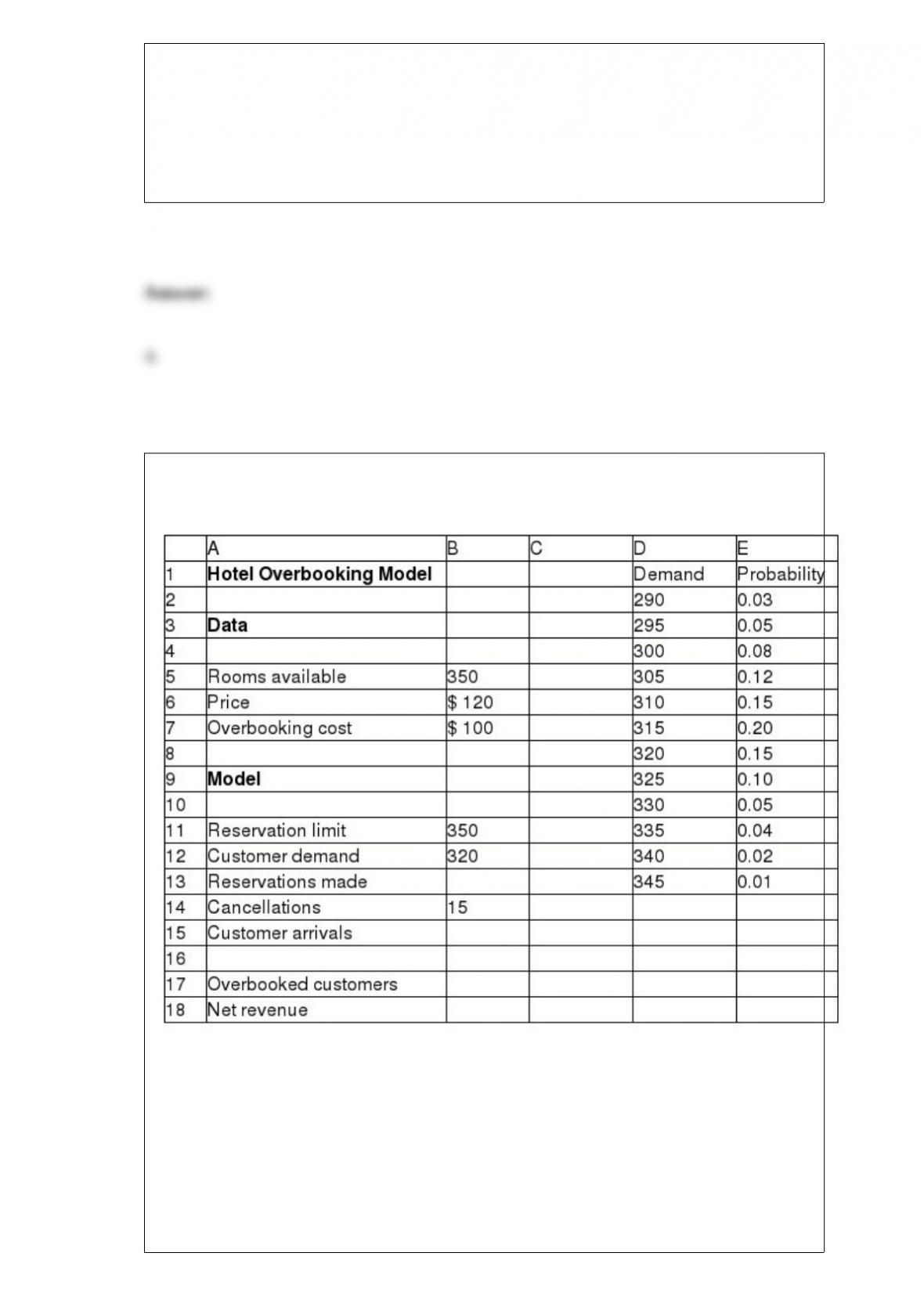
Below is the profit model spreadsheet for the Lazarus Shoe Company producing their
latest model of shoes for the month of January.
Calculate the total profit.
A) $600,000
B) $1,436,000
C) $836,000
D) $1,786,000
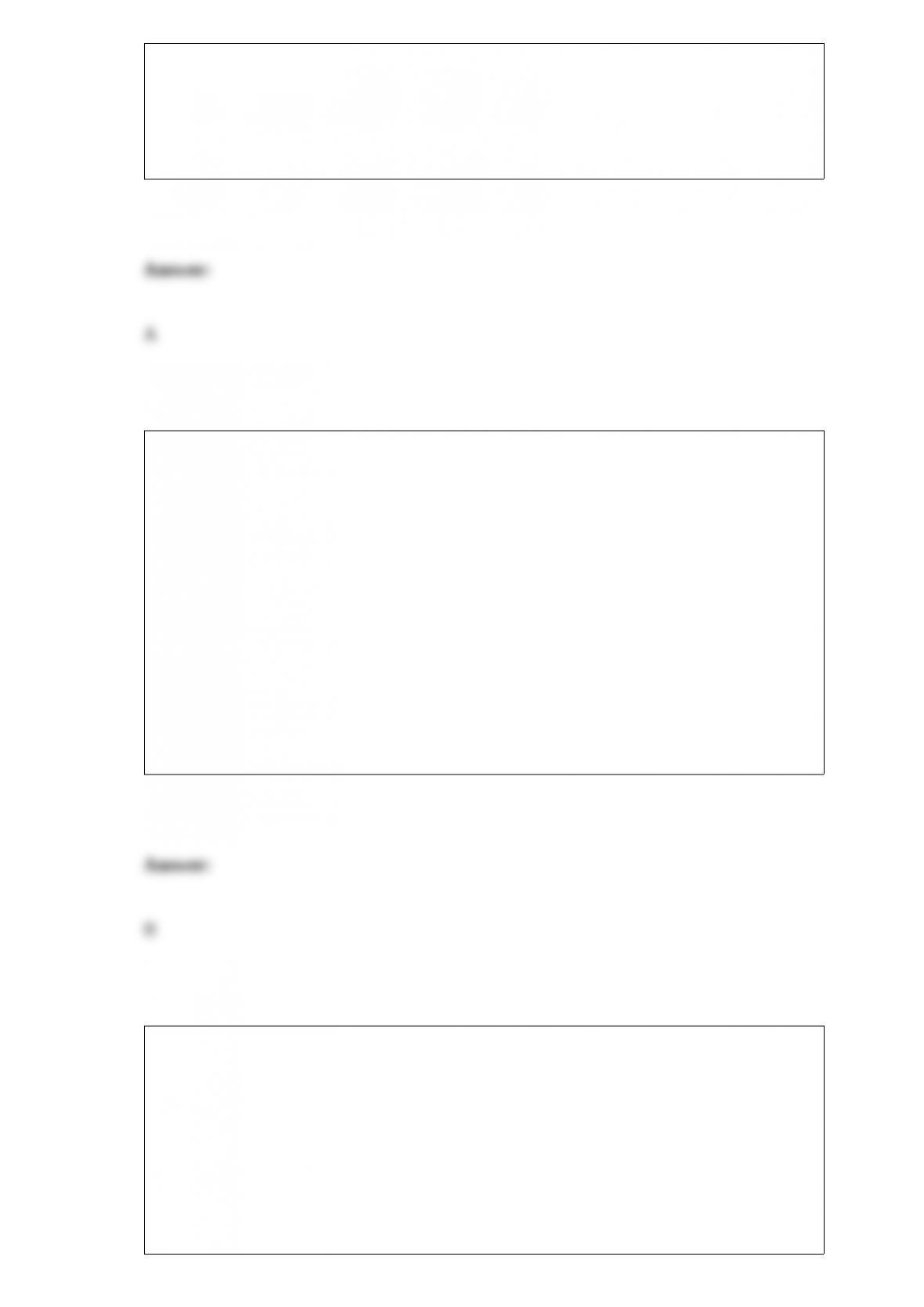
Below is a spreadsheet for a hotel overbooking model.
Assume that each reservation has a constant probability p = 0.04 of being cancelled.
Answer the question(s) using the Risk Solver Platform.
With respect to B12, what is the range of weights given in the Parameters section in the
Discrete dialog?
A) $E$2:$E$13
B) $D$2:$D$8
C) $D$2:$D$13
D) $E$2:$E$8
In a lower one -tailed hypothesis test, chosen level of significance = 0.10, sample size =
55, and t-test statistic = -1.76.
For a two-sample hypothesis which tests for differences in population parameters (1)
and (2), a two-tailed test seeks evidence that population parameter:
A) seeks evidence that population parameter (2) is larger than parameter (1).
B) seeks evidence that population parameter (2) is the same as parameter (1).
C) seeks evidence that population parameter (2) is smaller than parameter (1).
D) seeks evidence that population parameters (1) and (2) do not belong to the same
data.
Which of the following is an example of a measure of continuous metrics?
A) four errors revealed in an invoice
B) a delivery delayed by seven days
C) weight and volume of a sheet of steel
D) three incomplete orders on a day