
Which of the following is an implicit cost to a firm that produces a good or service?
A. Labor costs
B. Costs of operating production machinery
C. Foregone profits of producing a different good or service
D. Costs of renting or buying land for a production site
Which of the following is NOT a type of market structure?
A. Monopolistic competition
B. Perfect competition
C. Monopolistic oligopoly
D. Monopoly
If an increase in income causes a decrease in the consumption of good Y, we know that
good Y is:
A. a normal good.
B. a substitute.
C. a complement.
D. an inferior good.

At the point of consumer equilibrium, the slope of the budget line is equal to the:
A. market rate of indifference.
B. indifference curve.
C. marginal rate of substitution.
D. consumer preference.
The St. Petersburg paradox occurs when:
A. individuals are willing to pay significantly less than the expected value of a gamble.
B. individuals are willing to pay exactly the expected value of a gamble.
C. individuals are willing to pay significantly more than the expected value of a
gamble.
D. None of the statements illustrates the St. Petersburg paradox.

If a product is perceived by consumers as homogeneous, which of the following
strategies will work to induce brand loyalty?
A. Intensive advertising campaign
B. Price wars with competitors
C. Frequent buyer rebate programs
D. None of the answers are correct.
A decrease in the price of good Y will have what effect on the budget line on a normal
X-Y graph?
A. Increase the vertical intercept
B. Decrease the horizontal intercept
C. Parallel outward shift of the line
D. Parallel inward shift of the line
Which of the following measures market structure?
A. Four-firm concentration ratio
B. Lerner index
C. Herfindahl-Hirschman index
D. All of the choices may be used to make inferences about market structure.
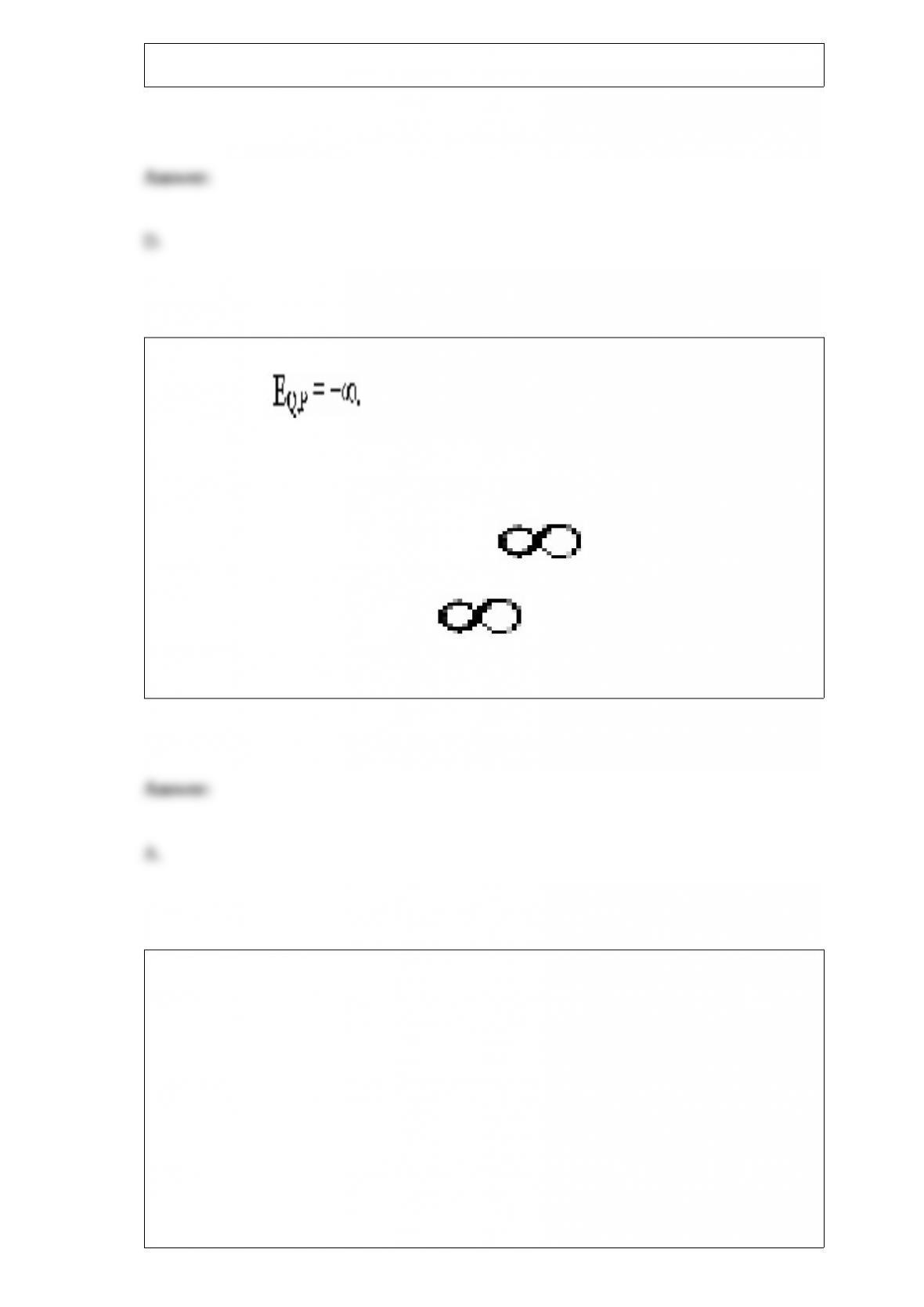
Consider firms operating in an industry where the own price elasticity of demand is
infinite; that is, Use this information to determine the type of industry in
which these firms operate and the optimal advertising-to-sales ratio.
A. Perfectly competitive industry and 0
B. Monopolistically competitive industry and
C. Perfectly competitive industry and
D. Monopolistic industry and 0
Consider an antique auction where bidders have independent private values. There are
two bidders, each of whom perceives that valuations are uniformly distributed between
$100 and $1,000. One of the bidders is Sue, who knows her own valuation is $200.
What is Sue’s optimal bidding strategy in an English auction?
A. Submit a bid of $150.
B. Submit a bid of $200.
C. Submit a bid that is less than $150.
D. Keep bidding until the bid exceeds $200.