Achievement Test 8: Chapters 16–17 Name __________________________
Accounting, 5e Instructor _______________________
Section # _______ Date _________
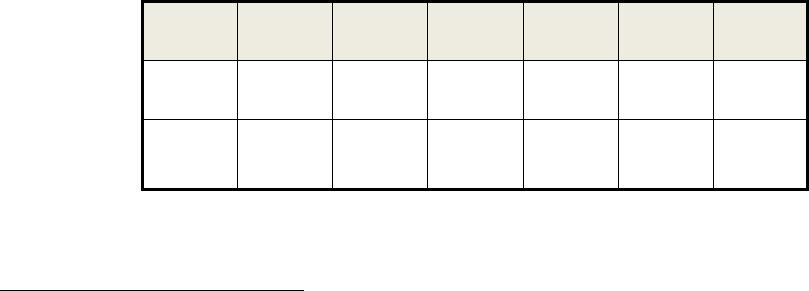
Part
I
II
III
IV
V
Total
Points
30
10
25
20
15
100
Score
PART I — MULTIPLE CHOICE (30 points)
Instructions: Designate the best answer for each of the following questions.
____ *1. In a JIT cost accounting system,
a. no inventories are kept on hand.
b. no manufacturing overhead costs are incurred.
c. a company strives to have the right amount of materials, parts, and products on
hand.
d. conversion costs are eliminated.
____ 2. The number of purchase orders would be an appropriate cost driver for
a. inspecting and testing cost.
b. machining cost.
c. ordering and receiving materials cost.
d. supervising cost.
____ 3. Which one of the following is a product-level activity?
a. Assembly of staplers
b. Every tenth stapler produced is tested to be sure it meets quality standards.
c. The factory janitor is paid.
d. A setup is undertaken when the model of staplers to be produced changes.
____ 4. The primary benefit of activity-based costing is that it leads to
a. more cost pools used to assign overhead costs to products.
b. more accurate product costing.
c. enhanced control over overhead costs.
d. better management decisions.
____ 5. All of the following are value-added activities in a manufacturing operation except
a. assembly.
b. engineering design.
c. inspections.
d. machining.

Test Bank for Accounting, Fifth Edition
AT8- 2
____ 6. ABC costing is an approach for allocating
a. direct materials to products.
b. direct labor to products.
c. manufacturing overhead to products.
d. direct materials and direct labor to products.
____ 7. The first step in activity-based costing is to
a. assign overhead costs for each activity cost pool to products.
b. compute the activity-based overhead rate.
c. identify cost drivers that accurately measure each activity’s contribution to the
finished product.
d. identify and classify the major activities involved in the manufacture of specific
products.
____ 8. Given the following data, compute equivalent units of production for conversion costs:
Beginning Work in Process—8,000 units, 40% complete
Units Completed and Transferred Out—90,000 units
Ending Work in Process—5,000 units, 20% complete.
a. 95,000
b. 91,000
c. 87,800
d. 94,200
____ 9. When there is beginning work in process, units transferred out can be computed by
subtracting
a. ending work in process units from the units accounted for.
b. ending work in process units from the units started into production.
c. beginning work in process units from the units to be accounted for.
d. beginning work in process units from the units started into production.
____ 10. Given the following data, compute equivalent units of production for materials.
Materials are added at the beginning of the process.
Beginning Work in Process—8,000 units, 40% complete
Units Completed and Transferred Out—90,000 units
Ending Work in Process—5,000 units, 20% complete.
a. 98,200
b. 91,000
c. 90,000
d. 95,000
____ 11. Which of the following does not describe a characteristic of process costing?
a. Job cost sheets must pass from one production department to the next on a daily
basis.
b. Once production begins, it continues until the finished product emerges.
c. All units of production receive precisely the same amount of material, labor, and
overhead.
d. Work in process accounts are maintained for each production department.

Achievement Test 8
AT8- 3
____ 12. Which item is not a calculation performed on a production cost report?
a. Number of physical units to be accounted for
b. Materials cost per equivalent unit
c. Cost of goods transferred out of finished goods
d. Cost of goods transferred remaining in work in process
PART II — TRUE/FALSE (10 points)
Instructions: Designate whether each of the following statements is true or false by circling the T
or F.
T F 1. The flow of costs is essentially the same in a job order and a process cost system.
T F 2. The method of assigning costs is essentially the same in a job order and a process
cost system.
T F 3. The physical units are a measure of the work done during a period, expressed in
fully completed units.
T F 4. Manufacturing costs in beginning work in process are ignored in computing the cost
of units transferred out and the cost of ending work in process.
T F 5. A cost reconciliation schedule is prepared to assign total costs to units transferred
out and in ending work in process.
T F 6. Activity-based costing allocates overhead to multiple activity cost pools and assigns
the activity cost pools to products by means of cost drivers.
T F 7. The first step in activity-based costing is to identify the cost driver that has a strong
correlation to the activity pool.
T F 8. An activity-based overhead rate is computed by dividing the estimated overhead
per activity by the number of cost drivers expected to be used per activity.
T F 9. Non-value-added activities are production-related activities that add cost to a
product without increasing its market value.
T F 10. Product-level activities are required to support or sustain an entire production
process.
Test Bank for Accounting, Fifth Edition
AT8- 4
PART III — PROCESS COSTING (25 points)
Instructions: Using the following data, complete the requirements given below. When you are
given amounts to assume the answers to previous requirements, be careful to use such assumed
amounts rather than your answers (in order to minimize carry–through errors).
The Finishing Department of Wayland Fixtures reports the following for January 2014:
Production: All materials are added at the beginning of the process. Beginning work in process
11,000 units, 20% complete. Units started into production 88,000 units. Ending work in process
9,000 units, 40% complete.
Manufacturing Costs: Beginning work in process, $35,100, comprised of $21,100 of materials and
$14,000 of conversion costs. Materials added $68,000; labor and overhead added $56,200.
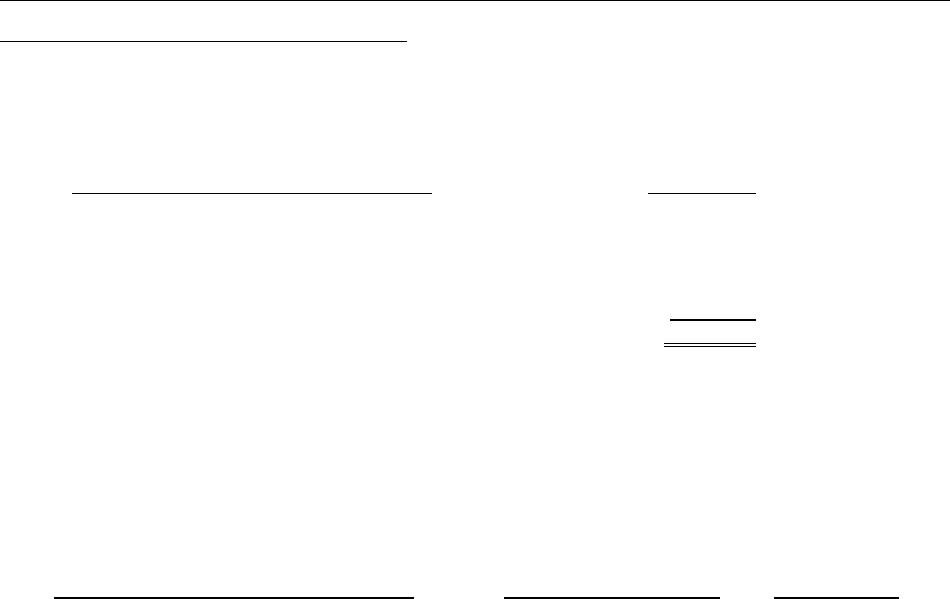
(a) Required: Compute equivalent units of production for (1) materials and (2) conversion
costs.
Materials Conversion
(b) Assume your answers to (a) above were 49,500 units for materials and 46,800 for
conversion costs.
Required: Compute the unit costs for the month.
Materials Conversion
(c) Assume your answers to (b) above were $1.50 for materials and $0.80 for conversion costs.
Required: Determine the costs to be assigned to the units transferred out.
(d) Assume the same unit costs as given in (c) above.
Required: Determine the costs assigned to the 9,000 units in ending work in process.
Achievement Test 8
AT8- 5
PART IV — ACTIVITY-BASED COSTING (20 points)
Bella Clear Windows designs and builds custom windows for luxury homes. Most of the windows
are custom made but occasionally the company does mass production on order. Its budgeted
manufacturing overhead costs for the year 2014 are as follows:
Overhead Cost Pools Amount
Purchasing $ 26,000
Production (cutting, milling, finishing) 176,000
Setting up machines 65,000
Inspecting 35,000
Utilities 75,000
Total budget overhead costs $377,000
For the last three years, the company has been allocating overhead to products on the basis of
machine hours. For the year 2014, 20,000 machine hours are budgeted.
The operations manager of Bella Clear recently directed her accountant to implement the activity–
based costing system she has repeatedly proposed. The accountant and production foreman
identified the following cost drivers and their usage for the previously budgeted overhead cost
pools:
Overhead Cost Pools Activity Cost Drivers Total Activity
Purchasing Number of orders 80
Production (cutting, milling, finishing) Direct labor hours 16,000
Setting up machines Number of setups 250
Inspecting Number of inspections 1,250
Utilities Square feet occupied 15,000
During this month, the company received an order for 80 windows from a housing development
contractor. The accountant prepared cost estimates for producing components for 80 windows to
submit a contract price per window set to the contractor. The following data for the production of
80 windows is accumulated:
Direct materials $22,000
Direct labor $23,100
Machine hours 1,600
Direct labor hours 2,100
Number of purchase orders 8
Number of machine setups 15
Number of inspections 12
Number of square feet occupied 1,200
Instructions
(a) Compute the predetermined overhead rate using traditional costing with machine hours as
the basis.
(b) Compute the manufacturing cost per window under traditional costing.
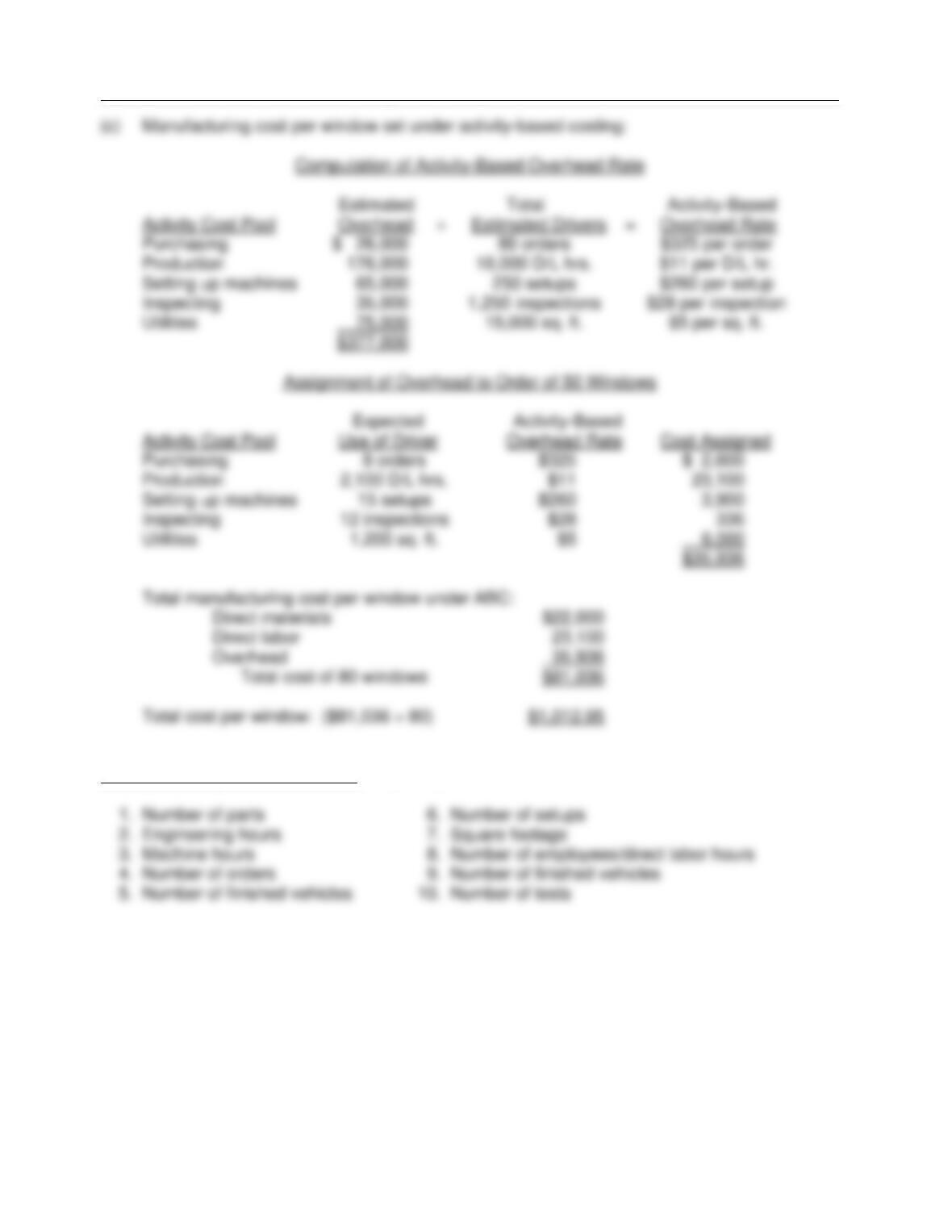
(c) Compute the manufacturing cost per window under the proposed activity-based costing
system.

Test Bank for Accounting, Fifth Edition
AT8- 6
PART V — ABC COST DRIVERS (15 points)
Scoot Motors manufactures motor scooters in its Jacksonville, Florida plant.
Instructions
Identify an appropriate cost driver that may be used to assign each of the following costs to each
line of motor scooters. Cost drivers may be used more than once.
Cost Drivers
Machine hours
Number of parts
Number of finished vehicles
Engineering hours
Number of setups
Number of employees/direct labor hours
Number of tests
Number of orders
Square footage
Cost Cost Driver
1. Assembling __________________________
2. Engineering __________________________
3. Machining __________________________
4. Ordering and receiving __________________________
5. Painting scooters __________________________
6. Machine setup __________________________
7. Storing materials __________________________
8. Supervising __________________________
9. Packing and shipping __________________________
10. Inspecting and testing __________________________
Achievement Test 8
AT8- 7
Solutions — Achievement Test 8: Chapters 16–17
PART I — MULTIPLE CHOICE (30 points)
PART II — TRUE/FALSE (10 points)
PART III — PROCESS COSTING (25 points)
PART IV — ACTIVITY-BASED COSTING (20 points)
Test Bank for Accounting, Fifth Edition
AT8- 8
PART V — ABC COST DRIVERS (15 points)