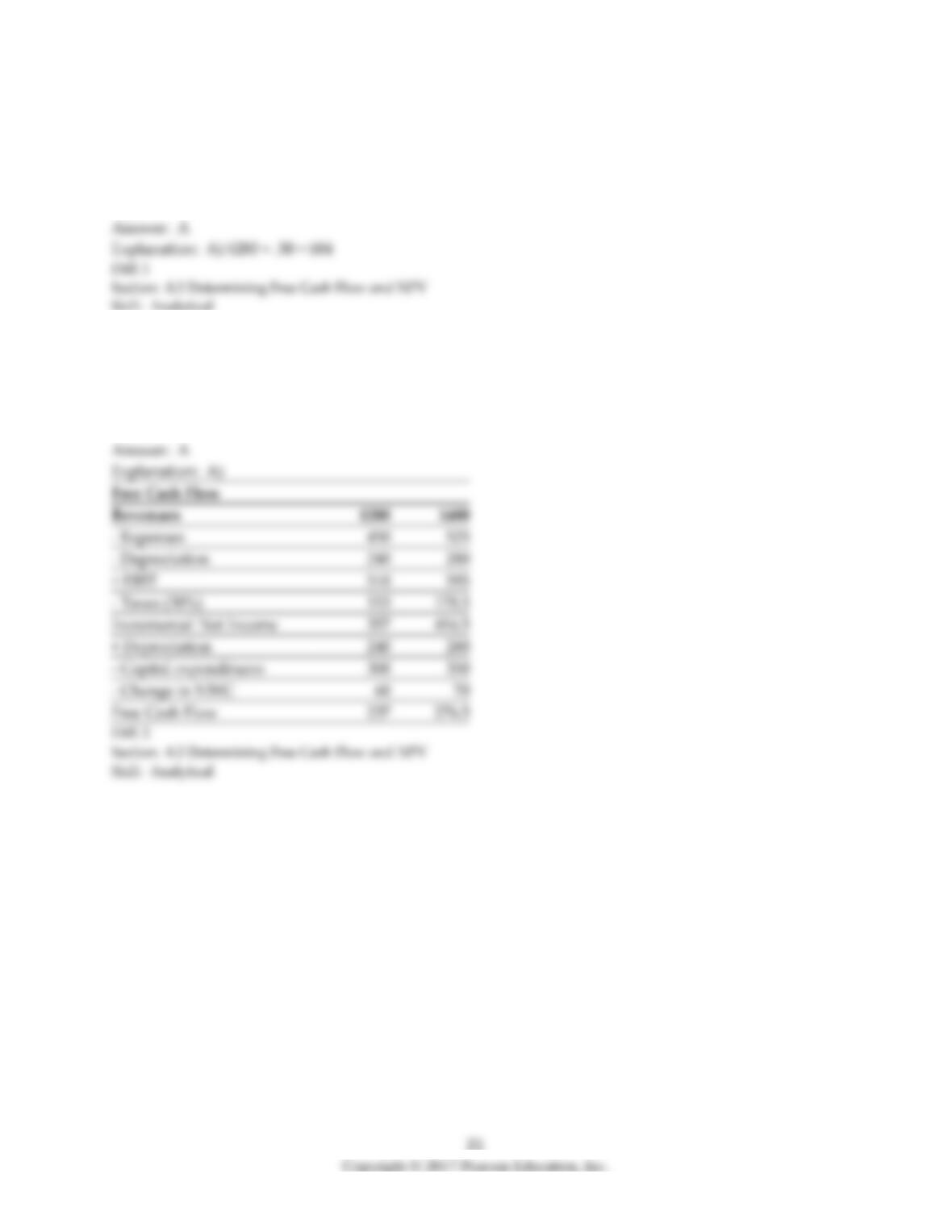
24) The depreciation tax shield for the Shepard Industries project in year two is closest to:
A) $84
B) $196
C) $72
D) $96
25) The free cash flow from the Shepard Industries project in year one is closest to:
A) $240
B) $300
C) –$5
D) $390
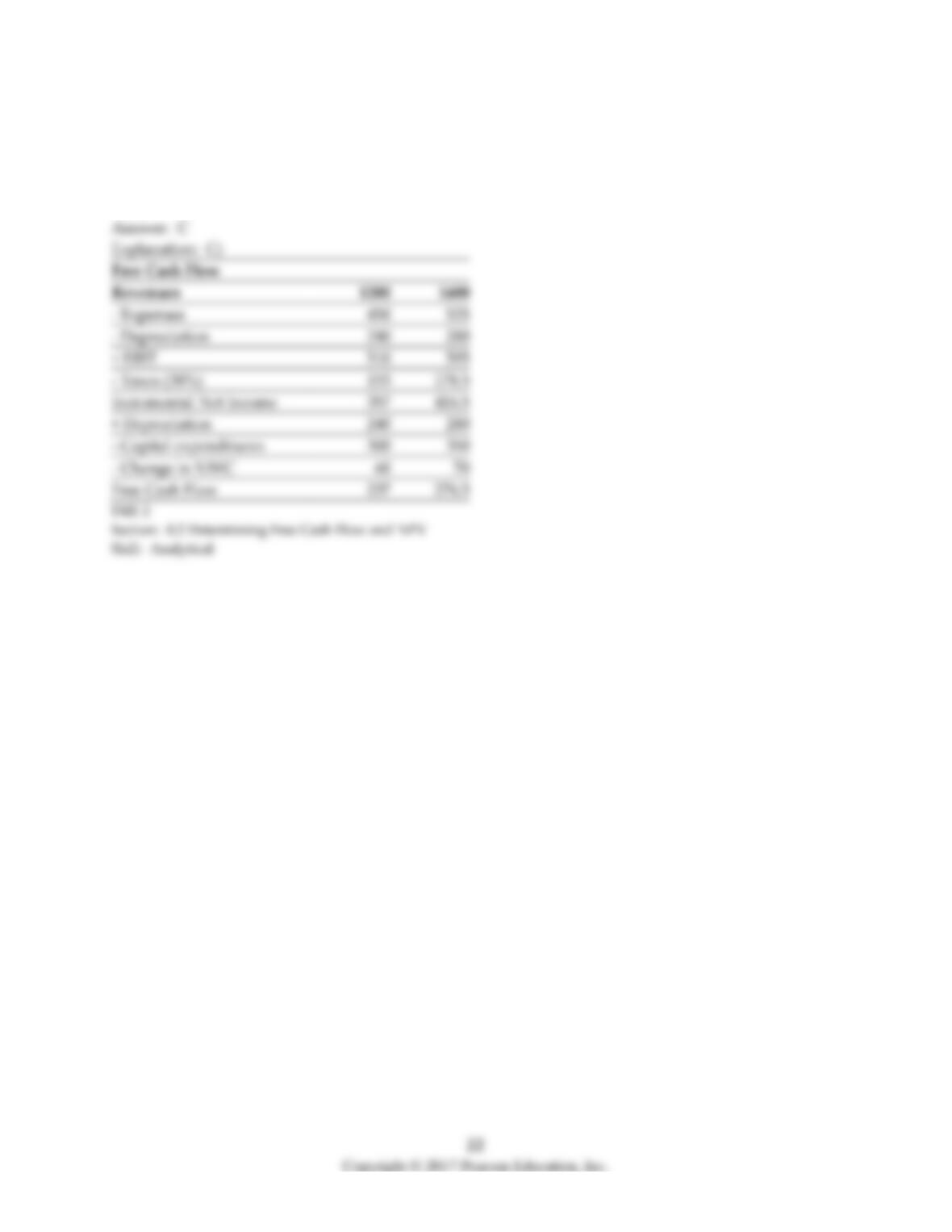
26) The free cash flow from the Shepard Industries project in year two is closest to:
A) $345
B) $455
C) $275
D) –$5
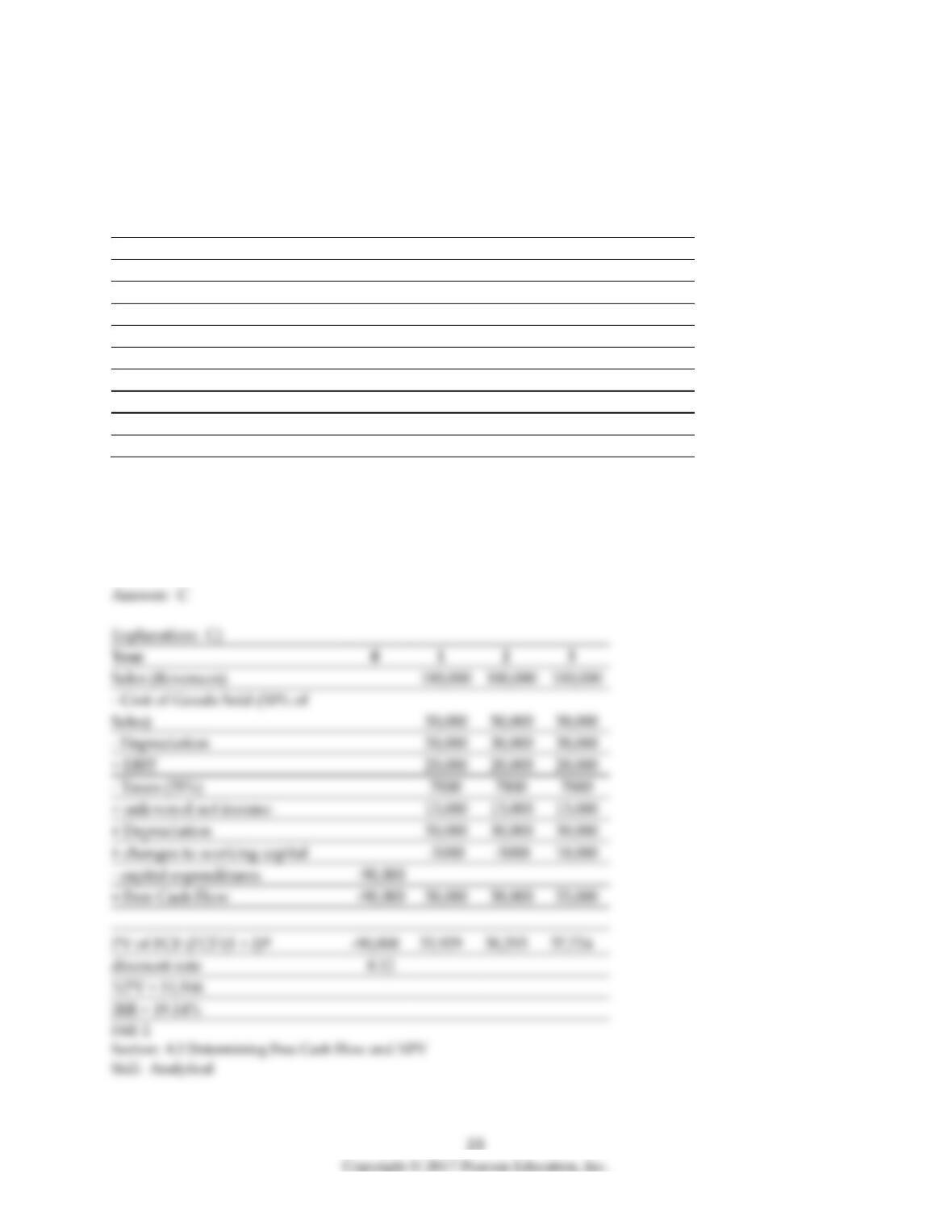
Use the information for the question(s) below.
Epiphany Industries is considering a new capital budgeting project that will last for three years.
Epiphany plans on using a cost of capital of 12% to evaluate this project. Based on extensive research, it
has prepared the following incremental cash flow projections:
Year
0
1
2
3
Sales (Revenues)
100,000
100,000
100,000
– Cost of Goods Sold (50% of Sales)
50,000
50,000
50,000
– Depreciation
30,000
30,000
30,000
= EBIT
20,000
20,000
20,000
– Taxes (35%)
7000
7000
7000
= unlevered net income
13,000
13,000
13,000
+ Depreciation
30,000
30,000
30,000
+ changes to working capital
-5000
-5000
10,000
– capital expenditures
-90,000
27) The free cash flow for the first year of Epiphany’s project is closest to:
A) $43,000
B) $25,000
C) $38,000
D) $45,000
Sales (Revenues)
Sales)
– Depreciation
= EBIT
– Taxes (35%)
= unlevered net income
+ Depreciation
+ changes to working capital
– capital expenditures
discount rate
0.12
NPV = 11,946
IRR = 19.14%
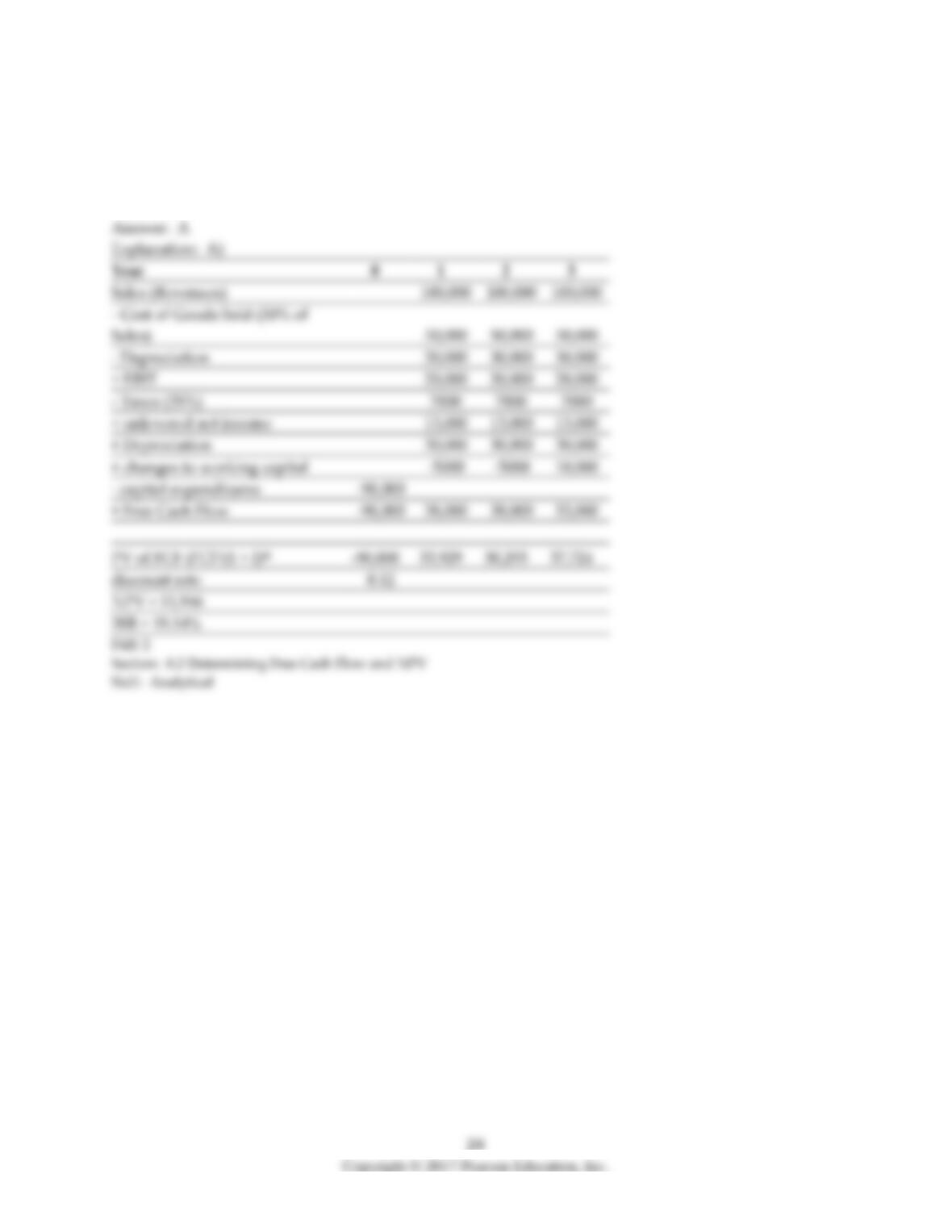
28) The free cash flow for the last year of Epiphany’s project is closest to:
A) $53,000
B) $38,000
C) $35,000
D) $43,000
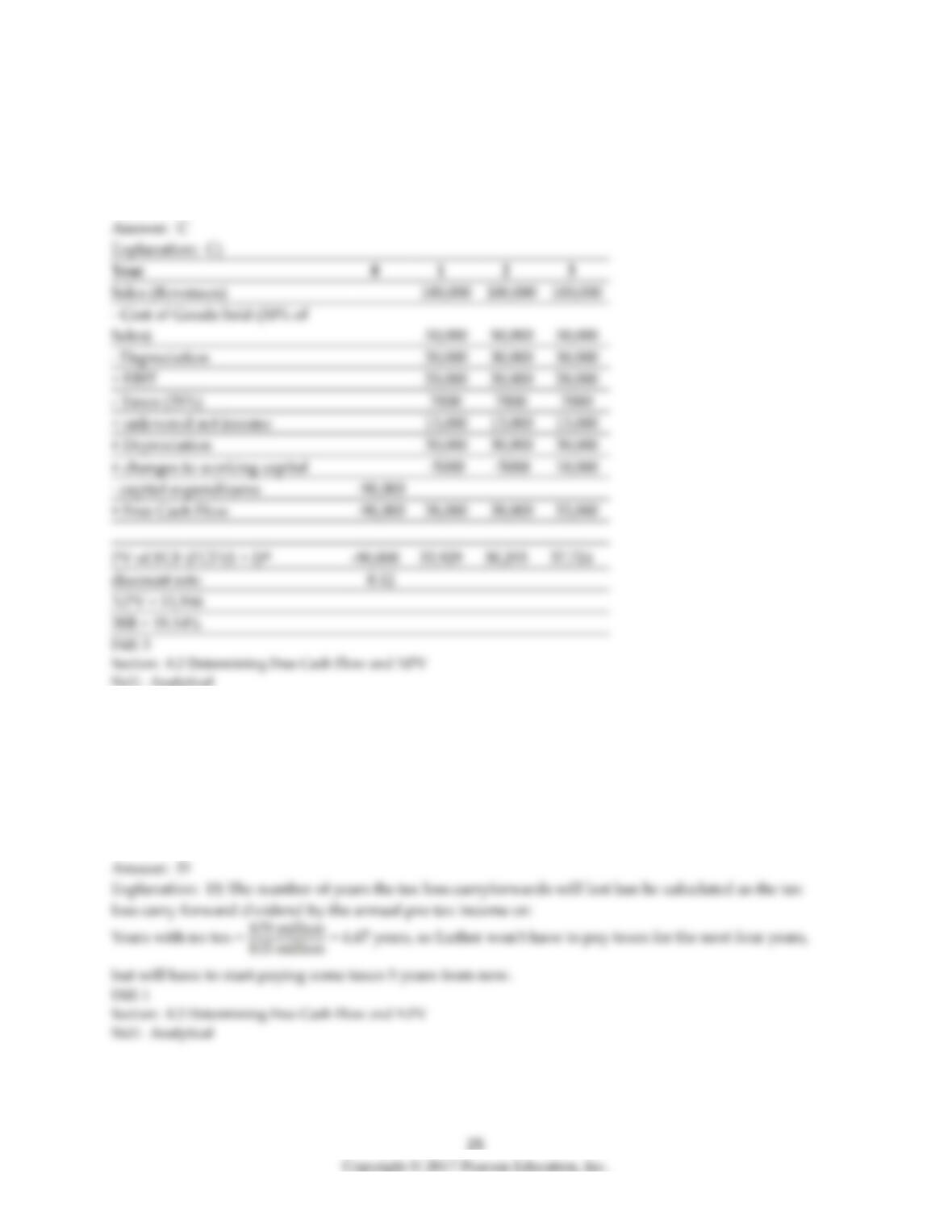
29) The NPV for Epiphany’s Project is closest to:
A) $4825
B) $39,000
C) $11,946
D) $20,400
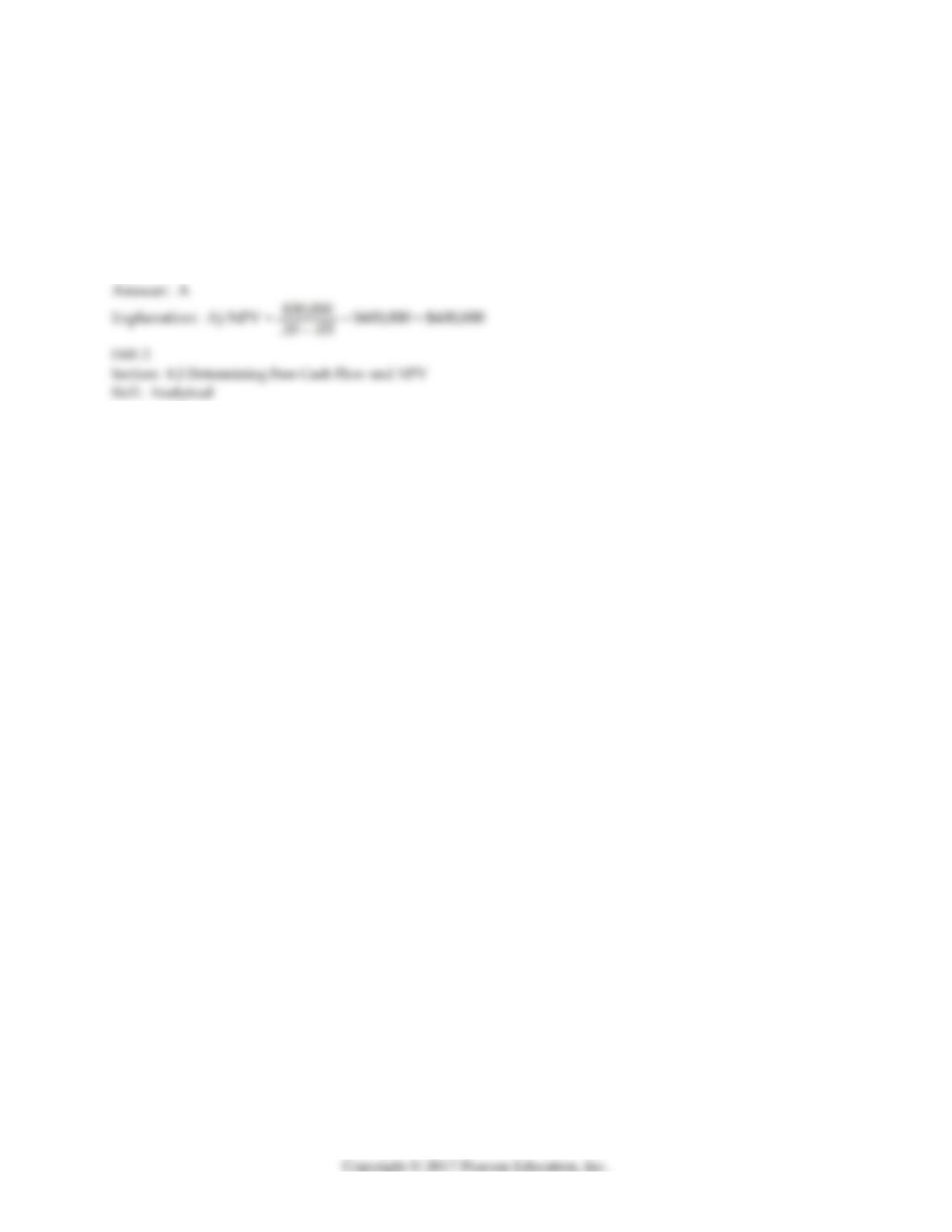
30) Luther Industries has outstanding tax loss carryforwards of $70 million from losses over the past
four years. If Luther earns $15 million per year in pre-tax income from now on, Luther first pays taxes
in:
A) 7 years
B) 2 years
C) 4 years
D) 5 years
26
31) You are considering investing $600,000 in a new automated inventory system that will provide after–
tax cost savings of $50,000 next year. These cost savings are expected to grow at the same rate as sales.
If sales are expected to grow at 5% per year and your cost of capital is 10%, then what is the NPV of the
automated inventory system?
A) $400,000
B) $500,000
C) -$100,000
D) $1,000,000
Use the information for the question(s) below.
The Sisyphean Corporation is considering investing in a new cane manufacturing machine that has an
estimated life of three years. The cost of the machine is $30,000 and the machine will be depreciated
straight line over its three-year life to a residual value of $0.
The cane manufacturing machine will result in sales of 2000 canes in year 1. Sales are estimated to grow
by 10% per year each year through year three. The price per cane that Sisyphean will charge its
customers is $18 each and is to remain constant. The canes have a cost per unit to manufacture of $9
each.
Installation of the machine and the resulting increase in manufacturing capacity will require an increase
in various net working capital accounts. It is estimated that the Sisyphean Corporation needs to hold
2% of its annual sales in cash, 4% of its annual sales in accounts receivable, 9% of its annual sales in
inventory, and 6% of its annual sales in accounts payable. The firm is in the 35% tax bracket, and has a
cost of capital of 10%.
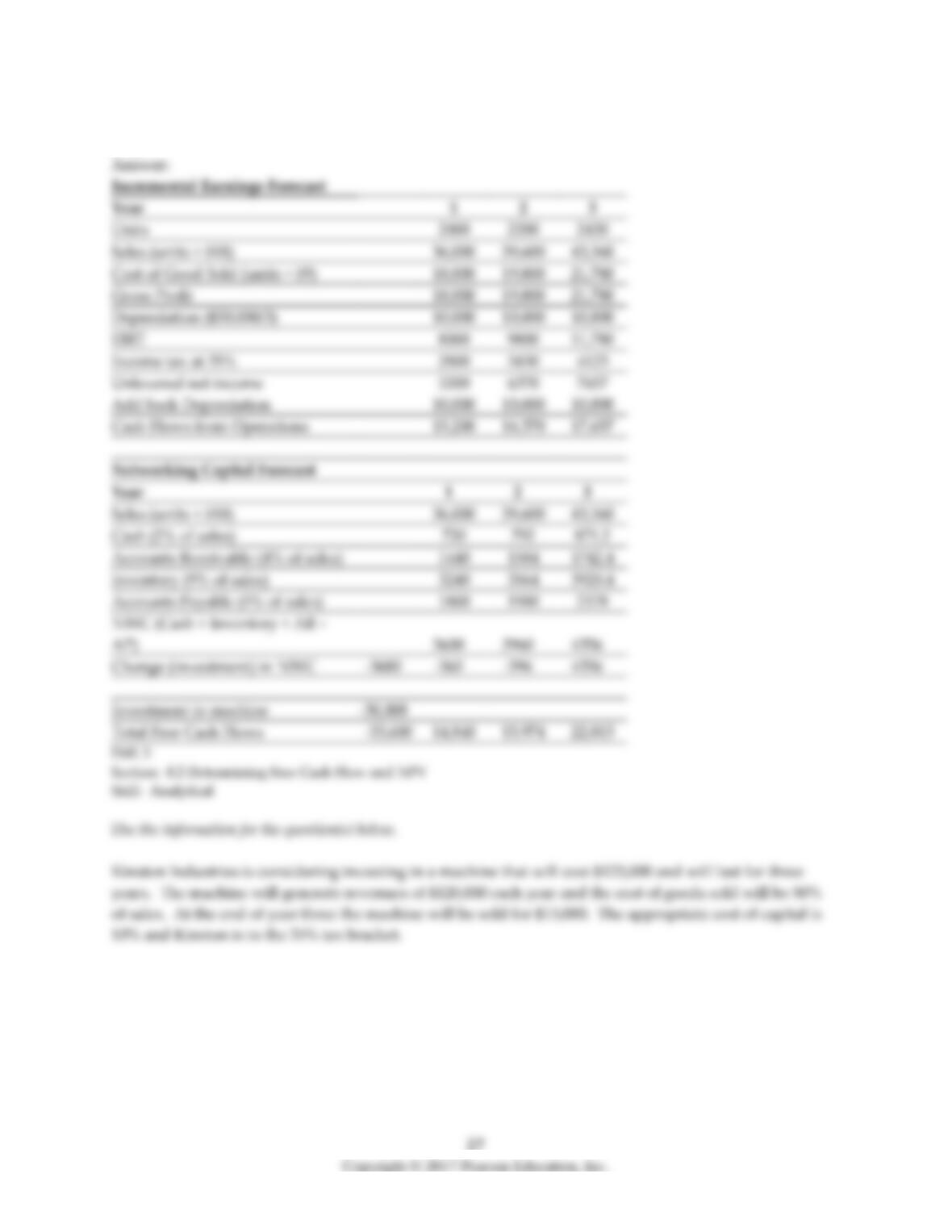
32) Calculate the total Free Cash Flows for each of the three years for the Sisyphean Corporation’s new
project.
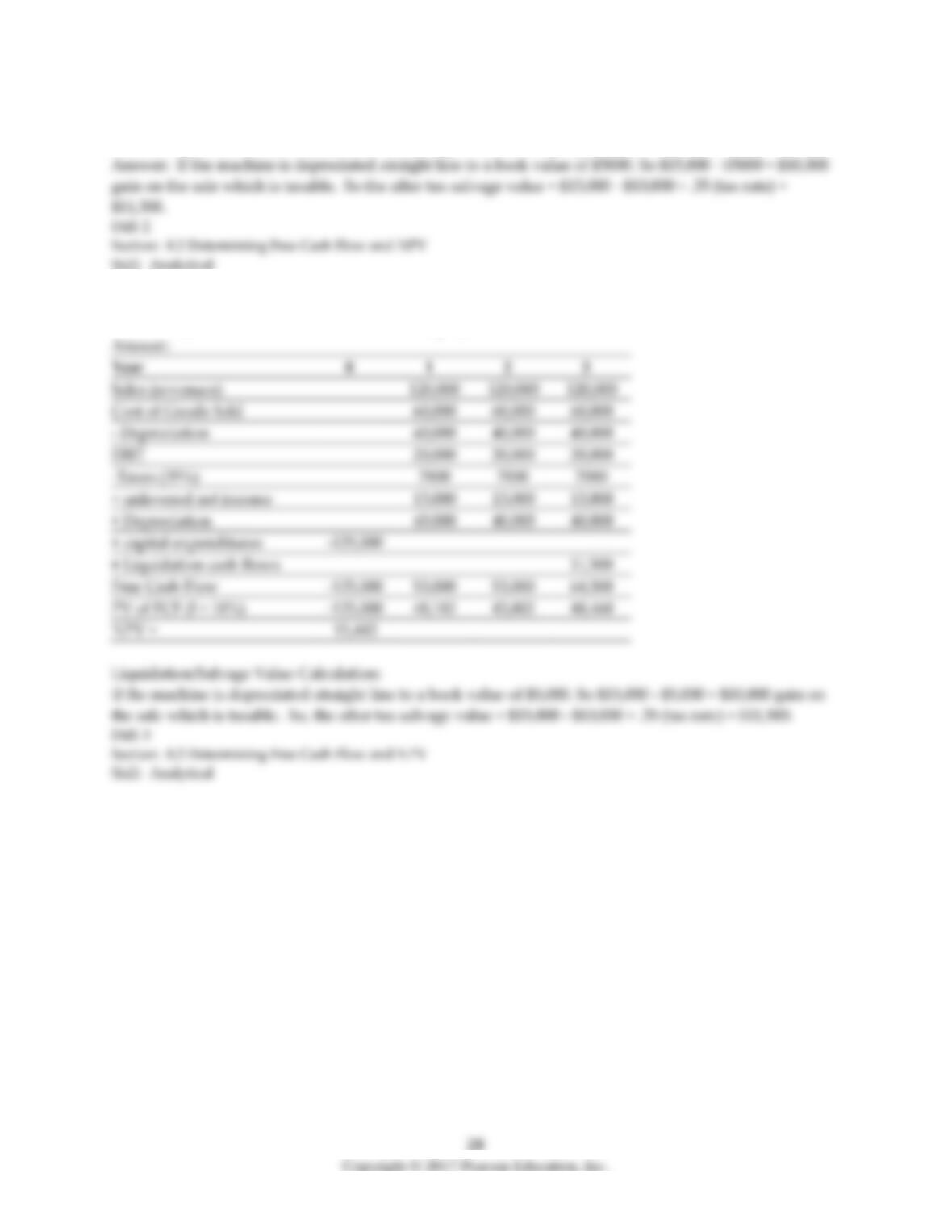
33) Assume that Kinston’s new machine will be depreciated straight line to a salvage value of $5000 at
the end of year three. What is the after-tax salvage value of this project?
34) Assume that Kinston’s new machine will be depreciated straight line to a salvage value of $5,000 at
the end of year three. What is the NPV for this project?
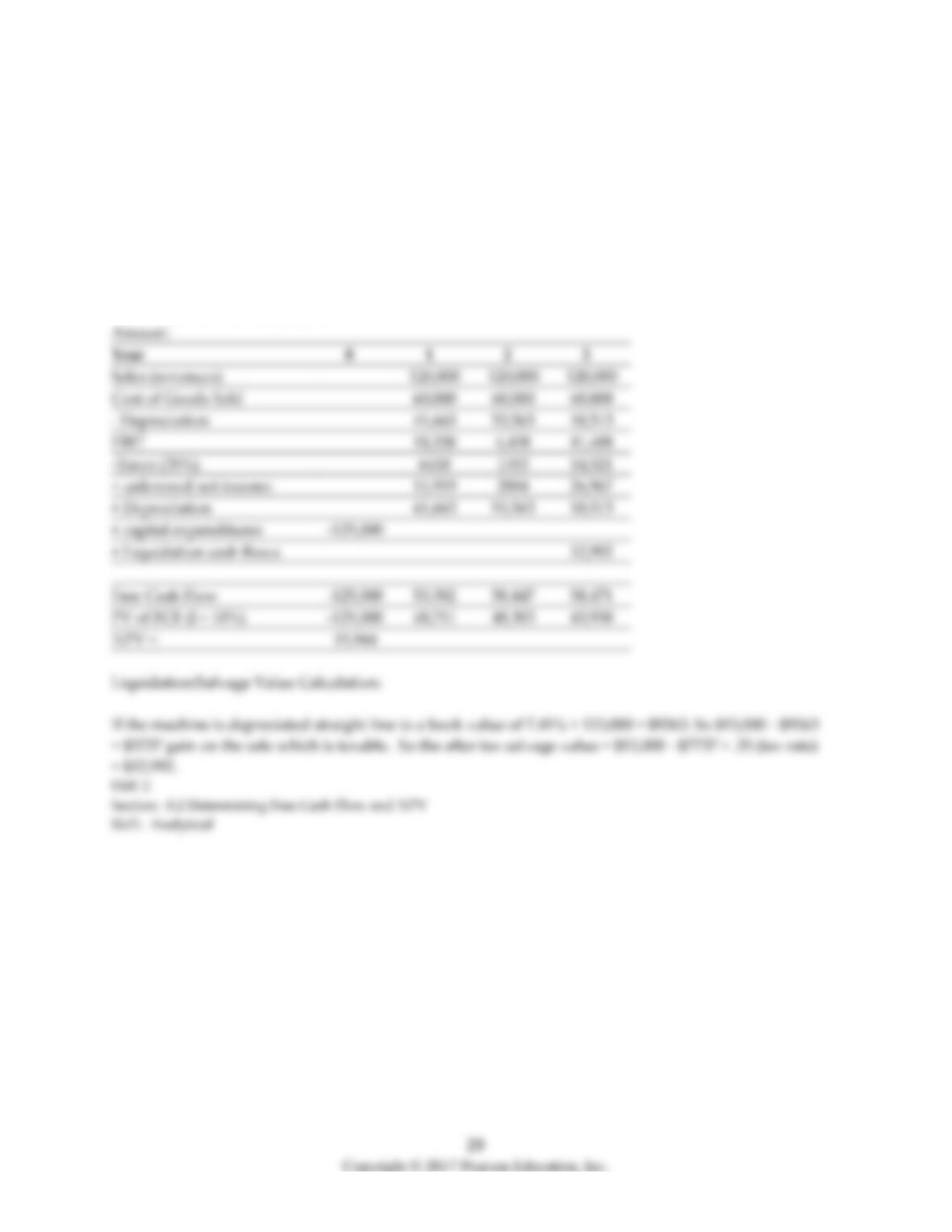
35) Assume that Kinston’s new machine will be depreciated using MACRS according to the following
schedule:
Year
3 Years
1
33.33%
2
44.45%
3
14.81%
4
7.41%
What is the NPV of this project?
Cost of Goods Sold
60,000
60,000
– Depreciation
41,663
18,513
EBIT
-Taxes (35%)
14,521
= unlevered net income
+ Depreciation
41,663
18,513
+ capital expenditures
+ Liquidation cash flows
12,992
Free Cash Flow
PV of FCF (I = 10%)
48,711
43,930
NPV =
8.3 Choosing Among Alternatives
Use the following information to answer the question(s) below.
Galt Motors currently produces 500,000 electric motors a year and expects output levels to remain
steady in the future. It buys armatures from an outside supplier at a price of $2.50 each. The plant
manager believes that it would be cheaper to make these armatures rather than buy them. Direct in–
house production costs are estimated to be only $1.80 per armature. The necessary machinery would
cost $700,000 and would be obsolete in 10 years. This investment would be depreciated to zero for tax
purposes using a 10-year straight line depreciation. The plant manager estimates that the operation
would require additional working capital of $40,000 but argues that this sum can be ignored since it is
recoverable at the end of the ten years. The expected proceeds from scrapping the machinery after 10
years are estimated to be $10,000. Galt Motors pays tax at a rate of 35% and has an opportunity cost of
capital of 14%.
1) The incremental cash flow that Galt Motors will incur today (Year 0) if they elect to manufacture
armatures in house is closest to:
A) -740,000
B) -700,000
C) -660,000
D) 740,000
2) The incremental cash flow that Galt Motors will incur in year 4 if they elect to manufacture armatures
in house is closest to:
A) 25,000
B) 350,000
C) 375,000
D) 1,250,000
3) The incremental cash flow that Galt Motors will incur in year 10 if they elect to manufacture
armatures in house is closest to:
A) 40,000
B) 335,000
C) 375,000
D) 415,000
4) The NPV of manufacturing the armatures in house is closest to:
A) 1,095,000
B) 1,215,000
C) 1,225,000
D) 1,250,000
5) The IRR of manufacturing the armatures in house is closest to:
A) 48%
B) 49%
C) 50%
D) 53%
6) What decision should Galt Motors take regarding manufacturing the armatures in house?
A) Proceed with in house manufacture since NPV is negative
B) Proceed with in house manufacture since NPV is positive
C) Reject in-house manufacture since NPV is negative
D) Reject in-house manufacture since IRR is greater than 14%
Use the following information to answer the question(s) below.
Two years ago the Krusty Krab Restaurant purchased a grill for $50,000. The owner, Eugene Krabs, has
learned that a new grill is available that will cook Krabby Patties twice as fast as the existing grill. This
new grill can be purchased for $80,000 and would be depreciated straight line over 8 years, after which
it would have no salvage value. Eugene Krab expects that the new grill will produce EBITDA of $50,000
per year for the next eight years while the existing grill produces EBITDA of only $35,000 per year. The
current grill is being depreciated straight line over its useful life of 10 years after which it will have no
salvage value. All other operating expenses are identical for both grills. The existing grill can be sold to
another restaurant now for $30,000. The Krusty Krab’s tax rate is 35%.
7) The incremental cash flow that the Krusty Krab will incur today (Year 0) if they elect to upgrade to
the new grill is closest to:
A) -80,000
B) -50,000
C) -46,500
D) +30,000
8) The incremental cash flow that the Krusty Krab will incur in year 1 if they elect to upgrade to the new
grill is closest to:
A) 6500
B) 7800
C) 10,800
D) 11,500
9) The incremental after tax cash flow that the Krusty Krab will receive from selling the existing grill is
closest to:
A) 19,500
B) 30,000
C) 33,500
D) 50,000
10) If the Krusty Krab’s opportunity cost of capital is 12%, then the NPV for upgrading to the new grill
is closest to:
A) -22,875
B) -15,025
C) 7130
D) 10,630