
FOR INSTRUCTOR USE ONLY
CHAPTER 7
FRAUD, INTERNAL CONTROL, AND CASH
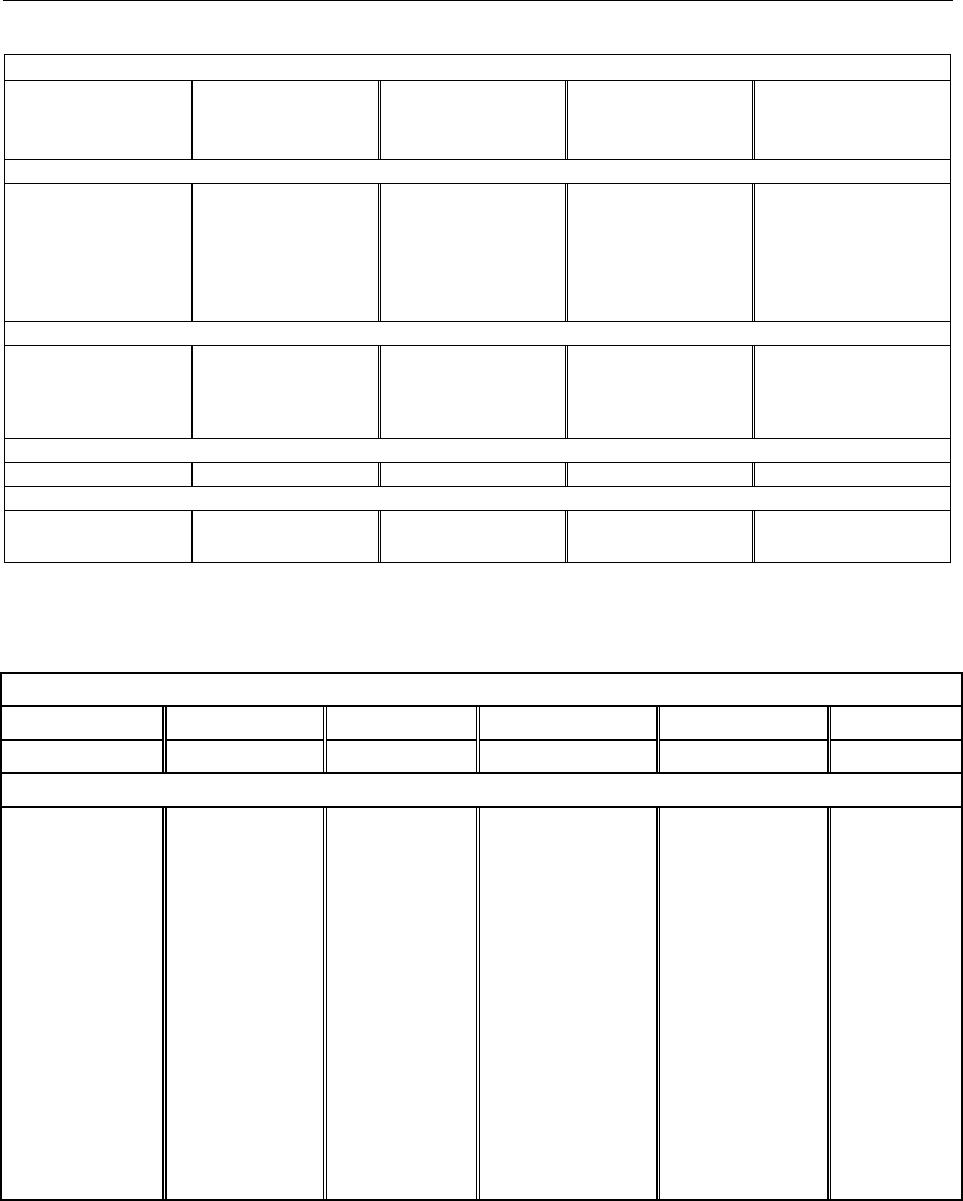
SUMMARY OF QUESTIONS BY LEARNING OBJECTIVE AND BLOOM’S TAXONOMY
Item
LO
BT
Item
LO
BT
Item
LO
BT
Item
LO
BT
Item
LO
BT
True-False Statements
1.
1
K
9.
2
K
17.
2
K
25.
4
K
33.
6
K
2.
1
K
10.
2
K
18.
2
K
26.
4
K
34.
6
K
3.
2
K
11.
2
K
19.
2
K
27.
5
K
35.
7
K
4.
2
K
12.
2
K
20.
2
K
28.
5
K
36.
8
K
5.
2
K
13.
2
K
21.
3
K
29.
5
K
37.
8
K
6.
2
K
14.
2
K
22.
3
K
30.
5
K
*38.
9
K
7.
2
K
15.
2
K
23.
3
K
31.
6
K
*39.
9
K
8.
2
K
16.
2
K
24.
4
K
32.
6
K
Multiple Choice Questions
40.
1
C
73.
2
K
106.
4
K
139.
5
AP
172.
8
AP
41.
1
K
74.
2
K
107.
5
K
140.
5
C
173.
8
K
42.
2
K
75.
2
K
108.
5
K
141.
5
C
174.
8
K
43.
2
K
76.
2
K
109.
5
K
142.
5
C
175.
8
AP
44.
2
K
77.
2
K
110.
5
K
143.
5
C
176.
8
AP
45.
2
K
78.
2
C
111.
5
K
144.
5
AP
177.
8
C
46.
2
K
79.
2
C
112.
5
K
145.
5
AP
178.
8
AP
47.
2
K
80.
3
K
113.
5
K
146.
5
AP
179.
8
AP
48.
2
K
81.
3
K
114.
5
K
147.
5
AP
180.
8
AP
49.
2
K
82.
3
K
115.
5
K
148.
5
AP
181.
8
AP
50.
2
K
83.
3
K
116.
5
K
149.
5
AP
182.
8
AP
51.
2
K
84.
3
K
117.
5
K
150.
5
AP
183.
8
K
52.
2
K
85.
3
K
118.
5
AP
151.
5
AP
184.
8
AP
53.
2
K
86.
3
K
119.
5
AP
152.
5
AP
185.
8
AP
54.
2
K
87.
3
K
120.
5
AP
153.
5
AP
*186.
9
K
55.
2
K
88.
4
K
121.
5
AP
154.
6
C
*187.
9
K
56.
2
K
89.
4
K
122.
5
AP
155.
6
K
*188.
9
C
57.
2
K
90.
4
K
123.
5
AP
156.
6
K
*189.
9
K
58.
2
C
91.
4
K
124.
5
K
157.
6
K
*190.
9
AP
59.
2
C
92.
4
K
125.
5
K
158.
6
K
*191.
9
K
60.
2
K
93.
4
K
126.
5
K
159.
6
K
*192.
9
AP
61.
2
K
94.
4
K
127.
5
AP
160.
7
K
*193.
9
AP
62.
2
K
95.
4
K
128.
5
AP
161.
7
K
*194.
9
AP
63.
2
K
96.
4
K
129.
5
AP
162.
7
K
*195.
9
AP
64.
2
K
97.
4
K
130.
5
AP
163.
7
K
*196.
9
AP
65.
2
K
98.
4
K
131.
5
AP
164.
7
K
*197.
9
AP
66.
2
K
99.
4
K
132.
5
AP
165.
8
K
*198.
9
AP
67.
2
K
100.
4
C
133.
5
K
166.
8
AP
*199.
9
K
68.
2
K
101.
4
K
134.
5
AP
167.
8
AP
*200.
9
K
69.
2
C
102.
4
K
135.
5
AP
168.
8
AP
70.
2
K
103.
4
K
136.
5
AP
169.
8
K
71.
2
K
104.
4
K
137.
5
K
170.
8
AP
72.
2
K
105.
4
C
138.
5
AP
171.
8
AP
Test Bank for Accounting: Tools for Business Decision Making, Fifth Edition
FOR INSTRUCTOR USE ONLY
7-2
Brief Exercises
201.
2
K
204.
4
K
207.
5
AP
210.
5
AP
202.
2
K
205.
5
K
208.
5
AP
211.
6
AP
203.
3
K
206.
5
K
209.
5
AP
Exercises
212.
2
C
218.
5
AP
224.
5
AN
230.
5
AP
*236.
9
AP
213.
2
AN
219.
5
AP
225.
5
AN
231.
5
AP
*237.
9
AP
214.
5
AP
220.
5
AP
226.
5
C
232.
8
AP
*238.
9
AP
215.
5
AP
221.
5
K
227.
5
AP
233.
8
AP
216.
5
AP
222.
5
AP
228.
5
AP
234.
8
AP
217.
5
AP
223.
5
AP
229.
5
AP
*235.
9
AP
Completion Statements
239.
1
K
243.
2
K
247.
4
K
251.
5
K
*255.
9
K
240.
1
K
244.
2
K
248.
5
K
252.
7
K
241.
1
K
245.
2
K
249.
5
K
253.
8
K
242.
1
K
246.
4
K
250.
5
K
*254.
9
K
Matching
256.
1-7
K
Short Answer Essay
257.
1
K
259.
2
C
261.
2
C
263.
5
C
265.
2
E
258.
2
C
260.
2
E
262.
4
K
264.
7
C
266.
2
C
*This topic is dealt with in an Appendix to the chapter.
SUMMARY OF LEARNIG OBJECTIVES BY QUESTION TYPE
Learning Objective 1
Item
Type
Item
Type
Item
Type
Item
Type
Item
Type
Item
Type
1.
TF
2.
TF
40.
MC
41.
MC
256.
Ma
257.
SA
Learning Objective 2
3.
TF
16.
TF
50.
MC
63.
MC
76.
MC
244.
C
4.
TF
17.
TF
51.
MC
64.
MC
77.
MC
245.
C
5.
TF
18.
TF
52.
MC
65.
MC
78.
MC
256.
Ma
6.
TF
19.
TF
53.
MC
66.
MC
79.
MC
258.
SA
7.
TF
20.
TF
54.
MC
67.
MC
201.
Be
259.
SA
8.
TF
42.
MC
55.
MC
68.
MC
202.
Be
260.
SA
9.
TF
43.
MC
56.
MC
69.
MC
212.
Ex
261.
SA
10.
TF
44.
MC
57.
MC
70.
MC
213.
Ex
265.
SA
11.
TF
45.
MC
58.
MC
71.
MC
239.
C
266.
SA
12.
TF
46.
MC
59.
MC
72.
MC
240.
C
13.
TF
47.
MC
60.
MC
73.
MC
241.
C
14.
TF
48.
MC
61.
MC
74.
MC
242.
C
15.
TF
49.
MC
62.
MC
75.
MC
243.
C
Fraud, Internal Control, and Cash
FOR INSTRUCTOR USE ONLY
7-3
Learning Objective 3
Item
Type
Item
Type
Item
Type
Item
Type
Item
Type
Item
Type
21.
TF
23.
TF
81.
MC
83.
MC
85.
MC
87.
MC
22.
TF
80.
MC
82.
MC
84.
MC
86.
MC
256.
Ma
Learning Objective 4
24.
TF
90.
MC
95.
MC
100.
MC
105.
MC
25.
TF
91.
MC
96.
MC
101.
MC
106.
MC
26.
TF
92.
MC
97.
MC
102.
MC
225.
C
88.
MC
93.
MC
98.
MC
103.
MC
256.
Ma
89.
MC
94.
MC
99.
MC
104.
MC
262.
SA
Learning Objective 5
27.
TF
117.
MC
131.
MC
145.
MC
210.
Be
227.
Ex
28.
TF
118.
MC
132.
MC
146.
MC
214.
Ex
228.
Ex
29.
TF
119.
MC
133.
MC
147.
MC
215.
Ex
229.
Ex
30.
TF
120.
MC
134.
MC
148.
MC
216.
Ex
230.
Ex
107.
MC
121.
MC
135.
MC
149.
MC
217.
Ex
248.
C
108.
MC
122.
MC
136.
MC
150.
MC
218.
Ex
249.
C
109.
MC
123.
MC
137.
MC
151.
MC
219.
Ex
250.
C
110.
MC
124.
MC
138.
MC
152.
MC
220.
Ex
251.
C
111.
MC
125.
MC
139.
MC
153.
MC
221.
Ex
256.
Ma
112.
MC
126.
MC
140.
MC
205.
Be
222.
Ex
263.
SA
113.
MC
127.
MC
141.
MC
206.
Be
223.
Ex
114.
MC
128.
MC
142.
MC
207.
Be
224.
Ex
115.
MC
129.
MC
143.
MC
208.
Be
225.
Ex
116.
MC
130.
MC
144.
MC
209.
Be
226.
Ex
Learning Objective 6
31.
TF
33.
TF
154.
MC
156.
MC
158.
MC
211.
Be
32.
TF
34.
TF
155.
MC
157.
MC
159.
MC
256.
Ma
Learning Objective 7
35.
TF
161.
MC
163.
MC
231.
C
264.
SA
160.
MC
162.
MC
164.
MC
256.
Ma
Learning Objective 8
36.
TF
168.
MC
173.
MC
178.
MC
183.
MC
233.
Ex
37.
TF
169.
MC
174.
MC
179.
MC
184.
MC
234.
Ex
165.
MC
170.
MC
175.
MC
180.
MC
185.
MC
253.
C
166.
MC
171.
MC
176.
MC
181.
MC
231.
Ex
167.
MC
172.
MC
177.
MC
182.
MC
232.
Ex
Test Bank for Accounting: Tools for Business Decision Making, Fifth Edition
FOR INSTRUCTOR USE ONLY
7-4
Learning Objective 9
Item
Type
Item
Type
Item
Type
Item
Type
Item
Type
Item
Type
34.
TF
187.
MC
191.
MC
195.
MC
199.
MC
237.
Ex
38.
TF
188.
MC
192.
MC
196.
MC
200.
MC
238.
Ex
39.
TF
189.
MC
193.
MC
197.
MC
235.
Ex
254.
C
186.
MC
190.
MC
194.
MC
198.
MC
236.
Ex
255.
C
Note: TF = True-False C = Completion
MC = Multiple Choice Ex = Exercise
Ma = Matching SA = Short Answer Essay
CHAPTER LEARNING OBJECTIVES
1. Define fraud and internal control. A fraud is a dishonest act by an employee that results in
personal benefit to the employee at a cost to the employer. The fraud triangle refers to the
three factors that contribute to fraudulent activity by employees: opportunity, financial
pressure, and rationalization. Internal control consists of all the related methods and
measures adopted within an organization to safeguard its assets, enhance the reliability of its
accounting records, increase efficiency of operations, and ensure compliance with laws and
regulations.
2. Identify the principles of internal control activities. The principles of internal control are
establishment of responsibility; segregation of duties; documentation procedures; physical
controls; independent internal verification; and human resource controls.
3. Explain the applications of internal control principles to cash receipts. Internal controls
over cash receipts include: (a) designating only personnel such as cashiers to handle cash;
(b) assigning the duties of receiving cash, recording cash, and having custody of cash to
different individuals; (c) obtaining remittance advices for mail receipts, cash register tapes or
computer records for over–the-counter receipts, and deposit slips for bank deposits; (d) using
company safes and bank vaults to store cash with access limited to authorized personnel,
and using cash registers in executing over–the-counter receipts; (e) making independent daily
counts of register receipts and daily comparisons of total receipts with total deposits; and (f)
bonding personnel who handle cash, as well as requiring them to take vacations.
4. Explain the applications of internal control principles to cash disbursements. Internal
controls over cash disbursements include: (a) having only specified individuals such as the
treasurer authorized to sign checks; (b) assigning the duties of approving items for payment,
paying the items, and recording the payment to different individuals; (c) using prenumbered
checks and accounting for all checks, with each check supported by an approved invoice;
after payment, stamping each approved invoice “paid”; (d) storing blank checks in a safe or
vault with access restricted to authorized personnel, and using a machine with indelible ink to
imprint amounts on checks; (e) comparing each check with the approved invoice before
issuing the check, and making monthly reconciliations of bank and book balances; and (f)
bonding personnel who handle cash, requiring employees to take vacations, and conducting
background checks.
Fraud, Internal Control, and Cash
7-5
5. Prepare a bank reconciliation. In reconciling the bank account, it is customary to reconcile
the balance per books and the balance per bank to their adjusted balance. The steps
reconciling the Cash account are to determine deposits in transit, outstanding checks, errors
by the depositor or the bank, and unrecorded bank memoranda.
6. Explain the reporting of cash. Cash is listed first in the current assets section of the balance
sheet. Companies often report cash together with cash equivalents. Cash restricted for a
special purpose is reported separately as a current asset or as a noncurrent asset, depending
on when the company expects to use the cash.
7. Discuss the basic principles of cash management. The basic principles of cash
management include: (a) increase the speed of receivables collection, (b) keep inventory
levels low, (c) monitor the timing of payment of liabilities, (d) plan timing of major
expenditures, and (e) invest idle cash.
8. Identify the primary elements of a cash budget. The three main elements of a cash budget
are the cash receipts section, cash disbursements section, and financing section.
*9. Explain the operation of a petty cash fund. In operating a petty cash fund, a company
establishes the fund by appointing a custodian and determining the size of the fund. The
custodian makes payments from the fund for documented expenditures. The company
replenishes the fund as needed, and at the end of each accounting period. Accounting entries
to record payments are made each time the fund is replenished.
TRUE-FALSE STATEMENTS
1. The most important element of the fraud triangle is rationalization.
2. Employees sometimes commit fraud because of personal financial problems caused by
too much debt.
3. The safeguarding of assets is an objective of a company’s system of internal control.
4. When one individual is responsible for all related activities, the potential for errors and
irregularities is decreased.
5. Internal control is most effective when several people are responsible for a given task.
6. An effective system of internal control centralizes functions in a single capable individual.
Test Bank for Accounting: Tools for Business Decision Making, Fifth Edition
7-6
7. The responsibility for keeping the records for an asset should be separate from the
physical custody of that asset.
8. Requiring employees to take vacations is a weakness in the system of internal controls
because it does not promote operational efficiency.
9. The extent of internal control features adopted by a company must be evaluated in terms
of cost-benefit.
10. Bonding means insuring a company against theft by employees.
11. It is unlikely that a company would want to bond its employees who handle cash or
inventory.
12. An effective system of internal control requires that at least two individuals be assigned to
one cash drawer so that each can serve as check on the other.
13. A good system of internal control will safeguard its assets and enhance the accuracy and
reliability of its accounting records.
14. A system of internal control cannot be considered good until the possibility of human error
has been completely eliminated.
15. Only large companies need to be concerned with a system of internal control.
16. Under an effective system of internal control, errors occur only as a result of fraud or
dishonesty.
17. The responsibility for ordering, receiving, and paying for merchandise should be assigned
to different individuals.
Fraud, Internal Control, and Cash
7-7
18. The separation of duties feature of internal control can be negated when several
employees are involved in a scheme.
19. In order to prevent a transaction from being recorded more than once, a company should
maintain only one book of original entry.
20. Segregation of duties among employees eliminates the possibility of collusion.
21. For efficiency of operations and better control over cash, a company should maintain only
one bank account.
22. Checks received in the mail should be immediately stamped “NSF” to prevent
unauthorized cashing of the check.
23. The treasurer should prepare and sign a check only after authorization to issue a check
has been provided.
24. Control over cash disbursements is improved if major expenditures are paid by check.
25. An example of segregation of duties is having a check signer recording cash
disbursements.
26. Electronic funds transfer (EFT) is a disbursement system that uses a telephone or a
computer to transfer cash from one location to another.
27. One example of a periodic independent verification is the bank reconciliation.
28. To obtain maximum benefit from a bank reconciliation, the reconciliation should be
prepared by the employee authorized to sign checks.
29. All reconciling items in determining the adjusted cash balance per books require the
depositor to make adjusting journal entries to the cash account.
Test Bank for Accounting: Tools for Business Decision Making, Fifth Edition
FOR INSTRUCTOR USE ONLY
7-8
30. A bank reconciliation is generally prepared by the bank and sent to the depositor along
with canceled checks.
31. Cash equivalents are highly liquid investments that can be converted into a specific
amount of cash.
32. Cash equivalents include money market accounts, commercial paper, and U.S. treasury
bills held for ninety days or less.
33. Cash restricted in use should be separately reported on the balance sheet.
34. Sound internal control activities dictate that the amount of cash on hand should be kept to
a maximum.
35. A basic principle of cash management is to increase the speed of paying liabilities.
36. If a monthly cash budget is prepared properly, there will never be a cash deficiency at the
end of any month.
37. A cash budget contributes to more effective cash management.
*38. A petty cash fund is used to pay relatively large amounts.
*39. The petty cash fund eliminates the need for a bank checking account.
Answers to True-False Statements
Fraud, Internal Control, and Cash
7-9
MULTIPLE CHOICE QUESTIONS
40. Which of the following is not one of the main factors that contribute to fraudulent activity?
a. Opportunity.
b. Incompatible duties.
c. Financial pressure.
d. Rationalization.
41. All of the following requirements about internal controls were enacted under the Sarbanes
Oxley Act except
a. independent outside auditors must attest to the level of internal control.
b. companies must develop sound internal controls over financial reporting.
c. companies must continually assess the functionality of internal controls.
d. independent outside auditors must eliminate redundant internal controls.
42. Which one of the following is not an objective of a system of internal controls?
a. Safeguard company assets.
b. Overstate liabilities in order to be conservative.
c. Enhance the accuracy and reliability of accounting records.
d. Reduce the risks of errors.
43. Which one of the following is not an objective of a system of internal controls?
a. Safeguard company assets.
b. Enhance the accuracy and reliability of accounting records.
c. Fairness of the financial statements.
d. Reduce the risks of errors.
44. All of the following are examples of internal control procedures except
a. using prenumbered documents.
b. reconciling the bank statement.
c. customer satisfaction surveys.
d. insistence that employees take vacations.
45. Each of the following is a feature of internal control except
a. an extensive marketing plan.
b. bonding of employees.
c. separation of duties.
d. recording of all transactions.
Test Bank for Accounting: Tools for Business Decision Making, Fifth Edition
7-10
46. Each of the following is a feature of internal control except
a. limited access to assets.
b. independent internal verifications.
c. authorization of transactions.
d. generic design of documents.
47. Which of the following is not a limitation of internal control?
a. Cost of establishing control procedures should not exceed their benefit.
b. The human element.
c. Collusion.
d. The size of the company.
48. Internal controls are concerned with
a. only manual systems of accounting.
b. the extent of government regulations.
c. safeguarding assets.
d. preparing income tax returns.
49. Internal control is defined, in part, as a plan that safeguards
a. all balance sheet accounts.
b. assets.
c. liabilities.
d. capital stock.
50. Under the concept of establishment of responsibility, how many people should have the
ultimate responsibility?
a. Everyone in the organization.
b. An individual and his/her supervisor.
c. Only one individual.
d. The CEO.
51. Internal controls are not designed to safeguard assets from
a. natural disasters.
b. employee theft.
c. robbery.
d. unauthorized use.
Fraud, Internal Control, and Cash
7-11
52. Having one person responsible for the related activities of ordering merchandise,
receiving goods, and paying for them
a. increases the potential for errors and fraud.
b. decreases the potential for errors and fraud.
c. is an example of good internal control.
d. is a good example of safeguarding the company’s assets.
53. The custodian of a company asset should
a. have access to the accounting records for that asset.
b. be someone outside the company.
c. not have access to the accounting records for that asset.
d. be an accountant.
54. Internal auditors
a. are hired by CPA firms to audit business firms.
b. are employees of the IRS who evaluate the internal controls of companies filing tax
returns.
c. evaluate the system of internal controls for the companies that employ them.
d. cannot evaluate the system of internal controls of the company that employs them
because they are not independent.
55. When two or more people get together for the purpose of circumventing prescribed
controls, it is called
a. a fraud committee.
b. collusion.
c. a division of duties.
d. bonding of employees.
56. From an internal control standpoint, the asset most susceptible to improper diversion and
use is
a. prepaid insurance.
b. cash.
c. buildings.
d. land.
57. A traditional definition of internal control specifically includes all of the following features
except
a. adherence to prescribed managerial policies.
b. promotion of operational efficiency.
c. reliability of accounting data.
d. insistence that employees not take earned vacations.
Test Bank for Accounting: Tools for Business Decision Making, Fifth Edition
7-12
58. A consequence of separation of duties is that
a. theft by employees becomes impossible.
b. operations become extremely inefficient because of constant training of employees.
c. more employees will need to be bonded.
d. theft is still possible when several employees are involved.
59. A very small company would have the most difficulty in implementing which of the
following internal control activities?
a. Separation of duties.
b. Limited access to assets.
c. Periodic independent verification.
d. Sound personnel procedures.
60. The principle of establishing responsibility does not include
a. one person being responsible for one task.
b. authorization of transactions.
c. independent internal verification.
d. approval of transactions.
61. The control principle related to not having the same person authorize and pay for goods is
known as
a. establishment of responsibility.
b. independent internal verification.
c. separation of duties.
d. rotation of duties.
62. Two individuals at a retail store work the same cash register. You evaluate this situation
as
a. a violation of establishment of responsibility.
b. a violation of separation of duties.
c. supporting the establishment of responsibility.
d. supporting internal independent verification.
63. An accounts payable clerk also has access to the approved supplier master file for
purchases. The control principle of
a. establishment of responsibility is violated.
b. independent internal verification is violated.
c. documentation procedures is violated.
d. separation of duties is violated.
Fraud, Internal Control, and Cash
7-13
64. Related selling activities do not include
a. ordering the merchandise.
b. making a sale.
c. shipping the goods.
d. billing the customer.
65. Related purchasing activities include
a. ordering, receiving, paying.
b. ordering, selling, paying.
c. ordering, shipping, billing.
d. selling, shipping, paying.
66. Joe is a warehouse custodian and also maintains the accounting record of the inventory
held at the warehouse. An assessment of this situation indicates
a. documentation procedures are violated.
b. independent internal verification is violated.
c. segregation of duties is violated.
d. establishment of responsibility is violated.
67. Physical controls to safeguard assets do not include
a. cashier department supervisors.
b. vaults.
c. safety deposit boxes.
d. locked warehouses.
68. In large companies, the independent internal verification procedure is often assigned to
a. computer operators.
b. management.
c. internal auditors.
d. outside CPAs.
69. Maximum benefit from independent internal verification is obtained when
a. it is made on a pre-announced basis.
b. it is done by the employee possessing custody of the asset.
c. discrepancies are reported to management.
d. it is done at the time of the audit.
Test Bank for Accounting: Tools for Business Decision Making, Fifth Edition
7-14
70. If employees are bonded
a. it means that they are not allowed to handle cash.
b. they have worked for the company for at least 10 years.
c. they have been insured against misappropriation of assets.
d. it is impossible for them to steal from the company.
71. In a small business, the lack of certain separations of duties can best be overcome by
a. bonding the employees.
b. getting the owner actively involved.
c. hiring only honest employees.
d. holding one person responsible for a given set of transactions.
72. Mrs. Smith has worked for Bosco Inc. for 20 years without taking a vacation. An internal
control feature that would address this situation would be
a. human resource controls.
b. establishment of responsibility.
c. physical controls.
d. documentation procedures.
73. A system of internal control
a. is infallible.
b. can be rendered ineffective by employee collusion.
c. invariably will have costs exceeding benefits.
d. is premised on the concept of absolute assurance.
74. Which of the following statements is correct?
a. Due to its liquid nature, cash is the easiest asset to steal.
b. A good system of internal control will ensure that employees will not be able to steal
cash.
c. It takes two or more employees working together to be able to steal cash.
d. All of these answer choices are correct.
75. Internal control measures
a. only apply to publicly traded companies.
b. are in place to safeguard assets.
c. can eliminate all irregularities in the accounting process.
d. All of these answer choices are correct.
Fraud, Internal Control, and Cash
7-15
76. Sam’s Grocery Store has the following policy. ‘Only one cashier can have access to a
cash drawer.’ Which internal control principle supports this policy?
a. Documentation procedures.
b. Segregation of duties.
c. Physical controls.
d. Establishment of responsibilities.
77. Ron Jones has been a trusted employee for over 10 years. He is responsible for ordering
merchandise inventory, receiving the inventory items, and authorizing the payment for
these items. Which internal control principle, if any, is being violated?
a. None, Ron has proven to be trustworthy and has enough experience to do a good job.
b. Documentation procedures.
c. Establishment of responsibilities.
d. Segregation of duties.
78. What is the rationale for the internal control principle, segregation of duties?
a. History has shown that employees are generally dishonest and thus cannot be
entrusted with performing related duties.
b. The work of one employee should, without duplication of effort, provide a reliable basis
for evaluating the work of another employee.
c. Control is most effective when only one person is responsible for a give task.
d. Segregation of duties causes companies to hire more employees and thus it supports
the economy.
79. Bonding involves all of the following except
a. The company obtains insurance protection against misappropriation of assets by a
dishonest employee.
b. The insurance company screens employees before they are added to the policy.
c. The company informs employees that the insurance company will vigorously
prosecute all offenders.
d. Employees do not commit inappropriate acts because of the threat of prosecution and
their loyalty to the employer.
80. Which of the following would not be included in the definition of cash?
a. Money on deposit in a bank.
b. Coins.
c. NSF checks.
d. Petty cash.
Test Bank for Accounting: Tools for Business Decision Making, Fifth Edition
7-16
81. At Emerson Company, one bookkeeper prepares the cash deposits while the other
bookkeeper enters the collections in the journal and ledger. Which of the following is the
best explanation of this type of internal control principle over cash receipts?
a. Physical controls.
b. Documentation procedures.
c. Segregation of duties.
d. Mechanical controls.
82. Which one of the following items would not be considered cash?
a. Coins.
b. Money orders.
c. Currency.
d. Postdated checks.
83. The reconciliation of the cash register tape with the cash in the register is an example of
a. other controls.
b. independent internal verification.
c. establishment of responsibility.
d. segregation of duties.
84. Which of the following is not an internal control procedure for cash?
a. Payments should be made with cash.
b. There should be limited access to cash.
c. The amount of cash on hand should be kept to a minimum.
d. Cash should be deposited daily.
85. Which of the following is not an internal control activity for cash?
a. The number of persons who have access to cash should be limited.
b. The functions of record keeping and maintaining custody of cash should be combined.
c. Surprise audits of cash on hand should be made occasionally.
d. All cash receipts should be recorded promptly.
86. Supervisors counting cash receipts daily is an example of
a. human resource controls.
b. independent internal verification.
c. establishment of responsibility.
d. segregation of duties.
Fraud, Internal Control, and Cash
7-17
87. Which of the following is not an internal control procedure for cash?
a. Only designated personnel are authorized to handle cash.
b. The same individual receives the cash and pays the bills.
c. Surprise audits of cash on hand should be made occasionally.
d. Access to cash is limited.
88. Which of the following is not an internal control activity for cash?
a. All payments should be made with currency, not checks.
b. Banking facilities should be used as much as possible.
c. The amount of cash on hand should be kept to a minimum.
d. Employees who have access to cash should be bonded.
89. Control over cash disbursements is generally more effective when
a. all bills are paid in cash.
b. disbursements are made by the accounts payable subsidiary clerk.
c. payments are made by check.
d. all purchases are made on credit.
90. Which of the following is not a suggested procedure to establish internal control over cash
disbursements?
a. Anyone can sign the checks.
b. Different individuals approve and make the payments.
c. Blank checks are stored with limited access.
d. The bank statement is reconciled monthly.
91. The use of prenumbered checks is an example of
a. documentation procedures.
b. independent internal verification.
c. establishment of responsibility.
d. segregation of duties.
92. Before a check authorization is issued, the following documents must be in agreement,
except for the
a. invoice.
b. remittance advice.
c. receiving report.
d. purchase order.
Test Bank for Accounting: Tools for Business Decision Making, Fifth Edition
7-18
93. Which of the following is an appropriate internal control activity for cash?
a. Record keeping and custodianship over cash should be performed by the same
person.
b. Banking facilities should be used as little as possible.
c. All payments should be made with currency, not checks.
d. The amount of cash on hand should be kept to a minimum.
94. An exception to disbursements being made by check is acceptable when cash is paid
a. to an owner.
b. to employees as wages.
c. from petty cash.
d. to employees as loans.
95. Allowing only the treasurer to sign checks is an example of
a. documentation procedures.
b. separation of duties.
c. other controls.
d. establishment of responsibility.
96. Blank checks
a. should be safeguarded.
b. should be pre-signed.
c. do not need to be safeguarded since they must be signed to be valid.
d. should not be pre-numbered.
97. An employee authorized to sign checks should not record
a. owner cash contributions.
b. mail receipts.
c. cash disbursement transactions.
d. sales transactions.
98. Electronic funds transfer (EFT) is a disbursement system that transfers cash from one
location to another using
a. a telephone.
b. a telegraph.
c. a computer.
d. a telephone, telegraph, or computer.
Fraud, Internal Control, and Cash
7-19
99. A bank statement
a. lets a depositor know the financial position of the bank as of a certain date.
b. is a credit reference letter written by the depositor’s bank.
c. is a bill from the bank for services rendered.
d. shows the activities that increased or decreased the depositor’s account balance.
100. Which one of the following would not cause a bank to debit a depositor’s account?
a. Bank service charge.
b. Collection of a note receivable.
c. Wiring of funds to other locations.
d. Checks marked NSF.
101. A company maintains the asset account, Cash in Bank, on its books, while the bank
maintains a reciprocal account that is
a. a contra asset account.
b. a liability account.
c. also an asset account.
d. a stockholders’ equity account.
102. A deposit made by a company will appear on the bank statement as a
a. debit.
b. credit.
c. debit memorandum.
d. credit memorandum.
103. All of the following are items that would most likely be paid from a petty cash fund except
a. postage due.
b. taxi fares.
c. administrative wages.
d. freight-out.
104. All of the following are true regarding bank statements except
a. the bank statement will show a credit for deposits received from a company.
b. the bank statement balance will always agree with the company recorded balance.
c. the bank statement is a copy of the bank’s records sent to the customer for periodic
review.
d. the bank statement will show a debit if a check is paid for a company issuing the
check.
Test Bank for Accounting: Tools for Business Decision Making, Fifth Edition
7-20
105. Which of the following controls would best help detect the removal of a blank check by an
employee from the back of a company’s checkbook for subsequent misappropriation of
funds?
a. An accounting policies manual.
b. Tracing any debit memorandums from the bank to the company’s records.
c. The use of prenumbered checks.
d. A review of the cash budget.
106. On a bank statement, paid checks are shown as
a. credits.
b. debits
c. assets.
d. liabilities.
107. A NSF check should appear in which section of the bank reconciliation?
a. Addition to the balance per books.
b. Deduction from the balance per bank.
c. Addition to the balance per bank.
d. Deduction from the balance per books.
108. Which of the following would be deducted from the balance per books on a bank
reconciliation?
a. Outstanding checks.
b. Deposits in transit.
c. Notes collected by the bank.
d. Service charges.
109. Which of the following would be added to the balance per books on a bank reconciliation?
a. Outstanding checks.
b. Deposits in transit.
c. Notes collected by the bank.
d. NSF check.
110. Which of the following would not be subtracted from the balance per books on a bank
reconciliation?
a. Outstanding checks.
b. NSF checks.
c. Check printing charge.
d. Service charges.