TEST NUMBER 5
Question 1 (6 points)
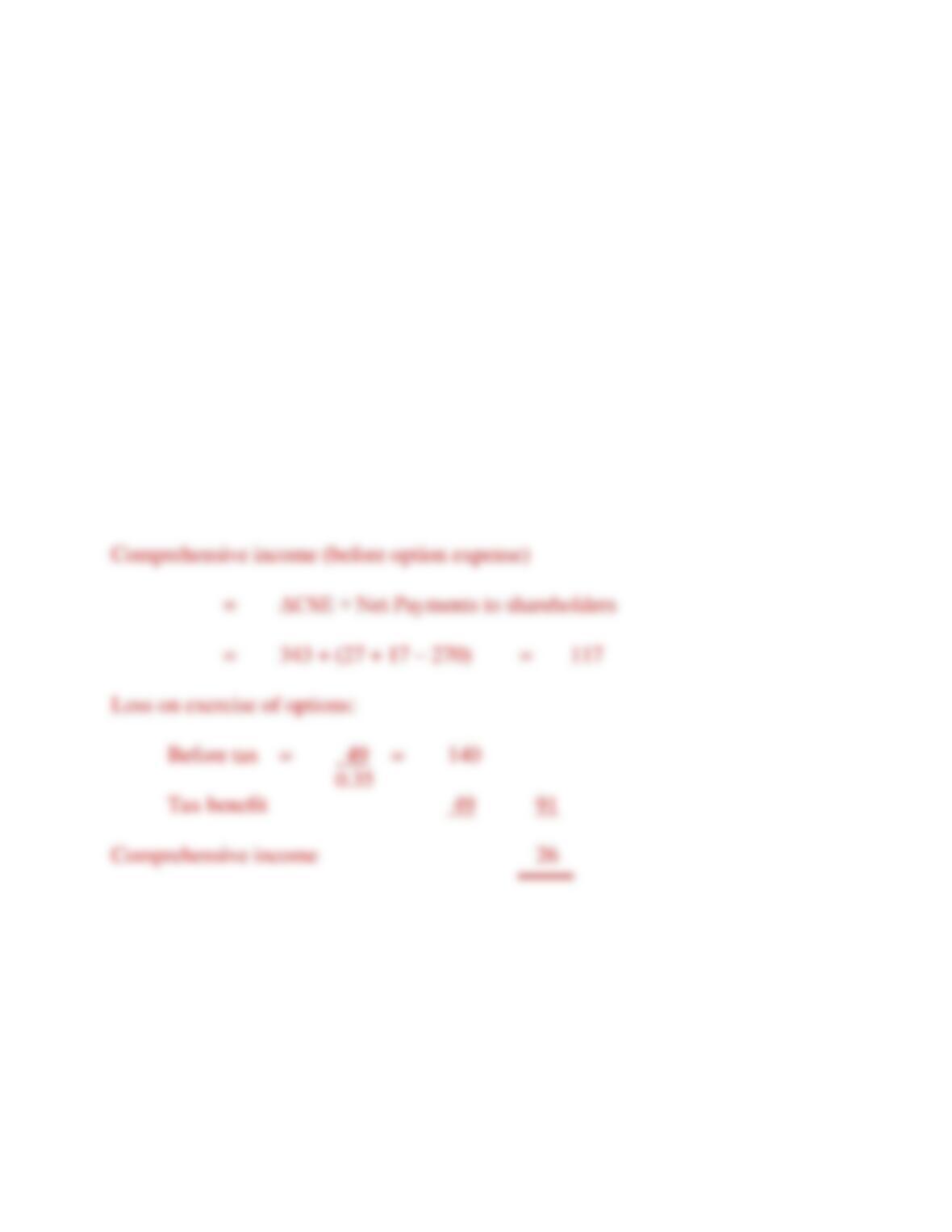
From the following information, calculate comprehensive income for fiscal year 2005. Amounts
are in millions of dollars.
Common shareholders’ equity, May 31, 2004 450
Share issues (including $49 tax benefit 270
from employee stock options)
Share repurchases 27
Common dividends 17
Common shareholders’ equity, May 31, 2005 793
The firm’s statutory tax rate is 35%.

Question 2 (12 points)
Below are some summary numbers for a firm for fiscal years 2004 and 2005 (in millions of
dollars).
2004 2005
Sales 12,257 12,867
Operating income (after tax) 858 772
Net financial expense (after tax) 56 98
Comprehensive income 802 674
Average net operating assets 4,903 4,949
Average common equity 3,503 2,149
(c) Calculate return on common equity (ROCE), return on net operating assets (RNOA),
and net borrowing cost (NBC) for the two years.
2004 2005
ROCE 22.89% 31.36%
RNOA 17.50 15.60
NFO (= NOA – CSF)
CSE) 1,400 2,800
NBC 4.0% 3.5%
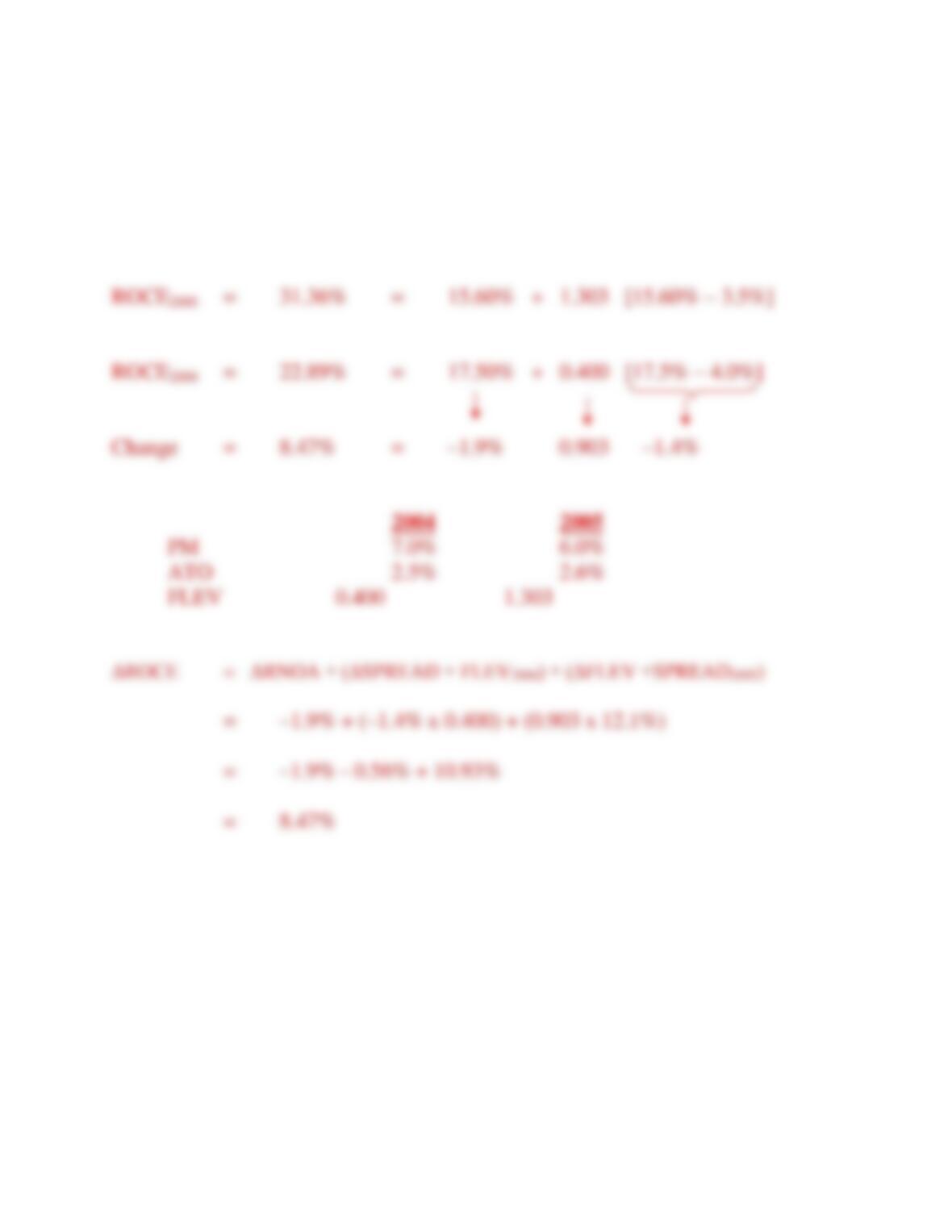
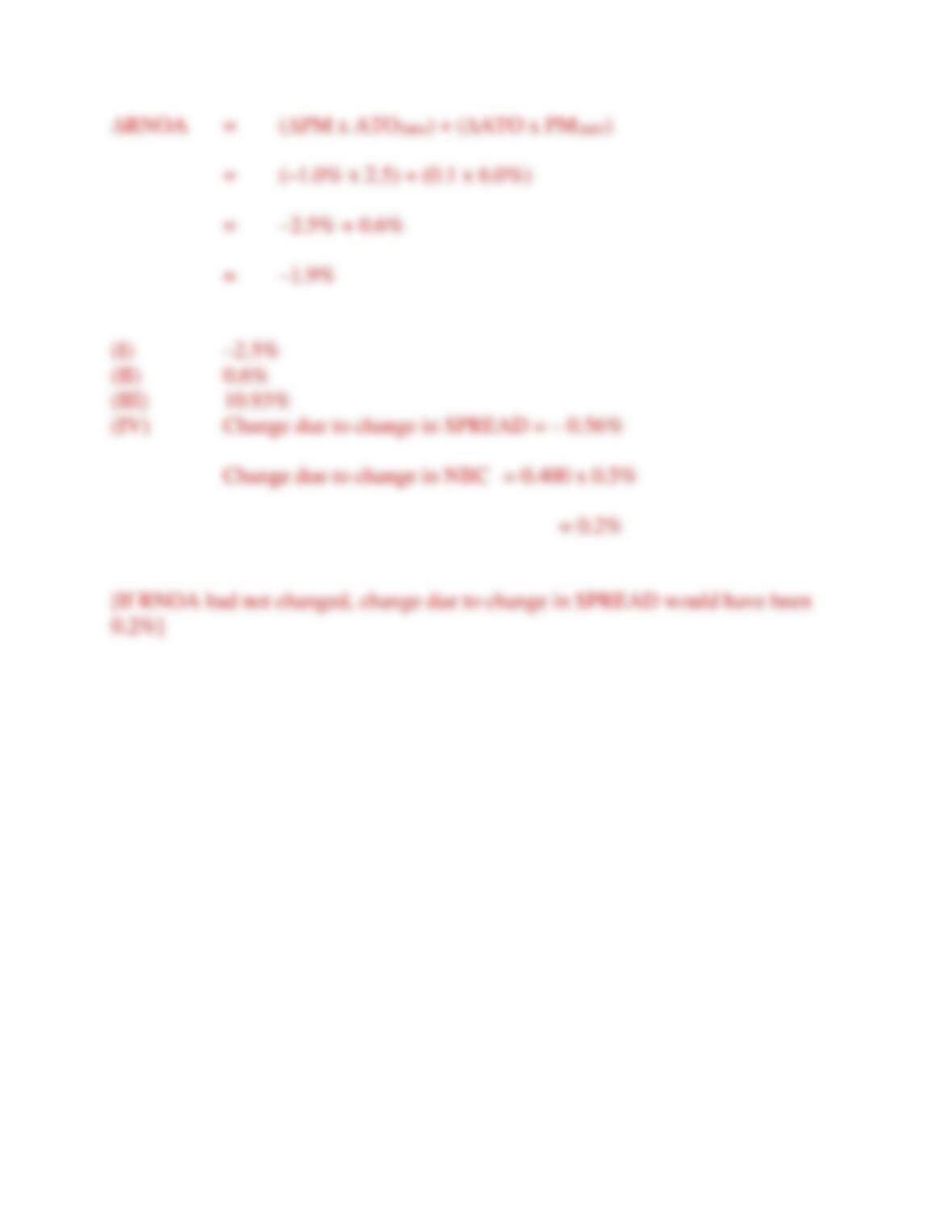
(d) How much of the change in ROCE over the two years is due to:
(I) Change in profit margin
(II) Change in asset turnover
(V) Change in financial leverage
(VI) Change in borrowing costs?

Question 3 (16 points)
The following are summary income statement and balance sheet numbers for a firm (in millions
of dollars). The firm has a required return for operations of 9%.
2002 2003 2004 2005
Sales 1,906 1,985 2,064 2,147
Core operating expenses 1,773 1,846 1,919 1,997
Core operating income 133 139 145 150
Unusual operating income —— —– (45) 60
133 139 100 210
Net financial expense 7 8 8 9
Comprehensive income 126 131 92 201
Net operating assets 945 983 1,022 1,063
Net financial obligations 150 155 175 120
Common equity 795 828 847 943
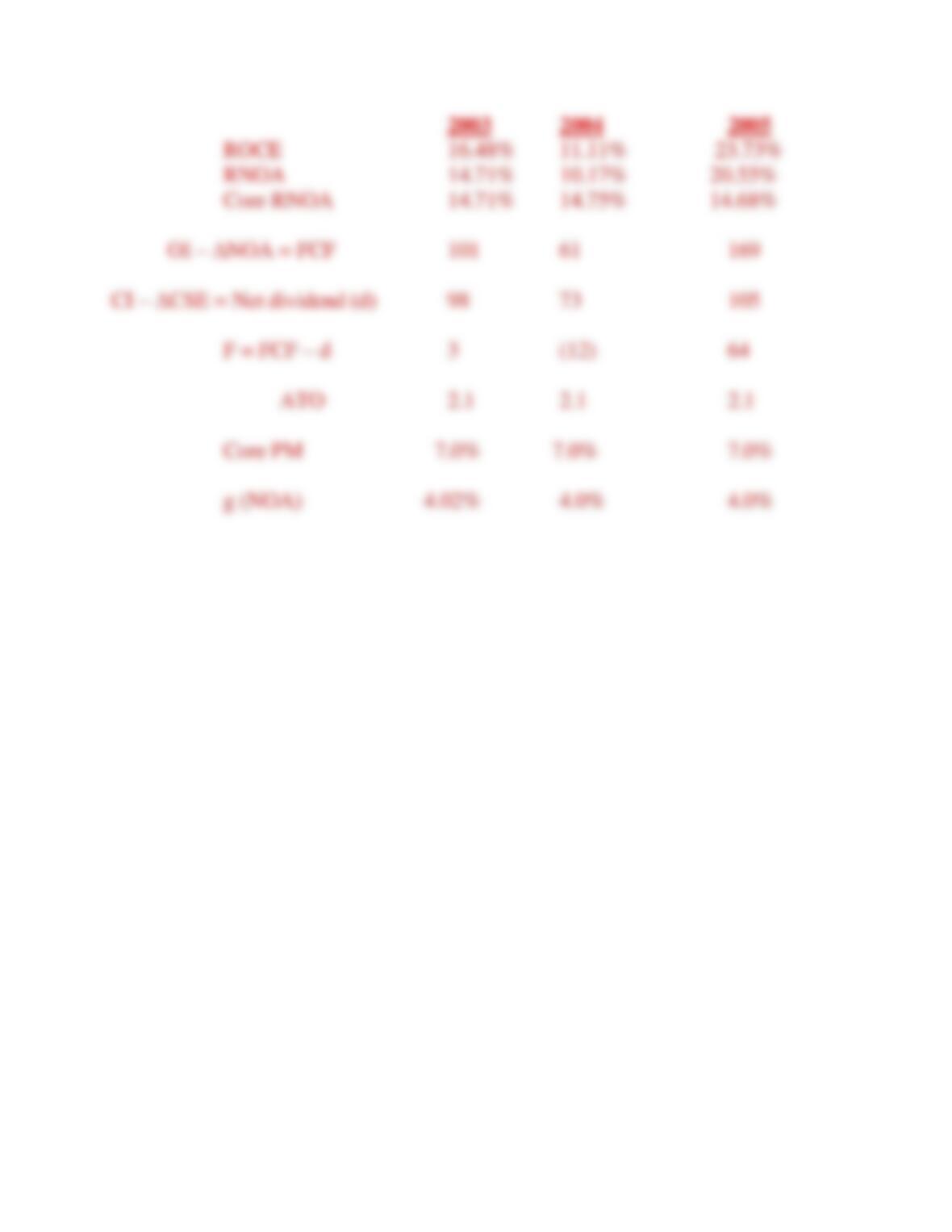
(d) Prepare a table on the next page giving the following for 2003- 2005. Use beginning-of-
period balance sheet numbers in denominators.
▪ Return on common equity (ROCE)
▪ Return on net operating assets (RNOA)
▪ Core return on net operating assets (Core RNOA)
▪ Free cash flow
▪ Net payments to common shareholders
▪ Net payments to net debt holders
▪ Asset turnover
▪ Core profit margin
▪ Growth rate for net operating assets
(e) On the basis of these financial statements, forecast
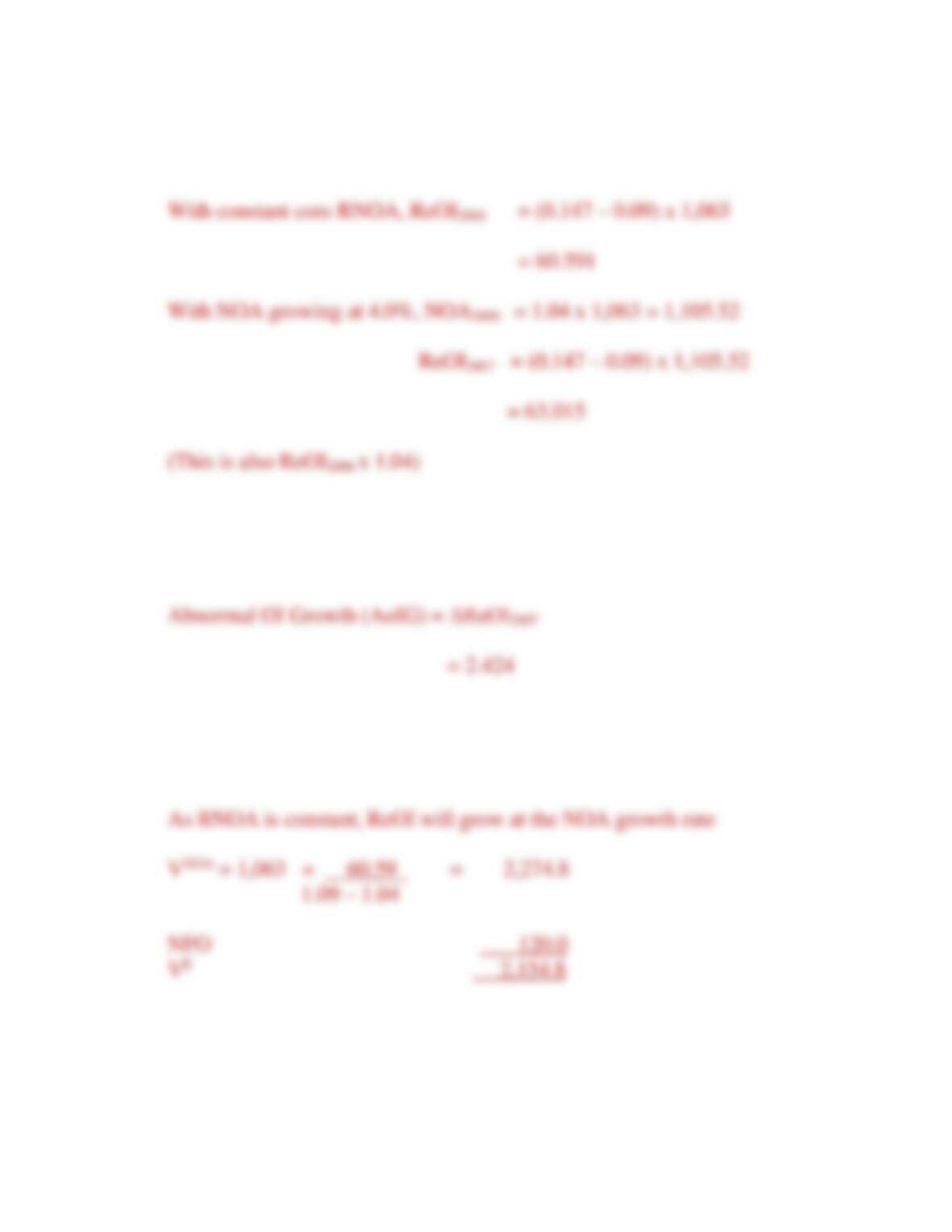
(i) Residual operating income for 2006 and 2007.
(ii) Abnormal operating income growth for 2007.
(f) Value the equity using two methods:
(i) Residual operating income valuation
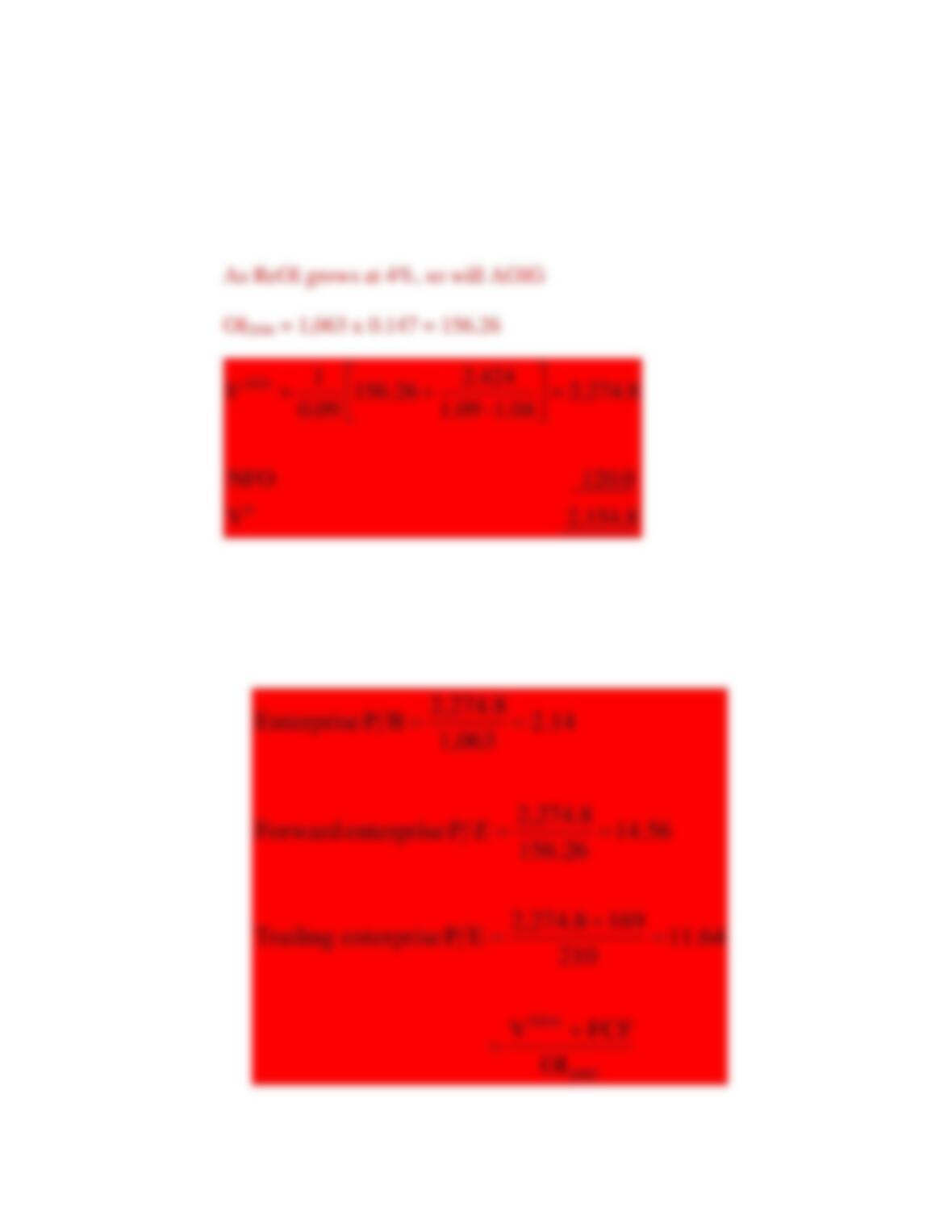
(ii) Abnormal operating income growth valuation
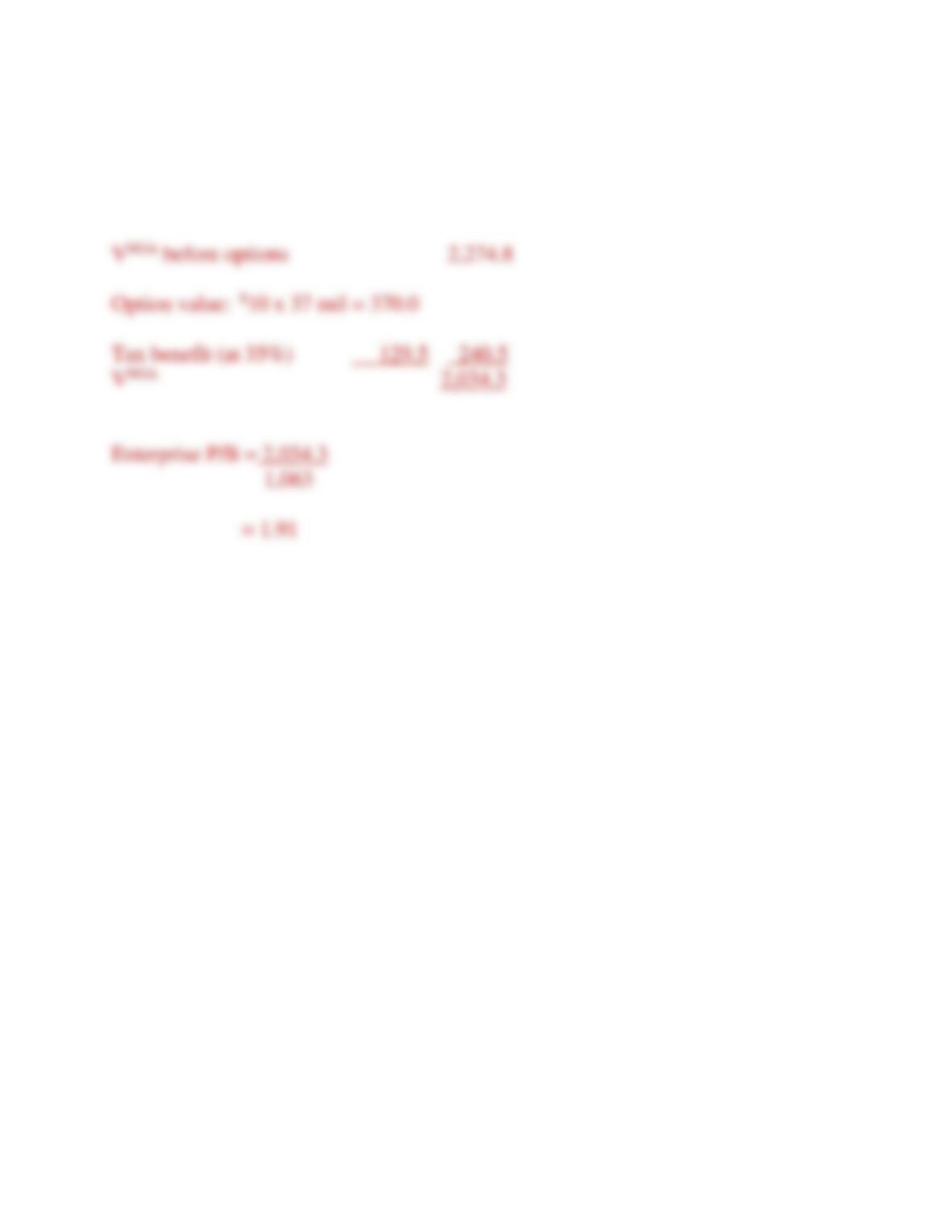
(d) Calculate the enterprise price-to-book ratio implied by your valuation. Also, calculate the
enterprise trailing and forward P/E ratios implied by your valuation.
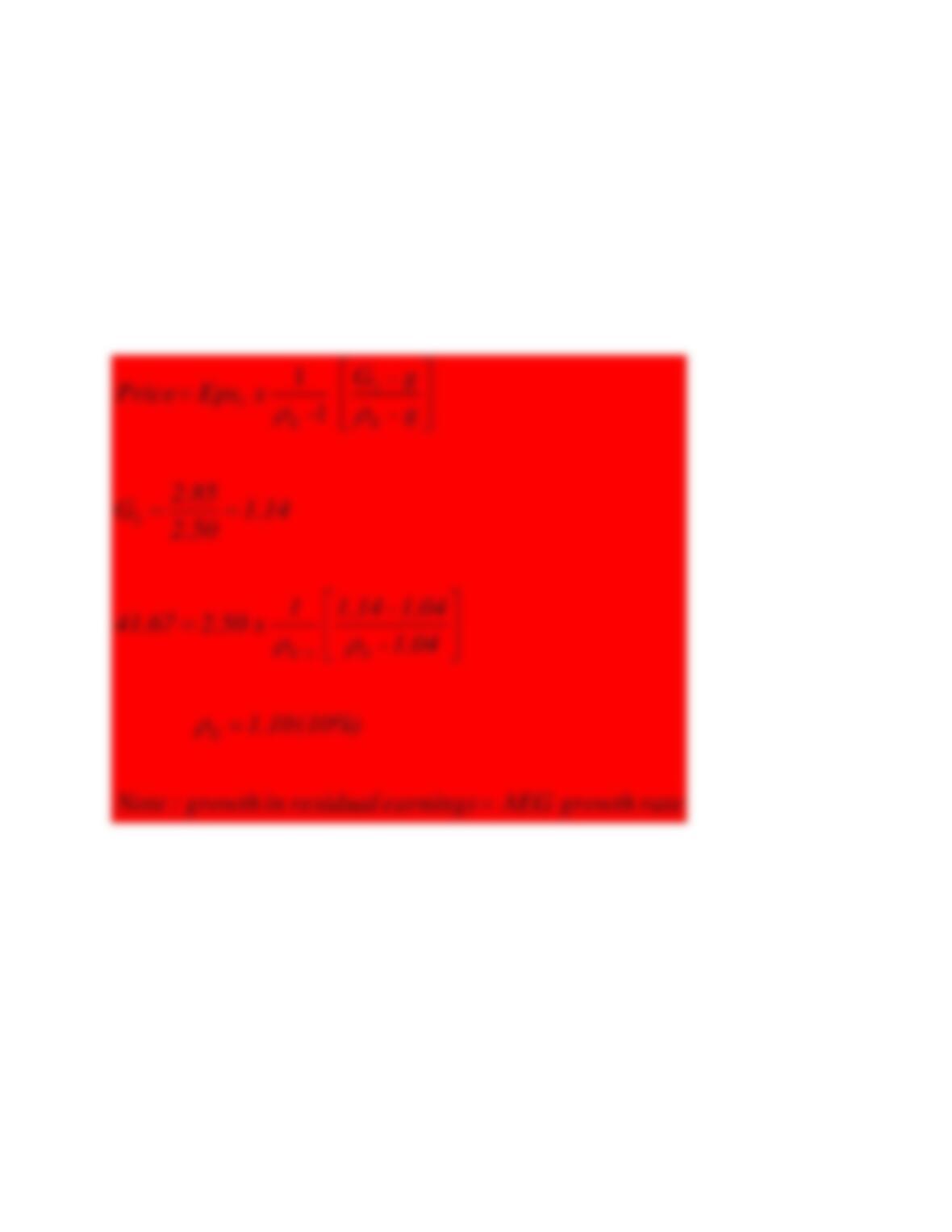
(e) After making your valuation you discover (in footnotes) that the firm has 37 million
employee stock options outstanding, valued at $10 per option. The firm’s tax rate is 35%.
How does this information modify your calculation of the enterprise price-to-book ratio?
Question 4 (6 points)
A firm whose equity traded at $41.67 per share at the end of 2004 in expected to earn $2.50 per
share in 2005 and $2.85 in 2006. The firm pays no dividends.
Set the long-term growth rate for residual earnings equal to the GDP growth rate of 4 percent.
Given these forecasts, what is the rate of return you expect to earn from buying the shares?