
TEST NUMBER 4
Question 1 (12 points)
At the time that of its 10-Q filing of financial statements for the first half of its January
2002 fiscal year, Home Depot’s shares traded at $50 per share. The following are summaries
from those financial statements.
Balance Sheet, July 29, 2001
(in millions of dollars)
Financial liabilities
1,320
Operating assets
23, 457
Operating liabilities
6,709
Financial assets
1,221
Common equity
(on 2,336 million outstanding
shares)
16,649
24,678
24,678
Statement of Earnings, Six Months Ended, July 29, 2001
(in millions of dollars)
Net sales
26,776
Cost of Merchandise Sold
18,795
Gross Profit
7,981
Operating Expenses:
Selling and Store Operating
4,963
Pre-Opening
59
General and Administrative
436
Total Operating Expenses
5,458
Operating Income
2,523
Interest Income (Expense):
Interest and Investment Income
22
Interest Expense
(11)
Interest, Net
11
Earnings Before Income Taxes
2,534
Income Taxes
978
Net Earnings
1,556
According to financial statement footnotes, Home Depot’s statutory tax rate (combined Federal
and State rates) is 39%. Other comprehensive income (not in net earnings above) is negligible.
Use a required six-month return for operations of 4% in calculations below.
(n)
Calculate the following from these statements:
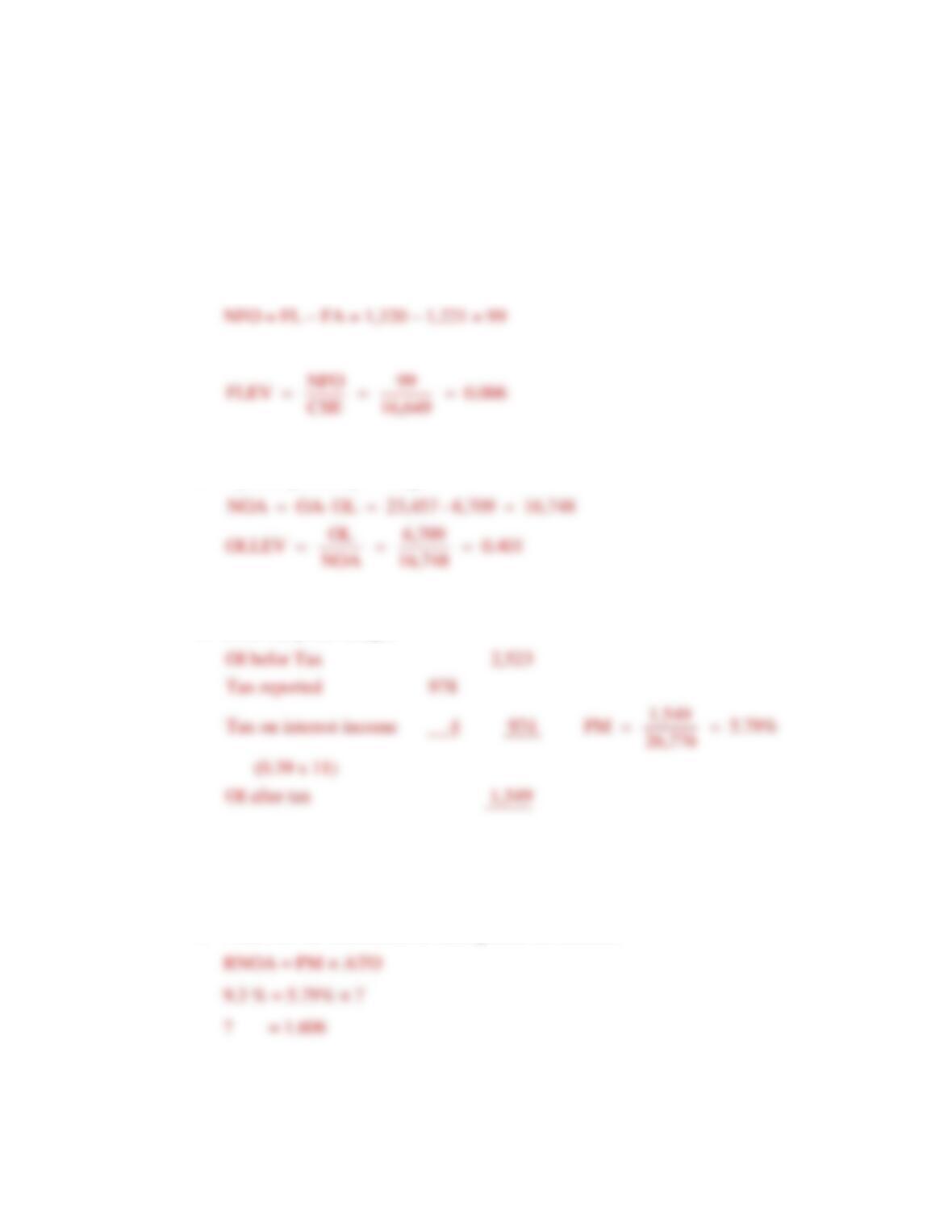
1. Financial leverage
2. Operating liability leverage
3. After-tax profit margin
(o) Home Depot earned a return on beginning net operating assets (RNOA) of 9.3% for the
six months ending July 29, 2001.
1. What was the asset turnover during these six months?
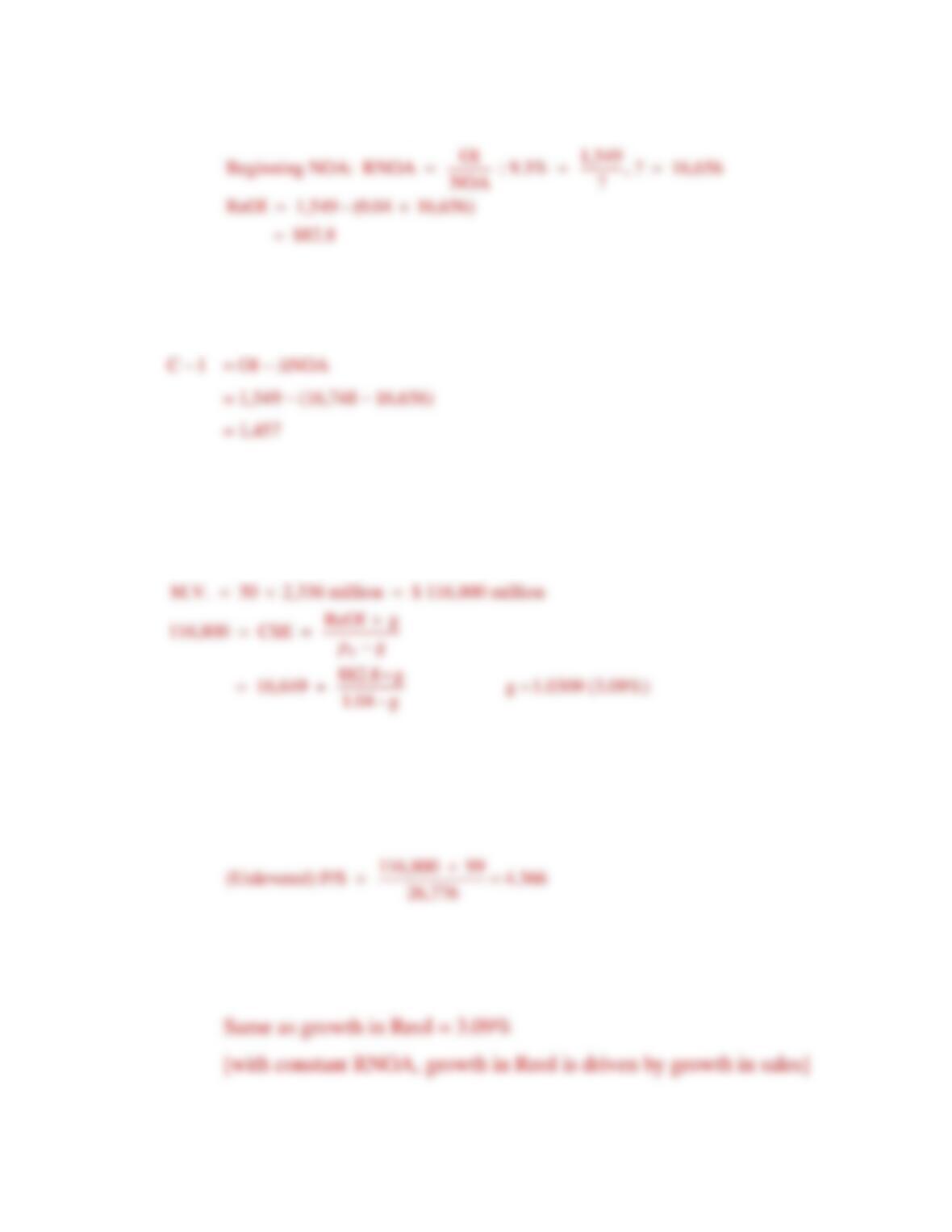
2. What was the residual operating income over the six months?
(p) Calculate the free cash flow generated by operations during the six months.
(q) At the current market price of $50 per share, what growth rate for residual operating
income does the market forecast for the future?
(r) Calculate Home Depot’s price–to-sales ratio for trailing six-month sales.
(s) If both profit margin and asset turnover are expected to continue at their current levels in
the future, what is the sales growth rate forecast implied in the price-to-sales ratio?
Question 2 (5 points)
Below is a summary of part of IBM’s Statement of Cash Flows for the year ended
December 31, 2001 (in millions of dollars). The firm faces a 37% statutory tax rate.
Net cash provided from operating activities
9,274
Cash flow from investing activities:
Payments for plant, rental machines and other property
(5,616)
Proceeds from disposition of plant, rental machines and other property
1,619
Investment in software
(565)
Purchases of marketable securities
(1,079)
Proceeds from marketable securities
1,393
Net cash used in investing activities
(4,248)
Supplemental data:
Cash paid during the year for:
Income taxes
2,697
Interest paid
1,447
Interest received
617
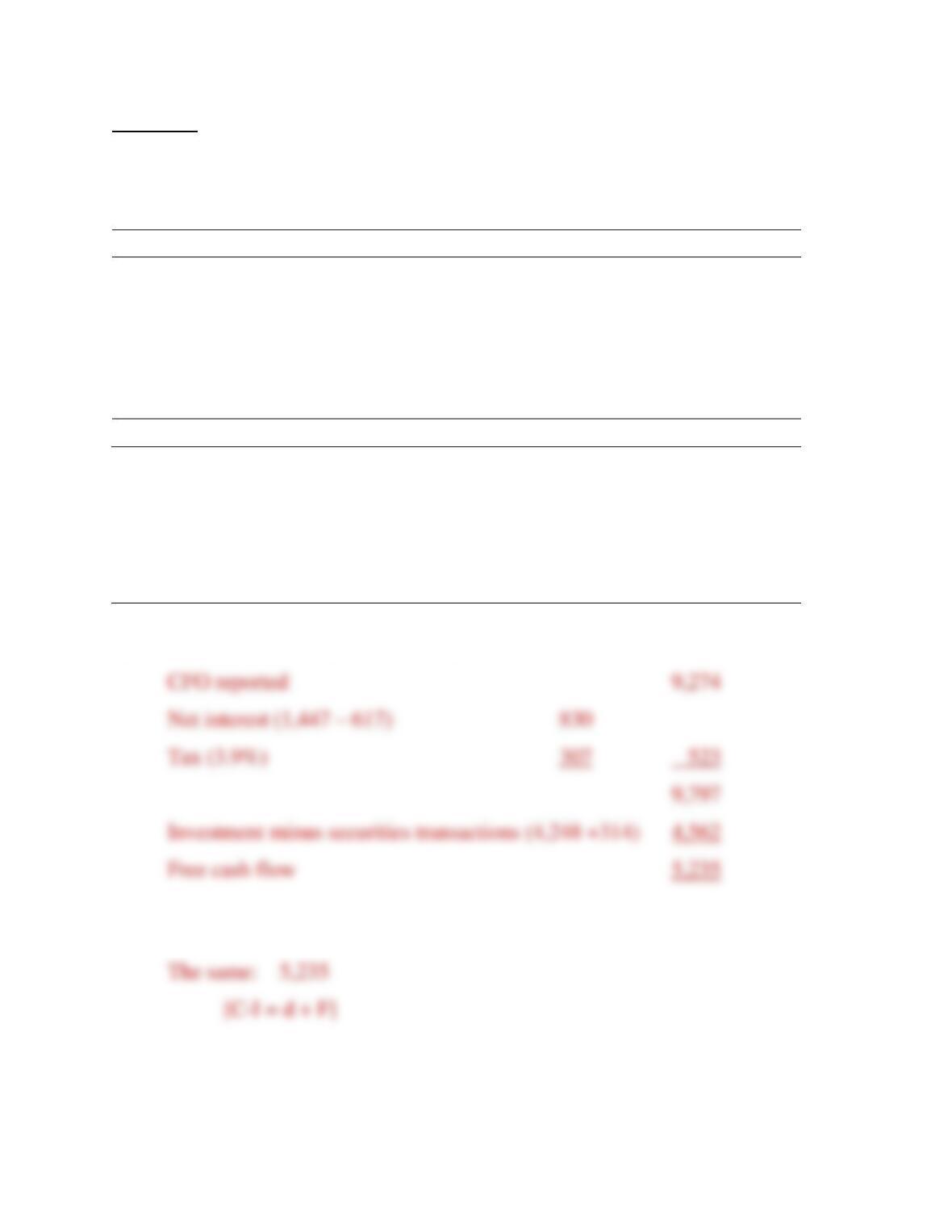
(c) From this information, calculate free cash flow for 2001.
(d) What was the net amount of cash paid out of the firm in financing activities during 2001?
Question 3 (7 points)
The following is from the statement of shareholders’ equity for Intel Corporation for
2000 (in millions of dollars). Intel faces a 38% tax rate.
Balance, December 25, 1999
32,535
Net income
10,535
Unrealized loss on available-for-sale securities
(3,596)
Issuance of shares through employee stock plans, net of tax benefit of $887 million
1,684
Reclassification of put warrant obligation
130
Amortization of unearned compensation
26
Conversion of subordinated notes to common stock (market value of stock was $350 million)
207
Repurchase of common stock
(4,007)
Cash dividends
(470)
Issuance of shares for acquisitions
278
37,322
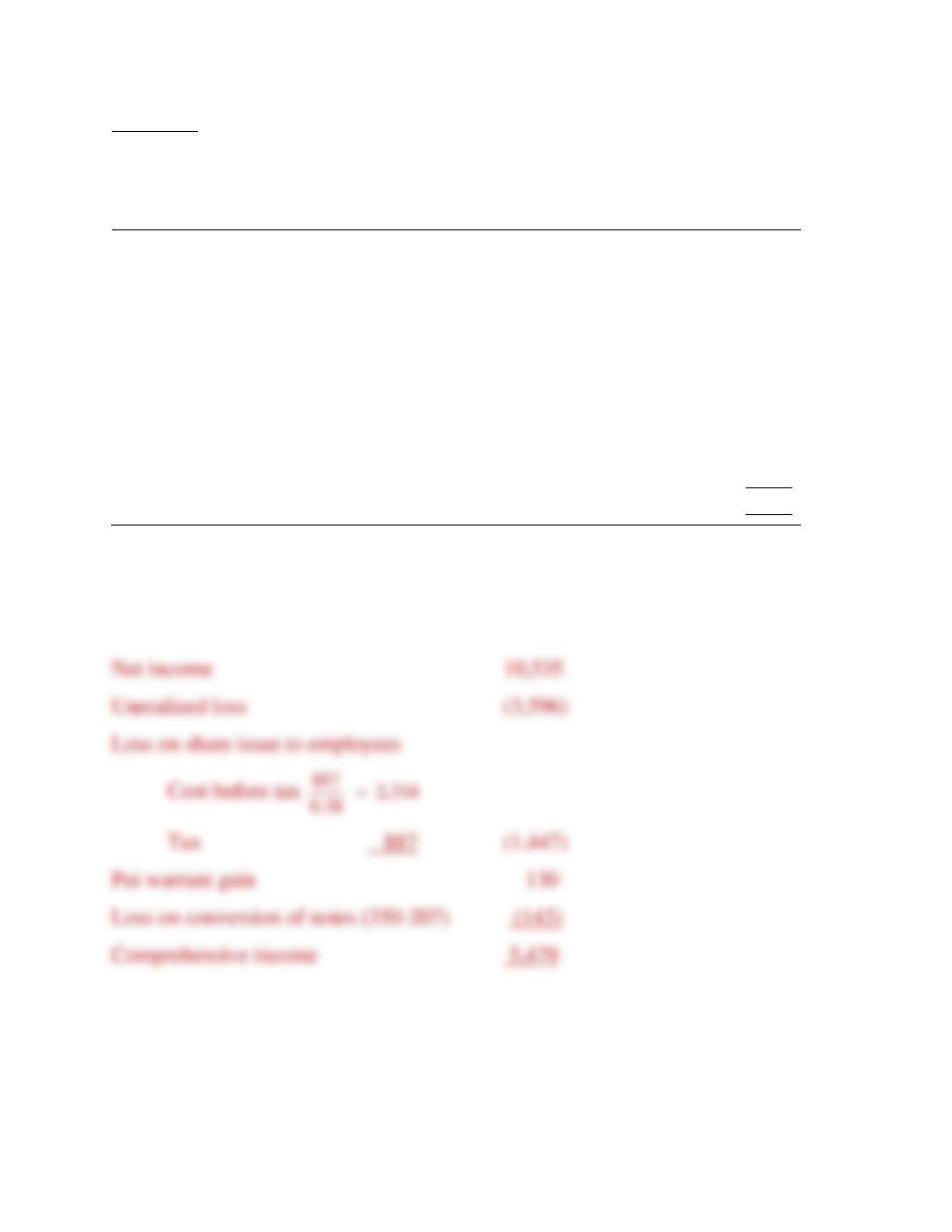
Calculate comprehensive income to Intel’s shareholders for 2000, being sure to include any
hidden dirty surplus expenses.
Question 4 (10 points)
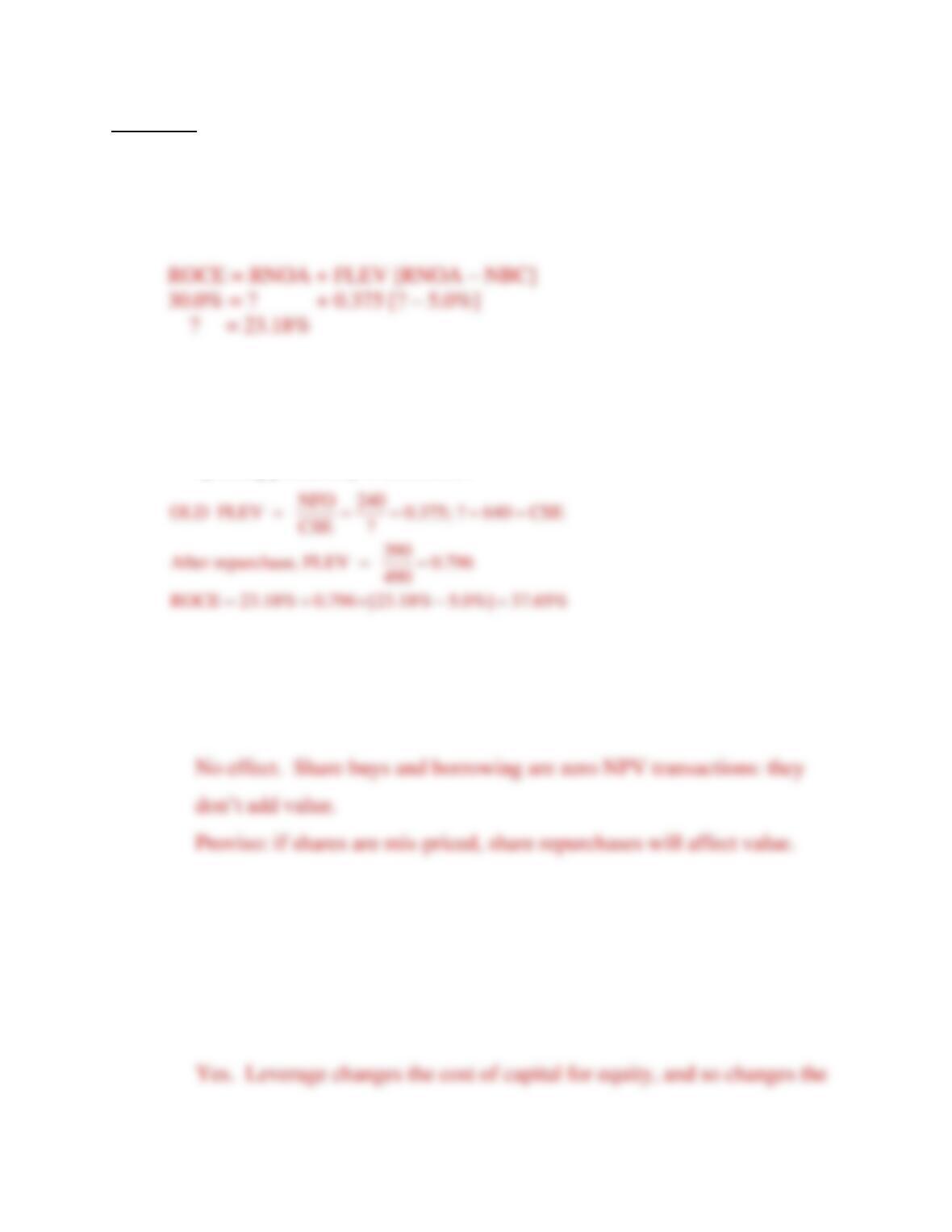
A firm with a return on common equity (ROCE) of 30% has financial leverage of 37.5%
and a net after-tax borrowing cost of 5% on $240 million of net debt.
(g) What rate of return does this firm earn on its operations?
(h) The firm is considering repurchasing $150 million of its stock and financing the
repurchase with further borrowing at a 5% after-tax borrowing cost. What effect will
this transaction have on the firm’s return on common equity if the same level of
operating profitability is maintained?
(i) Will this repurchase change the per share intrinsic value of the equity? Why?
(j) Will the normal P/E ratio for this firm change because of this transaction? Why?
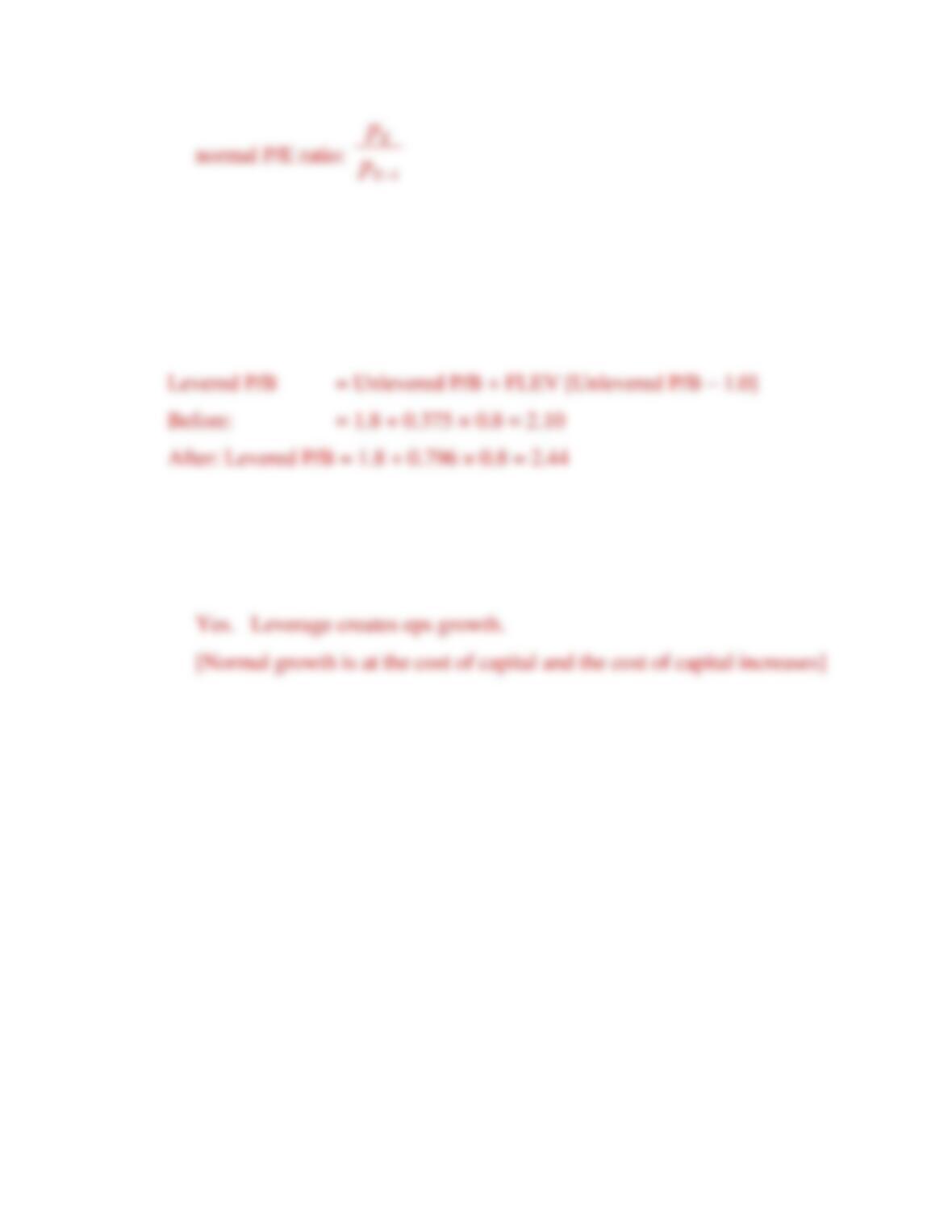
(k) The firm had an unlevered price-to-book ratio (P/B) of 1.8 prior to the transaction.
What will be the effect of the repurchase on the levered price-to-book ratio?
(l) Would you expect the earnings-per-share growth rate to change after the repurchase
transaction? Why?
Question 5 (6 points)
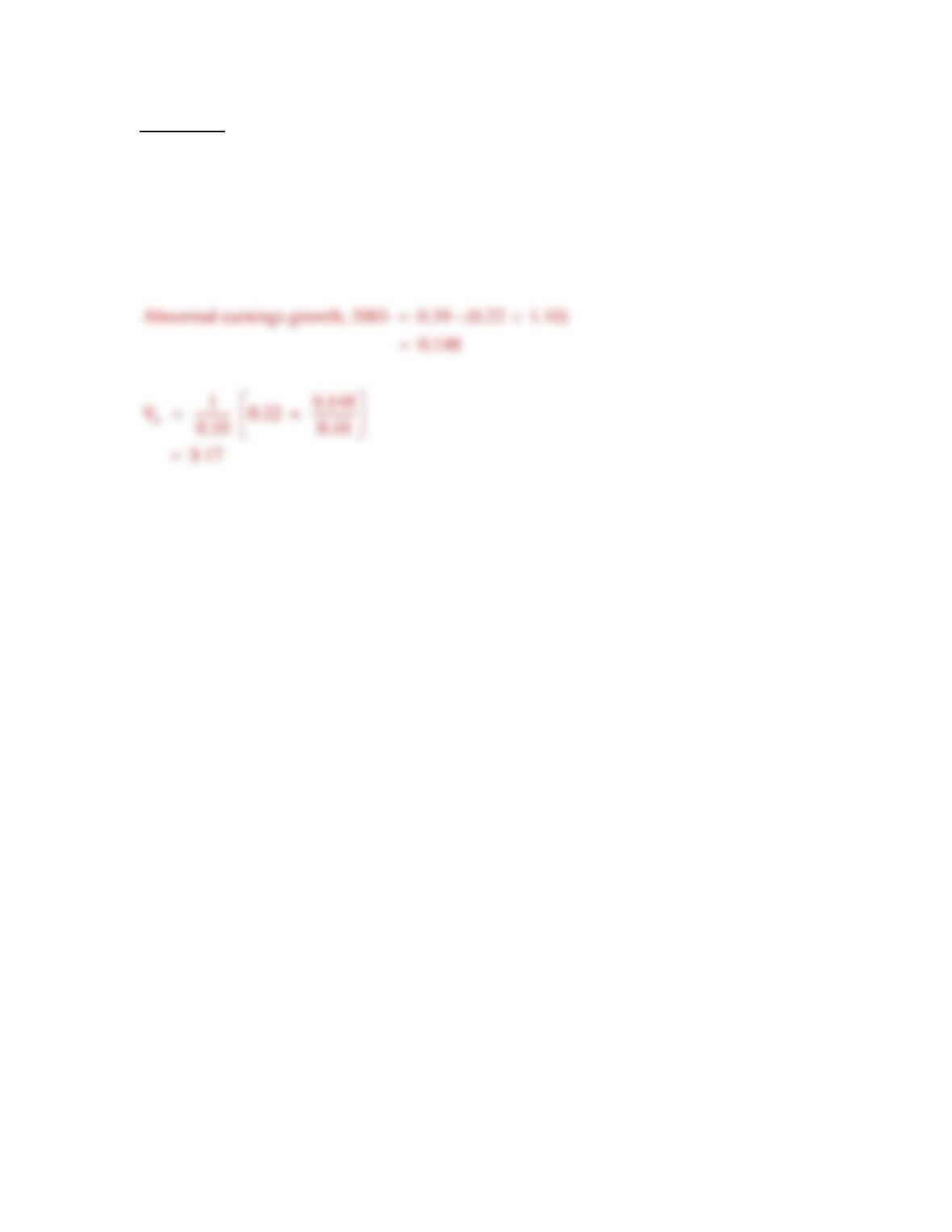
Cisco Systems traded at $20 per share on December 3, 2001. Analysts are forecasting
earnings per share of 0.22 for 2002 and 0.39 for 2003. The firm does not pay dividends.
Value Cisco on the assumption that abnormal earnings growth forecasted for 2003 will
continue at the same level into the future. Use a cost of equity capital of 10%.