
TEST NUMBER 3
This exam comes in two parts. Part I involves an analysis of a set of financial statements and Part
II involves forecasting and valuation based on those financial statements.
Part I: Analysis (20 Points)
The following is a comparative balance sheet for a firm for fiscal year 2002 (in millions of dollars):
2002
2001
2002
2001
Operating cash
60
50
Accounts payable
1,200
1,040
Short-term investments
(at market)
550
500
Accrued liabilities
390
450
Accounts receivable
940
790
Long-term debt
1,840
1,970
Inventory
910
840
Property and plant
2,840
2,710
Common equity
1,870
1,430
5,300
4,890
5,300
4,890
The following is the statement of common shareholders’ equity for 2002 (in millions of dollars):
Balance, end of fiscal year 2001
1,430
Share issues from exercised employee stock options
810
Repurchase of 24 million shares
(720)
Cash dividend
(180)
Tax benefit from exercise of employee stock options
12
Unrealized gain on investments
50
Net income
468
Balance, end of fiscal year 2002
1,870
The firm’s income tax rate is 35%. The firm reported $15 million in interest income and $98
million in interest expense for 2002. Sales revenue was $3,726 million.
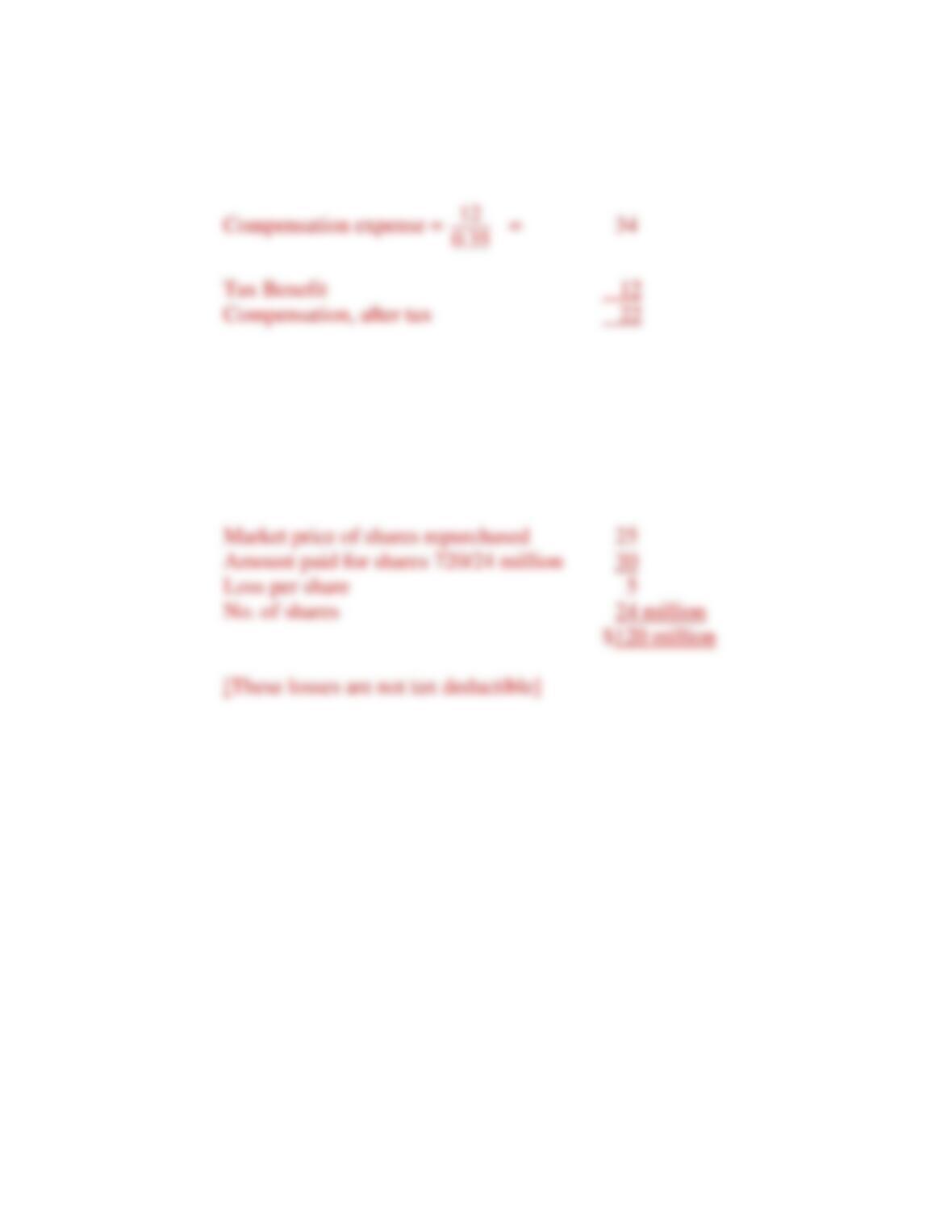
a. Calculate the loss to shareholders from the exercise of employee stock options during 2002.
b. The shares repurchased were in settlement of a forward purchase agreement. The market
price of the shares at the time of the repurchase was $25 each. What was the effect of this
transaction on the income for the shareholders?
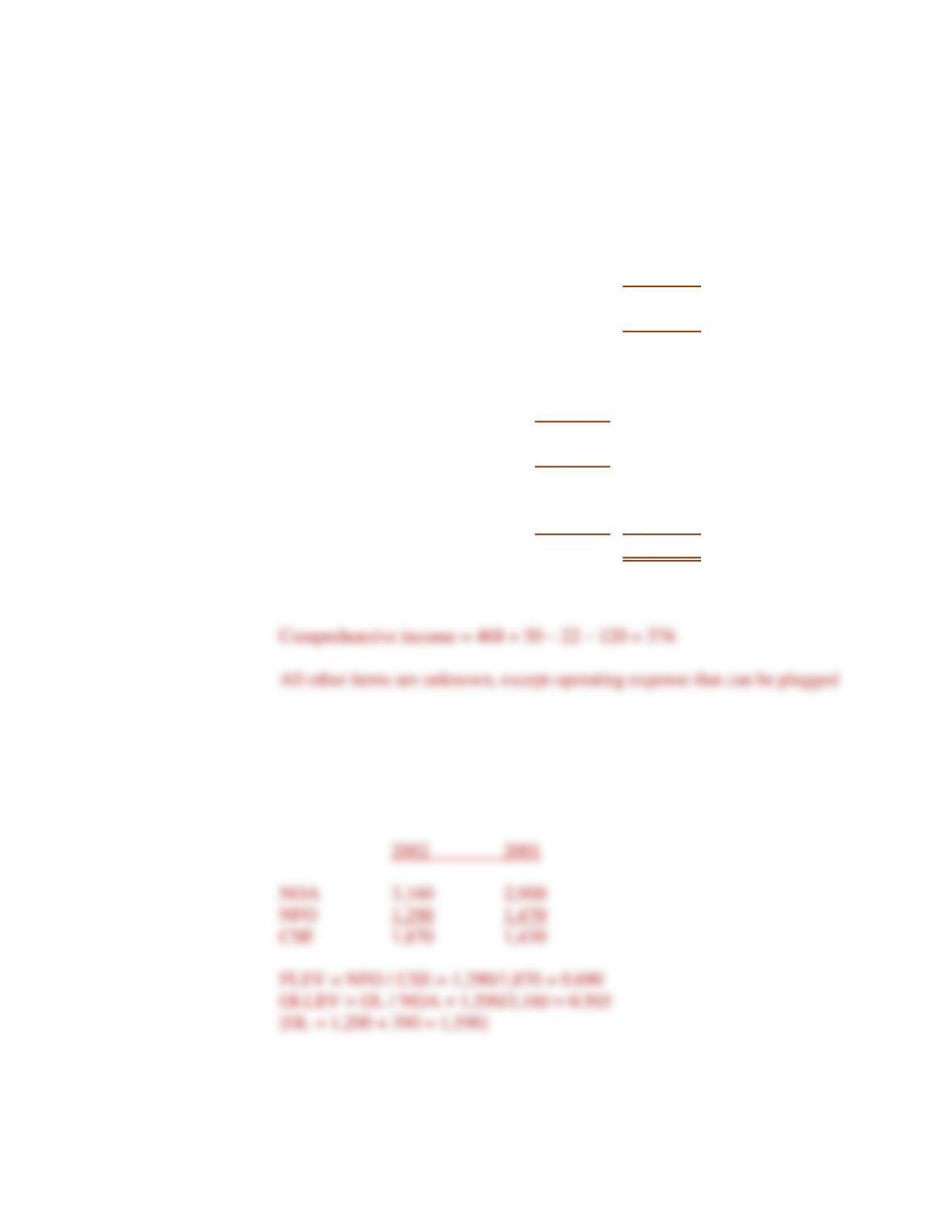
c. Prepare a comprehensive income statement that distinguishes after-tax operating income
from financing income and expense. Include gains or losses from the transactions in
questions (a) and (b) above.
Sales 3,726
Operating expenses (3,204)
OI before stock compensation 522
Compensation with options (22)
Operating income 500
Interest expense 98
Interest income (15)
83
Tax benefit 29
54
Unrealized gain on investments
(50)
Put option losses 120 (124)
Comprehensive income
376
d. Prepare a reformulated comparative balance sheet that distinguishes assets and liabilities
employed in operations from those employed in financing activities. Calculate the firms’
financial leverage and operating liability leverage at the end of 2002.
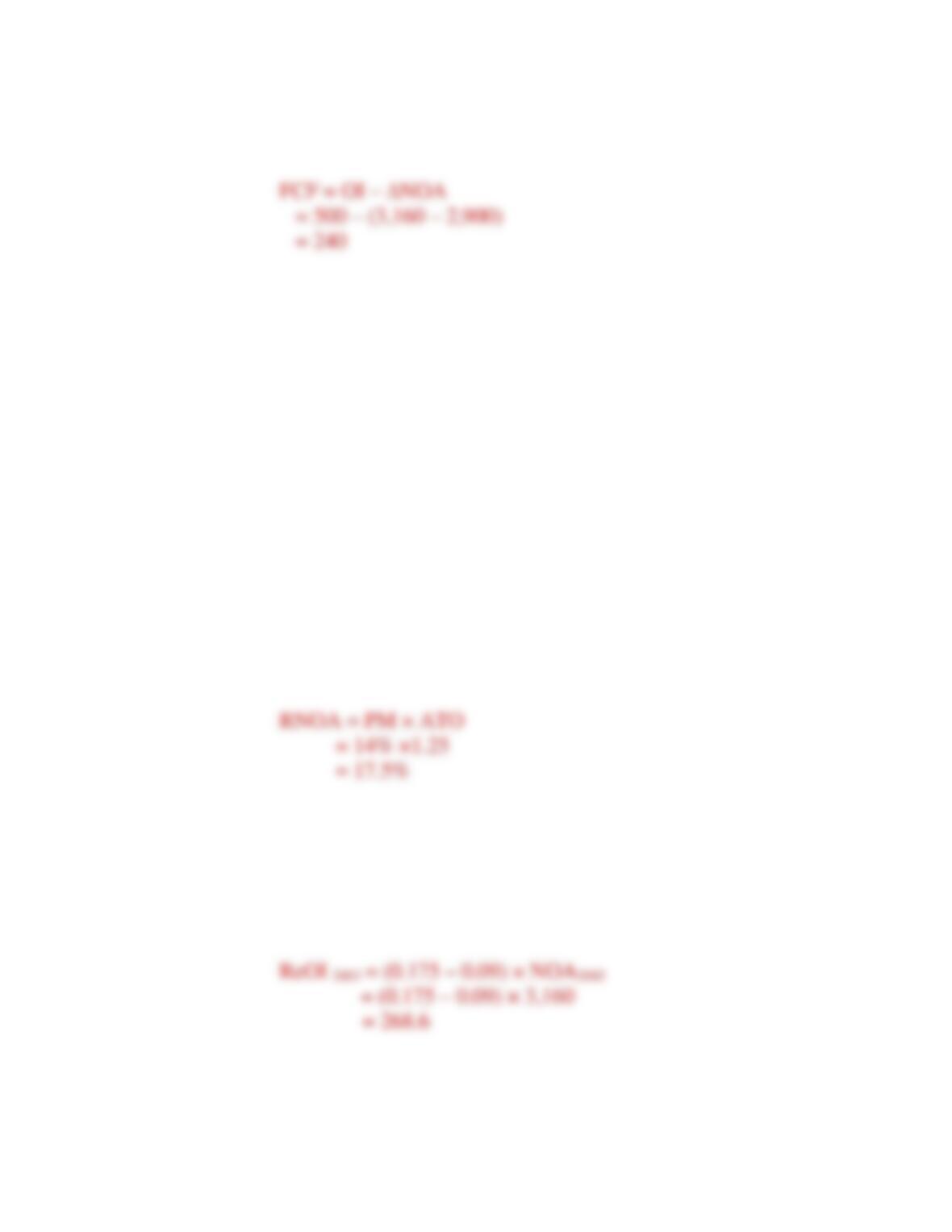
e. Calculate free cash flow for 2002.
Part II: Forecasting and Valuation (20 Points)
Use a cost of capital for operations of 9%.
Sales revenue is forecasted to grow at a 6% rate per year in the future, on a constant asset turnover
of 1.25. Operating profit margins of 14% are expected to be earned each year.
a. Forecast return on net operating assets (RNOA) for 2003.
b. Forecast residual operating income for 2003.
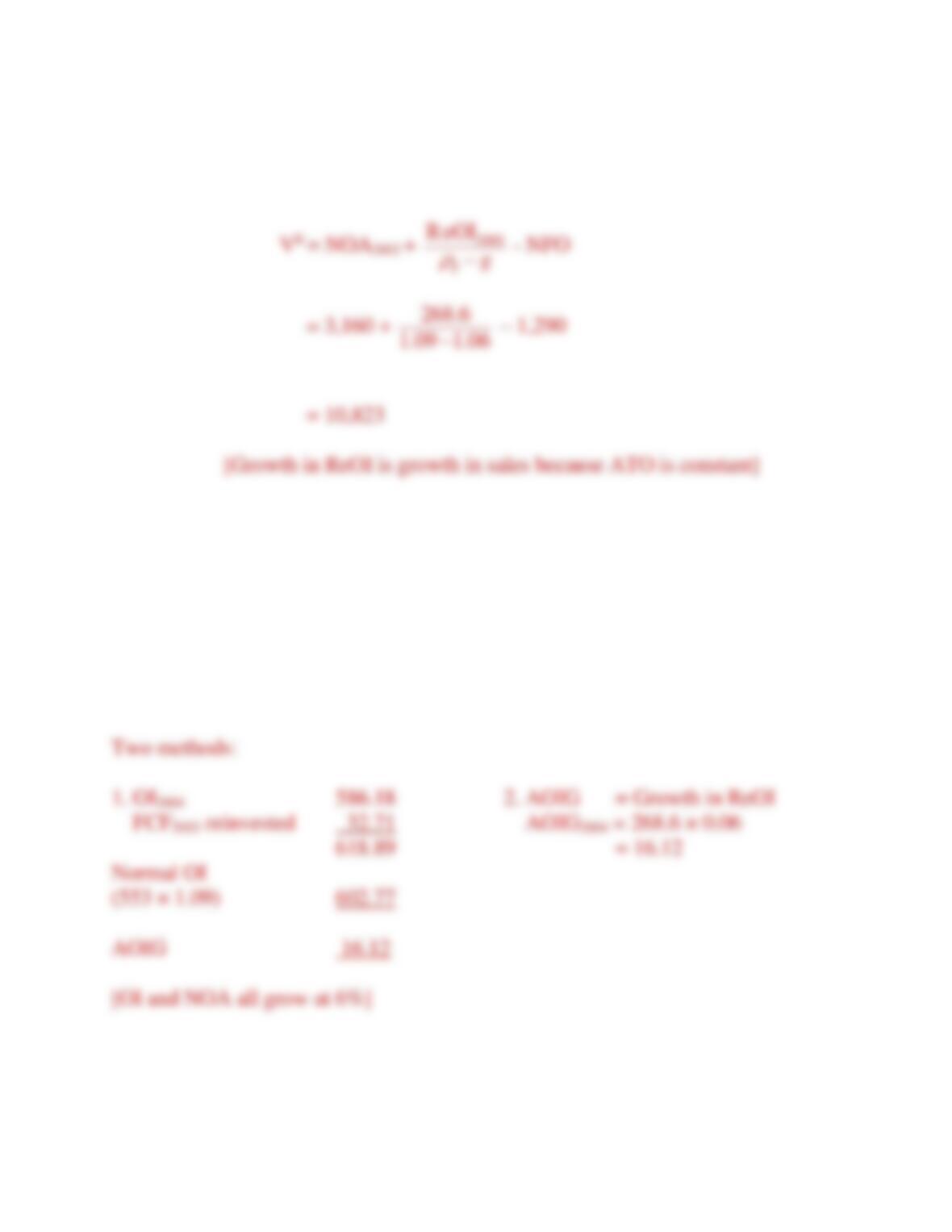
c. Value the shareholders’ equity at the end of the 2002 fiscal year using residual income
methods.
d. Forecast abnormal growth in operating income for 2004.
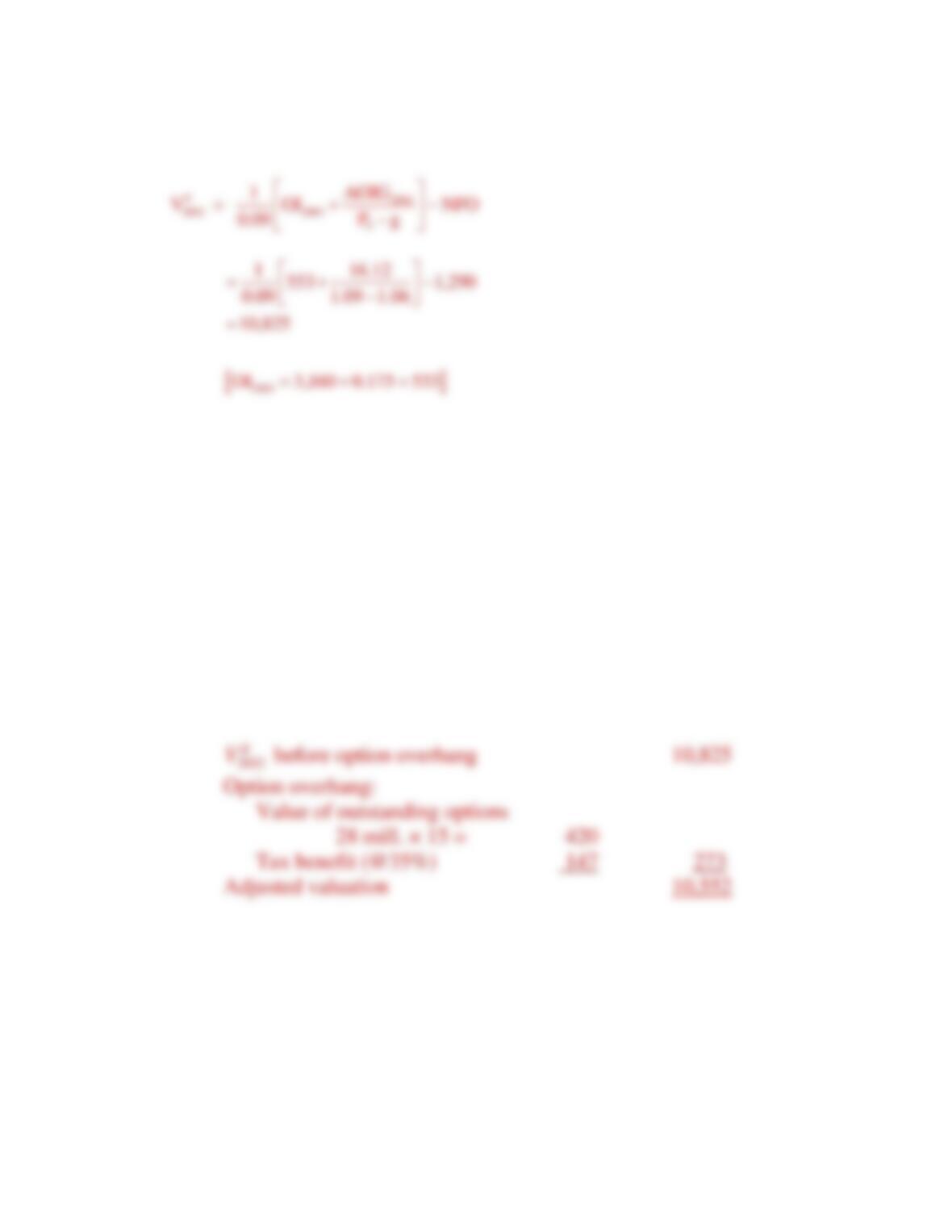
e. Value the shareholders’ equity at the end of 2002 using abnormal earnings growth
methods.
f. After reading the stock compensation footnote for this firm, you note that there are
employee stock options on 28 million shares outstanding at the end of 2002. A modified
Black-Scholes valuation of these options is $15 each. How does this information change
your valuation?