
Page 646 M/C Problems Chapter 19: Multinational
e. –5.20%
Chapter 19: Multinational M/C Problems Page 647
46. A product sells for $750 in the United States. The spot exchange rate
is $1 to 1.65 Swiss francs. If purchasing power parity (PPP) holds,
what is the price of the product in Switzerland?
a. 902.14
b. 1,002.38
c. 1,113.75
d. 1,237.50
e. 1,361.25
47. A box of candy costs 28.80 Swiss francs in Switzerland and $20 in the
United States. Assuming that purchasing power parity (PPP) holds, how
many Swiss francs are required to purchase one U.S. dollar?
a. 0.9448
b. 1.0498
c. 1.1664
d. 1.2960
e. 1.4400
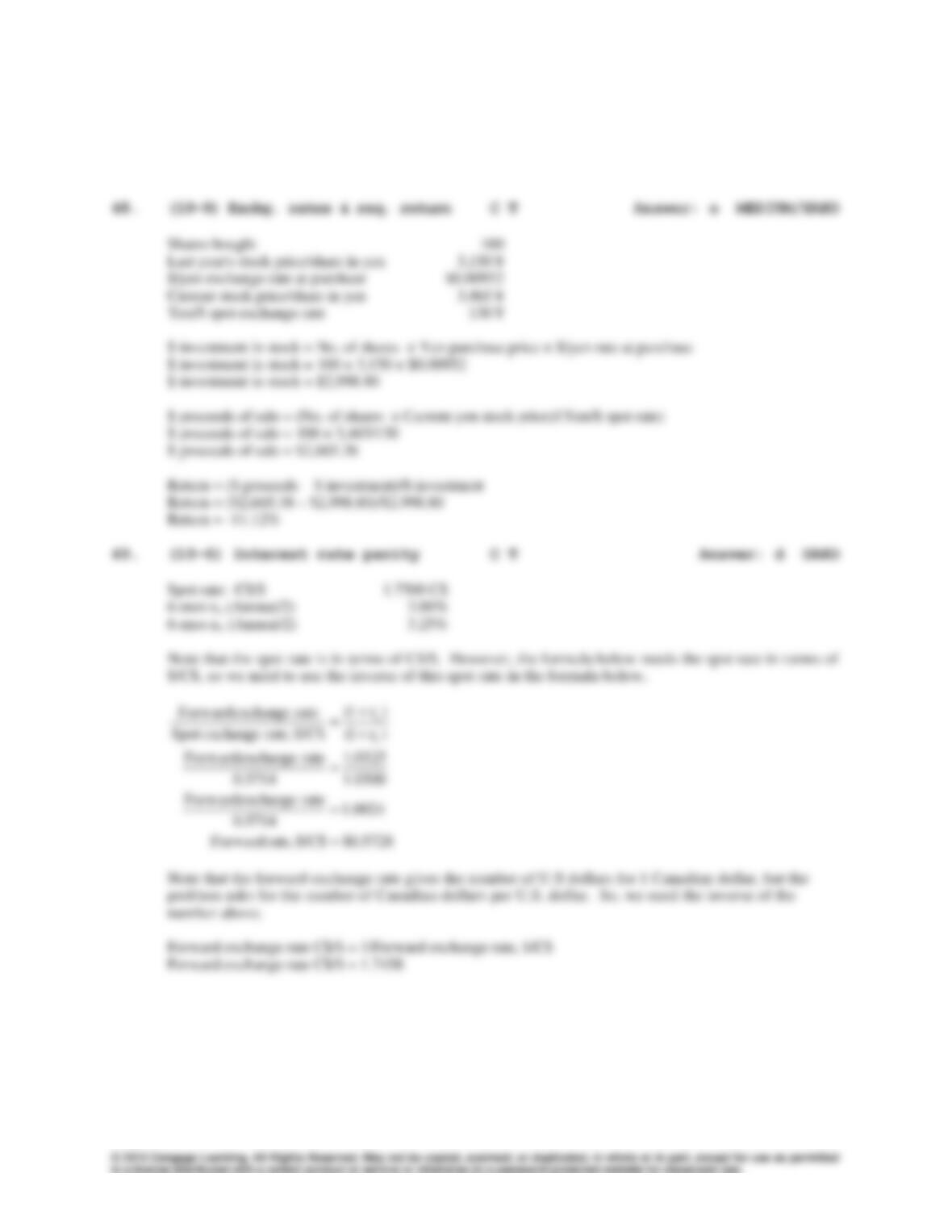
48. One year ago, a U.S. investor converted dollars to yen and purchased
100 shares of stock in a Japanese company at a price of 3,150 yen per
share. The stock’s total purchase cost was 315,000 yen. At the time
of purchase, in the currency market 1 yen equaled $0.00952. Today, the
stock is selling at a price of 3,465 yen per share, and in the currency
market $1 equals 130 yen. The stock does not pay a dividend. If the
investor were to sell the stock today and convert the proceeds back to
dollars, what would be his realized return on his initial dollar
investment from holding the stock?
a. –13.51%
b. –12.87%
c. –12.26%
d. –11.67%
e. –11.12%
49. Suppose in the spot market 1 U.S. dollar equals 1.75 Canadian dollars.
6-month Canadian securities have an annualized return of 6% (and thus a
6-month periodic return of 3%). 6-month U.S. securities have an
annualized return of 6.5% and a periodic return of 3.25%. If interest
rate parity holds, what is the U.S. dollar-Canadian dollar exchange
rate in the 180-day forward market? In other words, how many Canadian
dollars are required to purchase one U.S. dollar in the 180-day forward
market?
a. 1.2727
b. 1.4141
c. 1.5712
d. 1.7458
e. 1.9203

Page 648 M/C Problems Chapter 19: Multinational
Chapter 19: Multinational M/C Problems Page 649
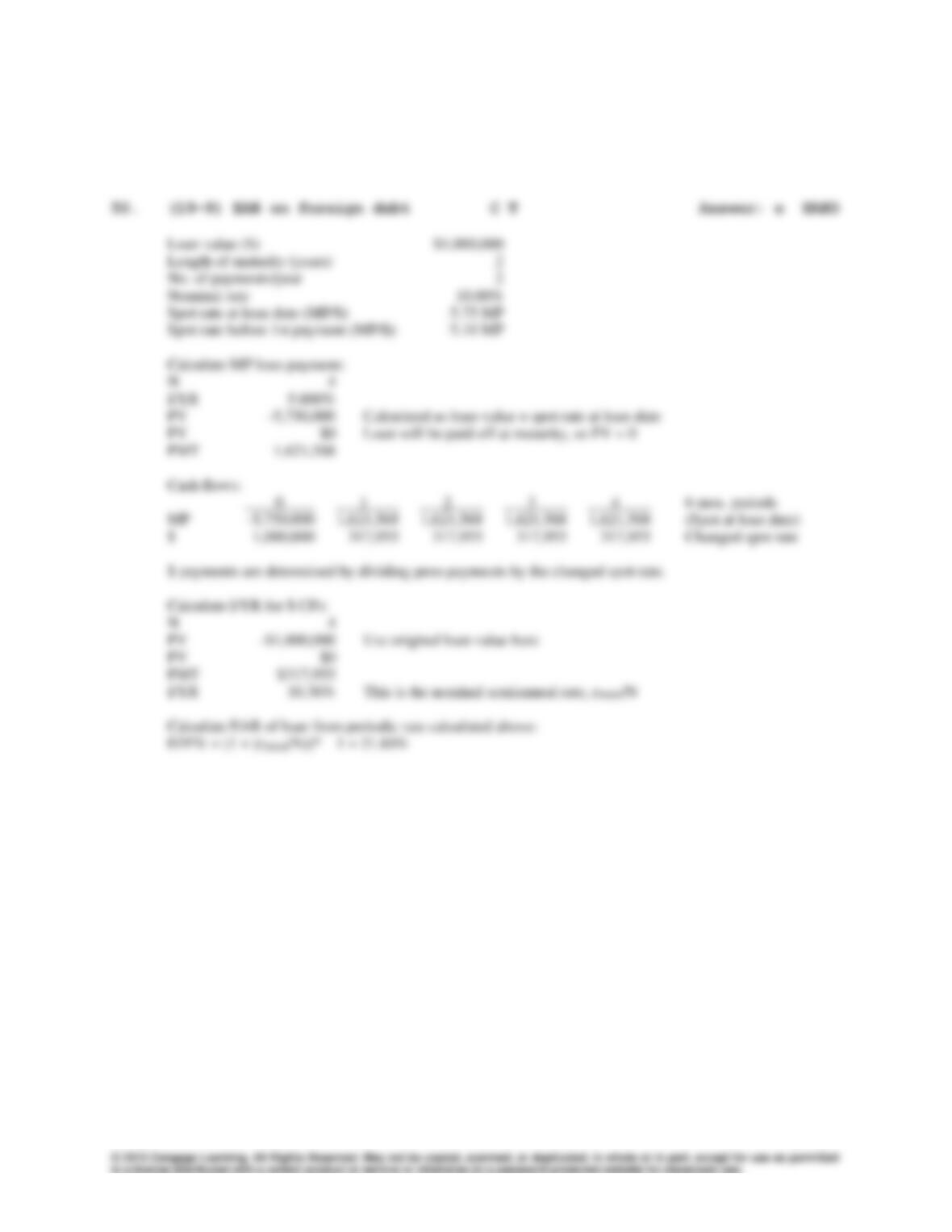
50. Blenman Corporation, based in the United States, arranged a 2-year,
$1,000,000 loan to fund a project in Mexico. The loan is denominated
in Mexican pesos, carries a 10.0% nominal rate, and requires equal
semiannual payments. The exchange rate at the time of the loan was
5.75 pesos per dollar, but it dropped to 5.10 pesos per dollar before
the first payment came due. The loan was not hedged in the foreign
exchange market. Thus, Blenman must convert U.S. funds to Mexican
pesos to make its payments. If the exchange rate remains at 5.10 pesos
per dollar through the end of the loan period, what effective annual
interest rate will Blenman end up paying on the loan?
a. 17.76%
b. 18.69%
c. 19.67%
d. 20.71%
e. 21.80%
Page 650 Answers Chapter 19: Multinational
CHAPTER 19
ANSWERS AND SOLUTIONS
Chapter 19: Multinational Answers Page 651
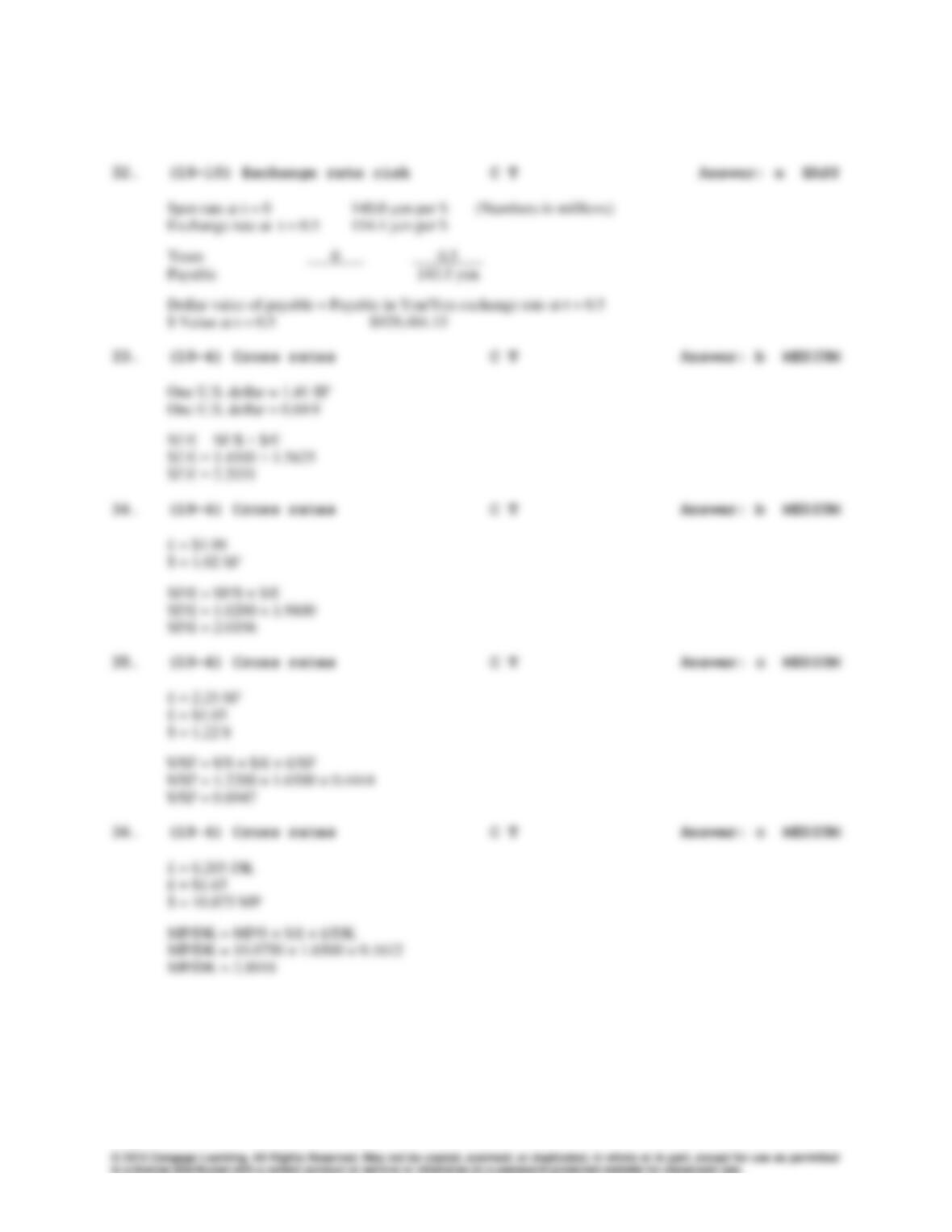
Page 652 Answers Chapter 19: Multinational
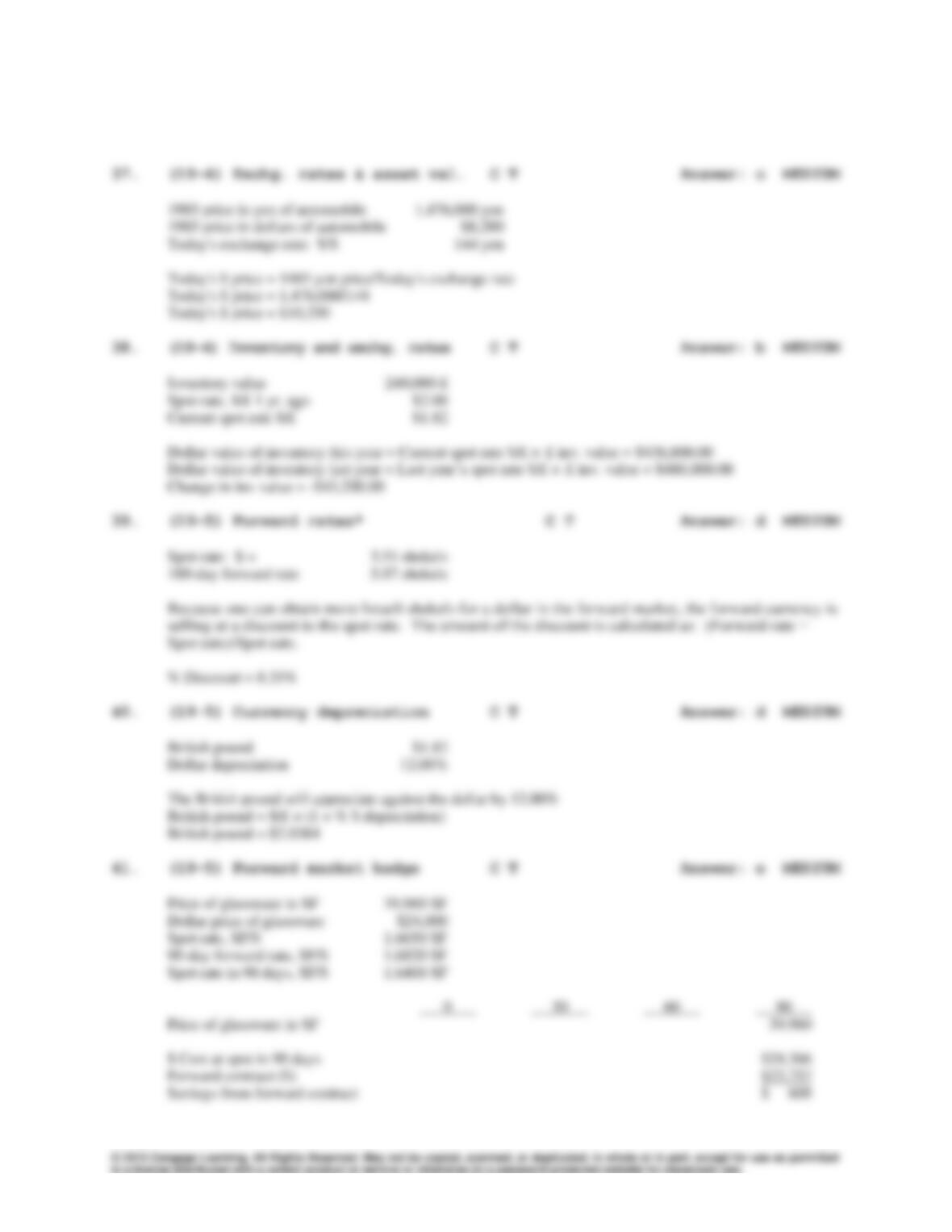
Chapter 19: Multinational Answers Page 653
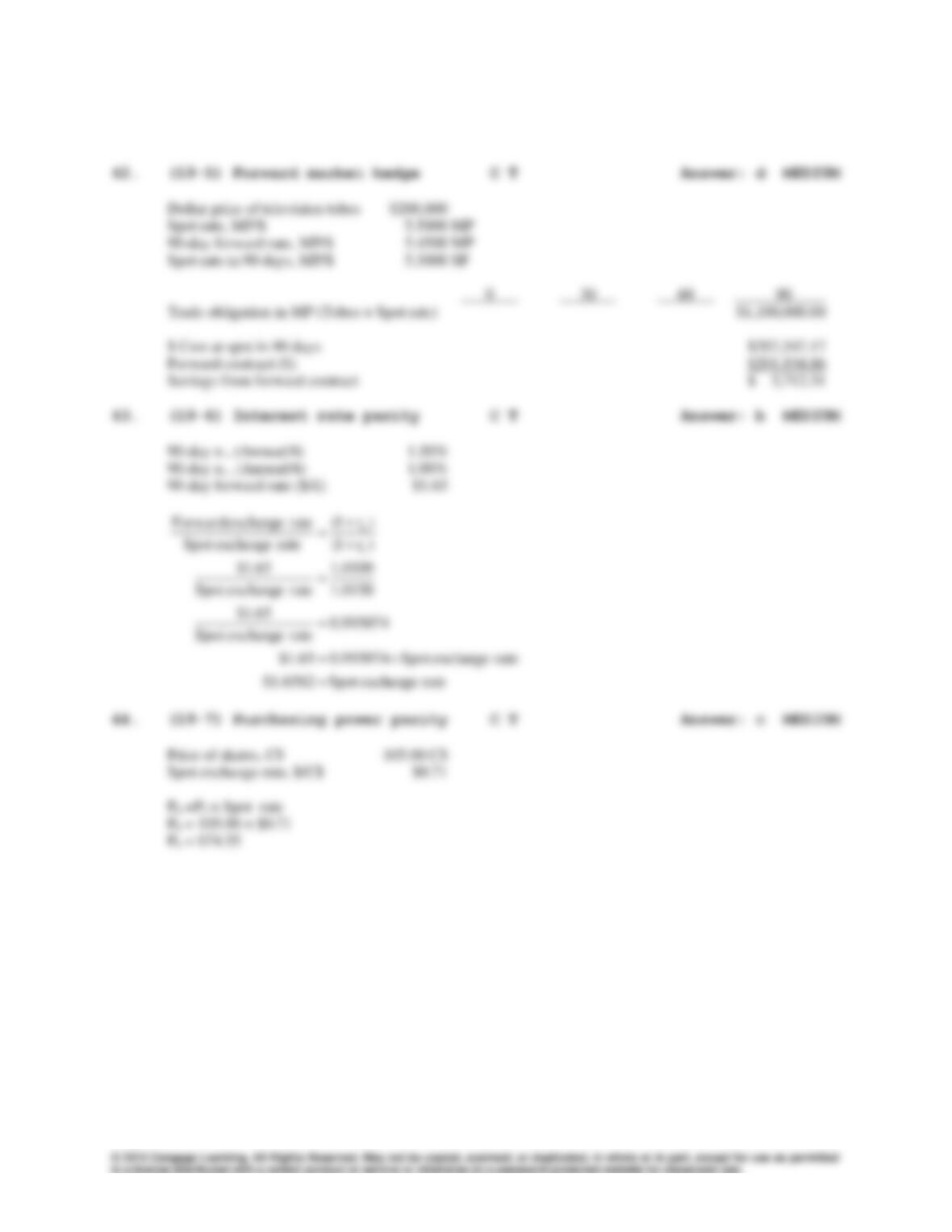
Page 654 Answers Chapter 19: Multinational
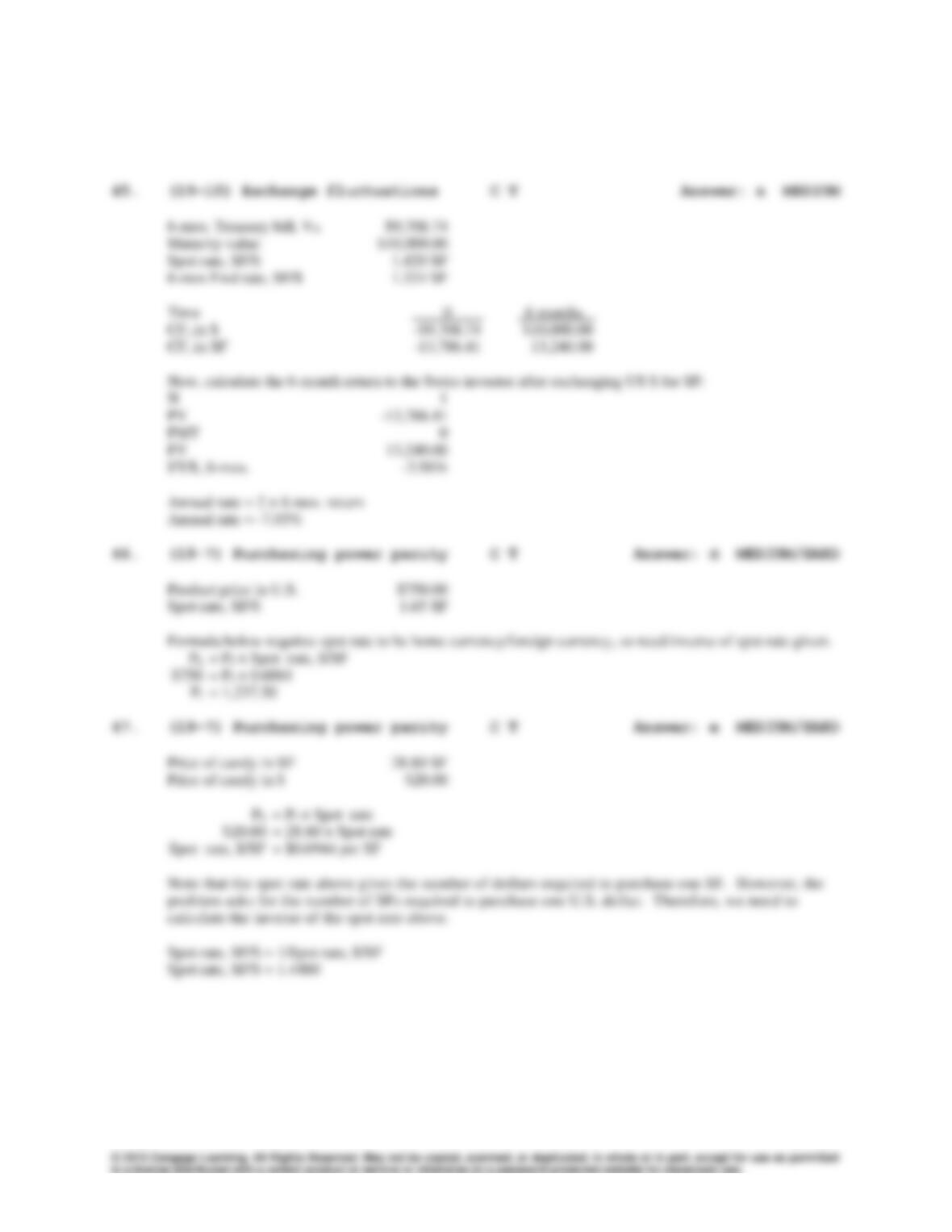
Chapter 19: Multinational Answers Page 655
Page 656 Answers Chapter 19: Multinational
Chapter 19: Multinational Answers Page 657