Chapter 13: FINANCING THE DEAL
Private Equity, Hedge Funds, and Other Sources of Financing
Answers to End of Chapter Discussion Questions
13.1 What are the primary ways in which a leveraged buyuot is financed?
13.2 How do loan and security covenants affect the way in which a leveraged buyout is managed? Note the
differences between positive and negative covenants.
13.3 Describe common strategies LBO firms use to exit their investment. Discuss the circumstances under which
some methods are preferred to others.
2
13.4 While most LBOs are predicated on improving operating performance through a combination of aggressive
cost cutting and revenue growth, hospital chain HCA laid out an unconventional approach which relied
heavily on revenue growth in its effort to take the firm private. On July 24, 2006, management again
announced that it would “go private” in a deal valued at $33 billion including the assumption of $11.7 billion
in existing debt. Would you consider a hospital chain a good or bad candidate for an LBO? Be specific.
13.5 In a move reminiscent of the blockbuster buyouts of the late 1980s, seven private investment firms acquired
100 percent of the outstanding stock of SunGard Data Systems Inc. (SunGard) in late 2005. SunGard is a
financial software firm known for providing application and transaction software services and creating backup
data systems in the event of disaster. The company‘s software manages 70 percent of the transactions made on
the Nasdaq stock exchange, but its biggest business is creating backup data systems in case a client’s main
systems are disabled by a natural disaster, blackout, or terrorist attack. Its large client base for disaster
recovery and back-up systems provides a substantial and predictable cash flow. Furthermore, the firm had
substantial amounts of largely unencumbered current assets. The deal left SunGard with a nearly 5 to 1 debt to
equity ratio. Why do you believe lenders might have been willing to finance such a highly leveraged
transaction?
13.6 In an effort to take the firm private, Cox Enterprises announced on August 3, 2004 a proposal to buy the
remaining 38% of Cox Communications’ shares that they did not currently own for $32 per share. Cox
Enterprises stated that the increasingly competitive cable industry environment makes investment in the cable
industry best done through a private company structure. Why would the firm believe that increasing future
levels of investment would be best done as a private company?
13.7 Following Cox Enterprises’ announcement on August 3, 2004 of its intent to buy the remaining 38% of Cox
Communications’ shares that they did not currently own, the Cox Communications Board of Directors formed
a special committee of independent directors to consider the proposal. Why?
13.8 Qwest Communications agreed to sell its slow but steadily growing yellow pages business, QwestDex, to a
consortium led by the Carlyle Group and Welsh, Carson, Anderson and Stowe for $7.1 billion in late 2002.
3
Why do you believe the private equity groups found the yellow pages business attractive? Explain the
following statement: “A business with high growth potential may not be a good candidate for an LBO.”
13.9 Describe the potential benefits and costs of LBOs to stakeholders including shareholders, employers, lenders,
customers, and communities in which the firm undergoing the buyout may have operations. Do you believe
that on average LBOs provide a net benefit or cost to society? Explain your answer.
13.10 Sony’s long-term vision has been to create synergy between its consumer electronics products business and its
music, movies, and games. On September 14, 2004, a consortium, consisting of Sony Corp of America,
Providence Equity Partners, Texas Pacific Group, and DLJ Merchant Banking Partners, agreed to acquire
MGM for $4.8 billion, consisting of $2.85 billion in cash and the assumption of $2 billion in debt. The cash
portion of the purchase price consisted of about $1.8 billion in debt and $1 billion in equity capital. Of the
equity capital, Providence contributed $450 million, Sony and Texas Pacific Group $300 million, and DLJ
Merchant Banking $250 million. In what way do you believe that Sony’s objectives might differ from those
of the private equity investors making up the remainder of the consortium? How might such differences affect
the management of MGM? Identify possible short-term and long-term effects.
Solutions to Chapter Case Study Questions
4
Berkshire Hathaway and 3G Buy American Food Icon Heinz
Discussion Questions:
1. Identify the form of payment, form of acquisition, acquisition vehicle, and post-closing organization?
Speculate why each may have been used.
2. How was ownership transferred in this deal? Speculate as to why this structure may have been used?
3. Describe the motivation for Berkshire and 3G to buy Heinz.
4. How will the investors be able to recover the 20% purchase price premium?
5. Do you believe that Heinz is a good candidate for a leveraged buyout? Explain your answer.
6. What do you believe was the purpose of the $1.5 billion senior secured revolving loan facility, and the $2.1
billion second lien bridge loan facility as part of the deal financing package?

7. Why do you believe Berkshire Hathaway wanted to receive preferred rather than common stock in exchange
for its investing $8 billion? Be specific.
Examination Questions and Answers
1. Leveraged buyout firms use the unencumbered assets and operating cash flow of the target firm to finance the
transaction. True or False
2. Accounts receivable represent an undesirable form of collateral from the lender’s point of view because they
are often illiquid. True or False
3. Because of their high liquidity, lenders often lend up to 100% of the book value of accounts receivable
pledged as collateral in leveraged buyouts. True or False
4. A negative loan covenant is a portion of a loan agreement that specifies the actions the borrowing firm agrees
to take during the term of the loan. True or False
5. Loan agreements commonly have cross-default provisions allowing a lender to collect its loan immediately if
the borrower is in default on a loan to another lender. True or False
6. Junk bonds are high-yield bonds either rated by the credit-rating agencies as below investment grade or not
rated at all. True or False
7. According to fraudulent conveyance laws, if a new company is found by the court to have been inadequately
capitalized to remain viable, the lender could be stripped of its secured position in the assets of the company or
its claims on the assets could be made subordinate to those of the general creditors. True or False

6
8. Typical LBO targets are in mature industries such as manufacturing, retailing, textiles, food processing,
apparel, and soft drinks. True or False
9. High growth firms with high reinvestment requirements often make attractive LBO targets. True or False
10. Premiums paid to LBO target firm shareholders often exceed 40%. True or False
11. The high premiums paid to LBO target shareholders reflect the tax benefits associated with the high leverage
of such transactions and the improved operating efficiency following the completion of the buyout resulting
from management incentive plans and the discipline imposed by the need to repay debt. True or False
12. Investors in highly leveraged transactions who are primarily focused on relatively short–to-intermediate term
financial returns are often called financial buyers. True or False
13. When a public company is subject to a leveraged buyout, it is said to be “going private.” True or False
14. A leveraged buyout initiated by a firm’s management is called a management buyout. True or False
15. Financial buyers usually hold onto their investments for at least 15–20 years. True or False
16. Investors in LBOs are frequently referred to as financial buyers, because they are primarily focused on
relatively short-to-intermediate-term financial returns. True or False
17. LBO capital structures are often very complex, consisting of bank debt, subordinated unsecured debt,
preferred stock, and common equity. True or False
18. LBO investors seldom sell assets to repay debt used to acquire the firm. True or False
19. LBO investors often use public offerings of the firm’s stock or sell the firm to a strategic buyer in order to exit
the business. True or False
20. LBO investors will often use the target firm’s cash in excess of normal working capital requirements to
finance the transaction. True or False
21. Asset based lending does not require the borrower to pledge assets as collateral underlying the loans. True or
False
22. The loan agreement stipulates the terms and conditions under which the lender will loan the borrower funds.
True or False
23. A single asset is often used to collateralize loans from different lenders in LBO transactions. True or False

24. Asset based lenders will usually lend up to 100% if the book value of the LBO target’s receivables. True or
False
25. Cash flow lenders view the borrower’s future cash flow generation capability as the primary means of
recovering a loan, while largely ignoring the assets of the LBO target. True or False
26. Junk bonds have invariably proved to be a reliable source of low-cost financing in LBO transactions during
the last 30 years. True or False
27. Fraudulent conveyance laws are intended to prevent shareholders, secured creditors, and others from
benefiting at the expense of unsecured creditors. True or False
28. To avoid being subject to fraudulent conveyance laws, a properly structured LBO should have a balance sheet
that clearly indicates solvency at the time of closing. True or False
29. The risk associated with overpaying is magnified for leveraged buyout transactions. True or False
30. Under-performing operating units of large companies are often excellent candidates for LBOs. True or False
31. Junk bonds are always high risk. True or False
32. Firms with redundant assets and predictable cash flow are often good candidates for leveraged buyouts. True
or False
33. Common exit strategies for LBOs include sale to a strategic buyer, an IPO, a leveraged recapitalization, or a
sale to another buyout firm. True or False
34. Divisions of larger companies are generally poor candidates for successful leveraged buyouts. True or False
35. Financial buyers usually plan to hold onto acquired firms longer than strategic buyers. True or False
36. Borrowers often seek revolving lines of credit that they can draw upon on a daily basis to run their business.
True or False
37. A term loan usually has a maturity of less than one year. True or False
38. The loan agreement stipulates the terms and conditions under which the lender will loan the firm funds. True
or False

39. An affirmative covenant is a portion of a loan agreement that specifies the actions the borrowing firm cannot
take during the term of the loan. True or False
40. Borrowers often prefer term loans because they do not have to be concerned that these loans will have to be
renewed. True or False
41. LBOs can be of an entire company or divisions of a company. True or False
42. When a public company is subject to an LBO, it is said to be going private, because more than 50% of the
equity of the firm has been purchased by a small group of investors and is no longer publicly traded. True or
False
43. The LBO that is initiated by the target firm’s incumbent management is called a management buyout. True or
False
44. LBO firms seldom purchase a firm to use as a platform to undertake other leveraged buyouts in the same
industry. True or False
45. A common technique used during the 1990s was to wait for favorable periods in the stock market to sell a
portion of the LBO’s equity to the public. The proceeds of the issue would be used to repay debt, thereby
reducing the LBO’s financial risk. True or False
46. LBO investors have become much more actively involved in managing target firms in recent years than they
have in the past. True or False
47. There is some evidence that the Sarbanes-Oxley Act of 2002 has also been a factor in some firms going
private as a result of the onerous reporting requirements of the bill. True or False
48. The growth in LBO activity is not simply a U.S. phenomenon. Western Europe has seen a veritable explosion
in private equity investors taking companies private, reflecting ongoing liberalization in the European Union
as well as cheap financing and industry consolidation. True or False
49. The promissory note commits the borrower to repay the loan, only if the assets when liquidated fully cover the
unpaid balance. True or False
50. If the borrower defaults on the loan or otherwise fails to honor the terms of the agreement, the lender can seize
and sell the collateral to recover the value of the loan only if the borrower agrees that it is unlikely that the
loan will be repaid. True or False
51. Because term loans are negotiated privately between the borrower and the lender, they are much more
expensive than the costs associated with floating a public debt or stock issue. True or False

52. Limitations the lender imposes on the borrower on the amount of dividends that can be paid, the level of
salaries and bonuses that may be given to the borrower’s employees, the total amount of indebtedness that can
be assumed by the borrower, and investments in plant and equipment and acquisitions are called affirmative
covenants. True or False
53. Secured debt often is referred to as mezzanine financing. True or False
54. Bridge financing is usually expected to be replaced within two years after the closing date of the LBO
transaction. True or False
55. Debt issues not secured by specific assets are called debentures. True or False
56. An indenture is a contract between the firm that issues the long-term debt securities and the lenders. True or
False
57. Preferred stock often is issued in LBO transactions, because it provides investors a fixed income security,
which has a claim that is junior to common stock in the event of liquidation. True or False
58. The acquirer often is asked for a commitment letter from a lender, which commits the lender to providing
financing for the transaction. True or False
59. If the LBO is structured as a direct merger in which the seller receives cash for stock, the lender will make the
loan to the buyer once the appropriate security agreements are in place and the target’s stock has been pledged
against the loan. The target then is merged into the acquiring company, which is the surviving corporation.
True or False
60. LBOs may be consummated by establishing a new subsidiary that merges with the target. This may be done to
avoid any negative impact that the new company might have on existing customer or creditor relationships.
True or False
61. Management buyouts without a financial equity contributor are relatively rare. True or False
62. LBO exit strategies involving selling to a strategic buyer usually result in the best price as the buyer may be
able to generate significant synergies by combining the firm with its existing business. True or False
63. LBOs normally involve public companies going private. True or False
64. Most highly leveraged transactions consist of acquisitions of private rather public firms. True or False
65. Private equity investments are normally focused on the manufacturing industry. True or False

10
1. Which of the following is generally not true about leveraged buyouts?
a. Borrowed funds are used to pay for all or most of the purchase price, perhaps as much as 90%
b. Tangible assets of the target firm are often used as collateral for loans.
c. Bank loans are often secured by the target firm’s intangible assets
d. Secured debt is often referred to as junk bond financing.
e. C and D only
2. Asset based lending is commonly used to finance leveraged buyouts. Which of the following is not true about
such financing?
a. The borrower generally pledges tangible assets as collateral.
b. Lenders look at the target firm’s assets as their primary protection.
c. Bank loans are secured frequently by receivables and inventory.
d. Loans maturing in more than one year are often referred to as term loans.
e. The target firm’s most liquid assets generally secure longer-term loans.
3. Security provisions and protective covenants are included in loan documents to increase the likelihood that the
interest and principal of outstanding loans will be repaid in a timely fashion. Which of the following is not
true about security provisions and protective covenants?
a. Security features include the assignment of payments due under a specific contract to the lender.
b. Negative covenants include limits on the amount of dividends that might be paid
c. Limitations on the amount of working capital that the borrower can maintain.
d. Periodically, financial statements must be sent to lenders.
e. Automatic loan repayment acceleration if the borrower is in default on any loans outstanding
4. Which of the following is not true about junk bonds?
a. Junk bonds are either unrated or rated below investment grade by the credit rating agencies
b. Typically yield about 1-2 percentage points below yields on U.S. Treasury debt of comparable
maturities.
c. Junk bonds are commonly used source of “permanent” financing in LBO transactions
d. During recessions, junk bond default rates often exceed 10%
e. Junk bond default risk on non-investment grade bonds tends to increase the longer the elapsed time
since the original issue date of the bonds
5. Which of the following characteristics of a firm would limit the firm’s attractiveness as a potential LBO
candidate?
a. Substantial tangible assets
b. High reinvestment requirements
c. High R&D requirements
d. B and C
e. All of the above
6. Premiums paid to LBO firm shareholders average
a. 20%
b. 70%
c. 5%
d. Less than typical mergers
e. More than typical mergers
7. Factors that are most likely to contribute to the magnitude of premiums paid to LBO target firm shareholders
are

11
a. Tax benefits
b. Improved operating efficiency
c. Improved decision making
d. A, B, and C
e. A and C only
8. Which of the following is not true about attractive LBO candidates?
a. Most assets tend to be encumbered
b. Have low leverage
c. Have predictable cash flow
d. Have assets that are not critical to the ongoing operation of the firm
e. Are in mature, moderately growing industries
9. Which of the following is generally not considered a characteristic of a financial buyer?
a. Focus on short-to-intermediate returns
b. Concentrate on actions that enhance the ability of target firm’s ability to generate cash flow to satisfy
debt service requirements
c. Intend to own the business for very long periods of time
d. Manage the business to maximize return to equity investors
e. All of the above
10. Which of the following are commonly used sources of funding for leveraged buyouts?
a. Secured debt
b. Unsecured debt
c. Preferred stock
d. Seller financing
e. All of the above
11. Fraudulent conveyance is best described by which of the following situations:
a. A new company spun off by its parent to the parent’s shareholders that enters bankruptcy is found to
have been substantially undercapitalized when created
b. An acquiring company pays too high a price for a target firm
c. A company takes on too much debt
d. A leveraged buyout is taken public when its operating cash flows are increasing
e. None of the above
12. LBO investors must be very careful not to overpay for a target firm because
a. Major competitors tend to become more aggressive when a firm takes on large amounts of debt
b. High leverage increases the break-even point of the firm
c. Projected cash flows are often subject to significant error limiting the ability of the firm to repay its
debt
d. A and B only
e. A, B, and C

12
13. LBOs often exhibit very high financial returns during the years following their creation. Which of the
following best describes why this might occur?
a. LBOs invariably improve the firm’s operating efficiency
b. LBOs tend to increase investment in plant and equipment
c. The only LBOs that are taken public are those that have been the most successful
d. LBOs experience improved decision making during the post-buyout period
e. None of the above
14. Which of the following is not typically true of LBOs?
a. Managers are generally also owners
b. Most employees are given the opportunity to participate in profit sharing plans
c. The focus tends to be on improving operational efficiency though cost cutting and improving
productivity
d. R&D budgets following the creation of the LBO are always increased significantly
e. All of the above
15. Which of the following tends to be true of LBOs
a. LBOs rely heavily on management incentives to improve operating performance
b. The premium paid to target firm shareholders often exceeds 40%
c. Tax benefits are predictable and are built into the purchase price premium
d. The cost of equity is likely to change as the LBO repays debt
e. All of the above
16. An investor group acquired all of the publicly traded shares of a firm. Once acquired, such shares would no
longer trade publicly. Which of the following terms best describes this situation?
a. Merger
b. Going private transaction
c. Consolidation
d. Tender offer
e. Joint venture
17. The management team of a privately held firm found a lender who would lend them 90 percent of the purchase
price of the firm if they pledged the firm’s assets as well as their personal assets as collateral for the loan. This
purchase would best be described by which of the following terms?
a. Merger
b. Leveraged buyout
c. Joint venture
d. Tender offer
e. Consolidation

13
Case Study Short Essay Examination Questions
Hollywood’s Biggest Independent Studios Combine in a Leveraged Buyout
Key Points
LBOs allow buyouts using relatively little cash and often rely heavily on the target firm’s assets to finance the
transaction.
Private equity investors often “cash out” of their investments by selling to a strategic buyer.
______________________________________________________________________________
The Lionsgate-Summit tie-up represented the culmination of more than four years of intermittent discussions between
the two firms. The number of studios making and releasing movies has been shrinking amid falling DVD sales and
continued efforts to transition to digital distribution. As the largest independent studios in Hollywood, both firms saw
their cash flow whipsawed as one blockbuster hit would be followed by a series of failures. Film and TV program
libraries offered the only source of cash flow stability due to the recurring fees paid by those licensing the rights to use
this proprietary content.
Lionsgate first approached Summit about a buyout in 2008 in an effort to bolster its film and TV library. However, it
was not until early 2012 that the two sides could reach agreement. The time was ripe because Summit’s investors were
looking for a way to cash in on the success of the firm’s Twilight movies series. Consisting of four films, this series had
grossed $2.5 billion worldwide. On February 2, 2012, Lionsgate announced that it had reached an agreement to acquire
Summit Entertainment by paying Summit shareholders $412.5 million in cash and stock for all of their outstanding
shares and assumed debt of $506.3 million. According to the merger agreement, Lionsgate would provide
administrative, production, and distribution services to Summit for a 10% servicing fee. Layoffs are expected at both
firms as they merge redundant departments in their film operations, such as marketing, production, and distribution.
The acquisition provides a windfall to Summit’s investors, including eBay cofounder Jeff Skoll’s film company Media
and private equity fund Traverse Management. These investors had previously received a $200 million dividend as part
of a recapitalization in early 2011 and gained handsomely from the sale to Lionsgate.
Lionsgate is a diversified film and television production and distribution company, with a film library of 13,000
titles. The firm’s major distribution channels include home entertainment and prepackaged media (DVDs); digital
distribution (on-demand TV) and pay TV (premium network programming). Summit, also a producer and distributor of
film and TV content, has a less consistent track record in realizing successful releases, with the Twilight “franchise” its
primary success. However, Summit does have strong international licensing operations, with arrangements in the
United States, Canada, Germany, France, Scandinavia, Spain, and Australia. The acquisition also strengthens
Lionsgate’s position as a leading content supplier and, controlling the Twilight and Hunger Games franchises, positions
Lionsgate as a market leader for young adult audiences. The combination also results in cost and revenue synergies,
more diversified cash flow streams, and greater access to international distribution channels.
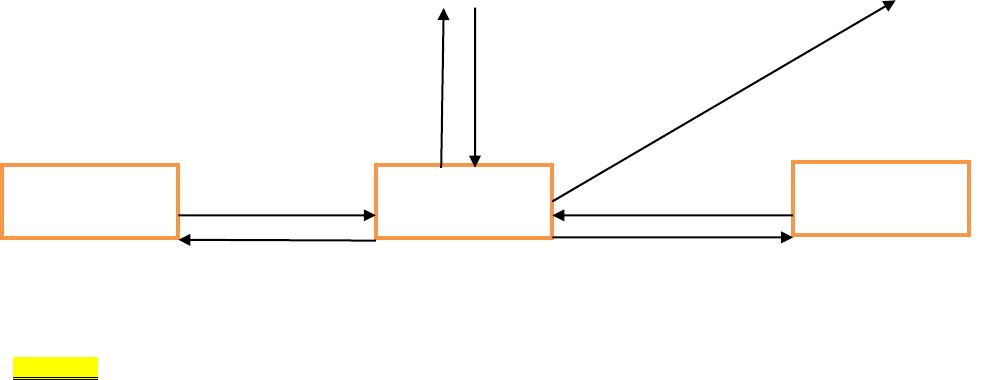
Figure 13.3 illustrates the subsidiary structure for completing the buyout of Summit Entertainment LLC. As is
typical of such transactions, Lionsgate created a merger subsidiary (Merger Sub) and funded the subsidiary with its
equity contribution of $100 million in cash and $69 million in Lionsgate stock, receiving 100% of the subsidiary’s
stock in exchange. Merger Sub was further capitalized by a bank term loan of $500 million. Following a tender offer to
Summit’s shareholders by Merger Sub, Merger Sub was merged into Summit Entertainment, with Summit surviving as
a wholly owned subsidiary of Lionsgate in a reverse triangular merger. At closing, $284.4 million of Summit’s excess
cash was used to finance the total cost of the deal.
Lionsgate
Entertainment
Summit
Entertainment
$284.4
Million in
Excess
Summit
Cash
14
Figure 13.3
Lionsgate-Summit Legal and Financing Structure.
Table 13.4 summarizes the sources of financing for the buyout and shows how these funds were used to pay for the
deal. Lionsgate financed the total cost of the deal of $953.4 million (consisting of $412.5 million for Summit stock +
the pretransaction term loan of $506.3 million + $34.6 million in transaction-related fees and expenses) as follows:
$100 million in cash from Lionsgate and $69 million in Lionsgate stock + $284.4 million of the $310 million in cash on
Summit’s balance sheet at closing + a new $500 million term loan. Summit’s $506.3 million term loan B was
refinanced with the new term loan for $500 million as part of the transaction. The new term loan is an obligation of and
is secured by the assets of Summit and its subsidiaries. It also is secured by a loan guarantee provided by Merger Sub,
created by Lionsgate to consummate the transaction. The guarantee is secured by the equity in Summit held by Merger
Sub. Lionsgate anticipates paying off the term loan well in advance of its 2016 maturity date out of future cash flows
from new movie releases. Summit’s pretransaction net debt was $196.3 million (pretransaction term loan of $506.3 less
total cash on the balance sheet of $310 million). Postclosing net debt increased to $474.4 million (postclosing term loan
of $500 million less $25.6 million in total cash of the balance sheet).
Table 13.4
Lionsgate-Summit Transaction Overview
• Sources of Funds ($ Millions) • Uses of
Funds ($ Millions)
Lionsgate Cash Consideration1 100.0 Seller Consideration 412.5
Lionsgate Stock Consideration2 69.0 Repay Term Loan 506.3
Summit Cash on Balance Sheet 284.4 Fees and expenses 34.6
New Term Loan 500.0
Total 953.4 953.4
1 Includes $55 million of Lionsgate cash and $45 million of convertible bond proceeds.
2 Includes $20 million of stock consideration to be issued to Summit sellers 60 days after closing.
Summit Pro Forma Capitalization
• As of 12/30/11 • Pro Forma
$ Millions Adjustment ($ Millions) $ Millions
Cash3 310 (284.4) 25.6
Revolver ($200 million) — — NA4
Prior Term Loan B Due 9/2016 506.3 (506.3) 0.0
New Term Loan B Due 9/2016 0.0 500.0 500.0
Total Debt 506.3 (6.3) 500.0
Contributed Equity5 169.0
3 Total cash balance prior to the transaction announcement. $284 million is excess Summit cash used by Lionsgate to
finance a portion of the deal. The remaining $25.6 million is cash needed to meet working capital requirements.
4 Revolver commitments terminated for the acquisition.
5 Consists of $100 million in cash from Lionsgate and $69 million in Lionsgate stock.
Source: Lionsgate 8K filing with the Securities and Exchange Commission on 2/1/2012.
Merger Sub
Lender
Summit
Shareholders
Summit
Cash & Lionsgate
Shares
$500 Million
Loan
Merger
Sub Stock
$100 Million in
Cash & $69
Million in
Lionsgate
Merger Sub Merges
With Summit
Merger Sub Loan
Guarantee

Table 13.5 presents the key features of the new term loan B facility. Note how Summit’s assets are used as collateral
to secure the loan. In addition, the lender has first priority on the proceeds from certain types of transactions, giving
them priority access to such funds. Cash distributions are not possible until the loan is almost paid off, and even then
the size of such distributions is limited. Finally, loan covenants require Summit to maintain a comparatively liquid
position during the term of the loan.
Table 13.5
Initial Terms and Conditions of the New Term Loan B Facility
• Item • Comment
Borrower Summit Entertainment LLC (Lionsgate subsidiary)
Guarantor Merger Sub
Security First priority security interest in tangible and intangible assets
Pledge of equity interests of Summit and guarantor
Assignments of all trademarks and copyrights
Direct assignment of all proceeds payable to borrowers or any guarantor under all existing license and distribution
agreements
Facilities $500 million senior secured term loan B
Ratings B1/B+
Maturity September 2016
Mandatory Amortization $13.75 million, paid quarterly
Pricing To be determined
Incremental Facility None
Optional Prepayments Up to one year at the discretion of the borrower
Mandatory Prepayments 100% of proceeds from asset sales
100% of insurance proceeds
50% of excess cash flow as defined in purchase agreement
Excess over mandatory maximum cash balance allowance
Permitted Distributions No distributions before loan facility is 75% amortized
Only distributions of up to $25 million allowed once loan is 75% amortized
Financial Maintenance Covenants Fixed charge coverage ratio of 1.25 to 1
Minimum liquidity ratio of at least 1.1 to 1
Discussion Questions
1. What about Lionsgate’s acquisition of Summit indicates that this transaction should be characterized as a
leveraged buyout? How does Lionsgate use Summit’s assets to help finance the deal? Be specific.
16
.
2. How are $34.6 million in fees and expenses associated with the transaction paid for? Be specific.
3. Speculate as to why Lionsgate refinanced as part of the transaction the existing Summit Term Loan B due in
2016 that had been borrowed in the early 2000s.
4. Do you believe that Summit is a good candidate for a leveraged buyout? Explain your answer.
5. Why is Summit Entertainment organized as a limited liability company?
6. Why did Lionsgate make an equity contribution in the form of cash and stock to the Merger Sub rather than
making the cash portion of the contributed capital in the form of a loan?
TXU Goes Private in the Largest Private Equity Transaction in History—The Dark Side of Leverage
Key Points
The 2007/2008 financial crisis left many LBOs excessively leveraged.
As structured, the TXU buyout (now Energy Future Holdings) left no margin for error.
Excessive leverage severely limits the firm’s future financial options.
_____________________________________________________________________________
Before the buyout, TXU, a Dallas-based energy giant, was a highly profitable utility. Historically low interest rates and
an overly optimistic outlook for natural gas prices set the stage for the largest private equity deal in history. The 2007
buyout of TXU was valued at $48 billion and, at the time, appeared to offer such promise that several of Wall Street’s
largest lenders –—including the likes of Lehman Brothers and Citigroup—invested, along with such storied names in
private equity as KKR, TPG, and Goldman Sachs. However, the price of gas plummeted, eroding TXU’s cash flow.
Since the deal closed in October 2007, investors who bought $40 billion of TXU’s debt have experienced losses as high
as 70% to 80% of their value. The other $8 billion used to finance the deal came from the private equity investors,
banks, and large institutional investors. They, too, have suffered huge losses. Having met its obligations to date, the
firm faces a $20 billion debt repayment coming due in 2014.

17
Wall Street banks were competing in 2007 to make loans to buyout firms on easier terms, with the banks also
investing their own funds in the deal. The allure to the banks was the prospect of dividing up as much as $1.1 billion in
fees for originating the loans, repackaging such loans into pools called collateralized loan obligations, and reselling
them to long-term investors such as pension funds and insurance companies. In doing so, the loans would be removed
from the banks’ balance sheets, eliminating potential losses that could arise if the deal soured at a later date.
Furthermore, the deal appeared to be attractive as an investment opportunity because some banks put up $500 million
of their own cash for a stake in TXU.
The financial sponsor group, consisting of Kohlberg Kravis Roberts & Co, Texas Pacific Group, and Goldman
Sachs, created a shell corporation, referred to as Merger Sub Parent, and its wholly owned subsidiary Merger Sub. TXU
was merged into Merger Sub, with Merger Sub surviving. Each outstanding share of TXU common stock was
converted into the right to receive $69.25 in cash. Total cash required for the purchase was provided by the financial
sponsor group and lenders (Creditor Group) to Merger Sub. Regulatory authorities required that the debt associated
with the transaction be held at the level of the Merger Sub Parent holding company so as not to leverage the utility
further.
Subsequent to closing, the new company was reorganized into independent businesses under a new holding
company, controlled by the Sponsor Group, called Texas Holdings (TH). Merger Sub (which owns TXU) was renamed
Energy Future Holdings. TH’s direct subsidiaries are EFH and Oncor (an energy distribution business formerly held by
TXU). EFH’s primary direct subsidiary is Texas Competitive Electric Holdings, which holds TXU’s public utility
operating assets and liabilities. All TXU non-Sponsor Group–related debt incurred to finance the transaction is held by
EFH, while any debt incurred by the Sponsor Group is shown on the TH balance sheet. This legal structure allows for
the concentration of debt in TH and EFH, separate from the cash-generating assets held by Oncor and Texas
Competitive Electric Holdings.
Loan covenants limit EFH’s and its subsidiaries’ ability to issue new debt or preferred stock; pay dividends on,
repurchase, or make distributions of capital stock or make other restricted payments; make investments; sell or transfer
assets; consolidate, merge, sell, or dispose of all or substantially all its assets; and repay, repurchase, or modify debt. A
breach of any of these covenants could result in default. Table 13.6 illustrates selected covenants in which certain ratios
must be maintained either above or below stipulated thresholds. Note that EFH was in violation of certain covenants
when you compare actual December 31, 2009 (the last year for which public information is available), ratios with
required threshold levels.
Table 13.6
EFH Holdings Debt Covenants
• December 31, 2009 •
Threshold Level as of December 31, 2009
Maintenance Covenant
TCEH Secured Facilities: Ratio of Secured debt to adjusted EBITDA
4.76–1.00
Must not exceed 7.25–1.00
Debt Incurrence Covenants
EFH Corp Senior Notes:
EFH Corp fixed charge coverage ratio
TCEH fixed charge coverage ratio
EFH Corp 9.75% Notes:
EFH Corp fixed charge coverage ratio
TCEH fixed charge coverage ratio
TCEH Senior Notes:
TCEH fixed charge coverage ratio
TCEH Senior Secured Facilities:
TCEH fixed charge coverage ratio
1.2–1.0
1.5–1.0
18
1.2–1.0
1.5–1.0
1.5–1.0
1.5–1.0
At least 2.0–1.0
At least 2.0–1.0
At least 2.0–1.0
At least 2.0–1.0
At least 2.0–1.0
At least 2.0–1.0
Restricted Payments/Limitations on Investments Covenants
EFH Corp Senior Notes
General restrictions
EFH Corp fixed charge coverage ratio
General restrictions
EFH Fixed Charge coverage ratio
EFH Corp leverage ratio
EFH Corp 9.75% Notes
General restrictions
EFH Corp fixed charge coverage ratio
General restrictions
EFH Corp fixed charge coverage ratio
EFH Corp leverage ratio
TCEH Senior Notes
TCEH fixed charge coverage ratio
1.4–1.0
1.2–1.0
9.4–1.0
1.4–1.0
1.2–1.0
9.4–1.0
1.5–1.0
At least 2.0–1.0
At least 2.0–1.0
≤7.0–1.0
At least 2.0–1.0
At least 2.0–1.0
≤7.0–1.0
At least 2.0–1.0
Things clearly have not turned out as expected. The firm faces an almost–untenable capital structure. The firm’s debt
traded at between 20 and 30 cents on the dollar throughout most of 2012. The $8 billion equity invested in the deal has
been virtually wiped out on paper. Absent a turnaround in natural gas prices, EFH is left with seeking a way to reduce
substantially the burden of the pending 2014 $20 billion loan payment with its lenders through a debt-for-equity swap
or more favorable terms on existing debt or by pursuing Chapter 11 bankruptcy. EFH has posted eight consecutive
quarterly losses. In December 2012, in an effort to extend debt maturities to buy time for a turnaround and to reduce
interest expense, EFH exchanged $1.15 billion of new payment–in-kind notes (interest is paid with more debt) for
existing notes with a face value of $1.6 billion. By any measure, this transaction illustrates the dark side of leverage.
Discussion Questions
1. How does the postclosing holding company structure protect the interests of the financial sponsor group
and the utility’s customers but potentially jeopardize creditor interests in the event of bankruptcy?
2. What was the purpose of the pre-closing covenants and closing conditions as described in the merger
agreement?

20
3. Loan covenants exist to protect the lender. How might such covenants inhibit the EFH from meeting its
2014 $20 billion obligations?
4. As CEO of EFH, would you recommend to the board of directors as an appropriate strategy for paying the
$20 billion in debt that is maturing in 2014?
5. The substantial writedown of the net acquired assets in 2008 suggests that the purchase price paid for
TXU was too high. How might this impact KKR, TPG, and Goldman’s ability to earn financial returns
expected by their investors on the TXU acquisition? How might this writedown impact EFH’s ability
meet the $20 billion debt maturing in 2014?
Lessons from Pep Boys’ Aborted Attempt to Go Private
Key Points
LBOs in recent years have involved financial sponsors’ providing a larger portion of the purchase price in cash than in
the past.
Financial sponsors focus increasingly on targets in which they have previous or related experience.
Deals that would have been completed in the early 2000s are more likely to be terminated or subject to renegotiation
than in the past.
_____________________________________________________________________________________
It ain’t over till it’s over” quipped former New York Yankees’ catcher Yogi Berra, famous for his malapropisms. The
oft-quoted comment was once again proven true in Pep Boys’ unsuccessful attempt to go private in 2012. On May 30,
2012, after nearly two years of discussions between Pep Boys and several interested parties, the firm announced that a
buyout agreement with the Gores Group (Gores), valued at approximately $1 billion (including assumed debt), had
collapsed, a victim of Pep Boys’ declining operating performance. The firm’s shares fell 20% on the news to $8.89 per
share, well below its level following the all-cash $15-a-share deal with Gores announced in January 2012. The terms of
the transaction also included a termination fee if either party failed to complete the deal by July 27, 2012. The failed
transaction illustrates the characteristics and potential pitfalls common to contemporary LBOs.