
15
categories, such as a substantial women’s healthcare business. The merger also is a response to the ongoing global trend of consolidation
among the purchasers of pharmaceutical products as governments are increasingly becoming the primary purchaser of generic drugs.
Under the merger agreement, a wholly owned Teva corporate subsidiary, the Boron Acquisition Corp. (i.e., acquisition vehicle),
merged with Barr, with Barr surviving the merger as a wholly owned subsidiary of Teva. Immediately following the closing of the
merger, Barr was merged into a newly formed limited liability company (i.e., postclosing organization), also wholly owned by Teva,
which is the surviving company in the second step of the merger. As such, Barr became a wholly owned subsidiary of Teva and ceased to
be traded on the New York Stock Exchange.
The merger agreement contained standard preclosing covenants, in which Barr agreed to conduct its business only in the ordinary
course (i.e., as it has historically, in a manner consistent with common business practices) and not to alter any supplier, customer, or
employee agreements or declare any dividends or buy back any outstanding stock. Barr also agreed not to engage in one or more
transactions or investments or assume any debt exceeding $25 million. The firm also promised not to change any accounting practices in
any material way or in a manner inconsistent with generally accepted accounting principles. Barr also committed not to solicit alternative
bids from any other possible investors between the signing of the merger agreement and the closing.
Teva agreed that from the period immediately following closing and ending on the first anniversary of closing it would require Barr or
its subsidiaries to maintain each compensation and benefit plan in existence prior to closing. All annual base salary and wage rates of each
Barr employee would be maintained at no less than the levels in effect before closing. Bonus plans also would be maintained at levels no
less favorable than those in existence before the closing of the merger.
The key closing conditions that applied to both Teva and Barr included satisfaction of required regulatory and shareholder approvals,
compliance with all prevailing laws, and that no representations and warranties were found to have been breached. Moreover, both parties
had to provide a certificate signed by the chief executive officer and the chief financial officer that their firms had performed in all
material respects all obligations required to be performed in accordance with the merger agreement prior to the closing date and that
neither business had suffered any material damage between the signing and the closing.
The merger agreement had to be approved by a majority of the outstanding voting shares of Barr common stock. Shareholders failing
to vote or abstaining were counted as votes against the merger agreement. Shareholders were entitled to vote on the merger agreement if
they held Barr common stock at the close of business on the record date, which was October 10, 2008. Since the shares issued by Teva in
exchange for Barr’s stock had already been authorized and did not exceed 20% of Teva’s shares outstanding (i.e., the threshold on some
public stock exchanges at which firms are required to obtain shareholder approval), the merger was not subject to a vote of Teva’s
shareholders.
Teva and Barr each notified the U.S. Federal Trade Commission and the Antitrust Division of the U.S. Department of Justice of the
proposed deal in order to comply with prevailing antitrust regulations. Each party subsequently received a “second request for
information” from the FTC, whose effect was to extend the HSR waiting period another 30 days. Teva and Barr received FTC and Justice
Department approval once potential antitrust concerns had been dispelled. Given the global nature of the merger, the two firms also had to
file with the European Union Antitrust Commission as well as with other country regulatory authorities.
Discussion Questions
1. Why do you believe that Teva chose to acquire the outstanding stock of Barr rather than selected assets? Explain your answer.
2. Mergers of businesses with operations in many countries must seek approval from a number of regulatory agencies. How might
this affect the time between the signing of the agreement and the actual closing? How might the ability to realize synergy
following the merger of the two businesses be affected by actions required by the regulatory authorities before granting their
approval? Be specific.
16
3. What it the importance of the pre-closing covenants signed by both Teva and Barr?
4. What is the importance of the closing conditions in the merger agreement? What could happen if any of the closing conditions
are breached (i.e., violated)?
5. Speculate as to why Teva offered Barr shareholders a combination of Teva stock and cash for each Barr share outstanding and
why Barr was willing to accept a fixed share exchange ratio rather than some type of collar arrangement.
Johnson & Johnson Uses Financial Engineering to Acquire Synthes Corporation
_____________________________________________________________________________
Key Points
While tax considerations rarely are the primary motivation for takeovers, they make transactions more attractive.
Tax considerations may impact where and when investments such as M&As are made.
Foreign cash balances give multinational corporations flexibility in financing M&As.
_____________________________________________________________________________________
United States–based Johnson & Johnson (J&J), the world’s largest healthcare products company, employed creative tax strategies in
undertaking the biggest takeover in its history. When J&J first announced that it would acquire Swiss medical device maker Synthes for
$19.7 million in stock and cash, the firm indicated that the deal would dilute its current shareholders due to the issuance of 204 million
new shares. Investors expressed their dismay by pushing the firm’s share price down immediately following the announcement. J&J

17
looked for a way to make the deal more attractive to investors while preserving the composition of the purchase price paid to Synthes’
shareholders (two-thirds stock and the remainder in cash). They could defer the payment of taxes on that portion of the purchase price
received in J&J shares until such shares were sold; however, they would incur an immediate tax liability on any cash received.
Having found a loophole in the IRS’s guidelines for utilizing funds held in foreign subsidiaries, J&J was able to make the deal’s
financing structure accretive to earnings following closing. In 2011, the IRS had ruled that cash held in foreign operations repatriated to
the United States would be considered a dividend paid by the subsidiary to the parent, subject to the appropriate tax rate. Because the
United States has the highest corporate tax rate among developed countries, U.S. multinational firms have an incentive to reinvest
earnings of their foreign subsidiaries abroad.
With this in mind, J&J used the foreign earnings held by its Irish subsidiary to buy 204 million of its own shares, valued at $12.9
billion, held by Goldman Sachs and JPMorgan, which had previously acquired J&J shares in the open market. The buyback of J&J shares
held by these investment banks increased the consolidated firm’s earnings per share. These shares, along with cash, were exchanged for
outstanding Synthes’ shares to fund the transaction. J&J also avoided a hefty tax payment by not repatriating these earnings to the United
States, where they would have been taxed at a 35% corporate rate rather than the 12% rate in Ireland. Investors reacted favorably,
boosting J&J’s share price by more than 2% in mid-2012, when the firm announced the deal would be accretive rather than dilutive.
Presumably, the IRS will move to prevent future deals from being financed in a similar manner.
Merck and Schering-Plough Merger: When Form Overrides Substance
If it walks like a duck and quacks like a duck, is it really a duck? That is a question Johnson & Johnson might ask about a 2009
transaction involving pharmaceutical companies Merck and Schering-Plough. On August 7, 2009, shareholders of Merck and Company
(“Merck”) and Schering–Plough Corp. (Schering-Plough) voted overwhelmingly to approve a $41.1 billion merger of the two firms. With
annual revenues of $42.4 billion, the new Merck will be second in size only to global pharmaceutical powerhouse Pfizer Inc.
At closing on November 3, 2009, Schering-Plough shareholders received $10.50 and 0.5767 of a share of the common stock of the
combined company for each share of Schering-Plough stock they held, and Merck shareholders received one share of common stock of
the combined company for each share of Merck they held. Merck shareholders voted to approve the merger agreement, and Schering–
Plough shareholders voted to approve both the merger agreement and the issuance of shares of common stock in the combined firms.
Immediately after the merger, the former shareholders of Merck and Schering-Plough owned approximately 68 percent and 32 percent,
respectively, of the shares of the combined companies.
The motivation for the merger reflects the potential for $3.5 billion in pretax annual cost savings, with Merck reducing its workforce
by about 15 percent through facility consolidations, a highly complementary product offering, and the substantial number of new drugs
under development at Schering-Plough. Furthermore, the deal increases Merck’s international presence, since 70 percent of Schering–
Plough’s revenues come from abroad. The combined firms both focus on biologics (i.e., drugs derived from living organisms). The new
firm has a product offering that is much more diversified than either firm had separately.
The deal structure involved a reverse merger, which allowed for a tax-free exchange of shares and for Schering-Plough to argue that it
was the acquirer in this transaction. The importance of the latter point is explained in the following section.
To implement the transaction, Schering-Plough created two merger subsidiaries (i.e., Merger Subs 1 and 2) and moved $10 billion in
cash provided by Merck and 1.5 billion new shares (i.e., so-called “New Merck” shares approved by Schering-Plough shareholders) in the
combined Schering-Plough and Merck companies into the subsidiaries. Merger Sub 1 was merged into Schering-Plough, with Schering–
Plough the surviving firm. Merger Sub 2 was merged with Merck, with Merck surviving as a wholly-owned subsidiary of Schering-
Plough. The end result is the appearance that Schering-Plough (renamed Merck) acquired Merck through its wholly-owned subsidiary
(Merger Sub 2). In reality, Merck acquired Schering-Plough.
Former shareholders of Schering-Plough and Merck become shareholders in the new Merck. The “New Merck” is simply Schering–
Plough renamed Merck. This structure allows Schering–Plough to argue that no change in control occurred and that a termination clause
in a partnership agreement with Johnson & Johnson should not be triggered. Under the agreement, J&J has the exclusive right to sell a
rheumatoid arthritis drug it had developed called Remicade, and Schering-Plough has the exclusive right to sell the drug outside the
United States, reflecting its stronger international distribution channel. If the change of control clause were triggered, rights to distribute
the drug outside the United States would revert back to J&J. Remicade represented $2.1 billion or about 20 percent of Schering–Plough’s
2008 revenues and about 70 percent of the firm’s international revenues. Consequently, retaining these revenues following the merger was
important to both Merck and Schering-Plough.
18
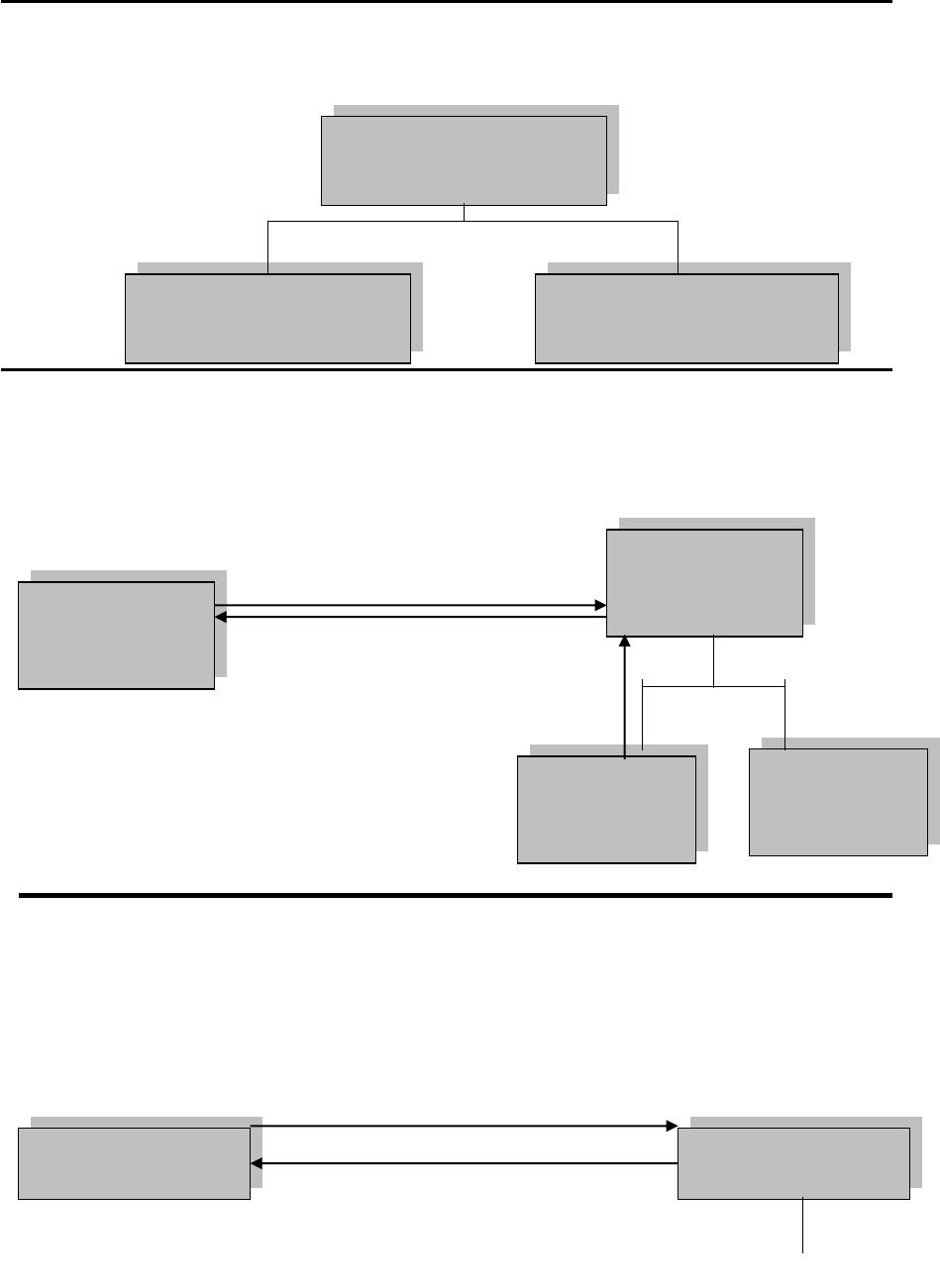
The multi-step process for implementing this transaction is illustrated in the following diagrams. From a legal perspective, all these
actions occur concurrently.
Step 1: Schering-Plough renamed Merck (denoted in the diagrams as “New Merck”)
a. Schering-Plough creates two wholly-owned merger subs
b. Schering-Plough transfers cash provided by Merck and newly issued “New Merck” stock
into Merger Sub 1 and only “New Merck” stock into Merger Sub 2.
Step 2: Schering-Plough Merger:
a. Merger Sub 1 merges into Schering-Plough in a reverse merger with Schering-Plough
surviving
b. To compensate shareholders, Schering-Plough shareholders exchange their
shares for cash and stock in “New Merck”
c. Former Schering-Plough shareholders now hold stock in “New Merck”
Step 3: Merck Merger:
a. Merger Sub 2 merges into Merck with Merck surviving
b. To compensate shareholders, Merck shareholders exchange their shares for
shares in “New Merck”
c. Former shareholders in Merck now hold shares in “New Merck” (i.e.,
a renamed Schering-Plough)
d, Merger Sub 2, a subsidiary of “New Merck,” now owns Merck.
“New Merck”
(Schering Plough)
Merger Sub 2 (Holds “New
Merck” Stock only)
Merger Sub 1 (Holds Cash
and “New Merck” Stock)
Schering-Plough
Shareholders
“New Merck”
(Schering-Plough)
Merger Sub 1
(Merged into
Parent)
Merger Sub 2
(Holds “New
Merck Stock)
$10.50 Cash + .5767 Shares of
“New Merck” Common
1 Share of Schering-Plough
Common
Merck Shareholders
“New Merck”
(Schering-Plough)
1 Share of “New Merck” common
1 Share of Merck Common
Merger
19
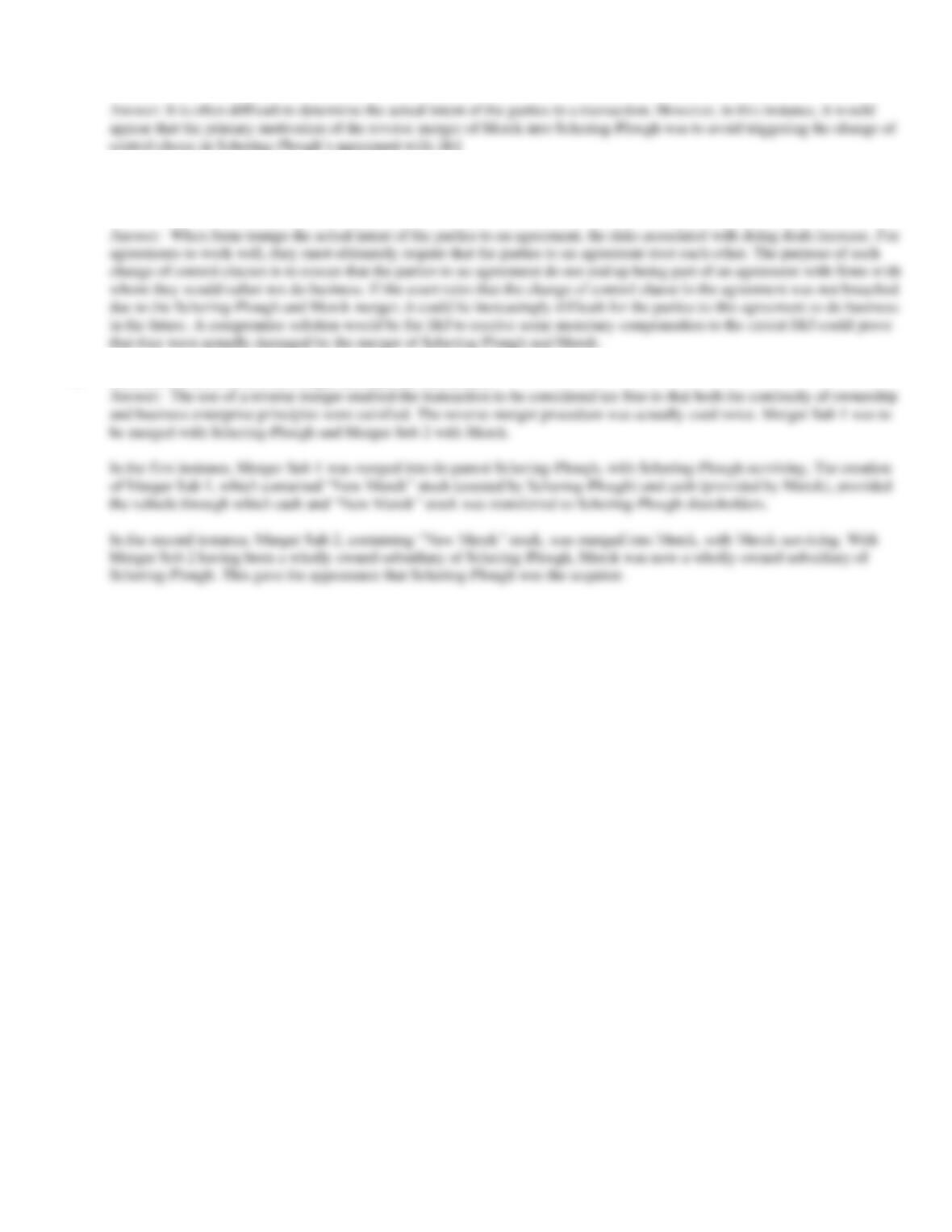
Combined Company Resulting from Steps 1-3
Concluding Comments
In reality, Merck was the acquirer. Merck provided the money to purchase Schering-Plough, and Richard Clark, Merck’s chairman and
CEO, will run the newly combined firm when Fred Hassan, Schering-Plough’s CEO, steps down. The new firm has been renamed Merck
to reflect its broader brand recognition. Three–fourths of the new firm’s board consists of former Merck directors, with the remainder
coming from Schering-Plough’s board. These factors would give Merck effective control of the combined Merck and Schering-Plough
operations. Finally, former Merck shareholders own almost 70 percent of the outstanding shares of the combined companies.
J&J initiated legal action in August 2009, arguing that the transaction was a conventional merger and, as such, triggered the change of
control provision in its partnership agreement with Schering-Plough. Schering-Plough argued that the reverse merger bypasses the change
of control clause in the agreement, and, consequently, J&J could not terminate the joint venture. In the past, U.S. courts have tended to
focus on the form rather than the spirit of a transaction. The implications of the form of a transaction are usually relatively explicit, while
determining what was actually intended (i.e., the spirit) in a deal is often more subjective.
In late 2010, an arbitration panel consisting of former federal judges indicated that a final ruling would be forthcoming in 2011.
Potential outcomes could include J&J receiving rights to Remicade with damages to be paid by Merck; a finding that the merger did not
constitute a change in control, which would keep the distribution agreement in force; or a ruling allowing Merck to continue to sell
Remicade overseas but providing for more royalties to J&J.
Discussion Questions
Discussion Questions:
1. Do you agree with the argument that the courts should focus on the form or structure of an agreement and not try to interpret
the actual intent of the parties to the transaction? Explain your answer.
Merck
Merger Sub 2
Former Merck Shareholders
Merck
“New Merck”
(Schering-Plough)
Former Schering-Plough
Shareholders
20
2. How might allowing the form of a transaction to override the actual spirit or intent of the deal impact the cost of doing business
for the parties involved in the distribution agreement? Be specific.
3. How did the use of a reverse merger facilitate the transaction?
Cablevision Uses Tax Benefits to Help Justify the Price Paid for Bresnan Communications
In mid-2010, Cablevision Systems announced that it had reached an agreement to buy privately owned Bresnan Communications for
$1.37 billion in a cash for stock deal. CVS’ motivation for the deal reflected the board’s belief that the firm’s shares were undervalued
and their desire to expand coverage into the western United States.
CVS is the most profitable cable operator in the industry in terms of operating profit margins, due primarily to the firm’s heavily
concentrated customer base in the New York City area. Critics immediately expressed concern that the acquisition would provide few
immediate cost savings and relied almost totally on increasing the amount of revenue generated by Bresnan’s existing customers.
CVS saw an opportunity to gain market share from satellite TV operators providing services in BC’s primary geographic market.
Bresnan, the nation’s 13th largest cable operator, serves Colorado, Montana, Wyoming, and Utah. CVS believes it can sell bundles of
services, including Internet and phone services, to current Bresnan customers. Bresnan’s primary competition comes from DirecTV and
DISH Network, which cannot offer phone and Internet access services.
In order to gain shareholder support, CVS announced a $500 million share repurchase to placate shareholders seeking a return of cash.
The deal was financed by a $1 billion nonrecourse loan and $370 in cash from Cablevision. CVS points out that the firm’s direct
investment in BC will be more than offset by tax benefits resulting from the structure of the deal in which both Cablevision and Bresnan
agreed to treat the purchase of Bresnan’s stock as an asset purchase for tax reporting purposes (i.e., a 338 election). Consequently, CVS
will be able to write up the net acquired Bresnan assets to their fair market value and use the resulting additional depreciation to generate
significant future tax savings. Such future tax savings are estimated by CVS to have a net present value of approximately $400 million
Discussion Question:
1. How is the 338 election likely to impact Cablevision System’s earnings per share immediately following closing? Why?
2. As an analyst, how would you determine the impact of the anticipated tax benefits on the value of the firm?
3. What is the primary risk to realizing the full value of the anticipated tax benefits?
Teva Pharmaceuticals Buys Ivax Corporation
21
Teva Pharmaceutical Industries’, a manufacturer and distributor of generic drugs, takeover of Ivax Corp for $7.4 billion created the
world’s largest manufacturer of generic drugs. For Teva, based in Israel, and Ivax, headquartered in Miami, the merger eliminated a large
competitor and created a distribution chain that spans 50 countries.
To broaden the appeal of the proposed merger, Teva offered Ivax shareholders the option to receive for each of their shares either
0.8471 of American depository receipts (ADRs) representing Teva shares or $26 in cash. ADRs represent the receipt given to U.S.
investors for the shares of a foreign-based corporation held in the vault of a U.S. bank. Ivax shareholders wanting immediate liquidity
chose to exchange their shares for cash, while those wanting to participate in future appreciation of Teva stock exchanged their shares for
Teva shares.
At closing, each outstanding share of Ivax common stock was cancelled. Each cancelled share represented the right to receive either of
these two previously mentioned payment options. The merger agreement also provided for the acquisition of Ivax by Teva through a
merger of Merger Sub, a newly formed and wholly-owned subsidiary of Teva, into Ivax. As the surviving corporation, Ivax would be a
wholly-owned subsidiary of Teva. The merger involving the exchange of Teva ADRs for Ivax shares was considered as tax–free for those
Ivax shareholders receiving Teva stock under U.S. law as it consisted of predominately acquirer shares.
Case Study. JDS Uniphase–SDL Merger Results in Huge Write-Off
What started out as the biggest technology merger in history up to that point saw its value plummet in line with the declining stock
market, a weakening economy, and concerns about the cash-flow impact of actions the acquirer would have to take to gain regulatory
approval. The $41 billion mega-merger, proposed on July 10, 2000, consisted of JDS Uniphase (JDSU) offering 3.8 shares of its stock for
each share of SDL’s outstanding stock. This constituted an approximate 43% premium over the price of SDL’s stock on the
announcement date. The challenge facing JDSU was to get Department of Justice (DoJ) approval of a merger that some feared would
result in a supplier (i.e., JDS Uniphase–SDL) that could exercise enormous pricing power over the entire range of products from raw
components to packaged products purchased by equipment manufacturers. The resulting regulatory review lengthened the period between
the signing of the merger agreement between the two companies and the actual closing to more than 7 months. The risk to SDL
shareholders of the lengthening of the time between the determination of value and the actual receipt of the JDSU shares at closing was
that the JDSU shares could decline in price during this period.
Given the size of the premium, JDSU’s management was unwilling to protect SDL’s shareholders from this possibility by providing a
“collar” within which the exchange ratio could fluctuate. The absence of a collar proved particularly devastating to SDL shareholders,
which continued to hold JDSU stock well beyond the closing date. The deal that had been originally valued at $41 billion when first
announced more than 7 months earlier had fallen to $13.5 billion on the day of closing.
JDSU manufactures and distributes fiber-optic components and modules to telecommunication and cable systems providers
worldwide. The company is the dominant supplier in its market for fiber-optic components. In 1999, the firm focused on making only
certain subsystems needed in fiber-optic networks, but a flurry of acquisitions has enabled the company to offer complementary products.
JDSU’s strategy is to package entire systems into a single integrated unit. This would reduce the number of vendors that fiber optic
network firms must deal with when purchasing systems that produce the light that is transmitted over fiber. SDL’s products, including
pump lasers, support the transmission of data, voice, video, and internet information over fiber-optic networks by expanding their fiber–
optic communications networks much more quickly and efficiently than would be possible using conventional electronic and optical
technologies. SDL had approximately 1700 employees and reported sales of $72 million for the quarter ending March 31, 2000.
As of July 10, 2000, JDSU had a market value of $74 billion with 958 million shares outstanding. Annual 2000 revenues amounted to
$1.43 billion. The firm had $800 million in cash and virtually no long-term debt. Including one-time merger-related charges, the firm
recorded a loss of $905 million. With its price–to-earnings (excluding merger-related charges) ratio at a meteoric 440, the firm sought to
use stock to acquire SDL, a strategy that it had used successfully in eleven previous acquisitions. JDSU believed that a merger with SDL
would provide two major benefits. First, it would add a line of lasers to the JDSU product offering that strengthened signals beamed
across fiber-optic networks. Second, it would bolster JDSU’s capacity to package multiple components into a single product line.
Regulators expressed concern that the combined entities could control the market for a specific type of pump laser used in a wide
range of optical equipment. SDL is one of the largest suppliers of this type of laser, and JDS is one of the largest suppliers of the chips
used to build them. Other manufacturers of pump lasers, such as Nortel Networks, Lucent Technologies, and Corning, complained to
regulators that they would have to buy some of the chips necessary to manufacture pump lasers from a supplier (i.e., JDSU), which in
combination with SDL, also would be a competitor.
As required by the Hart–Scott–Rodino (HSR) Antitrust Improvements Act of 1976, JDSU had filed with the DoJ seeking regulatory
approval. On August 24 th, the firm received a request for additional information from the DoJ, which extended the HSR waiting period.
On February 6, JDSU agreed as part of a consent decree to sell a Swiss subsidiary, which manufactures pump laser chips, to Nortel
Networks Corporation, a JDSU customer, to satisfy DoJ concerns about the proposed merger. The divestiture of this operation set up an

alternative supplier of such chips, thereby alleviating concerns expressed by other manufacturers of pump lasers that they would have to
buy such components from a competitor.
On July 9, 2000, the boards of both JDSU and SDL unanimously approved an agreement to merge SDL with a newly formed, wholly
owned subsidiary of JDS Uniphase, K2 Acquisition, Inc. K2 Acquisition, Inc. was created by JDSU as the acquisition vehicle to complete
the merger. In a reverse triangular merger, K2 Acquisition Inc. was merged into SDL, with SDL as the surviving entity. The post-closing
organization consisted of SDL as a wholly owned subsidiary of JDS Uniphase. The form of payment consisted of exchanging JDSU
common stock for SDL common shares. The share exchange ratio was 3.8 shares of JDSU stock for each SDL common share
outstanding. Instead of a fraction of a share, each SDL stockholder received cash, without interest, equal to dollar value of the fractional
share at the average of the closing prices for a share of JDSU common stock for the 5 trading days before the completion of the merger.
Under the rules of the NASDAQ National Market, on which JDSU’s shares are traded, JDSU is required to seek stockholder approval
for any issuance of common stock to acquire another firm. This requirement is triggered if the amount issued exceeds 20% of its issued
and outstanding shares of common stock and of its voting power. In connection with the merger, both SDL and JDSU received fairness
opinions from advisors employed by the firms.
The merger agreement specified that the merger could be consummated when all of the conditions stipulated in the agreement were
either satisfied or waived by the parties to the agreement. Both JDSU and SDL were subject to certain closing conditions. Such conditions
were specified in the September 7, 2000 S4 filing with the SEC by JDSU, which is required whenever a firm intends to issue securities to
the public. The consummation of the merger was to be subject to approval by the shareholders of both companies, the approval of the
regulatory authorities as specified under the HSR, and any other foreign antitrust law that applied. For both parties, representations and
warranties (statements believed to be factual) must have been found to be accurate and both parties must have complied with all of the
agreements and covenants (promises) in all material ways.
The following are just a few examples of the 18 closing conditions found in the merger agreement. The merger is structured so that
JDSU and SDL’s shareholders will not recognize a gain or loss for U.S. federal income tax purposes in the merger, except for taxes
payable because of cash received by SDL shareholders for fractional shares. Both JDSU and SDL must receive opinions of tax counsel
that the merger will qualify as a tax-free reorganization (tax structure). This also is stipulated as a closing condition. If the merger
agreement is terminated as a result of an acquisition of SDL by another firm within 12 months of the termination, SDL may be required to
pay JDSU a termination fee of $1 billion. Such a fee is intended to cover JDSU’s expenses incurred as a result of the transaction and to
discourage any third parties from making a bid for the target firm.
Despite dramatic cost-cutting efforts, the company reported a loss of $7.9 billion for the quarter ending June 31, 2001 and $50.6 billion
for the 12 months ending June 31, 2001. This compares to the projected pro forma loss reported in the September 9, 2000 S4 filing of
$12.1 billion. The actual loss was the largest annual loss ever reported by a U.S. firm up to that time. The fiscal year 2000 loss included a
reduction in the value of goodwill carried on the balance sheet of $38.7 billion to reflect the declining market value of net assets acquired
during a series of previous transactions. Most of this reduction was related to goodwill arising from the merger of JDS FITEL and
Uniphase and the subsequent acquisitions of SDL, E-TEK, and OCLI..
The stock continued to tumble in line with the declining fortunes of the telecommunications industry such that it was trading as low as
$7.5 per share by mid-2001, about 6% of its value the day the merger with SDL was announced. Thus, the JDS Uniphase–SDL merger
was marked by two firsts—the largest purchase price paid for a pure technology company and the largest write-off (at that time) in
history. Both of these infamous “firsts” occurred within 12 months.
Case Study Discussion Questions
1. What is goodwill? How is it estimated? Why did JDS Uniphase write down the value of its goodwill in 2001? Why does this
reflect a series of poor management decisions with respect to mergers completed between 1999 and early 2001?
23
2. How might the use of stock, as an acquisition “currency,” have contributed to the sustained decline in JDS Uniphase’s stock
through mid-2001? In your judgment what is the likely impact of the glut of JDS Uniphase shares in the market on the future
appreciation of the firm’s share price? Explain your answer.
3. What are the primary differences between a forward and a reverse triangular merger? Why might JDS Uniphase have chosen to
merge its K2 Acquisition Inc. subsidiary with SDL in a reverse triangular merger? Explain your answer.
4. Discuss various methodologies you might use to value assets acquired from SDL such as existing technologies, “core”
technologies, trademarks and trade names, assembled workforce, and deferred compensation?
5. Why do boards of directors of both acquiring and target companies often obtain so–called “fairness opinions” from outside
investment advisors or accounting firms? What valuation methodologies might be employed in constructing these opinions?
Should stockholders have confidence in such opinions? Why/why not?
Consolidation in the Wireless Communications Industry:
Vodafone Acquires AirTouch
.
Deregulation of the telecommunications industry has resulted in increased consolidation. In Europe, rising competition is the catalyst
driving mergers. In the United States, the break up of AT&T in the mid-1980s and the subsequent deregulation of the industry has led to
key alliances, JVs, and mergers, which have created cellular powerhouses capable of providing nationwide coverage. Such coverage is
being achieved by roaming agreements between carriers and acquisitions by other carriers. Although competition has been heightened as
a result of deregulation, the telecommunications industry continues to be characterized by substantial barriers to entry. These include the
requirement to obtain licenses and the need for an extensive network infrastructure. Wireless communications continue to grow largely at
24
the expense of traditional landline services as cellular service pricing continues to decrease. Although the market is likely to continue to
grow rapidly, success is expected to go to those with the financial muscle to satisfy increasingly sophisticated customer demands. What
follows is a brief discussion of the motivations for the merger between Vodafone and AirTouch Communications. This discussion
includes a description of the key elements of the deal structure that made the Vodafone offer more attractive than a competing offer from
Bell Atlantic.
Vodafone
Company History
Vodafone is a wireless communications company based in the United Kingdom. The company is located in 13 countries in Europe,
Africa, and Australia/New Zealand. Vodafone reaches more than 9.5 million subscribers. It has been the market leader in the United
Kingdom since 1986 and as of 1998 had more than 5 million subscribers in the United Kingdom alone. The company has been very
successful at marketing and selling prepaid services in Europe. Vodafone also is involved in a venture called Globalstar, LP, a limited
partnership with Loral Space and Communications and Qualcomm, a phone manufacturer. “Globalstar will construct and operate a
worldwide, satellite-based communications system offering global mobile voice, fax, and data communications in over 115 countries,
covering over 85% of the world’s population”.
Strategic Intent
Vodafone’s focus is on global expansion. They are expanding through partnerships and by purchasing licenses. Notably, Vodafone lacked
a significant presence in the United States, the largest mobile phone market in the world. For Vodafone to be considered a truly global
company, the firm needed a presence in the Unites States. Vodafone’s strategy is focused on maintaining high growth levels in its markets
and increasing profitability; maintaining their current customer base; accelerating innovation; and increasing their global presence through
acquisitions, partnerships, or purchases of new licenses. Vodafone’s current strategy calls for it to merge with a company with substantial
market share in the United States and Asia, which would fill several holes in Vodafone’s current geographic coverage.
Company Structure
The company is very decentralized. The responsibilities of the corporate headquarters in the United Kingdom lie in developing corporate
strategic direction, compiling financial information, reporting and developing relationships with the various stock markets, and evaluating
new expansion opportunities. The management of operations is left to the countries’ management, assuming business plans and financial
measures are being met. They have a relatively flat management structure. All of their employees are shareowners in the company. They
have very low levels of employee turnover, and the workforce averages 33 years of age.
AirTouch
Company History
AirTouch Communications launched it first cellular service network in 1984 in Los Angeles during the opening ceremonies at the 1984
Olympics. The original company was run under the name PacTel Cellular, a subsidiary of Pacific Telesis. In 1994, PacTel Cellular spun
off from Pacific Telesis and became AirTouch Communications, under the direction of Chair and Chief Executive Officer Sam Ginn.
Ginn believed that the most exciting growth potential in telecommunications is in the wireless and not the landline services segment of the
industry. In 1998, AirTouch operated in 13 countries on three continents, serving more than 12 million customers, as a worldwide carrier
of cellular services, personal communication services (PCS), and paging services. AirTouch has chosen to compete on a global front
through various partnerships and JVs. Recognizing the massive growth potential outside the United States, AirTouch began their global
strategy immediately after the spin-off.
Strategic Intent
AirTouch has chosen to differentiate itself in its domestic regions based on the concept of “Superior Service Delivery.” The company’s
focus is on being available to its customers 24 hours a day, 7 days a week and on delivering pricing options that meet the customer’s
needs. AirTouch allows customers to change pricing plans without penalty. The company also emphasizes call clarity and quality and
extensive geographic coverage. The key challenges AirTouch faces on a global front is in reducing churn (i.e., the percentage of
customers leaving), implementing improved digital technology, managing pressure on service pricing, and maintaining profit margins by
focusing on cost reduction. Other challenges include creating a domestic national presence.
Company Structure

25
AirTouch is decentralized. Regions have been developed in the U.S. market and are run autonomously with respect to pricing decisions,
marketing campaigns, and customer care operations. Each region is run as a profit center. Its European operations also are run
independently from each other to be able to respond to the competitive issues unique to the specific countries. All employees are
shareowners in the company, and the average age of the workforce is in the low to mid-30s. Both companies are comparable in terms of
size and exhibit operating profit margins in the mid-to-high teens. AirTouch has substantially less leverage than Vodafone.
Merger Highlights
Vodafone began exploratory talks with AirTouch as early as 1996 on a variety of options ranging from partnerships to a merger. Merger
talks continued informally until late 1998 when they were formally broken off. Bell Atlantic, interested in expanding its own mobile
phone business’s geographic coverage, immediately jumped into the void by proposing to AirTouch that together they form a new
wireless company. In early 1999, Vodafone once again entered the fray, sparking a sharp takeover battle for AirTouch. Vodafone
emerged victorious by mid-1999.
Motivation for the Merger
Shared Vision
The merger would create a more competitive, global wireless telecommunications company than either company could achieve
separately. Moreover, both firms shared the same vision of the telecommunications industry. Mobile telecommunications is believed to be
the among the fastest-growing segment of the telecommunications industry, and over time mobile voice will replace large amounts of
telecommunications traffic carried by fixed-line networks and will serve as a major platform for voice and data communication. Both
companies believe that mobile penetration will reach 50% in developed countries by 2003 and 55% and 65% in the United States and
developed European countries, respectively, by 2005.
Complementary Assets
Scale, operating strength, and complementary assets were given as compelling reasons for the merger. The combination of AirTouch and
Vodafone would create the largest mobile telecommunication company at the time, with significant presence in the United Kingdom,
United States, continental Europe, and Asian Pacific region. The scale and scope of the operations is expected to make the combined
firms the vendor of choice for business travelers and international corporations. Interests in operations in many countries will make
Vodafone AirTouch more attractive as a partner for other international fixed and mobile telecommunications providers. The combined
scale of the companies also is expected to enhance its ability to develop existing networks and to be in the forefront of providing
technologically advanced products and services.
Synergy
Anticipated synergies include after-tax cost savings of $340 million annually by the fiscal year ending March 31, 2002. The estimated net
present value of these synergies is $3.6 billion discounted at 9%. The cost savings arise from global purchasing and operating efficiencies,
including volume discounts, lower leased line costs, more efficient voice and data networks, savings in development and purchase of
third-generation mobile handsets, infrastructure, and software. Revenues should be enhanced through the provision of more international
coverage and through the bundling of services for corporate customers that operate as multinational businesses and business travelers.
AirTouch’s Board Analyzes Options
Morgan Stanley, AirTouch’s investment banker, provided analyses of the current prices of the Vodafone and Bell Atlantic stocks, their
historical trading ranges, and the anticipated trading prices of both companies’ stock on completion of the merger and on redistribution of
the stock to the general public. Both offers were structured so as to constitute essentially tax-free reorganizations. The Vodafone proposal
would qualify as a Type A reorganization under the Internal Revenue Service Code; hence, it would be tax-free, except for the cash
portion of the offer, for U.S. holders of AirTouch common and holders of preferred who converted their shares before the merger. The
Bell Atlantic offer would qualify as a Type B tax-free reorganization. Table 1 highlights the primary characteristics of the form of
payment (total consideration) of the two competing offers.
Table 1. Comparison of Form of Payment/Total Consideration
Vodafone
Bell Atlantic
5 shares of Vodafone common plus $9 for each
share of AirTouch common
1.54 shares of Bell Atlantic for each share of AirTouch common
subject to the transaction being treated as a pooling of interest under

26
U.S. GAAP.
Share exchange ratio adjusted upward 9 months out to reflect the
payment of dividends on the Bell Atlantic stock.
A share exchange ratio collar would be used to ensure that AirTouch
shareholders would receive shares valued at $80.08. If the average
closing price of Bell Atlantic stock were less than $48, the exchange
ratio would be increased to 1.6683. If the price exceeded $52, the
exchange rate would remain at 1.54.1
1The collar guarantees the price of Bell Atlantic stock for the AirTouch shareholders because $48 1.6683 and $52 1.54
both equal $80.08.
Morgan Stanley’s primary conclusions were as follows:
1. Bell Atlantic had a current market value of $83 per share of AirTouch stock based on the $53.81 closing price of Bell Atlantic common
stock on January 14, 1999. The collar would maintain the price at $80.08 per share if the price of Bell Atlantic stock during a specified
period before closing were between $48 and $52 per share.
2. The Vodafone proposal had a current market value of $97 per share of AirTouch stock based on Vodafone’s ordinary shares (i.e.,
common) on January 17, 1999.
3. Following the merger, the market value of the Vodafone American Depository Shares (ADSs) to be received by AirTouch shareholders
under the Vodafone proposal could decrease.
4. Following the merger, the market value of Bell Atlantic’s stock also could decrease, particularly in light of the expectation that the
proposed transaction would dilute Bell Atlantic’s EPS by more than 10% through 2002.
In addition to Vodafone’s higher value, the board tended to favor the Vodafone offer because it involved less regulatory uncertainty.
As U.S. corporations, a merger between AirTouch and Bell Atlantic was likely to receive substantial scrutiny from the U.S. Justice
Department, the Federal Trade Commission, and the FCC. Moreover, although both proposals could be completed tax-free, except for the
small cash component of the Vodafone offer, the Vodafone offer was not subject to achieving any specific accounting treatment such as
pooling of interests under U.S. generally accepted accounting principles (GAAP).
Recognizing their fiduciary responsibility to review all legitimate offers in a balanced manner, the AirTouch board also considered a
number of factors that made the Vodafone proposal less attractive. The failure to do so would no doubt trigger shareholder lawsuits. The
major factors that detracted from the Vodafone proposal were that it would not result in a national presence in the United States, the
higher volatility of its stock, and the additional debt Vodafone would have to assume to pay the cash portion of the purchase price.
Despite these concerns, the higher offer price from Vodafone (i.e., $97 to $83) won the day.
Acquisition Vehicle and Post Closing Organization
In the merger, AirTouch became a wholly owned subsidiary of Vodafone. Vodafone issued common shares valued at $52.4 billion based
on the closing Vodafone ADS on April 20, 1999. In addition, Vodafone paid AirTouch shareholders $5.5 billion in cash. On completion
of the merger, Vodafone changed its name to Vodafone AirTouch Public Limited Company. Vodafone created a wholly owned
subsidiary, Appollo Merger Incorporated, as the acquisition vehicle. Using a reverse triangular merger, Appollo was merged into
AirTouch. AirTouch constituted the surviving legal entity. AirTouch shareholders received Vodafone voting stock and cash for their
AirTouch shares. Both the AirTouch and Appollo shares were canceled. After the merger, AirTouch shareholders owned slightly less than
50% of the equity of the new company, Vodafone AirTouch. By using the reverse merger to convey ownership of the AirTouch shares,
Vodafone was able to ensure that all FCC licenses and AirTouch franchise rights were conveyed legally to Vodafone. However,
Vodafone was unable to avoid seeking shareholder approval using this method. Vodafone ADS’s traded on the New York Stock
Exchange (NYSE). Because the amount of new shares being issued exceeded 20% of Vodafone’s outstanding voting stock, the NYSE
required that Vodafone solicit its shareholders for approval of the proposed merger.
Following this transaction, the highly aggressive Vodafone went on to consummate the largest merger in history in 2000 by combining
with Germany’s telecommunications powerhouse, Mannesmann, for $180 billion. Including assumed debt, the total purchase price paid
by Vodafone AirTouch for Mannesmann soared to $198 billion. Vodafone AirTouch was well on its way to establishing itself as a global
cellular phone powerhouse.
27
Discussion Questions:
1. Did the AirTouch board make the right decision? Why or why not?
2. How valid are the reasons for the proposed merger?
3. What are the potential risk factors related to the merger?
4. Is this merger likely to be tax free, partially tax free, or taxable? Explain your answer.
5. What are some of the challenges the two companies are likely to face while integrating the businesses?
Determining Deal Structuring Components
BigCo has decided to acquire Upstart Corporation, a leading supplier of a new technology believed to be crucial to the successful
implementation of BigCo’s business strategy. Upstart is a relatively recent start-up firm, consisting of about 200 employees averaging
about 24 years of age. HiTech has a reputation for developing highly practical solutions to complex technical problems and getting the
resulting products to market very rapidly. HiTech employees are accustomed to a very informal work environment with highly flexible
hours and compensation schemes. Decision-making tends to be fast and casual, without the rigorous review process often found in larger
firms. This culture is quite different from BigCo’s more highly structured and disciplined environment. Moreover, BigCo’s decision
making tends to be highly centralized.
While Upstart’s stock is publicly traded, its six co-founders and senior managers jointly own about 60 percent of the outstanding stock.
In the four years since the firm went public, Upstart stock has appreciated from $5 per share to its current price of $100 per share.
Although they desire to sell the firm, the co-founders are interested in remaining with the firm in important management positions after
the transaction has closed. They also expect to continue to have substantial input in both daily operating as well as strategic decisions.
Upstart competes in an industry that is only tangentially related to BigCo’s core business. Because BigCo’s senior management
believes they are somewhat unfamiliar with the competitive dynamics of Upstart’s industry, BigCo has decided to create a new
corporation, New Horizons Inc., which is jointly owed by BigCo and HiTech Corporation, a firm whose core technical competencies are
more related to Upstart’s than those of BigCo. Both BigCo and HiTech are interested in preserving Upstart’s highly innovative culture.
Therefore, they agreed during negotiations to operate Upstart as an independent operating unit of New Horizons. During negotiations,
both parties agreed to divest one of Upstart’s product lines not considered critical to New Horizon’s long-term strategy immediately
following closing.
New Horizons issued stock through an initial public offering. While the co-founders are interested in exchanging their stock for New
Horizon’s shares, the remaining Upstart shareholders are leery about the long-term growth potential of New Horizons and demand cash in
exchange for their shares. Consequently, New Horizons agreed to exchange its stock for the co–founders’ shares and to purchase the
remaining shares for cash. Once the tender offer was completed, New Horizons owned 100 percent of Upstart’s outstanding shares.
Discussion Questions:
1. What is the acquisition vehicle used to acquire the target company, Upstart Corporation? Why was this legal structure used?
2. How would you characterize the post-closing organization? Why was this organizational structure used?
3. What is the form of payment? Why was it used?
4. What was the form of acquisition? How does this form of acquisition protect the acquiring company’s rights to HiTech’s
proprietary technology?
5. How would the use of purchase accounting affect the balance sheets of the combined companies?
6. Was the transaction non-taxable, partially taxable, or wholly taxable to HiTech shareholders? Why?