Chapter 10 – Auditing the Revenue Process
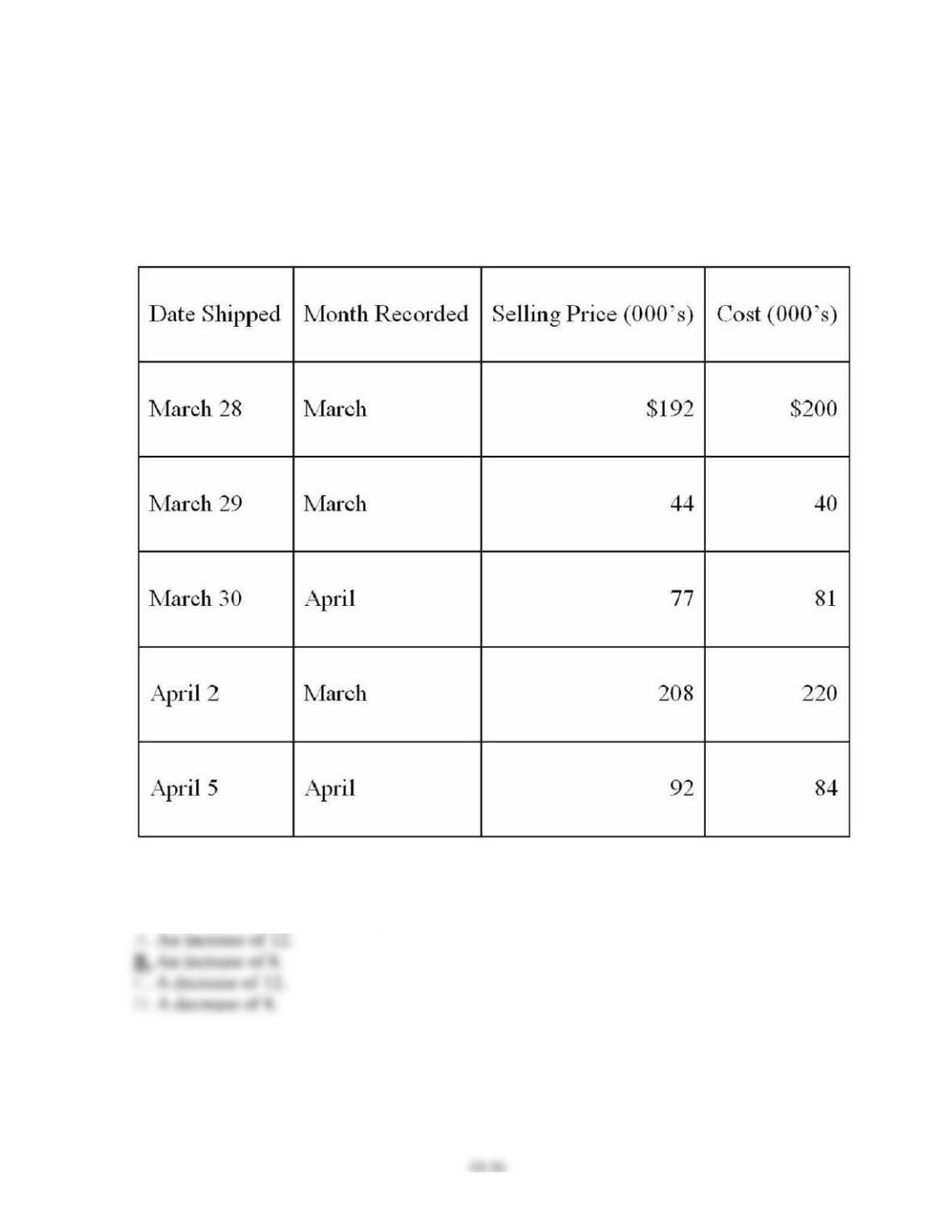
75. An auditor is reviewing sales cutoff as of March 31, 2010. All sales are shipped FOB
destination and the company records sales three days after shipment. The auditor notes the
following transactions:
If the client records the required adjustments, the net effect on income in thousands of dollars
for the period ended March 31, 2011 is
Chapter 10 – Auditing the Revenue Process
76. Customers having substantial year-end past due balances fail to reply after second request
forms have been mailed directly to them. Which of the following is the most appropriate audit
procedure?
77. Which of the following strategies most likely could improve the response rate of the
confirmation of accounts receivable?
Chapter 10 – Auditing the Revenue Process
78. In confirming accounts receivable, an auditor decided to confirm customers’ account
balances rather than individual invoices. Which of the following most likely would be included
with the client’s confirmation letter?
79. When comparing prices and terms on a sample of sales invoices with the authorized price
list and terms of trade, the auditor is testing the ____________ assertion.
Chapter 10 – Auditing the Revenue Process
80. When a sample of sales transactions recorded in the sales journal is traced back to the
customer orders and shipping documents, the auditor is testing the ____________ assertion.
81. When tracing a sample of shipping documents from throughout the year to the details of the
sales invoices and to the sales journal and customers’ accounts receivable subsidiary ledger, the
Chapter 10 – Auditing the Revenue Process
82. When reviewing bank confirmations for any liens on receivables, the auditor is testing the
______________ assertion.
83. Explain how revenue recognition is important to the audit of the revenue process.
Chapter 10 – Auditing the Revenue Process
10–41
84. Listed below are six assertions regarding the financial presentations made in the revenue
process. For each, give an example of how an auditor could use one of the types of documents
contained in the revenue process to test the assertion.
Occurrence
Completeness
Authorization
Accuracy
Cutoff
Classification
Chapter 10 – Auditing the Revenue Process
85. The XYZ Company billing department has decided to assign one employee to each of its
customers. This employee will be responsible for granting credit to the client and then handling
the billing. XYZ believes this will result in better customer service, because the client will only
have to deal with one person and that one person will be very familiar with the credit terms. As
an auditor, would you agree with XYZ’s decision?
Chapter 10 – Auditing the Revenue Process
86. What inherent risk factors should an auditor consider when auditing the revenue process of
a computer manufacturer?
87. Assume an account receivable confirmation is returned with a note to the auditor describing
a difference between your client’s records and the customer’s records. Clearly describe below
two potential non-misstatement timing differences that could cause a discrepancy between a
client’s receivable records and his/her customer’s records. The timing differences you describe
should be such that after investigation you would determine that your client’s receivable
balance is not misstated due to these differences.
Chapter 10 – Auditing the Revenue Process
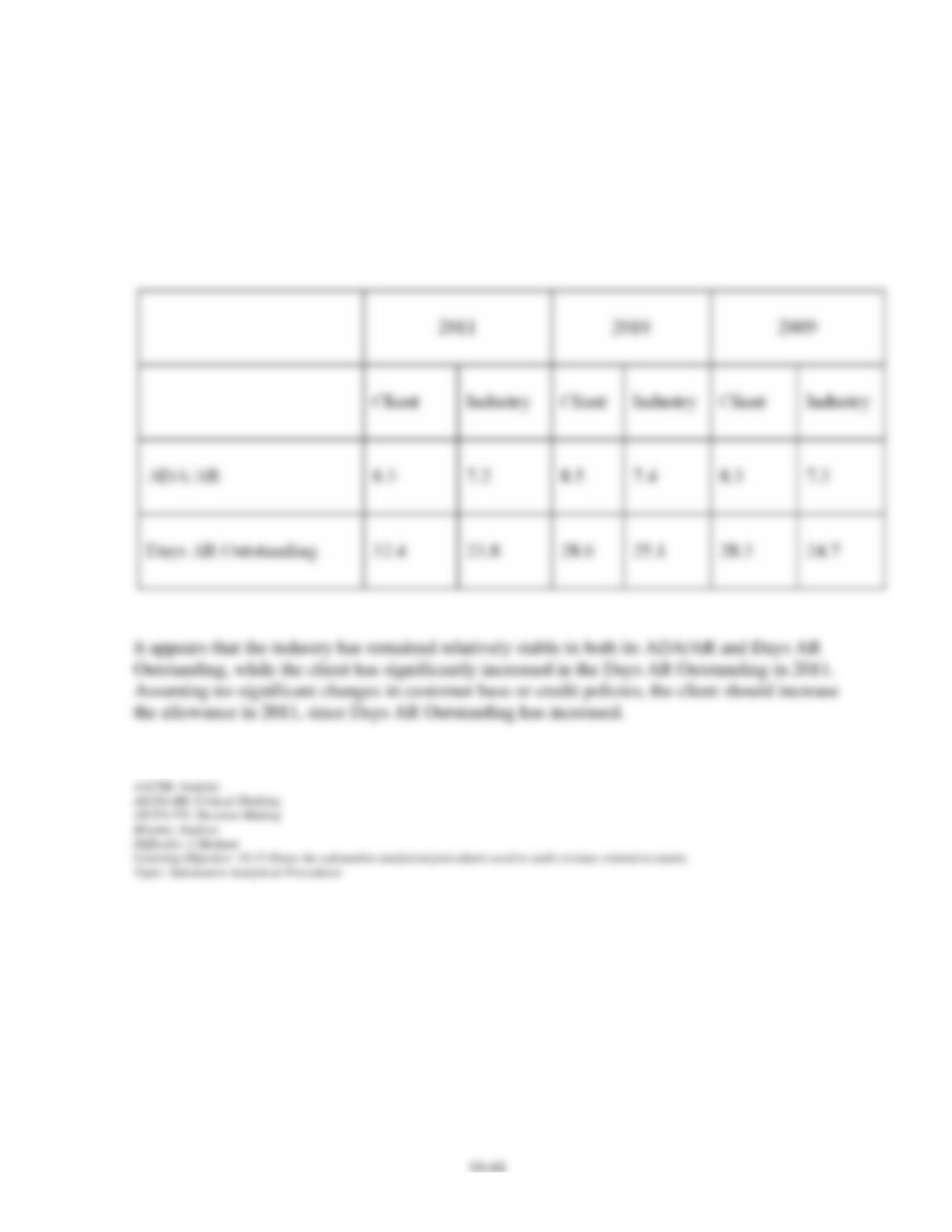
88. You are auditing the allowance for doubtful accounts (ADA) and perform the analytical
procedures shown below. Assume that no significant changes have occurred during the year in
either the client’s credit policies or customer base. What concerns, if any, about adjusting the
ADA should the auditor have based on the information shown below?
Chapter 10 – Auditing the Revenue Process
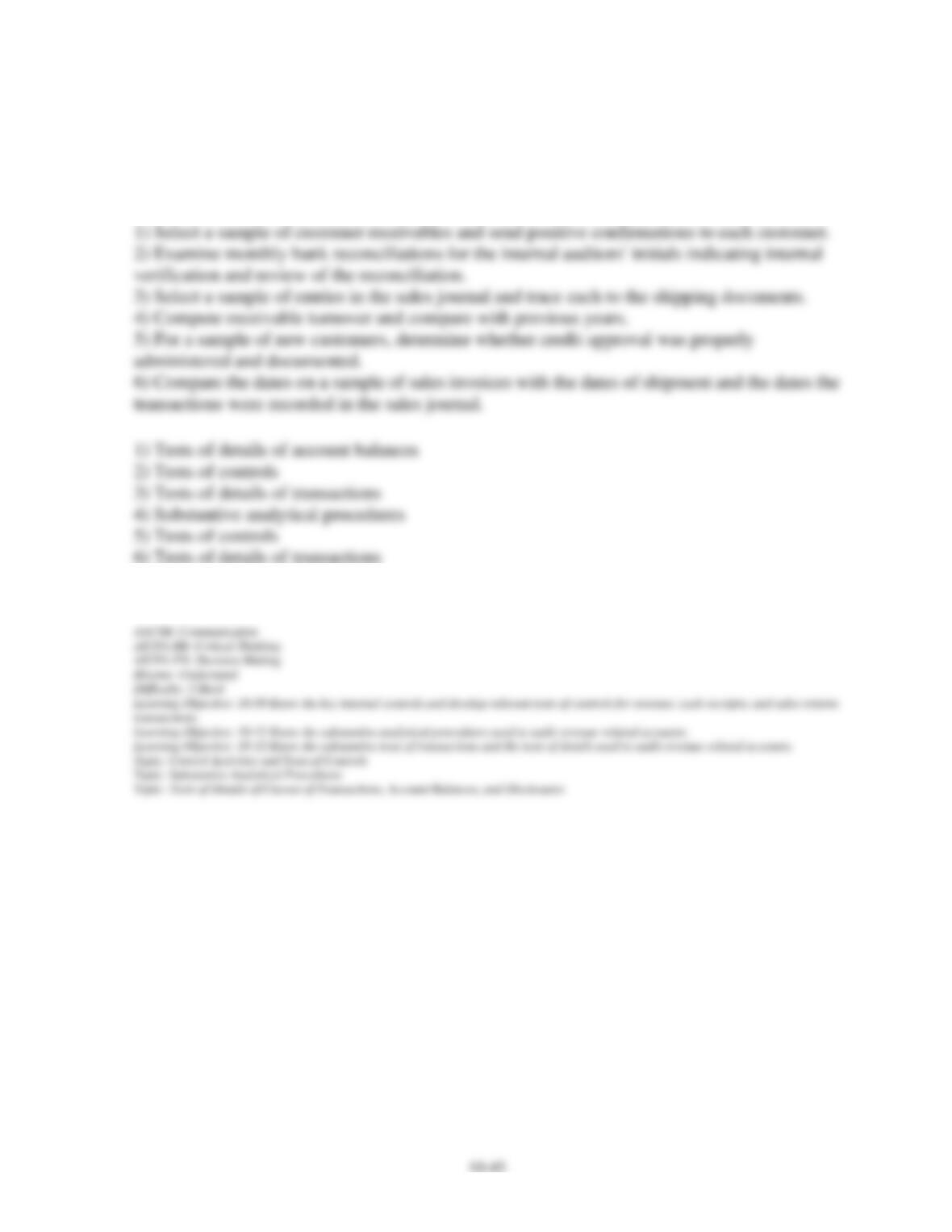
89. Identify whether the following tests are tests of controls, substantive analytical procedures,
tests of details of transactions, or tests of details of account balances:
Chapter 10 – Auditing the Revenue Process
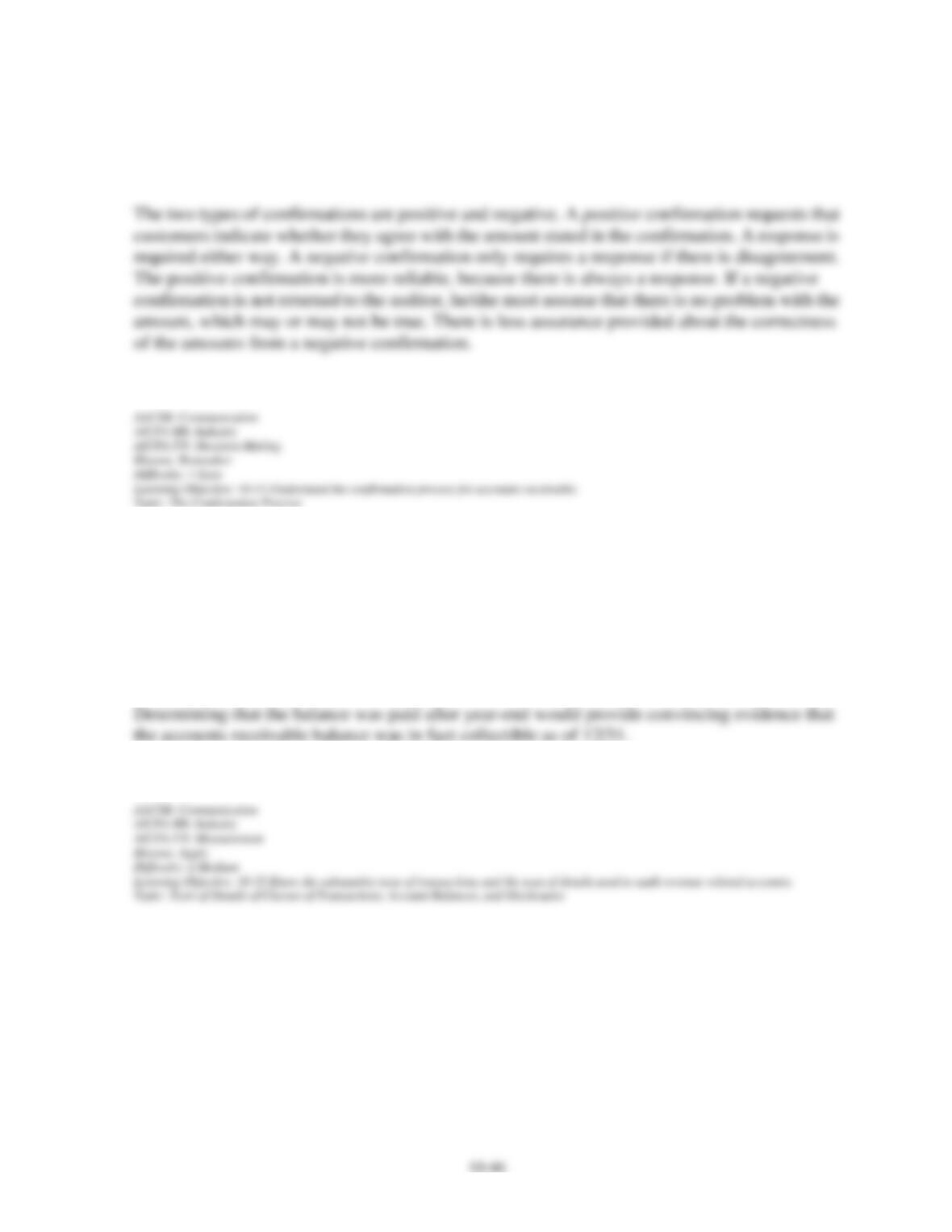
90. Describe the two types of confirmations and indicate which one is more reliable and why.
91. Assume you are working on a 12/31 year-end audit. It is now March 31st and the 12/31
accounts receivable aging shows a large receivable that was outstanding on 12/31 for 120 days.
Further, the client’s receivables are typically collected in less than 45 days. You anticipate that
the client’s allowance for doubtful account should be increased and inform the client about your
disposition. The client disagrees. Is there an alternative substantive procedure that you could
perform that would provide convincing evidence that this balance is collectible? If so, explain.
Chapter 10 – Auditing the Revenue Process
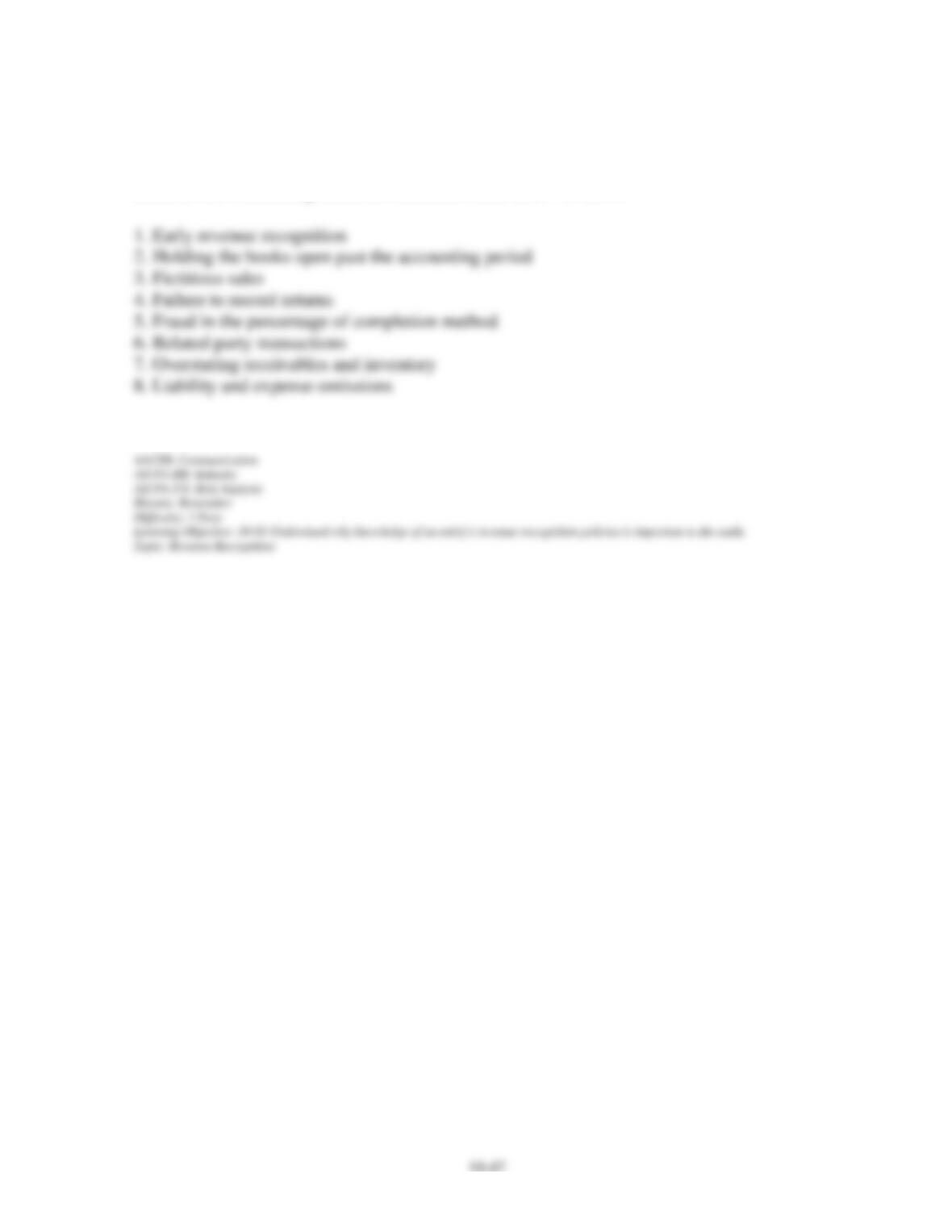
92. According to the Association of Certified Fraud Examiners, there are eight common
methods for committing financial statement fraud. List 4 of the 8.
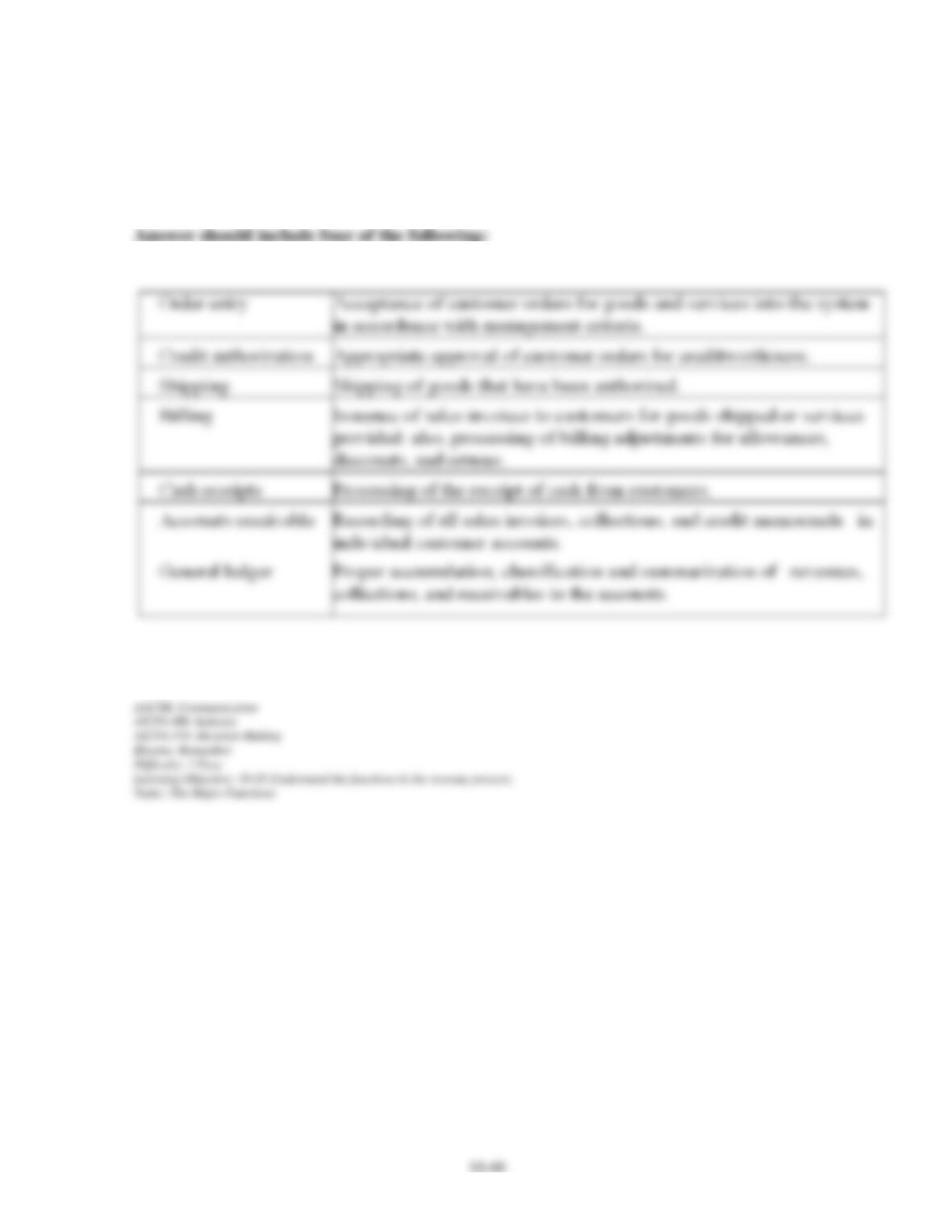
Chapter 10 – Auditing the Revenue Process
93. Identify four of the seven primary functions in the revenue cycle and describe each
function.
Chapter 10 – Auditing the Revenue Process
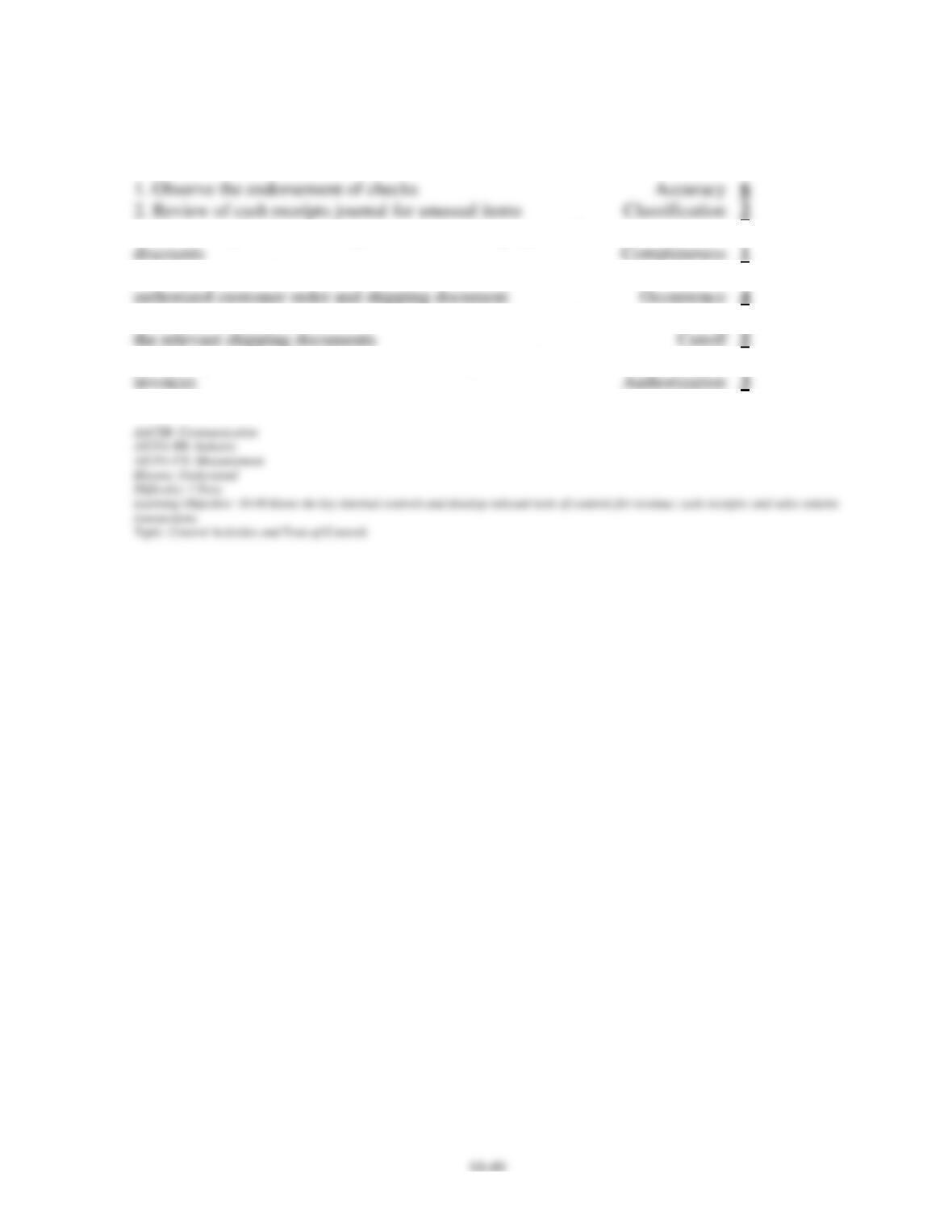
94. Match the test of controls described below to the appropriate assertion it is used to test:
3. Test a sample of cash receipts transactions for proper cash
4. Test a sample of sales invoices for the presence of
5. Compare the dates on the sales invoices with the dates of
6. Recompute financial information on a sample of sales