
The theory of purchasing power parity
(a) extends the law of one price to a group of goods.
(b) assumes that most changes in nominal exchange rates are the result of changes in
real exchange rates.
(c) assumes that inflation rates are roughly the same in most countries.
(d) was valid only under the gold standard.
Answer:
U.S. Treasury bills
(a) have the largest trading volume of any money market asset.
(b) have a default risk slightly greater than that of corporate bonds.
(c) have a maturity of at least two years.
(d) may only be purchased directly from the federal government.
Answer:
In the 1980s and 1990s, the United States
(a) was essentially a closed economy.

(b) was generally a net borrower of foreign funds.
(c) was generally a net lender abroad.
(d) experienced a net outflow of savings.
Answer:
The result of the supply shocks of 19731974 was to
(a) reduce aggregate output and raise the price level.
(b) reduce the price level and raise aggregate output.
(c) reduce both aggregate output and the price level.
(d) raise both aggregate output and the price level.
Answer:
The difference between a savings deposit and a time deposit is
(a) time deposits pay no interest.
(b) savings deposits pay no interest.
(c) time deposits have specified maturities.

(d) savings deposits have specified maturities.
Answer:
The popularity of money market mutual funds during the 1970s is best explained by
(a) the rapid economic growth of that decade.
(b) the repeal of the McFadden Act.
(c) the rise in market interest rates above Regulation Q ceilings.
(d) the rapid increase in federal debt outstanding.
Answer:
Under the efficient markets hypothesis, what would be the price per share of a company
whose current dividend is $10.00 and whose dividends are expected to grow by 3% per
year (assume the risk-adjusted interest rate is 10%)?
(a) $74.62
(b) $79.23
(c) $138.57
(d) $147.14

Answer:
The Federal Reserve pursued an expansionary monetary policy during 1964 in order to
(a) pull the United States out of a deep recession.
(b) counteract the effects of a deep cut in federal income taxes.
(c) keep interest rates from rising.
(d) bring down the inflation rate.
Answer:
What is the price of a coupon bond that has annual coupon payments of $90, a par value
of $1000, a yield to maturity of 10%, and a maturity of two years?
(a) $820.38
(b) $982.64
(c) $1000.00
(d) $1180.00
Answer:

An asset is
(a) the same thing as a liability.
(b) a thing of value that can be owned.
(c) money, as opposed to stock or bonds.
(d) anything that never declines in value.
Answer:
Temporary, short-term discount loans to banks in areas in which agriculture and tourism
are important are known as
(a) primary credit.
(b) secondary credit.
(c) seasonal credit.
(d) repo loans.
Answer:

Which of the following is NOT true of allocating goods and services through a system
of government rationing?
(a) No country has ever actually attempted to allocate goods and services in this way.
(b) Shifts in the costs of producing individual goods and services will not be reflected in
the trade accomplished by rationing.
(c) Shifts in the values that consumers place on different goods and services will not be
reflected in the trade accomplished by rationing.
(d) Incentives to produce are reduced under such a system.
Answer:
Real business cycle analysis differs from both the new classical and the new Keynesian
analyses in holding that
(a) the aggregate supply curve is vertical, even in the short run.
(b) changes in aggregate demand can affect output in the long run.
(c) money is neutral in the long run, but not the short run.
(d) prices are sticky in the short run.
Answer:

Options on securities are regulated by the
(a) CFTC.
(b) Federal Reserve.
(c) SEC.
(d) FBI.
Answer:
Loans by the Federal Reserve to banks are known as
(a) repurchase agreements.
(b) Federal funds.
(c) discount loans.
(d) cash items in the process of collection.
Answer:
The reason that the U.S. economy has experienced long-term inflation since World War
II is
(a) the high tax rates imposed by the federal government.

(b) the large budget deficits run by the federal government.
(c) the rate of growth of the money supply has been too fast relative to the rates of
growth of velocity and output.
(d) the long-run increases in the prices of oil and other basic commodities.
Answer:
Which of the following schools of thought among economists believe that unexpected
changes in the money supply can affect output in the short run?
(a) Only new Keynesian
(b) Only new Keynesian and new classical
(c) Only new Keynesian and real business cycle
(d) New Keynesian, new classical, and real business cycle
Answer:
Disintermediation refers to the
(a) failure of financial intermediaries due to moral hazard problems.
(b) failure of financial intermediaries due to adverse selection problems.

(c) movement of savers and borrowers from banks to financial markets.
(d) removal of government regulations of financial intermediaries.
Answer:
Issuers of coupon bonds
(a) make multiple payments of interest and principal.
(b) make a single payment of interest and principal.
(c) make multiple payments of principal, but a single payment of interest.
(d) make a single payment of principal at the time the bond is issued and multiple
payments of interest over the life of the bond.
Answer:
The simultaneous equilibrium of the money, nonmoney asset, and goods markets is
known as
(a) nominal GDP.
(b) potential GDP.
(c) general equilibrium.

(d) full equilibrium.
Answer:
According to the new classical view, when the actual price level is greater than the
expected price level
(a) aggregate output is above the full employment level.
(b) aggregate output is below the full employment level.
(c) the aggregate supply curve will slope downward.
(d) the coefficient a is equal to zero.
Answer:
Banks responded to their loss of borrowers to the commercial paper market by offering
(a) standby letters of credit.
(b) negotiable certificates of deposit.
(c) NOW accounts.
(d) money market deposit accounts.

Answer:
The theory of portfolio selection leads to the conclusion that
(a) there is one best asset for each investor.
(b) there is one best asset for all investors.
(c) savers should allocate their savings among many different assets.
(d) savers should concentrate their savings in as few assets as possible.
Answer:
Closed-end mutual funds
(a) will always redeem shares issued.
(b) are not obligated to redeem shares issued.
(c) issue shares that always sell at the market value of the underlying assets.
(d) may not hold U.S. government securities in their portfolios.
Answer:

If a futures contract for U.S. Treasury bonds increases by “15” in the financial page
listings, the value of the contract increased by
(a) $15.00.
(b) $468.75.
(c) $2133.33.
(d) $15,000.00.
Answer:
An increase in labor productivity will cause the FE line to
(a) shift to the left.
(b) intersect the IS curve at a higher real interest rate.
(c) intersect the LM curve at a higher real interest rate.
(d) become steeper.
Answer:

In comparing actively managed mutual funds with those funds that simply buy and hold
a large market portfolio (index funds), we would expect that
(a) the actively managed funds provide a higher return than the index funds.
(b) the index funds provide a higher return than the actively managed funds.
(c) actively managed funds and index funds provide the same returns.
(d) index funds provide a lower return than actively managed funds only if taxes are
taken into consideration.
Answer:
Interest is best thought of as
(a) a rental fee on the principal of a debt.
(b) compensation for taxes incurred on an investment.
(c) an example of the exploitation of borrowers by lenders.
(d) in most cases equal to the maturity of the debt.
Answer:
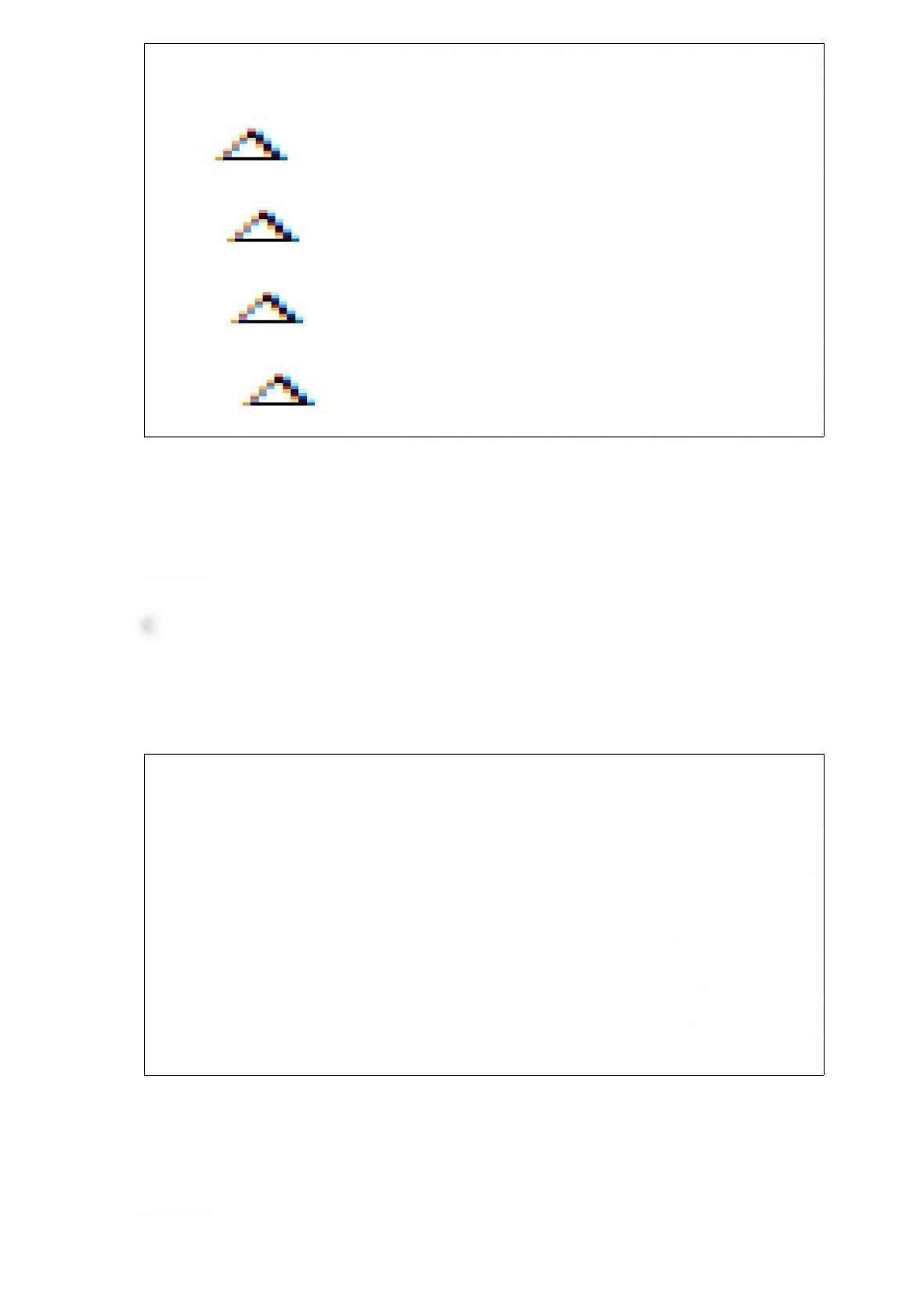
Which of the following is the correct expression for the value of $1 invested in a
foreign security for one year?
(a) 1 if EXe/EX
(b) 1 if+ EXe/EX
(c) 1 + if EXe/EX
(d) 1 + if+ EXe/EX
Answer:
Suppose that your marginal federal income tax rate is 30%, the sum of your marginal
state and local tax rates is 5%, and the yield on thirty-year U.S. Treasury bonds is 10%.
You would be indifferent between buying a thirty-year Treasury bond and buying a
thirty-year municipal bond (ignoring differences in liquidity, risk, and costs of
information) if the municipal bond has a yield of
(a) 6.5%.
(b) 7.0%.
(c) 9.5%.
(d) 10.0%.
Answer:

As wealth increases, which of the following is likely to account for a smaller fraction of
a saver’s portfolio?
(a) Corporate stock
(b) Corporate bonds
(c) Cash
(d) U.S. government securities
Answer:
What is the approximate daily volume of trading in the foreign-exchange market?
(a) $1 million
(b) $1 billion
(c) $10 billion
(d) $1 trillion
Answer:

Which of the following statements concerning money market deposit accounts is NOT
true?
(a) They were not subject to Regulation Q ceilings.
(b) They are not covered by federal deposit insurance.
(c) They are not subject to reserve requirements.
(d) They generally pay higher interest rates than other bank deposits available to small
depositors.
Answer:
With respect to U.S. Treasury Bills,
(a) the bid price is always greater than the asked price.
(b) the asked price is always greater than the bid price.
(c) the bid price is only greater than the asked price if investors expect interest rates to
decline in the future.
(d) the asked price is only greater than the bid price if investors expect interest rates to
decline in the future.
Answer: