
1) a firm with a highly elastic demand for its products
a.will be unable to pass increased costs following unfavorable changes in the exchange
rate without significantly lowering the quantity sold
b.will be able to raise prices following unfavorable changes in the exchange rate
without significantly lowering the quantity sold
c.can easily pass increased costs on to consumers
d.will sell about the same amount of product regardless of price
2) adr trades
a.clear in three days, just like trades in u.s. shares
b.settle only after the trade in the underlying stocks clear, which can take time
depending on the clearing practices of the national market
c.are price in the currency of the underlying security
d.all of the above
3) comparative advantage
a.is also known as relative efficiency
b.can lead to trade even in the face of absolute efficiency
c.exists when one party can produce a good or service at a lower opportunity cost than
another party
d.all of the above
4) a 5%-annual coupon british has a par value of £1,000, matures in five years, and has
a yield to maturity of 4%. the current exchange rate is $2.00 = £1.00 and inflation is
forecast at 3% in the u.s. and 2% in the u.k. per year for the next five years. if a
dollar-based investor used forward contracts to redenominate this bond into dollars,
what would be his rate of return?
a.5%

b.6%
c.7%
d.8%
5) “yankee” bonds are
a.dollar-denominated foreign bonds originally sold to u.s. investors
b.yen-denominated foreign bonds originally sold in japan
c.pound sterling-denominated foreign bonds originally sold in the u.k
d.none of the above
6) investments in r&d
a.are usually a waste of time and money
b.can allow the firm to maintain and strengthen its competitive position
c.can allow the firm to cut costs and enhance productivity
d.both b and c
7) a representative office
a.is a way for the parent bank to provide its mnc clients with a level of service greater
than that provided through merely a correspondent relationship
b.is a small service facility staffed by parent bank personnel that is designed to assist
mnc clients of the parent bank in dealings with the bank’s correspondents
c.is a step up from a correspondent relationship, but below a foreign branch
d.all of the above
8) the cost of compliance with the sarbanes-oxley act
a.is a small amount, since most firms were playing by rules to begin with
b.disproportionately affects small firms
c.is paid for with tax credits for firms found to be in compliance
d.all of the above
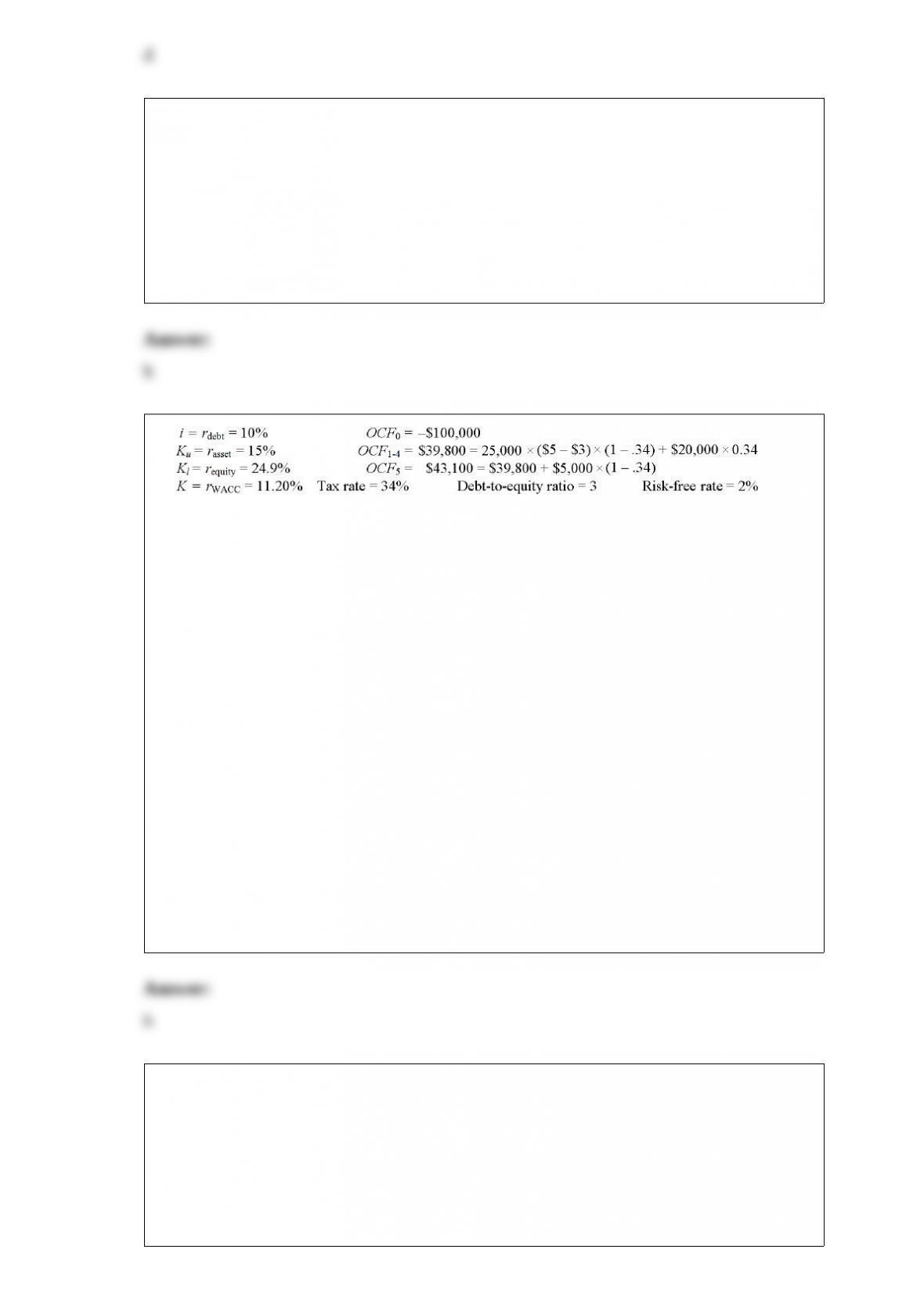
9)
the 5-year project requires equipment that costs $100,000. if undertaken, the
shareholders will contribute $25,000 cash and borrow $75,000 with an interest-only
loan with a maturity of 5 years and annual interest payments. the equipment will be
depreciated straight-line to zero over the 5-year life of the project. there will be a
pre-tax salvage value of $5,000. there are no other start-up costs at year 0. during years
1 through 5, the firm will sell 25,000 units of product at $5; variable costs are $3; there
are no fixed costs.
when using the apv methodology, what is the npv of the depreciation tax shield?
a.$32,051.52
b.$25,777.35
c.$22,794.65
d.$97,152.98
e.none of the above
10) in the real world, many firms that have cross-listed their shares on the u.s. markets
have experienced a reduction in the cost of capital. this effect was greater for
a.australian firms than for canadian firms
b.united states firms than for mexican firms
c.bonds than for stocks
d.none of the above
11) the primary methods of payment for foreign trades, ranked in the order of most
secure to least secure for the exporter is
a.open account, consignment, letter of credit/time draft, and cash in advance
b.consignment, letter of credit/time draft, cash in advance, and open account
c.cash in advance, letter of credit/time draft, consignment, and open account
d.cash in advance, letter of credit/time draft, open account, and consignment
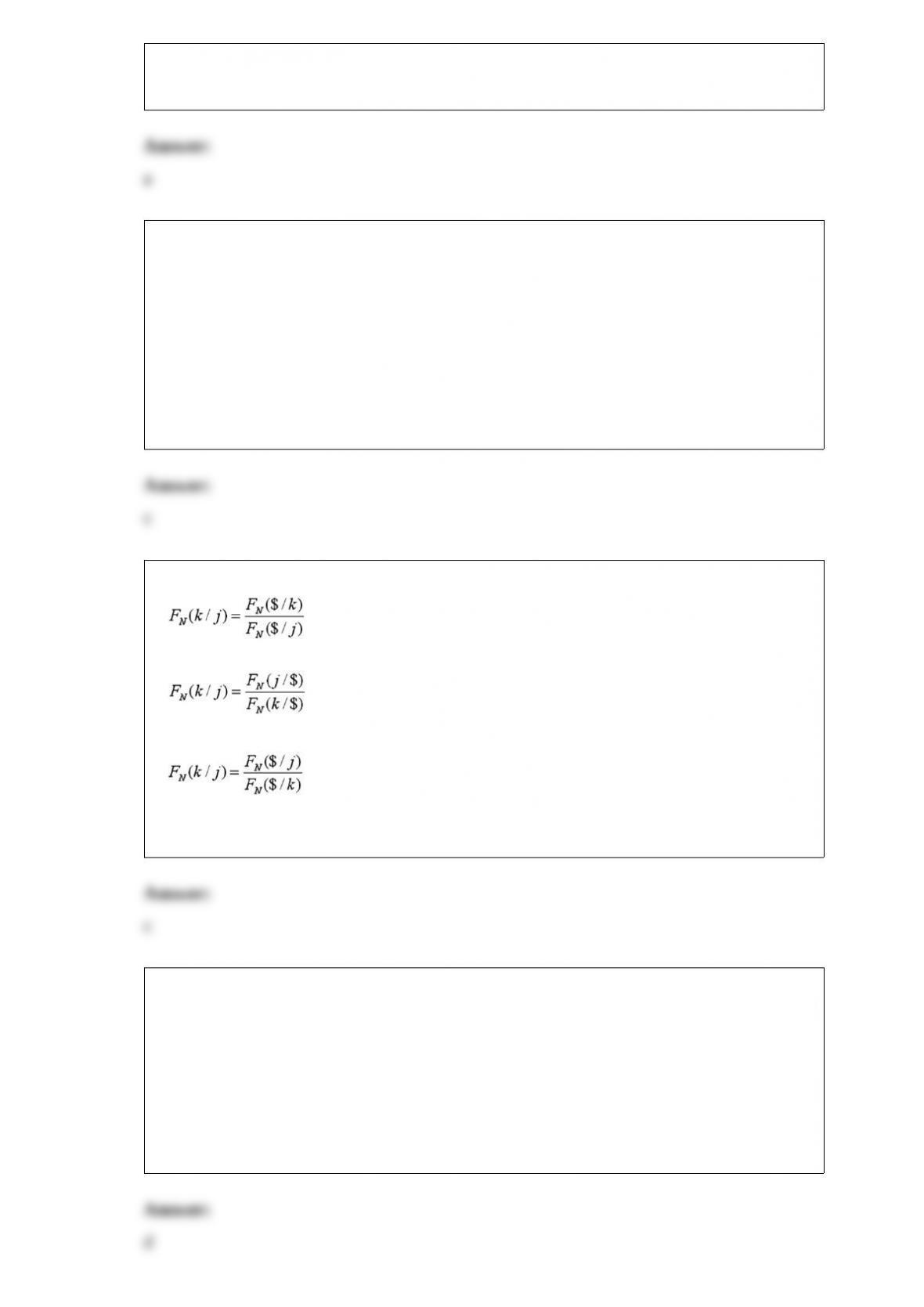
12) which of the following are correct?
a.
b.
c.
d.all of the above are correct
13) comparing the u.s. with the german and japanese corporate governance systems,
a.the u.s. system is “market centered”
b.the german and japanese systems are “bank centered”
c.it seems fair to say that no country has a perfect system
d.all of the above

14) xyz corporation, a u.s. parent firm, has a wholly owned sales affiliate, abc ltd., in
the united kingdom. the affiliate was established to service to the local market.
assume that:
1> the functional currency of abc is the pound
2> the reporting currency is the dollar
3> the initial exchange rate $1.00 = £0.67
abc’s nonconsolidated balance sheets and the footnotes to the financial statements
indicate that abc owes the parent firm £200,000. assume that, xyz had made an
investment of $500,000 in the affiliate. under fasb 52, the intercompany debt and
investment will appear on the consolidated balance sheet as
a.£200,000
b.$201,493
c.$298,507
d.none of the above
15) a higher u.s. interest rate (i$ ) will result in
a.a stronger dollar
b.a lower spot exchange rate (expressed as foreign currency per u.s. dollar)
c.both a and b
d.none of the above
16) the cost of capital is
a.the minimum rate of return an investment project must generate in order to pay its
financing costs
b.the minimum rate of return an investment project must generate in order to pay its
financing costs plus a reasonable profit
c.the maximum rate of return an investment project must generate in order to pay its
financing costs
d.the maximum rate of return an investment project must generate in order to pay its
financing costs plus a reasonable profit