
Which of the following is not one of the essential issues in evaluating commercial loan
requests?
a. The structure of the borrower’s board of directors.
b. The character of the borrower.
c. The use of the loan proceeds.
d. The source of repayment for the loan.
e. The amount the customer needs to borrow.
Answer:
How many 90-day Eurodollar futures contracts should a bank purchase to hedge the
roll-over of a 6-month, $20 million loan if loan rates and Eurodollar rates have the same
volatility?
a. 2 contracts
b. 4 contracts
c. 10 contracts
d. 20 contracts
e. 40 contracts
Answer:

An investor can invest in either a tax-exempt security that pays 5% or a taxable
corporate security of comparable risk and maturity that pays 8%. At what marginal tax
rate will the investor be indifferent between these two securities?
a. 25.0%
b. 32.5%
c. 37.5%
d. 57.5%
e. 62.5%
Answer:
Who is at risk if an indirect loan defaults on a loan with full recourse?
a. The bank
b. The borrower
c. The dealer
d. The credit bureau
e. All of the above

Answer:
The Federal Deposit Insurance Reform Act of 2005 created which of the following?
a. Bank Insurance Fund
b. Deposit Insurance Fund
c. Savings Association Insurance Fund
d. National Credit Union Shares Insurance Fund
e. Federal Savings and Loan Insurance Fund
Answer:
The efficiency ratio measures:
a. a bank’s ability to control interest expense.
b. a bank’s ability to control non-interest expense.
c. a bank’s spread.
d. a bank’s burden.
e. a bank’s operating leverage.
Answer:

Which of the following is not one of the risks identified by the Federal Reserve Board?
a. Credit Risk
b. Market Risk
c. Ownership Risk
d. Reputation Risk
e. Legal Risk
Answer:
Under FASB 157, the valuation of Level 2 assets is labeled:
a. marking to market.
b. marking to matrix.
c. marking to myth.
d. marking to major.
e. marking to minor.
Answer:

Under FASB 157, the valuation of Level 3 assets is labeled:
a. marking to market.
b. marking to matrix.
c. marking to myth.
d. marking to major.
e. marking to minor.
Answer:
Which of the following is likely to have a negative effective duration?
a. A high coupon, interest only mortgage-backed security that is pre-paying at a high
rate.
b. A low coupon U.S. Treasury bond.
c. Fed Funds purchased.
d. Demand deposits
e. None of the above can have a negative effective duration.
Answer:

What are the weaknesses of using static GAP analysis versus duration gap analysis?
a. Static GAP ignores the time value of money.
b. Static GAP ignores the cumulative impact of interest rate changes on a bank’s risk
profile.
c. Static GAP does not proscribe the treatment of demand deposits.
d. All of the above are weaknesses of using static GAP analysis versus duration gap
analysis.
e. a. and b.
Answer:
Which of the following is not a techniques that banks use to “manage earnings”?
a. Window dressing
b. Nonrecurring sales of assets
c. Adjusting the allowance for loan losses
d. Increasing loans classified as non-performing
e. All of the above are techniques that banks use to “manage earnings”
Answer:
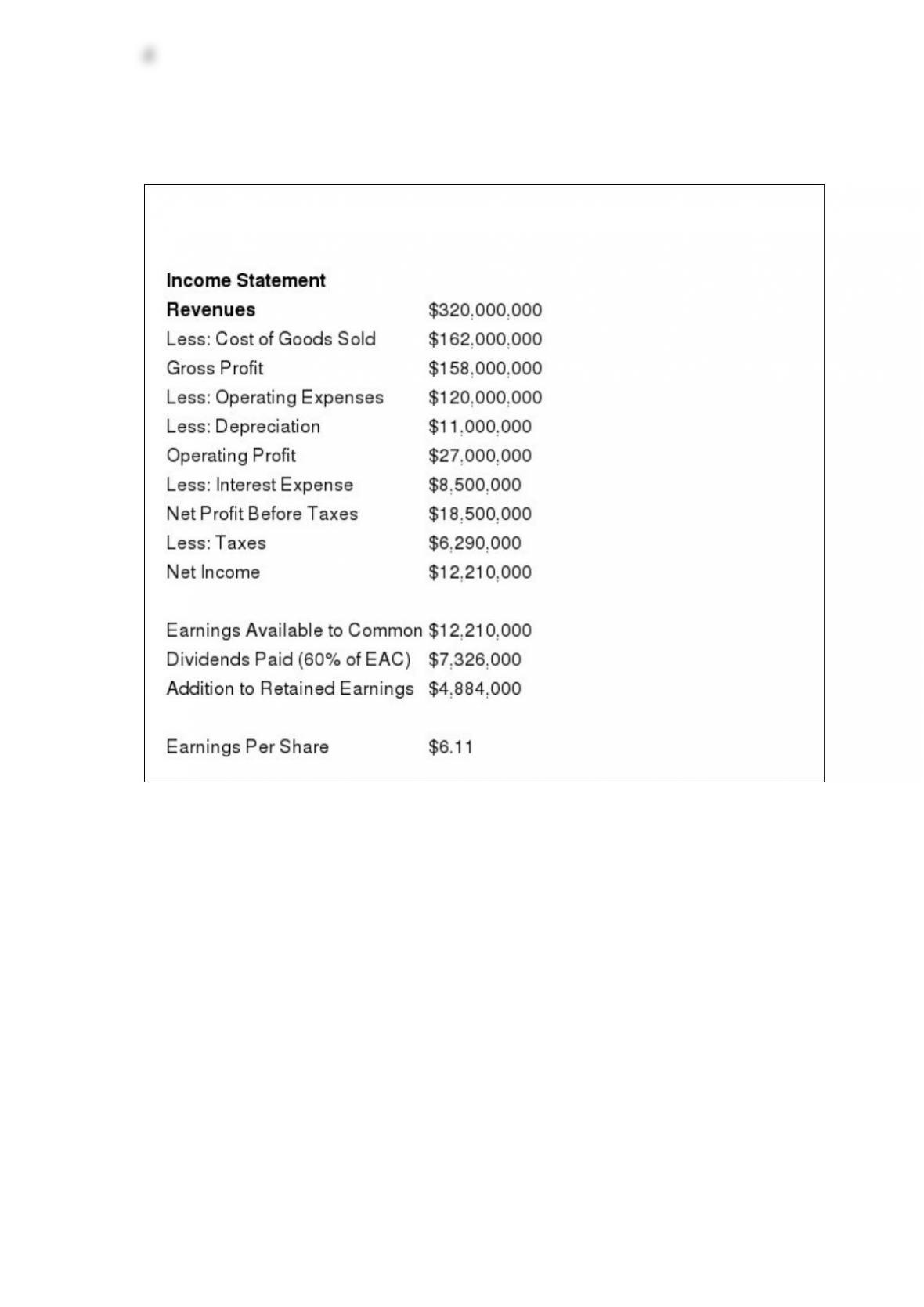
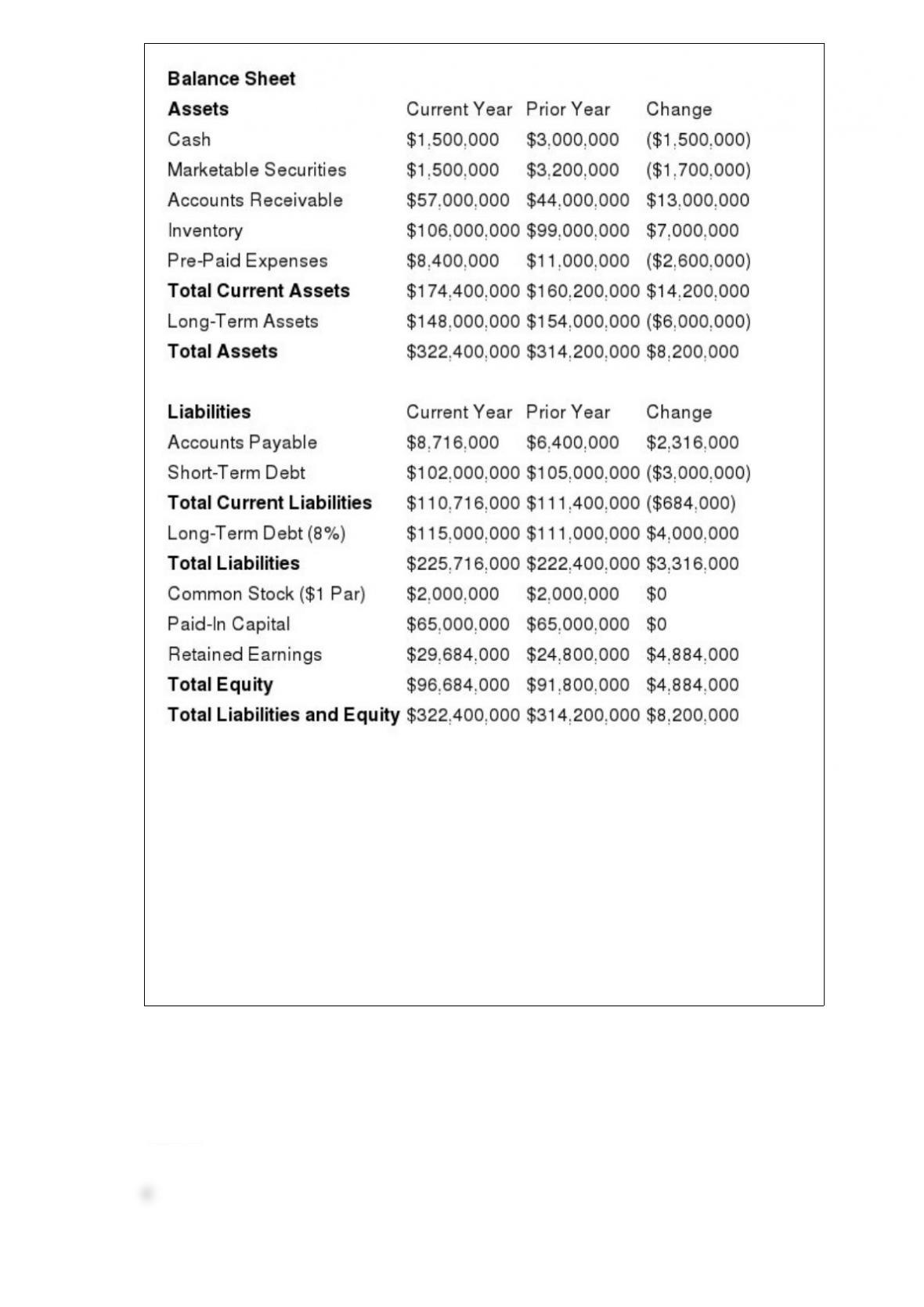
What is Dylan’s current ratio for the current year?
a. 1.36
b. 1.44
c. 1.58
d. 1.68
e. 1.71
Answer:

Which of the following is primarily used as collateral for borrowings from the Federal
Home Loan Bank Board?
a. Real estate loans
b. Treasury securities
c. Negotiable CDs
d. Credit card receivables
e. Repurchase agreement
Answer:
Which of the following is the receiver of a failed depository institution?
a. Federal Reserve
b. Federal Deposit Insurance Corporation
c. Office of the Comptroller of the Currency
d. Office of Thrift Supervision
e. Federal Savings and Loan Insurance Corporation
Answer:

For banks that have insufficient capital, which of the following is not a typical
operating strategy to achieve capital adequacy?
a. Limit asset growth
b. Shrink the bank
c. Increase the dollar amount of commercial loans outstanding
d. Shift more bank assets into lower risk categories.
e. Reprice assets to reflect greater equity support
Answer:
Banks prefer money market deposit accounts to demand deposits for all of the
following reasons except:
a. required reserves on money market deposit accounts are lower.
b. money market deposit accounts are less interest rate sensitive than demand deposit
accounts.
c. demand deposit accounts have fewer checks written each month.
d. average demand deposit balances are higher than money market deposit account
balances.
e. money market deposits accounts are not limited to the $100,000 deposit insurance
limit like demand deposit accounts.

Answer:
A firm’s borrowing base is:
a. based on cash flow from operations.
b. a measure of long-term profit potential.
c. the amount of the firm’s unused credit.
d. an estimate of the available collateral on a company’s current assets.
e. a measure of net fixed assets.
Answer:
Everything else the same, if the yield to maturity decreased 1 percentage point, which
of the following bonds would have the largest percentage increase in value?
a. A 25-year 11% coupon bond.
b. A 25-year 7.5% coupon bond.
c. A 25-year zero-coupon bond.
d. A 3-year zero coupon bond.
e. A 3-year bond with a 7.5% coupon.

Answer:
A bank is going to issue $5,000,000 in 10-year par value bonds that pay a 6% annual
coupon. The bank must pay .5% of the face value in floatation costs. What is the bank’s
effective cost of borrowing?
a. 5.9%
b. 6.1%
c. 6.3%
d. 6.5%
e. 6.7%
Answer:

What is the Macaulay’s duration of a 10 year zero-coupon bond with a face value of
$1,000 and a market rate of 8%, compounded annually is:
a. 10 years
b. 11 years
c. 12 years
d. 13 years
e. None of the above
Answer:
To the nearest dollar, what is the value today of an investment that pays $15,000 in
seven years, assuming an annual opportunity cost of 9%?
a. $7,473
b. $27,421
c. $8,206
d. $7,130
e. None of the above
Answer:

Term loans are generally repaid with funds from:
a. investing cash flows.
b. issuing new debt.
c. reductions in inventory and receivables.
d. cash flows from operations.
e. redeeming marketable securities.
Answer:
If a bank pays 62 cents in non-interest expense per dollar of net operating revenue, its
_______ is equal to 0.62.
a. burden
b. net non-interest margin
c. efficiency ratio

d. overhead ratio
e. non-interest expense ratio
Answer:
A bank can establish a floor on interest rate costs by:
a. buying a call option on Eurodollar futures.
b. selling Eurodollar futures contracts.
c. selling a call option on Eurodollar futures.
d. a. and b.
e. b. and c.
Answer:
The vast majority of credit card revenues comes from:
a. merchant discounts.
b. net credit gains.
c. advertising revenue.

d. interest income and annual fees.
e. interchange fees.
Answer:
The _________ repealed the Glass-Steagall Act.
a. Riegle-Neal Interstate Banking and Branching Efficiency Act
b. Gramm-Leach-Bliley Act
c. Financial Institutions Reform, Recovery and Enforcement Act
d. Federal Deposit Insurance Corporation Improvement Act
e. Depository Institutions Deregulation and Monetary Control Act
Answer:
Which of the following led to the sharp decline in bank profits in 2008?
a. Record high loan loss provisions
b. Record gains in trading activities
c. Significant goodwill impairment expenses

d. All of the above.
e. a. & c. only.
Answer:
Which of the following would cause a firm’s ROE to be high, but its ROA to be low?
a. A low gross profit margin but a high net profit margin.
b. Financing a relatively large proportion of assets with equity.
c. Paying very low interest rates on the firm’s debts.
d. Leasing a large amount of equipment.
e. Financing a relatively large proportion of assets with debt.
Answer:
Under current bankruptcy law, which of the following debts are not dischargeable under
Chapter 7?
a. Past due child support
b. Past due mortgage payments
c. Past due credit card payments
d. Past due auto loan payments
e. All of the above are dischargeable under Chapter 7 bankruptcy law
Answer:
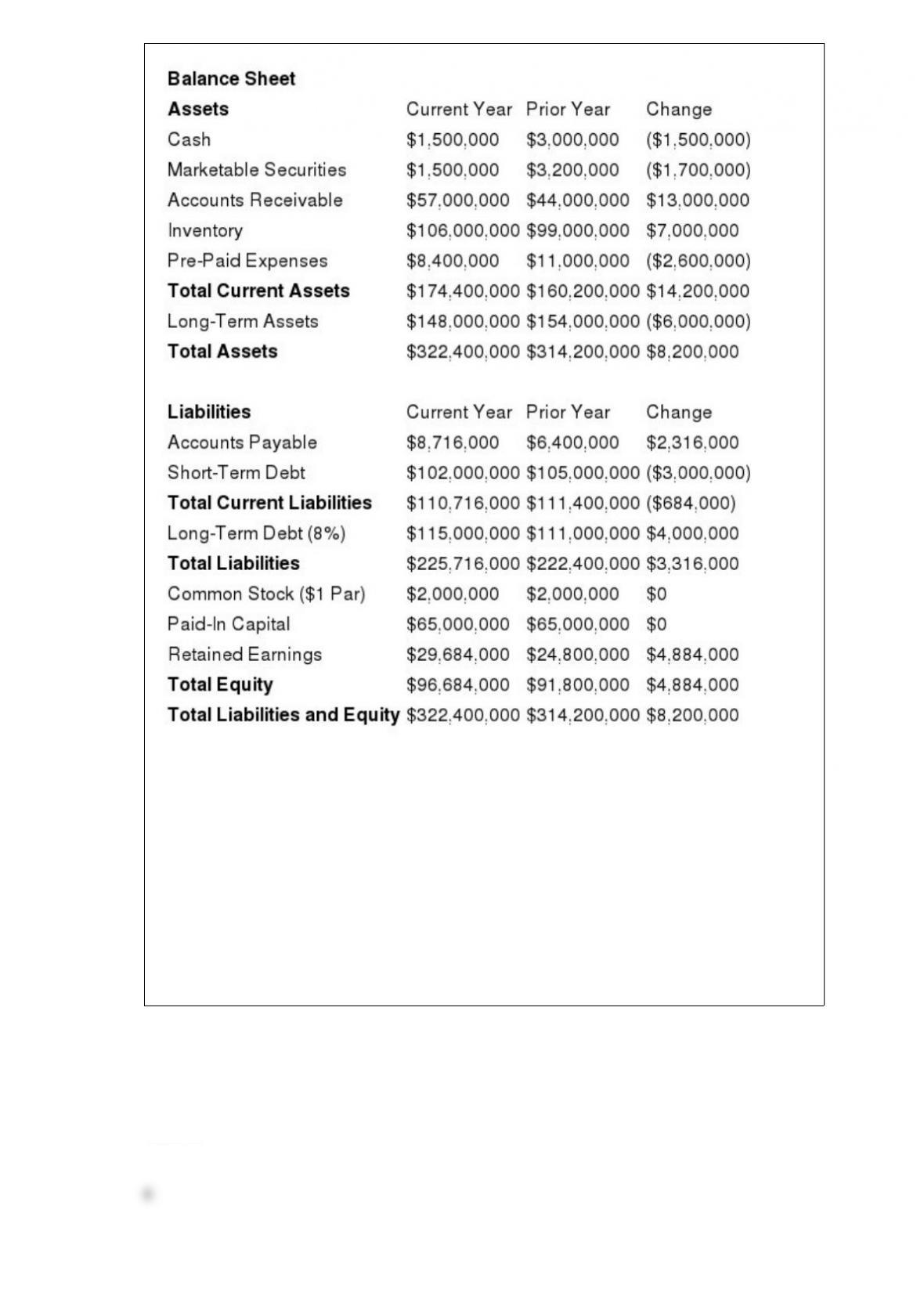
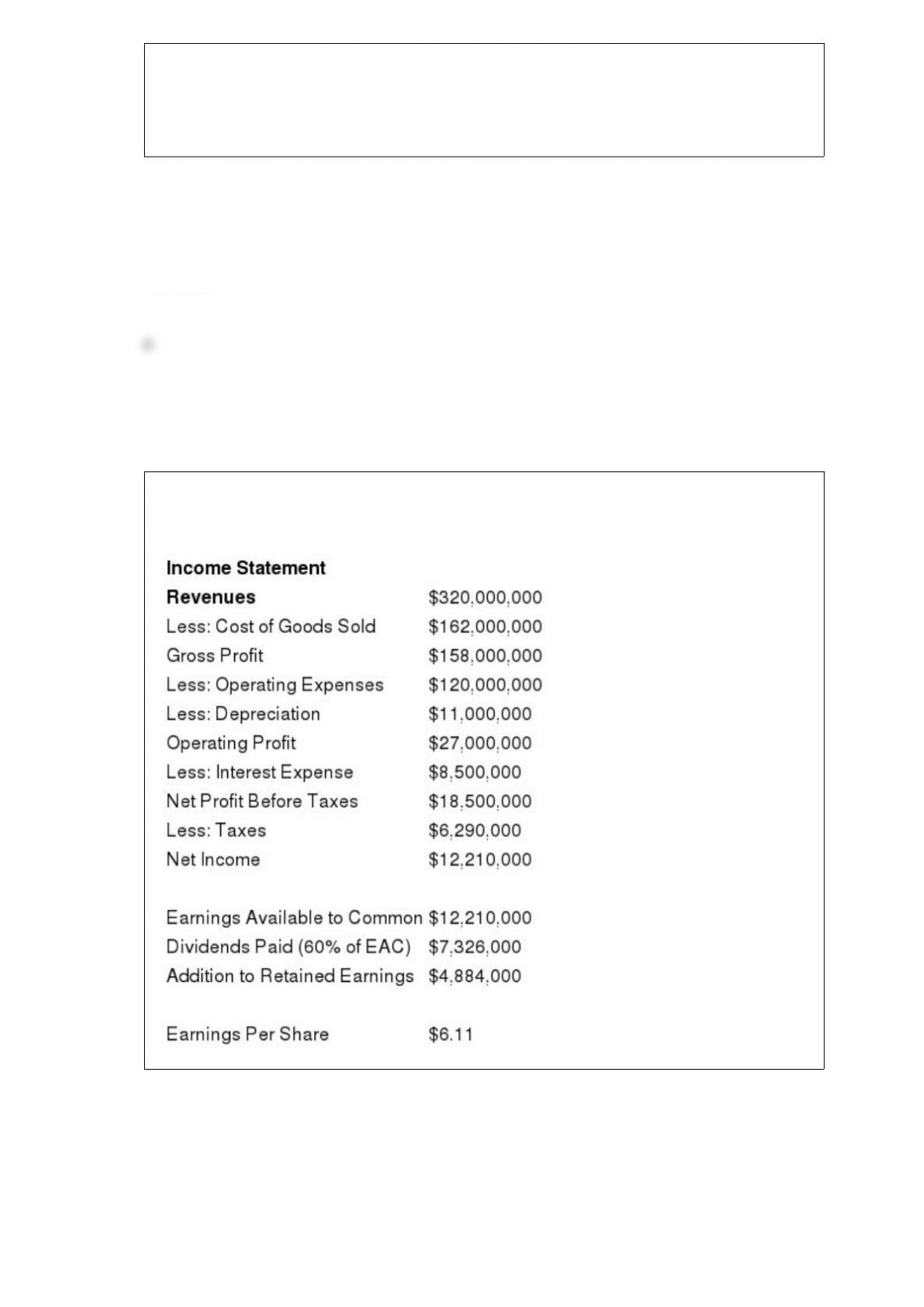
What were Dylan’s cash receipts during the year?
a. $307,000,000
b. $320,000,000
c. $323,000,000
d. $424,000,000
e. $482,000,000
Answer:

A bank currently owns a municipal bond paying a tax-exempt rate of 8%. If the banks
marginal tax rate is 39%, what is the taxable equivalent yield?
a. 11.12%
b. 4.88%
c. 13.11%
d. 5.76%
e. 9.32%
Answer: