
Phil and Terry started a new business three years ago. Two years ago, they incorporated
the business and issued themselves each 20,000 shares of stock. Last year, they took the
company public in an IPO and issued an additional 100,000 shares of stock at that time.
The offer price was $14 a share, the spread was 8 percent, and the lockup period was
six months. The stock closed at $17 a share at the end of the first day of trading. During
the first six months of trading, the stock had a price range of $13 to $23 per share.
During the second six months of trading, the stock sold between $15 and $21 per share.
Both Tracie and Amy purchased 100 shares at the offer price. Given this, which one of
the following statements is correct? Ignore trading costs and taxes.
A. Tracie could have earned a maximum profit of 100($23 – 17) on her investment.
B. Phil could have sold 5,000 shares at $23 per share.
C. The underwriters earned a spread equal to 8 percent of $17.
D. The maximum price at which Terry could have sold shares is $21.
E. Amy paid 108 percent of $14 per share to purchase her 100 shares.
Your friend claims that he invested $5,000 seven years ago and that this investment is
worth $38,700 today. For this to be true, what annual rate of return did he have to earn?
Assume the interest compounds annually.
A. 28.87 percent
B. 31.39 percent
C. 33.96 percent
D. 36.01 percent
E. 37.87 percent
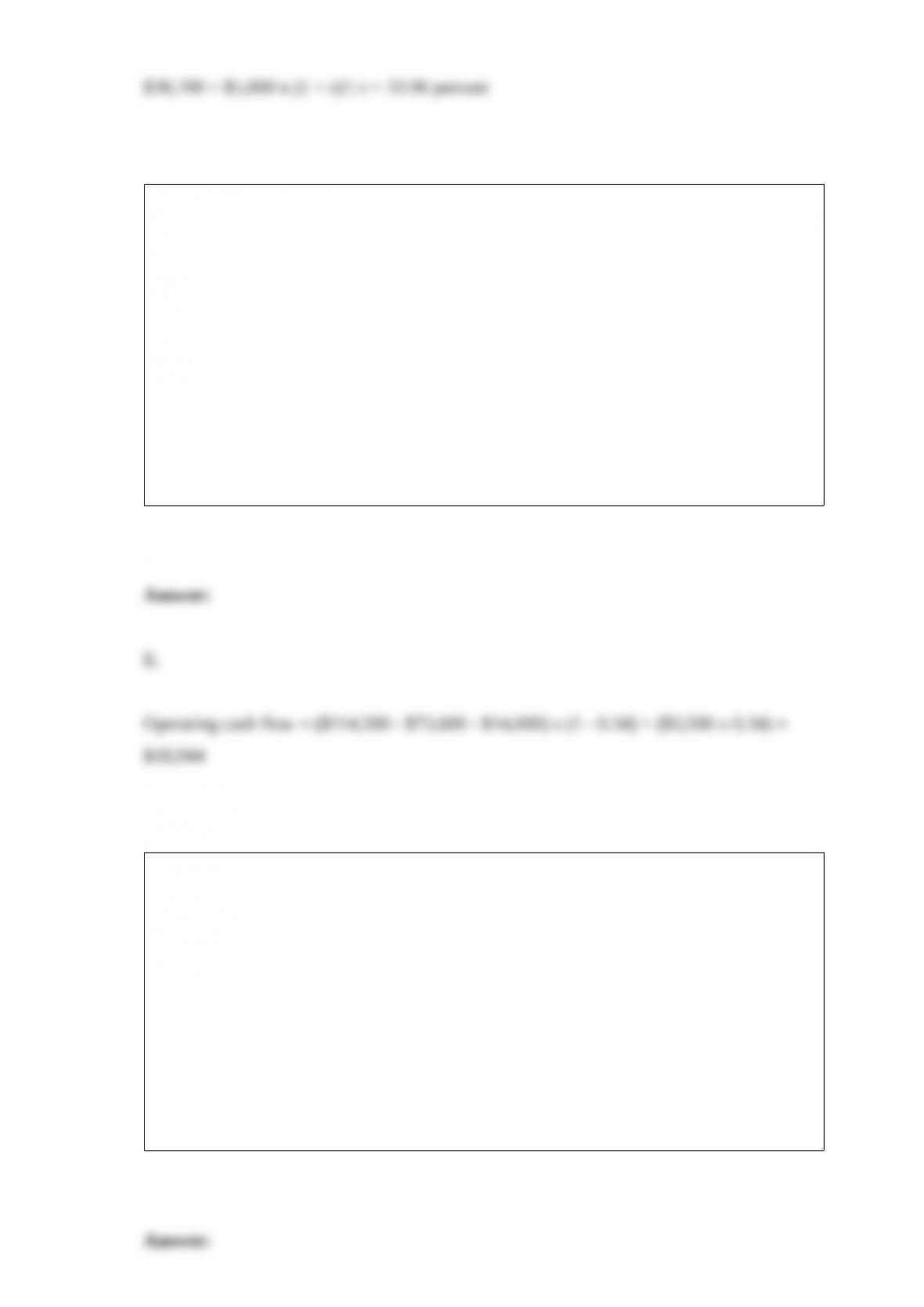
A nine-year project is expected to generate annual revenues of $114,500, variable costs
of $73,600, and fixed costs of $14,000. The annual depreciation is $3,500 and the tax
rate is 34 percent. What is the annual operating cash flow?
A. $14,301
B. $14,788
C. $15,052
D. $17,506
E. $18,944
Belk Department Store charges a daily rate of 0.01 percent on its store credit cards.
What interest rate is the company required by law to report to potential customers?
A. 35.98 percent
B. 36.50 percent
C. 39.00 percent
D. 40.04 percent
E. 40.48 percent
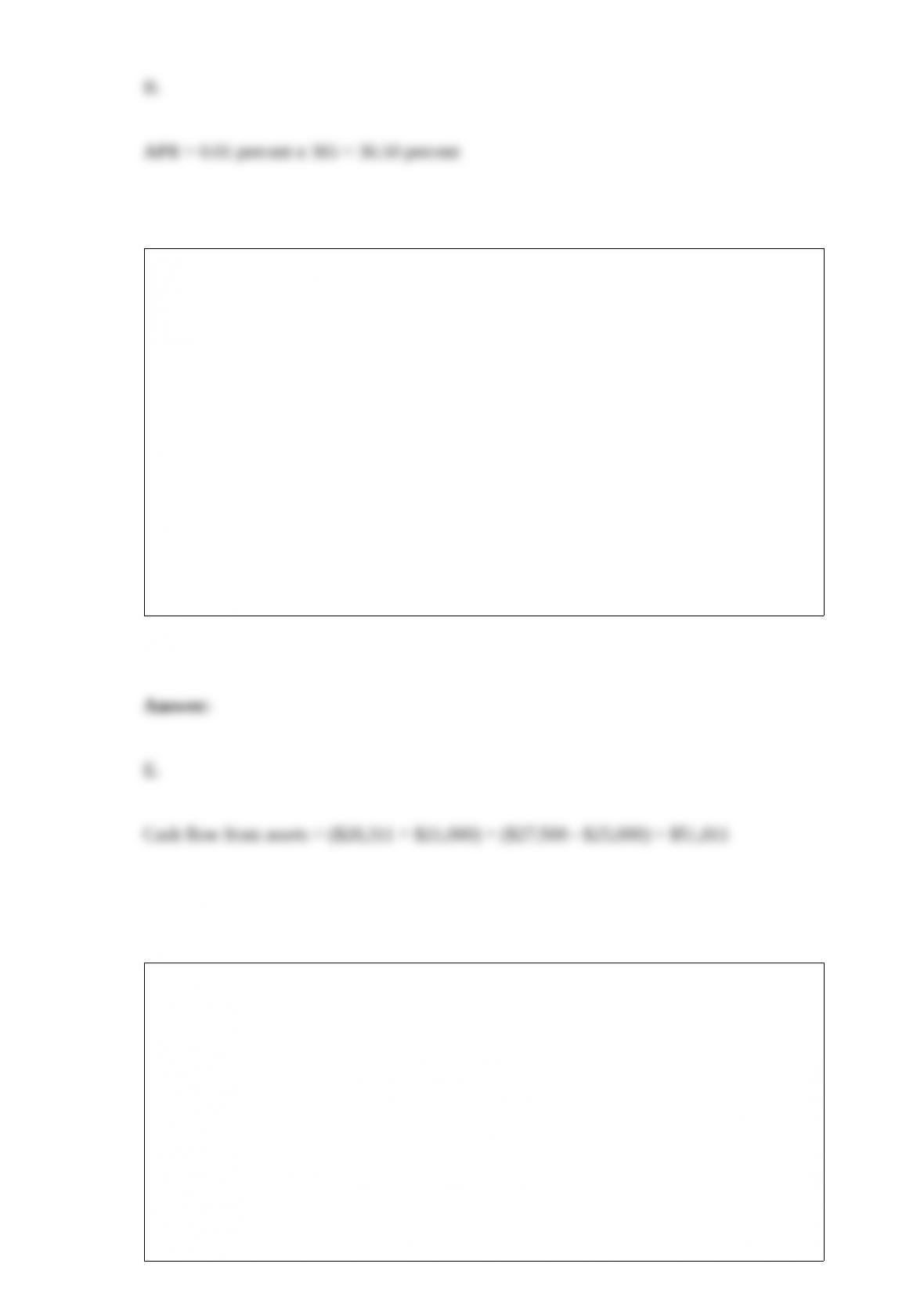
Miser Materials paid $27,500 in dividends and $28,311 in interest over the past year
while net working capital increased from $13,506 to $18,219. The company purchased
$42,000 in net new fixed assets and had depreciation expenses of $16,805. During the
year, the firm issued $25,000 in net new equity and paid off $21,000 in long-term debt.
What is the amount of the cash flow from assets?
A. $21,811
B. $30,811
C. $36,189
D. $49,811
E. 51,811
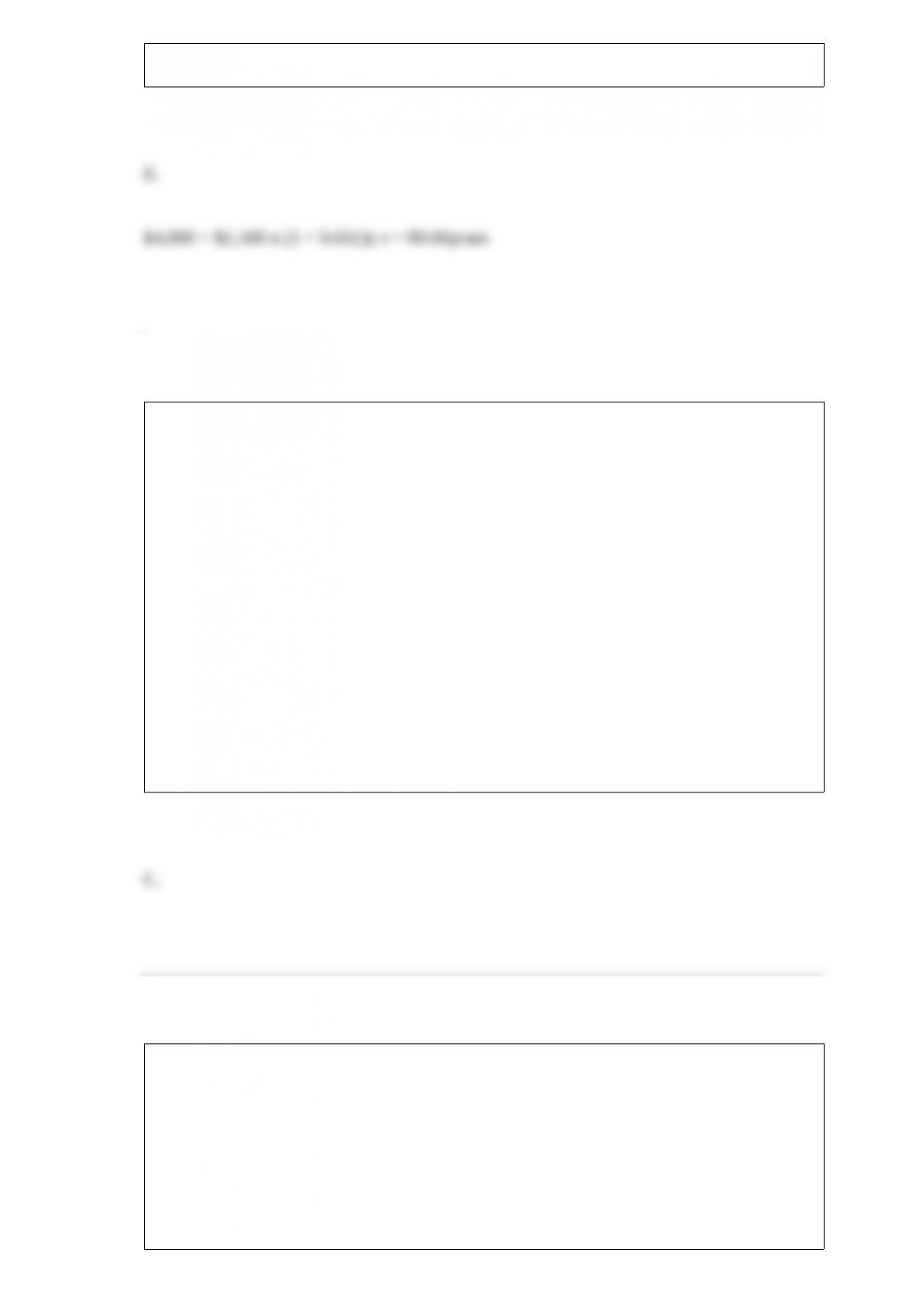
You have $1,500 today in your savings account. How long must you wait for your
savings to be worth $4,000 if you are earning 1.1 percent interest, compounded
annually?
A. 76.68 years
B. 79.69 years
C. 72.13 years
D. 80.57 years
E. 89.66 years
You want to create a $65,000 portfolio comprised of two stocks plus a risk-free security.
Stock A has an expected return of 14.2 percent and Stock B has an expected return of
17.8 percent. You want to own $20,000 of Stock B. The risk-free rate is 4.8 percent and
the expected return on the market is 13.1 percent. If you want the portfolio to have an
expected return equal to that of the market, how much should you invest in the risk-free
security?
A. $11,921
B. $13,509
C. $15,266
D. $17,315
E. $18,775
Which one of the following principles refers to the assumption that a project will be
evaluated based on its incremental cash flows?
A. Forecast assumption principle
B. Base assumption principle
C. Fallacy principle
D. Erosion principle
E. Stand-alone principle
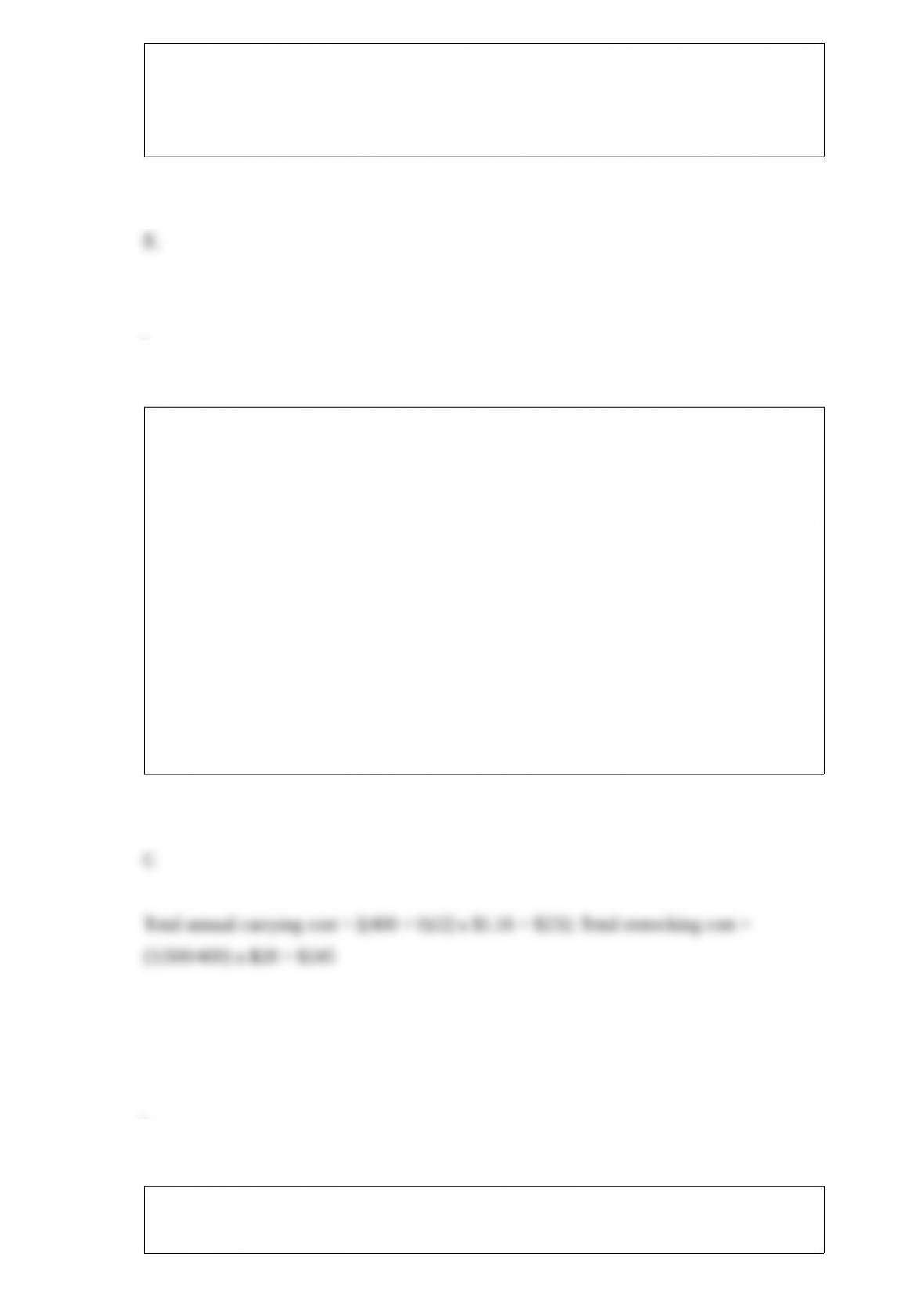
The Flowering Vine buys hanging plants for $2 each and resells them for $8.95 each.
The firm sells 3,500 plants per year. Generally, the firm orders 400 plants at a time and
has a fixed cost per order of $28. The carrying cost per unit is $1.16. To avoid newer
plants mixing with older plants, the inventory is totally sold out before it is restocked.
The total annual carrying cost is ____ and the total annual restocking cost is ____.
A. $211; $245
B. $211; $269
C. $232; $245
D. $232; $256
E. $232; $269
What percentage of capital gains are excluded from taxation for corporate shareholders?

A. 0 percent
B. 10 percent
C. 25 percent
D. 70 percent
E. 75 percent
Which one of the following events must occur before a firm can offer a liquidating
dividend?
A. Bankruptcy filing
B. Insolvency declaration
C. Asset sale
D. Negative equity
E. Failed bond issue