Which one of the following terms is most commonly used to describe the cash flows of
a new project that are simply an offset of reduced cash flows for a current project?
A. Opportunity cost
B. Sunk cost
C. Erosion
D. Replicated flows
E. Pirated flows
Answer:
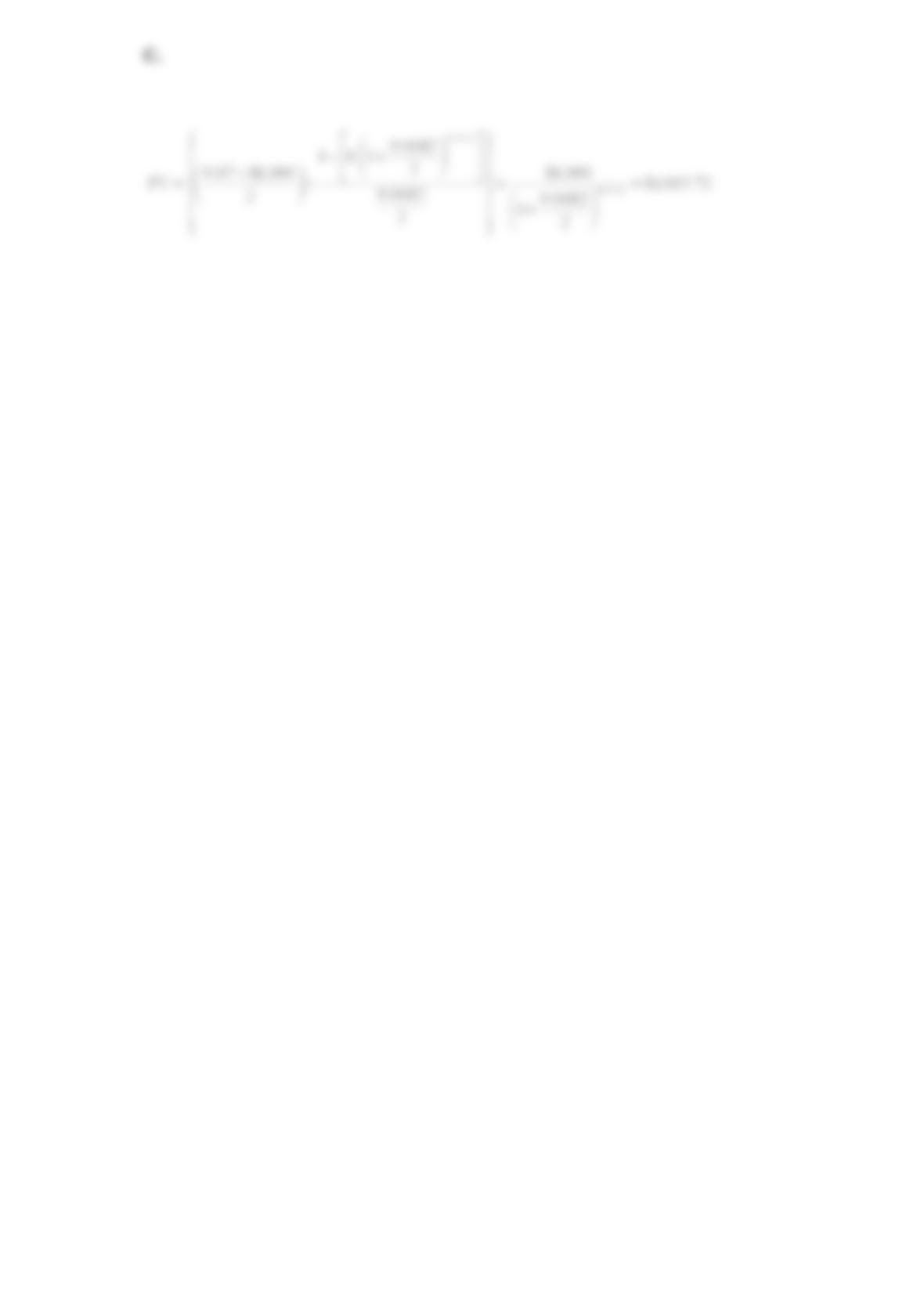
Marcos & Sons has no debt. Its current total value is $58 million. What will the
company’s value be if it sells $21 million in debt and has a tax rate of 34 percent?
Assume debt proceeds are used to repurchase equity.
A. $58,220,000
B. $60,370,000
C. $62,330,000
D. $64,560,000
E. $65,140,000
Answer:
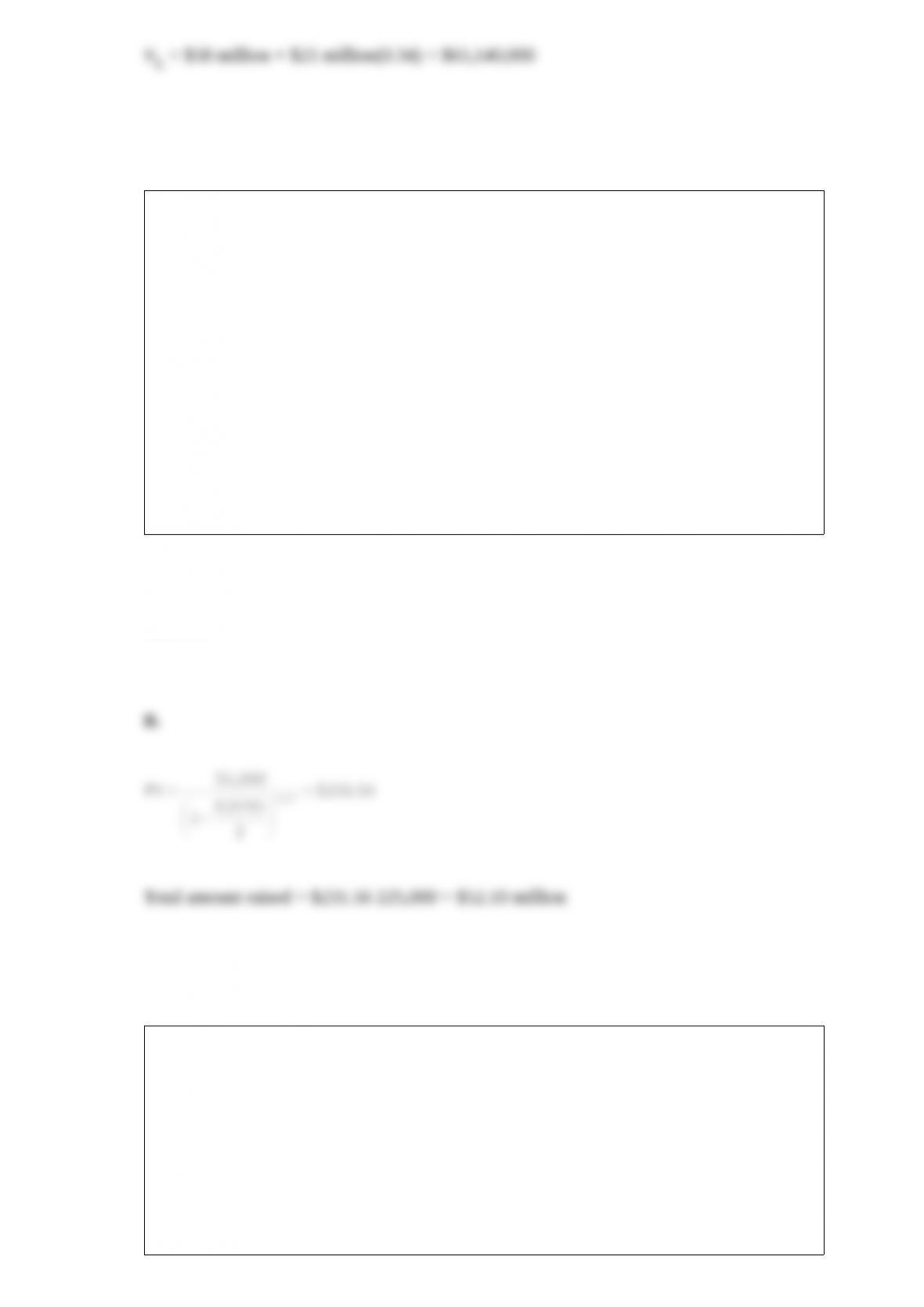
Deltona Motors just issued 225,000 zero coupon bonds. These bonds mature in 20
years, have a par value of $1,000, and have a yield to maturity of 7.45 percent. What is
the approximate total amount of money the company raised from issuing these bonds?
(Assume semiannual compounding.)
A. $48.20 million
B. $52.10 million
C. $55.14 million
D. $162.08 million
E. $225.00 million
Answer:
The Sarbanes-Oxley Act of 2002 has:
A. reduced the annual compliance costs of all publicly traded firms in the U.S.
B. decreased senior management’s involvement in the corporate annual report.
C. greatly increased the number of U.S. firms that are going public for the first time.
D. decreased the number of U.S. firms going public on foreign exchanges.
E. made officers of publicly traded firms personally responsible for the firm’s financial
statements.
Answer:
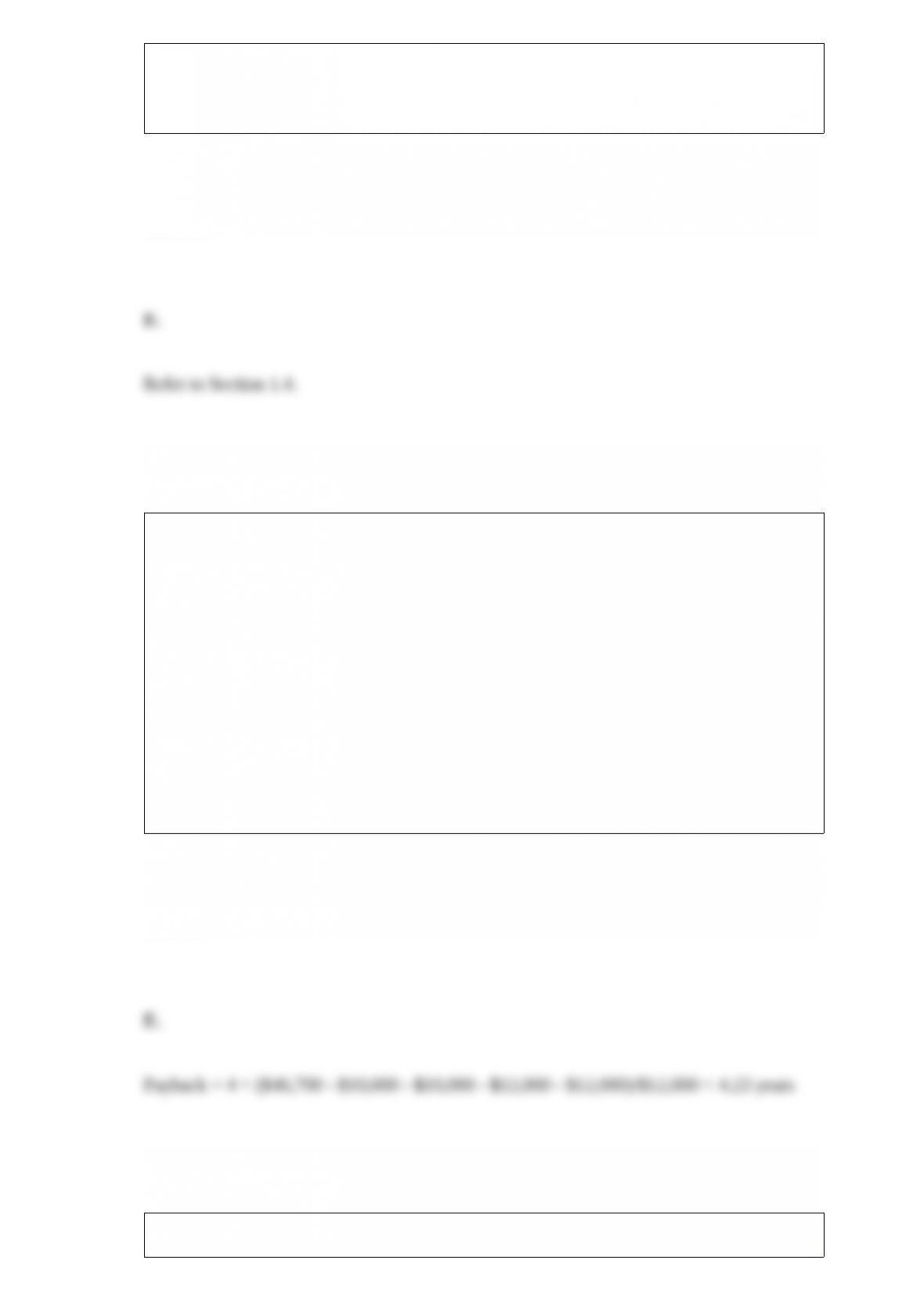
The Golden Goose is considering a project with an initial cost of $46,700. The project
will produce cash inflows of $10,000 a year for the first two years and $12,000 a year
for the following three years. What is the payback period?
A. 2.87 years
B. 3.23 years
C. 3.41 years
D. 3.79 years
E. 4.23 years
Answer:
The inflation premium:

A. increases the real return.
B. is inversely related to the time to maturity.
C. remains constant over time.
D. rewards investors for accepting interest rate risk.
E. compensates investors for expected price increases.
Answer:
On June 22, Roy’s Welding Shop purchased $3,300 worth of goods. The terms of the
sale were 1/7, net 21. What is the effective annual rate of interest for the credit period
for this sale?
A. 29.96 percent
B. 31.38 percent
C. 34.42 percent
D. 37.73 percent
E. 38.63 percent
Answer:
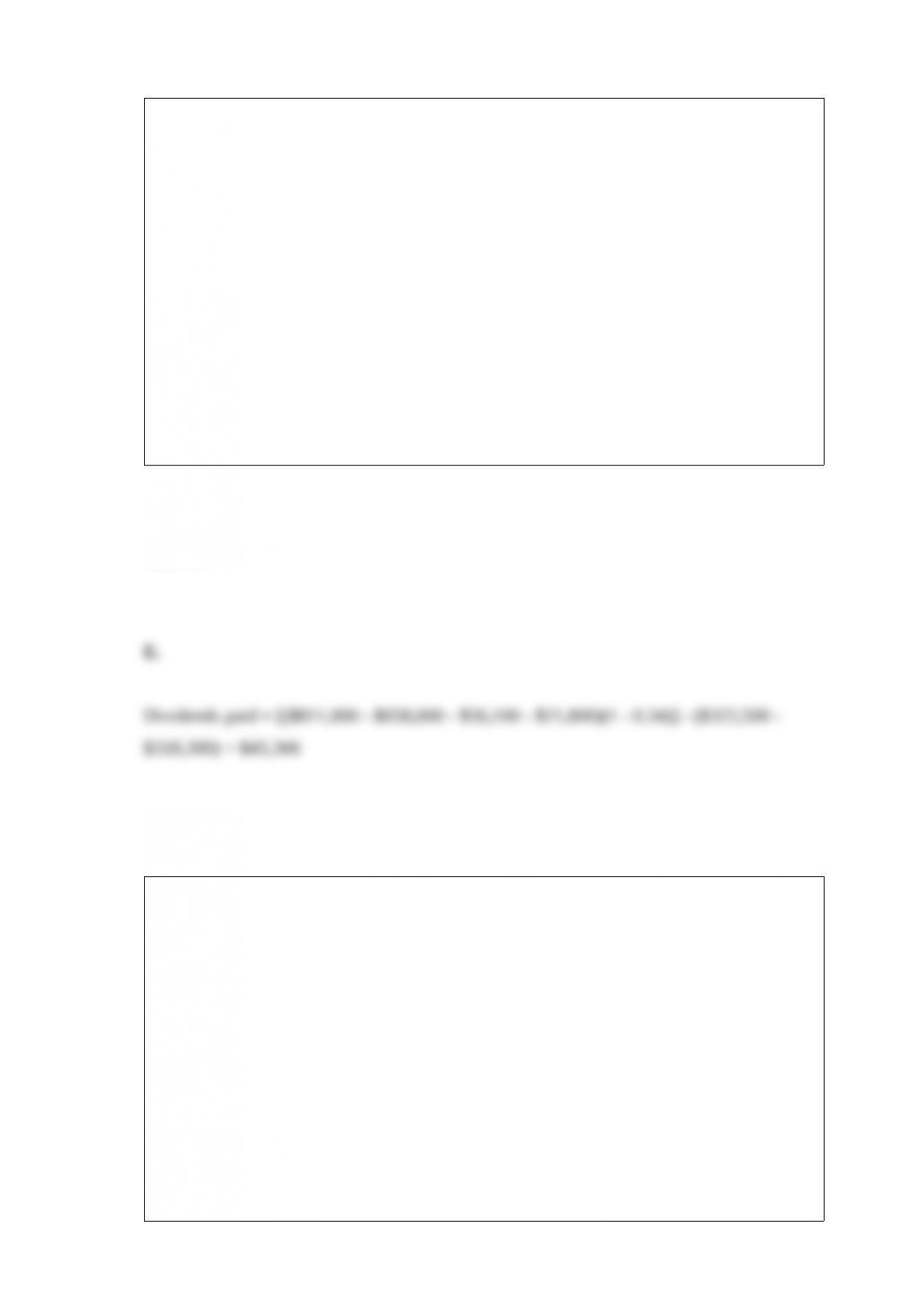
Bridgewater Furniture has sales of $811,000, costs of $658,000, and interest paid of
$21,800. The depreciation expense is $56,100 and the tax rate is 34 percent. At the
beginning of the year, the firm had retained earnings of $318,300 and common stock of
$250,000. At the end of the year, the firm has retained earnings of $322,500 and
common stock of $280,000. What is the amount of the dividends paid for the year?
A. $15,266
B. $19,466
C. $31,566
D. $41,066
E. $45,366
Answer:
Classic Pickles is a mature manufacturing firm. The company just paid a $4 annual
dividend, but management expects to reduce the payout by 4 percent per year,
indefinitely. If you require a 12 percent return on this stock, what will you pay for a
share today?
A. $21.42
B. $24.00
C. $25.24
D. $28.56
E. $30.02
Answer:
The historical returns on large-company stocks, as reported by Ibbotson and Sinquefield
and reported in your textbook, are based on the:
A. largest 20 percent of the stocks traded on the NYSE.
B. stock returns for the largest 10 percent of the publicly traded firms in the U.S.
C. returns of the 100 largest firms in the U.S.
D. returns of all the stocks listed on the NYSE.
Answer:
Debbie’s Cookies has a return on assets of 15.3 percent and a cost of equity of 16.9
percent. What is the pretax cost of debt if the debt-equity ratio is 0.54? Ignore taxes.
A. 8.87 percent
B. 9.29 percent
C. 9.64 percent
D. 11.31 percent
E. 12.33 percent
Answer:
The Toy Chest pays an annual dividend of $4.80 per share and sells for $93.20 a share
based on a market rate of return of 15 percent. What is the capital gains yield?
A. 7.35 percent
B. 7.78 percent
C. 9.23 percent
D. 9.85 percent
E. 10.00 percent
Answer:
Which one of the following is the risk arising from changes in value caused by political
actions?
A. Exchange rate risk
B. Political risk
C. Translation risk
D. LIBOR risk
E. Cross-rate risk
Answer:
The yield to maturity on a discount bond is:
A. equal to both the coupon rate and the current yield.
B. equal to the current yield but greater than the coupon rate.
C. greater than both the current yield and the coupon rate.
D. less than the current yield but greater than the coupon rate.
Answer:
Bama Entertainment has common stock with a beta of 1.46. The market risk premium is
9.3 percent and the risk-free rate is 4.6 percent. What is the expected return on this
stock?
A. 16.31 percent
B. 16.67 percent
C. 17.40 percent
D. 18.03 percent
E. 18.13 percent
Answer:
Which one of the following is a shortage cost associated with a firm’s inventory?
A. Restocking cost
B. Opportunity cost of capital
C. Inventory obsolescence
D. Insurance cost
E. Inventory theft

Answer:
The federal government has a tax claim on the cash flows of The Window Store. This
claim is defined as a claim by one of the firm’s:
A. residual owners.
B. shareholders.
C. financiers.
D. provisional partners.
E. stakeholders.
Answer:
Donovan Brothers, Inc. would like to increase its internal rate of growth. Decreasing
which one of the following will help the firm achieve its goal?
A. Return on assets
B. Net income

C. Retention ratio
D. Dividend payout ratio
E. Return on equity
Answer:
Shane’s Music has a line of credit with a local bank that permits it to borrow up to
$750,000 at any time. The interest rate is 0.28 percent per month. The bank charges
compound interest and also requires that 4 percent of the amount borrowed be deposited
into a non-interest-bearing account. How much interest will the firm pay if it needs
$500,000 of cash for four months to pay its operating expenses?
A. $5,857.88
B. $5,949.21
C. $6,017.02
D. $6,039.91
E. $6,208.11
Answer:
How quickly can a bank receive payment once it transmits a copy of a check to the
bank on which the check was drawn?
A. Immediately
B. In one day
C. Between one and two days
D. In two days
E. Between two and three days
Answer:
Red Mountain, Inc. bonds have a face value of $1,000. The bonds carry a 7 percent
coupon, pay interest semiannually, and mature in 13.5 years. What is the current price
of these bonds if the yield to maturity is 6.82 percent?
A. $989.50
B. $994.56
C. $1,015.72
D. $1,018.27
E. $1,020.00
Answer: