1) suppose mexico is a major export market for your u.s.-based company and the
mexican peso appreciates drastically against the u.s. dollar. this means
a.your company’s products can be priced out of the mexican market, as the peso price of
american imports will rise following the peso’s fall
b.your firm will be able to charge more in dollar terms while keeping peso prices stable
c.your domestic competitors will enjoy a period of facing lessened price competition
from mexican imports
d.both b and c are correct
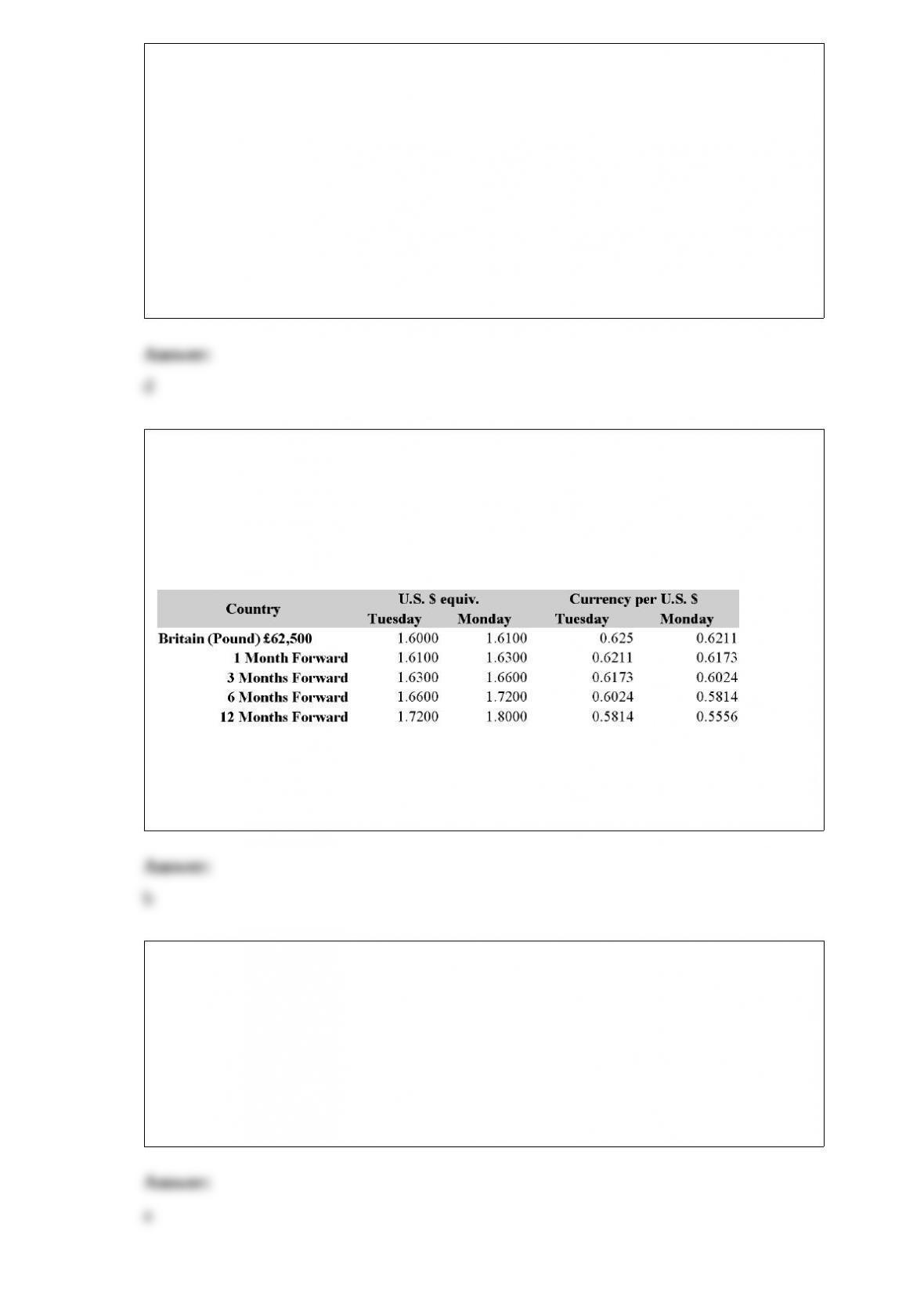
2) your firm is a u.s.-based exporter of bicycles. you have sold an order to a french firm
for 1,000,000 worth of bicycles. payment from the french firm (in euro) is due in three
months. detail a strategy using futures contracts that will hedge your exchange rate risk.
have an estimate of how many contracts of what type and how much (in $) your firm
will have.
a.go short 12 six-month forward contracts; pay $1,290,000
b.go short 16 six-month forward contracts. pay $1,230,000
c.go long 16 six-month forward contracts; raise $1,230,000
d.go long 12 six-month forward contracts. receive $1,230,000
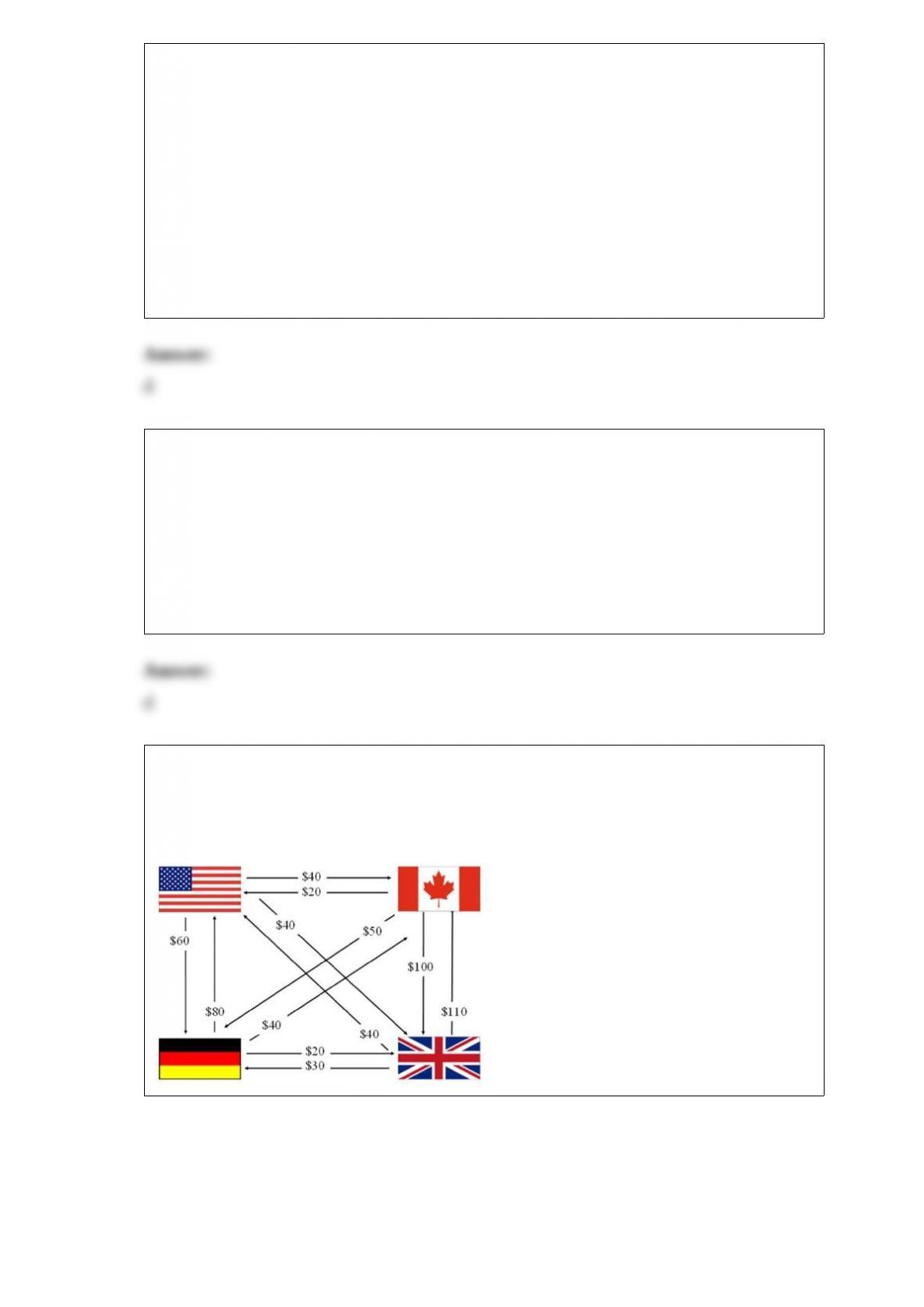
3) the bond equivalent yield that the exporter pays in discounting the b/a is:
a.6.10%
b.9.29%
c.6.02%
d.none of the above
4) translation exposure refers to
a.accounting exposure
b.the effect that an unanticipated change in exchange rates will have on the consolidated
financial reports of an mnc
c.the change in the value of a foreign subsidiaries assets and liabilities denominated in a
foreign currency, as a result of exchange rate change fluctuations, when viewed from
the perspective of the parent firm
d.all of the above
5) mncs can use their global presence to
a.take advantage of underpriced labor services available in certain developing countries
b.gain access to special r&d capabilities residing in advanced foreign counties
c.boost profit margins and create shareholder value
d.all of the above
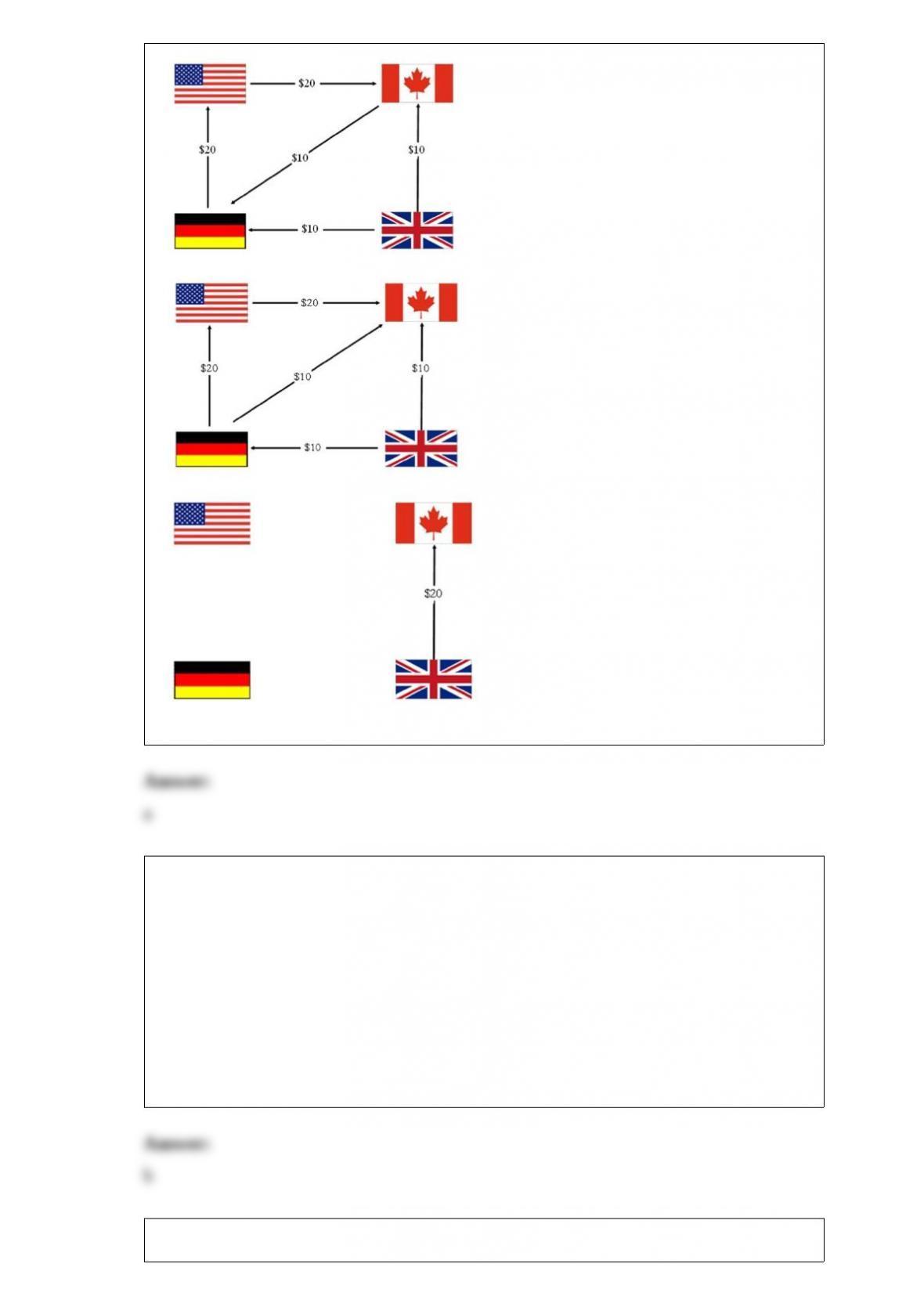
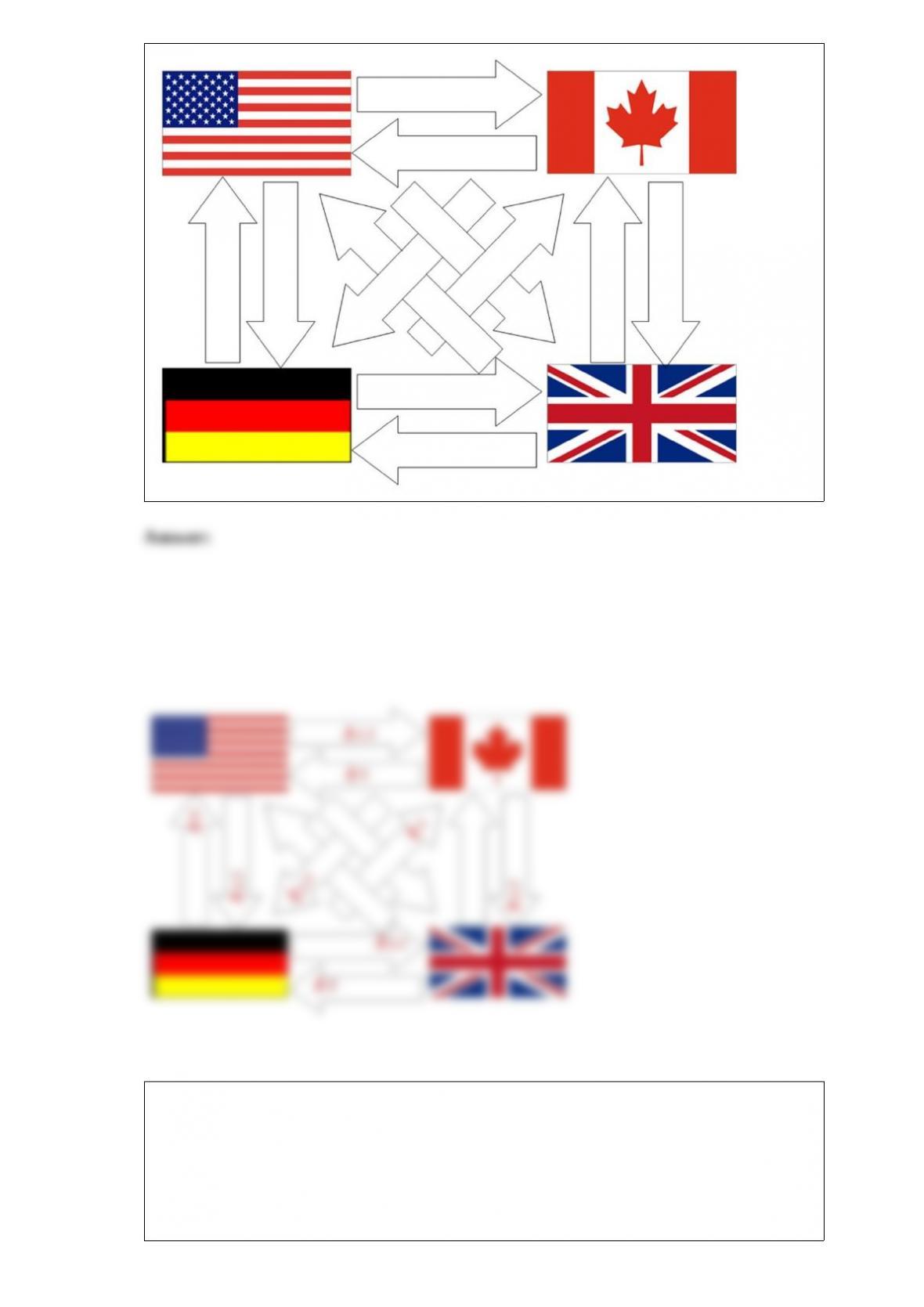
6) consider a u.s. mnc with three subsidiaries and the following foreign exchange
transactions shown at left. use bilateral netting to reduce the number of foreign
exchange transactions by half.
a.
b.
c.
d.none of the above
7) at the outbreak of world war i
a.major countries such as great britain, france, germany and russia suspended
redemption of banknotes in gold
b.major countries such as great britain, france, germany and russia imposed embargoes
on the export of gold
c.the classical gold standard was abandoned
d.all of the above
8) which investment is likely to be the least liquid?

a.a share of publicly traded company trading on the nyse
b.a bond issued by a fortune 500 company
c.a house in a nice part of town
d.a and b are equally liquid
9) examples of transfer risk include
a.the unexpected imposition of capital controls, inbound or outbound, and withholding
taxes on dividend and interest payments
b.unexpected changes in environmental policies, sourcing/local content requirements,
minimum wage law, and restriction on access to local credit facilities
c.restrictions imposed on the maximum ownership share by foreigners, mandatory
transfer of ownership to local firms over a certain period of time (fade-out
requirements), and the nationalization of local operations of mncs
d.none of the above
10) when a swap bank serves as a dealer:
a.the swap bank stands willing to accept either side of a swap
b.the swap bank matches counterparties but does not assume any risk of the swap
c.the swap bank receives a commission for matching buyers and sellers
d.none of the above
11) assume that a product has the following three stages of production:

if the value-added tax (vat) rate is 20%, what would be the vat over all stages of
production?
a.150
b.600
c.350
d.225
12) buying a currency option provides
a.a flexible hedge against exchange exposure
b.limits the downside risk while preserving the upside potential
c.a right, but not an obligation, to buy or sell a currency
d.all of the above
13) when honda, a japanese auto maker, built a factory in ohio,
a.it was engaged in foreign direct investment
b.it was engaged in portfolio investment
c.it was engaged in a cross-border acquisition
d.none of the above
14) the underlying principle of the current rate method is
a.assets and liabilities should be translated based on their maturity
b.monetary balance sheet accounts should be translated at the spot rate; nonmonetary
accounts are translated at the historical rate in effect when the account was first
recorded
c.monetary accounts are translated at the current exchange rate; other accounts are
translated at the current exchange rate if they are carried on the books at current value;
items carried at historical cost are translated at historic exchange rates

d.all balance sheet accounts are translated at the current exchange rate, except
stockholder equity
15) precautionary cash balances
a.represent an increasingly-important source of interest income for many mncs
b.are necessary in case the firm has underestimated the amount needed to cover
transactions
c.are synonymous with speculative cash balances
d.none of the above
16) over the last several years the u.s. has run persistent
a.balance-of-payments deficits
b.balance-of-payments surpluses
c.current account deficits
d.capital account deficits
17) since the passage of the sarbanes-oxley act,
a.some foreign firms choose to list their shares on the london stock exchange and other
european exchanges, instead of u.s. exchanges, to avoid the costly compliance
b.the pace of foreign firms listing their shares in the u.s. has increased
c.the firms have passed this increased cost on to their customers
18) a currency futures option amounts to a derivative on a derivative. why would
something like that exist?
a.for some assets, the futures contract can have lower transactions costs and greater

liquidity than the underlying asset
b.tax consequences matter as well, and for some users an option contract on a future is
more tax efficient
c.transactions costs and liquidity
d.all of the above
19) operating exposure measures
a.the extent to which the foreign currency value of the firm’s assets is affected by
unanticipated changes in exchange rates
b.the extent to which the firm’s operating cash flows will be affected by unexpected
changes in exchange rates
c.the affect of changes in exchange rates will have on the consolidated financial reports
of a mnc
d.the affect of unanticipated changes in exchange rates on the dollar value of
contractual obligations denominated in a foreign currency
20) consider the situation of firm a and firm b. the current exchange rate is $2.00/£ firm
a is a u.s. mnc and wants to borrow £30 million for 2 years. firm b is a british mnc and
wants to borrow $60 million for 2 years. their borrowing opportunities are as shown,
both firms have aaa credit ratings.
the irp 1-year and 2-year forward exchange rates are
explain how this opportunity affects which swap firm a will be willing to participate in.
21) a french firm is considering a one-year investment in the united kingdom with a
pound-denominated rate of return of i£ = 15%. the firm’s local cost of capital is i = 10%
the project costs £1,000 and will return £1,150 at the end of one year.
the current exchange rate is 2.00 = £1.00
suppose that the bank of england is considering either tightening or loosening its
monetary policy. it is widely believed that in one year there are only two possibilities:
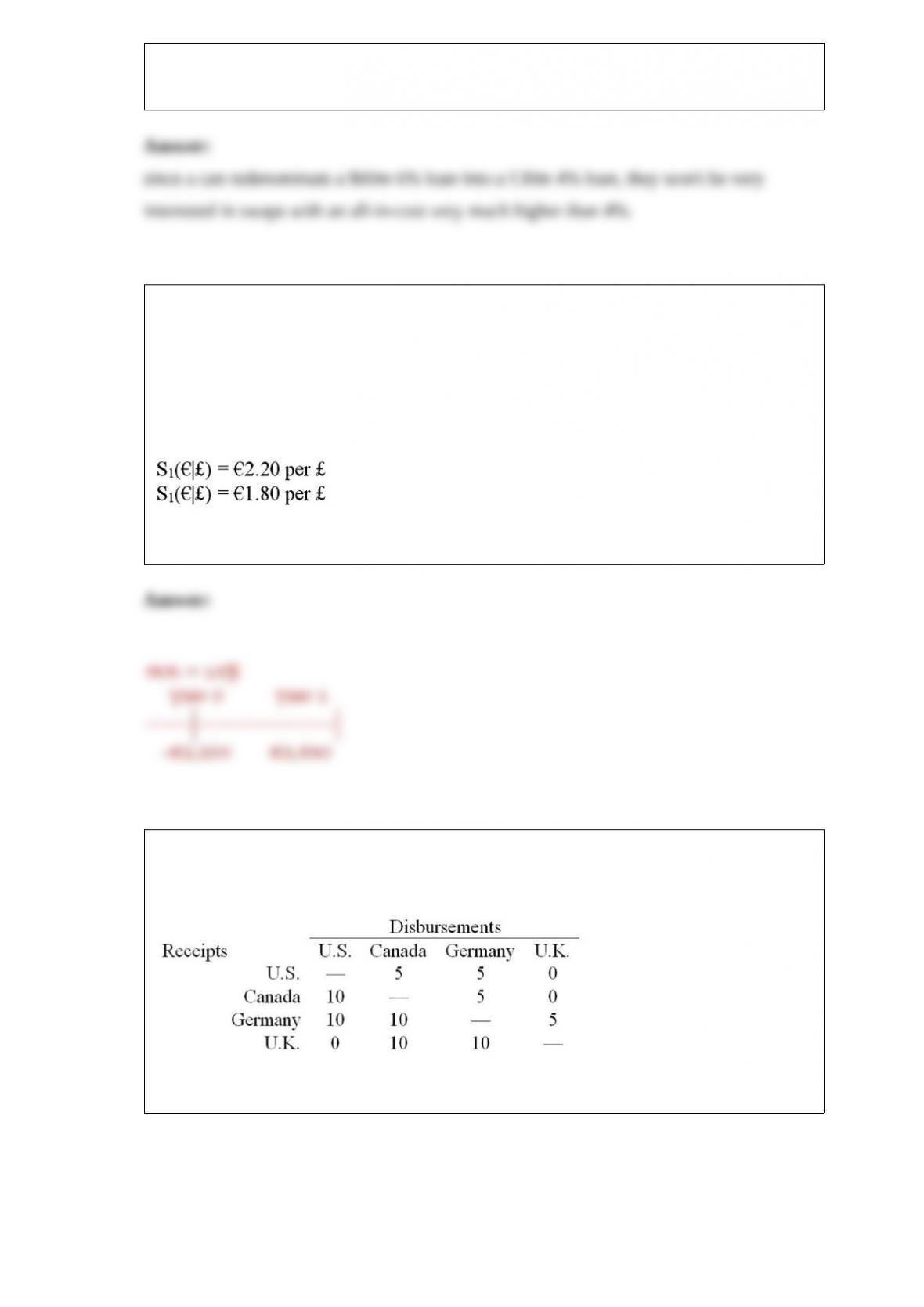
find the irr in euro for the french firm if they wait one year to undertake the project after
the exchange rate rises to s1(|£) = 2.20 per £.
22) your firm’s interaffiliate cash receipts and disbursements matrix is shown below
($000):
fill out the following figure with the initial situation shown in the table.
23) the strik-it-rich gold mining company is contemplating expanding its operations. to
do so it will need to purchase land that its geologists believe is rich in gold.
strik-it-rich’s management believes that the expansion will allow it to mine and sell an
additional 2,000 troy ounces of gold per year. the expansion, including the cost of the
land, will cost $500,000. the current price of gold bullion is $425 per ounce and
one-year gold futures are trading at $450.50 = $425 (1.06). extraction costs are $375 per

ounce. the firm’s cost of capital is 10 percent.
strik-it-rich’s management is, however, concerned with the possibility that large sales of
gold reserves by russia and the united kingdom will drive the price of gold down to
$390 for the foreseeable future. on the other hand, management believes there is some
possibility that the world will soon return to a gold reserve international monetary
system. in the latter event, the price of gold would increase to at least $460 per ounce.
the course of the future price of gold bullion should become clear within a year.
strik-it-rich can postpone the expansion for a year by buying a purchase option on the
land for $25,000.
estimate the value of the option on the land to the management of the mine.
24) a stock market investor would pay attention to
a. anticipated changes in exchange rates that have been already discounted and reflected
in the firm’s value
b. unanticipated changes in exchange rates that have not been discounted and reflected
in the firm’s value
25) the time from acceptance to maturity on a $300,000 banker’s acceptance is 30 days.
the importing bank’s acceptance commission is 3 percent and that the market rate for
30-day b/as is 4 percent.
determine the bond equivalent yield the importer’s bank will earn from discounting the
b/a with the exporter.
26) the time from acceptance to maturity on a $2,000,000 banker’s acceptance is 90
days.
the importing bank’s acceptance commission is 1.25 percent and that the market rate for
90-day b/as is 6 percent.
if the exporter’s opportunity cost of capital is 11 percent, should he discount the b/a or
hold it to maturity?
27) the time from acceptance to maturity on a $30,000,000 banker’s acceptance is 45
days.
the importing bank’s acceptance commission is 1.5 percent and that the market rate for
45-day b/as is 4 percent.
if the exporter’s opportunity cost of capital is 11 percent, should he discount the b/a or
hold it to maturity?