
1) eurocurrency
a.is the euro, the common currency of europe
b.is a time deposit of money in an international bank located in a county different from
the country that issued the currency
c.is a demand deposit of money in an international bank located in a county different
from the country that issued the currency
d.either b or c
2) the main approaches to forecasting exchange rates are
a.efficient market, fundamental, and technical approaches
b.efficient market and technical approaches
c.efficient market and fundamental approaches
d.fundamental and technical approaches
3) alternatives to firms locating production overseas include
a.exporting from the home country
b.licensing production to a local firm in the host country
c.ignoring the foreign market
d.all of the above
4) bank dealers in conversations among themselves use a shorthand notation to quote
bid and ask forward prices in terms of forward points. this is convenient because
a.forward points may change faster than spot and forward quotes
b.forward points may remain constant for long periods of time, even if the spot rates
change frequently
c.traders who are looking for violations of covered interest arbitrage are less interested
in the actual spot and forward exchange rates, but are interested in the premium or
discount differential measured in forward points

d.both c and d are correct
5) for european options, what of the effect of an increase in st?
a.decrease the value of calls and puts ceteris paribus
b.increase the value of calls and puts ceteris paribus
c.decrease the value of calls, increase the value of puts ceteris paribus
d.increase the value of calls, decrease the value of puts ceteris paribus
6) the impact of financing in determining the functional currency
a.financing does not impact the choice of functional currency due to the integrated
nature of capital markets
b.if the financing of the foreign entity is primarily denominated in the foreign currency
and the debt service obligations are normally handled by the foreign entity, the
functional currency is the foreign currency
c.if the financing of the foreign entity is primarily from the parent, with debt service
obligations are normally handled by the parent, the functional currency is the home
currency
d.both b and c
7) the board of directors may grant stock options to managers in order to
a.save executive compensation costs
b.use as a substitute for bonus
c.align the interest of managers with that of shareholders
d.none of the above

8) suppose a u.s. firm has an asset in britain whose local currency price is random. for
simplicity, suppose there are only three states of the world and each state is equally
likely to occur. the future local currency price of this british asset (p*) as well as the
future exchange rate (s) will be determined, depending on the realized state of the
world.
which of the following statements is most correct?
a.the firm faces no exchange rate risk since the local currency price of the asset and the
exchange rate are negatively correlated
b.the firm faces substantial exchange rate risk since the local currency price of the asset
and the exchange rate are positively correlated
c.the firm’s exchange rate exposure can be completely hedged with derivatives written
on the british pound
d.since randomness is involved, no hedging is possible
9) when exchange rates change
a.the value of a foreign subsidiary’s foreign currency denominated assets and liabilities
change to new numbers still denominated in the foreign currency
b.the value of a foreign subsidiary’s foreign currency denominated assets and liabilities
change when redenominated into the home currency
c.hedging should be done after the change
d.none of the above
10) on blocked funds strategy is
a.transferring personnel from corporate headquarters to the subsidiary offices
b.using the national airlines of the host country when possible for the international
travel of all mnc executives
c.holding business conferences of the mnc in the host country, where all expenses are

paid by the local subsidiary
d.all of the above
11) when a country’s currency depreciates against the currencies of major trading
partners,
a.the country’s exports tend to rise and imports fall
b.the country’s exports tend to fall and imports rise
c.the country’s exports tend to rise and imports rise
d.the country’s exports tend to fall and imports fall
12) in the united states foreign-source income is taxed at the same rate as u.s.-earned
income and a foreign tax credit is given against taxes paid to a foreign government.
however,
a.the foreign tax credit is limited to the amount of tax that would be due on that income
if it were earned in the united states
b.if the tax rate paid on foreign-source income is greater than the u.s. tax rate, part of
the credit may go unused
c.both of the above are true statements
d.none of the above is true
13) once capital markets are integrated, it is difficult for a country to maintain a fixed
exchange rate. why?
a.the market forces may be stronger than the exchange rate intervention that the
government can muster
b.portfolio managers will not invest in countries with fixed exchange rates
c.because of the tobin tax
d.none of the above
14) while debt can reduce agency costs between shareholders and management,
a.debt can create its own agency costs
b.this only happens at extreme levels of debt
c.this does not work for firms in mature industries with large cash reserves
d.none of the above is true
15) proceeding the asian crisis,
a.domestic price bubbles in east asia, particularly in real estate, were fostered by capital
inflows from bankers from the g-10 countries
b.the liberalization of financial markets coupled with capital inflows from bankers from
the g-10 countries contributed to bubbles in financial asset prices
c.the close interrelationships common among commercial firms and financial
institutions in asia resulted in poor investment decision making
d.all of the above
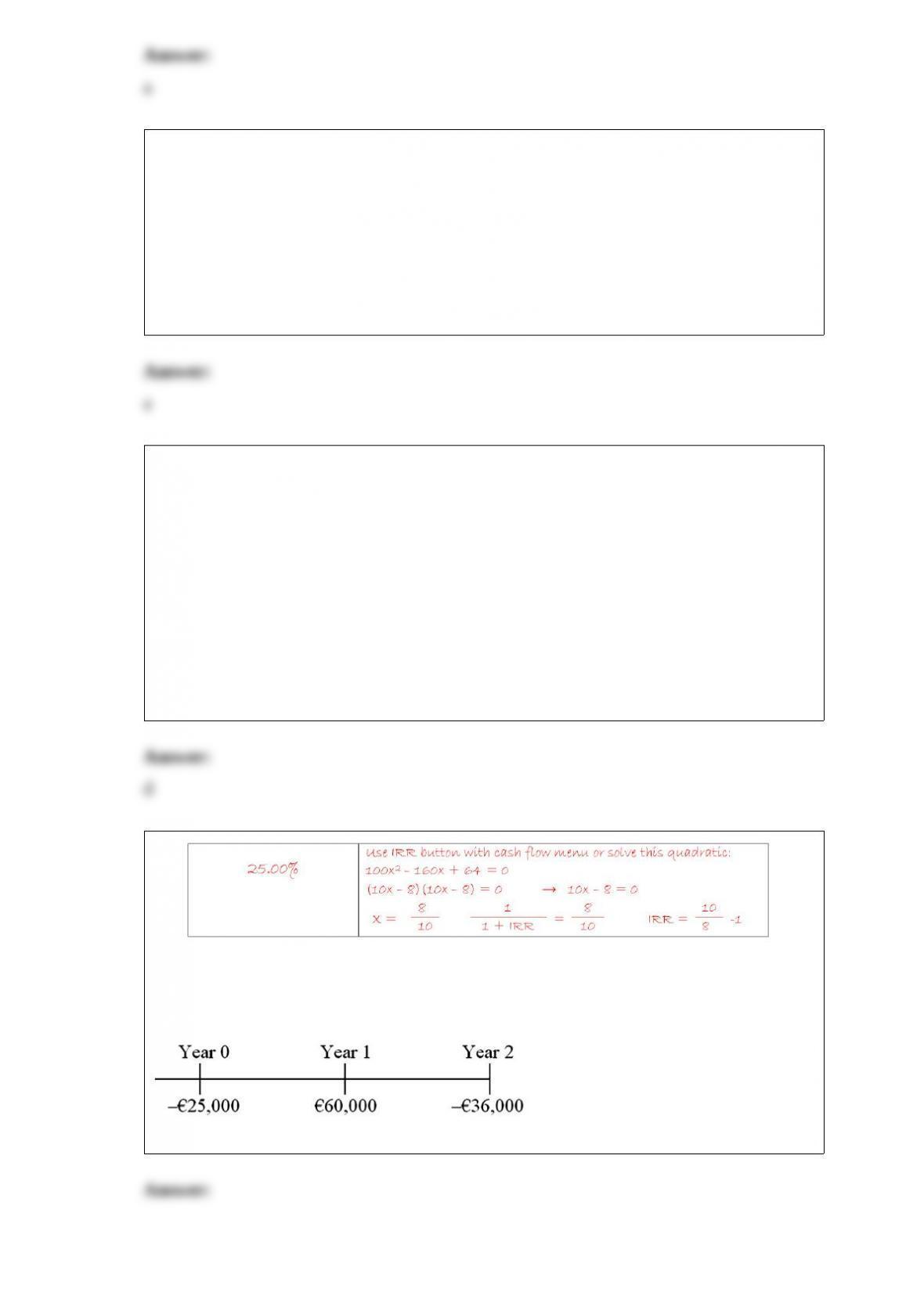
16)
consider the following international investment opportunity. it involves a gold mine that
can be opened at a cost, then produces a positive cash flow, but then requires
environmental clean-up:
what is the dollar-denominated irr of this project?
17) suppose that you hold a piece of land in the city of london that you may want to sell
in one year. as a u.s. resident, you are concerned with the dollar value of the land.
assume that if the british economy booms in the future, the land will be worth £2,000,
and one british pound will be worth $1.80. if the british economy slows down, on the
other hand, the land will be worth less, say, £1,500, but the pound will be stronger, say,
$2.20/£. you feel that the british economy will experience a boom with a 60 percent
probability and a slowdown with a 40 percent probability.
estimate your exposure (b) to the exchange risk.
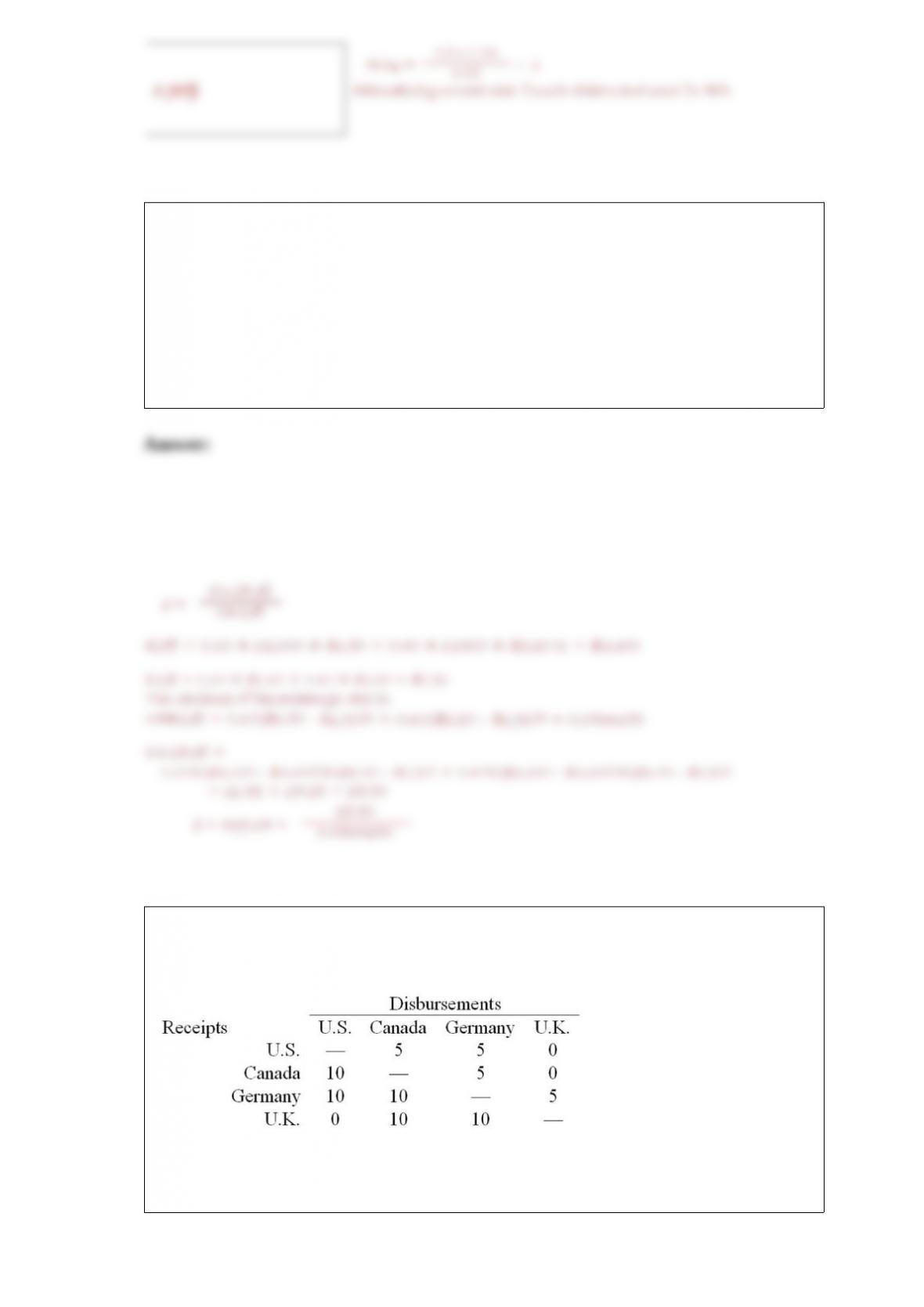
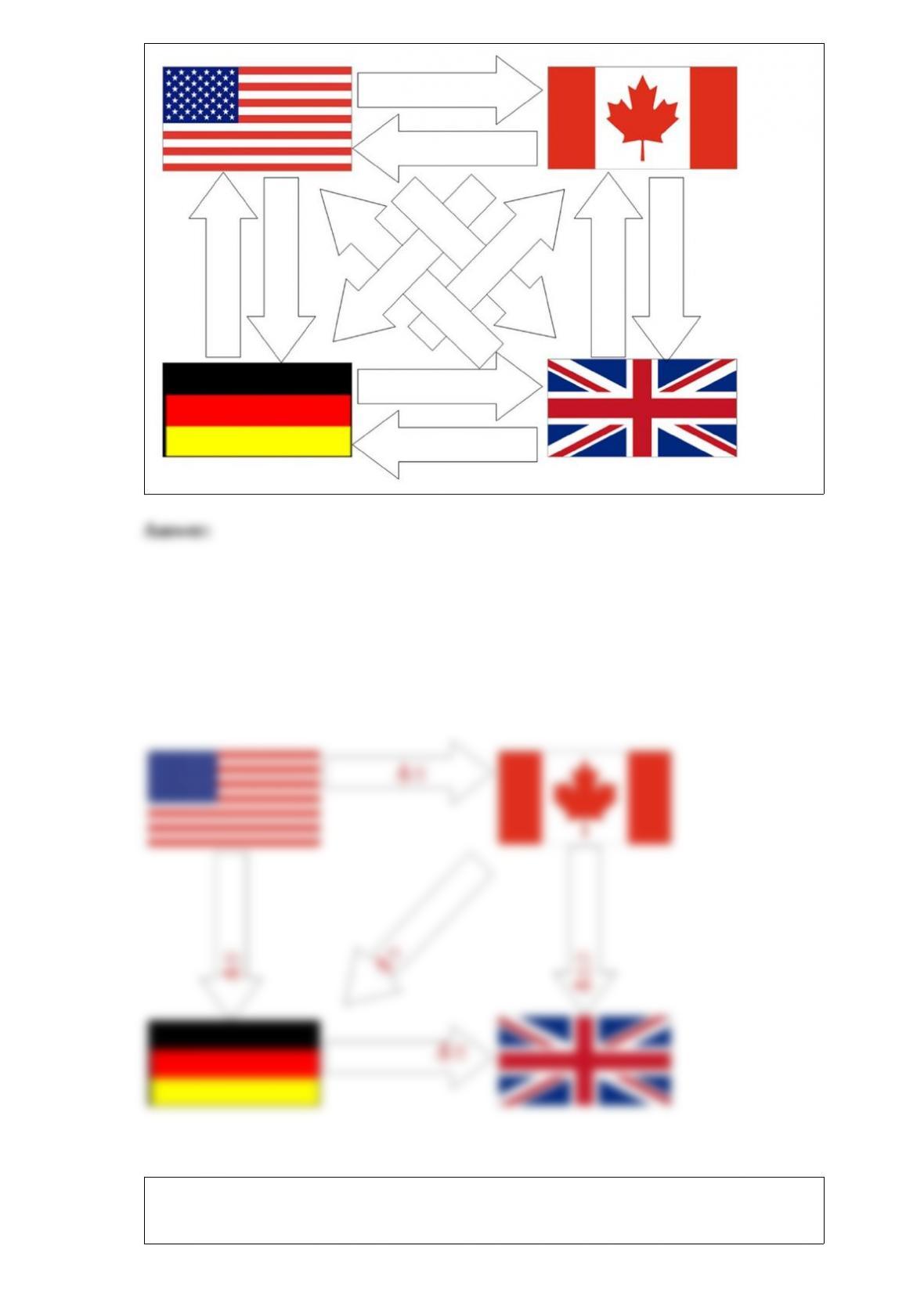
18) your firm’s interaffiliate cash receipts and disbursements matrix is shown below
($000):
using your results to the last question, use bilateral netting to simplify.
19) the stock market of country a has an expected return of 5%, and standard deviation
of expected return of 8%. the stock market of country b has an expected return of 15%

and standard deviation of expected return of 10%.
find the global minimum variance portfolio.
20) the strik-it-rich gold mining company is contemplating expanding its operations. to
do so it will need to purchase land that its geologists believe is rich in gold.
strik-it-rich’s management believes that the expansion will allow it to mine and sell an
additional 2,000 troy ounces of gold per year. the expansion, including the cost of the
land, will cost $500,000. the current price of gold bullion is $425 per ounce and
one-year gold futures are trading at $450.50 = $425 (1.06). extraction costs are $375 per
ounce. the firm’s cost of capital is 10 percent.
strik-it-rich’s management is, however, concerned with the possibility that large sales of
gold reserves by russia and the united kingdom will drive the price of gold down to
$390 for the foreseeable future. on the other hand, management believes there is some
possibility that the world will soon return to a gold reserve international monetary
system. in the latter event, the price of gold would increase to at least $460 per ounce.
the course of the future price of gold bullion should become clear within a year.
strik-it-rich can postpone the expansion for a year by buying a purchase option on the
land for $25,000.
compute the npv at the current price of gold. hint: think of the gold mine as a perpetuity
21) assume that you are a retail customer.
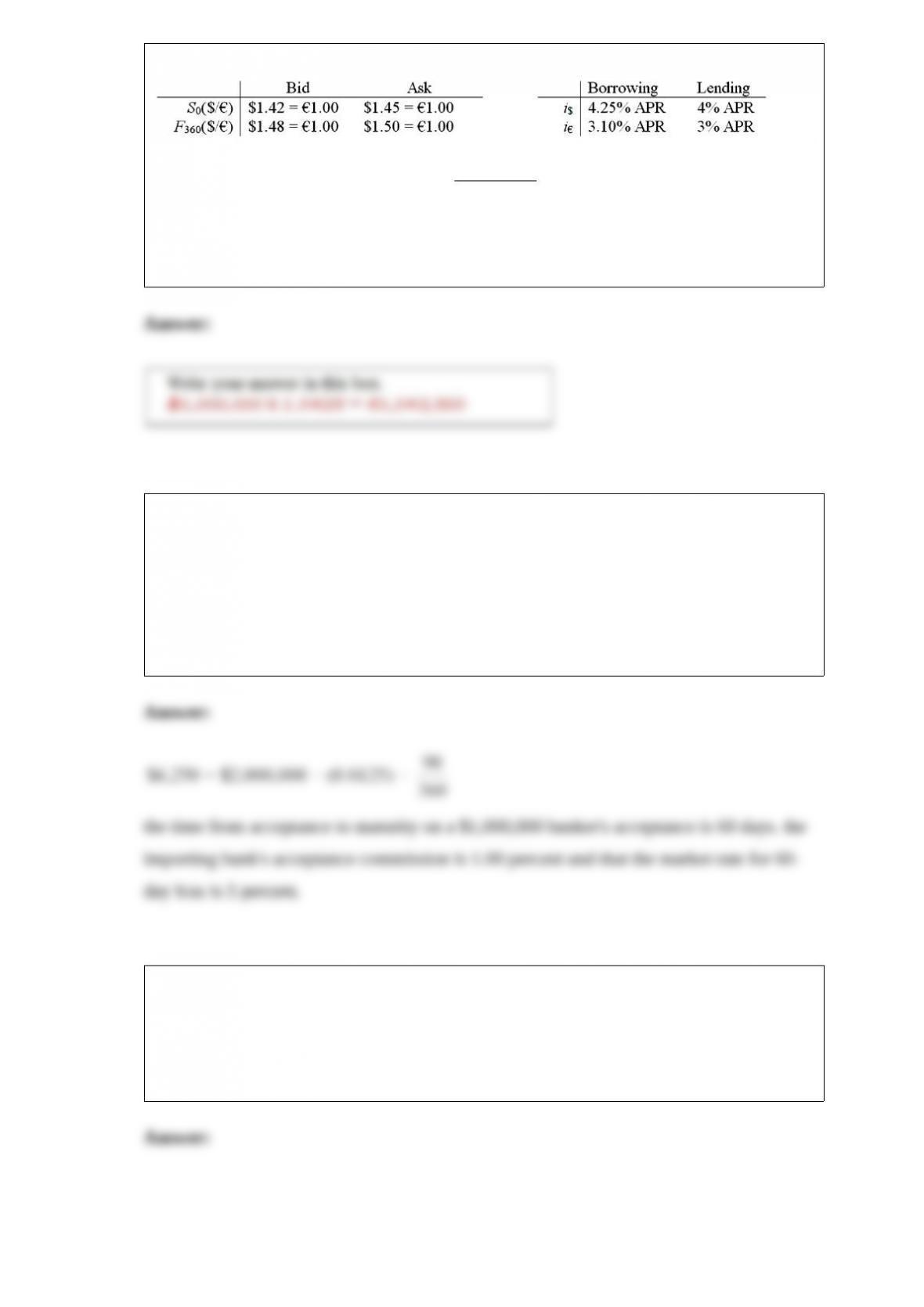
please note that your answers are worth zero points if they do not include currency
symbols ($, )
if you borrowed $1,000,000 for one year, how much money would you owe at
maturity?
22) the time from acceptance to maturity on a $2,000,000 banker’s acceptance is 90
days.
the importing bank’s acceptance commission is 1.25 percent and that the market rate for
90-day b/as is 6 percent.
calculate the amount the banker will receive if the exporter discounts the b/a with the
importer’s bank.
23) suppose that the swap that you proposed in question 2 is now 4 years old (i.e. there
is exactly one year to go on the swap). the fourth payment has already been made. if the
spot exchange rate prevailing in year 4 is $1.8778 = 1 and the 1-year forward exchange
rate prevailing in year 4 is $1.95 = 1, what is the value of the swap to the party paying
dollars? if the swap were initiated today the correct rates would be as shown:
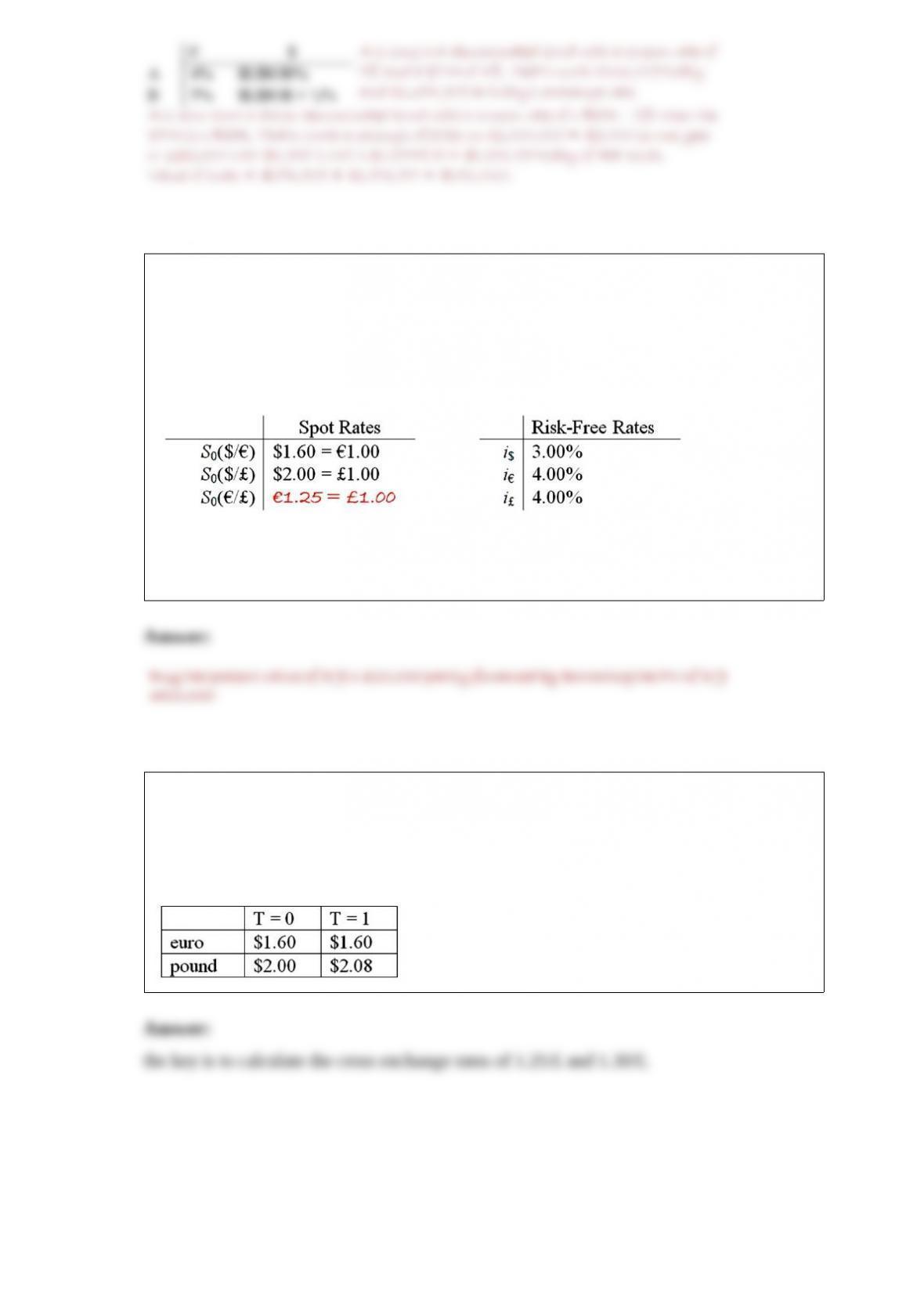
24) consider an option to buy £10,000 for 12,500. in the next period, if the pound
appreciates against the dollar by 37.5 percent then the euro will appreciate against the
dollar by ten percent. on the other hand, the euro could depreciate against the pound by
20 percent.
big hint: don’t round, keep exchange rates out to at least 4 decimal places.
state the composition of the replicating portfolio; your answer should contain “trading
orders” of what to buy and what to sell at time zero.
25) calculate the euro-based return an italian investor would have realized by investing
10,000 into a £50 british stock. the stock pays a £0.30 quarterly dividend, and after one
year the investment sells for £54.
spot exchange rates at the start and end of the year are shown in the table.