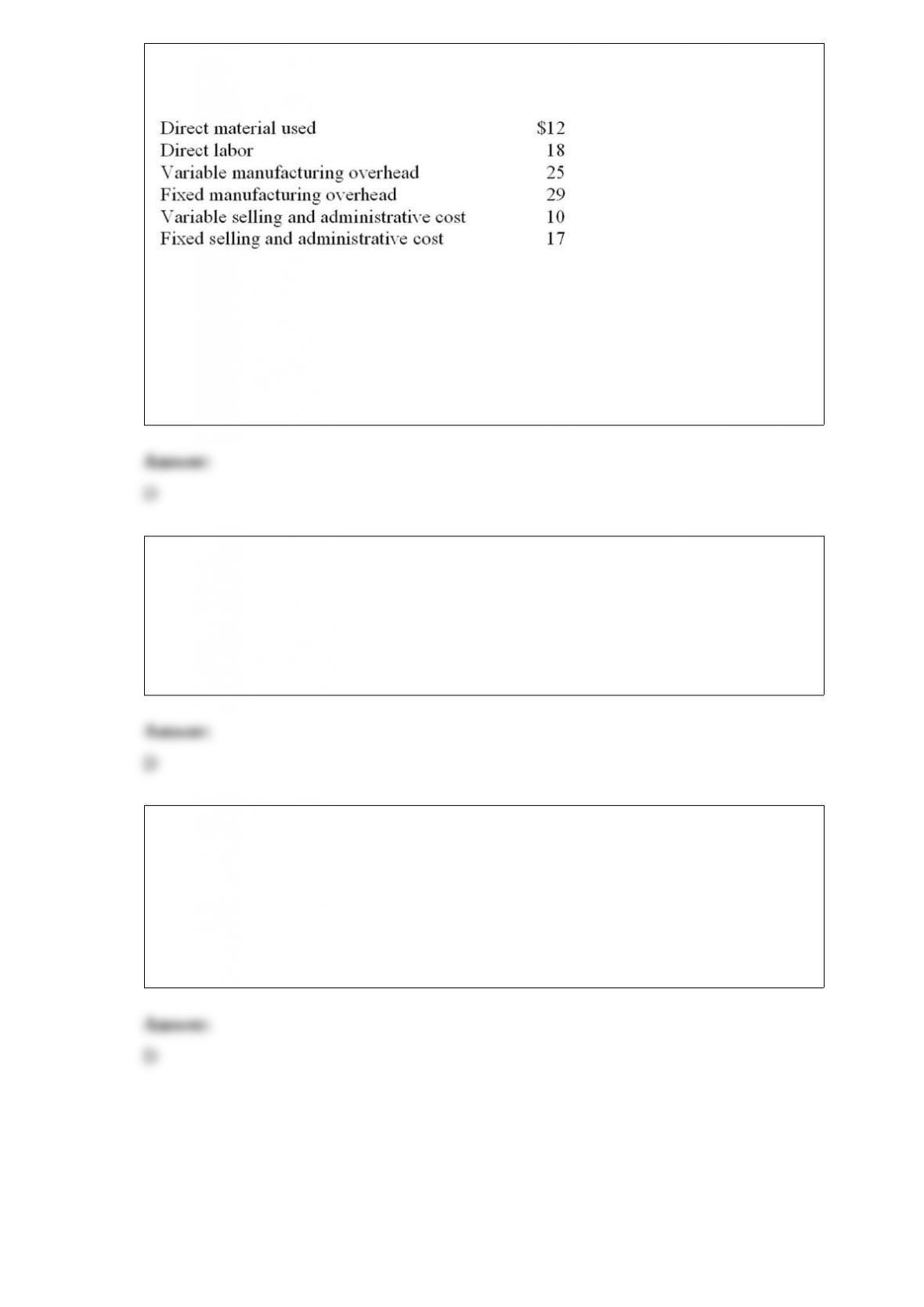
1) Lone Star has computed the following unit costs for the year just ended:
Under absorption costing, each unit of the company’s inventory would be carried at:
A.$35
B.$55
C.$65
D.$84
E.None of the other answers are correct
2) If a company desires to increase its safety margin, it should:
A.increase fixed costs
B.decrease the contribution margin
C.decrease selling prices, assuming the price change will have no effect on demand
D.stimulate sales volume
E.attempt to raise the break-even point
3) When considering whether to investigate a variance, managers should consider all of
the following except the variance’s:
A.size
B.pattern of recurrence
C.trends over time
D.nature, namely, whether it is favorable or unfavorable
E.controllability
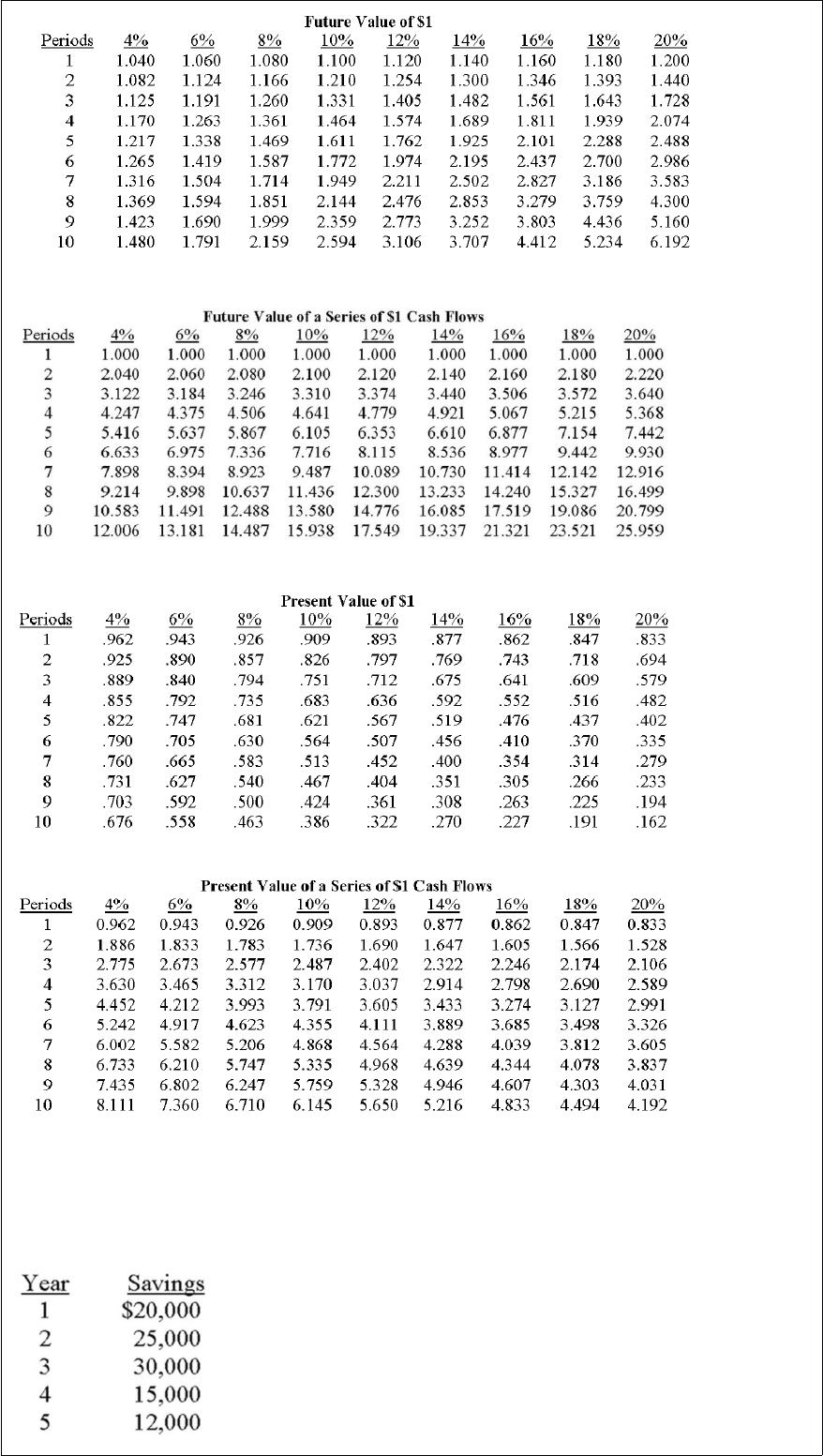
4)
The mayor of Statesville is considering the purchase of a new computer system for the
city’s tax department. The system costs $75,000 and has an expected life of five years.
The mayor estimates the following savings will result if the system is purchased:
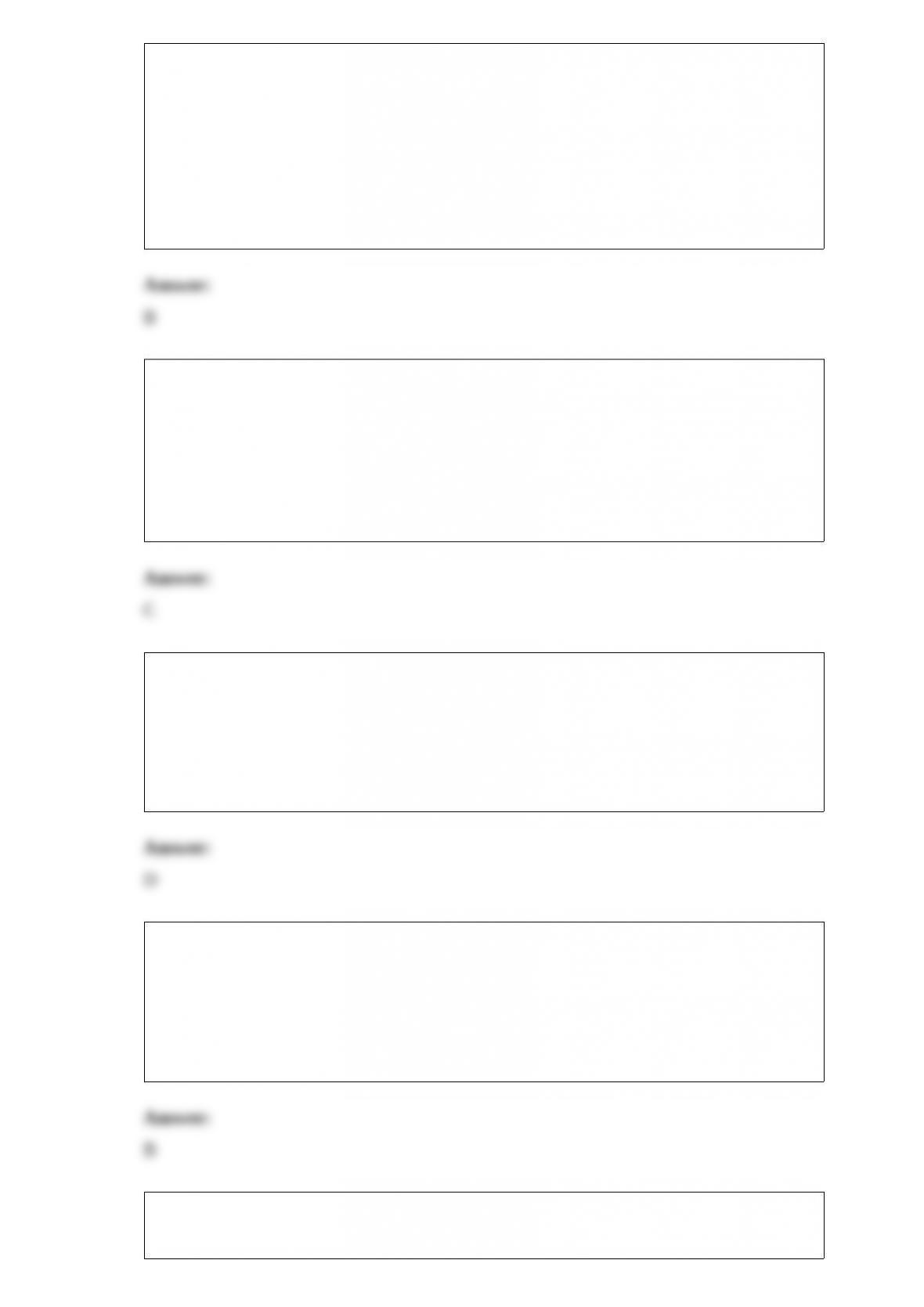
If Statesville uses a 10% discount rate for capital-budgeting decisions, the net present
value of the computer system would be:
A.$489
B.$4,057
C.$11,658
D.$63,342
E.$79,057
5) Which of the following conditions would cause absorption-costing income to be
higher than variable-costing income?
A.Units sold exceeded units produced
B.Units sold equaled units produced
C.Units sold were less than units produced
D.Sales prices decreased
E.Selling expenses increased
6) Which of the following is not an example of a committed fixed cost?
A.Property taxes
B.Depreciation on buildings
C.Salaries of management personnel
D.Outlays for advertising programs
E.Equipment rental costs
7) Which of the following types of companies would most likely use process costing?
A.Aircraft manufacturers
B.Textile manufacturers
C.Textbook publishers
D.Custom-machining firms
E.Shipbuilders
8) Which of the following business models considers financial, customer, internal
operating, and other measures in the evaluation of performance?

A.Deterministic simulation
B.Balanced scorecard
C.Payoff matrix
D.Decision tree
E.Chart of operating performance (COP)
9) Barrett Corporation had 6,500 units of work in process on April 1 . During April,
19,100 units were completed and as of April 30, 5,100 units remained in production.
How many units were started during April?
A.11,600
B.17,700
C.20,500
D.30,700
E.None of the other answers are correct
10) Sherman Company provides services in the retail flooring industry. The following
information is available for 20×5:
Twenty percent of the firm’s services are for cash and the remaining 80% are on
account. Of the credit services, 40% are collected in the month that the service is
provided, with the remaining 60% collected in the following month.
Services provided in January are expected to total $250,000 and grow at the rate of 5%
per month thereafter.
January’s cash collections are expected to be $240,400, and month-end receivables are
forecast at $120,000.
Monthly cash operating costs and depreciation during the first quarter of the year are
approximated at $250,000 and $15,000, respectively.
Sherman’s December 31, 20×4 balance sheet revealed accounts payable balances of
$28,000. This amount is related to the company’s operating costs and is expected to
grow to $36,000 by the end of 20×5’s first quarter. All operating costs are paid within 30
days of incurrence.
Company policy requires that a $20,000 minimum cash balance be maintained, and
Sherman’s 20×4 year-end balance sheet showed that the firm was in compliance with
policy by having cash of $23,000.
Required:
A. Determine the sales revenue earned that will appear on the income statement for the
quarter ended March 31, 20×5.
B. Compute the company’s first-quarter cash collections.
C. Compute the cash balance that would appear on the March 31, 20×5 balance sheet.
D. What are some possible actions the company could pursue if, at any time during the
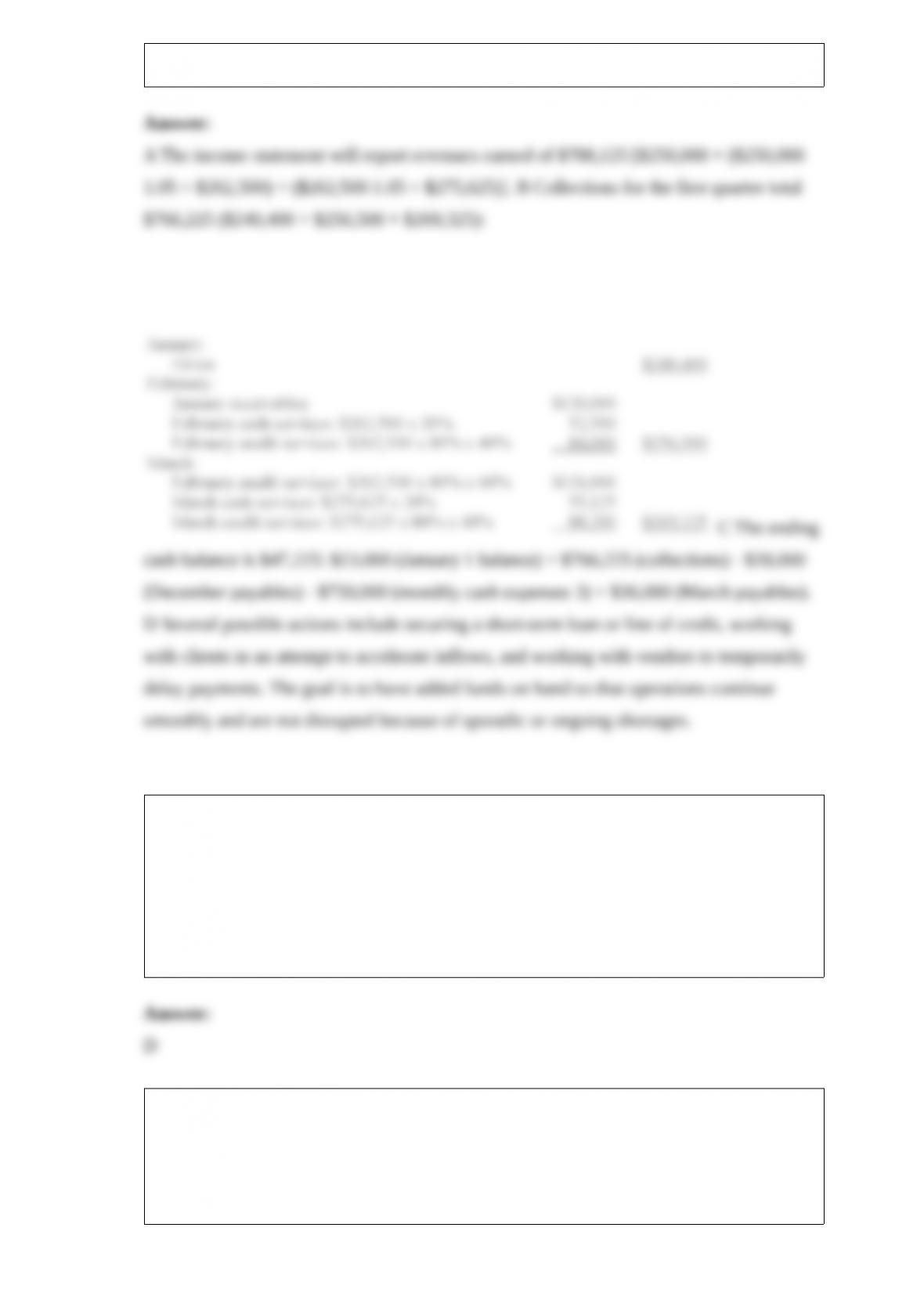
quarter, it finds that the cash balance has fallen below the stated minimum?
11) Which of the following would depict the logical order for preparing (1) a
production budget, (2) a cash budget, (3) a sales budget, and (4) a direct-labor budget?
A.1-3-4-2
B.2-3-1-4
C.2-1-3-4
D.3-1-4-2
E.3-1-2-4
12) Filipe’s Fresh Meats and Produce is a wholesale distributor that operates in central
California. An analysis of two of the company’s customers, Atriums Retirement Home
and Sigma SigmaSigma Fraternity, revealed the data that follow for a recent 12-month
period.
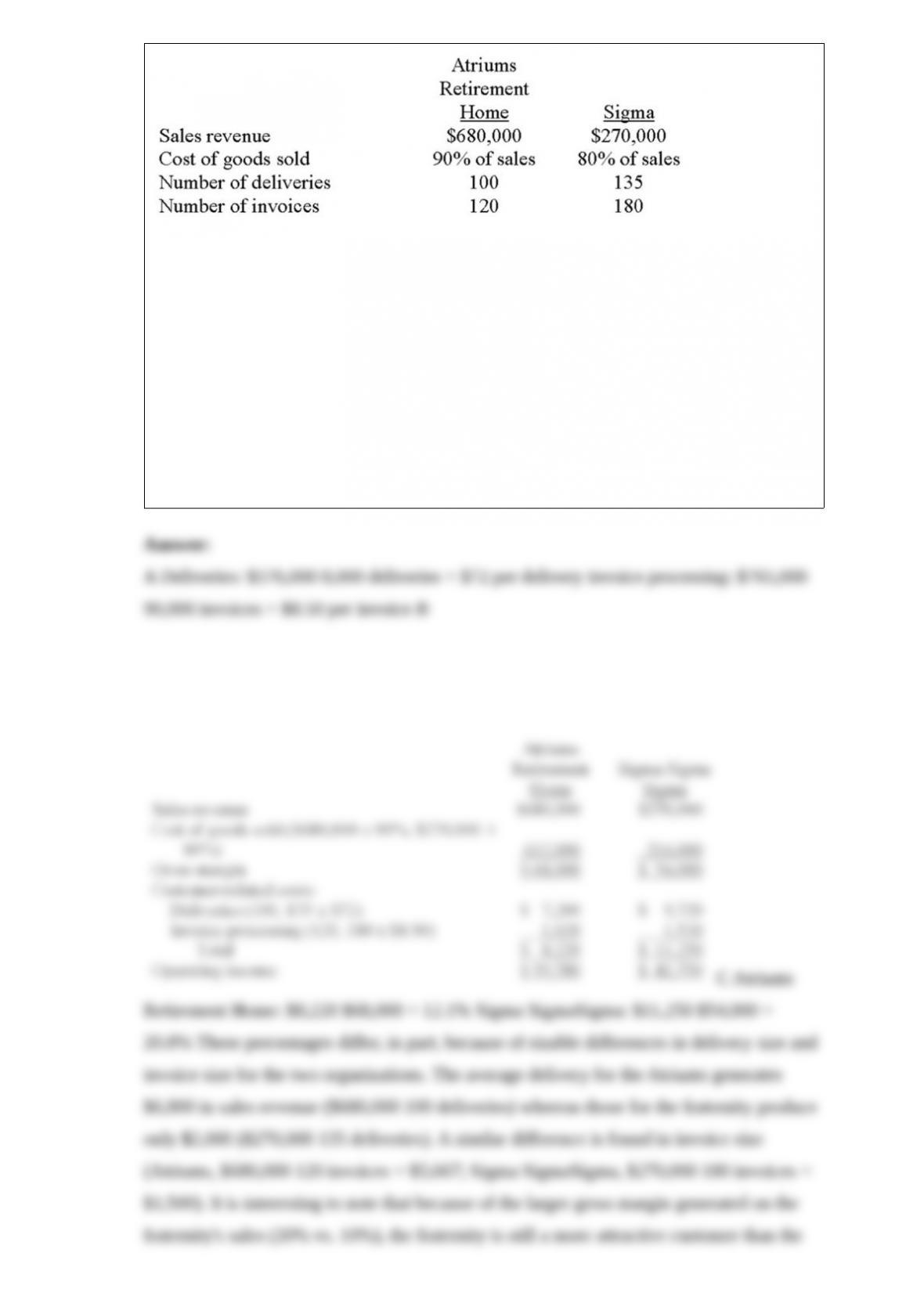
Filipe’s uses activity-based costing to determine the cost of servicing its customers. The
company had total delivery costs during the year of $576,000 and 8,000 deliveries,
along with cost of $765,000 for the administrative processing of 90,000 invoices.
Required:
A. Compute the pool rates for deliveries and invoice processing.
B. Compute the operating income that Ippilito’s earned from these two customers.
C. Compute the total of customer-related costs (deliveries and invoice processing) for
each customer as a percentage of gross margin, and analyze the results for management.
Explain any significant differences that you find.
13) Most companies base the calculation of the material price variance on the:
A.quantity of direct materials purchased
B.quantity of direct materials spoiled
C.quantity of direct materials that should have been used in achieving actual production
D.quantity of direct materials actually used
E.quantity of direct materials to be purchased during the next accounting period
14) Yang Manufacturing, which uses the high-low method, makes a product called Yin.
The company incurs three different cost types (A, B, and C) and has a relevant range of
operation between 2,500 units and 10,000 units per month. Per-unit costs at two
different activity levels for each cost type are presented below.
If Yang produces 10,000 units, the total cost would be:
A.$90,000
B.$100,000
C.$110,000
D.$125,000
E.None of the other answers is correct
15) Which of the following is not a type of quality cost?
A.External failure costs
B.Internal failure costs
C.All of the answers are correct
D.Prevention costs
E.Appraisal costs
16) A profit center manager:
A.does not have the ability to produce revenue
B.may be involved with the sale of new marketing programs to clients
C.would normally be held accountable for producing an adequate return on invested
capital
D.often oversees divisional operations
E.may be the manager who oversees the operations of a retail store
17) Sand Box Company is choosing new cost drivers for its accounting system. One
driver is labor hours; the other is a combination of machine hours for unit variable costs
and number of setups for a pool of batch-level costs. Data for the past year follow.
Assume that the two separate pools are used. The flexible budget dollar amounts for the
actual level of machine hours and actual number of setups are:
A.Choice A
B.Choice B
C.Choice C
D.Choice D
E.Choice E
18) Within the relevant range, a curvilinear cost function can sometimes be graphed as
a:
A.sloping straight line
B.jagged line
C.vertical straight line
D.curved line
E.horizontal straight line
19) Which of the following statements about material requisitions is false?
A.Material requisitions are often computerized
B.Material requisitions are a common example of source documents
C.Material requisitions contain information that is useful to the cost accounting
department
D.Material requisitions authorize the transfer of materials from the production floor to
the raw materials warehouse
E.Material requisitions are routinely linked to a bill of materials that lists all of the
materials needed to complete a job
20) Which of the following are needed under weighted-average process costing to
calculate the cost of goods completed during the period?
A.Choice A
B.Choice B
C.Choice C
D.Choice D
E.Choice E
21) Which of the following is used in the calculation of both return on investment and
residual income?
A.Total stockholders’ equity
B.Retained earnings
C.Invested capital
D.Total liabilities
E.The cost of capital
22) Walker, Inc. has a Pennsylvania-based division that produces electronic
components, with a very strong domestic market for circuit no. 222 . The variable
production cost is $140, and the division can sell its entire output for $1 Walker is
subject to a 30% income tax rate.
Alternatively, the Pennsylvania division can ship the circuit to a division that is located
in Mississippi, to be used in the manufacture of a global positioning system (GPS).
Information about the global positioning system and Mississippi’s costs follow.
Selling price: $380
Circuit shipping and handling fees to Mississippi: $10
Labor, overhead, and additional material costs of GPS: $120
Required:
A. Assume that the transfer price for the circuit was $160. How would Pennsylvania’s
divisional manager likely react to a corporate decision to transfer the circuits to
Mississippi? Why?
B. Calculate Pennsylvania income, Mississippi income, and income for the company as
a whole if the transfer took place at $160 per circuit.
C. Assuming that transfers took place at a price higher than $160, would the revised
price increase, decrease, or have no effect on Walker’s income? Briefly explain.
D. Assume that Walker moved its GPS production facility to a division located in
Germany, which is subject to a 45% tax rate. The transfer took place at $180. Shipping
fees (absorbed by the overseas division) doubled to $20; the German division paid an
import duty equal to 10% of the transfer price; and labor, overhead, and additional
material costs were $150 per GPS. If the German selling price of the GPS amounted to
$450, calculate Pennsylvania income, German income, and income for Walker as a
whole.
E. Suppose that U.S. and German tax authorities allowed some discretion in how
transfer prices were set. Given the difference in tax rates, should Walker attempt to
generate the majority of its income in Pennsylvania or Germany? Why?
23) Which of the following budgets is based on many other master-budget components?
A.Direct labor budget
B.Overhead budget
C.Sales budget
D.Cash budget
E.Selling and administrative expense budget
24) Baker, Inc. produces a number of components that are used in home theater
systems. Fred Briggs, head of the company’s market research department, has identified
the need for a new component that will most likely sell for $75. Projected volume levels
are anticipated to reach 28,000 units in the first year, as several firmly entrenched
competitors will be introducing a similar product in the not-too-distant future.
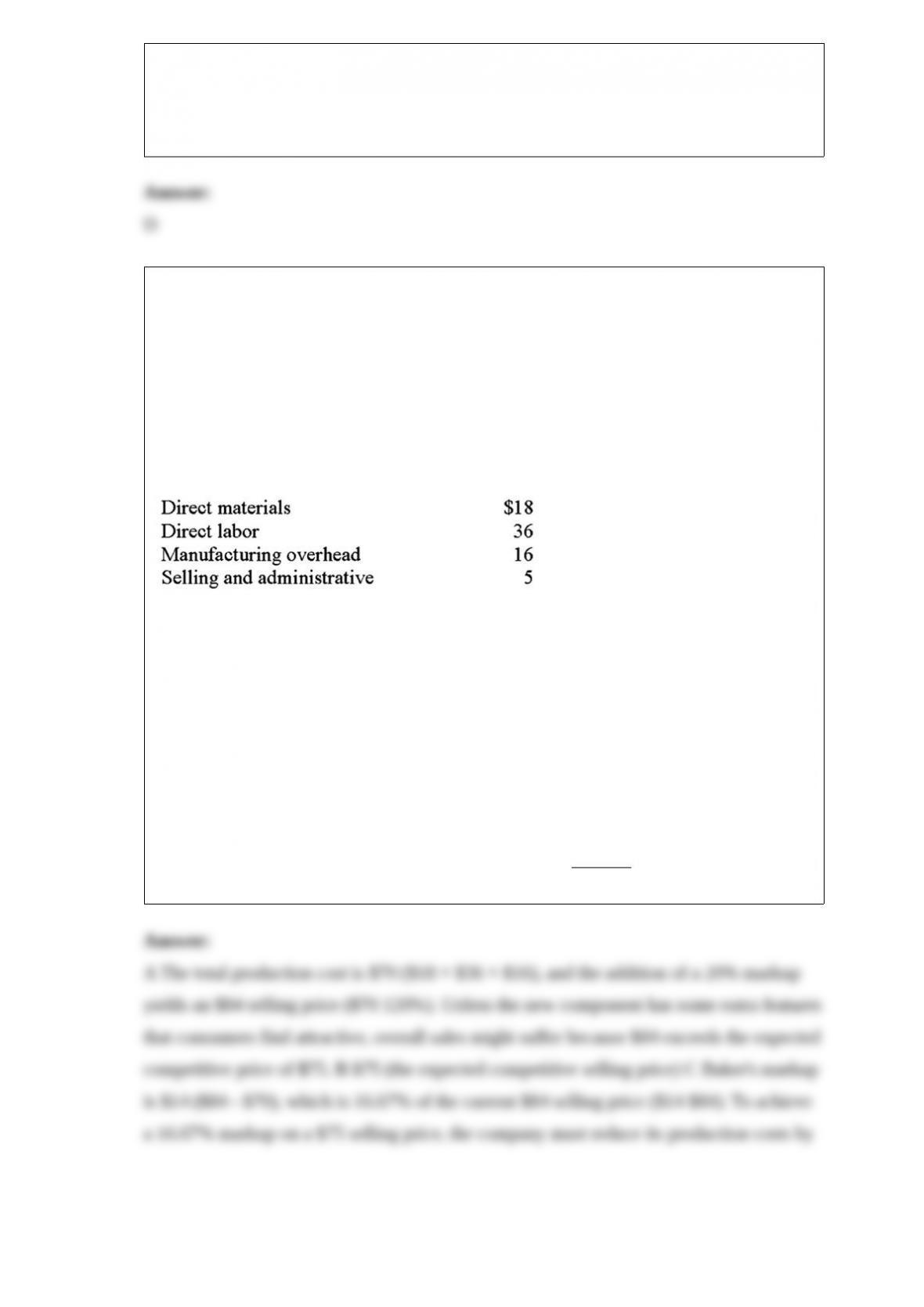
Conversations with Baker’s engineers and reviews of cost accounting data related to
similar products that the company manufactures resulted in the following cost estimates
for the new component:
Baker currently uses cost-plus pricing and adds a 20% markup on total production cost
to arrive at what is normally a competitive selling price.
Required:
A. What is the anticipated selling price of the new component if Baker uses its current
pricing policy? What difficulties, if any, might the company face in the marketplace?
B. Assume that Baker decides to switch to target costing. What price would the
company charge for the new component?
C. With the switch to target costing, what would Baker have to do to the component’s
manufacturing cost to achieve the normal profit margin on sales? Be specific and show
calculations.
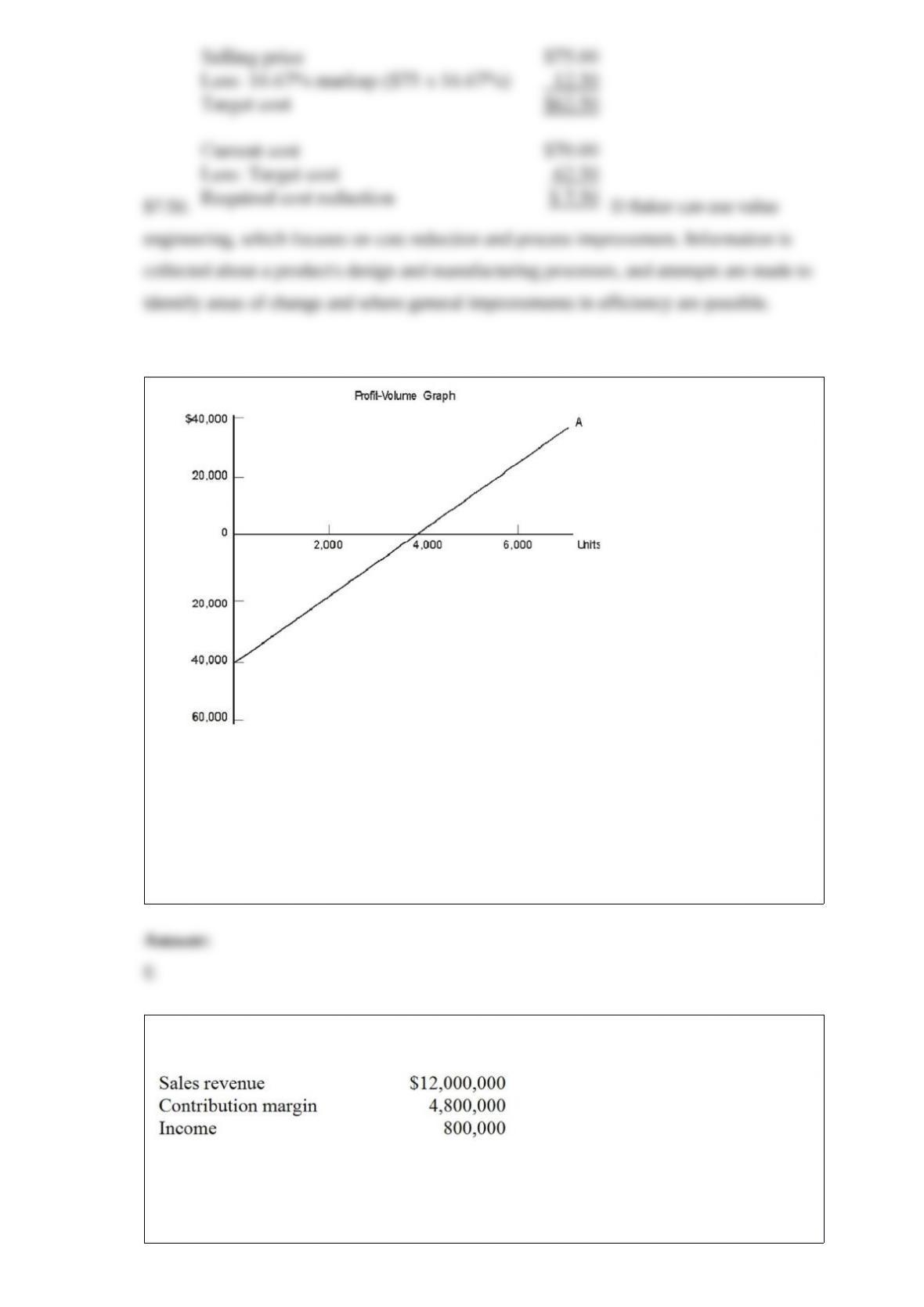
25)
Refer to the figure above. Line A is the:
A.fixed cost line
B.variable cost line
C.total cost line
D.total revenue line
E.profit line
26) The following information relates to Dazie Company:
Dazie’s operating leverage factor is closest to:
A.0.067
B.0.167

C.0.400
D.2.500
E.6.000
27) The provisions of section 302 of the Sarbanes-Oxley Act (as originally enacted)
require the signing officers of a company to do all of the following except:
A.Audit the internal controls over financial reporting
B.Establish the internal controls over financial reporting
C.Maintain the internal controls over financial reporting
D.Evaluate the internal controls over financial reporting
E.Disclose material weaknesses in the internal controls over financial reporting
28) The following data relate to product no. 89 of Des Moines Corporation:
Direct material standard: 3 square feet at $2.50 per square foot
Direct material purchased: 30,000 square feet at $2.60 per square foot
Direct material consumed: 29,200 square feet
Manufacturing activity: 9,600 units completed
Assume that the company computes variances at the earliest point in time.
The direct-material price variance is:
A.$2,880U
B.$2,920F
C.$2,920U
D.$3,000F
E.$3,000U
29) Occular is studying whether to drop a product because of ongoing losses. Costs that
would be relevant in this situation would include variable manufacturing costs as well
as:
A.factory depreciation
B.avoidable fixed costs
C.unavoidable fixed costs
D.allocated corporate administrative costs
E.general corporate advertising
30) Non-value-added costs occur in nonmanufacturing organizations as well as in
manufacturing firms.
Required:
A. Explain what is meant by a non-value-added cost.
B. Identify two potential non-value-added costs for each of the following service
providers: airlines, banks, and hotels.
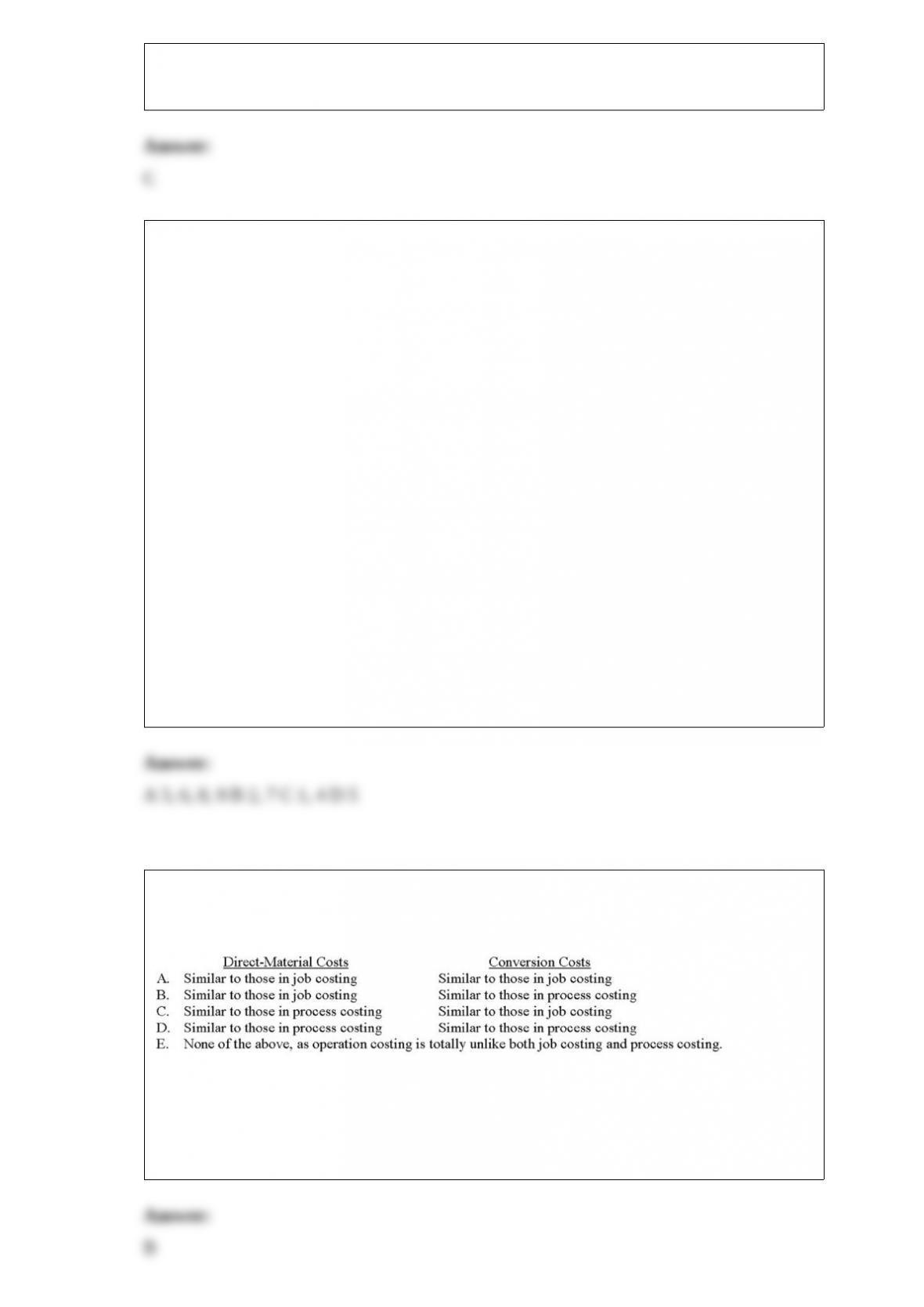
31) Master Products has the following information for the year just ended:
The company’s sales-price variance is:
A.$3,000 unfavorable
B.$7,000 unfavorable
C.$7,000 favorable
D.$7,500 unfavorable
E.$7,500 favorable
32) Consider the statements that follow.
1> Variable selling costs are expensed when incurred.
2> The income statement discloses a company’s contribution margin.
3> Fixed manufacturing overhead is attached to each unit produced.
4> Direct labor becomes part of a unit’s cost.
5> Sales revenue minus cost of goods sold equals contribution margin.
6> This method must be used for external financial reporting.
7> Fixed selling and administrative expenses are treated in the same manner as fixed
manufacturing overhead.
8> This method is sometimes called full costing.
9> This method requires the calculation of a fixed manufacturing cost per unit.
Required:
Determine which of the nine statements:
A. Relate only to absorption costing.
B. Relate only to variable costing.
C. Relate to both absorption costing and variable costing.
D. Relate to neither absorption costing nor variable costing.
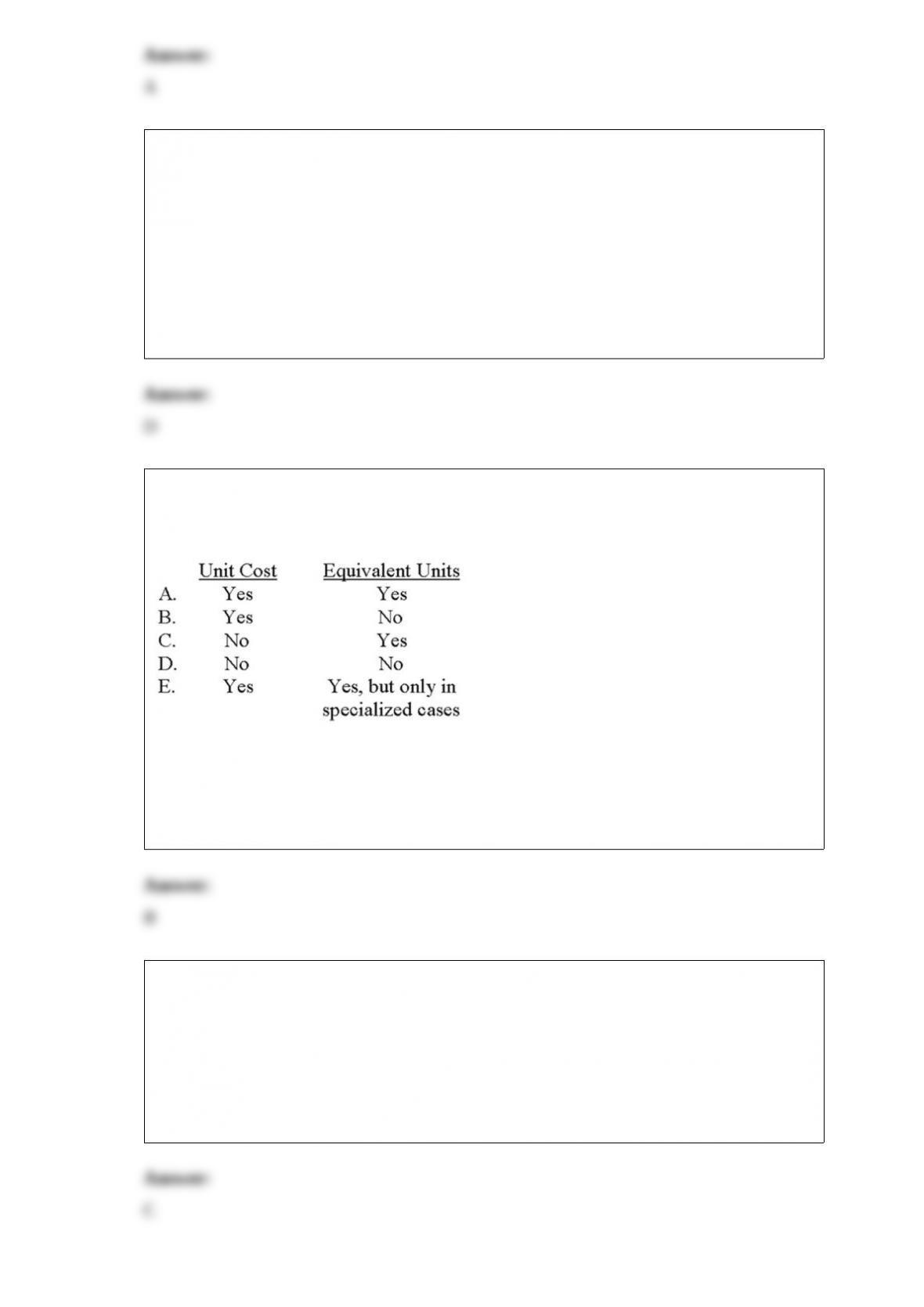
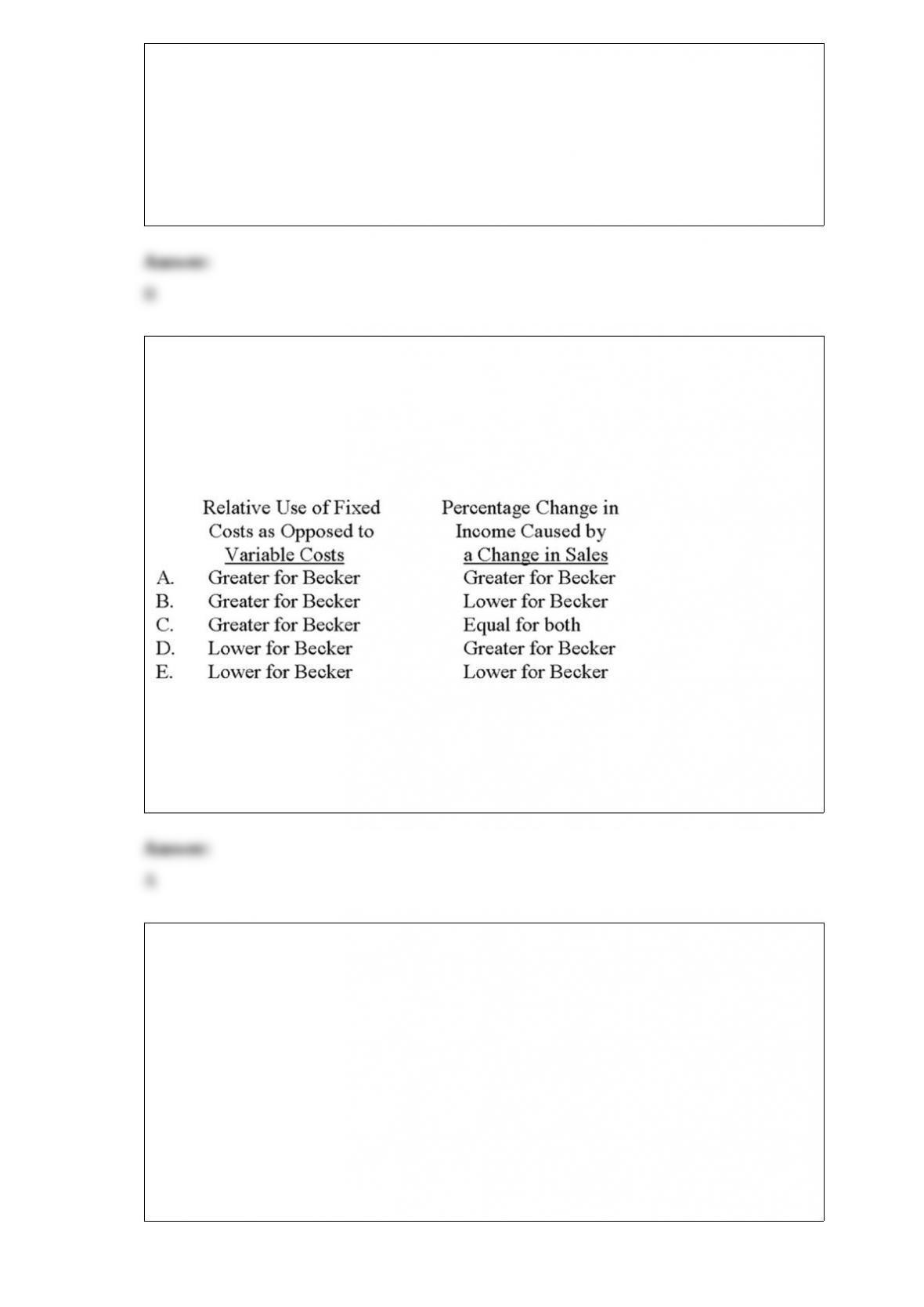
33) Which of the following best describes the procedures used in operation costing to
assign direct-material and conversion costs to production?
A.Choice A
B.Choice B
C.Choice C
D.Choice D
E.Choice E
34) Which of the following occurs if a company experiences an increase in its fixed
costs?
A.Net income would increase
B.The break-even point would increase
C.The contribution margin would increase
D.The contribution margin would decrease
E.More than one of the other answers would occur
35) You are analyzing Becker Corporation and Newton Corporation and have
concluded that Becker has a higher operating leverage factor than Newton. Which one
of the following choices correctly depicts (1) the relative use of fixed costs (as opposed
to variable costs) for the two companies and (2) the percentage change in income
caused by a change in sales?
A.Choice A
B.Choice B
C.Choice C
D.Choice D
E.Choice E
36) A company that uses activity-based budgeting performs the following:
1Plans activities for the budget period.
2Forecasts the demand for products and services as well as the customers to be served.
3Budgets the resources necessary to carry out activities.
Which of the following denotes the proper order of the preceding activities?
A.1-2-3
B.2-1-3
C.2-3-1
D.3-1-2
E.3-2-1
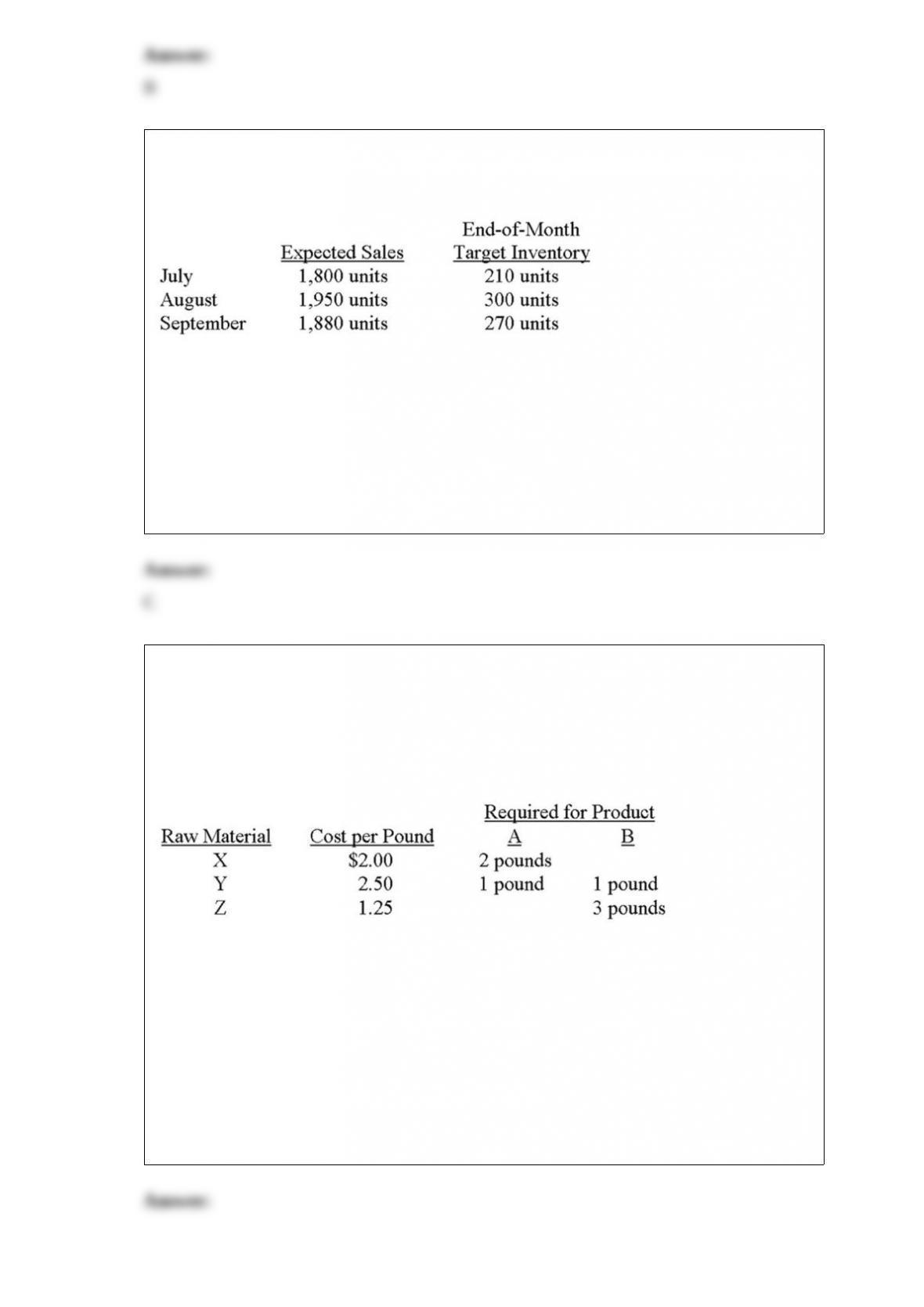
37) Bison Sporting Goods sells bicycles throughout the northeastern United States. The
following data were taken from the most recent quarterly sales forecast:
On the basis of the information presented, how many bicycles should the company
purchase in August?
A.1,860
B.1,950
C.2,040
D.2,250
E.None of the other answers are correct
38) Jaergin manufactures two products: A and B. The company predicts a sales volume
of 10,000 units for product A and ending finished-goods inventory of 2,000 units. These
numbers for product B are 12,000 and 3,000, respectively. Jaergin currently has 7,000
units of A in inventory and 9,000 units of B.
The following raw materials are required to manufacture these products:
Product A requires three hours of cutting time and two hours of finishing time; B
requires one hour and three hours, respectively. The direct labor rate for cutting is $10
per hour and $18 per hour for finishing.
Required:
A. Prepare a production budget in units for products A and B.
B. Prepare a materials usage budget in pounds and dollars for materials X, Y, and Z.
C. Prepare a direct labor budget in hours and dollars for product A.