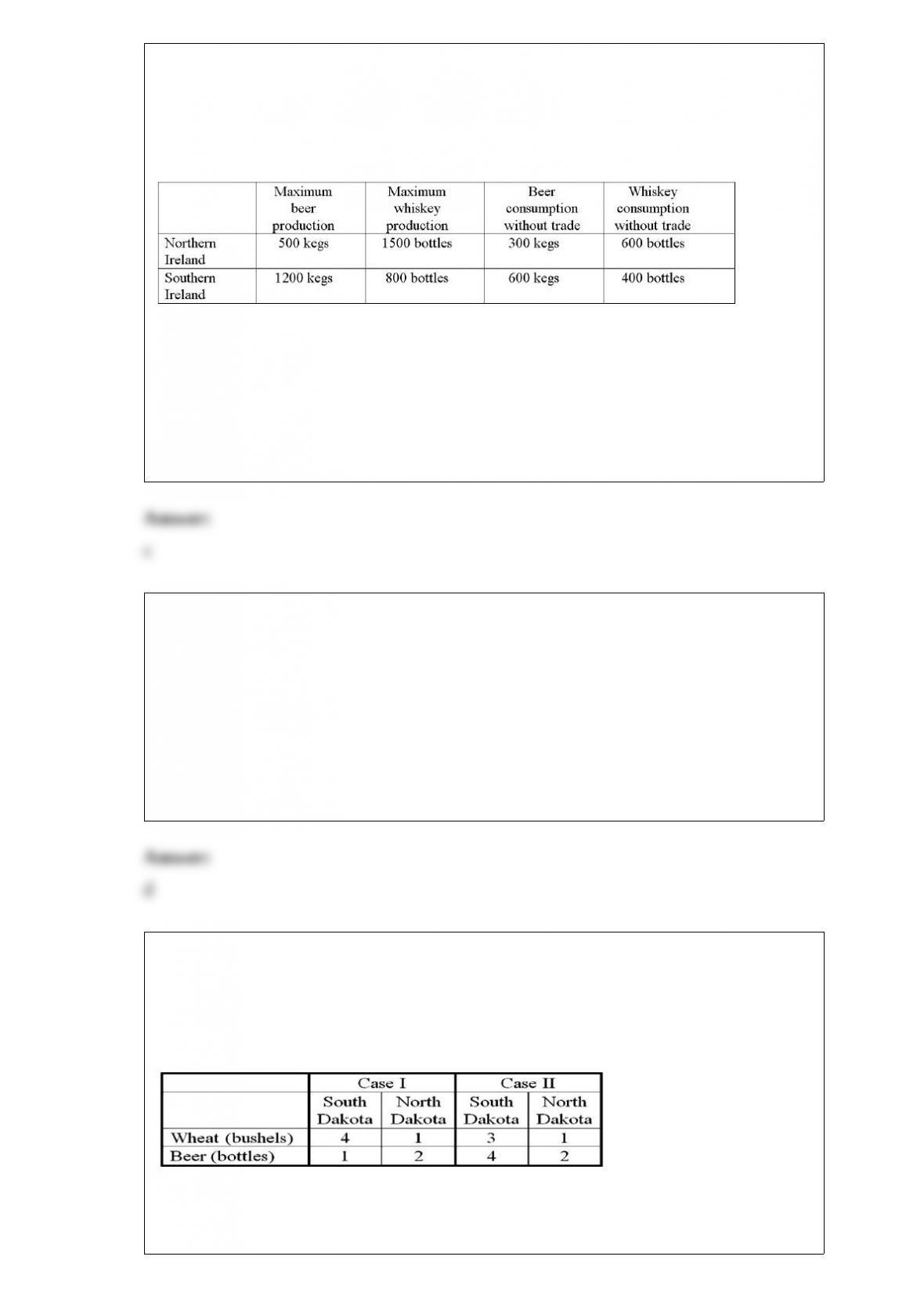
1) the first two columns give the maximum daily amounts of beer and whiskey that
southern ireland and northern ireland can produce when they completely specialize in
one or other product. the last two columns give each country’s consumption without
trade.
what is the price of beer without trade in northern ireland?
a.2 bottles of whiskey = 3 kegs of beer
b.5 bottles of whiskey = 12 kegs of beer
c.3 bottles of whiskey = 1 keg of beer
2) which of the following are reasons why a bank may establish a multinational
operation?
a.low marginal and transaction costs
b.home nation information services, and prestige
c.growth and risk reduction
d.all of the above
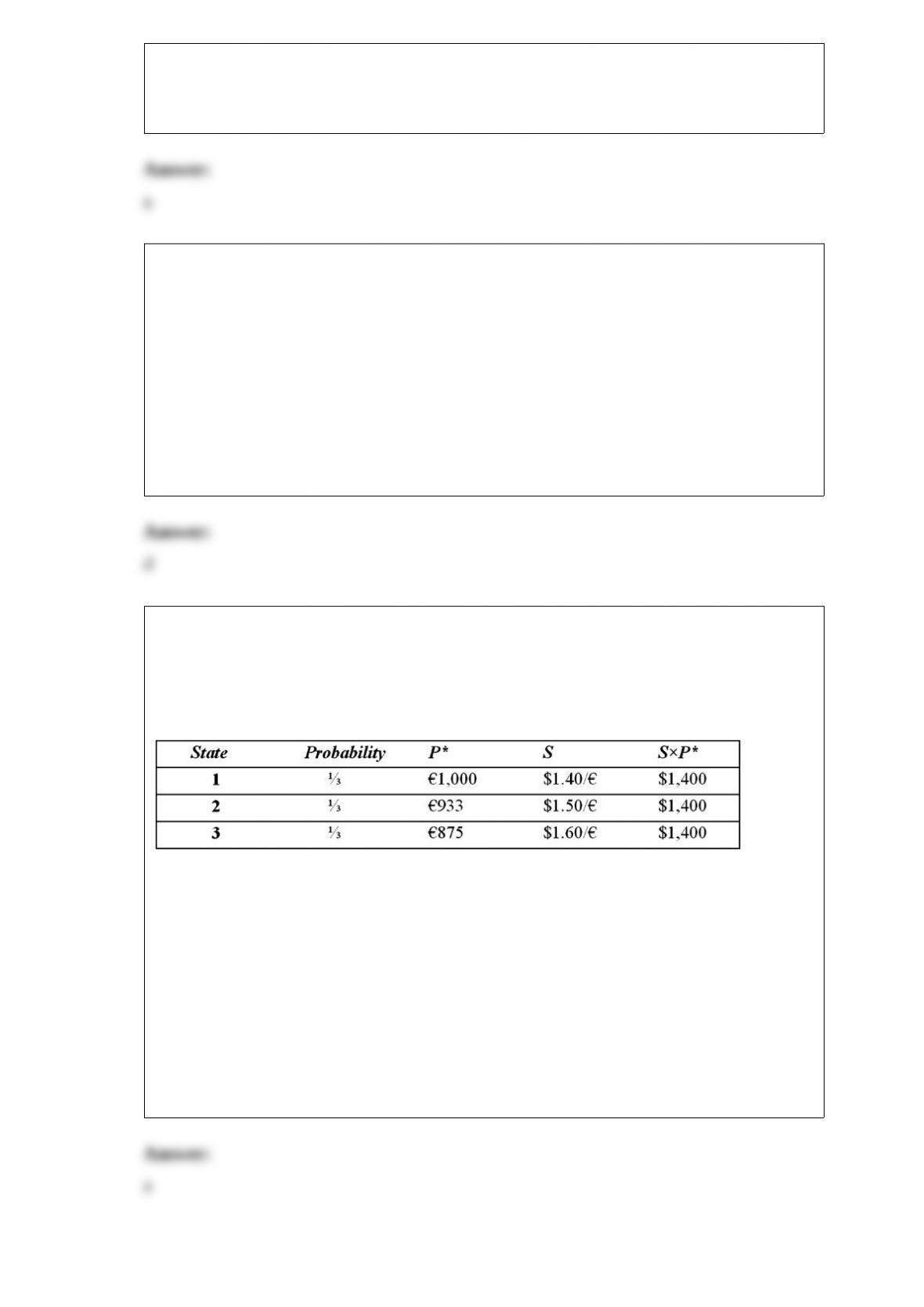
3) 76the table below shows the bushels of wheat and the bottles of beer that north and
south dakota can produce per day of labor under two different hypothetical situations
(cases i and ii).
which state has an absolute advantage in producing wheat in case i?
a.south dakota
b.north dakota
c.neither state
4) privatization is often seen as a cure for bureaucratic inefficiency and waste; some
economists estimate that privatization improves efficiency and reduces operating costs
by as much as
a.5 percent
b.10 percent
c.15 percent
d.20 percent
5) suppose a u.s. firm has an asset in italy whose local currency price is random. for
simplicity, suppose there are only three states of the world and each state is equally
likely to occur. the future local currency price of this asset (p*) as well as the future
exchange rate (s) will be determined, depending on the realized state of the world.
assume that you choose to “hedge” this asset by selling forward the expected value of
the euro denominated cash flow at f1($/£) = $1.50/. calculate your cash flows in each of
the possible states.
a.$1,400, $1,400, $1,400
b.$1,496.6, $1,400, $1,306.40
c.$1,404, $1,404. $1,404
d.none of the above

6) in what country do the three largest shareholders control, on average, about 60
percent of the shares of a public company?
a.united states
b.canada
c.great britain
d.italy
7) in the reality of corporate governance at the turn of this century,
a.boards of directors are often dominated by management-friendly insiders
b.a typical board of directors often has relatively few outside directors who can
independently and objectively monitor the management
c.managers of one firm often sit on the boards of other firms, whose managers are on
the board of the first firm. due to the interlocking nature of these boards, there can exist
a culture of “i’ll overlook your problems if you overlook mine.”
d.all of the above have been true to a greater or lesser extent in the recent past
8) the record of investing in u.s.-based international mutual funds
a.shows that most funds have a beta much less than one
b.shows them to be a raging arbitrage opportunity
c.shows that they offer less diversification benefits than just investing in u.s.-based
mncs
d.none of the above
9) the table below shows the bushels of wheat and the bottles of beer that north and
south dakota can produce per day of labor under two different hypothetical situations
(cases i and ii).
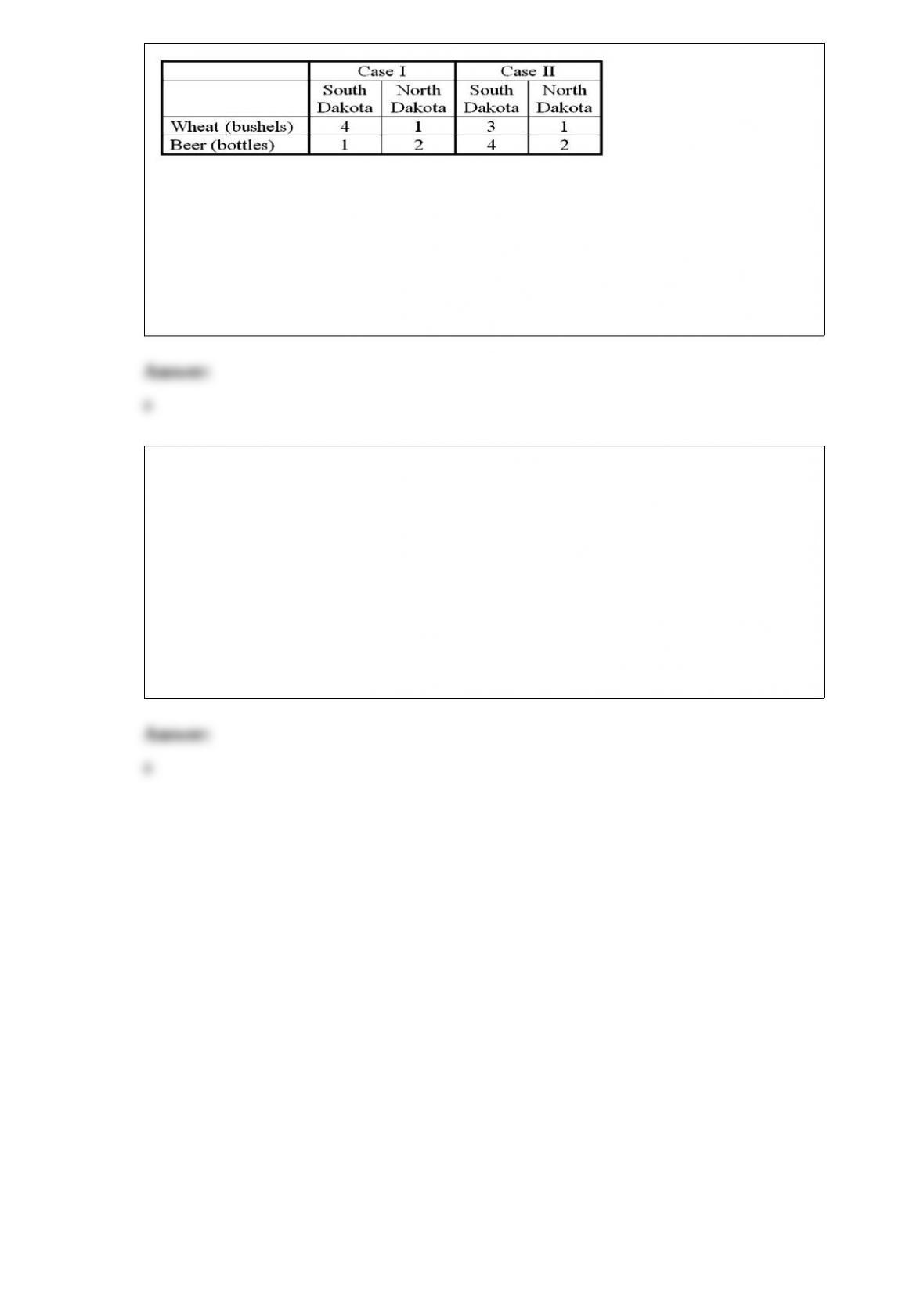
which state has an absolute advantage in producing beer in case ii?
a.south dakota
b.north dakota
c.neither state
10) the current account includes
a.the export and import of goods and services
b.all purchases and sales of assets such as stocks, bonds, bank accounts, real estate, and
businesses
c.all purchases and sales of international reserve assets such as dollars, foreign
exchanges, gold, and special drawing rights (sdrs)
d.none of the above