A rise in the annual interest rates will cause
a. the principal amount of a bond to increase.
b. the principal amount of a bond to decrease.
c. the present value of a bond to decrease.
d. the present value of a bond to increase.
Answer:
A simple statistical model that assumes that the value of a variable at any date depends
just on its own past values plus an error term is known as a
a. vector autoregression (VAR) model.
b. univariate time-series model.
c. structural VAR model.
d. structural equilibrium model.
Answer:
If the annual inflation rate is 3 percent in France and 5 percent in Italy, by how much
will the real exchange rate change over a year? Assume that both countries use the euro
so their nominal exchange rate cannot change.

a. 2 percent
b. 3/5 percent
c. −3/5 percent
d. −2 percent
Answer:
If the supply of dollars in exchange for euro increases,
a. the dollar depreciates against the euro.
b. the dollar appreciates against the euro.
c. the exports of U.S. to Europe becomes costlier.
d. the demand for European goods increase in the U.S.
Answer:
A mechanism by which a short-term loan is made, allowing a shopper to purchase
goods or services today and pay for it at a later date, is known as a card.
a. debit

b. commodity
c. credit
d. fiat
Answer:
A treasury bond issued by the U.S. government
a. does not have a maturity date.
b. makes periodic payments of specific amounts.
c. pays dividends to the bond holders.
d. is a short-term debt security.
Answer:
Shares in the Federal Reserve Banks are owned by
a. the federal government of the United States.
b. banks that are members of the Federal Reserve System.
c. the governments of the states in which they are located.

d. private citizens who own stock in them.
Answer:
Under an activist rule,
a. the growth rate of money supply is greater than the inflation rate.
b. monetary policy is allowed to change over the course of the business cycle.
c. the growth rate of money supply is lower than the inflation rate.
d. monetary policy is not changed over the course of the business cycle.
Answer:
If one country is hit with a shock that increases the value of its currency and causes its
net exports to decline and the net exports and income of other countries to rise, then the
business cycle is being transmitted internationally through ______effect.
a. a trade
b. an interest-rate
c. an exchange-rate
d. an expected-inflation

Answer:
The is a place where banks can request loans from the Federal Reserve.
a. money market
b. domestic trading desk
c. Treasury
d. discount window
Answer:
The Federal Reserve’s function as the lender of last resort leads to the problem of
a. economic instability.
b. contagion.
c. bank run.
d. adverse selection.
Answer:

In the liquidity-preference model, a decrease in people’s incomes causes
a. both the nominal interest rate and the equilibrium quantity of money to increase.
b. the nominal interest rate to increase and the equilibrium quantity of money to
decrease.
c. the nominal interest rate to decrease and the equilibrium quantity of money to remain
unchanged.
d. both the nominal interest rate and the equilibrium quantity of money to decrease.
Answer:
An investor earns dividends of $450 during the course of a year. At the end of the year,
the stock is worth $10,700.
If the capital-gains yield on the stock over the year is calculated at 8 percent the
approximate worth of the stock at the beginning of the year was
a. $9,007.
b. $9,457.
c. $9,907.
d. $10,357.
Answer:

John bought an inflation-indexed security for $10,000 in January The security promises
an annual interest rate of 5 percent and makes payments twice a year. If the value of the
inflation index in January 2014 was 106 and its value in July 2014 was 105, John will
receive an interest income of ____.
a. $504.76
b. $226.40
c. $182.72
d. $368.56
Answer:
Green bank has transaction accounts worth $200 million. If the required reserve ratio is
10%, Green bank holds_____as required reserves.
a. $220 million
b. $180 million
c. $60 million
d. $20 million
Answer:

A commercial bank that gets its charter from a state government (the state in which its
headquarters are located) is called a bank.
a. local
b. community
c. charter
d. state
Answer:
The fundamental value of a stock varies
a. directly with the rate of discount.
b. inversely with the growth rate of earnings on the stock.
c. directly with previous year’s actual earnings on the stock.
d. inversely with the time frame for which a stock is held.
Answer:

An investor buys a stock for $10,000 and earns dividends of $250 during the course of
the year. At the end of the year, the stock is worth $9,300. The total return for the year is
a. 2.5 percent.
b. −2.5 percent.
c. −4.5 percent.
d. −7.0 percent.
Answer:
The view that a change in the timing of taxes does not affect people’s consumption is
known as the
a. tax equalization postulate.
b. fiscal policy equality law.
c. Lucas critique.
d. Ricardian equivalence proposition.
Answer:
When the Fed uses its policy tools to smooth out the business cycle, the policy is
referred to as a(n)

a. stabilization policy.
b. Pareto-efficient policy.
c. contractionary policy.
d. expansionary policy.
Answer:
Labor productivity multiplied by the number of hours worked gives
a. the hourly wage rate.
b. the average product of labor.
c. total factor productivity.
d. total output.
Answer:
Which of the following statements correctly identifies a difference between a stock
exchange and a stock index?
a. A stock exchange refers to a market where stocks of government-owned enterprises
are traded, while a stock index refers to a market where the stocks of privately-owned

enterprises are traded.
b. A stock index refers to a market where stocks of government-owned enterprises are
traded, while a stock exchange refers to a market where the stocks of privately-owned
enterprises are traded.
c. A stock exchange refers to a market where stocks are traded, while a stock index
reflects the average price of a collection of stocks.
d. A stock index refers to a market where stocks are traded, while a stock exchange
reflects the average price of a collection of stocks.
Answer:
Compensation of workers is defined as
a. wages and salaries plus benefits earned by the workers.
b. wages and salaries earned by the worker.
c. non-monetary benefits earned by the workers.
d. the tax rates which are applicable on the wages earned by the workers.
Answer:
A measure of the total supply of money in the economy is referred to as

a. monetary aggregate.
b. liquidity total.
c. the velocity of money.
d. inside money.
Answer:
If 1 euro is equal to 20 dollars,
a. $1 would trade for 83 euros.
b. $1 would trade for 20 euros.
c. $1 would trade for 20 euros
d. $1 would trade for 33 euros.
Answer:
A steady state
a. is a shortrun equilibrium which describes what the exogenous variables in a model
will do if they are not disturbed by any other variable in the model.
b. is a shortrun equilibrium which describes what the endogenous variables in a model

will do if they are not disturbed by any other variable in the model.
c. is a longrun equilibrium which describes what the exogenous variables in a model
will do if they are not disturbed by any other variable in the model.
d. is a longrun equilibrium which describes what the endogenous variables in a model
will do if they are not disturbed by any other variable in the model.
Answer:
An investor bought a one-year government bond of Country X with a nominal interest
rate of 6 percent. If the current exchange rate between the U.S. dollar and Country X’s
currency is 50 units per dollar and the expected exchange rate after a year is 48 units
per dollar, what is the expected dollar return of investing in Country X’s bond?
a. 4 percent
b. 3 percent
c. 8 percent
d. 12 percent
Answer:
If money is gold or silver, it is called money
a. fiat

b. inside
c. commodity
d. glitter
Answer:
Why have economists abandoned the use of money-growth rules in the United States?
a. Because the Fed can no longer control the money supply
b. Because the velocity growth rate has been too stable
c. Because of instability in money demand
d. Because money-growth rules are overly activist
Answer:
In the liquidity-preference model,
a. both the nominal interest rate and the price level in the economy are exogenous
variables.
b. both the nominal interest rate and the price level in the economy are endogenous
variables.

c. the nominal interest rate is an exogenous variable, while the price level in the
economy is an endogenous variable.
d. the nominal interest rate is an endogenous variable, while the price level in the
economy is an exogenous variable.
Answer:
The aggregate-demand curve shows the combinations of___ and___ that are consistent
with equilibrium in the market for goods services and the market for money.
a. the price level; output
b. the price level; the real interest rate
c. the real interest rate; the money supply
d. the money supply; output
Answer:
A model that focuses on what is happening at just one point in time is known as a.
a dynamic model.
b. a static model.
c. a general-equilibrium model.
d. a partial-equilibrium model.
Answer:
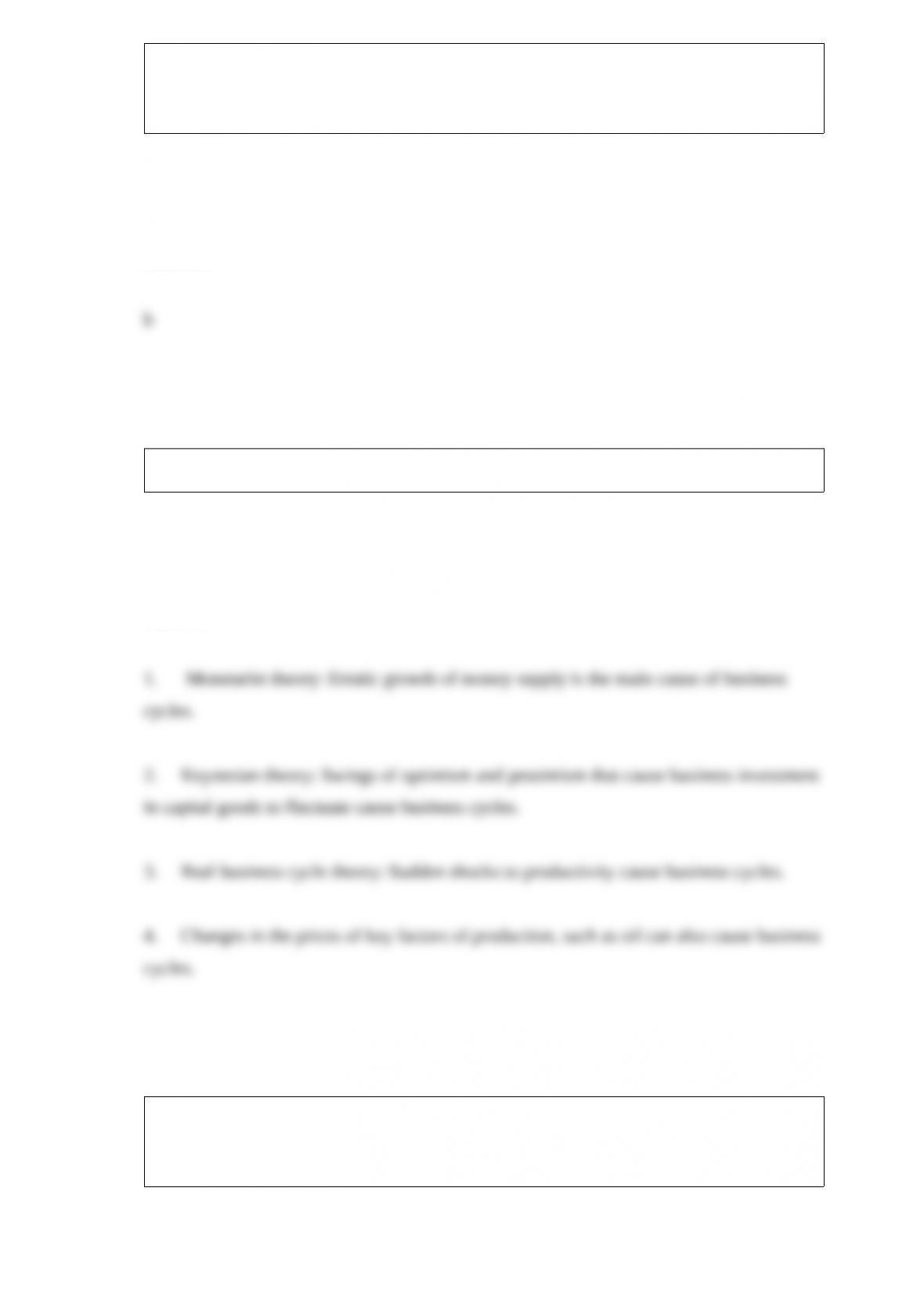
Explain the four major theories of the causes of the business cycle.
Answer:
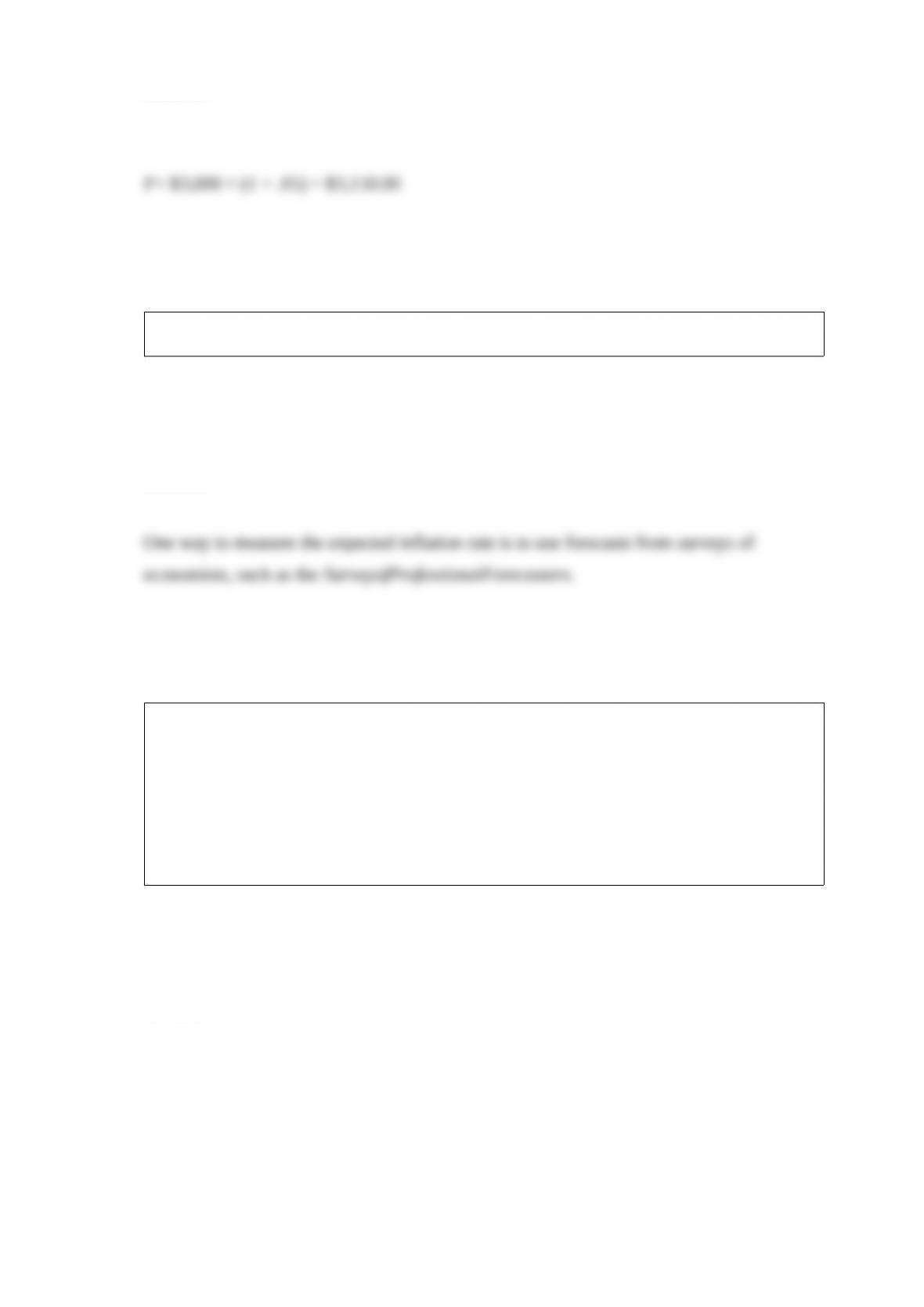
Consider a one-year discount bond that has a present value of $3,000. If the annual rate
of discount is 5 percent, calculate the future value of the bond (the amount the bond
pays in one year).
Answer:
How can the expected inflation rate be measured?
Answer:
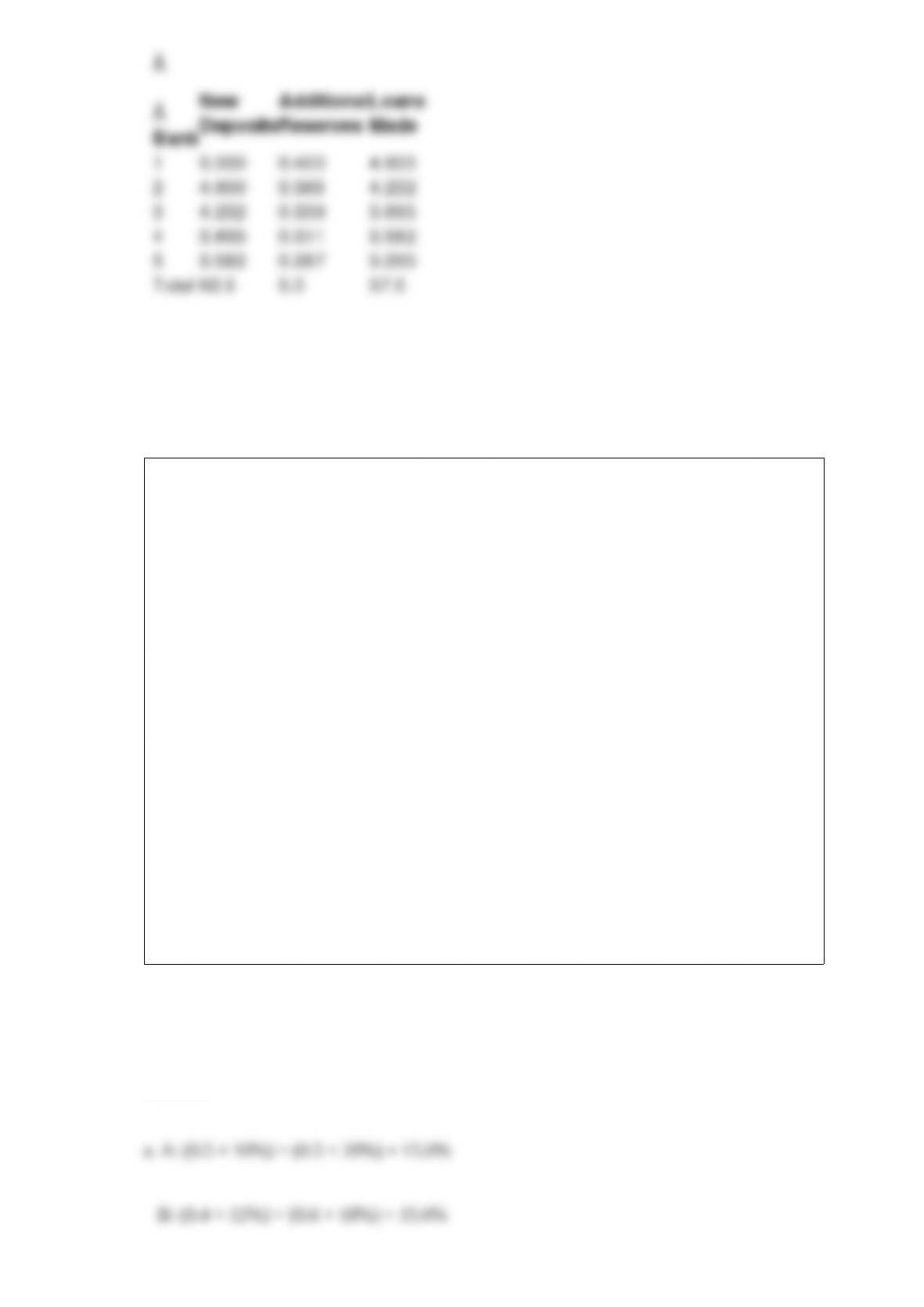
The Fed makes an open-market purchase of $5 million in an economy in which no bank
holds excess reserves and the assumptions of the simple multiplier hold with a reserve
requirement of 8 percent. Draw up a table to show the amount of new deposits in each
new bank (show the amounts in the first five of them), the additional reserves held by
that bank, and the loans made by that bank, as each successive bank lends out its excess
reserves. Finally, calculate the total amount of new deposits, of additional reserves, and
of loans made in the economy.
Answer:
Suppose you are an investor with a choice between three securities that are identical in
every way except in terms of their rates of return and risk.
Investment A: Total return = 10 percent with probability 50 percent
Total return = 20 percent with probability 50 percent
Investment B: Total return = 12 percent with probability 40 percent
Total return = 18 percent with probability 60 percent
Investment C: Total return = 5 percent with probability 60 percent
Total return = 25 percent with probability 40 percent
a. Which investment provides the highest expected return? Show your work by
calculating the expected return of all three investments.
b. Calculate the standard deviation of all three investments.
c. What type of investor might prefer investment A? Who might prefer investment B?
Answer:
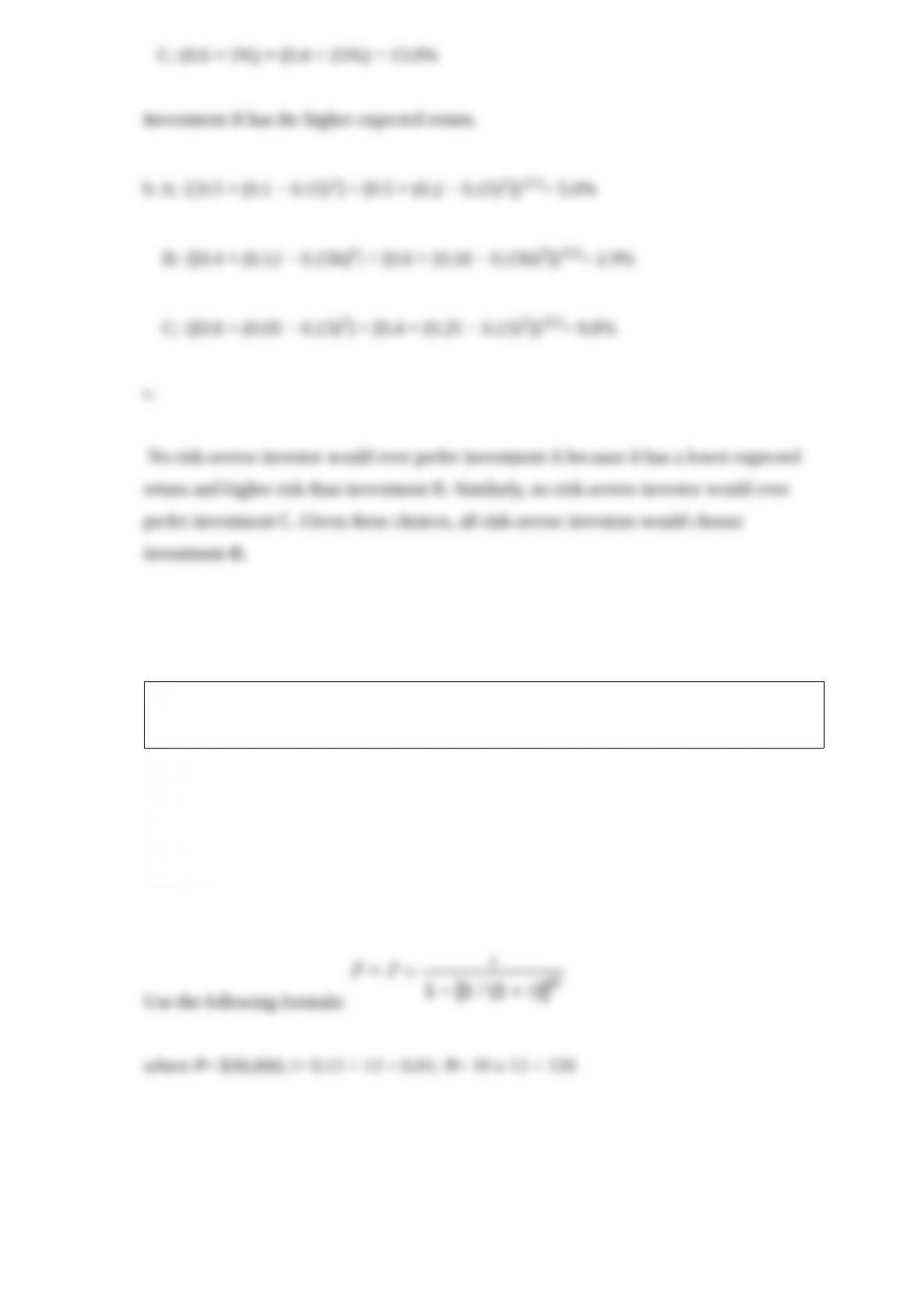
You borrow $30,000 for 10 years to pay tuition and fees. The annual interest rate is 12
percent. What monthly payment would be required to pay off the loan?
Answer:
Describe the roles of the Federal Reserve governors other than the chairman.
Answer:
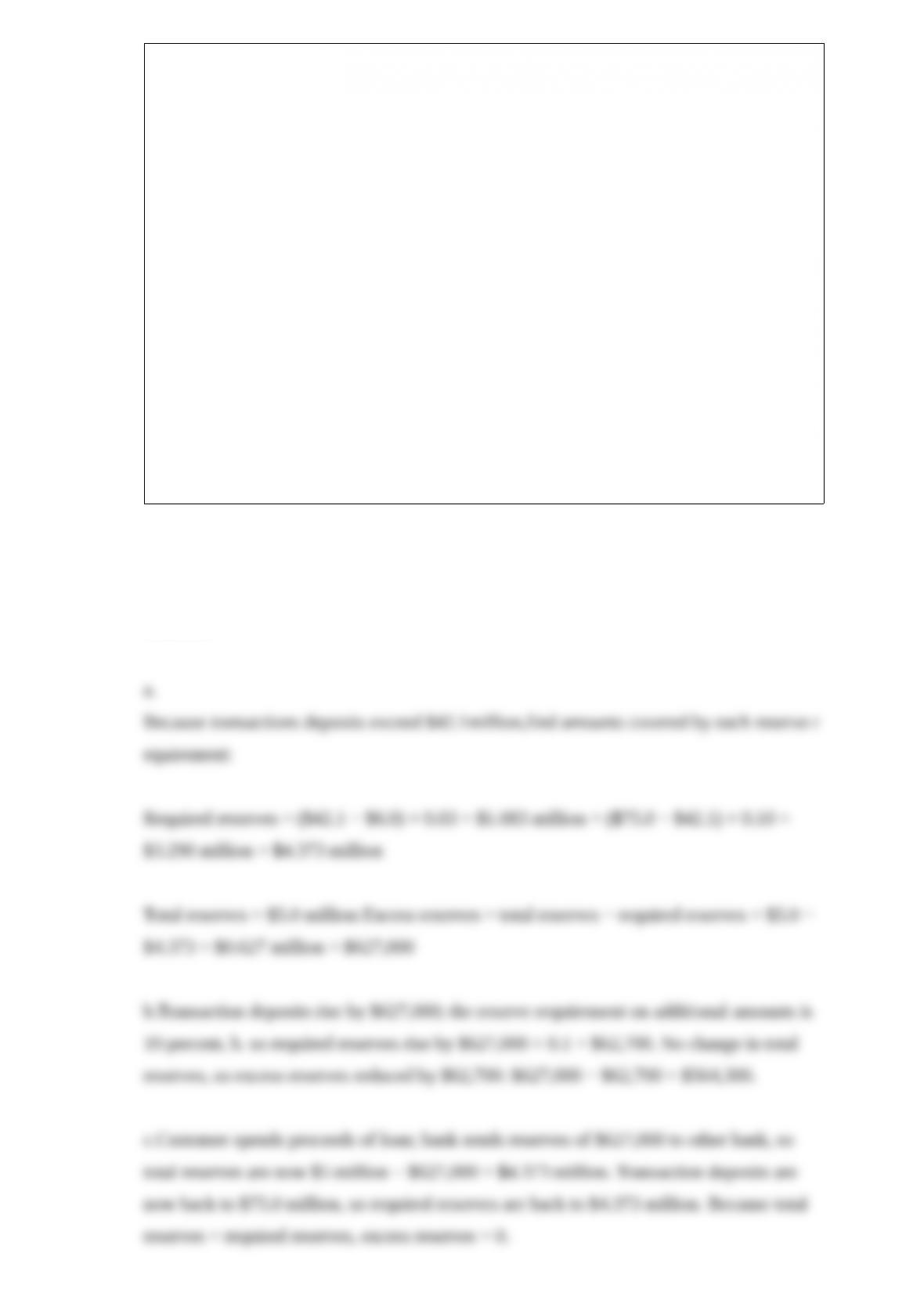
The reserve requirement is 0 percent on the first $6.0 million in transaction deposits, 3
percent on amounts between $6.0 million and $42.1 million, and 10 percent on amounts
above $42.1 million.The First Bank of Boston has the following assets and liabilities
(all amounts in millions of dollars):
Assets
Reserves $5.0
Loans $345.0
Securities $70.0
Liabilities + Capital
Transaction deposits $75.0
Nontransaction deposits $315.0
Equity capital $30.0
a. Calculate the bank’s excess reserves.Show your work.
b.Suppose First Bank makes a loan to a customer equal to the amount of the excess
reserves you found in part a. Calculate the bank’s excess reserves before the customer
spends the proceeds of the loan.Show your work.
c. Now suppose the customer spends the proceeds of the loan. Calculate the bank’s
excess reserves. Show your work.
Answer:
Donovan’s $200,000 CD matures. He deposits $20,000 into his checking account, buys
a CD for $150,000, and puts
$30,000 into his money-market mutual fund. How does this affect M1 and M2?
Answer:
Describe in words the relationships established in the two equations used by the Federal
Reserve to forecast the demand for M2.
Answer:

15 million people in a country are employed and 2.5 million are unemployed while 1
million are retired workers. The size of the country’s labor force is
a. 15 million.
b. 18.5 million
c. 17.5 million
d. 11.5 million.
Answer:
The labor force consists of
a. those employed plus those on temporary layoff.
b. those employed plus those unemployed.
c. the working-age population minus those who are in the military or institutionalized.
d. the working-age population plus those who are in the military or institutionalized.
Answer:
Suppose the economy is thought to be 2 percent below potential (i.e., the output gap is
−2 percent), when potential output grows 4 percent per year. Suppose the Fed is
following the Taylor rule, with an inflation rate of 3 percent

over the past year. The federal funds rate is currently 3 percent. The equilibrium real fed
funds rate is 3 percent and the weights on the output gap and inflation gap are 5 each.
The inflation target is 1 percent.
a. Is thefedfundsratecurrentlytoohighortoolow?By how much?Show your work.
Suppose that all the conditions are the same as described above, except that the output
gap is b. +2 percent instead of −2 percent. Is the fed funds rate currently too high or too
low? By how much ?Show your work.
Suppose a year has gone by, output is now 3 percent above potential, and the inflation
rate
c. was 5 percent over the year. What federal funds rate should the Fed now set
(assuming the inflation target does not change)? Show your work.
Answer:
Suppose you are an investor who is considering buying a one-year British government
bond that has a 4 percent interest rate or a one-year French government bond with a 7
percent interest rate. The exchange rate today is 2.00 euros per pound and you expect
the exchange rate to be 2.10 euros per pound one year from now.
a.Which bond would you purchase? Why? Show your calculations.
b.Suppose you expect the exchange rate to be 2.05 euros per pound in one year, instead
of 2.10 euros per pound. Would you change your decision about which bond to buy?
Explain and show your calculations.
Answer:
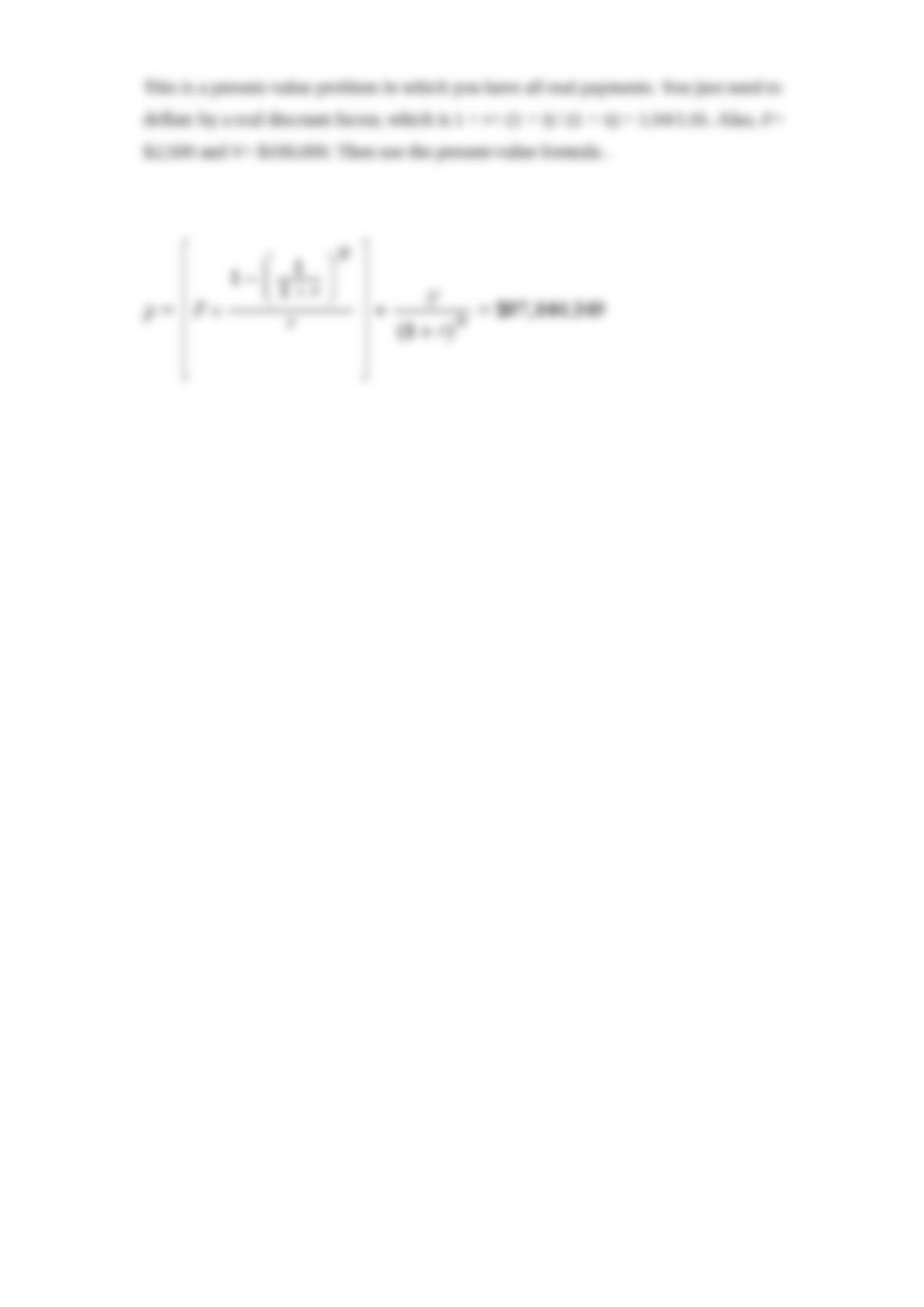
Suppose you buy an inflation-indexed bond that will adjust with inflation and thus pay
you $2,500 in real (inflation- adjusted) terms each year for the next five years, plus your
real principal of $100,000 at the end of the fifth year. The nominal interest rate is 4
percent and the expected inflation rate is 1 percent. What is the present value of the
bond? Show your work.
Answer: